Stage 5 Subject Selection Handbook (2020 - 2021) - Issued June 2018 Year 9 2020 - Mary ...
←
→
Page content transcription
If your browser does not render page correctly, please read the page content below
Mary MacKillop Catholic College Stage 5 Year 9 Course Handbook 2020 - 2021
Year 9 2020
Stage 5 Subject Selection
Handbook
(2020 - 2021)
Issued June 2018
© This Handbook remains the property of
Mary MacKillop Catholic College Wakeley
~1~
Mary MacKillop Catholic College Stage 5 Year 9 Course Handbook 2020 - 2021
Table of Contents
Welcome to Stage 5 4
Essential Information 6
Making your Subject Choices 7
Study Tips for a Successful Stage 5 Experience 8
Pattern of Study for Stage 5 9
Section 2 - Elective Courses
Human Society and it’s Environment (HSIE) 14-18
Personal Development, Health and Physical Education
19
(PDHPE)
Creative and Performing Art (CAPA) 20-25
Languages 26-27
Technology and Applied Studies (TAS) 28-32
~2~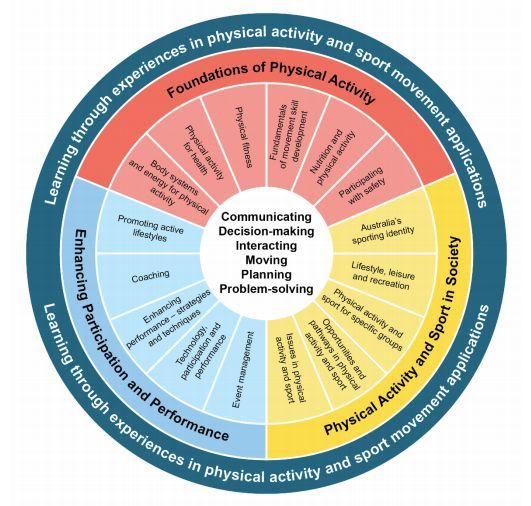
Mary MacKillop Catholic College Stage 5 Year 9 Course Handbook 2020 - 2021
Introduction
Dear Year 8 Student
Contained in this Booklet is important information which has been designed to assist you in;
● making well-informed and sound decisions
● viewing information which needs your close attention, discussion and consideration
● providing support for you in attaining your personal potential.
The over-riding consideration at Mary MacKillop Catholic
College is that students select subjects suited to their interests
and abilities:
● Choosing subjects you are interested in and like, make your life at school enjoyable
● Choosing subjects which match your level of ability makes your school life rewarding.
Right Subject + That I Enjoy = Right Result
This booklet provides information on;
● The curriculum requirements for Stage 5 (Year 9 and 10) (Section 1) and
● Elective subjects offered for study in Stage 5 (Section 2).
Please read the booklet carefully
Year 8 students must select TWO electives and THREE reserve electives to study in Year 9
and 10, in preference order using the Web Preferences Student Portal. Your Username and
Password will be provided at a later date.
(Students can login and submit their preferences before the deadline, processing of forms will
occur only after this date.)
While every effort is made to give each student their choices, there may be situations where this
may not be possible because of class sizes, timetable restrictions and staff recommendations.
Thus, any delay in returning the subject selection forms will most certainly result in
preferences/choices being reduced for all students.
Please ensure that before you submit your elective choice form, that both you and your
parent/guardian have signed the form.
Miss Michelle Israel
Leader of Learning: Student Learning
~3~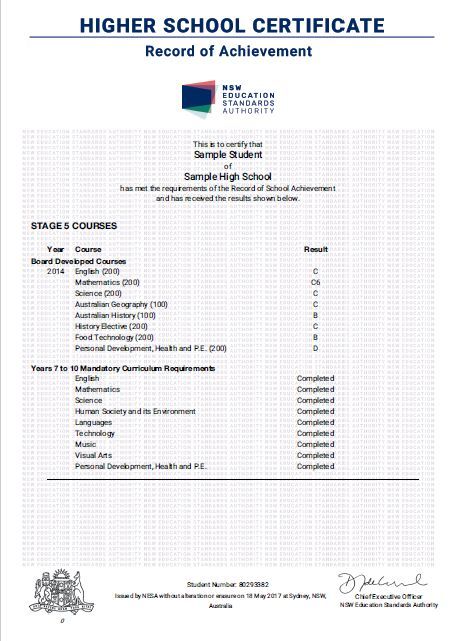
Mary MacKillop Catholic College Stage 5 Year 9 Course Handbook 2020 - 2021
Welcome to Stage 5
The start of Year 9 marks the commencement of your Stage 5 studies. School education
is broken up into 6 stages. Years 9 and 10 are referred to as Stage 5. For the first time in
secondary school you are able to choose some of the subjects that you will study.
In Stage 5, Mary MacKillop students study two elective subjects plus the core subjects
(which are listed on page 9 of this booklet).
Please read the following information carefully.
The key to enjoying the next two years and succeeding in your studies is to ensure you
choose subjects that you will enjoy and are suited to. It also will require you to commit to
high standards in class work and homework. In choosing your electives consider
carefully your interests and talents.
This Booklet is designed to provide you with information about the elective subjects
offered at Mary MacKillop Catholic College and assist you in choosing the appropriate
subject. This subject selection booklet contains a brief explanation of what each elective
subject is about. You can seek further advice from the Leader of Curriculum,
Coordinator of Learning (Year), Coordinator of Learning (KLA) and your class teachers
about any matters relating to the subjects outlined in this booklet.
Before making your choices, completing your on-line subject selection and handing in
the signed receipt, you need to:
- Read this booklet carefully and gather information about what the subject is
about
- Talk to appropriate current Year 9 and 10 students about their experiences
- Discuss your choices with your parents and teachers
- Make the final decision, chosen on the basis of interest, strengths and your
weaknesses and don’t be concerned with what friends might be choosing.
A sensible and mature approach to this program and a positive attitude will result in two
happy and successful years here at MMCC whilst you undertake your studies in Stage 5.
NOTE: Once you have made your choices you will carry them through to the end of Year 10.
Once your electives have been allocated for Years 9 and 10 the decision is final. Therefore, no
changes can be made for an incorrect choice of subjects.
~4~Mary MacKillop Catholic College Stage 5 Year 9 Course Handbook 2020 - 2021
Mary MacKillop Catholic College
The Spirit of St Mary of the Cross MacKillop
Mary MacKillop was born to migrant parents in Melbourne in the middle of last century. In
1886, Mary MacKillop, in cooperation with Father Julian Tenison Woods, founded the Sisters of
St Joseph; and dedicated her life to the teaching of poor children. She responded to one of the
greatest social issues of her time: the lack of educational opportunities for young people,
particularly Catholics, in many parts of Australia. She was the first Australian founder of a
Religious Congregation for women. Mary MacKillop died in Sydney on August 8th, 1909 and
was canonised on Sunday. 17 October 2010.
Her life was founded on her faith and beliefs.
● Mary MacKillop believed in herself and her ability to achieve.
● Mary MacKillop believed in God and recognised God's plan for her in the events that
shaped her life.
● Mary MacKillop was courageous enough to dream dreams; and determined enough to
work for their realisation.
Our Founding Beliefs
We believe...
● That Mary MacKillop based her life on the ideals of respect for every person, justice for
the poor, and education that promoted the individual, trust in God, and that her charism
should guide all our endeavours at Mary MacKillop Catholic College
● That the Christian ethos based on the Gospel values of peace, love, joy and
reconciliation, pervade all aspects of the College
● That we should work in cooperation and partnership with parents, priests and the local
community
● That we live in a multicultural society and that this is the future hope of our community
● That education is about liberation and the redemption of the human spirit in all its
aspects, and that the Catholic school is concerned with empowering students to become
autonomous and to take responsibility for their own learning and lives.
Staff Positions of Responsibility
~5~Mary MacKillop Catholic College Stage 5 Year 9 Course Handbook 2020 - 2021
Leaders of Learning (College Leadership Team)
Principal Ms Gilda Pussich
Assistant Principal Mr Pablo Grana
Leader of Religious Education Mrs Annette Flanagan
Leader of Administration Mr David Thomas
Leader of Curriculum Miss Michelle Israel
Leader of Teaching and Learning Ms Jacqueline Verlinden
Leader of Wellbeing Mrs Jennifer Lowe
Coordinators of Learning (College Middle Leaders)
Coordinator of Learning - English Mrs Katrina Gomes
Coordinator of Learning - Mathematics Mrs Sara Waugh
Acting Coordinator of Learning – Science Ms Bronia Withnall
Coordinator of Learning – TAS Mrs Rosellina Ryan
Coordinator of Learning – HSIE Mr James Rooney
Coordinator of Learning – PDHPE Mr David Tomich
Coordinator of Learning – CAPA Ms Sandra Veljanovski
Coordinator of Learning – Languages Mr David Thomas
Coordinator of Learning – VET Pathways and Partnership Mrs Maria Pedavoli
Coordinator of Learning – Saturday School of Community Miss Michelle Israel
Languages, Open High School, Distance Education and Outside
Tutors
Coordinator of Learning – Learning Support Miss Leah Brown
Coordinator of Learning - Year 7 Ms Pina Gagliano
Coordinator of Learning - Year 8 Mr Matthew Andrejev
Coordinator of Learning - Year 9 Mrs Lyne Toohey
Coordinator of Learning - Year 10 Ms Maria Messina
Coordinator of Learning - Year 11 Mrs Effie Orlando
Coordinator of Learning - Year 12 Ms Sonia Boustani
Assistant Coordinators of Learning
Assistant Coordinator of Learning - Religious Education Mr Nick Sacca
Assistant Coordinator of Learning - English Mrs Alannah Wylie
Assistant Coordinator of Learning - HSIE Ms Natalie Pavisic
Year 7 Mr Ian McLean
Year 8 Miss Ashlee Jennings
Year 9 Ms Bronia Withnall
Year 10 Ms Kiera Crosariol
Year 11 Ms Bridget Tate
Year 12 Mr Robert Hennessey
~6~Mary MacKillop Catholic College Stage 5 Year 9 Course Handbook 2020 - 2021
House Coordinators
Arena House Miss Ashlee Jennings
Crosio House Ms Kiera Crosariol
Goolagong House Ms Bridget Tate
Henderson House Mr Ian McLean
McCormack House Mr Robert Hennessey
O’Shane House Ms Bronia Withnall
Other Positions of Responsibility
Youth Ministry Coordinator Miss Josephine Ayoub
Sports Coordinator Mr Stuart Whiley
Catholic Intensive English Centre (CIEC) Coordinator Mrs Flavia Arapi-Nuñez
Information Literacy Teachers Mrs Maria Thomson
Mrs Regina Felipe
English as a Second Language or Dialect Mrs Mariana Arapi
(EALD) Coordinator
Arabic/Assyrian/Chaldean Liaison Officer Ms Vivian Matti
Vietnamese Liaison Officer Sr. Dorothy Hoang
Office/Support Staff:
Business Manager Mr Winston Olegasegarem
Principal’s PA Ms Pina Varano
Bursar Mrs Linda Garreffa
Executive Support Ms Grace Labbozzetta
Reception Mrs Rosemary Gerardis
School Fees Mrs Luisa Melacrinis
Student Services/ Attendance/ First Aid Mrs Lauren Thompson
ICT Support Officer Mr Joseph Figliano
College Office Hours:
The College Office is open for enrolment, fees and general business from 8.00 am until 4.00 pm.
Teachers can be contacted between these times.
Street Address: 5 Carnarvon Street, Wakeley NSW 2176
Postal Address: Locked Bag 64, Wetherill Park BDC 1851
Phone: (02) 9725 4322
Fax: (02) 9725 4393
~7~Mary MacKillop Catholic College Stage 5 Year 9 Course Handbook 2020 - 2021
Making Your Subject Choices
1. Listen carefully during the subject information talks
2. Read the information in this Booklet
3. Listen carefully to the advice of your teacher
4. Read the information on the powerpoint presentation
5. Do some additional reading on the subjects you are thinking about taking
6. Access the NESA website http://educationstandards.nsw.edu.au/wps/portal/nesa/home
7. Choose the subjects you are interested in
8. Choose those subjects that you are good at
9. Be guided by your results in Year 8
10. Do not be influenced by what your friends say or intend to do
11. Do not be influenced by who you think will teach the subject
12. Be selective about the students who you talk to
13. Discuss your options with your parents but you make the final choice
~8~Mary MacKillop Catholic College Stage 5 Year 9 Course Handbook 2020 - 2021
Study Tips for a Successful Stage 5 Experience
1) Start your homework early. "Procrastination is a student’s worst enemy." Try to get
some quality homework completed earlier on in the evening
2) Take good notes and review them often. Notes have no use if you don’t even look at
them. Type up a one page set of notes and display these in a number of places
leading up to a test
3) Take short breaks between heavy study periods, i.e. 5-minute break for every 40
minutes of study
4) Ask questions about things you don’t understand
5) Schedule your time wisely, use your College Diary to develop a study schedule and
stick to it
6) Find the study environment that works for you, i.e. a quiet room free from
distractions. Keep this room neat and ensure you have all the equipment required to
complete your homework
7) Study even if your teacher did not assign homework; use the nights when you did
not get much homework to revise
8) Go to bed early – you need 8 to 10 hours of sleep a night! Eat healthy foods,
including breakfast and exercise regularly
9) Develop good listening skills. "60% of your school day is spent listening"
10) Participate in class discussions
11) Control interruptions when you study (friends, siblings, TV, music, phones etc.)
Get your parents to take messages when you receive a telephone call
12) Tackle your hardest subject first. If you cannot do the hardest subject when you are
fresh, what chance do you have when you’re tired?
13) Keep your work neat and well organised
14) AVOID "CRAMMING"! Start revising for tests early and do not leave it until the
last couple of days, as this will only stress you out.
Always do your very best in every task and you will enjoy your days at school.
~9~Mary MacKillop Catholic College Stage 5 Year 9 Course Handbook 2020 - 2021
Pattern of Study for Stage 5
All students entering Stage 5 in 2020 will study a compulsory core curriculum of:
Religious Education English
Mathematics (Substage 5.1, 5.2 or 5.3) Science
History (Mandatory) Geography (Mandatory)
Personal Development, Health and Physical Education
In addition to the compulsory curriculum, students will undertake studies in two elective subjects.
The elective courses on offer are displayed below.
Table of Elective Courses and Subject Areas For Year 9 2020
Subject Area Courses Offered Subject Area Courses Offered
(KLA) (KLA)
Creative and *Dance Personal *Physical Activity and Sports
Performing *Drama Development, Studies
Arts (CAPA) Health and
*Music
Physical
*Photography and Digital
Education
Media
(PDHPE)
*Visual Arts
*Visual Design
Human Society *Big History Project Technological *Design and Technology
and Its *Commerce and Applied *Food Technology
Environment *Geography (elective) Studies (TAS) *IT (Multimedia)
(HSIE) *History (elective) *Information Software and
*Work Education Technology
*Textiles Technology
Languages *French
Year 8 students must select two electives to study in Year 9 and 10, in preference order and
then 3 RESERVE electives IN PREFERENCE ORDER using the Web Preferences Student
Portal.
All Elective Choice Forms must be returned to the Executive Assistants Office, next to C1 by
the 9am on Monday 12 August. Every effort will be made to give a student her choices; however,
final allocations of courses will be made after taking into account class sizes, timetable restrictions
and staff recommendations.
~10~Mary MacKillop Catholic College Stage 5 Year 9 Course Handbook 2020 - 2021
Curriculum Requirements for Stage 5
and the Record of School Achievement (RoSA).
NESA’s mandatory curriculum requirements for Stage 5 are listed below. All time allocations are
indicative. Indicative time is the time expected for a typical student to achieve the objectives and
outcomes of the course. The indicative time for a course is therefore directly related to that course’s
objectives and outcomes.
Reference to Years 7–10 in the following table in no way precludes gifted and talented students
from accelerated study programs in English, Mathematics and Science.
All students who attend Mary MacKillop Catholic College will be provided with a Curriculum
program that meets the Stage 4 and 5 Curriculum Requirements.
Stage 4 and 5
Curriculum Requirements
NESA Requirements Across Year 7
Key Learning Area COMMENTS
– 10 (Indicative Hours)
English 400 hrs
Mathematics 400 hrs
Science 400 hrs
At least 200 hrs in years 7 - 8 plus
100 hrs of Australian History and
Human Society and Its
100 hrs of Australian Geography 400 hrs
Environment
(including Civics) during Stage 5 i.e.
Years 9-10
Music 100 hrs in years 7 - 8
Creative Arts 200 hrs
Visual Arts 100 hrs in years 7 - 8
Technological and Applied 200 hrs in
200 hrs
Studies years 7 - 8 Technology
Personal Development, Health Should be spread over
300 hrs
and Physical Education years 7 - 10
~11~Mary MacKillop Catholic College Stage 5 Year 9 Course Handbook 2020 - 2021
What requirements do I have to meet to complete a Stage 5 Pattern of Study and be eligible
for Stage 6?
To satisfactorily complete Stage 5 you must:
• apply yourself to all the courses you are studying, by completing all the assessment tasks
and class work set
• have a satisfactory record of attendance throughout Year 9 and Year 10 in order to meet
course outcomes as recommended by NESA
• be in attendance at school until the final date for Year 10, as stipulated by NESA.
At MMCC we look at your ATTITUDE, APPLICATION and ATTENDANCE
What does satisfactory application mean?
NESA requires that your application to your work is satisfactory. This means that you must show
you have met the course requirements in terms of both effort and achievement. Merely attending
classes regularly does not constitute satisfactory completion of a course. Rather, it is expected that
you will engage in lessons, complete all the assessment tasks as well as other assigned tasks, e.g.
Class work and homework as required. Extended periods of absence of more than fifteen (15) days
each year would make it very difficult for a student to meet the outcomes of a course.
What happens if I do not satisfactorily complete a course?
Hopefully, this situation will never apply to you! However, should you fail to meet course
requirements an “N” award will be given for that course and this shows that the subject was not
satisfactorily completed.
A student may not progress onto Stage 6 study if she:
(a) Did not meet all mandatory curriculum requirements;
(b) Left school before the final date for Year 10 without being granted an exemption;
(c) Did not comply with other NESA requirements
A student who is given an ‘N’ determination in a mandatory course in Stage 5 may not be
eligible to undertake Stage 6 studies.
Credentialing Stage 5
NESA issues what is known as the Record of School Achievement (RoSA).
This credential will:
● be a record of achievement for students who leave school prior to receiving their HSC
● report results of moderated, school based assessment
● be available when a student leaves school any time after they complete Year 10
● be cumulative and recognise a student’s achievements until the point they leave school
● show the Stage 5 courses that a student has completed and the grade (A-E) awarded by the
school for each course
~12~Mary MacKillop Catholic College Stage 5 Year 9 Course Handbook 2020 - 2021
● show the mandatory requirements in Languages, Technology (Mandatory), Music, Visual
Arts, and Personal Development, Health and Physical Education. Mandatory requirements
are reported as 'Completed', or, where they have not been met, as 'Not Completed'
A sample of the School Record of Achievement (RoSA) is shown below for a student leaving
school after completing Stage 5. This document will only be issued to those students that finish
their schooling after completing Stage 5.
~13~Mary MacKillop Catholic College Stage 5 Year 9 Course Handbook 2020 - 2021
Description of Levels of Achievement
How will my Level of Achievement in all my subjects be worked out?
Naturally, the grades you receive in your different subjects are directly based on your level of
achievement in the assessment program for each course you study.
Grades A to E will be awarded by the College for all courses on the basis of Performance Descriptors
issued by NESA. The exception is Mathematics grades where NESA uses: A10, A9, B8, B7, C6, C5,
D4, D3 and E2 in the final school report.
NESA Common Grade Scale
The Common Marking Scale describes performance at each of five grade levels:
Grade Level of Achievement Performance Descriptor
A The student has an extensive knowledge and understanding of the content and can readily apply
this knowledge. In addition, the student has achieved an extensive level of competence in the
processes and skills and can apply these skills to new situations
B The student has a thorough knowledge and understanding of the content and a thorough level
of competence in the processes and skills. In addition, the student is able to apply this
knowledge and these skills to most situations.
C The student has a sound knowledge and understanding of the main areas of content and has
achieved a sound level of competence in the processes and skills.
D The student has a basic knowledge and understanding of the content and has achieved a basic
level of competence in the processes and skills.
E The student has an elementary knowledge and understanding in few areas of the content and
has achieved an elementary level of 3competence in some of the processes and skills.
(The exception is that at end of Year 10, grades A10, A9, B8, B7, C6, C5, D4, D3 and E2 will
be used for Mathematics)
Assessment of a course will be in the prescribed Areas for Assessment for each course as
indicated on the Stage 5 Course Performance Descriptors for that course. Course
Performance Descriptors are a series of statements for each specific course issued by NESA.
They summarise the observable and measurable features of student achievement and assist in the
awarding of grades to students based on levels of achievement. More details on Stage 5
assessment will be presented in the 2018 Assessment Handbook, issued in Term 1, 2018.
~14~Mary MacKillop Catholic College Stage 5 Year 9 Course Handbook 2020 - 2021
SECTION 2 – Elective Courses to Select from for Stage 5
Big History
Course Description:
Big History examines our past, explains our present and imagines our future. Journey through nearly 14
billion years of history. It's a story about us. It is an idea that arose from a desire to go beyond specialized
and self-contained fields of study to grasp history as a whole. This growing, multi-disciplinary approach is
focused on high school students, yet designed for anyone seeking answers to the big questions about the
history of our Universe.
What will students learn about?
The Universe
The Universe started simply with a burst of energy. As it developed over billions of years, stars were born;
new complexities emerge, setting the stage for radical change.
Our Solar system & Earth
The birth and death of stars leave an aftermath of matter, gas, and clouds of dust. Through gravity,
accretion, and random collisions, new complex forms of matter grow to become galaxies, the Earth, and
even living organisms.
Life
What makes life on Earth so special? How do you explain its diversity? And what exactly is it? How life
emerged remains a mystery, but we've learned that life is fragile in the face of gradual and sudden change.
Just ask the dinosaurs.
Humans
Powerful brains. Precise language. Humans have a knack for gathering, preserving, and sharing
information. We use these skills to create entirely new forms of complexity, making us the most powerful
force of change on the planet.
The Future
What does 13.8 billion years of history tell us? How does knowing so much about the past influence how
we think about the future? These may be the most important questions Big History asks.
What will students learn to do?
Today we have more information available to us on our phones than was available in all the great libraries
of Alexandria. How do we decide what claims we can trust? Big History teaches students to examine their
intuition, looking at the authority, evidence, and logic of claims across disciplines and scales. Students
learn to apply a thoughtful, consistent, and rigorous approach to engaging with new ideas and information
and using evidence to construct effective arguments.
Record Of School Achievement (RoSA)
Satisfactory completion of 200 hours of study of Big History during Stage
5 will be recorded with a grade on the student’s Record of School Achievement.
~15~Mary MacKillop Catholic College Stage 5 Year 9 Course Handbook 2020 - 2021
Commerce
Course Description:
Commerce enables young people to develop the knowledge, understanding, skills and values that form the
foundation on which they can make sound decisions about consumer, financial, legal, business and
employment issues. It develops in students the ability to research information, apply problem-solving
strategies and evaluate options in order to make informed and responsible decisions as individuals and as
part of the community.
What will students learn about?
Students undertaking a 200-hour course will study Core Part 1 and Core Part 2 and a minimum of five
options.
Options may be studied for 15–25 indicative hours each.
Core Part 1 Core Part 2
Consumer Choice a nd Personal Finance Law and Society and E mployment Issues
learning about making responsible develop an understanding of their legal rights and
spending, saving, borrowing and investment responsibilities and how laws affect individuals and
decisions as part of personal financial regulate society. They also learn about commercial and
management and the development of legal aspects relating to employment issues, and their
consumer and financial literacy. rights and responsibilities at work.
Students will also study the following
options: Our Economy
Promoting and Selling Global Links
Law in Action Travel
Political Involvement
What will students learn to do?
Student learning in Commerce will promote critical thinking and the opportunity to participate in the
community. Students learn to identify, research and evaluate options when making decisions on how to
solve consumer problems and issues that confront consumers. They will develop research and
communication skills, including the use of ICT, that build on the skills they have developed in their
mandatory courses.
Record Of School Achievement (RoSA)
Satisfactory completion of 100 or 200 hours of study in Commerce during Stage 5 (Years 9 and 10) will
be recorded with a grade on the student’s Record of School Achievement.
~16~Mary MacKillop Catholic College Stage 5 Year 9 Course Handbook 2020 - 2021
Elective Geography
Course Description:
The Geography (Elective) course provides an opportunity for students to learn more Geography through
additional study. It provides students with a broader understanding of the discipline of Geography and the
processes of geographical inquiry, and enables depth studies through flexible learning in a choice of focus
areas.
In a 200-hour Geography (Elective) course they will study at least five of the eight focus areas.
What will students learn about?
Geography (Elective) enables students to learn more about:
· the geographical processes that form and transform environments and communities
· the importance of the world’s environments and issues associated with them
· human activities at a range of scales
· contemporary world events and issues in terms of their spatial and ecological dimensions
· the roles and responsibilities of individuals, groups and governments in resolving tensions and
conflicts at a range of scales
· being an informed and active citizen.
What will students learn to do?
Students learn to gather, process and communicate geographical information from a variety of primary
and secondary sources. Appropriate geographical tools including information and communication
technologies (ICT) are to be integrated in each focus area. Geographical tools, such as maps, graphs,
statistics, photographs and fieldwork, assist students to gather, analyse and communicate geographical
information in a range of formats.
Record Of School Achievement (RoSA)
Satisfactory completion of 100 or 200 hours of study in Geography (Elective) during Stage 5 (Years 9 and
10) will be recorded with a grade on the student’s Record of School Achievement.
~17~Mary MacKillop Catholic College Stage 5 Year 9 Course Handbook 2020 - 2021
Elective History
Course Description:
History develops in young people an interest in, and enjoyment of, exploring the past.
A study of Elective History provides opportunities for developing a knowledge and understanding of past
societies and historical periods.
What will students learn about?
Students explore the nature of history and the methods that historians use to construct history through a
range of thematic and historical studies. Students develop an understanding of how historians investigate
and construct history through an examination of various types of history such as oral history, museum or
archive studies, historical fiction, media, biography or film. Historical issues studied include the
collection, display and reconstruction of the past, ethical issues of ownership and preservation and
conservation of the past. A selection of ancient, medieval and early modern societies are studied in
relation to themes such as war and peace, crime and punishment, music through history, slavery, women
in history or other relevant topics.
What will students learn to do?
Students apply an understanding of history, heritage, archaeology and the methods of historical inquiry
and examine the ways in which historical meanings can be constructed through a range of media. Students
learn to apply the skills of investigating history including understanding and analysing sources and
evidence and sequencing major historical events to show an understanding of continuity, change and
causation. Students develop research and communication skills, including the use of ICTs, and examine
different perspectives and interpretations to develop an understanding of a wide variety of viewpoints.
Students also learn to construct a logical historical argument supported by relevant evidence and to
communicate effectively about the past for different audiences.
Record Of School Achievement (RoSA)
Satisfactory completion of 100 or 200 hours of study in History (Elective) during Stage 5 (Years 9 and 10)
will be recorded with a grade on the student’s Record of School Achievement.
~18~Mary MacKillop Catholic College Stage 5 Year 9 Course Handbook 2020 - 2021
Work Education
Course Description:
Work Education provides students with opportunities to develop knowledge, understanding and skills
regarding the world of work including an awareness of work readiness and employer expectations, the
roles and purpose of a range of sectors including education, training and employment organisations and an
appreciation of the role of lifelong learning in planning and managing pathways.
What will students learn about?
The core content is arranged in two parts:
Core Part 1 – Preparing Core Part 2 – Working
Futures Communities
Topics: Topics:
Transition Planning Workplace Rights and Responsibilities
What is Work? Exploring Post-school Pathways
Introduction to Workplace Safety Technology and Communication
Enterprise Initiatives Partnerships in the Community
Students completing the 200 hour course will study both Core Part 1 and Core Part 2 and a minimum of
six options.
In addition students will study selected Options that cater for specific needs and interests. The Options
cover areas such as technology, transitions, community participation, communication and partnerships.
The Work Education syllabus encourages the integration of work and community based learning
opportunities.
What will students learn to do?
Students will learn to research a range of work related issues, for example employment trends and
participation rates. Students will learn to communicate using a range of techniques targeting specific
audiences, for example employers. Students will learn employability skills, which include communication
skills, teamwork, ICTs, and problem solving. Students will learn enterprise skills including taking the
initiative in workplace contexts. Students will learn to plan and manage their own pathways including the
range of life transitions.
Record Of School Achievement (RoSA)
Satisfactory completion of 100 or 200 hours of study in Work Education during
Stage 5 (Years 9 and 10) will be recorded with a grade on the student’s Record of School Achievement.
~19~Mary MacKillop Catholic College Stage 5 Year 9 Course Handbook 2020 - 2021
Physical Activity and Sport Studies (PASS)
Course Description: Physical Activity and Sports Studies aims to enhance students’ capacity to
participate effectively in physical activity and sport, leading to improved quality of life for themselves and
others. Students engage in a wide range of physical activities in order to develop key understandings about
how and why we move and how to enhance quality and enjoyment of movement.
What will students learn about? The course includes modules selected from each of the following three
areas of study:
What will students learn to do?
Throughout the course students will develop skills that develop their ability to:
● work collaboratively with others to enhance participation, enjoyment and performance in physical
activity and sport
● display management and planning skills to achieve personal and group goals in physical activity
and sport
● perform movement skills with increasing proficiency
● analyse and appraise information, opinions and observations to inform physical activity and sport
decisions.
Record Of School Achievement (RoSA)
Satisfactory completion of 100 or 200 hours of study in Physical Activity and Sports Studies CEC during
Stage 5 (Years 9 and 10) will be recorded with a grade on the student’s Record of School Achievement.
~20~Mary MacKillop Catholic College Stage 5 Year 9 Course Handbook 2020 - 2021
Dance
Course Description:
Dance provides students with opportunities to experience and enjoy dance as an artform as they perform,
compose and appreciate dance. In an integrated study of the practices of performance, composition and
appreciation, students develop both physical skill and aesthetic, artistic and cultural understandings. The
course enables students to express ideas creatively and to communicate physically, verbally and in written
forms as they make, perform and analyse dances and dance forms.
What will students learn about?
All students study dance performance, composition and appreciation. They will learn about the elements
of dance (space, time and dynamics) and how they are used in, and link, the three practices. They will
learn about performing dances with an awareness of safe dance practice, dance technique and performance
quality. They will learn about how dance expresses ideas, feelings and experiences as they construct dance
compositions to communicate ideas. They learn about people, culture and society as they study and
analyse dance performances, compositions and dance works of art.
What will students learn to do?
Students will learn to develop an articulate body as they perform a range of dances in a variety of styles
with a working knowledge of safe dance practice. They will learn to structure movement as they compose
dances to express their ideas, feelings and experiences. They will learn to use the language of dance and to
describe movements using the elements of dance as they view, discuss, read and write about dance.
Drawing from their experiences gained in performing, composing and appreciating dances, they will learn
to make connections between the making and performing of the movement and the appreciation of its
meaning.
Record Of School Achievement (RoSA)
Satisfactory completion of 100 or 200 hours of study in Dance during Stage 5 (Years 9 and 10) will be
recorded with a grade on the student’s Record of School Achievement.
~21~Mary MacKillop Catholic College Stage 5 Year 9 Course Handbook 2020 - 2021
Drama
Course Description:
Drama enables young people to develop knowledge, understanding and skills individually and
collaboratively to make, perform and appreciate dramatic and theatrical works. Students take on roles as a
means of exploring both familiar and unfamiliar aspects of their world while exploring the ways people
react and respond to different situations, issues and ideas.
What will students learn about?
All students undertake a unit of playbuilding in every 100 hours of the course. Playbuilding refers to a
group of students collaborating to make their own piece of drama from a variety of stimuli. At least one
other dramatic form or performance style must also be studied in the first 100 hours. Examples of these
include improvisation, mime, script, puppetry, small screen drama, physical theatre, street theatre, mask,
comedy and Shakespeare. Students also learn about the elements of drama, various roles in the theatre, the
visual impact of design, production elements and the importance of the audience in any performance.
What will students learn to do?
Students learn to make, perform and appreciate dramatic and theatrical works. They devise and enact
dramas using scripted and unscripted material and use acting and performance techniques to convey
meaning to an audience. They learn to respond to, reflect on and analyse their own work and the work of
others and evaluate the contribution of drama and theatre to enriching society.
Record Of School Achievement (RoSA)
Satisfactory completion of 100 or 200 hours of study in Drama during Stage 5 (Years 9 and 10) will be
recorded with a grade on the student’s Record of School Achievement.
~22~Mary MacKillop Catholic College Stage 5 Year 9 Course Handbook 2020 - 2021
Music
Course Description:
All students should have the opportunity to develop their musical abilities and potential. As an artform,
music pervades society and occupies a significant place in world cultures and in the oral and recorded
history of all civilisations. Music plays important roles in the social, cultural, aesthetic and spiritual lives
of people. At an individual level, music is a medium of personal expression. It enables the sharing of
ideas, feelings and experiences. The nature of musical study also allows students to develop their capacity
to manage their own learning, engage in problem-solving, work collaboratively and engage in activity that
reflects the real world practice of performers, composers and audiences.
What will students learn about?
In both the Mandatory and Elective courses, students will study the concepts of music (duration, pitch,
dynamics and expressive techniques, tone colour, texture and structure) through the learning experiences
of performing, composing and listening, within the context of a range of styles, periods and genres. The
Mandatory course requires students to work in a broad range of musical contexts, including an exposure to
art music and music that represents the diversity of Australian culture. The Elective course requires the
study of the compulsory topic Australian Music, as well as a number of optional topics that represent a
broad range of musical styles, periods and genres.
What will students learn to do?
In Music, students learn to perform music in a range of musical contexts, compose music that represents
the topics they have studied and listen with discrimination, meaning and appreciation to a broad range of
musical styles. The study of Concepts of Music underpin the development of skills in performing,
composing and listening.
Record Of School Achievement (RoSA)
Satisfactory completion of 100 or 200 hours of elective study in Music during Stage 5 (Years 9 and 10)
will be recorded with a grade on the student’s Record of School Achievement.
~23~Mary MacKillop Catholic College Stage 5 Year 9 Course Handbook 2020 - 2021
Photographic and Digital Media
Course Description:
Photographic and Digital Media provides opportunities for students to enjoy making and studying a range
of photographic and digital media works. It enables students to represent their ideas and interests about the
world, to engage in contemporary forms of communication and understand and write about their
contemporary world. Photographic and Digital Media enables students to investigate new technologies,
cultural identity and the evolution of photography and digital media into the 21st century. Students are
provided with opportunities to make and study photographic and digital media works in greater depth and
breadth than through the Visual Arts elective course.
What will students learn about?
Students learn about the pleasure and enjoyment of making different kinds of photographic and digital
media works in still, interactive and moving forms. They learn to represent their ideas and interests with
reference to contemporary trends and how photographers, videographers, film-makers, computer/digital
and performance artists make photographic and digital media works. Students learn about how
photographic and digital media is shaped by different beliefs, values and meanings by exploring
photographic and digital media artists and works from different times and places, and relationships in the
artworld between the artist – artwork – world – audience. They also explore how their own lives and
experiences can influence their making and critical and historical studies.
What will students learn to do?
Students learn to make photographic and digital media works using a range of materials and techniques in
still, interactive and moving forms, including ICT, to build a Photographic and Digital Media portfolio
over time. They learn to develop their research skills, approaches to experimentation and how to make
informed personal choices and judgements. They learn to record procedures and activities about their
making practice in their Photographic and Digital Media journal. Students learn to investigate and respond
to a wide range of photographic and digital media artists and works in making, critical and historical
studies. Students learn to interpret and explain the function of and relationships in the artworld between
the artist – artwork – world – audience to make and study photographic and digital media artworks.
Record Of School Achievement (RoSA)
Satisfactory completion of 100 or 200 hours of study in Photographic and Digital Media during Stage 5
(Years 9 and 10) will be recorded with a grade on the student’s Record of School Achievement.
~24~Mary MacKillop Catholic College Stage 5 Year 9 Course Handbook 2020 - 2021
Visual Arts
Course Description:
Visual Arts provides opportunities for students to enjoy the making and studying of art. It builds an
understanding of the role of art in all forms of media, both in the contemporary and historical world, and
enables students to represent their ideas and interests in artworks. Visual Arts enables students to become
informed about, understand and write about their contemporary world.
What will students learn about?
Students learn about the pleasure and enjoyment of making different kinds of artworks in 2D, 3D and/or
4D forms. They learn to represent their ideas and interests with reference to contemporary trends and how
artists’ including painters, sculptors, architects, designers, photographers and ceramists, make artworks.
Students learn about how art is shaped by different beliefs, values and meanings by exploring artists and
artworks from different times and places and relationships in the artworld between the artist – artwork –
world – audience. They also explore how their own lives and experiences can influence their artmaking
and critical and historical studies.
What will students learn to do?
Students learn to make artworks using a range of materials and techniques in 2D, 3D and 4D forms,
including traditional and more contemporary forms, site-specific works, installations, video and digital
media and other ICT forms, to build a body of work over time. They learn to develop their research skills,
approaches to experimentation and how to make informed personal choices and judgements. They learn to
record procedures and activities about their artmaking practice in their Visual Arts diary. They learn to
investigate and respond to a wide range of artists and artworks in artmaking, critical and historical studies.
They also learn to interpret and explain the function of and relationships in the artworld between the artist
– artwork – world – audience to make and study artworks.
Record Of School Achievement (RoSA)
Satisfactory completion of 100 or 200 hours of elective study in Visual Arts during Stage 5 (Years 9 and
10) will be recorded with a grade on the student’s Record of School Achievement.
~25~Mary MacKillop Catholic College Stage 5 Year 9 Course Handbook 2020 - 2021
Visual Design
Course Description:
Visual Design provides opportunities for students to enjoy making and studying visual design artworks
and to become informed about and understand and write about their contemporary world. It enables
students to represent their ideas and interests about the world in visual design artworks and provides
insights into new technologies, different cultures, and the changing nature of visual design in the 21st
century. Students are provided with opportunities to make and study visual design artworks in greater
depth and breadth than through the Visual Arts elective course.
What will students learn about?
Students learn about the pleasure and enjoyment of making different kinds of visual design artworks in
print, object and space-time forms. They learn to represent their ideas and interests with reference to
contemporary trends and how web designers, architects, commercial and industrial designers, space, light
and sound designers, graphic designers and fashion, accessory and textile designers make visual design
artworks. Students learn about how visual design is shaped by different beliefs, values and meanings by
exploring visual designers and visual design artworks from different times and places, and relationships in
the artworld between the artist/designer – artwork – world – audience. They also explore how their own
lives and experiences can influence their making and critical and historical studies.
What will students learn to do?
Students learn to make visual design artworks using a range of materials and techniques in print, object
and space-time forms, including ICT, to build a folio of work over time. They learn to develop their
research skills, approaches to experimentation and how to make informed personal choices and
judgements. They learn to record procedures and activities about their making practice in their Visual
Design journal. They learn to investigate and respond to a wide range of visual designers and visual
design artworks in making, critical and historical studies. They also learn to interpret and explain the
function of and relationships in the artworld between the artist/designer – artwork – world – audience to
make and study visual design artworks.
Record Of School Achievement (RoSA)
Satisfactory completion of 100 or 200 hours of study in Visual Design during Stage 5 (Years 9 and 10)
will be recorded with a grade on the student’s Record of School Achievement.
~26~Mary MacKillop Catholic College Stage 5 Year 9 Course Handbook 2020 - 2021
French
Course Description:
Language is the basis of all communication and human interaction. Elective French gives students a
practical life skill that is useful for work, travel and building relationships beyond school. It does this
through a focus on:
● language skills (speaking, listening, reading and writing in French); and
● intercultural skills (communication and understanding between cultures)
By studying French, students will improve their literacy, their creative and problem solving skills, and
become open to a world of possibilities in relation to employment, travel and further study in Australia
and internationally.
Elective French is also intended to provide students with a solid basis for continuing their HSC studies in
French Continuers, should they choose to. Beyond the language itself, the course aims to make learning
fun through self discovery and the exploration of culture in ways that are relevant to students’ lives.
What will students learn about?
Students will build on their introduction in Year 8 to French language and the cultures of French-speaking
communities. In particular, they will learn about:
● How language works as a way of communicating meaning
● Using language in ways that are appropriate for context and purpose
● The connections between language and culture, including their own, and how this influences the
way we see and interact with others and the world
● French-speaking cultures here and around the world and how they compare with students’
experiences and expectations of the world
● The ways in which speaking and understanding a second or additional language can improve their
ability to succeed at school and in life
What will students learn to do?
Elective French is a practical subject that aims to build communication and cross-cultural skills. Students
will learn to:
● Communicate in basic French in everyday situations through speaking, writing, listening and
reading
● Interact across and move between cultures
● Appreciate cultural diversity in the community and use it as an advantage as they engage with the
world
● Use English more effectively by understanding how it works and compares to another language
● Analyse and solve problems in creative ways by understanding how meaning is communicated
through language and culture
Record Of School Achievement (RoSA)
Satisfactory completion of 100 or 200 hours of elective study in French during Stage 5 (Years 9 and 10)
will be recorded with a grade on the student’s Record of School Achievement.
~27~Mary MacKillop Catholic College Stage 5 Year 9 Course Handbook 2020 - 2021
Design and Technology
Course Description:
Students who are self directed learners, thrive on mystery and enjoy problem solving should consider
Design and Technology. The course will develop a student’s ability for innovative and creative thought
through the planning and production of design projects related to real-life needs and situations. The design
and development of quality projects gives students the opportunity to identify needs and opportunities,
research and investigate existing solutions, analyse data and information, generate, justify and evaluate
ideas, and experiment with tools, materials and techniques to manage and produce design projects.
Students will undertake a range of practical experiences that occupy the majority of course time.
There is a new syllabus for this course.
What will students learn about?
There are three core content areas in this course: Holistic Approach to design that focuses on the concepts
of design, the factors affecting design and the influences of design on the individual, society and the
environment; Design Processes that provides a framework for the application of appropriate design
processes and the production of quality design solutions; Activity of Designers that examines enterprising
activities with innovation and current trends in design.
Project work forms the basis of every unit of work and will enable students to develop their own approach
to designing and production of a wide range of projects.
What will students learn to do?
The focus areas of design provide a meaningful context for designing, producing and evaluating projects.
The focus areas for learning will include six projects from the following contexts:
● Agriculture: plant enterprise, animal enterprise and environmental projects
● Digital Technologies: software solutions, automated solutions, control systems
● Engineered Systems: aeronautical, environmental, medical, transport, structural
● Food Technologies: food, packaging, food presentation, nutrition
● Information and Communication Technology: 3D modelling, animation, desktop publishing,
graphics, marketing and architecture
● Material Technologies: electronics, jewellery, metals, polymers, textiles, timber
Students will be assessed based on practical textile experiences; reports; presentations; tests; research
assignments; case studies; journals; self and peer evaluations.
Record Of School Achievement (RoSA)
Satisfactory completion of 100 or 200 hours of study in Design and Technology during Stage 5 (Years 9
and 10) will be recorded with a grade on the student’s Record of School Achievement.
~28~Mary MacKillop Catholic College Stage 5 Year 9 Course Handbook 2020 - 2021
Textiles Technology
Course Description:
Students who have a flair for the application of textiles to meet the functional and aesthetic needs of
society should consider Textiles Technology. Textiles Technology embraces an understanding of good
design and the properties of textiles to develop quality projects. This subject encourages students to
express ideas and demonstrate responsible decision making skills. Students will undertake a range of
practical experiences that occupy the majority of course time.
There is a new syllabus for this course.
What will students learn about?
There are three areas of study: design; properties and performance of textiles; textiles and society.
Throughout the study of these areas students will learn about designing and producing with textiles and
examine the work of textile designer’s. The course offers the opportunity for students to explore the
unique properties of a range of textiles and the way they perform, by deconstructing textiles students gain
a broad understanding of how textile items are made. Students will delve into the historical, cultural and
contemporary perspectives of textiles design that will inform their own design practices.
Project work forms the basis of every unit of work and will enable students to discriminate in their choices
of textiles for particular uses.
What will students learn to do?
Explore and apply skills in design for a range of textile applications
● Appreciate the significant role of textiles for the individual consumer and society
● Examine the properties and performance of textiles
● Creatively document, communicate and present design ideas
● Proficiently manage resources
● Produce quality textile items
● Critically evaluate design and construction of textile items
Projects will be based across a range of focus areas which may include:
● apparel: including clothing and accessories
● furnishings: including lampshades, bedspreads, curtains and chair coverings
● costume: theatre, masks, fancy dress and dance costumes
● textile arts: wall hangings, fabric based artworks and wearable design
● non-apparel: book covers, toys, bags and umbrellas.
Students will be assessed based on practical textile experiences; reports; presentations; tests; research
assignments; case studies; journals; self and peer evaluations.
Record Of School Achievement (RoSA)
Satisfactory completion of 100 or 200 hours of study in Textiles Technology during Stage 5 (Years 9 and
10) will be recorded with a grade on the student’s Record of School Achievement.
~29~Mary MacKillop Catholic College Stage 5 Year 9 Course Handbook 2020 - 2021
Information and Software Technology
Course Description:
Students who have a genuine interest in Information Technology and all its applications should consider
that Information and Software Technology may be suited to them. Current technologies are becoming
obsolete at a rapid rate and new generations will need to be flexible to accommodate changes as they
emerge. This subject is for students who want to have the appropriate information to make informed
choices about IT applications. Students will undertake a range of practical experiences that occupy the
majority of course time.
What will students learn about?
Core Content:
● Design, produce and evaluate
● Data handling
● Hardware Issues
● Past, current and emerging technologies
● People
● Software
Options:
● Authoring and multimedia
● Database design
● Digital media
● Internet and website development
● Robotics and automated systems
● Software development and programming
● Network Systems
● Artificial intelligence, similar and modelling
What will students learn to do?
● Undertake a range of computer software and hardware application
● Solve problems in relation to real Information Technology situations
● Discover the ethical issues related to Information and Software Technology
● Research past, current and emerging technologies in Information Technology
● Develop communication and collaborative work practices
Assessment includes: practical IT experiences; reports; presentation; test; research assignments; case
studies; self and peer evaluation; individual and group work.
Record Of School Achievement (RoSA)
Satisfactory completion of 100 or 200 hours of study in Information and Software Technology during
Stage 5 (Years 9 and 10) will be recorded with a grade on the student’s Record of School Achievement.
~30~Mary MacKillop Catholic College Stage 5 Year 9 Course Handbook 2020 - 2021
Industrial Technology - Multimedia
Course Description:
Students who have an interest in digital technologies, multimedia production and who are interested in
creating projects that are visually appealing and relevant to an audience are suited to Industrial
Technology - Multimedia. Multimedia is for students who are creative and self motivated or interested in
a career in the artistic use of Information Technology. Students will undertake a range of practical
experiences that occupy the majority of course time.
There is a new syllabus for this course.
What will students learn about?
All students will learn about the principles and techniques involved in producing a wide range of
multimedia productions. The core module will develop knowledge and skills in the use of tools, materials
and techniques related to Web Design and Video Production. These are further enhanced and developed
through the study of specialist modules in Apps and Interactivity and Games with Simulations.
Throughout the development of projects students will learn about the social, economic and environmental
impacts of their actions.
Project work forms the basis of every unit of work and will enable students to develop a range of
multimedia projects.
What will students learn to do?
The major emphasis of the Industrial Technology - Multimedia syllabus is on students actively planning,
developing and producing quality multimedia projects. Students will learn to design, prepare and present
projects using a range of programmes and apps on digital devices.
Practical projects should reflect the nature of the Multimedia focus area and provide opportunities for
students to develop specific knowledge, understanding and skills related to multimedia technologies.
These may include:
● 2D and 3D animations
● virtual reality projects
● computer games
● ePublications
● digital photography and graphics
● videos
● websites and apps
Students may be assessed through practical experiences, reports, presentations, tests, research
assignments, case studies, self and peer evaluation and experimental work.
Record Of School Achievement (RoSA)
Satisfactory completion of 100 or 200 hours of study in Industrial Technology - Multimedia during Stage
5 (Years 9 and 10) will be recorded with a grade on the student’s Record of School Achievement.
~31~You can also read


