Healthcare professionals' attitudes towards acupuncture: an analysis of barriers and enablers to its integration - ANMF
←
→
Page content transcription
If your browser does not render page correctly, please read the page content below

Healthcare professionals’ attitudes towards
   acupuncture: an analysis of barriers and
   enablers to its integration

Zhang, M, N1,2; Zheng, Z1; Vesty, G1
1. School of Health and Biomedical Sciences, RMIT University,
   Bundoora, Victoria, Australia
2. School of Nursing, Midwifery and Paramedicine, ACU,
   Melbourne, Australia

My Research / Thesis

                  Australian doctors and nurses or midwives’
                  attitudes and perceptions of acupuncture and
                  acupressure practice in Perioperative Care-
                  National Survey                   http://i.dailymail.co.uk/i/pix/2017/03/02/12/3DDFF69100000578-0-image-a-
                                                    17_1488456787923.jpg

                                Figure 1. Matthews (2017),                                                      Figure 2. “Acupressure”. n.d.
                  http://www.dailymail.co.uk/health/article-4274898/Ditch-                        https://fullbodybalancing.com/acupressure-5-benefits-
                          paracetamol-try-ACUPUNCTURE.html.                                                                health/

RMIT University                                                                                                                                           2
Definition of terms
        •Acupuncture: needles
        •Acupressure: pressure
        •Complementary and Alternative Medicine (CAM)
         –broad set of health care practices ≠
          conventional medicine

RMIT University                                         3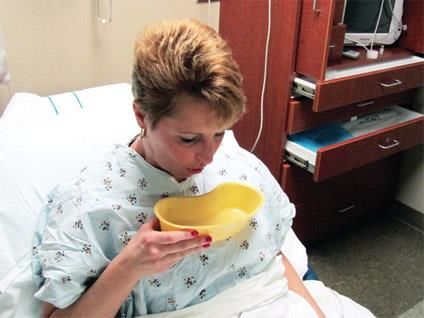
Side Effects after operations/GA

           Figure 3. Gayer (2014), http://www.outpatientsurgery.net/guides/ambulatory-                  Figure 4. “Boy in hospital bed” (2016),
                            anesthesia/2014/images/9_prevention.jpg                      http://www.med.uio.no/helsam/english/research/projects/pediatric-pain-
                                                                                                        management-practices-postoperative/

                  PONV                                                                                               Pain
(Post Operative Nausea and Vomiting)

RMIT University                                                                                                                                                   4
Aims and Study Design
                                                            Aim 1
                                  Purposive literature review to identify
                     Study 1
                                   key themes associated with barriers,
                    Literature          enablers and acceptance of
                      Review
                                  acupuncture use in perioperative care

                                                           Aim 2
                     Study 2
                                     Examine the beliefs, attitudes, perceptions, clinical
                     National         use, knowledges and perceptions of Australian
                     Survey         doctors and nurses toward the use of acupuncture
                                          and acupressure in perioperative care

                                                           Aim 3
                     Further      Identify any potential barriers that may impact on the
                    analysis of        implementation of the use of acupuncture /
                     Study 2                 acupressure in perioperative care

RMIT University                                                                              5
Why examine attitudes?
Proven Effectiveness
Cochrane review: compared PC 6 stimulation with
sham treatment →PC6 acupoint stimulation
significantly ↓ the incidence of nausea, vomiting and
the need for rescue antiemetics (Lee, Chan & Fan, 2015).
Acupuncture (Level I), specifically auricular
acupuncture (Level I [PRISMA] ↓ postoperative pain,
opioid requirements as well as opioid-related adverse
effects compare to a variety of controls (Schug et al., 2015).
RMIT University 6
Why examine attitudes? (Continued) Attitudes of physicians – 80% considered it is effective & safe Current literature focuses on CAM in general High referral rate of acupuncture Australia: 70-80% (Easthope et al., 2000; Wardle et al., 2013) International: 50-94% (Chen et al., 2010) RMIT University 7
Literature Search Strategies
To explore the attitudes and perceptions of
acupuncture use in peri-operative care
Integrative Review
Broadest type of research review method inclusion of
experimental and non-experimental research
Study selection-Purposive sampling
PRISMA flowchart of study selection process followed
- 12 studies selected
RMIT University 8PRISMA Flowchart RMIT University 9
Literature Review Findings
Perceptions and attitudes
• Overall positive attitudes and perception among
surveyed health care professionals despite low
knowledge of and exposure to acupuncture.
• GPs took a favourable view towards both the efficacy
and cost effectiveness of acupuncture among other
physicians (Wardle, Sibbrit & Adams, 2013; Norheim & Fonnebo, 1998; Lipman,
Dale & MacPherson, 2003; Czarnawska-Illiev & Robinson, 2016).
Who referred patients and to whom
GPs, Age groups, Sex
RMIT University 10Literature Review: Findings (Continued)
Barriers and enablers of integrating acupuncture
into conventional medicine (Manias et al, 2015)
Three themes identified
–Intrapersonal
–Interpersonal
–Environmental & External
RMIT University 11Findings (Continued)
1. Intrapersonal barriers +/- enablers
- Knowledge of and exposure to acupuncture
- Personal use
- Prior positive experiences
- Prescribed CAM previously and comfortable with referral to
acupuncture
- Belief in the efficacy of acupuncture
- Perceived lack of evidence
- Scepticism and Prejudice
RMIT University 12Findings (Continued) 2. Interpersonal barriers +/- enablers -Patients’ own request -Number of patients asking about acupuncture -Using CAM practitioners for source of information -Direct interactions with the acupuncturists to build trust -Patient feedback and refusal -Different medical paradigms of Western Medicine and Traditional Chinese Medicine RMIT University 13
Findings (Continued)

3. Environmental/External barriers +/- enablers
-Lack of options
-Side effects from conventional therapies
-Availability of credentialed providers
-Difficulty in finding a practitioner
-Lack of reimbursement & insurance coverage
-Lack of regulation
-Logistical (facility, issues with administration such as frequency, timing,
length of time, hospital setting, body parts, number of needles)

RMIT University                                                                14
Limitations of prior research: areas to
              further explore
                  • Low response rate associated with large online
                    studies
                  • Bias with regional/small number of participants/single
                    site study
                    –limits the generalisability of results
                  • Cultural diversity and geographical differences
                  • Missing data from nurses!!!

RMIT University                                                              15
Implications for future clinical practice •Change in patient and societal interest in CAM. •Healthcare professionals must be well informed about acupuncture and the potential benefits and limitation. •Attitudes are important to this integration. Knowledge shapes attitudes. •Education is the key!!! RMIT University 16
Overcoming Barriers
                  Figure 2: A conceptual framework for translating evidence into
                  practice adapted from Gonales et al (2012)

RMIT University                                                                    17
Key Points
• The national survey (Study 2) focuses on the GAP
between translating evidence into practice
• Participants including nurses/midwives (whom spend
most of our time with our patients during their
hospitalization!!!)
• First nationwide survey in Australia
• Willingness of receiving further education has been
included in the survey questionnaire.
• Provide the foundation for further studies
RMIT University 18Quote
“Innovation is taking two things that already
exist and putting them together in a new way.”
Tom Freston
RMIT University 19References
• Chen, L., Houghton, M., Seefeld, L., Malarick, C., & Mao, J. (2010). A survey of selected physician views on
acupuncture in pain management. Pain Medicine, 11, 530-534.
• Czarnawska-Iliev, I., & Robinson, N. (2016). General Practitioners’ use of and attitudes to acupuncture in
relation to the UK’s National Institute for Health and Care Excellence (NICE) clinical guidelines – a pilot
study. European Journal of Integrative Medicine, 8, 342-354. Retrieved from:
http://dx.doi.org/10.1016/j.eujim.2016.07.004.
• Donald, G.K., Mackeret, P., & Tobin, I. (2010). Medical students and acupuncture: a short sharp placement
experience. Acupuncture Medicine, 28(1),12-15. doi: 10.1136/aim.2009.001602. PubMed PMID: 20351370.
• Easthope, G., Tranter, B., & Gill, G. (2000). Normal medical practice of referring patients for complementary
therapies among Australian general practitioners. Complementary Therapies in Medicine, 8, 226–233. Retrieved
from: http://dx.doi.org/10.1054/ctim.2000.0398
• Faircloth, A. (2014). Perceptions of acupuncture and acupressure by Anaesthesia provider (VCU Theses and
dissertation). Paper 3586
• Fries, C. J. (2008). Classification of complementary and alternative medical practices. Canadian Family
Physicians, 54, 1570-71. PubMed PMID: 19005130.
• Giordano, J., Boatwright, D., Stapleton, S., & Huff, L. (2002). Blending the boundaries: steps toward an
integration of Complementary and Alternative Medicine into mainstream practice. Journal of Alternatively and
Complementary Medicine, 8, 897-906. doi: 10.1089/10755530260511892. PubMed PMID: 12614540.
• Gonzales, R., Handley, M.A., Ackerman, S., & O’Sullivan P.S. (2012). Increasing the translation of evidence
into practice, policy, and public health improvements: a framework for training health professionals in
implementation and dissemination science. Academic Medicine, 87, 271-8. doi:
10.1097/ACM.0b013e3182449d33. PMCID: PMC3307591.
RMIT University 20References (Continued)
• Johnston, M.F, Hui, K. K., & Bastani, R. (2005). Incorporating acupuncture into oncologic practice: how
clinical need shapes physicians acceptance. Journal of Cancer, 3, 11-12. Scopus ISSN: 15446301.
• Lee, A., Chan, S,K,C., Fan, L, T, Y. (2015). Stimulation of the wrist acupuncture point PC6 for preventing
postoperative nausea and vomiting. Cochrane. Retrieved from:
http://www.cochrane.org/CD003281/ANAESTH_wrist-pc6-acupuncture-point-stimulation-prevent-nausea-
and-vomiting-after-surgery
• Lipman, L., Dale, J., & MacPherson, H. (2003). Attitudes of GPs towards the provision of acupuncture on the
NHS. Complementary Therapies in Medicine, 11, 110-114. doi: 10.1016/S0965-2299903)00042-6
• Manias, E., Rixon, S., Williams, A., Liew, D., & Braaf, S. (2015). Barriers and enablers affecting patient
engagement in managing medications with specialty hospital settings. Health Expectations, 18(6), 2787-2798.
doi: 10.1111/hex.12255
• Moher,D., Liberati, A,, Tetzlaff, J., & Altman, D.G, (2009). The PRISMA Group. Preferred Reporting Items
for Systematic Reviews and Meta-Analyses: The PRISMA Statement. PLoS Medicine, 6(7):e1000097. Retrieved
from: http://dx.doi.org/10.1371/journal.pmed.1000097
• Norheim, A. J., & Fonnebo, V. (1998). Doctors’ attitudes to acupuncture-a Norwegian study. Social Science &
Medicine, 47(4), 519-523. Retrieved from PubMed.
• Schug, S.A., Palmer, G. M., Scott, D. A., Halliwell, R., & Trinca, J. (2015). Acute Pain Management: Scientific
Evidence (4th ed.). Melbourne: Australian and New Zealand College of Anaesthetists and Faculty of Pain
Medicine.
• Shao, J, Y, J., Borthwick, A, M., Lewith, G, T., & Hopwood, V. (2005). Attitudes towards traditional
acupuncture in the UK. Evidence Based Integrative Medicine, 2(1), 37-45. Retrieved from AMED.
RMIT University 21References (Continued)
• Wardle, J.L., Sibbrit, D., & Adams, J. (2013). Acupuncture referrals in rural primary healthcare: a survey of
general practitioners in rural and regional New South Wales Australia. Acupuncture in Medicine, 31, 375-382.
doi: 10.1136/acupmed-2013-010393
• Whittemore, R., & Knafl, K. (2005). The integrative review: updated methodology. Journal of Advanced
Nursing, 52, 546-553.
• World Health Organization (WHO). (n.d). Acupuncture: review and analysis of reports on controlled
clinical trials. Retrieved from apps.who.int/medicinedocs/pdf/s4926e/s4926e.pdf
• Ytrehus, I. A., Norheim, A J., Emaus, N., & Fonnebo, V. (2010). Physicians become acupuncture patients-not
acupuncturists. The Journal of Alternative and Complementary Medicine, 16(4), 449-455. doi:
10.1089/acm.2008.06434
RMIT University 22Thank you RMIT University 23
You can also read


