Student Finance 2018 Entry - Laura Cragg Student Recruitment and Widening Participation
←
→
Page content transcription
If your browser does not render page correctly, please read the page content below

Student Finance 2018 Entry

Laura Cragg
Student Recruitment and Widening
Participation

Introduction
•   Benefits of Higher Education
•   What do we know about 2018 entry?
•   Loan Repayments
•   Additional Financial Support
•   The University of Manchester support
•   Applying for Student Finance
•   Further Questions

Benefits of Higher Education

Benefits of Higher Education
• Greater social cohesion and mobility
• Greater propensity to vote, volunteer
  and participate in public debates
• Less exposure to unemployment
• Greater propensity to live healthily
• Higher earnings

BIS research paper #133
Things We Know and Don’t Know about the Wider Benefits of
Higher Education (2013)
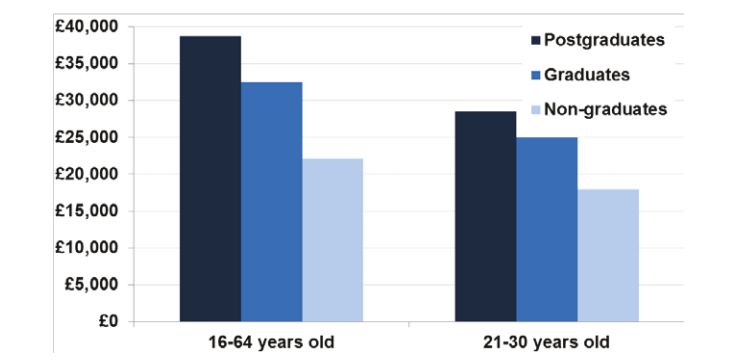
Graduate Annual Earnings
   Median Gross Annual Earnings by Qualification Level and Age, Q2 2015

BIS Report
Graduate Labour Market Statistics April-June Q2 2015
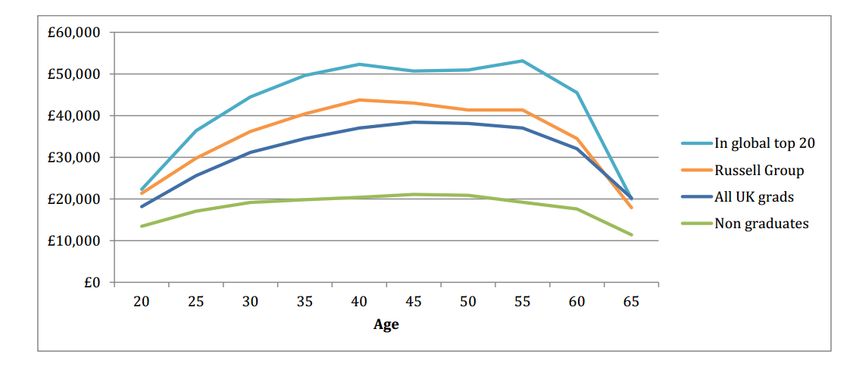
Graduate Annual Earnings
   Salary by age, for Graduates and non-Graduates, Q2 2016

BestCourse4Me
Comparison of data on Institution attended in the Office for
National Statistics ‘Labour Force Survey’ 2016
Tuition Fees and Living Costs
What do we know for 2018 entry?

•   For UK/EU students joining undergraduate courses in 2017, the tuition fee
    is £9,250. We expect tuition fees to rise in line with inflation for 2018 entry.

•   Figures for tuition fees and the government maintenance loan for 2018 entry
    have not been confirmed by the UK government. Once these figures have
    been announced, student finance information will be updated on the
    University of Manchester student finance web pages:
    www.manchester.ac.uk/studentfinance

•   The University of Manchester financial support package has been
    announced and confirmed.
Tuition fees at the University of Manchester • The tuition fee for full-time, UK undergraduate students has yet to be confirmed for 2018 entry. • For UK/EU students joining undergraduate courses in 2017, the tuition fee is £9,250. We expect tuition fees to rise in line with inflation for 2018 entry.
Tuition fee loan
•    Students do not need to find the money for
     fees up-front
• Loans are available, regardless of household
  income, up to the maximum tuition fee amount
• Students start to pay the loan back once they
  have graduated and are earning above
  £21,000
• Student Finance England pay the tuition fee
  loan directly to the University
Government living cost support • At the time of going to print, figures for the maintenance loan for 2018 entry had not been confirmed. • All eligible students (UK), can access repayable living support from the government. The amount of support varies depending on a student's circumstances. The amount of loan will vary depending on whether a student lives away from home, lives at home with their parents or studies at a university in London.
Government living cost support

• Maintenance loans are available to help
  with living costs
• All eligible students (UK) can access
  repayable living cost support from the
  government
• Some of the support students receive
  depends upon parental / household
  income
• Loans have to be paid back
Household Income Assessment
•   Whose income is assessed depends on whether the student is classified as a
    dependent or independent student.

•   Household income is the total amount the student’s family earns each year
    before tax and National Insurance. Household income is usually based on
    earnings for the previous tax years

•   If the student's parents are separated or divorced, the income of the parent they
    are financially dependent on will be considered. The income of any relevant
    partner of this parent will also be considered. The income of the student's other
    parent will be ignored.

•   If the student is over 25, has care of a young person or has supported
    themselves financially for 3 years before starting the HE course, their parental
    income won’t be taken into account when assessing entitlement. These students
    are described as independent students.
Estimated living costs
Costs Undergraduate year (40 Weekly cost (based on 40
weeks) weeks)
Accommodation [ (self- £4,955** £123.86
catered)*
Meals (excluding meals out) £1,525 £38
Clothes £400
Transport (includes local £375 Weekly bus pass from £8.00
transport and travelling
home/visiting friends)
Other (e.g. books, £2,000 £50
equipment, mobile phone
bill, socialising, laundry,
photocopying and printing)
TOTAL £9,255
* For catered accommodation, add approximately £900 to the annual total.
** The University of Manchester self-catered accommodation can range in price from £3,915 to
£6,099Interest-free Options
Following a consultation, the government is looking to introduce a Sharia Law-
friendly model of Student Finance. No timescales have been announced but it
is the Government’s intention to introduce this.
As the University’s scholarships and bursaries are non-repayable, there is no
barrier to receiving these. You must still have a full financial assessment carried
out by Student Finance England in order for the University to access your
household income however, you are not obliged to take out any loans with
Student Finance England.
Sharia Compliant Bank Accounts
• Many mainstream banks offer accounts and services that meet Sharia
principles and there are also some specialist banks which operate in
accordance with these principles.
Further information can be found online: www.moneyadviceservice.co.ukNHS financial support
• Students in their fifth and sixth year of Medicine or Dentistry, are currently
eligible to apply for NHS funding for these years only:
tuition fees paid by the NHS;
be eligible to apply for a reduced government maintenance loan;
be eligible for a non means-tested NHS maintenance grant and be able
to apply for an NHS means-tested maintenance bursary.
• A Learning Support Fund is available for students domiciled in England
studying eligible healthcare courses such as Nursing, Midwifery and Speech
and Language Therapy.
Accommodation Expenses (TDAE)- help with placement costs
Child Dependants Allowance (CDA) - £1,000 grant
Exceptional Support Fund – for students in hardship
For more information on NHS financial support see
https://www.nhsbsa.nhs.uk/healthcare-studentsAdditional Financial Support • Additional support is available if students have a disability, a learning difficulty, mental health condition or long-term health condition in the form of the Disabled Students’ Allowance (DSA).This can include travel allowances, specialist equipment allowances and non-medical helper allowances. • Additional support is available if students have adults or children who are dependent upon them through the Parents’ Learning Allowance and Childcare grant and the Adult Dependents’ grant. • Students are advised to contact their chosen University as soon as possible to enquire about additional support.
The University of Manchester
Financial Support for 2018
The University of Manchester Financial Support
We want to admit the most talented students, regardless of background or ability to pay.
The University of Manchester is committed to providing support to students from lower
income households.
     • The Manchester Bursary
     • Foundation Year Bursary
     • Year abroad / Year in Industry Bursary
     • Undergraduate Access Scholarship
Household Income Assessment
You must have your household income assessed by Student Finance England by 31st
May of the academic year in which you are applying for finance and agree to share this
with the University.
Payment of award
You must have provided your bank details to the University by 31st May of the academic
year in which you are applying, or you will not receive the bursary for that academic year.
The Manchester Bursary
Available to UK students registered on an undergraduate degree programme
(excluding NHS funded programmes)
Residual Household Income Cash bursary
£0 - £25,000 £2,000
(paid in three instalments during the
academic year)
Between £25,001 - £35,000 £1,000
(paid in three instalments during the
academic year)Foundation Year Bursary
Support for students enrolling on foundation ‘Year 0’ programmes in Medicine,
Dentistry, Pharmacy, Biosciences, Science and Engineering
Residual Household Income Cash bursary
£0 - £25,000 £4,000
(paid in three instalments during the
academic year)
Between £25,001 - £35,000 £2,000
(paid in three instalments during the
academic year)Financial Support for students on a year abroad
or year in industry
Study programme Residual household income Cash bursary
Work Placement £0 - £25,000 £1,350
(Erasmus)
£25,001 - £35,000 £675
Work Placement £0 - £25,000 £2,000
(non-Erasmus: UK
£25,001 - £35,000 £1,000
or worldwide)
Study Abroad £0 - £25,000 £2,000
(Erasmus or
worldwide) £25,001 - £35,000 £1000
For students on a year abroad/year in industry there will be reduced fees for this additional
year. Further information regarding the precise level of tuition fees will be made available
nearer the time students are due to undertake the additional year of study.Undergraduate Access Scholarship The University’s Undergraduate Access Scholarships are generously funded by our alumni community and donors. These scholarships are in addition to any other bursaries students may receive from the University and are awarded as follows: All students who have successfully completed the Manchester Access Programme and started an undergraduate course at the University will receive a £1,000 award in their first year. Students from households where the income is below £25,000 per year will receive the award for each year of their study. Students under the age of 25 who have been in public care for a minimum of three months since the age of 11 will receive £1,000 a year throughout the duration of their undergraduate course.
Article 26 scholarship and
support for asylum seekers
• The University offers one article 26 scholarship
  to a student seeking asylum in the UK to
  progress into Higher Education

• Further information can be found below:
http://www.studentsupport.manchester.ac.uk/financ
es/a-z/asylum/
Other Scholarships

•   Subject-specific
•   Academic performance
•   Sport
•   Music

Students should find out what support they could be eligible for at their
chosen university
Student Loan Repayment
Student Loan Repayment
• Students will not start paying back their loans until they
  earn over £21,000 per annum gross (£1,750pm)
• Students pay back 9% of what they earn above
  £21,000
• They are eligible to start repayment the April after
  they leave / graduate (providing they earn over
  £21,000)
• Any outstanding debt is written off after 30 years
Student Loan Repayment
  Income each year Monthly income   Approximate
  before tax       before tax       monthly
                                    repayment
  £21,000         £1,750            £0
  £22,000         £1,833            £7
  £23,500         £1,958            £18
  £25,000         £2,083            £29
  £27,000         £2,250            £45
  £30,000         £2,500            £67
Student Loan Repayment
Approximate Monthly Repayment
£158 £200
£143
£128
£113 £150
£98
£83
£68 £100
£53
£38
£23 £50
£8
£0 £0
£0
£18,000 £22,000 £26,000 £30,000 £34,000 £38,000 £42,000
Repayments increase with how much a student earns,
not how much they oweEarly Student Loan Repayment • There will be no penalty for early repayments of Student Loans • It may make more financial sense to pay back in instalments • Depending what a student earns, they may never pay back the full amount
Getting a Mortgage

• A student loan is very unlikely to affect an
  individual’s ability to get a mortgage
• Mortgage lenders usually take account of a
  person’s monthly net income before any
  deductions
Key Facts on Interest
Interest on Student Loans
   During study until                          Interest rate is: Retail Price
  entering repayment                               Index (RPI) plus 3%

                                                    Interest rate is:
 Income below £21,000
                                                    Set at RPI Only

   Income between                                   Interest rate is:
  £21,000 to £41,000                               RPI plus up to 3%

                                                     Interest rate is:
     Above £41,000
                                                      RPI plus 3%

       Interest added will vary, depending on a student’s circumstances
 The interest rate applied is updated once a year in September, using the rate
                of RPI from that March which is carried forward
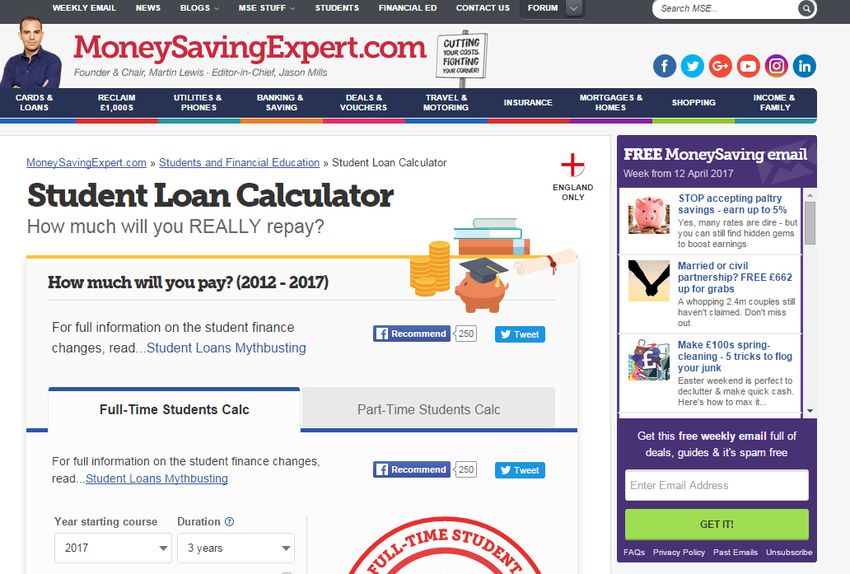
Repayment Calculator
www.moneysavingexpert.com/studentsStudent Loan Application Process
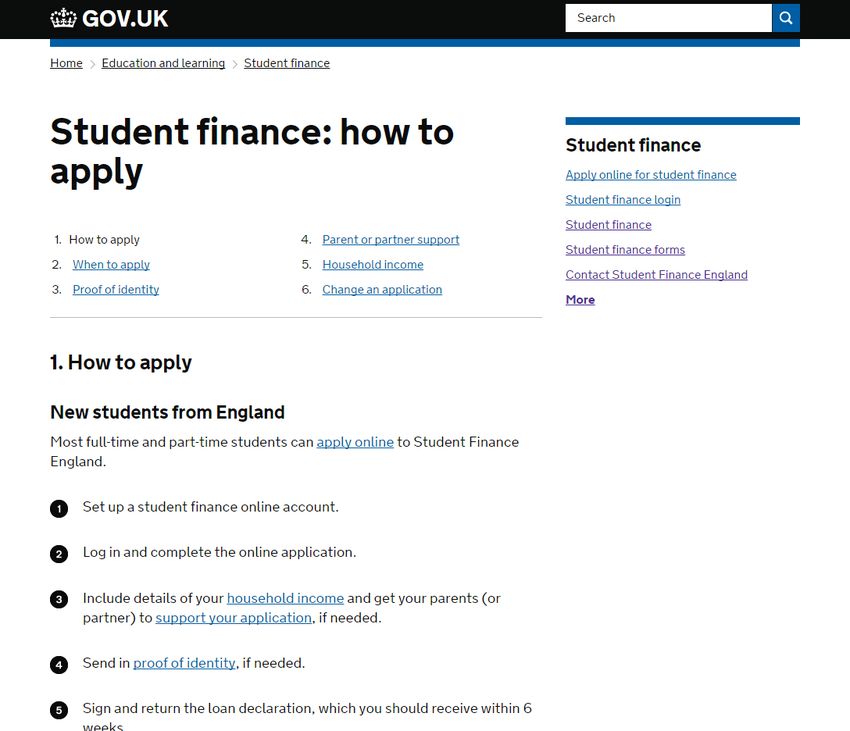
Application Process
• Students do not need to have a confirmed place on a
  course before they submit an application for student finance
• Students should be encouraged to apply early
• Applications usually open in February
• The deadline for submitting student finance applications in
  order to have funding in place is usually end of May
• Parents should be encouraged to give consent to share
  financial information with university – speeds up allocation
  of scholarships and bursaries
• Students will receive a reminder from Student Finance
  England to re-apply for support for the following academic
  year
Application Process
Before starting an application, students should have the following to hand:
•   Passport - SFE can check identity using valid UK passport details
•   Expected University and course details
•   Bank account details and National Insurance number
If parents or other sponsors will be supporting a student’s application, they will need their
own account on GOV.UK to provide information including:
•   National Insurance number(s)
•   Household income information
•   Details of other child dependants
If sponsors cannot submit income details online, they should send a photocopy of
evidence including: P60s, Pay slips or Tax returns
You don’t have to submit financial information but cannot be considered for
bursaries and will only receive the minimum level of maintenance loan
Information for parents
To support an application, you can follow these steps:
• Include your National Insurance number on the student’s online
   application
• If your child is applying for financial support that depends on your
   household income, you’ll also need to register and complete a part
   of the application. You can also do this at
   www.gov.uk/studentfinance
• If you expect your income to drop by 15% or more, send Student
   Finance England a current tax year income assessment form
• Student Finance England may ask for more details and evidence
   about your income or circumstances
Application Process
Further Information
•   www.manchester.ac.uk/studentfinance

•   www.blackbullion.com financial education specialists, helping students gain money and
    budgeting skills

•   www.manchester.ac.uk/umass University of Manchester Aspiring Students’ Society:
    advice and guidance about budgeting

•   www.gov.uk/student-finance

•   www.moneysavingexpert.com/students information and finance calculators

•   www.thestudentroom.co.uk advice from peers and Student Finance England

           @sf_england                                     SFEngland
Any questions?
You can also read


