HENRIK HOLOLEI Interview with European Commission's Director General for Mobility and Transport - Hermes - Air Transport Organisation
←
→
Page content transcription
If your browser does not render page correctly, please read the page content below

A I R   T R A N S P O R T   O R G A N I Z A T I O N
                      THE MAGAZINE
                               01   | JANUARY - MARCH 2018

                                    HENRIK
                                    HOLOLEI
                                    Interview with
                                    European
                                    Commission’s
                                    Director General
                                    for Mobility
                                    and Transport
THE MAGAZINE
01 | JANUARY - MARCH 2018

INDEX
 3                                                 5                                    28
 Editorial                                         Top News                             Interview
 Dr Kostas Iatrou                                  January- March 2018                  Henrik Hololei
 Director General,                                 Latest Industry news and updates   European Commission’s
 Hermes - Air Transport Organization                                                    Director General for Mobility
                                                                                        and Transport

                                                   15
 4                                                 HERMES News
                                                   - 2 017 ACI Africa and World
 Welcome Note                                         Annual General Assembly 15
 Vijay Poonoosamy                                  - 2018 Hermes Leaders Forum:
 President                                           Ownership and Control in
 Hermes Air Transport Organization                   Aviation
                                                   • Introductory                17
                                                   • Leaders Forum               18
                                                   • Report                      21
                                                   • Conclusions                 26

                                                                                        31
                                                                                        Articles
                                                                                        Ownership and Control in Aviation
                                                                                        Salvatore Sciacchitano
                                                                                        Executive Secretary of ECAC

 Copyright © 2018:
 HERMES | Air Transport Organization
 Material (either in whole or in part) from this
 publication may not be published, photocopied,
 rewritten, transferred through any electronical
 or other means, without prior permission
 by the publisher.
THE MAGAZINE
                                                  01 | JANUARY - MARCH 2018

                                          INDEX
34                                        38
Liberalization of Ownership and
Control – How Quick and
                                          Analysis
                                          European Air Transport
How Far for Africa?                       Developments in 2018
Chris Zweigenthal
                                          Ulrich Schult Strathaus
Chief Executive                           Managing Director,
Airlines Association Of Southern Africa
                                          Aviation Strategy & Concepts

                                          40
                                          Statistics

                                          NOVEMBER 2017-JANUARY 2018:
36
Ownership & Control
                                          Worldwide Traffic Results
                                          Passenger traffic / Freight volumes
                                          (Summary)                       40-45
Pieter (J.Th.) Elbers
President and Chief Executive Officer
KLM

                                          Economic Development
                                          JAN - MAR 2018: Air Transport
                                          Monthly Monitor (Domestic
                                          and International)            46-51

                                HERMES • THE MAGAZINE › JANUARY-MARCH 2018 | 3
EDITORIAL

                                            Dr Kostas Iatrou
                                            Director General
                                            Hermes - Air Transport Organization

Dear Hermes members,

I would like to welcome to the new way of communication of Hermes.Every three months you will have the opportunity
  to hear from your organization on their latest developments as well the latest developments of air transportation. This
is your magazine and authors are mainly members of the organisation. ICAO and ACI have agreed to provide us with data
that will be included in the magazine.
This year issues will focus on ownership and control in aviation. All the interviews and articles will be related to this topic.
During ACI WAGA in Mauritius last October Hermes hosted a reception honoured with the presence of the Deputy Prime
Minister of the country.In March we launched our annual Leaders Forum in Ekali.
Athens, Greece with the participation of important people of the air transport Industry; this is the first leg of our strategy
to contribute to this Industry by providing it with recommendations. In June Hermes will host two receptions, in IATA
AGM in Sydney (2 June) and in ACI WAGA in Brussels (18 June), thanks to the constant support of both IATA and ACI.
Your contribution is important for the success of Hermes.

                                                                                                                        Kostas

4 | HERMES • THE MAGAZINE › JANUARY-MARCH 2018
WELCOME

                                            Vijay Poonoosamy
                                            President
                                            Hermes - Air Transport Organization

Welcome to this very first edition of your HERMES Magazine!

According to the WTTC, the Travel and Tourism sector generates more than 292 million jobs (1 in 10) and con-
tributes almost USD 7.9 trillion (10.2%) to global GDP. It is therefore clearly in the vested interests of all to do
what it takes to ensure that nothing is done to clip the wings of a sector that makes communities take off.

With the formidable growths of both passenger numbers (IATA forecasts that the number will double to 7.8
billion in 2036) and security threats, we must also ensure that everything is done to develop a strategic
and holistic roadmap to promote the safe, secure, sustainable and seamless growth of Travel and Tourism.

Let us all work effectively together to promote and protect the Travel and Tourism chain recognizing that it can never be
stronger than its weakest link.
I also invite you to contribute to the HERMES Magazine’s efforts to make the Travel and Tourism chain stronger.
Thank you and safe travels.

                                                                                                                   Vijay

                                                                      HERMES • THE MAGAZINE › JANUARY-MARCH 2018 | 5
TOP NEWS                               ary - March 2018
                                           J a nu

   2/01/2018
   EAMONN BRENNAN TAKES OFFICE AS
   DIRECTOR GENERAL OF EUROCONTROL
   Eamonn Brennan was appointed by the 41 Mem-
   ber States of EUROCONTROL to lead the or-
   ganisation as its Director General from 1 January
   2018. Before joining EUROCONTROL, Eamonn
   Brennan was the Chief Executive of the Irish
   Aviation Authority (IAA) where he was respon-               15/01/2018
   sible for the provision of Air Traffic Management
                                                               NORWEGIAN SETS NEW RECORD
   (ATM) services in Irish controlled airspace, aero-
                                                               TRANSATLANTIC FLIGHT TIME FROM
   nautical communications on the North Atlantic,
                                                               NEW YORK TO LONDON BY A SUBSONIC
   and Air Traffic Control at the major Irish Air-
                                                               AIRCRAFT
   ports, as well as the safety and security regulation
   of the Irish civil aviation industry. Source: EUROCONTROL   Norwegian has set a new record time for the
                                                               fastest ever transatlantic flight by a subsonic pas-
                                                               senger aircraft this week using the Boeing 787-9
                                                               Dreamliner. Norwegian flight DY7014 from New
                                                               York JFK to London Gatwick on Monday 15 Jan-
                                                               uary completed the full duration of the flight in
                                                               5 hours and 13 minutes – the fastest transatlan-
                                                               tic flight recorded on a subsonic commercial air-
                                                               craft. The previous record was 5 hours and 16
                                                               minutes. The flight carrying 284 passengers de-
                                                               parted New York at 11:44am and arrived at Lon-
                                                               don at 9:57pm – 53 minutes early. Source: Norwegian

   16/01/2018
   SESAR PROJECT SHOWS HOW AIRCRAFT SEPARATION METHODS CAN INCREASE RUNWAY
   CAPACITY
   EUROCONTROL successfully completed a SESAR real-time simulation with AustroControl (COOPANS)
   using an optimal runway delivery tool (ORD) supporting controllers to optimise aircraft separation on
   final approach.
   The simulation also involved the participation of representatives from the SJU IAA, NATS, DSNA, Thales,
   NAVIAR, LFV, Croatia Control and DFS who participated in briefings and observed exercises.
   The simulation combined time-based separation (TBS) - a SESAR solution that replaces current distance
   separations with time intervals - with RECAT pairwise wake separations under mixed mode runway op-
   erations.

6 | HERMES • THE MAGAZINE › JANUARY-MARCH 2018
TOP NEWS
                                                                                               nuary - March 20
                                                                                                   Ja                18

17/01/2018
ICAO: CONTINUED PASSENGER TRAFFIC
GROWTH AND ROBUST AIR CARGO
DEMAND IN 2017
A new record 4.1 billion passengers were carried
by the aviation industry on scheduled services
                                                       22/01/2018
in 2017, according to the preliminary figures re-
leased today by the International Civil Aviation       BOEING’S 787-10 DREAMLINER CLEARED
Organization (ICAO). This indicates a 7.1% in-         FOR COMMERCIAL SERVICE BY FEDERAL
crease over 2016. The number of departures rose        AVIATION ADMINISTRATION
to approximately 37 million globally, and world        Boeing [NYSE: BA] announced today the 787-10
passenger traffic, expressed in terms of total         Dreamliner received an amended type certificate
scheduled revenue passenger-kilometres (RPKs),         (ATC) from the U.S. Federal Aviation Adminis-
posted an increase of 7.6% with approximately 7.7      tration (FAA), clearing the airplane for commer-
trillion RPKs performed. This growth is a slight       cial service. The awarding of ATC caps a success-
improvement from the 7.4% achieved in 2016.            ful flight test program that began in March 2017
                                                       and involved three flight test airplanes that ac-
                                                       cumulated about 900 test hours. Boeing’s flight
                                                       test program team took the airplanes through a
                                                       series of tests to confirm the airplane’s handling,
                                                       systems and overall performance met internal re-
                                                       quirements and certification standards to ensure
                                                       safety of flight. Source: Boeing

                                                       26/01/2018
                                                       100- TO 150-SEAT LARGE CIVIL
                                                       AIRCRAFT FROM CANADA DO NOT
                                                       INJURE U.S. INDUSTRY, SAYS USITC
                                                       The U.S. International Trade Commission has
18/01/2018                                             made negative determinations in its final phase
EMIRATES ORDERS 36 A380S WORTH                         antidumping and countervailing duty investiga-
US$ 16 BILLION                                         tions concerning 100- to 150-Seat Large Civil
                                                       Aircraft from Canada.
Emirates, the world’s largest international airline,
today announced a US$ 16 billion (AED 58.7 bil-        Bombardier Statement on ITC Vote:
                                                       “Today’s decision is a victory for innovation, competition,
lion) deal for 36 additional Airbus A380 aircraft,
                                                       and the rule of law. It is also a victory for U.S. airlines and
with 20 firm orders and 16 options. Emirates’          the U.S. traveling public. The C Series is the most innovative
A380 fleet operates both GE and Rolls-Royce            and efficient new aircraft in a generation. Its development and
engines, and the airline is evaluating engine op-      production represent thousands of jobs in the United States,
tions for its latest A380 order.                       Canada, and the United Kingdom. We are extremely proud
The additional Airbus A380s will be delivered to       of our employees, investors and suppliers who have worked
Emirates from 2020 onwards. Together with the          together to bring this remarkable aircraft to the market. With
airline’s 101-strong A380 fleet and its current or-    this matter behind us, we are moving full speed ahead with
der backlog for 41 aircraft, this new order brings     finalizing our partnership with Airbus. Integration planning is
Emirates’ commitment to the A380 programme             going well and we look forward to delivering the C Series to
                                                       the U.S. market so that U.S. airlines and the U.S. flying public
to 178 aircraft, worth over US$ 60 billion.
Source: Emirates                                       can enjoy the many benefits of this remarkable aircraft.”

                                                             HERMES • THE MAGAZINE › JANUARY-MARCH 2018 | 7
TOP NEWS
       nuary - March 20
        Ja            18

   28/01/2018
   ESTABLISHMENT AND LAUNCHING OF A SINGLE AFRICAN AIR TRANSPORT MARKET (SAATM)
   The Single African Air Transport Market will be for- Objectives:
   mally established and launched on the 28 January 1. To commemorate the establishment and launch-
   2018 on the margins of the African Union Summit        ing of the market, marking a notable milestone
   in Addis Ababa, Ethiopia. Eligible airlines of the 23  since the adoption of the Yamoussoukro Decision
   countries are, effective this season, are entitled to  in 1999;
   conduct their business into the markets and fully 2. To gain insight into the exciting launch of SAATM
   operate the traffic rights provided for in the Yamous- from all stakeholders; and
   soukro Decision. The launch event brings together 3. To enhance publicity and global exposure on the
   the aviation industry in Africa and airline manufac-   establishment of the Single African Air Transport
   turers to forge ahead the effective implementation     Market, a key AU Agenda 2063 flagship project
   of SAATM.                                              – the first of the twelve flagship projects to be
                                                          launched.

   29/01/2018                                               31/01/2018
   QANTAS: THE WORLD’S FIRST US-                            FIRST A321LR SUCCESSFULLY
   AUSTRALIA DEDICATED BIOFUEL                              COMPLETES MAIDEN FLIGHT
   FLIGHT TAKES OFF                                         Airbus’ newest Single Aisle adds range up for
   The world’s first dedicated biofuel flight be-           transatlantic flight capability
   tween the United States and Australia, QF96               Airbus’ first A321LR(Long Range), MSN7877,
   from Los Angeles to Melbourne, is set to depart          has accomplished its maiden flight following a
   later today.                                             mission lasting 2 hours and 36 minutes. The air-
   The historic trans-Pacific 15 hour flight will op-       craft powered by CFM Leap-1A engines is now
   erate with approximately 24,000kg of blended             set to undergo a nearly 100 hour flight test pro-
   biofuel, saving 18,000kg in carbon emissions.            gramme, including trans-Atlantic missions, for
   Qantas will use biofuel processed from Brassica          EASA and FAA Type Certification in Q2 2018.
   Carinata, a non-food, industrial type of mustard         Entry into service is targeted for Q4 2018.
   seed, developed by Canadian-based agricultur-              The aircraft’s crew comprised: Experimental
   al-technology company, Agrisoma Biosciences              Test Pilots Yann Beaufils and Peter Lofts as well
   (Agrisoma). The flight is part of the partnership        as Flight Test Engineers Frank Hohmeister, Jim
   announced in 2017 which will also see the com-           Fawcett, Cedric Favrichon and Cabin Specialist
   panies work with Australian farmers to grow the          Alexander Gentzsch. During the flight, the crew
   country’s first commercial aviation biofuel seed         tested the aircraft’s flight controls, engines and
   crop by 2020.                                            main systems including flight envelope protec-
                                                            tions, both at high and low speed. Source: Airbus

8 | HERMES • THE MAGAZINE › JANUARY-MARCH 2018
TOP NEWS
                                                                                                                    nuary - March 20
                                                                                                                                  Ja                   18

31/01/2018
IATA: AIR FREIGHT DEMAND UP 9% IN                      2017 in review - air freight volumes
2017, STRONGEST GROWTH SINCE 2010
The International Air Transport Association
(IATA) released full-year 2017 data for global
air freight markets showing that demand, mea-             +9%
sured in freight tonne kilometers (FTKs) grew                         2017 was the strongest year for air           This is more than
                                                                      freight demand growth since 2010              2x faster than
by 9.0%. This was more than double the 3.6%                           +9% for the industry                          global goods trade...
                                                                                                                    ...and 3x faster than
annual growth recorded in 2016.                                                                                     capacity
                                                                                                                                                   T

                                                                                                                                              Y
Freight capacity, measured in available freight                                                                           3%           CAPA
                                                                                                                                              CI

                                                                                9%        DEMAND GROWTH
tonne kilometers (AFTKs), rose by 3.0% in 2017.
This was the slowest annual capacity growth                +2.5
                                                                  Freight load factor rose by
                                                                  2.5 percentage points
                                                                  compared to 2016...
seen since 2012. Demand growth outpaced ca-
pacity growth by a factor of three.                               ...which helped to drive
                                                                  increases in cargo yields
Air cargo’s strong performance in 2017 was
sealed by a solid result in December. Year-on-                                                         A stronger global economy
                                                                                                       & the re-stocking cycle boosted
                                                                                                       air freight demand in 2017
year demand growth in December increased
5.7%. This was less than half the annual growth
rate seen during the middle of 2017 but still well
above the five-year average of 4.7%. Freight ca-                   European airlines benefited         Airlines in Asia Pacific
                                                                   from buoyant export demand          flew 37% of global
pacity grew by 3.3% year-on-year in December.                      for manufactured goods made
                                                                   in the region
                                                                                                       volumes in 2017

Full-year 2017 demand for air freight grew at
twice the pace of the expansion in world trade                    +25%                                      63%
(4.3%). This outperformance was a result of                        African airlines posted             of survey respondents

strong global demand for manufacturing ex-                         the fastest growth in 2017          expect freight volumes to
                                                                                                       increase in 2018

ports as companies moved to restock inventories
quickly. Source: ΙΑΤΑ                                   www.iata.org/economics

1/02/2018
IATA: 2017 MARKED BY STRONG PASSENGER DEMAND, RECORD LOAD FACTOR
The International Air Transport Association (IATA) announced global passenger traffic results for 2017
showing that demand (revenue passenger kilometers or RPKs) for the year ended 31 December rose 7.6%
compared to 2016. This was well above the 10-year average annual growth rate of 5.5%. While the rate of
demand growth slowed to 6.2% in December 2017, compared to December 2016, this largely was owing to
less favorable comparisons to the even stronger growth trend seen in the year-ago period. Full year 2017
capacity rose 6.3%, and load factor climbed 0.9 percentage point to a record calendar-year high of 81.4%.

16/02/2018
EASA PUBLISHES THE 2018-2022 EUROPEAN PLAN FOR AVIATION SAFETY
The European Aviation Safety Agency published the 2018-2022 European Plan for Aviation Safety (EPAS),
which also includes the Agency’s rulemaking programme. The EPAS, a key component of the European Avi-
ation Safety Programme, provides a coherent and transparent framework for safety work at European level,
helping the identification of major safety risks and defining the actions to take. It also supports the Member
States of the European Union to implement their State Safety Programmes and facilitates the sharing of best
practice and knowledge.

                                                                  HERMES • THE MAGAZINE › JANUARY-MARCH 2018 | 9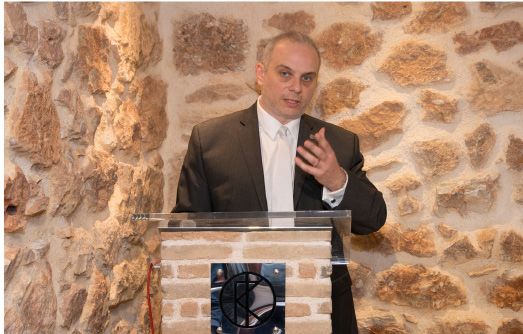
TOP NEWS
       nuary - March 20
        Ja            18

   20/02/2018                                                   22/02/2018
   QATAR AIRWAYS TAKES DELIVERY                                 IATA RELEASES 2017 AIRLINE
   OF THE WORLD’S FIRST AIRBUS A350-1000                        SAFETY PERFORMANCE
   Qatar Airways today celebrated the delivery of the           The International Air Transport Associ-
   world’s first Airbus A350-1000 as the aircraft’s glob-       ation (IATA) released data for the 2017
   al launch customer before an audience of internation-        safety performance of the commercial air-
   al media at the Airbus Delivery Centre in Toulouse,          line industry showing continued strong
   France. It is the first Airbus aircraft to be fitted with    improvements in safety.
   Qatar Airways’ revolutionary Qsuite Business Class
   seat. Source: Airbus                                         • The all accident rate (measured in ac-
                                                                  cidents per 1 million flights) was 1.08,
                                                                  an improvement over the all accident
                                                                  rate of 1.68 in 2016 and the rate of 2.01
                                                                  for the previous 5-year period (2012-
                                                                  2016).
                                                                • The 2017 rate for major jet accidents
                                                                 (measured in jet hull losses per 1 million
                                                                 flights) was 0.11, which was the equiva-
                                                                 lent of one major accident for every 8.7
                                                                 million flights. This was an improve-
   H55 COMPLETES ITS FIRST FINANCING ROUND                       ment over the rate of 0.39 achieved in
   WITH NANODIMENSION                                            2016 and also better than the five-year
   After building the 2 Solar Impulse electric airplanes         rate (2012-2016) of 0.33.
   and flying around the world, covering 42’000 km, So-         • There were 6 fatal accidents with 19
   lar Impulse’s Co-Founder André Borschberg together             fatalities among passengers and crew.
   with several former colleagues, is now bringing electric       This compares with an average of 10.8
   propulsion to the world of aviation to make air trans-         fatal accidents and approximately 315
   port cleaner, quieter, safer and more affordable. H55 has      fatalities per year in the previous five-
   just completed its first VC financing round with Nan-          year period (2012-2016). In 2016 there
   oDimension, a Silicon Valley and Swiss based Venture           were 9 fatal accidents and 202 fatalities.
   Capital firm, to further develop the potential of electric
   propulsion for existing airplane designs and new aviation    • None of the 6 fatal accidents involved
   solutions such as flying cars, drones and VTOLs.               a passenger jet. Five involved turbo-
                                                                  prop aircraft and one involved a cargo
                                                                                     jet. The crash of the
                                                                                     cargo jet also result-
                                                                                     ed in the deaths of
                                                                                     35 persons on the
                                                                                     ground, as well as
                                                                                     the crew of the jet.
                                                                                     • IATA member air-
                                                                                       lines experienced
                                                                                       zero fatal accidents
                                                                                       or hull losses in
                                                                                       2017 with jet or
                                                                                       turboprop equip-
                                                                                       ment.

10 | HERMES • THE MAGAZINE › JANUARY-MARCH 2018
TOP NEWS
nuary - March 20
Ja 18
26/02/2018
IATA: AIM FOR 1 BILLION PASSENGERS TO FLY ON SUSTAINABLE AVIATION FUEL FLIGHTS
BY 2025
The International Air transport Association (IATA) set out an aim for one billion passengers to fly on flights
powered by a mix of jet fuel and sustainable aviation fuel (SAF) by 2025. This aspiration was identified on
the tenth anniversary of the first flight to blend sustainable aviation fuel and ordinary jet fuel.
On 24 February 2008, a Virgin Atlantic Boeing 747 flew from London to Amsterdam with sustainable avia-
tion fuel in one of its engines. The flight demonstrated the viability of drop-in biofuels, which can be blended
with traditional jet fuel, using existing airport infrastructure. A flight completely powered by sustainable fuel
has the potential to reduce the carbon emissions of that flight by up to 80%.
28/02/2018
AIRBUS: FIRST ULTRA LONG RANGE A350
XWB MAKES ITS DEBUT
The first Ultra Long Range version of the A350
XWB has rolled out of the Airbus final assem-
bly line in Toulouse. The latest variant of the
best-selling A350 XWB Family will be able to fly
further than any other commercial airliner and
will enter service with launch operator Singa-
pore Airlines later this year. Altogether, Singa-
pore Airlines has ordered seven A350-900 Ultra
Long Range aircraft, which it will use on non-
stop flights between Singapore and the US, in-
cluding the world’s longest commercial service
between Singapore and New York. Source: Airbus
HERMES • THE MAGAZINE › JANUARY-MARCH 2018 | 11TOP NEWS
nuary - March 20
Ja 18
06/03/2018 14/03/2018
ACI WORLD ANNOUNCES THE WORLD’S IATA INNOVATES DANGEROUS GOODS
TOP AIRPORTS FOR CUSTOMER HANDLING
EXPERIENCE IN 2017 The International Air Transport Association
Airports Council International (ACI) World (IATA) has launched an innovative new solu-
announces the winners of the 2017 Airport tion for the air cargo industry: Dangerous Goods
Service Quality (ASQ) Awards. In 2017, over AutoCheck (DG AutoCheck) that will enhance
half of the world’s 7.7 billion travelers passed safety and improve efficiency in the transport of
through an ASQ airport. dangerous goods by air and support the indus-
This year an unprecedented sixteen airports try’s goal of a fully digitized supply chain.
are first time winners, challenging best- in-
class airports in the delivery of top-quality cus-
tomer service. This phenomenon reflects the
15/03/2018
increasingly competitive airport industry oper-
ating environment, where continuous service ICAO COUNCIL ADOPTS NEW
improvement is a key ingredient in business AMENDMENT ENABLING MORE
performance. Airports make the customer ex- INTEGRATED AND RESPONSIVE
perience a high priority. GLOBAL AIR TRAFFIC MANAGEMENT
In an important step toward a more integrated
and responsive global air traffic management
(ATM) system, the ICAO Council, during its on-
09/03/2018 going 213th Session, has adopted a new amend-
TURKISH AIRLINES CLOSES AIRBUS ment to Annex 15 to the Convention on Inter-
AND BOEING ORDERS national Civil Aviation (Chicago Convention)
Turkish Airlines today announced on the PDP covering Aeronautical Information Services.
that, in order to insure the need for wide body
aircraft, the Incorporation has decided to pur-
chase 50 firm and 10 optional aircraft, a total 16/03/2018
of 60 wide body aircraft, of which 6 to be de-
livered in 2019, 14 in 2020, 10 in 2021, 12 in ACI WORLD CALLS FOR THE
2012, 11 in 2023 and 7 in the year 2024. Ac- SLOT ALLOCATION SYSTEM TO
cording to this, a total of 30 B787-9 aircraft, of BE REFORMED BY THE AVIATION
which 25 firm and 5 optional, will be purchased COMMUNITY ON AN EQUAL BASIS
from Boeing and a total of 30 A350-900 air- Angela Gittens, Direc-
craft, of which 25 firm and 5 optional will be tor General of Airports
purchased from Airbus. Council International
(ACI) World, has today
addressed aviation lead-
ers at the CIIASA confer-
13/03/2018 ence in Mexico City.
BOEING RECOGNIZED BY GUINNESS Gittens spoke on the chal-
WORLD RECORDS™ FOR 10,000TH 737 lenges facing the world’s
Thousands of Boeing (NYSE: BA) employees airports including aviation security, airport
gathered at the company’s Renton, Wash. facto- infrastructure financing, ownership structures,
ry today to celebrate the 10,000th 737 to come and the environment. Gittens called for con-
off the production line. With this airplane, a 737 tinued collaboration on these issues which will
MAX 8 for Southwest Airlines, the 737 has bro- help facilitate aviation to continue generating
ken the GUINNESS WORLD RECORDS title for meaningful value as a major contributor to
the most produced commercial jet aircraft model. global economic prosperity.
12 | HERMES • THE MAGAZINE › JANUARY-MARCH 2018TOP NEWS
nuary - March 20
Ja 18
16/03/2018 21/03/2018
BOEING 737 MAX 7 COMPLETES SUCCESSFUL BOEING DELIVERS FIRST 737 MAX 9
FIRST FLIGHT Boeing [NYSE: BA] and the Lion Air
Boeing’s [NYSE: BA] new 737 MAX 7 successfully Group today celebrated the very first 737
completed its first flight today. The airplane remains on MAX 9 to be delivered. The airplane will
schedule and now begins a comprehensive flight test go into service with Thai Lion Air, where
program leading to certification and delivery in 2019. its added capacity will help the airline
Source: Boeing
launch several international routes.
IATA EXPANDS ITS MONTREAL
HEAD OFFICE OPERATIONS WITH
THE ADDITION OF KEY FINANCIAL
SERVICES FUNCTIONS
The International Air Transport Associ-
ation (IATA) announced it is increasing
its Montreal headquarters operations with
the expansion of its Financial and Distri-
bution Services (FDS) division. The move
is expected to grow IATA’s employment in
24/03/2018 Montreal to more than 400 with the ad-
2018 AIR TRANSPORT AWARDS – EMIRATES, dition of 27 full-time jobs—some newly
SINGAPORE CHANGI AIRPORT, created, others relocated from Geneva,
ABDUL WAHAB TEFFAHA AND JEFF POOLE Switzerland.
AMONG THE WINNERS
Continuing the tradition of hosting the award ceremo-
ny in exclusive and landmark places, this year ceremo-
ny took place in the iconic Burj Al Arab.
The ceremony started with a concert with the distinguished pianist, Mrs Evgenia Votanopoulou.
In particular, the winners by category are as follows:
-Manufacturer of the Year:
Bombardier
-Service Provider of the Year: SITA
-Airport of the Year under 20 Million
Passengers:
Athens International Airport
-Airport of the Year above 20 Million
Passengers: Singapore Changi Airport
-Airline Alliance of the Year: Star
Alliance
-Airline of the Year: Emirates Airline
-Editor Choice Award - Individual:
Catalin Radu
-Editor Choice Award - Corporate: Air
Arabia
-“Katerina & George Iatrou” Lifetime
Achievement Award: Abdul Wahab Teffaha, Secretary General, AACO
-Leader of the Year: Jeff Poole, Director General, CANSO
Source: Air Transport Awards
HERMES • THE MAGAZINE › JANUARY-MARCH 2018 | 13TOP NEWS
nuary - March 20
Ja 18
24/03/2018 25/03/2018
QANTAS STARTS HISTORY-MAKING BOEING DELIVERS WORLD’S FIRST 787-10
FLIGHT DIRECT TO LONDON DREAMLINER TO SINGAPORE AIRLINES
Qantas’ first Perth to London flight has Boeing (NYSE: BA) and Singapore Airlines today cel-
taken off, marking the start of the only di- ebrated the delivery of the first 787-10 airplane, the
rect air link between Australia and Europe newest and largest member of the Dreamliner family
– and the fastest way of traveling between and a jet that will set a new global standard for fuel
the two continents. efficiency.
The history-making QF9, carrying more About 3,000 people marked the milestone at Boeing’s
than 200 passengers and 16 crew, pushed facility in North Charleston, South Carolina where the
back just before 7pm on Saturday evening latest 787 model is manufactured.
Source: Boeing
and will land in London at 5am on Sun-
day.
Operated by a Boeing 787-9, the flight
reduces total travel time by eliminating
stopovers and taking advantage of the
most favourable winds on any given day
without having to factor in a mid-point in
the Middle East or Asia when choosing a
flight path.
28/03/2018
DELTA AND KOREAN AIR TO LAUNCH WORLD-CLASS JOINT VENTURE PARTNERSHIP
Delta Air Lines and Korean Air will launch a new joint venture partnership that will offer customers world-
class travel benefits across one of the most comprehensive route networks in the trans-Pacific market.
The joint venture has now been approved by regulatory authorities in the U.S. and Korea, including the U.S.
Department of Transportation and the Korean Ministry of Land, Infrastructure and Transport.
14 | HERMES • THE MAGAZINE › JANUARY-MARCH 2018HERMES NEWS
O n the occasion of the 2017 ACI Africa and World Annual General Assembly in Mauritius Hermes hosted a reception
with the presence of the Deputy Prime Minster of Mauritius, Ivan Collendavelloo.
During the event Tan Sri Bashir Ahmad, Datuk Mohd Badlisham bin Ghazali Managing Director of MAHB and Olivier Jan-
kovec Director General of ACI Europe become members of Hermes.
From left: Dr Kostas Iatrou, Director General of Hermes - From left: Frederick Piccolo, Chief Executive Officer
Air Transport Organization, Datuk Mohd Badlisham bin Ghazali and President of Sarasota Manatee Airport Authority &
Managing Director of MAHB & Vijay Poonoosamy, President of Declan Collier, CEO of London City Airport
Hermes - Air Transport Organization
From left: Vijay Poonoosamy, President of Hermes - Air
Transport Organization, Angela Gittens, Director General of
ACI, Ivan Collendavelloo, Deputy Prime Minster of Mauritius,
& Dr Kostas Iatrou, Director General of Hermes - Air Transport
Organization
HERMES • THE MAGAZINE › JANUARY-MARCH 2018 | 15HERMES NEWS
SPONSORS
2018
Ownership and Control in Aviation
Friday 2 March 2018 • Ekali • Greece
16 | HERMES • THE MAGAZINE › JANUARY-MARCH 20182018 HERMES LEADERS FORUM:
OWNERSHIP AND CONTROL IN AVIATION
Air transport promotes freedom of move- fully realise the potential and benefits of do not have rights under the governing
ment and brings people closer together. full mergers. air services agreement.
Yet the providers of this freedom, the Second, the airline industry is highly cost The Forum will provide a good opportunity
airlines, operate in a cage of regulatory intensive, characterised by cyclical de- to explore these arguments as well as the
complexities second to no other inter- mands, vulnerability to external shocks, impact of O&C restrictions on changes in
national industry. One of these com- and low profit margins compared to the aviation market. For example, an in-
plexities is the “ownership and control other industries. These difficulties are teresting current development is the ef-
clause” found in international air servi- aggravated by the EU air carriers’ limited fort at international level to promote rec-
ces agreements and most national (or access to financing. For some airlines ognition and acceptance of clauses that
regional - EU) legislation alike. Ownership securing capital from foreign investors focus on the principal place of business
and Control (O&C) restrictions, by the way is vital to their survival. Limiting foreign of air carriers rather than their ownership
applicable only to airlines and no other investment also negatively impacts and control. At the same time however,
part of the aviation value chain (airports, transfer of know-how to the EU airline new business models based on reducing
business and may deprive EU passengers operating costs by outsourcing have
manufacturers etc), have caused airlines
from stronger competition. arguably eroded the notion of principal
some headaches:
In light of all this, why stick to the O&C place of business in the EU. What is the
First, the restrictions prevent cross-bor- restrictions? What purpose do they still experience in other parts of the world?
der mergers which are an important serve today? And what impact would Is O&C the only remaining element giving
component to expansion, consolidation their removal or liberalisation have on the airlines an identity allowing a strong link
of operations and growth in any other industry, workers and consumers? to safety, security and social oversight?
industry. Airlines have had to make do Must the liberalisation of O&C go hand in
Some of the arguments put forward in fa-
with (awkward) structures of joint ven- hand with the creation of a new concept
vour of maintaining O&C restrictions are:
tures and airline groups (even within the maintenance of traffic rights under of regulatory control? What would this
the EU where actually O&C has been fully bilateral air service agreements, provid- look like? How can national and inter-
liberalised). This was the only way to ing a clear identity and link to a regime national authorities provide the best
achieve economies of scale and expand of national labour law and safety and business environment for airlines while
networks to better accommodate con- security oversight, preventing “abuse” of ensuring the highest standards in quality
sumer demands but does not replace or traffic rights by nationals of States that and safety to passengers?
2018 HERMES LEADERS FORUM: OWNERSHIP AND CONTROL IN AVIATION | PROGRAM
09:00-09:30 Registration 12:00-13:15 SESSION 2 - THE INDUSTRY POSITION AND CHALLENGES - Part 1
Moderator
09:30-09:35 Welcome Address John Hanlon, Head of International Government and Industry
Dr Kostas Iatrou, Relations, Norwegian
Director General, Hermes — Air Transport Organization PANEL
Abdul Wahab Teffaha, Secretary General, AACO
09:35-10:00 Keynote Speech Dr Yiannis Paraschis, CEO, Athens International Airport
Filip Cornelis, A
cting Aviation Director, DG Mobility 13:15-14:30 Lunch
and Transport, European Commission
14:30-15:45 SESSION 2 - THE INDUSTRY POSITION AND CHALLENGES - PART 2
10:00-11:30 SESSION 1 — SETTING THE SCENE Moderator
Moderator John Hanlon, Head of International Government and Industry
Professor Andreas Papatheodorou, E ditor-in-Chief, Journal Relations, Norwegian
of Air Transport Studies PANEL
PANEL Haydar Yalcin, Deputy Director General, Turkish DGCA
Pavel Telicka, Vice President, European Parliament Jeffrey N. Shane, General Counsel, IATA
Salvatore Sciacchitano, Executive Secretary, ECAC Mauro Oretti, co-author of “Airline Choices for the Future”
Rob Huyser, A
cting Director General for Civil Aviation,
15:45-16:30 Coffee break
Netherlands
16:30-17:00 CONCLUDING SESSION — CONCLUSIONS AND THE WAY FORWARD
11:30-12:00 Coffee break Chair and Moderators
17:00-19:00 Reception
HERMES • THE MAGAZINE › JANUARY-MARCH 2018 | 172018 HERMES LEADERS FORUM: OWNERSHIP AND CONTROL IN AVIATION
Friday 2 March 2018 • Ekali • Greece
From left: From left:
Christos Petrou - CEO, FSF Mediterranean & Executive Director, Alexandre Zinell - CEO, Fraport Greece
EATEO Theresa Cissell - Manager, Qatar Airways
Robert Deillon - V P, Hermes - Air Transport Organization Dr Kostas Iatrou - D irector General, Hermes - Air Transport
Mario Nemeth - D irector General, CAA Slovakia Organization
Dr Kostas Iatrou - D irector General, Hermes - Air Transport Abdul Wahab Teffaha - Secretary General, AACO
Organization
From left: From left:
Dr Kostas Iatrou - D irector General, Hermes - Air Transport Mario Nemeth - D irector General, CAA Slovakia
Organization Salvatore Sciacchitano - Executive Secretary, ECAC
Pavel Telicka - V ice President, European Parliament Haydar Yalcin - Deputy Director General, Turkish CAA
Jeffrey Shane - G eneral Counsel, IATA Rob Huyser - A cting Director General for Civil Aviation,
Netherlands
18 | HERMES • THE MAGAZINE › JANUARY-MARCH 20182018 HERMES LEADERS FORUM: OWNERSHIP AND CONTROL IN AVIATION
Friday 2 March 2018 • Ekali • Greece
From left: From left:
Prof Andreas Papatheodorou - Editor-in-Chief, Journal of Air Jeffrey Shane - General Counsel, IATA
Transport Studies* John Hanlon - H ead of International Government and Industry
Rob Huyser - A cting Director General for Civil Aviation, Relations, Norwegian
Netherlands Mauro Oretti - co-author of “Airline Choices for the Future”
Salvatore Sciacchitano - Executive Secretary, ECAC Haydar Yalcin - Deputy Director General, Turkish CAA
Pavel Telicka - Vice President, European Parliament Dr Kostas Iatrou - D irector General, Hermes - Air Transport
Dr Kostas Iatrou - D irector General, Hermes - Air Transport Organization
Organization
From left: Dr Kostas Iatrou - D irector General, Hermes - Air Transport
Dr Yiannis Paraschis - CEO, Athens International Airport Organization
John Hanlon - H
ead of International Government and Industry
Relations, Norwegian
Abdul Wahab Teffaha - Secretary General, AACO
HERMES • THE MAGAZINE › JANUARY-MARCH 2018 | 192018 HERMES LEADERS FORUM: OWNERSHIP AND CONTROL IN AVIATION
Friday 2 March 2018 • Ekali • Greece
Concert by Yiannis Iatrou (left) & George Iatrou (right)
20 | HERMES • THE MAGAZINE › JANUARY-MARCH 20182018 HERMES LEADERS FORUM: OWNERSHIP AND CONTROL IN AVIATION
REPORT
Keynote Speaker: Filip Cornelis
T here are good prospects in aviation industry nowadays and IATA
expects that passengers will double.
The key to survival for airlines is to have access to capital. However,
there are currently many restrictions regarding ownership and control in
the aviation industry.
Alliances serve the second best solution for airlines with a strong de-
sire for cooperation and closer consolidation. Such cooperation is formed
mainly through bilateral agreements as airlines in the international level
have limited choices and alternatives regarding ownership control and
cooperation.
One of the main reasons that airlines need foreign investments is the
fact that airlines need to secure access to financial capital so as to be able to be competitive in the market by
offering lower fares and expanding their profitability.
In the European Union the majority of stakeholders of airlines are in favor of liberalization. One of the options
having today is the full relaxation of all restrictions regarding ownership and control. An idea forwarded is that
the nationality of each airline should be determined by its principal place of business.
Session 1: SETTING THE SCENE
Moderator: Prof. Andreas Papatheodorou
(Editor-in-Chief, Journal of Air Transport Studies)
C hoosing between relaxing constraints or not is of strategic importance
and should be examined and evaluated carefully.
Pavel Telicka (Vice President, European Parliament):
T he topics of legislation and competition in the aviation industry are
highly political and sensitive. The reality is different however, as re-
strictions are imposed not only in EU but also in other areas. Implica-
tions on the restrictions in ownership and control should be carefully
reflected and analyzed and even with certain guidelines it won’t be still
so easy to do.
Similarly, it is not at all easy for the European Commission to detect
who is controlling all those constraints and barriers, but as long as guide-
lines are provided, there may be progress regarding finding who are be-
hind the control in aviation industry.
HERMES • THE MAGAZINE › JANUARY-MARCH 2018 | 212018 HERMES LEADERS FORUM: OWNERSHIP AND CONTROL IN AVIATION
We should not care about “who owns what”, instead, it is service that really maNers along with prices and
the environmental and social aspects.
Bilateral agreements should be made on time in order to help consolidation and access to capital.
ICAO is the place for this opportunity and the organization that provides certain leadership. On the other
hand, there are several obstacles that prevent that kind of freedom such as social factors including jobs. The
political courage is needed in order to go on.
Salvatore Sciacchitano (Executive Secretary, ECAC):
“Why there is this kind of rule and restrictions in aviation sector
and not in the maritime or the railway sector?”
A common rule in aviation was that the control of an airline by the
state had to be at least at the portion of 49%. But nowadays, air
transport reflects at a great extent privatization and competition but des-
ignation is really difficult.
The European Union plays a significant and leading role in the liberali-
zation process. Although it is crucial that progress is seen in the next few
years, the economic market should not be prejudiced.
ICAO has made several reflections on liberalizing the market based on
multilateral agreements.
The designation issue is really crucial and needs to be examined not only at the level of individual countries
and airline but again on the international level. However, addressing the issue does not mean that there will
be “open doors” to “the flags of convenience”.
ICAO should consider the real change that should be made and should move forward by creating compatible
conditions for the globalization of the aviation market.
A good step forward is to progress internally and to propose conventions that may facilitate regional agree-
ments.
Liberalization should be promoted and applied but always with regard to safety, consumer rights, environ-
mental protection etc.
International aviation is a global phenomenon which is the reason why there should be a global agreement.
Therefore, a way should be found to apply freedom. However, there is lack of confidence. Even when agree-
ing between two regions, agreement between more countries will come
afterwards. We should work all together to create the conditions for a
global decision.
Rob Huyser (Acting Director General for Civil Aviation, Netherlands):
I n the past, the aviation industry and the governments were strategically
aligned but this has now become a core challenge because the current
aviation industry has been moved on in its effort to seek new ways and
new alternatives for cooperation.
22 | HERMES • THE MAGAZINE › JANUARY-MARCH 20182018 HERMES LEADERS FORUM: OWNERSHIP AND CONTROL IN AVIATION
Globalization has pushed and enabled the aviation to change and develop making the current prevailing
rules outdated.
In the European Union, several external aviation policies have been developed they include bilateral agree-
ments which are partly liberalized. The aim of the entire liberalization of the aviation sector may seem too
ambitious but ICAO works for it and we should remain positive whatever the current outcome of these efforts
that have been concluded in bilateral and regional agreements for now may be. Real and drastic decisions
should be taken between the industry and the states by merging t he aviation policies with the state concerns
and by convincing the public that such a progress is good and beneficial is essential.
IATA can apply freedom through concentric circles and convergence.
Freedom in skies should be promoted and applied but at the same time we should have in our minds secu-
rity, safety and any sociopolitical damages.
Session 2: THE INDUSTRY POSITION
AND CHALLENGES – PART 1
Moderator: John Hanlon
(Head of International Government and
Industry Relations, Norwegian Panel)
D ue to globalization and liberalization, there are several restrictions
reviewed by regulators who may now enable and facilitate interest-
ing opportunities. Liberalization could increase competition.
Abdul Wahab Teffaha (Secretary General, AACO)
T here several obstacles as regulators and political agents create safety
rights for businesses not for consumers. The current trend goes to-
wards more liberalization that is driven by people, not businesses.
Regulators need to “push the envelope” and make a change and at the
same time set the rules on how airlines should compete in the market
and how consumers should be protected.
On the other side, airlines tend to operate through alliances and joint
ventures in order to maximize control over the market and minimize
competition.
A safety net should be created to protect customers not businesses from
the market forces.
HERMES • THE MAGAZINE › JANUARY-MARCH 2018 | 232018 HERMES LEADERS FORUM: OWNERSHIP AND CONTROL IN AVIATION
Dr Yiannis Paraschis (CEO, Athens International Airport)
L iberalization indeed appeals to more investments and aNracts inter-
national capital. Aviation is a growing industry which needs not only
the appropriate infrastructure but also a capital that may be difficult to re-
ward and manage. Private airports aNract more traffic but currently 75%
of all airports worldwide are still public. In Europe, liberalization can lead
to the formation of investor groups and both airlines and airports are able
to deliver returns but the cost of capital may be increased.
Regulators should consider the consumers in order to secure a healthy
and environmentally sustainable market.
All airlines still remain “national” despite the various long-haul routes
expansions and connectivity is not yet as strong and developed as it could
have been.
Above all, the priority should be the safety of people and then economy,
liberalization and environmental impact will be examined and developed.
THE INDUSTRY POSITION
Session 3:
AND CHALLENGES – PART 2
Moderator: John Hanlon
(Head of International Government and
Industry Relations, Norwegian Panel)
Haydar Yalcin (Deputy Director General, Turkish DGCA)
E ven if the market conditions are positive, politicians do not like tak-
ing more risk by eliminating restrictions. However, liberalization
leads in the creation of more jobs.
Ownership and control are sensitive but the same holds true for strate-
gic issues that have social, political, commercial and technical manage-
ment effects.
Politicians should take critical decisions and the timing is really impor-
tant. Liberalization may be initially applicable at the regional level.
24 | HERMES • THE MAGAZINE › JANUARY-MARCH 20182018 HERMES LEADERS FORUM: OWNERSHIP AND CONTROL IN AVIATION
Jeffrey N. Shane (General Counsel, IATA)
T he concept of effective control is of vital importance and is currently
a big problem as the priority is being shiVed towards security and
safety. Effective control needs surgical reconstruction in the aviation in-
dustry which is the sector with the most regulations compared for exam-
ple to maritime sector.
Foreign investments are really essential but complexities such as the
“national flag” are important for governments.
Mauro Oretti (Co-Author of “Airline Choices for the Future”)
F rom the business perspective, removing restrictions can lead to in-
creased profits, growth and more sales. However, from the regulatory
perspective, governments are not harmonized yet as in reality their deci-
sions are based on emotional elements and not on rational ones.
HERMES • THE MAGAZINE › JANUARY-MARCH 2018 | 252018 HERMES LEADERS FORUM: OWNERSHIP AND CONTROL IN AVIATION
CONCLUSIONS
F oreign inward investment restrictions in the aviation sector do not exist in any other economic
activity. Even within the aviation industry, they apply only to a single stakeholder in the value
chain, namely airlines, while they do not apply to airports, ground handlers, IT providers, caterers
and other concessionaires.
These restrictions are often “justified” by factors other than economic or based on misperceived
effects on areas such as safety, security, defence, labor/social.
Why are those political concerns not justified in reality?
Safety, security and defence regulations and requirements would remain and apply under national
jurisdiction, irrespective of the airline ownership structure.
Inward investment strengthens the airlines economic health, thereby enhancing and amplifying
employment prospects and making airlines more attractive for future generations to work in.
On the other hand, there is a multitude of strong economic reasons to relax ownership and control
restrictions.
New finance injection opportunities will allow new airlines to enter the market and incumbents
to expand and improve their products, all to the benefit of the travelling public including enhanced
connectivity, better value for money, higher convenience resulting from wider variety of service choice,
greater ability to boost economic development, with positive externalities to all involved stakeholders.
Aviation facilitates globalisation and yet the industry is unjustifiable prevented from
having free access to trans-border funding investment opportunities.
Strong consideration should be given to a step-wise relaxation of existing
restrictions in the interest of a healthy and sustainable air transport sector
not least to the direct advantage of consumers.
26 | HERMES • THE MAGAZINE › JANUARY-MARCH 2018HERMES • THE MAGAZINE › JANUARY-MARCH 2018 | 27
INTERVIEW
                                                                 HENRIK
                                                                 HOLOLEI
                                                                  DG, for Mobility and Transport
                                                                  European Commission

Is Ownership & Control giving airlines       real global multinational airlines. I think     safety is observed because safety is al-
an identity and allowing a strong link to    this debate is long overdue and I really        ways the number one priority in aviation.
safety, security and social oversight?       don’t see any reason why we keep these          At the same time, nowadays security has
                                             restrictions in aviation. I also believe that   also moved up on the priorities list and
Henrik:
                                             the ownership and control rules relaxa-         needs to be of very high standard be-
In short, the answer is no. It is the DNA
                                             tion has nothing to do with safety, sec-        cause people expect a safe and secure
of the airlines which gives them an iden-
                                             urity or social aspects because all these       travel when they board a plane. There
tity. As an example, if a French football
                                             are already embedded in the DNA of the          is no way to lower those standards so
club is owned by a third country national,
                                             airlines.                                       that’s why you need the authorities to
does it make it less French and losing its
                                                                                             deliver the highest levels. Of course, for
identity? Well, the same can apply to avi-   How can national and international au-
                                                                                             the business environment, you have dif-
ation. If the airports’ investments come     thorities provide the best business en-
                                                                                             ferent options and I believe that those
mainly from third countries, are they        vironment for airlines while ensuring
                                                                                             States who treat aviation in a sensible
less European than those owned or fund-      the highest standards in quality and
                                                                                             manner are the ones which are getting
ed by the EU member states? I really do      safety to passengers?
                                                                                             the best results. What I mean by that
not think so.                                Henrik:                                         is that there is no need to tax aviation
Today, the restrictions in place are only    First and foremost, the important thing         more than any other industry. There is
for airlines and deprive airlines from ac-   is that capable oversight authorities are       absolutely no need to put up restric-
cess to the financing they need which        in place and these oversight authorities        tions. Many of the airports have fake
also deprives the industry the creation of   are making sure that the highest level of       capacity restrictions which are actually

28 | HERMES • THE MAGAZINE › JANUARY-MARCH 2018
INTERVIEW
the emergence of the aviation strategy
which has helped to frame the key issues
in relation to the European aviation in-
dustry as well as key challenges. But it
varies also from one member state to the
other and those member states that see
aviation as a strategic asset are those
that create the best conditions for that
sector to grow.
Is the concept of a “EU aviation cham-
pion” relevant and important or is it just
an excuse to justify protectionism and
tolerate an abuse of dominant power?
Henrik:
I believe that first of all, protectionism is
not an option. Europe opened up these
markets 25 years ago and it has allowed
aviation to grow and surpass 1 billion pas-
sengers. We are 26% of the world market,
contributing 510 billion euros annually to
the European GDP and supporting almost
10 million jobs. I think that this shows
how the open markets have served Eur-
ope in terms of connectivity as well as
in the interest of European citizens and
businesses. Most importantly, we have
also created competition in the market.
I don’t believe in champions which are
created artificially. Those champions
emerge through competition and open
markets. They are commercial and mar-
ket-based but not artificial and we have
already strong champions. We have
airlines like Ryanair which is the lar-
gest European airline. We have also the
Lufthansa group which is the largest
airline group in Europe and very able to
compete globally. So, those open mar-
kets are creating these champions. I
don’t think that this is something that
the states should get involved.
not allowing them to use the available a legally predictable framework for us,
capacity. It is not really in the interest of our partners and allowing our airlines to Would the application of WTO rules
anybody in the aviation sector. compete on global level make sense in aviation?
We can also offer prospective business How strategic is the aviation sector Henrik:
environment to airlines by allowing them considered in the context of the EU? It hasn’t been the case because the avi-
to make use of the benefits of emerging ation sector hasn’t been a part of the
third countries markets. For the EU, this Henrik: GATS agreement, but aviation sector is
means negotiating and signing compre- I would say that the importance of the not completely excluded from the WTO
hensive air transport agreements be- aviation sector has definitely grown rules. Manufacturers and a number of
cause they are the best tool to guarantee in the last years and this is also due to aviation services are subject to the WTO
HERMES • THE MAGAZINE › JANUARY-MARCH 2018 | 29INTERVIEW
rules. But the air transport services in-
cluding traffic rights are outside of this
scope and remain on a bilateral basis.
Honestly, I don’t think that there is much
chance that this will change anytime
soon. Many would also refer to the rule
of the most favorite nation that stands in
WTO as a strong obstacle and the major-
ity of states remain attached to the con-
cepts of bilateral agreements by which
you can grant different market actions
depending on the state you are conclud-
ing the agreement with. Having said all
that, if aviation is brought under the WTO
rules and the GATS, it will create the pre-
dictability and real multilateralism which
can add value.
Why is aviation not a part of GATS and
would its inclusion be a step in the right
direction?
Henrik:
Inclusion in GATS may be a good ob-
jective in the long term but I believe
that first and foremost we should try to
reach an agreement in the context of the
ICAO. This would be the first major step
towards a global liberalization of air ser-
vices.
ber States. Secondly, today in the EU we rules have been liberalized unilaterally
It would be good but it is very unlikely have one of the most liberalized owner- or bilaterally. Such investments might
that aviation can be brought under the ship and control rule framework in the be prevented due to international con-
GATS agreement but the EU is currently world. In Europe, third countries can straints.
negotiating with ten countries, being the own up to 49% of a European carrier, for
first block to block the agreement. So, we So, the problem is that bilateral agree-
example the figure in US is only 25%, in
are also finding ways how to enhance our Japan 33% and in Brazil 20%. However, ments require actions to be undertaken
connectivity through this kind of multi- 49% is still a limitation that does not at an international level to enable liberal-
lateral agreements with good partners. allow taking control over an airline and ization to investment rules to be truly
this can be an obstacle for investments. effective. This is something which is
Do you believe that the relaxation of also done at the moment in ICAO with the
ownership and control rules should What is important is to understand that
to fully relax the ownership and control ATRP (Air Transport Regulatory Panel)
take place unilaterally in the EU (as in but I don’t feel that we are making too
case of the EU-ETS) or in the context rules in Europe and also to open up to
non-EU investment would only be the much progress. However, for me, the
of a bilateral/multilateral negotiation
half of the story. Given the international option of EU going alone and considering
agreement among different countries/
nature of air transport, we need a global the relaxation of the ownership and con-
regional blocks to ensure level-field
agreement to allow us effectively lib- trol rules is something that we need to
playing?
eralizing investment rules. Indeed, if have a very thorough discussion about
Henrik: countries A and B liberalize investment, and I can see a lot of benefits but equally
First and foremost, what was one of the then country C may still refuse flights by I can also sense a lot of resistance. To be
most important achievements of the lib- an airline of country A, if it is controlled able to move forward, a good discussion
eralization of the EU’s internal market by investors of country B. This might lead with arguments, pros and cons, need to
was the liberalization of the ownership to a legal uncertainty for investment in be held to know how to take this issue
and control rules among the EU Mem- airlines across jurisdictions, even where forward.
30 | HERMES • THE MAGAZINE › JANUARY-MARCH 2018ΑRTICLE
OWNERSHIP &
CONTROL IN AVIATION
As highlighted in the conclusions of the 2018 Hermes Leaders Forum,
only one of the aviation supply chain’s main actors, namely airlines,
is faced with limitations of foreign inward investment whereas they
were the first to undertake the liberalisation process. The caps ap-
plied to foreign investment in airlines are a remnant of the history of
air transport, when national air carriers were considered a State’s key
strategic asset. Thus, the introduction of restricted ownership and
control clauses in Air Service Agreements, which still largely govern
aviation relations today, was a reflection of these national security
concerns about the foreign control of strategic resources. Today how-
ever, such restrictions appear to be conflicting with the progressive
liberalisation that has been taking place in Europe since the deregula-
tion packages (1987-1997) and today’s trends towards privatisation.
SALVATORE SCIACCHITANO was appoint- THE 49% OWNERSHIP AND limit access to the European market
ed Executive Secretary of ECAC on 1 December CONTROL RULE FOR AIRLINES to Europeans, in light of the fact that
2010. He has spent his whole career in aviation. IN EUROPE: DOES IT REALLY WORK? non-European countries typically
Mr Sciacchitano joined the Italian Airworthiness maintain forms of market access
Authority (RAI) in 1980, where he held several As part of the common aviation restriction. The United States and
managerial positions before becoming its Direc- framework, the European Union Canada, for instance, currently allow
tor General in 1996. Following the re-organisa- introduced the concept of “Euro- a maximum share of 25% foreign
tion of the civil aviation administration in Italy, pean licence” as a licence granted ownership and effective control in
he was appointed Deputy Director General of to an airline by one of the Member national carriers2. China stands at 35
ENAC, the newly established Civil Aviation Au- States. With this licence, airlines %3, Japan 33% and India only recent-
thority, from 1999 to 2010. In this capacity, he are allowed to serve any intra-Euro-
coordinated ENAC’s core activities in safety, air- pean route and, since 1997, also 2 To note, concerning the United States,
port, air traffic management and economic regu- domestic routes. In order to obtain a Bill seeking to increase caps on
such a licence, the airlines should foreign ownership of United States
lations. He was also Vice-President of the Italian commercial airlines from 25% to 49%
be 51%-owned by European citizens:
Security Inter-Ministerial Committee. has been introduced into Congress on
“Member States and/or nationals of
At the international level, Mr Sciacchitano 13 February 2018 (“Free to Fly Act”).
Member States own more than 50%
chaired the JAA Committee, represented Italy on The Canadian Government announced
of the undertaking and effectively the cap would be risen up to 49% in
EASA’s Management Board and on EUROCON-
control it, whether directly or in- 2018. China also announced it would
TROL Provisional Council, of which he was also make it easier for enterprises, either
directly through one or more inter-
Vice-President. He also taughtseveral master’s mediate undertakings, except as state or privately owned, to invest in its
degree courses on aviation-related topics in vari- provided for in an agreement with a
fast-rising aviation industry starting in
ous Italian universities. January 2019 (with exceptions for some
third country to which the Commun- regional airports).
Mr Sciacchitano was awarded the Paul Tis- ity is a party1”.
sandier Diploma by the International Aeronau-
This ownership and control principle 3 China also announced it would make
tical Federation, the Personal Distinction Award
was designed as a reciprocity rule to it easier for enterprises, either state or
by the Flight Safety Foundation – Mediterranean privately owned, to invest in its fast-
and the 2017 Lifetime Achievement Award by rising aviation industry starting on
Air Transport News. 1 European Union Regulation (EC) No January 2019 (with exceptions for some
1008/2008 L 293/6, Art 4. regional airports).
HERMES • THE MAGAZINE › JANUARY-MARCH 2018 | 31You can also read


