History Excursions 2019 - Perth College
←
→
Page content transcription
If your browser does not render page correctly, please read the page content below
2019      vol. 54
                           no. 3

History Excursions

                     print post approved 100002409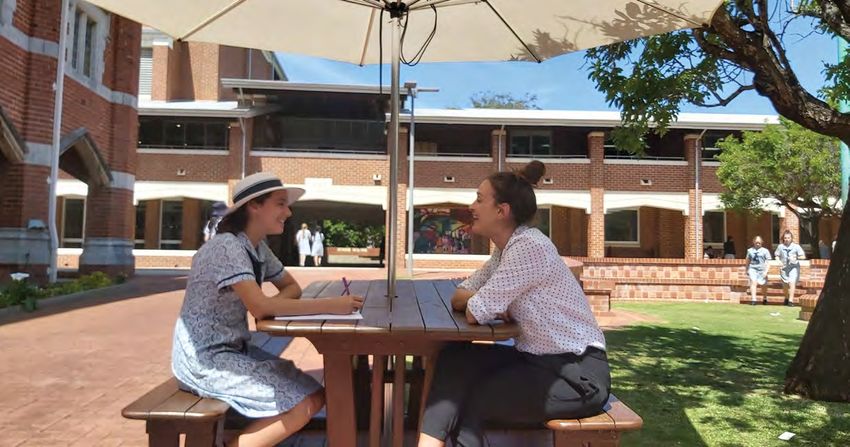
Contents
                                                            agora
                                  		2      Reflection
                                           Rosalie Triolo

                                  		2      Editorial
                                           Katrina Burge

             Thema                  3      Planning Purposeful Excursions

                              T
                                  		 Peter Hoban and Alice Barnes

  Perspectives on the theme
                                    8      The Shout-Out Project: Connecting to Community through
                                           Incursion
                                  		       Helen Avery and Jessica Vuckovic

                                  14

                                           Versailles: The Ultimate ‘French Revs’ Excursion
                                           Andrew A. Pyrcz

                                  22

                                           McCrae Cross-Cultural Experience
                                           Michelle Kiag

       Praktikos                28
                                           Celebrating Country: Excursions to Indigenous Sites
                                           Kara Taylor

            Teaching ideas    P 33
                                           Excursions Made Easy
                                           Nick Adeney

                                36
                                           Excursion Tips from HTAV Members

                                38
                                           Ancient History Excursion in Melbourne
                                           Christopher Gribbin

                                44
                                           A Living Chessboard: Make Your Own Medieval World
                                           David Waldron and Paul Michael Donovan

                                50
                                           Marching North to Engage in the Chinese Revolution!
                                           Tom Ryan

                                52
                                           Fundraising Ideas for Trips and Travel
                                           Ricky Craw

                                56
                                           Shadows and Sunshine in Europe
                                           Paul Iannazzo

                                59         A Capital Idea: Exploring Australia’s National Institutions in
                                           Canberra
                                  		       Fiona Bowen

           Kritikos               62      Reviews available online

                    Reviews
                    Reviews
                              K

agora 54:3 (2019)                                                                                           1
Reflection
                                     Rosalie Triolo president
                                     History exists ‘in the real world’, and only because students spend most of their day within four walls
                                     do teachers expeditiously draw upon textbooks, websites and augmented reality as representations
                                     of otherwise inaccessible times and places. Even so, at my last school where few parents could afford
                                     excursions, I regularly took students on walks in the residential and light industrial streets around
                                     the school. With supportive readings and activities before and after our walks, I asked students to look
                                     closely at the architecture of homes and factories, monuments, street names, other signage, shops,
                                     foods within shops, non-native plantings and vestiges of original vegetation. Despite all the times
                                     students had bussed, ridden bikes along, or walked those streets, I asked in conclusion if they had
                                     ever closely contemplated what ‘the real world’ could teach them about their community’s history. I
                                     opened students’ eyes to ‘history in the world all around them,’ as they had never imagined it.
                                     Historio-cultural institutions that offer strong representations of different places and pasts should,
                                     of course, be visited wherever possible. At an art gallery recently, I purchased a pack of ‘Curiosity’
                                     playing cards, with self-guided prompts for thoughtful observation in any gallery. My favourite card
                                     says, ‘Slow down the pace at which you look at a work of art. Imagine a work of art is a door to a new
                                     world and imagine stepping inside the image. What would the place look like?’ A good History teacher
                                     would ask further, focused questions – as this Agora will prompt you to.

                                     Editorial
                                     Katrina Burge editor
                                     Hands up if you remember a great excursion from your own school days. As a student, excursions
                                     were great fun. We loved the welcome break from the routine of daily school life, without necessarily
                                     realising how much learning we were actually doing at the time. As adults and teachers, we
                                     have more insight into the pedagogy underpinning excursions and carefully plot their learning
                                     intentions, but that doesn’t mean they can’t be fun as well as rigorous.
                                     Empathy reaches new levels when the only thing separating you from impassioned Vietnam
                                     conscription debates or dinner at Versailles with the Sun King is a thin mist of time. These are the
                                     unforgettable moments when knowledge leaps out of the textbook into embodied experience, and
                                     each of us, for a fleeting instant, becomes that famous person we’ve just been reading about. History
                                     teachers delight in creating these powerful learning opportunities, and for students, they are often
                                     what they remember decades after their own school years.
                                     The benefits and highlights of excursions are evident, but of course there’s the other side too – the
                                     endless admin, the risk assessments, concerns about student engagement and behaviour, arranging
                                     transport, funding, chaperones and all the details that conspire to take the fun out of excursions.
                                     And yet, despite all that, you still arrange plan the field trips, the museum visits, the neighbourhood
                                     tours, the historical incursions that enrich your teaching and stimulate your students. This issue of
                                     Agora provides you with a wealth of ideas, tips and resources for future excursions, and salutes and
                                     celebrates the hard work you do when you take your students out of the classroom.

    agora vol. 54, no. 3 (2019)                agora                                              agora        , HTAV’s journal, promotes ideas,
                                               Send submissions to agora@htav.asn.au              information and good classroom practice.
    ISSN: 0044-6726 (print) © 2019             By submitting an article to agora, contributors    It exists to foster and improve the effective
    ISSN: 1837-9958 (electronic) © 2019        agree to the terms of the Author Agreement.        learning and teaching of history.
    Printed in Melbourne by BGS Printing       Editor                                             The opinions expressed in this publication are
                                               Dr Katrina Burge k.burge@htav.asn.au               those of the authors and do not necessarily reflect
                                                                                                  the views of HTAV. While reasonable checks have
                                                                                                  been made to ensure the accuracy of statements
                                                                                                  and advice, no responsibility can be accepted
                                                                                                  for errors or omissions, however caused. No
                                                                                                  responsibility for any loss occasioned to any
                                               Suite 105, 34–36 Cambridge Street                  person acting or refraining from action as a result
                                               Collingwood, VIC 3066                              of material in this publication is accepted by the
                                               03 9417 3422 ABN 44 005 739 239                    authors, HTAV or the Sungraphô Editorial Board.
                                               www.htav.asn.au                                    All reasonable attempts have been made to
    cover image                                The History Teachers’ Association of Victoria is   trace copyright holders of material published.
    Adobe                                      a dynamic professional organisation committed      Material contained in agora is protected
                                               to nurturing and leading History education.        under the Copyright Act (Cth) 1968.

2                                                                                                                          54:3 (2019) agora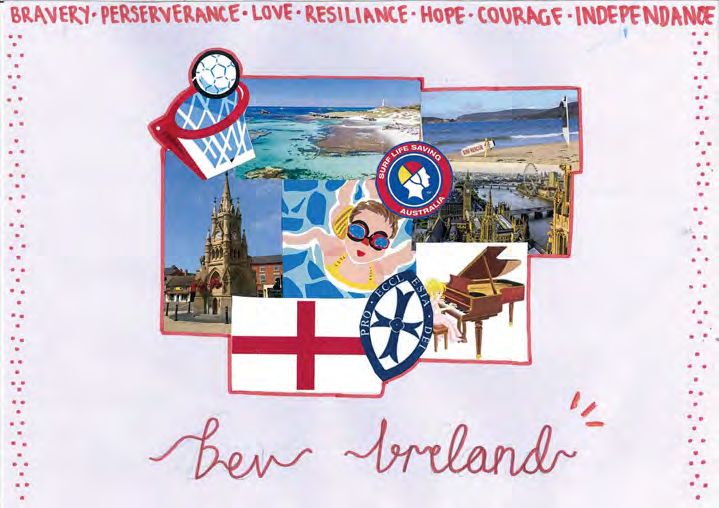
T

                   The Shout-Out Project: Connecting
                   to Community through Incursion
                   Students flourish when they find inspiring stories close to home.
                   Helen Avery and Jessica Vuckovic
                   Perth College, Mt Lawley WA

                   Bringing History to Life                                                The final process in the project involved sharing the
                                                                                           students’ creations with their peers and interviewees. We
                   As history teachers, we believe it is imperative to bring               realise that not all teachers will have the luxury of three
                   history to life for our students, but we know that it is                consecutive days for an incursion, so we also suggest
                   challenging to provide excursions that are relevant and                 timeline alterations to suit differing schedules.
                   cost-effective, while developing students’ historical skills
                   and creating a sense of belonging in their community.                   Inspiration for the Incursion
                   The PC Shout-Out Project was an incursion for Year 8                    The idea for this incursion developed when our school
                   students that took place at Perth College Anglican Girls’               decided to run a flexible learning program in the final
                   School, a K–12 school. The aim of the project was to                    week of Term 4, 2018. Each year group from Years 7 to 10
                   encourage students to develop their oral history skills                 would be involved in a project-based activity run over
                   and form greater connections with members of the wider                  a number of days, supervised by staff from different
                   community, while engaging with the Positive Psychology                  learning areas. While many of our colleagues saw this as a
                   that underpins our school’s leadership program.1                        chance to engage in further STEM-based projects, we saw
                                                                                           it as an opportunity to activate enthusiasm for the value
                   The incursion was a three-day multi-disciplinary project                of history in the wider school community. Running an
                   in which past Perth College graduates visited the school to             incursion rather than an excursion meant that we could
                   be interviewed by the Year 8 students. The students used                collaborate with other learning areas, so the learning and
                   the interview data to write narratives about interviewees               benefits of the activity were shared beyond our history
                   and created artworks that reflected their key strengths.                classrooms.

    Helen Avery and Jessica Vuckovic, ‘The Shout-Out Project: Connecting to Community through Incursion,’ Agora 54:3 (2019), 8–12

8                                                                                                                                   54:3 (2019) agora
T
The incursion was inspired heavily by The resource and planning
the book, Shout Out to the Girls: A Celebration booklet for the Shout-Out
Project can be downloaded
of Awesome Australian Women. 2 This book from www.htav.asn.au/
contains brief biographies (‘shout-outs’) of agora.
fifty inspirational Australian women from
a variety of fields and times. These include
famous figures such as Edith Cowan, Cathy
Freeman and Turia Pitt, as well as lesser-
known but by no means less significant
individuals. Each shout-out also included
an illustration of the individual, created by a
female artist. It is hard not to be inspired by
such an immense collection of exceptional
women, and as history teachers we found it
exciting to discover the stories of Australian
women whose achievements were previously
unknown to us. We wanted our students to
share this excitement, and realised that the
activity could be made even more powerful 0
1 Broadly speaking, Positive
if it was the students themselves who were Psychology concentrates on
strengths, not weaknesses,
discovering the stories, and if they realised you could reach out to community service
and on developing
that inspiring stories could be found close groups, extended family, retirement homes characteristics that help
to home. or local employers to find subjects for your individuals and institutions
students to interview. to flourish. It is associated
Within our extended school community, we with Dr Martin Seligman,
former president of the
realised that there were likely to be some Curriculum Links American Psychological
interesting stories to tell. The motto of Perth Institute. For more
College is to inspire girls to become ‘capable, As well as connecting our students to information, see the Positive
courageous and caring’ women, yet our relatable role models, the incursion was also Psychology Centre,
current students are generally unaware designed to improve their historical research University of Pennsylvania,
ppc.sas.upenn.edu, and
of how former students enact this in their skills and immerse them in the community
Courtney Ackerman, ‘What
lives following graduation. Although the through oral history. As noted in a recent is Positive Psychology and
school runs a variety of programs to help Agora article by Yoel Doron, studying oral Why is It Important?,’
past students stay connected to the school history can encourage students to take on a PositivePsychology.com,
and each other, there was no mechanism more active role as historians in an inquiry positivepsychology.com/
what-is-positive-
to connect these valuable stories and project and helps them connect their own
psychology-definition.
experiences with current younger students. experiences with those who came before
Our recognition that current students were them.3 The inclusion of a student-created 2 Penguin Random House
Australia, Shout Out to the
missing out on learning from women with artwork created cross-curricular links to
Girls: A Celebration of
whom they already had a connection (their the Arts, a connection that is sometimes Awesome Australian Women
school) sparked the creation of the PC difficult to foster within History teaching. (Sydney: Random House
Shout-Out Project. The incursion as a whole was strongly Australia, 2018).
related to the ‘General Capabilities’ of the 3 Yoel Doron, ‘Using Oral
Utilising members of our school community Australian Curriculum. Creating a narrative History to Engage Students,’
meant that we could keep the costs of response to the interviews provided explicit Agora 54:1 (2019), 41–46.
our incursion relatively small, without engagement with the ‘Literacy’ aspect and 4 Australian Curriculum,
compromising the quality of the experience. throughout the project, students developed Assessment and Reporting
We found that past students were eager to their ‘Critical and Creative Thinking’ and Authority, Australian
participate, as they were keen to reconnect ‘Personal and Social Capability’ as they Curriculum (Sydney:
ACARA), www.
with their school and share their stories drew on their personal strengths and australiancurriculum.edu.
with current students. If your school does demonstrated their understanding of au/f-10-curriculum/
not have access to numerous past students, their interviewees’ experiences.4 The PC general-capabilities/literacy.
agora 54:3 (2019) 9
T

          Helen Avery and Jessica
          Vuckovic are passionate
          educators with                      The project demonstrated that much of what we cover in
          backgrounds in pastoral
          and academic                        history can be useful to student learning in other subjects.
          leadership. They have
          previously collaborated
                                         Shout-Out Project also provided students           question development. Specialist staff were
          on projects presented at
          the National and               with real-life practice in implementing            also available to provide literacy support as
          Western Australian             focus questions and immersing themselves           needed. This meant that our incursion was
          Positive Education             in oral history in a small group.                  more inclusive to our student cohort and
          Conferences and have a                                                            was supportive of a wider range of learning
          keen passion for                                                                  needs than would otherwise be possible in a
                                         Structure and Scheduling
          developing engagement                                                             more traditional excursion.
          in history and
                                         When developing resources for the project,
          empowering students
          through a strengths-           we soon realised that it could link closely        The incursion was planned to take place
          based approach to              to our school’s positive education and self-       over three days. This time period allowed
          learning.                      leadership program.5 The positive education        for critical reflection and editing, and also
                                         program aims for optimal well-being, based         provided a practical time frame for the
                                         on Martin Seligman’s PERMA framework. It           incursion to involve external participants
                                         is constructed to reflect the elements of:         without having to rush the project. The
                                         • Positive emotions                                first day was spent exploring aspects of
                                                                                            the PERMA model and preparing for the
                                         • Engagement                                       interviews. The second day centred on the
                                         • Relationships                                    interviews, followed by time for creating the
                                                                                            narratives and artworks, which continued
                                         • Meaning                                          for part of the third day. The afternoon of
                                         • Accomplishment.6                                 the third day was spent sharing student
                                                                                            work through reading circles. Scheduling
                                         This gave us a focus for our incursion which       is described in more detail below, but if
                                         was integral to the success of running an          time is an issue, it can easily be revised. The
                                         oral history project. The incursion drew           interviews could be conducted on-site or
                                         upon the PERMA aspects of ‘Relationships’          out of school as required, with the follow-up
                                         and ‘Accomplishment,’ encouraging                  writing and artworks worked on during class
                                         students to build connections with the             or for homework.
                                         wider community and promote the idea of
                                         flourishing. This was achieved by students         Day 1: Preparing
                                         focusing on the character strengths of their       On the first day of the incursion, students
                                         interviewee and maintaining this theme in          were provided with a booklet (see previous
                                         their narrative and artwork.                       page) to guide them through the inquiry
         5 Perth College, ‘InsideOut                                                        process. This involved completing short
           Self-leadership Programme,’
           www.perthcollege.wa.edu.
                                         While a specific theme for an incursion            workshops based on Positive Psychology
           au/learning/senior-school/    can be chosen to suit your school’s needs,         principles, such as learning to identify the
           inside-out.                   having that central theme is important             character strengths of other people. We
         6 See Martin Seligman,
                                         because it provides students with a way to         explored how to construct interview and
           Flourish (North Sydney:       frame the conversations with their subjects.       focus questions. It was also important to
           Heinemann Australia, 2012)    When scaffolding this task for students with       provide guidance on appropriate etiquette
           and the Positive Psychology   learning difficulties, having a central theme      and supply context to help the students
           Centre’s PERMA Theory of      allowed us to differentiate the difficulty level   interact with people from different
           Well-Being and PERMA
           Workshops, ppc.sas.upenn.
                                         of the incursion more easily. Differentiation      generational or cultural backgrounds.
           edu/learn-more/               was provided through alternative booklets
           perma-theory-well-being-      that included scaffolded writing prompts           An advantage of running this activity as
           and-perma-workshops.          and an apprehension guide to assist with           an incursion was that staff from different

10                                                                                                                 54:3 (2019) agora
T

                                                                                                   Student artwork created for
                                                                                                   the Shout-Out Project

learning areas could share their expertise        interviewees, who were contacted via our
and provide support so that students were         Old Girls’ Association, were asked to share
gaining transferable skills that would            their insights into the proudest achievement
benefit their future learning, both within        of their life, describe a challenge they faced
history classes and in other subject areas. For   while at school and how they overcame
example, explicit instruction on narrative        it, and offer advice to current students
writing was provided by English teachers,         studying at Perth College.
while a science teacher offered guidance
on how to develop inquiry questions. This         To combat student nervousness about
highlighted the value of interdisciplinary        interacting with new people, the students
skills, and demonstrated that much of what        were organised in small groups to conduct
we cover in history can be useful to student      the interviews, and encouraged to make use
learning in other subjects.                       of the skills they had been practising the
                                                  previous day. Using members of our school
It was surprising to note that one of the         community as interviewees was helpful
key challenges for students was their lack        because it created a point of commonality
of confidence in speaking to community            – and to the amusement of our Year 8s, a
members they had never met before. This           number of the past students shared stories of
is a skill that is not frequently taught in       the mischief they caused at school! Inviting
secondary schools, but it is increasingly         guests who were known to the school
important to develop interpersonal skills to      community also decreased potential risk-
prepare student for their future workplaces.      management issues. In addition, providing
                                                  interviewees with the general theme for the
Day 2: Interviews, Narratives,                    project allowed them to prepare appropriate
Artwork                                           stories to share.
Interviews were conducted on the second
day of the incursion. A morning tea was set       The remainder of the second day was spent
up to provide a more relaxed atmosphere           creating the artwork and narratives based
for the students and interviewees. In total,      on the stories of the interviewees. Time
135 students participated in the incursion,       was also allocated to this for the first part
with 75 past students being interviewed. The      of the third day. Again, having access to

agora 54:3 (2019)                                                                                                                    11
T

         Student artwork created for
         the Shout-Out Project
                                                                                          limited options available to them as women
                                                                                          when they graduated had meant their lives
                                                                                          were more ordinary. It was gratifying to see
                                                                                          that the students gained life lessons and
                                                                                          drew inspiration from many women who
                                                                                          had initially deemed their own experiences
                                                                                          ‘unremarkable.’

                                                                                          We strongly advocate using an authentic
                                                                                          audience of people who were involved in the
                                                                                          experience, because presenting to people
                                       staff from a variety of learning areas meant       who will gain meaning from the outcome
                                       that students could receive personalised           enhances the meaning and value of this
                                       feedback and support as they worked on             incursion.
                                       the project. Students also had the freedom
                                       to break out into different areas of the           Student and Community
                                       school, which enhanced their creativity            Response
                                       and the quality of their final product. While
                                       we understand that not all teachers will be        Following the incursion, many interviewees
                                       able to conduct an incursion in this way,          reached back to the school to express their
                                       we would encourage the use of a flexible           thanks and their willingness to again share
                                       learning space for this part of the project.       their experiences and expertise, particularly
                                                                                          in the areas of humanities and social
                                       Day 3: Sharing the Learning through                sciences. Developing these relationships has
                                       Reading Circles                                    given us access to a large number of guest
                                                                                          speakers, some of whom have returned this
                                       A powerful outcome of the incursion was            year to provide career advice and mentoring
                                       watching the students share their narratives       to some of our older students. This has
                                       and artworks. Although we had hoped that           opened the door to further incursion
                                       the interviewees would hear the narratives         opportunities and has proven the ongoing
                                       in person, timing constraints meant that           value of the project.
                                       instead the girls shared their narratives
                                       with each other in reading circles, with the       After completing the project, students
                                       final narrative and artwork mailed to their        were surveyed anonymously on their
                                       interviewee. An unexpected strength of the         experiences. The results demonstrated that
                                       reading circles was that students engaged          they had relished their engagement with
                                       with a wide range of oral histories by hearing     members of the wider school community
                                       each other’s works.                                and appreciated the flexibility of the
                                                                                          incursion project. These findings supported
                                       Our oldest interviewee was a graduate from         our initial hope that stronger relationships
                                       the class of 1953, while our youngest guest        would be formed between past and current
                                       had graduated from the school the previous         students, and that this incursion would
                                       year. Some interviewees were prominent             provide an opportunity to connect to our
                                       members of the local community, while              school and community history.
                                       others felt that their lack of experience or the

12                                                                                                              54:3 (2019) agora
YOUTH CHALLENGE 2020
Brought to you by the National Museum of Australia with the generous support of Gandel Philanthropy
WHAT ARE YOUR TOP 10 DEFINING
MOMENTS IN AUSTRALIAN HISTORY?
This latest in the popular Youth Challenge program series – organised and run
by Ryebuck Media and the National Museum of Australia – will set students the
challenging task of deciding Australia’s top 10 defining moments in Australian history.
PROGRAM HIGHLIGHTS INCLUDE: KEY YOUTH CHALLENGE PROGRAM
PARTICIPATION INFO:
Launch and demonstration of ‘Exploring Defining
Moments in Australia’ interactive website Aimed at Years 8-10 students
What are the student workshop groups’ top 10 Run for one day in every state and territory in
defining moments in Australian history? July & August 2020 (dates TBC)
Competing to see which group's top 10 most closely Canberra Melbourne
matches our historians' top 10 Sydney Adelaide
Townsville Darwin
What defining moments to look for in your
Bunbury Launceston
community: Introduction to the national 2020
Defining Moments competition: What is Your Schools are invited to nominate up to 8 students
Local Community Defining Moment? Is it worthy of (overall numbers are restricted to around 130
being included in the National Museum of Australia’s students as this is a very hands-on program)
‘Defining Moments Hall of Fame’? The program commences at 9.00am and ends
at 2.45pm and is free of charge
REGISTER YOUR SCHOOL’S INTEREST NOW
We expect the program to be very popular so your school’s best chance of attending is to register your interest now!
To register your school please send the following details to: definingmoments@ryebuck.com.au
Teacher/school/ email address
Your school details including phone number
Number of students you may wish to bring
on the day (Maximum of 8)
FOR ALL ENQUIRIES RELATING TO THE PROGRAM
Please call Bernadette Lightfoot at Ryebuck Media
03 9500 2399
or email definingmoments@ryebuck.com.auYou can also read


