Homegrown National Park Design Challenge
←
→
Page content transcription
If your browser does not render page correctly, please read the page content below

Homegrown National Park Design Challenge
Competition brief

                                                                                         Credit: Evan Holt

Workshop Architecture and the David Suzuki              and landscape architects. We will also pursue
Foundation are excited to launch the Homegrown          permissions and funding to build a selection of
National Park Design Challenge. Architects,             the ideas as demonstration projects within the
landscape architects, designers, planners, artists      Homegrown National Park for the 2014 season.
and community members are invited to submit
their ideas for low-cost, easy-to-implement             About the Homegrown National Park
landscape design solutions for front yards,             Project
backyards, balconies, schoolyards and laneways
                                                        The David Suzuki Foundation launched the
that help to increase biodiversity and conserve
                                                        Homegrown National Park Project in spring, 2013.
water and energy.
                                                        The project’s purpose is to create a crowdsourced
This open competition aims to gather a range of         green corridor in the City of Toronto, along
ideas that can provide inspiration and practical        the former path of Garrison Creek. Key to the
information for homeowners and property                 project’s success is the recruitment and training
managers in the Homegrown National Park                 of Homegrown Park Rangers—volunteers that
boundary and beyond and generate awareness              live, work or play within the Homegrown National
about the importance of making sustainable              Park. Working with 14 partner groups, more
improvements to our urban landscape—one                 than a dozen neighbourhood organizations and
property at a time.                                     hundreds of local residents, the 21 Homegrown
                                                        Park Rangers began to enhance, restore and grow
The best ideas will be exhibited at the Urbanspace      more green space along the corridor, planting
Gallery in July 2014 and during Homegrown               more than 1,000 native flowers, shrubs and trees
National Park project events from May to October        in yards, alleys, balconies, schools, parks and
2014. The exhibition will include a series of invited   institutions in 2013. In 2014, the project expanded
submissions from prominent local architects             to five city wards (Wards 17-21), including the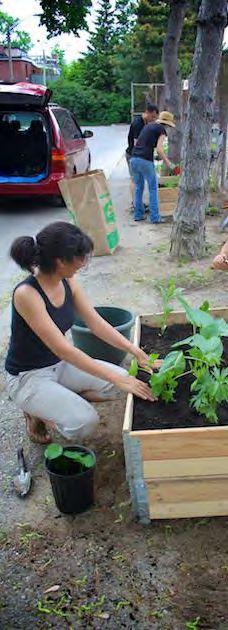
recruitment and training of an additional two        •    Reduce heat island effect
dozen Homegrown Park Rangers.
                                                     •    Increase biodiversity and improve habitat for
The Homegrown National Park Project connects              bees, birds and butterflies
residents to nature in their neighbourhoods and      •    Increase the amount and type of native plant
injects much-needed colour into the city’s grey           species and reduce invasive species
palette. But it’s about more than just beautifying
the city, or even making space for birds, bees and
butterflies. It changes the way people connect
with nature and the city.

What is the Challenge?
Competition objectives
The Homegrown National Park Design Challenge
will raise awareness about the importance of
making improvements to our urban landscape,
one property at a time, among Toronto
homeowners and property managers.

Recent severe storms and flooding, as well as
droughts and other severe weather events,
demonstrate that individuals need to conserve
water and energy, and assist in increasing passive
stormwater management in cities across Canada.           Competition organizers
Fostering biodiversity and increasing native
                                                         Workshop Architecture Inc.
plants will help people in cities connect to their
natural surroundings and address the problem of          Workshop Architecture has extensive
declining bee, bird and butterfly populations.           experience designing community buildings
                                                         and public spaces and engages people
This project is an opportunity for designers to          with the design of architecture and public
show homeowners and property managers                    space through creative installations,
simple and effective solutions that can improve          competitions, events and education
the landscape along the Homegrown National               programs. workshoparchitecture.ca
Park corridor, and provide one or more of these
benefits:                                                David Suzuki Foundation
                                                         The David Suzuki Foundation collaborates
•   Improve local air and water quality
                                                         with Canadians to conserve our
•   Increase natural stormwater management               environment and find solutions that will
                                                         create a sustainable Canada through
•   Increase carbon absorption and storage               science-based research, education and
                                                         policy work. davidsuzuki.org
•   Reduce water and energy use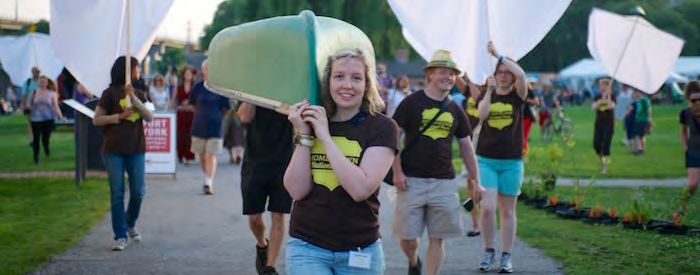
Competition guidelines
We invite competitors to submit ideas for
low-cost, easy-to-implement interventions
or landscape design solutions that increase
biodiversity and conserve water and energy
within the Homegrown National Park (see map at
http://ow.ly/tgIAO) in:

•   Residential front and backyards

•   Lanes and alleyways

•   Schoolyards and daycare play spaces

•   Apartment/condo balconies and landscaping

We want competitors to create a design to fit a
particular location, but that is easy to replicate in
similar spaces. Entering with, or in consultation
with, the site owners and/or stakeholders is
encouraged. If you have a site in mind and need
assistance contacting the owner/stakeholders,
email
info@workshoparchitecture.ca and we will let you
know if we can help make the contact.

By entering the Homegrown National Park
Design Challenge you acknowledge having
read and agreed to all the terms and conditions
stated herein and you agree to indemnify and
hold harmless the competition organizers,
their sponsors, partners, officers, agents and
employees from and against any and all claims.

Selection criteria
The jury will use these criteria to select winners:

•   Proposal design innovation in response to
    competition objectives and guidelines

•   Proposal responsiveness to site, context and
    stakeholders/users

•   Quality and clarity of presentation materials
out in these instructions. Failure to do so will lead
Competition details to immediate elimination from the process.
Awards
Only one entry per individual or team member.
The jury will award CAD $500 in prizes for the
competition ($300 first prize, two runner-up prizes
Ownership and copyright
of $100 each).
All materials submitted to the competition
become the property of Workshop Architecture
Schedule
Inc. and will not be returned. Workshop
Competition opens March 31, 2014 Architecture Inc. and the David Suzuki Foundation
retain worldwide rights to publish and exhibit all
Questions deadline April 24, 2014
entries (see “Exhibition and publication” below).
Each competitor will retain full copyright of all
Submissions due May 26, 2014
their materials unless otherwise assigned. Each
Winners announced June 2014 team retains the right to publish and exhibit their
own entry.
Exhibition opens July 2014
Exhibition and publication
Questions Workshop Architecture Inc. intends to exhibit
Please forward all questions regarding the a selection of competition entries in a number
competition to info@workshoparchitecture.ca by of venues which may include: online, in print,
April 24, 2014. in a gallery and outdoors in the Homegrown
National Park. In any exhibition, publication, or
website, we will make every effort to properly
Deadline
credit the appropriate competitors. Since
All submissions must be received by email by Workshop Architecture Inc. retains ownership
4:00 p.m. Eastern Standard Time on May 26, of all competition materials (see “Ownership
2014, or be disqualified. PLEASE NOTE: Workshop and copyright” above), we reserve the right to
Architecture Inc. will not take responsibility for utilize them in any publication or promotional
email problems or other technical issues. endeavour in perpetuity and without
compensation to the entrants.
Eligibility
The competition is open to anyone, but the firms, Submission requirements
partners, and professional associates of the jurors Please provide the following:
and the competition organizers are enjoined from
participating. If it is determined that a competitor 1. One 24” x 36” presentation board in landscape
is in any material way related to a juror or to a format to describe your proposal. Please provide
competition organizer, that competitor’s project this as one high-resolution PDF file, minimum 150
will be disqualified. dpi.
Everyone involved with this competition must
comply with the conditions and procedures laidThe boards can include any of the following:
a) Conceptual statement under 200 words
b) Plans, sections, elevations, sketches, 3D
renderings and/or photographs
c) No marks identifying the entrants shall
appear on the presentation boards.
PLEASE NOTE: We may print the boards to 11x17
for the jury session, so please ensure they are
legible at this size.
2. Complete, print, sign and scan the registration
form as a PDF document and send it in the same
email with the competition submission, but as a
separate file.
Send entries to:
info@workshoparchitecture.ca
Any entries that are larger than 4MB, please send
using Wetransfer.com
PLEASE ENSURE THAT YOU HAVE FOLLOWED THE
INSTRUCTIONS FOR SUBMISSION REQUIREMENTS
ABOVE. SUBMISSIONS THAT DO NOT INCLUDE
ALL MATERIALS REQUESTED AND IN THE FORMAT
OUTLINED MAY BE DISQUALIFIED.
Credit: Jode RobertsHOMEGROWN NATIONAL PARK DESIGN CHALLENGE REGISTRATION FORM Please fill in the details on the form below. Sign the registration form and scan a copy to be submitted as a pdf file by email along with your competition entry before the competition deadline. Name of main contact: Name of company/organization(s) (if applicable): Email: Telephone: Address: City: Country: Team members (if applicable): Student (Y/N): In signing this registration form and submitting an entry to the Homegrown National Park Design Challenge you agree to all the terms and conditions as outlined in the Homegrown National Park Design Challenge competition brief at: www.davidsuzuki.org/homegrownchallenge MAIN CONTACT SIGNATURE: Date:
You can also read


