IMPET S Magazine of - EU MILITARY STAFF 'A PARTNER FOR MILITARY EXPERTISE - ATALANTA CONTINUES FIGHT AGAINST PIRACY CYBER SECURITY & DEFENCE IN EU ...
←
→
Page content transcription
If your browser does not render page correctly, please read the page content below
IMPET S
                          Magazine of
                          the EU Military
                          Staff, EEAS,
                          Brussels
                          Autumn /Winter 2014
                          Issue #18

ATALANTA CONTINUES
FIGHT AGAINST PIRACY
CYBER SECURITY &
DEFENCE IN EU
MILITARY STRATEGIC LIFT
IN CRISIS RESPONSE

  EU MILITARY STAFF ‘A PARTNER
    FOR MILITARY EXPERTISE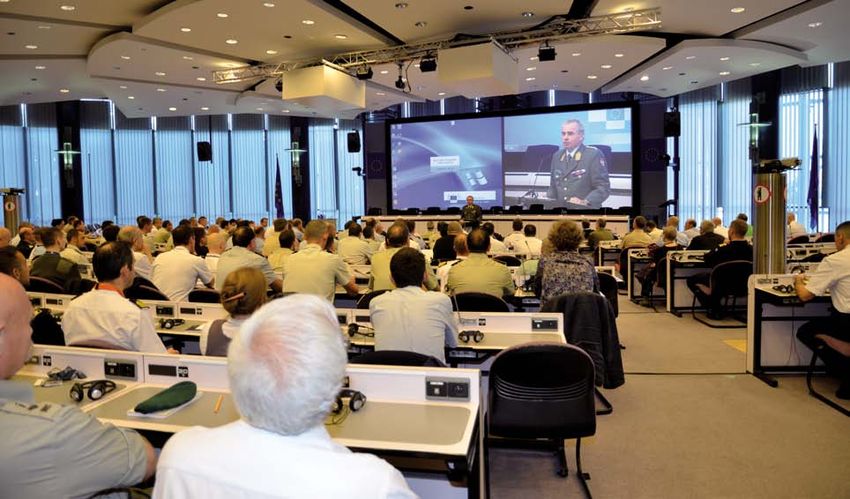
INTEGRATION

European Military Staff:
A Partner for Military Expertise
                                    By Lieutenant General Wolfgang Wosolsobe (AT), EU Military Staff Director General

 DG EUMS, Lt Gen Wolfgang WOSOLSOBE presents his address to the
 EUMS General Assembly.

Firstly I would like to welcome you all back after, what I      useful. I will therefore seize this opportunity to provide
hope was a relaxing summer break. The autumn issue of           some tangible elements of explanation on the military’s
IMPETUS also offers a podium to welcome all those who           place in the system.
recently joined the EU Military Staff and, of course to thank
those leaving. In addition to my thanks, I would also                The past few months have required the EU Military
reiterate my wish that they, back in their respective                       Staff to deliver against an expanding portfolio of
home-countries, would act as ambassadors                                        requirements expressed by the EEAS and the
for the European Union and for the value of                                       EU Military Committee (EUMC). I expect this
the military as part of the EU’s external                                          tendency to accelerate in the future. As
action.                                                   Military                  you are well aware, crisis situations around
We will need our renewed energy to be                  Expertise is                 Europe intensified and simultaneously
                                                                                    reached a level of magnitude which
ready for new challenges ahead. I would                   required                  needed permanent consideration by all
like to take this opportunity to highlight
                                                                                   services, particularly of the EEAS of which
some developments which I consider
                                                                                  we are members. Last August’s Foreign
crucial for the coming months, and to add
                                                                               Affairs Council (FAC) agenda was a telling
some thoughts.
                                                                           example of this development as it addressed
The specific advantage of the comprehensive approach                volatile situations in Ukraine, Syria, Iraq, Libya, and Gaza.
as a guiding principle of the European Union’s external         All this was coming on top of our ‘normal workload’ which
action is now well understood and widely recognised. The        includes 5 current military operations and missions. In
EU Military Staff has successfully continued its integration    addition, we are continuously looking for opportunities to
into the multifaceted environment of the European External      sharpen the profile of EU’s military dimension, the largest
Action Service (EEAS). When it comes to defining the place      part of which is shaped by Member States military
of the military in this concept of an EU specific               contributions to Common Security and Defence Policy
comprehensive approach, however, further work can prove         (CSDP).

2 . IMPETUS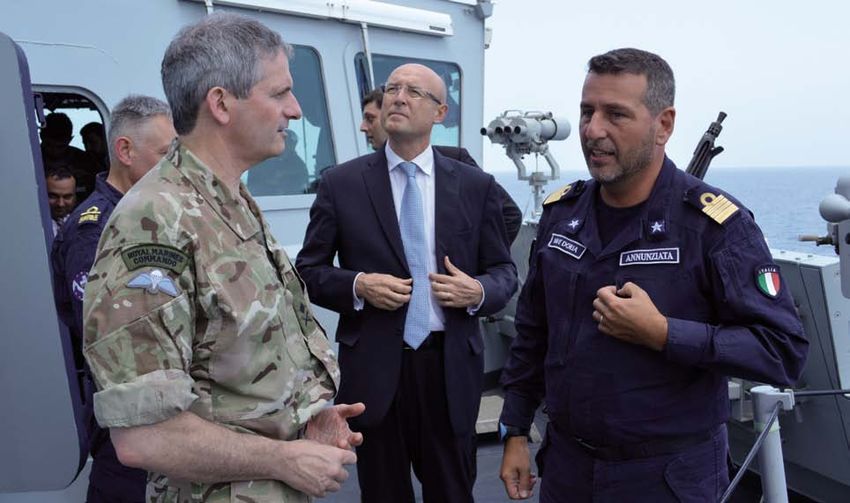
INTEGRATION

Most, but not all of our work is related to CSDP. Military
expertise is required long before the idea of a military
operation or mission starts to mature. In many cases, non-
military options will be selected inside or outside the
context of CSDP, but military expertise will remain part of
the broader and continuous multidisciplinary assessment.
In this spirit, there are an increasing number of cases where
delivering expertise is becoming the main output of the
EU’s military. Intelligence occupies a large and central part
in this but there is a much broader variety of issues on
which we deliver. What we call in jargon «prudent thinking»
or «prudent planning» draws on all strands of military
expertise, even if the results never transform, in the end,
into fully fledged missions or operations.
The EU Military Staffs’ ability to provide a broad spectrum
of products is appreciated by a growing number of EEAS
services which leads, in turn, to increasing demand.                            DG EUMS Lt Gen Wolfgang WOSOLSOBE meets Prime Minister
                                                                                        Mahamet KAMOUN of the Central African Republic.
Delegations have particularly reiterated their wish to
benefit from military expertise, especially intelligence and
in other areas. Cooperation with delegations has intensified
in geographic areas where a military dimension is or could            security challenges in the EU’s closer and more remote
become relevant. In this exchange with delegations, we                environment should lead both organisations to recognise
become increasingly aware of the immense added value                  the pressing need to re-energise EU-NATO cooperation. A
knowledge and experience which delegations can also                   collaborative and synergetic approach between
bring to our work. This should be further developed.                  organisations should be further developed in order to bring
                                                                      investment to individual Member States’ military resources,
Expertise is mainly built on personal experience,
                                                                      to encourage mutual benefit.
organisation of knowledge and a compendium of updated
collective lessons. Our system of rotating personnel every          Conclusions from the NATO summit certainly will have an
three to five years has the convincing advantage of regularly       impact on the Member States’ Armed Forces, which in turn
bringing fresh national military experience to the staff.                will likely influence their ability to contribute to military
But this system also obliges us to create a stable                              missions and operations of the EU. This is why we
knowledge base. We have to build on our                                             should approach capability development in
intellectual capital, develop it, maintain it                                         the broadest spectrum possible and in a
and make it accessible to others. Also in                      Ready                    collaborative way. On both sides, EU and
this spirit, the EU Military Staff should                                                NATO, cooperation between Member
bring a military contribution to the larger
                                                              for new                    States remains instrumental to such an
system of the EEAS. This would be an                      challenges                     effort. For the EU side, EU Military Staff in
appropriate answer to the always                                                         continuous dialogue with Member States,
broadening spectrum of expertise
                                                               ahead                   develop the specific requirements to
required.                                                                             enable EU action. Close cooperation
                                                                                   between EU Military Staff and the European
In terms of lessons, we organised a «High Level                                Defence Agency (EDA) will help transform these
Seminar on Lessons Learnt» in early summer, together                   requirements into fields of concrete cooperation,
with the EU Institute for Security Studies (EUISS) in Paris. The    dedicated to specific capabilities.
seminar not only underlined the general importance of a
lessons process but also offered a large number of                  Reflection triggered by the NATO summit will give
operational insights to a large and interested audience. The        additional substance to the implementation of the
dialogue triggered by this should last and will continue.           mandate of European Council 2013 (EC 13), and pave the
                                                                    way towards the European Council on Security and
Apart from crisis situations, operations and missions, a            Defence envisaged for spring 2015. Work on a Maritime
number of issues need to be addressed to better embed               security strategy, on a Cyber strategy and on military rapid
the European military in the EU’s s action and to make best         reaction is well under way. The capability strands brought
use of Member State’s contributions. Much of this has to be         forward by the Council remain guiding principles for
seen through the spectrum of a constructive EU-NATO                 further work e.g.; Remotely Piloted Aircraft Systems (RPAS),
relationship. The reason obviously is that, not only have we        Air to Air Refuelling, Cyber and Satellite Communications
22 EU Member States as NATO Members (and 5 more are                 (SatCom). This will be complemented by additional efforts
NATO partners), but that such an overlap in membership              in important shortfall areas.
creates a far-reaching community of interest.
                                                                    I now wish to continue with an explanation on our
With this in mind, the results of the NATO-summit in Wales          developing concept of military rapid response. There are of
take particular importance and deserve thorough analysis            course high and largely justified expectations to improve
on the part of the EU. Recent events and the continuing             the conditions for the use of Battle Groups. Financial

                                                                                                                         IMPETUS . 3
INTEGRATION

                                                                         strategic level reflection will be essential to further define
                                                                         the EU’s ambition in the security area. Here again,
                                                                         comparing notes with NATO while maintaining each
                                                                         organisation’s full autonomy, could add to the quality of the
                                                                         outcome.
                                                                         Together with many other activities I have mentioned so
                                                                         far, the military contribution to strategic reflection should
                                                                         be a product shared between Member States and EU
                                                                         Military Staff. It would therefore be important to reach back
                                                                         to Member States’ capabilities of analysis at the earliest
                                                                         possible stage. Such complementarity with Member States
                                                                         should be further explored. This not only would help EU
                                                                         Military Staff to respond to increasing demands within a
                                                                         constant resources envelope, it also would make an ever
                                                                         broader set of expertise available to EEAS.
                                                                         On operations and missions, firstly I wish to highlight two
                                                                         recent developments. Since its start in late spring 2014,
  EU Open Day 2014 - DG EUMS Lt Gen Wolfgang WOSOLSOBE meets             EUFOR RCA (Central African Republic) has brought tangible
  with Mr Agostino MIOZZO, EEAS Managing Director, Crisis Response &     added value in terms of security and confidence to the
  Operational Co-Ordinator.                                              local population in Bangui. On the other hand, it has also
                                                                         proven that in a complex and volatile environment, security
                                                                           cannot be imposed without a firm military presence
limitations and a frequently mentioned lack of                                    which needs to be sufficiently resourced. These
political will to use the Battle Groups cannot                                         are prerequisite to keep difficult situations
be addressed by the EU Military Staff, at                                                 under control and to transform them into
least not directly. What we are preparing                                                    opportunities for success. I pay particular
in our remit of work, is a broader set of                                                     tribute to the Operation Commander,
innovative reflections on rapid                            Work on Military                    Force Commander and all soldiers
response, of which larger, joint, flexible                                                     involved in this operation as well as to
and framework Battle Groups are part.
                                                            Rapid    Reaction    is            all Member States offering their

I expect the reflection on a broader
                                                              well under way                   contributions in this difficult place.

EEAS assessment of new threats and                                                            EUTM Somalia has taken up its full
challenges to take shape soon. EU                                                            activity in Mogadishu. Here as well, the
Military Staff will bring its share of                                                     environment is complex and demanding.
experience and knowledge to this as well. A                                             All soldiers, commanders and contributing
                                                                                   Member States, continuously prove their
                                                                             professionalism and dedication to a mission which
                                                                         remains a crucial building block towards a better
                                                                         consolidated Somalia.
                                                                         EUNAVFOR Atalanta, EUFOR Althea and EUTM Mali deserve
                                                                         praise for having fulfilled their respective missions in an
                                                                         outstanding manner and for their very important
                                                                         contributions to the EU’s credibility in their respective
                                                                         operational areas.
                                                                         In the context of operations, our C2 structure plays a central
                                                                         role. The EU relies on a number of very efficient Operational
                                                                         Headquarters (OHQ) offered by Member States. These are
                                                                         complemented by Force Headquarters (FHQ). Recent
                                                                         experience shows that an even more standardised
                                                                         cooperation with these Headquarters, and an early and
                                                                         regular link to Brussels, could help make even better use of
                                                                         these valuable assets.
                                                                         This is just a small overview of what we will find on our
                                                                         agenda in the coming months. I am fully confident in the
                                                                         EU Military Staffs’ ability to cope with the task and to
                                                                         continue providing high quality products both to EEAS and
 Signing of Single Intelligence Analysis Capacity (SIAC) agreement, DG
 EUMS Lt General Wolfgang WOSOLSOBE and Mr Ilka SALMI, Director          EUMC.
 INTCEN.
                                                                         I wish all our partners the best of success. n

4 . IMPETUS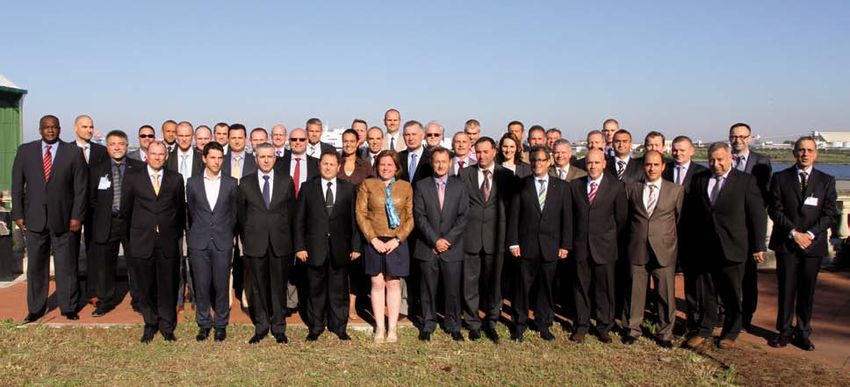
EUROPEAN UNION MILITARY STAFF

                                                                          HR/VP

                         CEUMC
                                                                                                                                                     EU Cell at
                                                                                                                                                      SHAPE

                                                                    DIRECTOR GENERAL
                                                                          EUMS
                        CEUMCWG                                                                                                                      EU Liaison
                                                                                                                                                       UN NY

                                                           LEGAL    DEPUTY DIRECTOR
                                                          ADVISOR      GENERAL
                                                                                                                                                        NPLT
                                         ACOS                                                                  ACOS EXTERNAL
                                    SYNCHRONIZATION                                                              RELATIONS

               CONCEPTS &                                                                                                                  COMMUNICATIONS &
                                               INTELLIGENCE            OPERATIONS                       LOGISTICS
               CAPABILITIES                                                                                                              INFORMATION SYSTEMS

                                                 Intelligence        Military Assessment                  Logistics                           CIS Policy &
                  Concepts
                                                    Policy                & Planning                       Policy                            Requirements

                                                                                                                                                                  Acting FR

                    Force                        Intelligence          Crisis Response &                  Resource                            Information
                  Capability                       Support            Current Operations                  Support                         Technology & Security

                   Exercises,                    Intelligence          OPSCENTRE &                   Administration &
              Training & Analysis                 Production           Watch keeping                    Support

                                                                                                                           Acting FR
                                                                                                                                                                              ORGANISATION

IMPETUS . 5
                                                                    EUMS
                                                                                           Flag and Branch Chief Rotations Summer/Autumn 2014 – correct at time of printing
COLLECTIVE STRENGTH

Role, Function and Working
Procedures of the European Union
Military Committee Working
Group (EUMCWG)
                                                                   By Lt Colonel Matthias Klein, Assistant to Chairman

                                                                   tasking’s, an additional platform for detailed discussions of
                                                                   national positions and Member States views, with the
                                                                   common aim of achieving consensus in support of EUMC
                                                                   discussions and decisions wherever possible. In order to
                                                                   achieve a possible consensus during Member States
                                                                   representatives’ discussions at the Working Group table, the
                                                                   EUMCWG can agree on behalf of the EUMC to documents,
                                                                   by using a «silence procedure» involving all 28 Member
                                                                   States in the final decision.
                                                                   Working Procedures in support of the EUMC are in general
                                                                   as follows:
                                                                   1. The Political and Security Committee (PSC) tasks the
                                                                       EUMC to deliver a specific Military Advice.
                                                                   2. After an initial discussion in EUMC and an agreement on
                                                                       suggested timelines, the EUMS drafts and releases a
                                                                       specific Military Advice for Member States written
                                                                       comments.
                                                                   3. After receiving Member States written comments, the
                                                                       revised draft Military Advice is discussed in several
                                                                       EUMCWG meetings (always «Word by Word and Para by
 Chairman EUMCWG Rear Admiral                                          Para») until consensus can be achieved.
 (German Navy) Juergen EHLE.
                                                                   4. The final draft Military Advice is then put under silence
                                                                       procedure for final agreement by Member States and
                                                                       forwarded afterwards via EUMC to the PSC.
This article will provide a short overview of the role, function
and working procedures of the European Union Military    The EUMCWG is chaired by an elected chairman (CEUMCWG),
Committee Working Group (EUMCWG).                                currently Rear Admiral (German Navy) Juergen EHLE,
The Decision of the Council back in 2001                             who is appointed for a term of 3 years. He is
setting up the Military Committee of the                                 directly supported in his chairman’s office by
                                                                           a Military Assistant (MA) and a Personal
European Union (EUMC) as the highest
                                                                             Assistant (PA), in order to staff the vast
military body within the European               PSC tasks the                 range of topics discussed within the
Union also provided to it a military
support structure in the form of the           EUMC to deliver                 Working Group, by the respective
                                                                               experts of the EUMS and also by
EU Military Staff (EUMS) and the EUMC          specific Military               personnel of the General Secretariat of
Working Group (EUMCWG), in order to
facilitate and support its work as                  Advice                    the  Council. The Chairman EUMCWG
                                                                             has no permanent deputy, but may be
appropriate.
                                                                            replaced when absent by a designated
The EUMCWG as the EUMC’s preparatory                                     high-ranking officer of the Member State
body is therefore also a permanent part of the                        running the current Presidency of the
Common Security and Defence Policy (CSDP)                         European Union. The core tasks of the EUMCWG
structures in Brussels. It provides following EUMC         are to provide Military Advice on EU missions and

6 . IMPETUS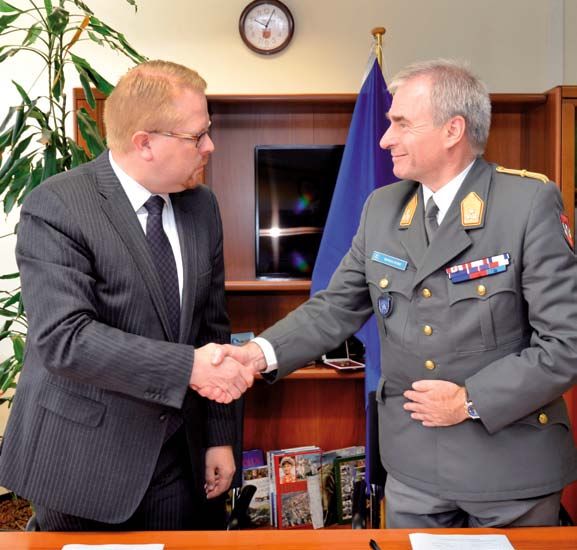
COLLECTIVE STRENGTH
operations (e.g. EU NAVFOR ATALANTA) and conceptual time and effort is needed and normally pays off in the end.
documents (e.g. EU’s Force Generation). The atmosphere in the Working Group is always driven by
collegiality and professionalism.
The EUMCWG regularly meets, as directed by the EUMC,
normally twice a week (Mondays and Thursdays), but can EUMCWG’s meetings are therefore always managed as an
also come together on short notice driven by current easy to use exchange forum of information and views.
events for extraordinary meetings. These meetings in Bringing the representatives together and giving them an
general take place in Council premises to assure its formal insight to the possibilities of what the EUMCWG has to offer,
decisional role. has already shown success. The experience of the
representatives directly to the different topics of interest
Informal meetings outside Council premises, for example
seems also to have make good developments. This success
hosted in the EUMS building, are also possible, in order at an
can be supported through constant communication and
early stage to pre-discuss a topic before its formal finalisation.
by working closely with people who know each other and
This helps to inform delegates ahead of upcoming formal
their business. Constantly stimulating this dialogue
discussions and possible decisions required.
between Member States is one key priority in order to find
Achieving consensual decisions and implementing them common solutions. The dialogue can be sometimes
always requires intensive and detailed discussions, exchange challenging but is always fruitful.
of views and national positions within all representatives of
The EUMCWG can be seen as the «engine room» of the
the 28 Member State delegations. The delegates of the
EUMC, always trying to prepare or directly provide sound
EUMCWG, usually ranking up to Colonel/Captain (Navy),
military advice as tasked by the EUMC. Therefore, the
discuss documents drafted by the EUMS, which is represented
Chairman EUMCWG is in close contact with the Chairman
at each meeting by an Action Officer as subject-matter
EUMC and personally reports back as the spokesperson of
expert for the particular topic, and drafter of the document
the EUMCWG to him following each meeting. He also gives
to be discussed. Depending on the topic, capitals may send
regular updates to the EUMC concerning the current state
national experts to reinforce the Working Group delegates.
of play of the Working Group discussion, especially when
It is always clear that Member States are at the heart of the topics at the Working Group level are starting to get too
EU’s general capacity to decide. Thus, in its regular and difficult and therefore need additional guidance and/or
event driven meetings, Member State representatives strive decisions by the Senior Military Representatives in the EUMC.
to reach consensus whenever possible. It helps to build
Sometimes re-utilising existing solutions and maximising
confidence through hands-on work in Brussels where the
the use of existing data sets in order to not having to
28 Member State representatives meet regularly. Confi
reinvent the same approaches over and over again, can be
dence, personal contacts and interaction among all
seen as beneficial to find an agreeable way out of upcoming
Working Group delegates play a very important role.
possible impasses. Therefore, a sort of collective memory
To be successful in achieving consensus, the Chairman in an environment of constantly changing people and
EUMCWG ensures at any time, that the work of the EUMCWG delegates, seems important together with the need of
is conducted impartially, having everybody on board during commonly shared awareness. Here the EUMCWG with its
the common effort of finding agreeable language. Therefore, frequent meetings, offers an ideal platform together with
the impartiality of Chairman EUMCWG at any time is of the the expertise of its delegates, and supported by the know
upmost importance together with his constant effort of how of the EUMS, to discuss and share ideas, in order to
having every voice and standpoint heard during the dis achieve a common goal. n
cussions. The EUMCWG is
important for its reach
out, to all Member States
and to relevant stake
holders.
Meetings must always be
an opportunity for real
deliberation. The strength
of common culture and
the quality of meetings
are intertwined, as mee
tings are the primary
forum in which professio
nal norms/views are
expressed, and some
times a different culture
needs to be consolidated.
The good reputation and
every success of the
EUMCWG in achieving
consensus, shows that
IMPETUS . 7
MISSION – RCA

EUFOR RCA: restaurer la sécurité
pour faciliter le retour à la vie
normale de la population de Bangui
                                                                                       By Lt Col Arnaud Drier de Laforte, EUMS

                                                                        opérationnelle4. Au terme de son mandat, ses tâches seront
                                                                        reprises par la Mission intégrée multidimensionnelle de
                                                                        stabilisation des Nations Unies en République centrafricaine5
                                                                        (MINUSCA).
                                                                        L’esprit de la mission est triple:
                                                                        • P rotéger les populations menacées par les groupes
                                                                          armés et restaurer les conditions permettant aux déplacés
    Patrouille à pieds dans les quartiers et                              banguissois de rentrer chez eux;
    collecte de renseignement d’ambiance.                               • Permettre aux acteurs humanitaires d'opérer dans des
                                                                          conditions de sécurité acceptables;
                                                                        • Permettre à la Force de l'Union Africaine d'atteindre sa
L’Union Européenne (UE) est présente en République                        pleine capacité opérationnelle le plus rapidement
centrafricaine (RCA) depuis de nombreuses années,                         possible.
notamment à travers sa Délégation ainsi que par ses projets             Le Général de Division Philippe PONTIÈS commande
soutenant les autorités locales dans le domaine du                      l’opération depuis son Etat-Major (OHQ) basé à Larissa. La
développement et de l’assistance humanitaire. Les sursauts              force comprend plus de 850 soldats dont près de 730 sont
d’instabilité, observés depuis le mois de décembre 2012,                déployés en République centrafricaine aux ordres du
ainsi que les graves exactions perpétrées à l’encontre des              Général de Brigade LION. Dix-neuf nations européennes
populations civiles ont décidé les Etats-Membres à agir                 sont représentées à Larissa et treize à Bangui, auxquelles
aussi sur le plan sécuritaire.                                          doivent être ajoutées les contributions géorgienne, près de
Le Conseil Européen de décembre 2013 invitait la HR/VP1 à               160 soldats, serbe, 1 équipe medicale et celle à venir de la
présenter, dans le cadre d’une approche globale, des                    Turquie. EUFOR se compose de deux compagnies et demie
propositions d’action incluant le recours aux instruments               d’infanterie, d’une compagnie de gendarmes, générée par
de la PSDC 2. Le 20 janvier 2014, le Conseil                                   la Force de Gendarmerie Européenne, et de tous les
approuvait un concept de gestion de crise3 et                                       appuis et soutiens nécessaires lui permettant de
l’opération EUFOR RCA était établie le 10                                              remplir pleinement son rôle sur le théâtre
février. Le 1er avril les moyens gagés par les                                           (CIMIC, EOD, soutien santé, logistique…).
Etats-Membres sont suffisants pour                                                           Depuis son déploiement à Bangui,
lancer l’opération: les premières tâches             une lettre de                           EUFOR a progressivement pris la
du mandat sont réalisées sur le terrain                                                      responsabilité de la sécurité de l’aéroport
dès le 30 Avril.                                     mission très                            puis des arrondissements 3 et 5 qui
                                                                   claire                    s’avèrent aujourd’hui les zones les plus
                                                                                             complexes de la capitale. Dans ces
Un mandat clair reposant sur                                                                secteurs, malgré une amélioration
une force robuste…                                                                        significative du niveau de sécurité, les
                                                                                        soldats européens font face à des conditions
Les Etats-Membres ont défini une lettre de                                          sécuritaires rudes et sont régulièrement pris à
mission très claire: agissant dans le cadre du                                  partie par des groupes armés non contrôlés6.
chapitre VII de la Charte des Nations Unies, la force
européenne doit conduire, dans Bangui, une opération dite               Quelques semaines après la déclaration de sa FOC,
de transition (bridging operation) contribuant à l’instauration         intervenue le 15 juin, l’action d’EUFOR RCA est unanimement
d’un environnement sûr et sécurisé, pendant quatre à six
mois, à partir de la déclaration de sa pleine capacité                  4
                                                                           Full Operational Capability – FOC.
                                                                        5
                                                                          Initialement, la relève était prévue par la Force de l’Union Africaine,
1
   Haute Représentante de l’Union pour les affaires étrangères et la      la MISCA, qui sera finalement absorbée par la MINUSCA à partir du
    politique de sécurité et vice-présidente de la Commission              15 septembre 2015.
    européenne.                                                         6
                                                                          Depuis la déclaration de la FOC, quelque quinze soldats ont été blessés
2
    Politique de Sécurité et de Défense Commune.                           lors d’accrochages armés avec ces groupes armés, les deux-tiers ont
3
    Crisis Managment Concept – CMC.                                        fait l’objet de rapatriement sanitaire vers l’Europe pour être soignés.

8 . IMPETUS
MISSION – RCA

reconnue par l’ensemble de ses partenaires, qu’ils soient                  premières étapes de la planification: à Bruxelles, parmi les
civils ou militaires, ainsi que par la population des                      instances de l’UE (bureau géographique, CMPD, EMUE, DG
arrondissements où EUFOR est déployée.                                     ECHO…), à l’OHQ à Larissa et à Bangui, des mécanismes de
                                                                           coordination, voire de coopération, ont été mis en place
                                                                           pour que, dans le respect des attributions et des spécificités
…mais qui ne peut être efficace durablement                                propres à chacun des acteurs, militaires ou humanitaires,
que dans le cadre d’une approche globale,                                  l’action globale de l’UE soit la plus appropriée pour
conçue dès la phase de planification et mise en                            répondre aux attentes locales.
œuvre tout au long de l’opération                                          L’action d’EUFOR s’inscrit donc pleinement dans une
En dépit d’un mandat relativement bref, six mois, l’impact                 approche globale, c’est ce qui doit permettre aux effets
qu’aura EUFOR RCA pour contribuer à résoudre7 la crise                     militaires, de courte durée, de contribuer au redressement
centrafricaine doit être replacé dans le contexte plus global              général du pays.
des efforts réalisés par l’UE en RCA. Cette opération est
l’une des composantes de l’action globale de l’Union. Dans                 Le besoin d’une réponse rapide, l’autre
ce contexte sécuritaire particulièrement dégradé, il faut
bien reconnaître qu’elle en constitue une brique                           caractéristique majeure d’EUFOR RCA.
préliminaire essentielle. Elle permet, en effet, de restaurer              L’urgence sécuritaire et la détresse humanitaire vécue par
un environnement sécuritaire favorable à la reprise des                    la population de Bangui ont obligé les Etats-Membres à
projets de soutien humanitaire et de développement,                        réagir rapidement et, pour la première fois, la procédure de
majoritairement suspendus suite aux troubles survenus                      planification et de validation politique accélérée (FTP)9 fut
depuis décembre 2012.                                                      appliquée. Dès lors que le principe d’une réponse urgente10
Dès le début de la planification, les effets potentiels des                et que le FTP furent acceptés par les Etats-Membres, il aura
instruments non-PSDC ont été pris en compte: pour                          fallu à peine deux semaines pour que le CMC soit approuvé
renforcer l’action d’EUFOR, pendant son mandat lui                              par le Conseil et la directive militaire initiale11 transmise
permettant ainsi d’atteindre ses objectifs plus                                       par le Comité Militaire au futur Commandant de
efficacement, et pour prolonger ses acquis à                                             l’Opération.
son départ.                                                                             Ultérieurement, il sera temps de revenir sur
                                                                                          toutes les leçons à tirer de l’usage du FTP
Par exemple, il convient de citer le projet                  Permettre                     dans de telles circonstances. Il doit
visant à recycler et équiper 480 policiers
et gendarmes centrafricains. Ce                             aux acteurs                    cependant être noté, dès à présent, qu’il
                                                                                           ne peut être conduit sous forte contrainte
programme, amorcé sept mois avant le
lancement d’EUFOR et financé par
                                                           humanitaires                    temporelle que s’il a été anticipé. D’un
                                                                                           point de vue militaire, l’EMUE et le Comité
l’instrument contribuant à la stabilité et à                  d’opérer                    militaire  doivent maintenir une veille
la paix s’intègre pleinement à l’action
        8

d’EUFOR: il lui offre les interlocuteurs                                                 stratégique    ciblée et permanente en
centrafricains idoines pour mener des                                                  conduisant notamment leurs propres
patrouilles mixtes parmi la population. Ce travail                                 travaux de planification préalable. Mais au-delà
commun améliore l’efficacité d’EUFOR, et constitue                              de ce  premier niveau, ce travail n’est pertinent que
un moyen d’assoir, de manière pérenne, les capacités et les            s’il est nourri des réflexions amont menées avec les autres
compétences des forces de sécurité intérieure. Elles                acteurs des institutions européennes, en particulier: les
pourront, grâce aux bonnes pratiques acquises, poursuivre           directions géographiques, la CMPD et les services concernés
leur action au départ d’EUFOR.                                      de la Commission. Ces échanges d’information sont
                                                                    impératifs à la bonne compréhension des enjeux et
La lutte contre l’impunité fut, elle aussi, identifiée rapidement   permettent de proposer aux Etats-Membres, sous faible
comme un facteur devant conforter la crédibilité de l’action        préavis, des options cohérentes, adaptées et réalistes. Ce fut
d’EUFOR, tout en renforçant son efficacité. Dès lors,               le cas pour l’opération EUFOR RCA. La rapidité avec laquelle
simultanément à la génération de force, les services de la          les Etats ont approuvé les propositions démontre la
Commission, en liaison étroite avec le SEAE, ont réorienté          pertinence des travaux préparatoires réalisés conjointement.
des projets existants, au profit de la reconstitution d’une         En outre, en aval, ce rythme fut entretenu par une procédure
chaîne pénale d’urgence. Ceci permet à EUFOR de pouvoir             complète de transfert des travaux de planification à l’OHQ
bénéficier d’un système judiciaire complet (certes avec une         dont l’appropriation rapide a permis de conserver le tempo
capacité d’absorption limitée) permettant le traitement             initial.
judiciaire et pénal des criminels qu’elle arrête. Ce projet, qui
bénéficie directement à EUFOR pendant la durée de son               Pour conclure, lancée avec rapidité et détermination,
déploiement, pose les bases d’une reconstruction ultérieure         EUFOR RCA atteint aujourd’hui les objectifs fixés lors de sa
des instances judiciaire et pénale centrafricaines.                 conception. En dépit d’une présence relativement brève sur
                                                                    le terrain, elle joue un rôle majeur pour permettre aux
Les domaines de l’assistance humanitaire et du                      instruments non-PSDC de développer pleinement leurs
développement, furent eux aussi pris en compte dès les              effets au profit de la population et des autorités locales.
                                                                    EUFOR RCA incarne entièrement le concept d’approche
                                                                    globale prôné par l’Union Européenne. n
7
    L e mandat initial était prévu durer 6 mois. Toutefois, à la mi-
     septembre, les Etat-Memebres ont donné leur accord pour une
     extension de trois mois (cette décision doit maintenant être          9
                                                                               Fast track Process - FTP
     officialisée par le Conseil de l’Union Européenne, à la fin du mois   10
                                                                               Qui permet de s’abstenir de la rédaction du Political Framework for
     d’octobre 2014.                                                            Crisis Approach – PFCA.
8
     Anciennement «Instrument pour la Stabilité».                          11
                                                                                Initiating Military Directive - IMD

                                                                                                                                  IMPETUS . 9
LOGISTICS

Military Strategic Lift in Crisis
Response – Making the most
of the «Last Resort»
                                               By Commander Paul Matthews Royal Navy, Logistics Directorate, EUMS

                                                                 It was clear from the outset of the global response to
                                                                 Haiyan that the extent of the military response to the
                                                                 disaster would vary significantly between Sovereign States
                                                                 and Crisis Response Co-ordinators. While OCHA1 have
                                                                 provided clear guidance in terms of when and how military
                                                                 assets should be used, the response varied considerably on
                                                                 a case by case basis with varying degrees of co-ordination
                                                                 and communication. For example, some EU Member states
                                                                 responded on a bilateral basis with the Philippine
                                                                 authorities, while informing DG ECHO2 of their activity
                                                                 while some Member States offered the use of military
                                                                 assets to ECHO but would not deploy them until specifically
                                                                 asked to do so. While the author does not wish to suggest
                                                                 that any of these approaches is inappropriate, it highlights
                                                                 the complexity of using military assets during times of
                                                                 Humanitarian Aid crises and that political agendas will need
                                                                 to be factored into any broader planning assumptions.
  UN Logistics Operations Centre, Brindisi, Italy.               From an EU Military Staff perspective, it is appropriate to
                                                                 emphasise that strong links have been established with DG
                                                                 ECHO over the course of recent years and ECHO fully
                                                                 understands what the military is able to bring to the table
The EU Deployability Conference is an annual event,
                                                                 in support of their humanitarian operations. Indeed, the
organised by the EUMS, Logistics Directorate. Its ambition
                                                                 recently established Emergency Response Co-ordination
is to get together the Movement and Transportation (M&T)
                                                                      Centre in Brussels has dedicated office space for EUMS
experts from the EU Member States, EU institutions,
                                                                            liaison officers to use in times of crisis, considerably
partner organisations and high level executives
                                                                                 enhancing the ability of the military staff to
from the existing Strategic Lift deployment
                                                                                    provide a military perspective when called
enablers. The conference aims to gain a
holistic understanding of the deployment              deployment                      upon to do so. This was particularly evident
                                                                                       during the early stages of the response to
challenges that the EU faces and to update              challenges                     Haiyan which saw EUMS liaison officers
participants on key initiatives put in place
or being explored by Member States, the                that the EU                     attending regular meetings within ECHO,
                                                                                       providing militar y advice to the
EU actors and the Strategic Partners in                      faces                    Humanitarian Aid providers as part of the
order to address these challenges and to
                                                                                    EU’s comprehensive approach to the crisis.
share best practice and experiences.
Following the success of the 2012 conference,
this year’s event took place in the United Nations                         The conference in Brindisi was very well supported
Global Support Centre in Brindisi, Italy on 6 and 7 May and         by   Member       States, Strategic Partners and, most
the theme for the event was «Military Strategic Lift in Crisis   importantly      in view   of the context for the event, by the
Response – Making the Best Use of the Last Resort». Using        United     Nations.       With   presentations delivered by
the global response to Typhoon Haiyan in the Philippines         representatives     from  UN  OCHA,  the World Food Programme
(November 2013) as the operational backdrop to the theme         and     UN   Department        of Peace   Keeping Operation’s
of this conference, the delegates sought to better               Movement        and    Transportation    Officer, the challenges
understand the United Nations guidelines on the use of
Foreign Military and Civil Defence Assets (MCDA) in crisis       1
                                                                    O CHA – The United Nations Office for the Co-ordination of
response (The Oslo Guidelines) and to examine ways in                Humanitarian Affairs.
which the use of military Strategic Lift could be more           2
                                                                    D G ECHO – The European Union’s Directorate General of
readily incorporated into the Crisis Response arena.                 Humanitarian Aid and Civil Protection

10 . IMPETUS
LOGISTICS
Deployability Conference Delegates, Brindisi, Italy.
associated in the utilisation of military assets in crisis providers and Strategic Lift entities to work more closely
response were very clearly outlined. At the forefront of in the future and the UN Logistics Base positively
these challenges is the concept that the use of military encouraged future events to be held within their facilities
assets in crisis response must be taken with due at Brindisi. Furthermore, as a direct result of the conference,
consideration to the core principles of Humanity, Neutrality the author was subsequently invited to participate in UN
and Impartiality and should only be utilised as the «Last OCHA’s working consultative group on Humanitarian
Resort» and when there are no other civilian alternatives. Civilian/Military Co-ordination in New York and it is
UN speakers also highlighted that when a decision anticipated that this invitation may be extended to
is taken to use military assets then their use other key military strategic lift providers in the
should be clearly limited in time and scale, future. UN OCHA also acknowledged that
presenting an exit strategy that defines in tangible benefit was gained by the UN’s
how the function could, in the future, be support participation in the event and that they
undertaken by civilian personnel. The UN would wish to be included on future
view was complemented by an excellent of their conferences in order to maintain the co-
overview of DG ECHO’s approach to humanitarian operation between the key stakeholders.
military engagement in Crisis Response The next Deployability Conference will
which further highlighted the close operations take place in Sofia, Bulgaria on 24 and 25
relationship that the EUMS enjoys with the March 2015 by kind invitation of the Bulgarian
E U ’s H u m a n i t a r i a n A i d p r o v i d e r s . Ministry of Defence. It is anticipated that the
Notwithstanding this, the aforementioned conference will focus on the strategic lift challenges
complexities associated with the deployment of military associated with operating on the African continent and
assets are significant and the use of military assets as part will include overviews from EUTM Mali, EUTM Somalia and
of ECHO’s response to Humanitarian Aid is a decision that EUFOR CAR. n
is not taken lightly. Perhaps the most thought provoking
discussion followed a presentation by Dr Bas Rietjens, a
professor from the Netherlands Defence Academy who has
a deep interest in Civil Military (Civ/Mil) co-operation in
Crisis Response. Dr Rietjens acknowledged the constraints
of the Oslo Guidelines but very clearly articulated the
potential benefits in enhanced Civ/Mil co-operation in the
field of Humanitarian Aid and Crisis Response, particularly
in the area of Strategic Lift where assets are able to make
significant contributions without undermining the
«neutrality» of the front line aid providers.
Civ/Mil co-operation in Crisis Response is a complex and
sensitive issue and while the meeting served as an
opportunity for the Humanitarian community to become
better acquainted with military lift providers, no silver
bullet was identified to enable greater engagement in
Humanitarian operations. Despite this, it was clear that Director EUMS Logistics BG LORIA chairs
Deployability Conference.
further opportunities exist in order for Humanitarian Aid
IMPETUS . 11GLOBAL MEMO
EU Missions
and Operations
S
ince 2003, the EU has conducted, or is conducting, 30 missions and operations under CSDP. 9 are
military operations/missions. The remainder are civilian missions. Currently, the EU is undertaking
16 missions and operations under CSDP (5 military missions and operations and 11 civilian missions).
Missions/Operations Military Civilian
EUJUST LEX-Iraq (Iraq), Mar 05 – 31 Dec 13
MIDDLE EAST EUPOL-COPPS (occupied Palestinian territory), Jan 06 – 30 Jun 15
EUBAM Rafah (occupied Palestinian territory), 25 Nov 05 – 30 Jun 15
CONCORDIA (former Yugoslav Republic of Macedonia), Mar – Dec 03 EUPOL Proxima (former Yugoslav Republic of Macedonia), Dec 03 – Dec 05
EUFOR ALTHEA (Bosnia and Herzegovina), Dec 04 – Nov 15 EUPAT (former Yugoslav Republic of Macedonia) followed EUPOL Proxima, Dec 05 – Jun 06
EUPM BiH Bosnia and Herzegovina, 1 Jan 03 – 30 Jun 12
EUJUST Themis (Georgia), Jul 04 – Jul 05
EUROPE
EUPT Kosovo, Apr 06 – Feb 08
EULEX Kosovo, 16 Feb 08 – 14 Jun 16
EUMM Georgia, 01 Oct 08 – 14 Dec 14
EUAM Ukraine, A two-year mandate is foreseen
AMM (Aceh Province, Indonesia), Sep 05 – Dec 06
ASIA
EUPOL AFGHANISTAN (Afghanistan), 15 Jun 07 – 31 Dec 14
ARTEMIS (Ituri province, Congo RDC), Jun – Sep 03 EUPOL Kinshasa (Congo RDC), Apr 05 – Jun 07
EUFOR RD Congo (Congo RDC), Jun – Nov 06 EU SSR (Guinea-Bissau), Jun 08 – Sep 10
EUFOR TCHAD/RCA (Chad-Central African Republic), Jan 08 – Mar 09 AMIS 11 Support, Darfur Province (Sudan), Jul 05 – Dec 07
Operation ATALANTA (EUNAVFOR Operation to counter piracy EUVASEC South Sudan, Sep 12 – Jan 14
off the coast of Somalia) Dec 08 – Dec 16 EUPOL RD Congo (Congo RDC), 01 Jul 07 – 30 Sep 14
AFRICA EUTM Somalia (Training Mission, Somalia), Apr 10 – Mar 15 EUCAP NESTOR, Horn of Africa and the Western Indian Ocean, 01 Aug 12 – 12 Dec 16
EUTM Mali (Training Mission, Mali), 18 Feb 13 – 18 May 16 EUSEC RD Congo (RDC), EUMS provides a POC for all issues related to the execution of
EUFOR RCA (Central African Republic, Africa) Apr 14 – Dec 14 the mandate Jun 05 – Jun 15
EUCAP SAHEL Niger, 16 Jul 14 – 15 Jul 16
EUCAP Sahel Mali, A two-year mandate is foreseen
EUBAM Libya 22 May 13 – 21 May 15
Note: Missions/Operations in bold are ongoing. Dates refer to agreed mandates and do not mean that missions/operations will necessarily close on dates indicated. Information correct at time of printing in October 2014.
MIDDLE EAST
MILITARY MISSIONS
CIVILIAN MISSIONS
OCCUPIED PALESTINIAN TERRITORY
OCCUPIED PALESTINIAN TERRITORY
EU BAM RAFAH
EUPOL COPPS
Type: EU Border assistance and monitoring mission.
Type: EU Police and rule-of law mission.
Objectives: To provide a «Third Party» presence at the Rafah Crossing Point (RCP)
on the Gaza-Egypt border, mandated to verify and evaluate the Objectives: To contribute to the establishment of sustainable and effective policing
professional conduct of the Palestinian Authority (PA) border police arrangements under Palestinian ownership, in accordance with best
and customs services at the RCP and to contribute to confidence international standards, in cooperation with the EU’s institution
building between Israel and the PA. building programmes as well as other international efforts in the wider
context of Security Sector, including Criminal Justice Reform.
Mandate: Operational phase began on 25 November 2005. However,
operations at the RCP have been suspended since June 2007 due to Mandate: Launched on 1 January 2006 for an initial duration of 3 years, the
Hamas’ violent takeover of the Gaza Strip. The Mission has current Mission mandate was recently extended from an initial 1
maintained its readiness and capacity to redeploy to the RCP once year, until 30 June 2015.
political and security conditions allow. The mission was recently
extended until 30 June 2015. Commitment: Headquarters in Ramallah, the Mission has an authorised strength of
71 international and 41 local mission members. The current strength
Commitment: The authorised and actual strength of the Mission is 4 international is 62 international mission members, including police experts,
mission members, currently contributed by 3 EU Member States. judges and prosecutors + 43 local staff). A total of 19 Member States
(Currently 3 + 4 local staff) The budget for the period of July 2014 to and the third states of Canada (2) and Norway (1) contribute Mission
June 2015 is €0.965 million. personnel. The budget for the period of July 2014 to June 2015 is
€9.820 million.
Acting Head Guy Rolin (FR)/ Selection process ongoing.
of Mission: Acting Head Major Rodolphe Mauget (FR).
of Mission:
12 . IMPETUSGLOBAL MEMO
EUROPE AND ASIA GEORGIA
EUMM GEORGIA
MILITARY MISSIONS CIVILIAN MISSIONS
Type: EU civilian monitoring mission under the CSDP framework
Objectives: Following the armed conflict between Russia and Georgia in August
BOSNIA AND HERZGOVINA 2008, EUMM Georgia monitors the implementation of the ceasefire
agreement brokered by the EU on 12 August and Implementing
Measures of 8 September. EUMM has the following mandated tasks:
European Union Force ALTHEA (EUFOR ALTHEA) Stabilisation, Normalisation, Confidence building and Information:
Type: Military EU-led operation. Mandate: Launched 15 September 2008, the Mission’s mandate has been
extended to 14 December 2014.
Objectives: Under the authority of the Council and in line with the mandate,
EUFOR ALTHEA supports Bosnia and Herzegovina (BiH) efforts to Commitment: Headquarters in Tbilisi with 3 Regional Field Offices in Mtskheta,
maintain a Safe and Secure Environment (SASE), and in parallel, Gori and Zugdidi, the Mission has an authorised strength of 282
conducts capacity building and training of the Armed Forces of BiH international staff (Currently 262 + 131 local staff). A budget of
(AFBiH) in order to contribute to the stability of the state. €26.65 million is allocated for the period up to 14 December 2014
(fifteen months). (23 contributing EU nations).
Mandate: In December 2004, EUFOR took over responsibility of maintaining a
SASE in BiH from the NATO-led Stabilisation Force (SFOR). The EU-led Head of Toivo Klaar (EE). EUSR for the South Caucasus and the Crisis in Georgia:
military Operation EUFOR ALTHEA is a United Nations (UN) Chapter Mission: Herbert Salber (DE). Head of Delegation: Philip Dimitrov (BG).
VII mission.
Commitment: In October 2011 the Foreign Affairs Council (FAC) decided to keep the
executive role to support BiH’s authorities’ efforts to maintain the UKRAINE
SASE. By September 2012, the operation had been reconfigured with
forces which, in addition, will focus on capacity building and
training. There are currently 907 troops from 17 EU Member States
and 5 Third Contributing States ready to carry out these tasks. EUFOR EUAM UKRAINE
is backed up by the Intermediate Reserve Forces and stands ready to Type: EU advisory mission for civilian security sector reform.
respond to any security challenge. Common costs for the operation
in 2014 are €14. 4 million. Objectives: To contribute to the development of effective, sustainable and
accountable civilian security services that contributes to
Command: The operation is conducted under Berlin+ arrangements, where EU strengthening the rule of law in Ukraine, for the benefit of all
Staff Group in NATO Supreme Headquarters Allied Powers in Europe Ukrainian citizens throughout the country.
(SHAPE) acts as an EU Operational HQ. Deputy Supreme Allied
Commander Europe (DSACEUR), General Sir Adrian Bradshaw (UK) is Mandate: An initial mandate of two years is foreseen by the Council Decision of
the EU Operation Commander. Major General Dieter Heidecker 22 July 2014, to start when the Mission is formally launched.
(AT) is the Force Commander (COM EUFOR) of EUFOR ALTHEA.
Commitment: Operational planning and other preparations for the Mission are
underway; a civilian response team was deployed in Kyiv in May 2014,
followed by the Mission Advance Team and later the Core Team.
Headquarters will be in Kyiv. A budget of € 2.68 million was allocated for
the first four-month start-up phase of the mission until 30 November.
Head of Kalman Mizsei (HU) was appointed on 24 July 2014. Head of
Mission: Delegation: Jan Tombinski (PL).
AFGHANISTAN
KOSOVO
EUPOL AFGHANISTAN
EULEX KOSOVO
Type: EU Police mission with linkages into wider rule of law.
Type: EU Rule of law mission.
Objectives: To support the Afghan government in moving towards the
establishment of sustainable and effective civilian policing Objectives: As the largest civilian mission launched under the CSDP, EULEX
arrangements that will ensure interaction with the wider criminal Kosovo’s task is to monitor, mentor and advise national authorities
justice system under Afghan ownership. Objectives are implemented with regard to police, justice and customs, while retaining executive
through assistance in policy-level reform of the Ministry of Interior, responsibilities in specific areas of competence.
training and capacity-building of the Afghan National Police
leadership as well as through support to relevant justice institutions. Mandate: Launched on 16 February 2008, the Mission’s current mandate runs
until 14 June 2016.
Mandate: Launched on 15 June 2007, the mandate was extended until 31
December 2014. The Council agrees in principle on an extension until Commitment: Headquartered in Pristina, the Mission has an authorised strength of
the end of 2016. 800 international mission members (Currently 878 + 936 local staff).
A total of 27 EU Member States contribute personnel and five Third
Commitment: Headquarters in Kabul with 2 field offices (Herat, Mazar-e Sharif), State contributors Norway, Switzerland, Turkey, USA and Canada are
the Mission has an authorised strength of 400 international mission supporting the Mission. A budget of €34 million is allocated for the
members, including police, legal and administrative experts. The period of 15 June 2014 to 14 October 2014 for the transition phase of
current strength is 277 International + 197 local staff. A total of 23 the Mission. Preliminary steps are taken for the budget of €55.820.000
EU Member States contribute personnel. The budget for the period allocated for the period 15 October 2014 to 14 June 2015.
of 1 June 2013 to 31 December 2014 is €108.5 million.
Head of AHoM: Joëlle Vachter (FR). EUSR and Head of EU Office: Samuel
Head of District Police Commissioner Karl-Åke Roghe (SE). Mission: Zbogar (SI).
Mission: EUSR: Franz-Michael Skjold Mellbin (DK).
IMPETUS . 13GLOBAL MEMO
AFRICA
MILITARY MISSIONS MALI
CIVILIAN MISSIONS
EUCAP SAHEL
DEMOCRATIC REPUBLIC OF CONGO (DRC) Type: EU Capacity building mission.
Objectives: The objective of EUCAP Sahel Mali is to allow the Malian authorities
EUSEC RD CONGO to restore and maintain constitutional and democratic order and the
conditions for lasting peace in Mali, and to restore and maintain
Type: Support mission in the field of Security Sector Reform (SSR). State authority and legitimacy throughout the territory of Mali by
means of an effective redeployment of its administration.
Objectives: Provides advice and assistance on defence reform (as part of SSR) in
the DRC with the aim of assisting the Congolese authorities in Mandate: The Council Decision establishing the mission applies for 2 years,
establishing a defence apparatus capable of guaranteeing the starting from the day on which the mission is formally launched.
security of the Congolese people.
Commitment: Temporary HQ in Bamako. Since 7 July 2014 the Core Team (23
Mandate: The SSR mission was launched on the 08 June 2005. In September international members) is on the ground. The budget for the first
2012 the PSC agreed on the need to extend EUSEC RD Congo for 1 nine months is € 5.5 million. The second CfC has been launched on
year (mandate 7), followed by a final transition phase of 12 months 29 July 2014, comprising 26 positions.
(mandate 8, 2014). During this period EUSEC should strive for a
finalisation or effective hand over of its tasks to the Congolese Head of Ambassador Albrecht Conze (DE) was appointed on 26 May 2014.
authorities, other EU instruments or bilateral or international actors Mission: Head of EU Delegation: Ambassador Richard Zink (DE). EUSR for
with a view to sustainability of the result. The mandate has been the Sahel: Michel Dominique Reveyrand-de Menthon (FR).
extended until 30 June 2015 (press release ST 13310/14).
Commitment: The mission consists of 35 military and civilian personnel from 10 EU
Member States and one from the USA + 29 local staff. The mission is
located in Kinshaha and has 1 detachment in Goma. Bukavu LIBYA
detachment was closed on the 12 September 2013. The mission
budget for 2014 is €8.5M million. A budget of € 4.6 million is
available until 30 June 2015.
EU Integrated Border Management
Head of Colonel Jean-Louis Nurenberg (LU). Assistance Mission in Libya (EUBAM Libya)
Mission: Type: EU Border assistance.
Objectives: The objectives of EUBAM Libya are, in the short term, to support the
Libyan authorities to develop capacity for enhancing the security of
Libya’s land, sea and air borders and, in the long term, to develop a
broader integrated border management strategy.
Mandate: The mission was launched on 22 May 2013 and has a mandate until 21
May 2015. (The mission has been temporary relocated out of Libya on
31st July 2014 and since October 2014 downsized to 17 people from
the 57 initially employed from 17 EU contributing states.
Commitment: The Mission operates from its Headquarters in Tripoli although its
work is to benefit all the country’s borders. The annual budget for
the Mission’s second year is €26.2 million. The Mission has an
authorised strength of 111 international staff. The actual strength
after the first year of operations is 61 international staff.
Head of Antti Hartikainen (FI).
Mission:
EUCAP SAHEL
HORN OF AFRICA AND
NIGER THE WESTERN INDIAN OCEAN
Type: EU Capacity building mission.
EUCAP NESTOR
Objectives: Through training and advising, the Mission aims to improve the
capacities of Nigerien Security Forces (Gendarmerie, National Police, Type: Capacity building mission.
National Guard) to fight terrorism and organised crime in an Objectives: A regional civilian mission augmented with military expertise,
effective and coordinated manner, with a view to contribute to aiming to assist countries in the Horn of Africa and the Western
enhancing political stability, security, governance and social Indian Ocean in strengthening their maritime security capacity in
cohesion in Niger and in the Sahel region. order to enable them to fight piracy more effectively. The Mission is
complementary to Operation ATALANTA and EUTM Somalia, and
Mandate: The initial two-year mandate starting on 16 July 2012 was extended follows a regional approach to address a regional problem. Currently
by a further two years until 15 July 2016. 83 + 18 local staff; 15 EU contributing states + 2 non EU (Norway +
Australia).
Commitment: Headquarters in Niamey, the Mission is staffed with 47 International Mandate: Current mandate from 16 July 2012 to 12 December 2016.
+ 27 local staff; 11 EU contributing states. An annual budget of €9.2
million was allocated for the period of 16 July 2013 to 15 July 2014. Commitment: The mission has its headquarters and a country office in Djibouti and
country offices in Seychelles. A Nestor liaison officer is embedded in
Head of Police Commissioner Filip De Ceuninck (BE). Head of Delegation: the EU Delegation to Tanzania. The mission has staff in Nairobi who
Mission: Raul Mateus Paula (PT). EUSR for the Sahel: Michel Dominique deploy on a semi-permanent basis to Somalia.
Reveyrand-de Menthon (FR). Head of Mr. Etienne de Poncins (FR).
Mission:
14 . IMPETUSYou can also read


