In-tuition - University of Pretoria
←
→
Page content transcription
If your browser does not render page correctly, please read the page content below

In-tuition
                                 Newsletter of the Faculty of Education at the University of Pretoria

January/February 2021                  Vol. 15 – No. 1

Inside this issue:                       International Early Childhood           www.up.ac.za/education
                                         Education webinars
Faculty of Education recognises more
excellence in research, teaching and     LLITUP trains Faculty of Humanities
learning                                 staff on online teaching with ClickUP
CENTRE FOR THE STUDY OF RESILIENCE
                                                    2   Message from the Dean
                                                                                                 9   Pretoria leads ESRC-UKRI study

     CONTENTS
                                                    EVENTS                                           to improve the lives of children in
                                                                                                     poverty
                                                    3   Faculty of Education recognises more
                                                        excellence in research, teaching and     10 Resilience workshop facilitated by
                                                        learning                                    international expert Dr Michael
                                                                                                    Ungar
                                                    4   Faculty of Education celebrates
                                                        books written by staff                   11 Introduction of the University of
  In-tuition is the official newsletter             4   Department of Humanities Education
                                                                                                    Pretoria team working on the study
  of the Faculty of Education,                          – Postgraduate Orientation Day
                                                                                                    funded by the ESRC-UKRI
  University of Pretoria                                                                         13 COVID-19 online education resource
                                                    COLLABORATIONS AND CONFERENCES
                                                                                                 13 Práxis Educativa
  Chief Editor    Mrs Sharon Mashau                 5   International Early Childhood
  Email           sharon.mashau@up.ac.za                                                         13 University of Pretoria Postgraduate
                                                        Education webinars
                                                                                                    Study Abroad Programme
  Editor          Mr Thabo Masenamela               5   Life Orientation Colloquium
                                                                                                 16 New resilience-related publications
  Email           thabo.masenamela@up.ac.za
                                                    TEACHING AND LEARNING                        16 Connect with the Centre for the
  Layout          Dreamwave Design Solutions                                                        Study of Resilience (CSR)
                                                    6   The PGDip in TVET programme sets
  Email           info@dreamwavedesign.co.za            the pace
                                                                                                 CLICKUP
  Copy editing Kaleela Callaghan                    6   Zoom session hosted by Prof Roger
                                                                                                 17 LLITUP trains Faculty of Humanities
  Email        kaleela.callaghan@gmail.com              Hale on 13 August 2020
                                                                                                    staff on online teaching with ClickUP

  Printing        Business Print                    INTERNATIONALISATION
                                                                                                 ART AND COMMUNITY
  Email           hello@businessprint.co.za         7   Appointment of Dr Adeyemo as
                                                                                                 19 Making history – first online visual art
                                                        Country Director (South Africa) at
                                                                                                    education exam exhibition
                                                        the Society of Transnational
                                                        Academic Researchers (STAR)              19 Career Reach report: Tembisa West
  Official social media pages of the                                                                Secondary School
                                                    7   Big Thinker Award from Herrmann
  Faculty of Education:                                 International
                                                                                                 STAFF NEWS
         UP Faculty of Education                    CENTRE FOR EVALUATION AND                    20 Dr Sello Galane – An extraordinary
                                                    ASSESSMENT                                      lecturer in our Department
         EducationUP@Educationtuks
                                                    8   Fifth PIRLS 2021 National Research       20 We welcome Mrs Sharon Mashau
         @UPFacultyofEducation                          Coordinator meeting
                                                                                                 ANNOUNCEMENTS
                                                    8   South Africa participates in the PIRLS
  Students and colleagues are urged to follow           2021 pilot study                         21 Distance Education and Teachers’
  and like our pages, follow the Faculty’s                                                          Training in Africa (DETA) Conference
                                                    8   The second Questionnaire
  activities, and share them with friends,
                                                        Development Group meeting for
  prospective students, and family.
                                                        PIRLS 2021

1 | University of Pretoria | Faculty of Education
DEAN’S MESSAGE

Message from the Dean
Herewith I would like to welcome
you to the 2021 academic year.
Like the rest of the world, our
country, the University and our
Faculty experienced a long and
challenging year that presented
us with many challenges and
required us to be responsive,
adaptive and resilient.
By applying these skills, we were able to
make it through the year. The COVID-19
pandemic that swept across the globe
emphasised the critical need for higher
education to craft and immediately
implement a response to issues that had
previously been thought of as future
challenges. Across the world, learners from
all walks of life had to come to terms with
severe disruptions in their education as
teaching shifted from contact teaching and
learning to online teaching and learning in a
matter of weeks. The application of the 21st-
century skills, so often referred to, suddenly
became critical in the present and resilience,       The Dean of the Faculty of Education, Professor Chika Sehoole
complex problem solving, communication,
tolerating uncertainty, adapting to a rapidly     gender, class and other critical variables.          spaces by educational processes, discourses
changing environment, and self-regulation         This means that the fact that you are a black        and practices. Interventions will be made to
became essential across all levels of the         female from a poor rural background should           support a shift towards an understanding
various systems.                                  not in any way impact on your chances of             of education as an entangled, material and
                                                  succeeding at the University of Pretoria.            affective web of power relations between
In responding to this new future, the                                                                  people, places and spaces in evolving
Faculty of Education focused on increased         The University has a Fly@UP campaign                 political, socio-cultural, socioeconomic and
investment in technology to support               to ensure that our students finish their             technological contexts in which learning
blended learning in contact programmes            studies within the prescribed minimum                occurs. We further need to investigate the
and advance students’ mental health and           period. This will require a social contract          use of technology to establish and maintain
wellbeing through Faculty-wide initiatives. It    between ourselves as a Faculty and our               social connectedness despite physical
will become increasingly important for the        students. We are committed to ensuring               isolation, prevent burnout and promote
Faculty to leverage its specialist knowledge      that we can offer the best-qualified lecturers       wellbeing in a work and learning space with
of curriculum design and development,             in the relevant fields of study, who will            no boundaries.
pedagogy and learning to influence the            present classes according to a timetable
design of learning programmes by focusing         schedule, give students assignments and              Finally, we will focus not only on what we are
not only on the design of programmes but          administer tests and examinations according          good at but also on what we are good for.
also on the design of students’ experiences       to the University’s lecture, test and exam           This will require us to become responsive
in interacting with those programmes.             timetables.                                          to societal needs. Through strategic
                                                                                                       collaborations and driven by our quest to
In the Faculty of Education, we see the future    The Faculty will champion a systemic and             respond to societal needs, the Faculty has
of teaching and learning as one in which          coherent approach in exposing students               over the past few years developed a suite
students and their learning experiences will      to a mix of all three delivery modes                 of professional qualifications through which
be the focus and point of departure. The          (distance, blended and online) to ensure             we contribute to the renewal of skills in the
design and development of that learning           that graduates are equipped with the                 education profession. School leadership,
experience to support learning will be critical   competencies and skills that are believed            leadership in the TVET sector, training in
to our students’ academic success.                to be crucial for the 21st century. These            virtual impairment, and ICT in education are
                                                  competencies include the development of              some of the 21st-century skills in which the
The weight of the pandemic has not made           (i) a propensity for lifelong learning; (ii) the     Faculty is developing expertise in response
us lose sight of our core mandate as a            ability to not only deal with change and             to the education sector’s needs. We also
university, namely teaching and learning,         uncertainty but also to embrace it; (iii) the        partner with other provinces to renew skills
research and community engagement or              skills to thrive in diverse social and cultural      sets in education. We continue to build our
responsiveness to societal needs. We are          environments; and (iv) the necessary skills to       reputation as the Faculty of Choice that
committed to ensuring that the students           move between these systems.                          makes a difference, and 2021 promises to
we accept (give access to) succeed in their                                                            take us to greater heights.
studies and leave the University with             The reimagining of research in the Faculty
qualifications. We are also committed to          uses innovative research methods to explore          Once again, welcome to the 2021 academic
eliminating differential levels of student        how all other kinds of inequalities are              year with its abundance of exciting
success and graduation rates based on race,       produced and reproduced in educational               possibilities!

                                                                                                     In-tuition newsletter | January/February 2021 | 2
EVENTS

Faculty of Education
recognises more
excellence in research,
teaching and learning

On 18 November 2020, the Faculty of                 Staff members in the following categories         Third Category: Best Supervisor, with the
Education hosted an online Research,                received a total of 25 awards:                    highest number of master’s students who
Teaching and Learning Awards Ceremony to                                                              graduated in the minimum period
                                                                                                      Fourth Category: Best Supervisor, with
recognise staff excellence and acknowledge          Teaching and Learning Awards
staff members’ contributions to the                                                                   the highest number of PhD students who
                                                       First Category: Education, Teaching and        graduated in the minimum period
Faculty’s teaching and learning work and
                                                       Learning Innovation Award
postgraduate education research.
                                                       Second Category: Model Lecturer of the
In his welcoming address, the Dean of the                                                          Research Awards
                                                       Year Award
Faculty of Education, Prof Chika Sehoole,                                                             Second Runner-up: Best Achiever Award
                                                       Third Category: ClickUp Dreamteam
thanked the staff of the Faculty for their                                                            First Runner-up: Best Achiever Award
                                                       Award
contributions by saying:                                                                              Best Achiever Award
                                                       Fourth Category: ClickUp Busy Bee Award
                                                                                                      Best Researcher Award
‘We are really grateful that we have
                                                    Postgraduate Supervisor Awards
been able to make it through the                                                                   All awardees received prizes that included a
                                                       First Category: Best Supervisor, with the   plaque, an award certificate and money paid
COVID-19 pandemic, and we were                         highest number of successful master’s       into their Research and Development Funds.
able to support our continuity plan                    students
not only in terms of teaching and                      Second Category: Best Supervisor, with
learning but also in terms of research                 the highest number of successful PhD
                                                       students
and postgraduate education.’ He also
reminded staff members that their
performance in all the core areas is of
importance not only for the success
of the Faculty but also for their career
development and added: ‘I would like
to congratulate not only those who will
be recognised today but all staff who
worked together as a team to fulfil the
mandate of the Faculty.’

Prof Anton Ströh, Vice Principal: Operations
and Acting Vice-Principal: Research and
Postgraduate Studies, participated in the
event and expressed appreciation that
the Faculty of Education is taking the lead
in mimicking what the University aims to
achieve at the institutional level. ‘Looking
at these awards, it is clear that the Faculty
of Education has succeeded in effectively
balancing the awards between the various
aspects of scholarship’, he commented. He
also expressed appreciation that the Faculty
of Education does not recognise only the top
achievers but also the up-and-coming staff
members.

3 | University of Pretoria | Faculty of Education
EVENTS

Faculty of Education celebrates books written by staff
                                                                                                                                 By Masego Panyane

The Faculty of Education recently hosted          in particular disciplines, including education,     presentations here today, this came through
its annual special ceremony to celebrate          the social sciences and the humanities. A           so strongly. We are paving the way to the
staff members who have published books            book is a seminal form of disseminating             future education of our continent. These
over the past year. This year the ceremony        knowledge that is as old as scholarship and         new books will find their way into UP’s
was hosted virtually due to the limitations       academia itself, and it is therefore important      libraries and many other libraries in Africa.’
imposed by the COVID-19 lockdown                  to continue making use of this medium.’
regulations.                                                                                          The books launched by the
                                                  He also pointed out that the books                  Faculty include:
The six books that were launched at the           produced by staff members are essential
event cover various subjects: the teaching        as they form part of what is recognised by             Adeyemo, K.S. (Ed). (2020). The education
of African history in schools, multilingualism    the Department of Higher Education and                 systems of Africa. Global education systems.
in the classroom; the exploration of the          Training as the University’s research output.          Springer, Cham.
education systems; career counselling; and        ‘UP and the University of KwaZulu-Natal                Bentrovato, D. & Wassermann, J.M. (Eds).
career construction.                              (UKZN) have been “competing” with regard               (2020). Teaching African history in schools
                                                  to their total research output, as recognised          – experiences and perspectives from Africa
Faculty Dean, Prof Chika Sehoole, acted as        by the Department of Higher Education and              and beyond. Brill | Sense.
the MC for the event, while Vice-Chancellor       Training, with UP mostly taking the lead. For          Maree, J.G. (Ed). (2019). Handbook of
and Principal, Prof Tawana Kupe, delivered        the past 15 years or so, we have been pipped           innovative career counselling. New York,
the opening address. Also in attendance           once or twice by UKZN or have tied with                NY: Springer.
was Prof Anton Ströh, Acting Vice-Principal:      them. Such forms of knowledge creation                 Maree, J.G. (Ed). (2020). First steps in
Research and Postgraduate Education.              as book publishing contribute to our prime             research (3rd ed). Pretoria, South Africa:
                                                  position as producers of knowledge in this             Van Schaik Publishers.
Prof Kupe, who expressed his excitement at        form. So again, I’d like to thank you on behalf        Maree, J.G. (2020). Innovating counselling
being part of this commendable celebration        of the institution for that,’ he said.                 for self- and career construction: Connecting
for a second year, said: ‘Well done,                                                                     conscious knowledge with subconscious
colleagues—this is commendable; we are            Speaking from his perspective as a                     insight. New York, NY: Springer.
proud of you, and you ought to be proud of        mathematician, Prof Ströh said: ‘I believe             Omidire, M.F. (Ed). (2019). Multilingualism
yourselves. The publication of books is an        that you publish only when you have                    in the classroom: Teaching and learning in
important form of disseminating knowledge         something to say. When I listened to the               a challenging context. Cape Town, South
                                                                                                         Africa: UCT Press.

Department of Humanities Education – Postgraduate
Orientation Day: 20 November 2020
To prepare the MEd and PhD students
of 2020/2021 for the challenges                     TIME                             EVENT                            PRESENTERS
awaiting them in their academic
endeavour, the Department of                        Friday, 20 November 2020
Humanities Education presented
an orientation programme geared                     15:00–15:05                      Welcome                          Dr Alta Vos
towards providing postgraduate                                                                                        (Module Coordinator)
students with the background
knowledge needed to manage their                    15:05–15:30                      Ice breaker                      Dr Tanya Smit
research successfully.                                                                                                (Former PhD student)

The purpose of the orientation was to ‘get          15:30–16:00                      Getting equipped: Library        Mrs Sonja Delport
the students going’. Therefore, a session was                                        matters                          (Information specialist)
included to support them in navigating their
way around various information-related
websites and repositories. To help them             16:00–16:30                      In hindsight                     Ms Nthembi Mbewe
with their planning towards the obligatory
outcome of the research proposal during the                                                                           Ms Marisa Lombard
first year of their study, they were also given                                                                       (Former MEd students)
an overview of the (successful) structure
in the Department. Finally, they were               16:30–17:00                      The way forward                  Prof Johan Wassermann
introduced to fellow postgraduate students                                                                            (HoD: Humanities
who were also starting out and received                                                                               Education)
advice from students who were in the same
situation a few years ago.

                                                                                                    In-tuition newsletter | January/February 2021 | 4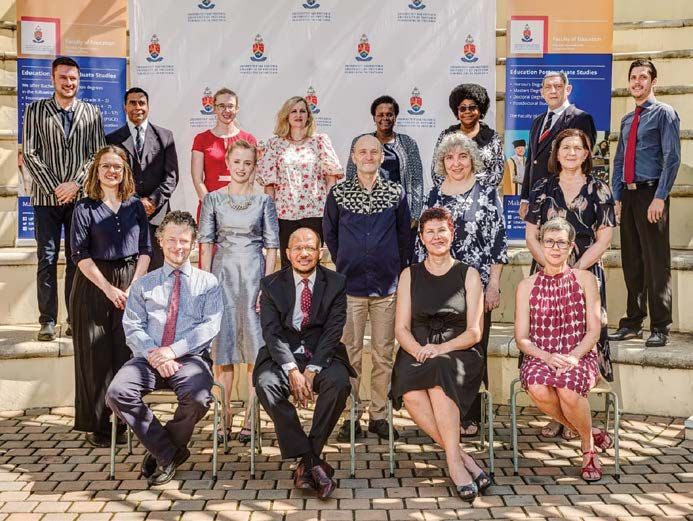
COLLABORATIONS AND CONFERENCES

International Early Childhood Education webinars
On 10 September 2020, the Department of             On 18 September 2020, the Department
Early Childhood Education hosted a webinar          of Early Childhood Education hosted
in collaboration with the University of             another webinar in collaboration with Dordt
Pittsburgh Bradford (USA). Mrs Joyce West           University (USA). Mrs Joyce West (University
(University of Pretoria) and Dr Jonathan            of Pretoria) and Mrs Ulrike Brons (Dordt
Chitiyo (University of Pittsburgh) discussed        University) discussed translanguaging when
the importance of family involvement during         teaching English as a second language. The
the early years of development. Epstein’s           critical discourse that took place considered
parental involvement model, Vygotsky’s              the legitimacy of the critical language period
socio-cultural theory and Bronfenbrenner’s          hypothesis and Cummins’ interdependence
ecological systems theory served as a               theory and threshold hypothesis.
framework to determine the roles of the
family, school, teacher and community.              Mrs Joyce West is looking forward to hosting
                                                    another webinar in collaboration with Dordt
Mrs Joyce West is looking forward to hosting        University in 2021, during which second-
Dr Jonathan Chitiyo as a guest lecturer in the      language vocabulary development will be
Department of Early Childhood Education             addressed.
in 2021.

 Life Orientation Colloquium
  On 21 October 2020, the Department of             from the University of Pretoria and Dr Janet     give impetus to the conversation about
  Humanities Education hosted the Life              Jarvis from the University of KwaZulu-Natal.     the status of life orientation in the higher
  Orientation Colloquium. This online event                                                          education context.
  was organised jointly by Dr Sarina de Jager       The Colloquium theme was ‘Conversations
                                                    around life orientation in higher education’     Participants from various institutions also
                                                    and was attended by lecturers from               embraced the opportunity to share their
                                                    universities from all over South Africa. The     research and collaborate on projects with
                                                    Colloquium consisted of three breakout           similar aims. The discussions indicated a
                                                    sessions during which participants               need for critical conversations about life
                                                    could discuss the three disciplines in life      orientation.
                                                    orientation, namely personal development,
                                                    social development and physical education.       Feedback from the Colloquium inspired the
                                                    The breakout sessions were followed by           publication of a special edition journal and
                                                    a plenary session during which the main          plans for another Colloquium to be held in
                                                    themes that had emerged were discussed.          2021. Drs De Jager and Jarvis are looking
                                                    The Colloquium aimed to encourage                forward to again hosting the Colloquium.
      Dr Janet Jarvis and Dr Sarina de Jager        collaboration between the participants and

5 | University of Pretoria | Faculty of Education
TEACHING AND LEARNING

 The PGDip in TVET programme sets the pace
  The innovative and internationally
  benchmarked Postgraduate Diploma
  in TVET programme was launched
  and successfully implemented in
  2020.
  The Department of Higher Education, the German Society for
  International Cooperation (GIZ) and the Technical University
  of Munich (TUM) are our stakeholders and partners. The 29
  participants in the programme, chosen from all over the country,
  are current leaders in the technical and vocational sector.

  The PGDip in TVET programme continued effectively during
  the Level 5 lockdown due to the well-structured blended
  learning approach that the experienced facilitators innovatively
  implemented, and contact sessions took place online in May,
  August and October via ClickUp Blackboard Learn. Due to the
  COVID-19 pandemic, the course participants were, unfortunately,
  unable to visit Munich, Germany, for the study visit in June, but
  it will hopefully take place in May 2021. An online study visit
  component was also introduced, and the participants explored the
  dual approach to vocational education. At the third contact session
  in August, participants showed appreciation for and celebrated
  their own and one another’s culture and heritage in online peer
  group sessions.

  The highlight of every contact session was the expert panel
  discussions during which leaders from the higher education sector,
  such as Prof Chika Sehoole (Dean), shared their experience and
  knowledge. Other participants were Ms Sabine Dall’Omo (CEO:
  Siemens), a representative of the German Chamber of Commerce
  and Dr Markus Thill (President: Bosch, Africa).

  On 23 and 24 November 2020, an online debriefing session                 Ms Katharina Prummer (TUM: programme coordinator), Mr Tobias
  organised by TUM took place. International guest speakers Dr             Ludwig (TUM), Dr Tanya Smit (UP: programme coordinator), Mr
  Martin Fladerer and Dr Ewald Blum presented ‘Ethics in leadership’       Consival Mashiti (course participant) and Ms Kholofelo Mashala
  and’ Positive leadership’.                                               (course participant)

 Zoom session hosted by Prof Roger Hale on 13 August 2020
By Riekie van Aswegen                                                   and enquired about his opinion of singers who want to attempt
                                                                        singing in different styles. Mariska von Wielligh was interested in
On 13 August, third-year music education students and music             how young singers could be motivated, while Matthew Botes wanted
education lecturers on UP’s Groenkloof Campus had the opportunity       advice on encouraging high school learners while also building their
to participate in a Zoom session with Prof Roger Hale from the Dixie    singing confidence.
State University, Utah (USA), who is a world-renowned specialist in
choral music education and vocal training. He is the director of the    Prof Hale suggested various ways to overcome stage anxiety,
Dixie State University choirs and bands and the University Choir’s      especially when choir members perform solo parts (relating to a
conductor, numerous community choirs (including a male voice choir      question raised by Juandi Boshoff). He also offered pointers on
and senior citizen choir) and instrumental ensembles. As a tenor, he    sound formation and blending (relating to Kyra Magill’s question) and
also does solo performances.                                            considerations for improving intonation (singing on pitch, in response
                                                                        to Ancois Delport’s question), and, responding to Reinhart Coetsee’s
Prof Hale agreed to have the session exclusively with the third-year    question, commented on the acceptability of vibrato as a choral
student group. He focused on technical aspects such as correct          sound.
singing posture, breathing and the placement of vowels, which
included an illustration of a singer’s airway and an animation of the   Dr Riekie van Aswegen expressed her thanks to Prof Hale for his
human body when breathing. The lively discussion was guided by          advice and the kind and respectful way he had interacted and shared
questions submitted by the students beforehand.                         his expertise with the participants. Mr Nelson Manganye declared
                                                                        that he was amazed by Prof Hale’s knowledge and presentation skills
Ronet Viljoen asked what one needed to consider when categorising a     and enthusiastically concluded: ‘He is my kind of human!’
voice type and how to improve breathing when singing long phrases

                                                                                              In-tuition newsletter | January/February 2021 | 6
INTERNATIONALISATION

 Appointment of Dr Adeyemo as Country Director (South Africa) at
 the Society of Transnational Academic Researchers (STAR)
  Dr Samuel Adeyemo from the Department of Education                         situated research and transnationally
  Management and Policy Studies has been appointed as Country                collaborative and mutually beneficial
  Director (South Africa) for The Society of Transnational Academic          publication.
  Researchers (STAR Scholars Network). This appointment is an
  honorary position through invitation and without remuneration              Dr Adeyemo’s appointment allows
  and is valid for two years, from 1 October 2020 to 31 September            academics in the Education Faculty
  2022.                                                                      of the University of Pretoria access to
                                                                             mentorship by collaboration with other
  STAR Scholars Network is a transnational forum of scholars who             STAR scholars to enhance their research
  advance global social mobility through innovative research and             and publication. UP staff members
  progressive advocacy efforts. Their mission is to create and share         who are members of the STAR network                Dr Samuel Adeyemo
  published scholarly research focused on international education            will also have opportunities to join
  by facilitating academic exchange worldwide. STAR envisions a              international education projects and submit articles for publication
  humane world through the promotion and exchange of knowledge               in the Journal of International Students, a STAR Network accredited
  across borders.                                                            journal (indexed in ProQuest, Scopus, and the Emerging Sciences
                                                                             Citation Index). Dr Adeyemo is an assistant editor for this journal.
  Scholars in the STAR network worldwide are willing to share
  their expertise to advance knowledge and increase academic                 It is hoped that the University of Pretoria and the Future Africa
  opportunities for future scholars, especially across national/             Institute, through the Education Faculty, will be able to use
  geographical borders. Membership of STAR provides networking               Dr Adeyemo’s appointment in the STAR network further to
  opportunities with scholars invested in promoting locally                  strengthen the University’s internationalisation agenda/vision.

Big Thinker Award from Herrmann International
The following contains an excerpt from the          The prestigious Big Thinker Award                 of Lecturers and Students’, he shared, in
Whole Brain® Thinking Blog, and the source          recognises individuals who have developed         display format, an array of examples of
of the narrative is herewith acknowledged.          breakthrough new applications of Whole            students’ demonstrations of learning by
The words of Herrmann International,                Brain® thinking by thinking ‘big’ about its       using a Whole Brain® approach.
Ann Herrmann-Nehdi, add value to this               possibilities, thereby taking the work to new
contribution to In-tuition. How she responds        heights.                                          Some of his students’ contributions to
to the acknowledgement of practitioners and                                                           promoting Whole Brain® thinking were
scholars of Whole Brain® Thinking resonates         Shown in the photo below with Prof Du             displayed in an authentic Whole Brain®
with the construct behind the word ‘whole’.         Toit are the former CEO of Herrmann               fashion. The display consisted of examples
Ann lives and speaks the language of                International, Ann Herrmann-Nehdi (left)          of master’s and PhD studies, a pamphlet
the model developed by her father, Ned              and Prof Anne-Louise de Boer, an earlier          titled Teaching in colours (used very
Herrmann, whose seminal works include The           Big Thinker Award recipient for her work in       effectively), samples of the book mentioned
Creative Brain, The Whole Brain Business Book       diabetes education. Together with Detken          above, and numerous artefacts. Many of the
and The Theory behind the HBDI and Whole            Scheepers and Theo Bothma, Prof Anne-             artefacts show that students have come up
Brain Technology: better results through better     Louise de Boer and Pieter co-authored Whole       with creative ideas from a self-challenging
thinking.                                           Brain Learning in Higher Education: Evidence-     perspective, even though they might initially
                                                    based Practice, the most comprehensive            not have enjoyed being ‘experimental’.
Ann reports as follows on an event that             resource Whole Brain® learning design             One of the essential cornerstones of
celebrated work done by South African               available.                                        Whole Brain® teaching and learning is that
scholars of Whole Brain® thinking (adapted):                                                          students with different preferences in terms
‘It is always thrilling to see the application                                                        of their approaches to learning should be
of Whole Brain® thinking have significant                                                             accommodated—both in terms of engaging
impact! Recently, in South Africa, I was                                                              them in learning and using various means of
delighted to honour this kind of achievement                                                          assessment for learning. In this regard, Prof
by bestowing our Big Thinker Award on Prof                                                            Du Toit aspires to be a role model. In most
Pieter du Toit for his application of Whole                                                           cases, the postgraduate students at the PhD
Brain® learning design to higher education.’                                                          and master’s levels, and many students who
Prof Pieter du Toit, from the Department                                                              are enrolled in the Postgraduate Certificate
of Humanities Education at the University                                                             in Higher Education (PGCHE), are lecturers
of Pretoria, is one of South Africa’s leading                                                         at the University of Pretoria or other
minds on learning and teaching in higher                                                              institutions of higher education.
education and has been a trailblazer in
applying Whole Brain® learning design                                                                 Prof Du Toit acknowledges that his Head
principles to improve the outcomes of                                                                 of Department’s unconditional support,
learning in higher education significantly.                                                           Prof Johan Wassermann, contributes to
He has also overseen many postgraduate                                                                his scholarship identity in general and
studies on applying the model, which                As part of Prof Du Toit’s presentation at the     specifically to his scholarship in applying the
further enhanced his research insights and          Whole Brain® Thinking Practitioner Event          notion of whole-brain thinking and learning
applications.                                       in Pretoria, entitled ‘Changing the Mindsets      in higher education.

7 | University of Pretoria | Faculty of Education
CENTRE FOR EVALUATION AND ASSESSMENT

Fifth PIRLS 2021 National Research Coordinator meeting

An online National Research Coordinator           three literary passages. New items were also     expected to continue until March 2021.
(NRC) meeting on the Progress in                  added to the contextual questionnaires.          Countries that will be testing late in 2021
International Reading Literacy Study (PIRLS                                                        can arrange with the IEA to complete their
2021), organised by the International             The first day of the meeting was opened by       verification after March 2021. Since there is
Association for the Evaluation of Educational     Dr Dirk Hastedt, Executive Director of the       no limit on the number of languages that can
Achievements (IEA), was held from 3 to            IEA, who focused on the progress report,         be sent for verification, all the South African
5 August 2020 and was attended by Mr              the field test outcomes and a review of          languages will be submitted for layout and
Mishack Tshele, the Data Manager at the           the PIRLS literary passages and items.           translation verification.
Centre for Evaluation and Assessment (CEA).       The informational passages and items
The IEA is an international cooperative of        were reviewed on the second day. Newly
national research institutions, government        recommended items for the contextual
research agencies, scholars, and analysts         questionnaires were also considered. The
whose work aims to research, understand,          new items related mainly to the effects of
and improve education worldwide.                  the COVID-19 pandemic and were reviewed
                                                  and finalised by the end of the second day.
Mr Tshele attended the three-day meeting          The third day’s programme was primarily
and 140 representatives from countries            devoted to data management and covered
worldwide to review and finalise the              sampling, translation, layout, and data
assessment instruments in preparation for         management systems.
the PIRLS 2021 cycle. Six PIRLS passages
from the field test were selected by the          The participating countries were asked
Reading Development Group (RDG) for               to schedule individual consultations with
inclusion as new passages in the PIRLS 2021       Statistics Canada to finalise the sampling
primary data collection. These passages           procedure. The translation verification
comprised three informational passages and        commenced in September 2020 and is                  Mr Mishack Tshele (Data Manager, CEA)

 South Africa participates in the PIRLS 2021 pilot study
  The Centre for Evaluation and Assessment         PIRLS is a study conducted under the            CEA team for the work done on the project
  (CEA), assisted by the Department of Basic       auspices of the International Association       during the COVID-19 lockdown in South
  Education, conducted the pilot study of          for the Evaluation of Educational               Africa and thanked everyone who assisted
  the international reading assessment,            Achievement (IEA) and is managed at an          with the study before announcing that the
  Progress in International Reading Literacy       international level by the International        data had been submitted just in time to
  Study (PIRLS 2021), in South Africa as the       Study Center at Boston College. The             the PIRLS Data Processing Center in Boston
  country prepares to roll out PIRLS 2021.         CEA, which manages the study locally, is        College.
  Early in March 2020, Grade 5 learners from       a National Research Centre for PIRLS in
  15 schools across Gauteng completed              South Africa.
  a reading assessment consisting of
  informational and literary passages and          Mr Mishack Tshele (Data Manager of the
  questionnaires compiled to assess their          CEA) conducted the data-capturing training
  reading attitudes. The field trial was based     for the PIRLS contextual questionnaires
  on passages submitted by countries               together with the data capturers at the
  interested in the study. The PIRLS Reading       CEA offices on Saturday, 21 March 2020,
  Development Group developed a set                and online training for the capturing of
  of reading comprehension items that              Achievement booklets data was conducted
  included multiple-choice and constructed-        online via Zoom video meetings on
  response formats to accompany each               Monday, 18 May 2020. The Director of the           Mr Gabriel Mokoena and Mr Mishack
  passage.                                         CEA, Dr Surette van Staden, praised the            Tshele in a PIRLS meeting

The second Questionnaire Development Group meeting for PIRLS 2021

The Director of the Centre for           which more than 60 countries would       The QDG consists of an invited group
Evaluation and Assessment (CEA),         participate.                             of national research coordinators.
Dr Surette van Staden, attended the                                               During the most recent meeting,
second Questionnaire Development         To provide insight into students'        representatives from Finland,
Group (QDG) meeting for the              contexts for learning across             Belgium, Taiwan, New Zealand
Progress in International Reading        participating countries, contextual      and Oman joined the PIRLS study
Literacy Study (PIRLS 2021) on 13        questionnaires are administered to       directors from Boston College. Due
and 14 July 2020. The meeting            Grade 4 learners, parents, teachers      to the COVID-19 pandemic, the
aimed to finalise the contextual         and school principals as part of the     meeting took place online and not
questionnaires to be used as part        PIRLS reading assessment.                in Hamburg, Germany, as initially         Dr Surette van Staden
of the PIRLS 2021 main survey in                                                  planned.                                  (Director: CEA)

                                                                                                 In-tuition newsletter | January/February 2021 | 8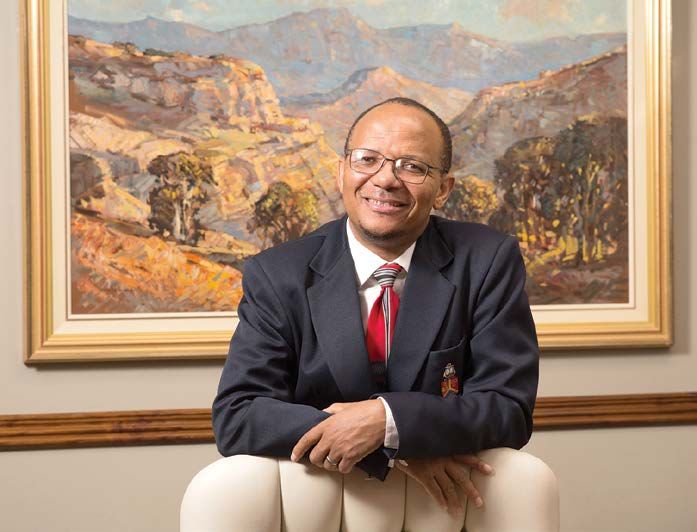
CENTRE FOR THE STUDY OF RESILIENCE

Biannual newsletter
of the Centre for
the Study of
Resilience

 Pretoria leads ESRC-UKRI study to improve the lives of children in poverty:
 Schools as enabling spaces for the improvement of the quality of life of
 primary school children living in rural South Africa

The University of Pretoria is leading a project     non-governmental public bodies to assess         contribution to understandings of how
to help children living in poverty to thrive in     evidence and policy reports of the past three    different sectors may work more effectively
school and beyond.                                  decades. This assessment will identify new       with schools to unlock the transformative
                                                    evidence in the critical education, health and   power of education for the achievement
Prof Liesel Ebersöhn (Director: Centre for the      policy areas where intervention programmes       of the other 2030 SDGs systemically and
Study of Resilience) and Qing Gu (Director:         have shown the highest potential to improve      sustainably.’
London Centre for Leadership in Learning)           children’s achievements and health-related
co-led the study in collaboration with the          quality of life in the short, medium and long
UCL Institute of Education, the UCL Institute       terms.
for Global Health and London South Bank
University, and are working on the project          The results will help the team develop
to improve the learning and health-related          a systems-oriented intervention that
quality of life of primary school children in       will strengthen schools’ organisational
South Africa’s rural communities.                   and professional capacity to enhance
                                                    children’s education and development in
In South Africa, 38% of children live in rural      socio-economically disadvantaged rural
communities and are much more likely to be          communities.
deprived of quality education and quality of
life than those living in urban areas.              Eighteen rural primary schools will be part of
                                                    an initial six-month pilot study undertaken
This new mixed-methods study, funded by             to analyse how different intervention tasks
the Economic and Social Research Council            work and to what degree they are impacted
(ESRC), brings together experts in education,       by school and community contexts.
health, psychology, sociology and health            Subsequently, the interventions will be
economics to investigate how schools can            refined and scaled up in 58 rural primary
be organised as enabling spaces to improve          schools, with the researchers continuing to         From left to right: Mabeth Crafford,
children’s learning and health.                     examine the extent of change in the schools’        Ralph Hwenjere, Prof Mahlapahlapana
                                                    capacities and capabilities and the impact          Themane, Amber Eksteen, Dr Rose
The study focuses on children between               of such change on children’s learning and           McGranahan, Prof Rupert Higham,
the ages of six and nine years since early          health outcomes.                                    Dr Gerard Joseph Abou-Jaoude,
interventions during this critical period of                                                            Prof Martin Mills, Prof Patrick Callaghan,
transition from early to middle childhood           Prof Ebersöhn stated: ‘By examining how             Dr Solomon Akinyemi, Sumanah Mustafa,
can significantly affect children’s long-term       schools may be(come) enabling spaces                Dr Renald Morris, Prof Qing Gu, Prof Lynn
outcomes.                                           to promote whole-child quality education            Ang, Liz-Marie Basson, Prof Peet du Toit,
                                                    (SDG4), and through this, transform the             Akhona Mbasa, Dr Hannelie du Preez,
The project will start with a systematic review     health-related quality of life for children         Dr Gerard Joseph Abou-Jaoude, Dr Surette
and interviews with officials from local and        and adults (SDG3) in rural communities in           van Staden, Prof Liesel Ebersöhn and
national government organisations and               South Africa, the research will make a timely       Prof Martin Mills

9 | University of Pretoria | Faculty of Education
CENTRE FOR THE STUDY OF RESILIENCE
Resilience workshop facilitated by international expert Dr Michael Ungar
As part of the science three domains:
communication strategy of the 1) Assessing risk;
2) Assessing resilience-enabling factors and
RYSE-RuSA study (funded by the
processes; and
South African National Research
3) Multidimensional considerations.
Foundation and the Russian He drew on real practice scenarios,
Research Foundation), Dr Michael demonstrated hands-on resilience-
Ungar (a co-investigator in RYSE- facilitating skills, and touched on his
RuSA) facilitated a three-hour theory-shifting Differential Impact Theory.
interactive resilience workshop.
The participants responded enthusiastically
Dr Ungar, the Canada Research Chair in to Dr Ungar’s workshop. The failure of the
Child, Family and Community Resilience air- conditioning system about halfway into
and a professor in the School of Social the three-hour workshop appeared not to Members of the RYSE-RuSA team present
Work at Dalhousie University in Canada, affect, and the attendees remained actively at the workshop. Prof Alexander Macknach
is a world-renowned scholar in the field engaged until the very end. Dr Ungar has (Institute of Psychology of the Russian
of resilience. The workshop on ‘Nurturing already been invited to facilitate follow-up Academy of Sciences), Prof Linda Theron
resilience: A multisystemic model for workshops when he returns for the RYSE (University of Pretoria, S.A.) and Dr Michael
positive development in contexts of diversity’ and RYSE-RuSA meetings in 2021. Ungar (Dalhousie University, Canada)
challenged everyone present to respect the
complexity of resilience.
Netsai Gwata, who managed the invitations
to the workshop, received more than
110 positive RSVPs, including many from
affiliates of the Centre for the Study of
Resilience. The workshop was attended by
professionals from diverse fields including,
but not limited to, health, law enforcement,
social work, psychology, defence and
education, as well as academics and
students from universities in and around
the Gauteng Province. During the workshop,
Dr Ungar demonstrated how to ‘diagnose’ Dr Michael Ungar and volunteers Some of the participants in the workshop
resilience when working with children demonstrating hands-on application of
exposed to multiple risks/adversity using ‘diagnosing’ resilience
In-tuition newsletter | January/February 2021 | 10CENTRE FOR THE STUDY OF RESILIENCE
Introduction of the University of Pretoria team working on the study
funded by the ESRC-UKRI: Schools as enabling spaces for the improvement
of the quality of life of primary school children living in rural South Africa
Ms Liz-Marié Basson an invitation to accompany a team of He is an avid rugby and cricket supporter
researchers from CVZ on two fieldwork and loves classic and vintage cars. His
Ms Liz-Marié Basson
trips during which she assisted in catching philosophy is: Opportunity can reside in
is a registered
and processing bats for zoonotic disease unusual places and circumstances—the dark
research psychologist
surveillance. She is looking forward to what reveals no horizons and therefore no limits.
at the Health
new experiences the ESRC project has in
Professions Council
of South Africa
store for her. Dr Olutosin Solomon Akinyemi
(HPCSA). After completing a
Postdoctoral Fellows bachelor’s degree in
Her involvement Science Education
in this project Dr Renald Morris (Physics) at the
is threefold: assistance with grant and Dr Morris is currently Obafemi Awolowo
project management, researcher and PhD serving as a Senior University, Nigeria,
student focussing on the rural community, Researcher in the Dr Akinyemi obtained
sustainable development and the capability Centre for the Study a master’s degree
approach. of Resilience (CSR). and a doctorate in
He is involved in Science Education
She has experience in research grant the ESRC project on from the University of the Witwatersrand,
management while employed in the health and wellbeing South Africa. He is a seasoned teacher
University of Pretoria’s research office and in South African rural of physical chemistry and physics at the
at the Centre for the Study of Viral Zoonoses primary schools secondary school and university level.
(CVZ) for four years. Her experience includes and will be focusing on the aspect of school His research focuses on science teacher
managing grants awarded by the National leadership and effectiveness. education, with a specific interest in
Research Foundation (NRF) South African developing pre-service teachers’ professional
Research Chairs (SARChI) and U.S. Federal He started his career as a production knowledge regarding the teaching of
Grants, including Centres for Disease Control and quality assurance engineer in the physical sciences and improving learner
and Prevention (CDC), National Institutes of mechanical engineering sector. However, outcomes by using the construct of Topic-
Allergies and Infectious Diseases (NIAID), and an increasing interest in social and public specific Pedagogical Content Knowledge. He
the United States Agency for International matters led to his transition to the non- is currently a postdoctoral research fellow
Development (USAID). governmental sector, where he became in the ESRC-UKRI project at the University of
involved in social justice, philanthropy, Pretoria, South Africa.
Her interest in supporting disadvantaged restorative justice, conflict management
communities and children through and leadership development. Specific areas This project aims to advance state-of-the-
sustainable interventions acted as a of interest include social crime prevention, art theory and practice about how South
driving force throughout Ms Basson’s children’s rights, human rights, youth crime African schools work effectively with families
academic career. During her undergraduate and violence, youth empowerment, social and communities in rural areas to create
studies, she became part of the Golden connectedness, criminal justice system optimal practices, strengthen organisational
Key International Honour Society’s transformation, social innovation projects, capacities and improve children’s learning,
(GKIHS) University of Pretoria Chapter as fundraising, grant making and the wellbeing health and wellbeing.
a community service director, chapter of change-makers.
president and international student Dr Otilia Chiramba
representative. Apart from having worked for organisations Dr Chiramba is a
such as the University of the Witwatersrand, postdoctoral fellow
As an individual and as part of the Pretoria the Open Society Foundation, the Centre at the Centre for the
chapter’s team, Ms Basson won three for Justice and Crime Prevention and Study of Resilience
international awards from GKIHS for Synergos, he was also employed in several (CSR) in the Faculty
long-term community service projects she government departments, including the of Education at the
developed and implemented. She completed Departments of Basic Education, Social University of Pretoria.
her master’s internship at the Itsoseng Development, Community Safety and She recently earned
Clinic on UP’s Mamelodi Campus, where her Justice. Traces of his work can be found her doctorate in
work focused on the impact of arts-based across the African continent and many other the Educational
interventions and psychotherapy on the countries worldwide. He studied at Unisa, Leadership and Policy Studies Division at
learning and wellbeing of school learners the University of Port Elizabeth and the the University of the Witwatersrand. Her
and the development of an autism spectrum University of the Witwatersrand, where he PhD thesis explicitly focused on the lived
disorder screening questionnaire. attained a PhD in leading and managing safe experiences of refugee students in higher
So far, Ms Basson’s career has been exciting schools. education. Otilia is an experienced teacher of
and full of surprises. A highlight has been undergraduate and postgraduate students
11 | University of Pretoria | Faculty of EducationCENTRE FOR THE STUDY OF RESILIENCE
and has also been involved in research Sumanah Mustafa currently completing a research project
and book projects administration at the involving exploring the intersecting
Sumanah Mustafa,
University of the Witwatersrand. subjectivities of white Afrikaans-speaking
who is currently an
drag performers and their negotiations of
intern at the Centre
Other experience consists of working with power within shifting post-apartheid queer
for the Study of
international and local teams in carrying spaces.
Resilience (CSR) and a
out research projects. Her research focuses
research assistant on
on underprivileged groups, conducting Concurrently, Amber has very happily
the ESRC project on
qualitative and narrative research, doing joined the team at UP’s Centre for the Study
health and wellbeing
qualitative interviews, managing data and of Resilience as an intern and research
in South African rural
analysing qualitative data. assistant for the Centre’s research, in
primary schools, will
collaboration with the ESRC, on schools as
be focusing on aspects of early childhood
Otilia has published several book chapters enabling spaces for the improvement of
education, primary schooling and family.
and articles in refereed (peer-reviewed) the quality of life of primary school children
journals, focusing on social justice issues and living in rural South Africa.
During her academic career, she has
resilience in higher education. She has also
studied English, Psychology, Journalism
presented her research at international and When she is not entirely focused
and Education. As a teacher, she has been
local conferences. on research, Amber can be found
involved in secondary school teaching
experimenting with new vegan recipes in the
and early childhood development in both
Senior research assistants resourced and under-resourced schools. Her
kitchen, watching anything and everything
on Netflix, spending quality time with her
experiences have confirmed to her that the
Mabeth Crafford loved ones, or trying her hand at crocheting
wellbeing of children is essential to ensure a
and sewing.
Mabeth Crafford flourishing society.
is currently
She is currently completing her M.A. degree
Ralph Hwenjere
a secretariat
administrator for in Critical Diversity Studies. Her research Ralph Hwenjere
the World Education focuses on the narratives of queer teachers completed his
Research Association in secondary schooling and what their BSc (Human
(WERA) and a experiences may reflect about gender and Genetics) degree
research intern at the sexuality discourse in the South African at the University
Centre for Resilience context. of Pretoria in 2018
Study. and his BSc Hons in
Her philosophy relies on the belief that Neurophysiology a
She completed her bachelor’s degree in human connection is fundamental, constant year later at the same
Archaeology and Linguistics at the University curiosity is much better than being right, and institution. Currently,
of Cape Town (UCT) in 2017, and in 2019 poetry can cure most (if not all) heartaches. he is working on a master’s degree in
she obtained an honours degree in Applied Neurophysiology. Ralph is a highly motivated
Language Studies from the University of Amber Eksteen student, and his time at the University has
Pretoria. Her mini-dissertation focused given him great insight into the world of
Amber Eksteen has
on language barriers between health care research. He is passionate about helping
always loved people
practitioners and their patients in a rural people and believes that teamwork makes
(although she is
clinic. the world a better place.
a chronically shy
introvert). She also
Her current academic interests are focused finds great pleasure
Akhona Mabasa
on heritage preservation and interaction in in learning new Akhona Mabasa
current society. In 2016, she participated in a things and getting holds a B.A. (Hons)
semester abroad course at the University of quietly involved degree in Psychology
North Carolina at Greensboro and in 2018, in social justice and is currently
she was part of a Cultural Au Pair Exchange efforts. These passions have been nurtured completing an M.A.
in Winterswijk, the Netherlands. throughout her academic journey. After degree in Diversity
graduating with a B.A. degree in Psychology Studies through
In 2015 she assisted the Centre for African and Media Studies from the University of the University of
Language Diversity at UCT to translate the Witwatersrand, Amber completed her the Witwatersrand.
a trilingual reader as part of a greater honours degree in Psychology to hone her Her dissertation
ongoing language revival project. She has knowledge of community-based psychology, focuses on white South Africans’ perceptions
also participated in three archaeological narrative identity and social psychology. of decolonisation in the higher education
fieldwork seasons and has assisted in the sector. Akhona is passionate about social
Stone Age Lab at UCT. During the 2019 Following this, she felt a strong need to justice and transformation in post-apartheid
protests against gender-based violence in incorporate more transdisciplinary (and South Africa and aims to dedicate her
South Africa, she was a member of the We indeed, antidisciplinary) understandings academic career to finding solutions that will
Are Her (a zine incorporating different art of humanity in her studies, and in 2019 empower and develop people in society who
forms) editorial team. she decided to register for an M.A. degree experience various intersecting layers of
in Critical Diversity Studies WITS. She is disadvantage.
In-tuition newsletter | January/February 2021 | 12CENTRE FOR THE STUDY OF RESILIENCE
COVID-19 online education resource: Translation of learning support tool
for home-based learning in three South African languages
Due to the COVID-19 pandemic, there has been a global shift of English:
schooling to the home environment. Parents and caregivers are now https://psu.mediaspace.kaltura.com/media/Quality+TalkA+A+Guide+
the custodians of their children’s learning and partner with teachers for+Meaningful+Discussions+at+Home/1_oe59lym0
to assist children with thinking about and learning school content. To
provide support to parents and caregivers, researchers at the Centre IsiZulu:
for the Study of Resilience have translated a user-friendly resource https://psu.mediaspace.kaltura.com/media/QT+Parent+SA+2020+
that families can use to direct critical learning in various South African +Isizulu/1_vpw7kz90
languages.
Sepedi:
The resources are based on findings from a joint study undertaken by https://psu.mediaspace.kaltura.com/media QT+Parent+SA+2020+
researchers at the University of Pretoria and the Pennsylvania State Sepedi/1_mggwfojn
University and inputs by teachers and learners in Mpumalanga.
Afrikaans:
Please follow the links below to access the resource in English, IsiZulu, https://psu.mediaspace.kaltura.com/media/QT+Parent+SA+2020+
Sepedi or Afrikaans. AFR+with+Jingle/1_cn84h4jy
Práxis Educativa
Portuguese translation of an article published by Prof Liesel Ebersöhn English and Portuguese PDFs of the publication are available at the
titled ‘African resilience pathway with meaning for COVID-19 social following links:
response’.
English:
Notice of a publication in the esteemed Práxis Educativa titled https://www.revistas2.uepg.br/index.php/praxiseducativa/article/
‘Collective resilience to global challenge: a collective wellbeing agenda view/16344/209209213456
to transform towards sustained equitable education’, which describes
the meaning of an Afrocentric collective wellbeing strategy transform Portuguese:
pathways to equitable education following the COVID-19 pandemic. https://www.revistas2.uepg.br/index.php/praxiseducativa/article/
Of interest is that the Portuguese translation of flocking is the term view/16344/209209213475
‘afluir’, which signifies a convergence or gathering of energy, people,
ideas and resources (similar to the confluence of streams to form a
river).
University of Pretoria Postgraduate Study Abroad Programme
CSR PhD student visits the Notre Dame Centre for the Study of Resilience), Prof an Australian international collaborator,
University in Australia Marien Graham (Co-supervisor and she was a partner in the European project
Senior Lecturer: Department of Science, Enhancing Teacher Resilience in Europe
Name of study: Pre-service teacher Mathematics and Technology Education) (ENTREE) (2013-2015) (http://entree-
resilience and self-efficacy in a challenged and Dr Surette van Staden (Co-Supervisor project.eu/en). During her visit, Carine
education context and Director: Centre for Evaluation and gained in-depth knowledge of the projects
Assessment). above, which was vital for her PhD study.
Carine Jonker was the recipient of the UP
Postgraduate Study Abroad Programme, The bursary enabled Carine to visit an
which funded a research visit to Prof international expert in teacher resilience
Caroline Mansfield (Dean of the School of between October and November 2019.
Education) at the University of Notre Dame, During the visit, she focused specifically on
Australia, who is a highly valued research enhancing her knowledge and expertise in
collaborator with CSR. pre-service teacher resilience, which was
enhanced by contact with colleagues at
Carine is currently enrolled as a PhD different institutions through face-to-face
student in Educational Psychology at the discussions and conference calls.
Centre for the Study of Resilience (CSR),
University of Pretoria. Her supervisors for Prof Mansfield was one of the project
her doctoral thesis entitled ‘Pre-service leaders in the Keeping Cool (2009-2012)
teacher resilience and self-efficacy in a and BRiTE: Building Resilience in Teacher
challenged education context’ are Prof Education (https://www.brite.edu.au) Carine Jonker and Prof Caroline Mansfield
Liesel Ebersöhn (Supervisor and Director: (2013-2015) projects in Australia, and as deliberating during a working lunch
13 | University of Pretoria | Faculty of EducationYou can also read


