Increasing Wildfire Awareness and Reducing Human-Caused Ignitions in Northern New Mexico - March 2018
←
→
Page content transcription
If your browser does not render page correctly, please read the page content below
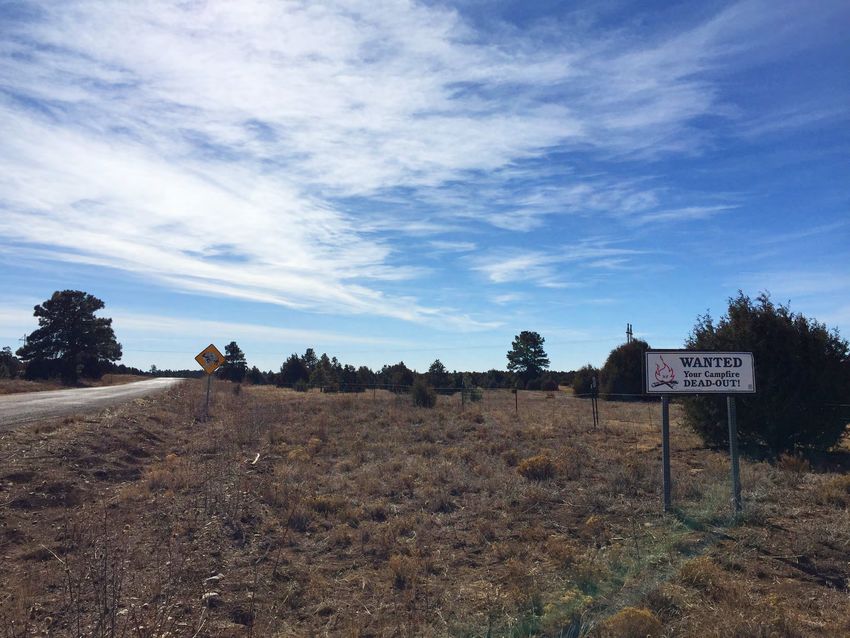
Increasing Wildfire
             Awareness and Reducing
March 2018   Human-Caused Ignitions
             in Northern New Mexico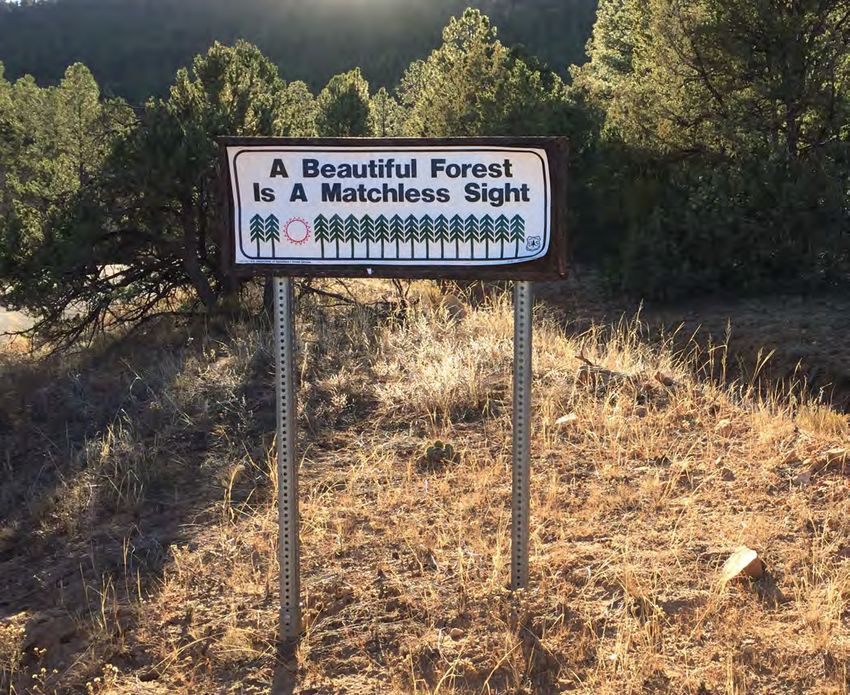
Acknowledgements
               The author thanks the managers and experts who took the time to share their
               experience and insights for this report. This project was conducted in
               association with the Forest Trust, Santa Fe, New Mexico (www.theforesttrust.
               org) and was supported by the Anya and Henry Bagley Charitable Trust.

               This report and other research from the Forest Stewards Guild is available on-
               line at www.ForestStewardsGuild.org/publications/

               This report was written by Alexander Evans and designed by Sam Berry. Cover
               photos are by Sam Berry (large) and Texas State Parks Ambassador Program
               (inset).

human ignitions.indd 1                                                                          3/23/18 4:32 PM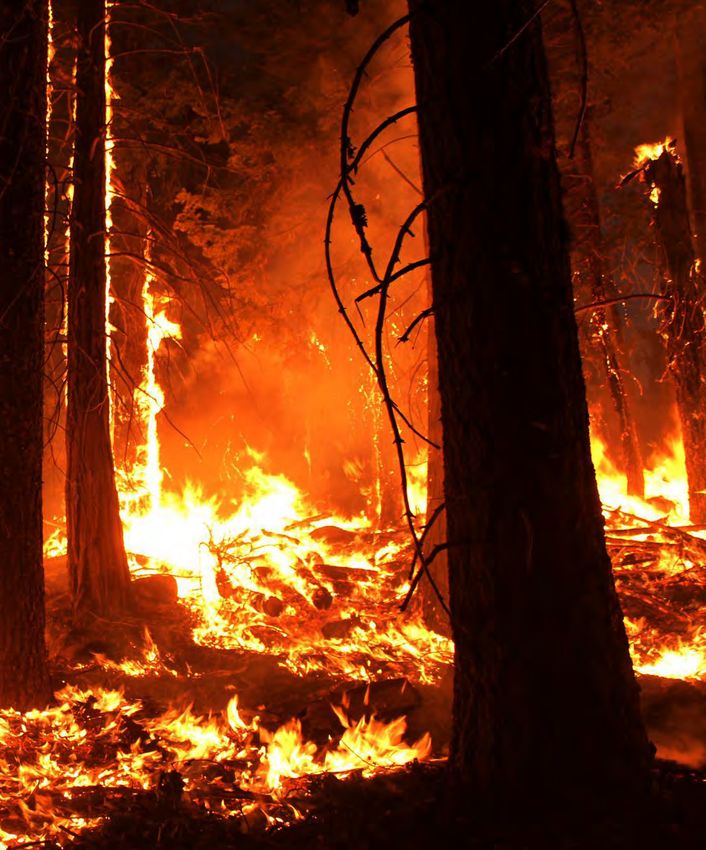
Table of Contents:
                                   Executive Summary .................................................................................. 2
                                   Human Caused Wildfire .......................................................................... 3
                                         How many acres are burned by human caused wildfires? ...................... 3
                                         How are wildfires started by people? ......................................................... 5
                                   		Campfires ....................................................................................... 7
                                   		Powerlines .................................................................................... 8
                                   		Arson ...........................................................................................10
                                         Where do wildfires start? ........................................................................ 11
                                   Public awareness of wildfire risk ................................................ 13
                                         Public awareness of the risk of wildfire ignitions .................................. 15
                                         Smokey Bear and USFS prevention budgets ......................................... 17
                                         Regional and local efforts to raise awareness of wildfire ignitions ....... 19
                                         Restrictions and Forest Closures ............................................................ 20
                                   Conclusion ...................................................................................................... 21

                                   Resources .................................................................................................... 22
                                   References .................................................................................................. 23

                                                                                                                                            photo by
                                                                                                                                            NASA

               Forest Stewards Guild         Increasing wildfire awareness and reducing
                                             human-caused ignitions in Northern New Mexico

human ignitions.indd 2                                                                                                                                    3/23/18 4:32 PM
1

                         photo by
                         Sam Berry

human ignitions.indd 1               3/23/18 4:33 PM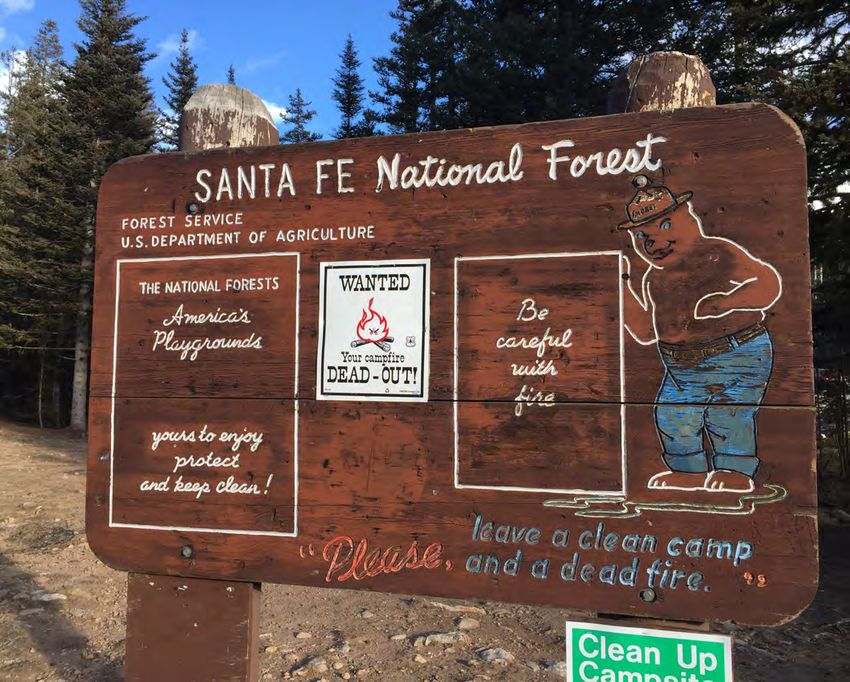
2

               Executive Summary

               L
                       arge wildfires that burn at high-severity       Public awareness campaigns such as Smokey Bear
                       are a common occurrence in the forests of       and the more recent One Less Spark seek to change
                       northern New Mexico. These wildfires burn       behaviors, but there is little information about their
               through forests that are not adapted to high-sever-     effectiveness. For example, there is scant research
               ity fire and can devastate ecosystems and human         on which wildfire prevention signs have the most
               communities. For example, the Las Conchas Fire of       impact on behavior. Recent academic research in
               2011 left a high-severity burn across 156,593 acres,    Florida suggests that prevention campaigns are
               caused severe flooding, and removed ponderosa           a good investment, but expanding this type of
               pine forests, perhaps forever. Although lightning       research could have a significant positive impact.
               causes many wildfires in the Southwest, human           Building a case for the effectiveness of wildfire pre-
               ignitions are a significant risk. In 2013, human        vention programs could also help make a case for
               ignited wildfires burned over 60,000 acres in Ari-      increasing prevention budgets. Currently, federal
               zona and New Mexico (SWCC 2016). Since human            agency budgets for prevention do not reflect the
               ignitions are preventable, raising education and        importance of these programs. Another oppor-
               awareness could be the key to reducing the number       tunity is to increase the integration of prevention
               of large wildfires.                                     messaging in programs such as Firewise that focus
                                                                       on homeowners in the wildland-urban interface
               To effectively reduce the wildfires caused by people,   (WUI) and Fire Adapted Communities that in-
               prevention efforts should recognize the variation in    clude the many facets of communities’ relationship
               how and where people start wildfires. People start      to fire. Linking human caused ignitions to the risk
               wildfires with their vehicles, cigarette butts, camp-   WUI residents face could help build a strong group
               fires, fireworks, debris burning, powerlines, arson,    of advocates for wildfire prevention and reduce the
               and other activities. Data from the Southwest show      high costs of wildfire.
               the impact of abandoned campfires, which account
               for 44% of the human caused wildfires since 2001.
               Research suggests that campfire bans have limited          Abandoned campfires are the
               effectiveness because of the particular importance
               of campfires to people recreating in the forest.           most common single source
               However, 80 percent of wildfires started by camp-          of human ignitions, and 80
               fires are within a quarter mile of a road. This type
               of analysis combined with local knowledge may              percent of wildfires started by
               suggest ways to target outreach to people likely to        campfires are within a quarter
               build campfires.
                                                                          mile of a road.

               Forest Stewards Guild            Increasing wildfire awareness and reducing
                                                human-caused ignitions in Northern New Mexico

human ignitions.indd 2                                                                                                          3/23/18 4:33 PM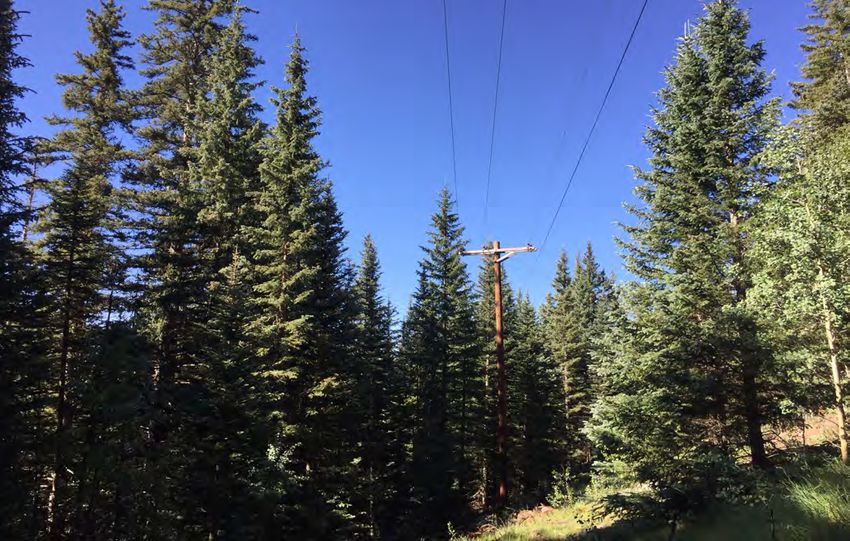
3           Human caused wildfire
               How many acres are burned by
               human caused wildfires?
               Over the last 16 years, wildfires burned an average     has a higher percentage of human-caused wild-
               of 4.6 million acres annually in the coterminous        fire (81% of the acres burned are human caused)
               U.S. (NIFC 2017). During big fire years such as         compared to other regions such as the Northwest
               2006, as many as 9.5 million acres burned, while in     (only 26% of the acres burned are human caused).
               other years such as 2004, fewer than 2 million acres    Scientific studies explore these regional differences
               burned (Figure 1). On average, human-caused             in more depth (Stephens 2005, Bartlein et al. 2008,
               wildfires burn over half (55%) of the total acres       Balch et al. 2017).
               burned in a given year (NIFC 2017). Some years
               the percentage of acres burned by human-caused          As the climate gets warmer, and in many areas
               wildfires is much greater; for example, 82 percent      drier, large, severe fires are likely to become more
               in 2009. These human-ignited wildfires are differ-      common. In fact, this pattern is already visible. An
               ent from controlled burns (also called prescribed       examination of wildfires in the western U.S. be-
               fire), which are intentionally ignited under specific   tween 1984 and 2011 showed that both the number
               conditions and managed to benefit ecological con-       of large fires and the acreage burned increased
               ditions. Analysis of wildfire records from 1992 to      significantly (Dennison et al. 2014). Abatzoglou
               2012 showed an increasing trend in large wildfires      and colleagues (2016) estimate that the changing
               ignited by humans (Balch et al. 2017).                  climate resulted in an additional 10 million acres of
                                                                       wildfire between 1984 and 2015. Regional studies
               Different regions of the U.S. have different patterns   have documented an increase in burn severity in
               of fire and different ratios of human and nature        both California and the southwestern U.S. (Dillon
               ignitions (Figure 2). For instance, the southern U.S.   et al. 2011, Miller and Safford 2012). By the end of

                Figure 1. Acres burned by wildfire in the coterminous U.S.

human ignitions.indd 3                                                                                                         3/23/18 4:33 PM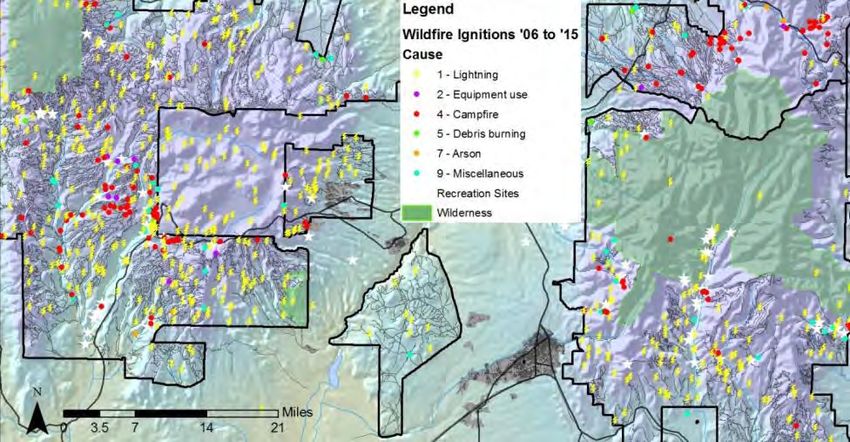
4

               Figure 2. Average acres burned by wildfire in each
               region, by ignition source (2001 to 2016)

               the 21st century, the western U.S. will be warmer     In New Mexico, people ignited nearly half (45%) of
               and drier than it was during the 20th century, with   the wildfires since 2000, and these fires accounted
               warmer spring and summer temperatures, reduced        for half (50%) of the acres burned by wildfire in the
               snowpack and earlier snowmelts, and longer, drier     state during this period (Figure3; SWCC 2016). In
               summer fire seasons (Westerling et al. 2006, IPCC     years with a lot of wildfire, such as 2011 or 2006,
               2007, Dominguez et al. 2010, Booz Allen Hamil-        human ignited wildfires often make up a larger
               ton 2015). The warmer, drier climate will mean an     percentage of the number of acres burned (71% in
               increase in severity and acres burned by wildfires    2011 and 66% in 2006).
               (Westerling et al. 2006, Westerling and Bryant
               2008, Mitchell et al. 2014, An et al. 2015).

               Figure 3. Acres of wildfire in New Mexico, by ignition source (SWCC 2016)

               Forest Stewards Guild            Increasing wildfire awareness and reducing
                                                human-caused ignitions in Northern New Mexico

human ignitions.indd 4                                                                                                       3/23/18 4:33 PM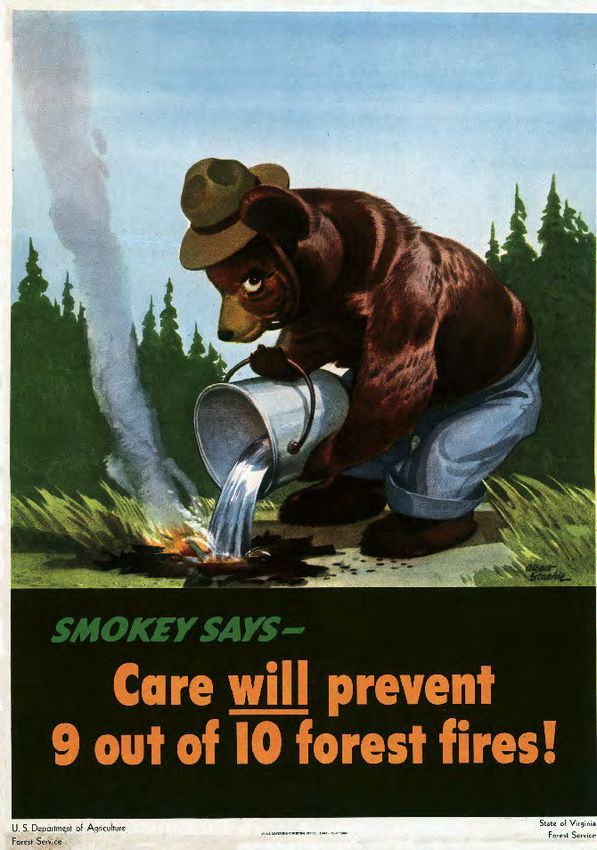
How are wildfires started by
   5
               people?

               People start wildfires in a wide variety of ways.       Data from the US Forest Service (USFS) provides
               Vehicle exhaust pipes, cigarette butts, and poorly      insight into the relative impact of different types
               extinguished campfires are all common causes for        of human ignition. Abandoned campfires are the
               wildfires (Narayanaraj and Wimberly 2012). July         most common single source of human ignitions
               fourth is the most common day for human-ignited         (Figure 4). On average since 2001, abandoned
               wildfires to start, likely because of the incendiary    campfires have started 44% of the human-ignited
               power of fireworks (Balch et al. 2017). The primary     wildfires in the Southwest (Arizona, New Mexico,
               source of human ignitions varies by ecoregion. For      and west Texas). The next most common category
               example, in marine coastal forest of Washington,        is miscellaneous, which accounts for an aver-
               agriculture is the important predictor of wildfire      age of 36% of the human ignited wildfires in the
               ignitions, while in the Great Basin and interior des-   Southwest since 2001. The Miscellaneous category
               erts, distance to railroads is more important (Fusco    includes a range of human sources such as power
               et al. 2016). In the east, the majority of human        lines or electrical lines, burning vehicles, fireworks,
               caused wildfires result from escaped fires from         ‘highway’, stove fuel sparks, and timber harvest
               debris burning (Balch et al. 2017).                     slash burning.

               Figure 4. Number of wildfires, by type of human ig-
               nition in the Southwest (Arizona, New Mexico, and
               west Texas)

human ignitions.indd 5                                                                                                           3/23/18 4:33 PM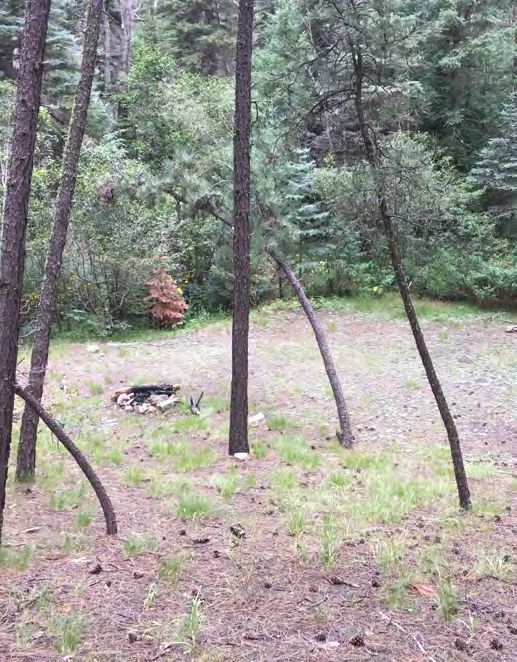
6
               An examination of the sources of human ignition
               by acres rather than the number of ignitions shows
               that on average, wildfires in the Miscellaneous
               category have burned the largest percentage of the
               acres burned by human-ignited wildfire since 2001
               in the Southwest (Figure 5). Fifty-eight percent of
               the human-ignited wildfires were in the Miscel-
               laneous category and the next highest category
               was campfires at 37 percent of the human ignited
               acres burned. Organizing wildfires by acres burned
               highlights the importance of a few, very large fires.
               The Wallow Fire burned more than half a million
               acres after it was ignited by an abandoned camp-
               fire, which is more than the average number of
               acres burned by human-ignited wildfires over the         Humans can cause fires in a variety of ways,
               past 15 years.                                           including equipment fires.

               Figure 5. Acres of wildfire by, ignition source in the
               Southwest (Arizona, New Mexico, and west Texas)
               Figure 5 excludes a wildfire that burned through over
               50,000 acres of grassland Texas in 2006 and the three                                       photo by
               largest fires of 2011, to better display the trends.                                        Maine Forest Service

               Forest Stewards Guild             Increasing wildfire awareness and reducing
                                                 human-caused ignitions in Northern New Mexico

human ignitions.indd 6                                                                                                            3/23/18 4:33 PM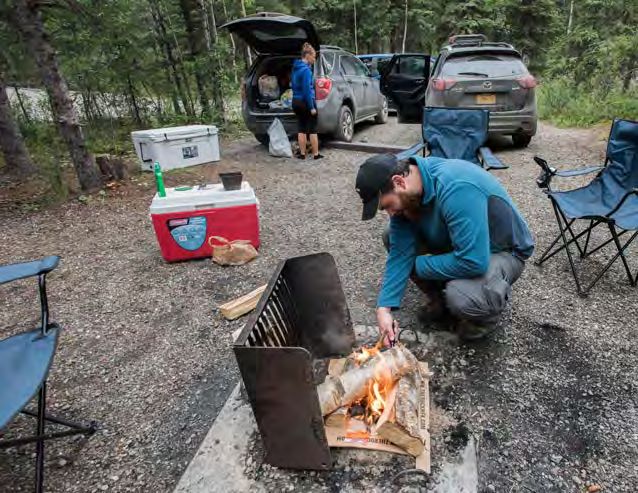
Campfires
   7
               Some the country’s most devastating and costly
               wildfires have been started by campfires. For ex-
               ample, the 2016 Soberanes Fire in California was
               started by an illegal campfire and cost at least $229
               million dollars to suppress (Branson-Potts 2016).
               Unattended campfires are common too. Over
               Memorial Day weekend in 2017, Santa Fe National
               Forest staff found 41 unattended campfires (Paskus
               2017). Campfire and road ignitions may drive
               larger fires because of their locations. In contrast
               to lightning, which may be more likely on a ridge
               (and then burn down slope), human ignitions are
               often linked to roads and recreation sites in valleys.
               Fires that start in valleys or lower slopes can burn
               up slope easily and hence grow faster.

               The potential for campfires to ignite wildfires has
               driven efforts to educate the public (e.g., Smokey
               Bear) and to restrict campfires. However, research
               suggests that campfire bans have limited effective-
               ness, perhaps because of the importance of camp-
               fires to people visiting the forest (Reid and Marion
               2005). Campfires are a central part of many peo-
               ple’s forest recreation. For example, a study found
               campfires were more important than many other
               campsite attributes including: campground host
               presence, campsite cost, availability of picnic tables,
               recreational vehicle hookups, or even restroom
               facilities (Lillywhite et al. 2013).

                                                                         Campfires are an imortant part of recre-
                                                                         ation for many visitors, but escaped camp-
                                                                         fires are a major source of wildfire.

                                                                                                 photos by
                                                                                                 top: National Park Service
                                                                                                 bottom: Zander Evans

human ignitions.indd 7                                                                                                        3/23/18 4:33 PM
Powerlines
8
A view of wildfire ignitions by the number of acres
burned suggests that electrical lines deserve a
separate category, since the total number of acres
burned by powerlines (nearly 178,000 acres) is
more than the sum of acres burned by wildfires
ignited by arson, children, debris burning, equip-
ment use, and smoking over 15 years. When a
powerline is knocked down by a falling tree, the
electrical current or sparks can easily start a wild-
fire. Electrical lines can also start wildfires when
hot particles are produced by arcing powerlines or
when burning embers are produced by the colli-
sion of high voltage power lines with surrounding
trees (Tse and Fernandez-Pello 1998). The ignition
of large wildfires by powerlines in the Southwest
is a recent phenomenon. Three major wildfires in
New Mexico since 2011 were caused by downed
powerlines: the 2013 Tres Lagunas Fire, 2013
Thompson Ridge Fire and 2011 Las Conchas Fire
(Evans 2014).
Electrical lines are a significant source of wildfire
ignitions in other parts of the country too. For
example, power lines started three wildfires in San
Diego County during the fall of 2008 (the Witch,
Guejito, and Rice Fires), and these three wildfires
Downed powerlines are a significant fire threat.
killed 2 people, injured 40 firefighters, destroyed
1,141 homes, and burned more than 207,000 acres
(Archibald 2008). A study in southern California
found that electrical line wildfires can often be
larger than wildfires caused by other types of igni-
tions because the high winds that can cause line
faults also makes firefighting more difficult (Mitch-
ell 2009).
While landowners and utilities are required to keep
electrical lines right-of-ways clear, the job is im-
mense. Thousands of miles of electrical lines run
through the fire-adapted forests of the western US.
Even where right-of-ways are maintained, setbacks
may not be wide enough. In New Mexico, for ex-
ample, easement widths are 10 feet on each side of
the center for distribution lines and 20 feet in each
direction for the higher voltage transmission lines. photos by
top: County of Fairfax Virginia
bottom: Argonne National Labratory
Forest Stewards Guild Increasing wildfire awareness and reducing
human-caused ignitions in Northern New Mexico
human ignitions.indd 8 3/23/18 4:33 PM9
Given that tree heights can be many times these (Johnson 2014). The Kit Carson Electric Coopera-
easement widths, an inherent hazard exists along tive spends about $400,000 a year on trimming
most powerlines strung through New Mexico’s trees along its distribution lines and estimated
forests. The Jemez Mountain Electrical Co-op that burying lines costs $100,000 per mile (Last
has 4,000 miles of distribution line, the Mora 2013). Recently, a jury found that Jemez Mountains
San Miguel Electric Coop has 1,900 miles, and Electric Cooperative and TriState Generation and
Kit Carson Electric in Taos has 2,700 miles (Last Transmission Inc. distribution lines bear 95% of
2013). Moreover, clearing right-of-ways to at least the responsibility for starting the 2011 Las Con-
tree height on both sides would fragment forests, chas Fire (Associated Press 2015). The costs of this
reducing habitat value and facilitating the invasion negligence will likely be significant given that the
of exotic plants (Tittler et al. 2012), and threaten Las Conchas Fire cost over $48 million dollars to
endangered species, thus requiring in depth envi- suppress and may have incurred a total cost as high
ronmental review. as $1.4 billion dollars (Walker et al. 2013). Given
these costs and the threat of wildfire, it might be
Reducing the threat of electrical line-caused wild- more cost effective to install solar panels to pro-
fire in San Diego county by replacing wooden poles duce electricity for remote costumers and remove
with steel, installing heavier conductors, and up- the electrical lines. This would reduce the risk of
grading substation cost nearly $500 million dollars wildfire and the cost of annual right-of-way main-
tenance.
Trees on either side of right-of-ways often overtop
photo by
electrical lines through the forest. Zander Evans
human ignitions.indd 9 3/23/18 4:33 PMArson
10
Arson is another consistent source of wildfire igni-
tions. Research suggests that arson ignitions are
responsive to law enforcement actions, weather
and climate, and labor market variables (Preste-
mon and Butry 2008). Wildfire hotspot modelling,
which identifies high potential for arson, can help
law enforcement efficiently allocate resources to
reduce arson incidents (Prestemon et al. 2016).
A review of research on wildfire arson identified
seven key ways to reduce the problem (Prestemon
and Butry 2008):
1. Reduce hazardous fuels and eliminate attractive
hazards such as piled fuels.
Hotspot modeling to identify areas of high arson
2. Monitor weather and climate drivers of wildland potential can help law enforcement reduce wildfire
arson success. threats.
3. Monitor predictors of arson such as the socio-
economic drivers of arson and other crime rates.
4. Increase law enforcement presence both as a
deterrent and to raise the arrest rate.
5. Catch arsonists quickly and frequently by
identifying arson hotspots in space and time.
6. Work with fire departments and fire suppression
teams to reduce firefighter-set fires.
photo by
inciweb
Forest Stewards Guild Increasing wildfire awareness and reducing
human-caused ignitions in Northern New Mexico
human ignitions.indd 10 3/23/18 4:33 PMWhere do wildfires start?
11
Proximity to roads, energy infrastructure, and The connection between development and wildfire
houses are good predictors of wildfire ignitions in ignitions is important because so many people live
human dominated landscapes (Cardille et al. 2001, in the wildland-urban interface (WUI). The most
Sturtevant and Cleland 2007, Syphard et al. 2008, recent assessment estimated 190 million acres of
Chas-Amil et al. 2015, Robinne et al. 2016). Hu- WUI in the U.S., 44 million houses in the WUI,
man influences drive wildfire locations in regional and 99 million WUI residents or 32 percent of the
studies across North America: New Jersey (Peters U.S. population (Martinuzzi et al. 2015). Not only
et al. 2013), California (Mann et al. 2016), Bristish is the WUI in the U.S. extensive, but it is growing
Columbia (Camp and Krawchuk 2017), Alaska rapidly; it grew approximately seven percent be-
(Calef et al. 2008), Missouri (Yang et al. 2007), tween 2000 and 2010 (Radeloff et al. 2005, Mar-
and Michigan (Bar Massada et al. 2013). However, tinuzzi et al. 2015). Of course, this growth trend
areas of dense human development and expansive puts more people and homes at risk from wildfire
agriculture have a reduced probability of human- too. The expansion of the WUI combines with the
caused wildfire because roads, buildings, and changing climate to increase the threat of wildfire
irrigated agriculture do not burn well and fragment (Syphard et al. 2007, Liu et al. 2015).
natural fuels (Parisien et al. 2012).
Figure 6. Map of wildfire ignitions by source from
2006 to 2015 on the Santa Fe and Carson National
Forests
human ignitions.indd 11 3/23/18 4:33 PM12
An analysis of the location of human-ignited wild-
fires (including equipment use, campfires, debris
burning, arson, and other causes) shows that recre-
ation sites and roads are related to human ignitions
(Figure 7). Of the 3,644 human caused ignitions
on National Forest land from 1980 to 2015, only
six percent were, in wilderness areas compared
to 23 percent of lightning ignitions that were in
wilderness areas (Figure 7, first column). Thirty-six
percent of human ignitions were within one mile of
a recreation site, compared to only thirteen percent
of lightning ignitions (Figure 7, second column).
Ninety one percent of human ignitions were within
a half mile of a road, and 77 percent were within
a quarter mile of a road (compared to 65 and 48
percent respectively for lightning ignitions; Figure
7, third and fourth columns). For campfires, the
relationship to roads is even stronger, since 80 per-
cent of wildfires started by campfires are within a
quarter mile of a road. Both the recreation sites and
roads data come from the USFS geospatial data-
base, and it is worth noting that the roads database
includes small forest roads not passable by pas-
senger vehicles. More knowledge about the spatial Wildfire ignition sources, such as abandoned camp-
patterns of human ignitions presents the opportu- fires, are more common closer to roads.
nity for targeted outreach and education, which is a
cost effective way to reduce wildfire impacts.
Figure 7. Comparison of the total number of wildfire
ignitions to ignitions in specific areas on National
Forest land in the Southwest from 1980 to 2015. photo by
Zander Evans
Forest Stewards Guild Increasing wildfire awareness and reducing
human-caused ignitions in Northern New Mexico
human ignitions.indd 12 3/23/18 4:33 PM13 Public awareness of wildfire risk
Public awareness of wildfire
threat to homes and communities
Many public awareness programs focused on wild- based on their perceptions of risk severity (Martin
fire are aimed at landowners and home mitigation et al. 2007, McCaffrey et al. 2011). Perceptions of
work. Hundreds of millions of dollars have been wildfire risk are also influenced by individual’s as-
invested in community wildfire protection plans, sessments of the costs and benefits of a particular
forest thinning (often called fuel reduction), and measure (McCaffrey 2015). Neighbors can be the
making homes more resistant to wildfire (Evans et crucial factor that determines whether a resident
al. 2015). Home mitigation programs that reduce will take steps to mitigate wildfire hazard (Bren-
the risk that homes will burn during wildfire are kert-Smith 2010, Dickinson et al. 2015). When
a central focus of public wildfire awareness cam- local fire departments and county wildfire special-
paigns, but the adoption of home hazard reduc- ists share information with residents about hazard
tion practices often falls short of program goals reduction, it can also help motivate mitigation
(Brenkert-Smith 2011). The limitations of efforts activities (Brenkert-Smith et al. 2012). A crucial ca-
to inspire homeowners to take action and reduce veat is that there is great variety in WUI residents.
wildfire threat have implications for campaigns to Programs, ideas, and solutions are unlikely to work
reduce human ignitions. across all community contexts or for all WUI resi-
dents (Brenkert-Smith 2011, Stidham et al. 2014).
Research has uncovered a number of reasons why The information sources that residents find most
residents do not take steps to reduce risk from useful and the factors that motivate residents to
wildfire, including not wanting to cut trees, risk take hazard reduction measures vary significantly
perceptions, wildfire knowledge, and economic is- by location (McCaffrey et al. 2011).
sues (Collins 2005). Residents who are knowledge-
able about wildfire risk are motivated to take action
photo by Environmental Protection Agency
human ignitions.indd 13 3/23/18 4:33 PM14
Seasonal homes make up about 10 percent of the
homes in the WUI across the coterminous U.S. In
New Mexico, there are an estimated 29,000 sea-
sonal homes in the WUI (Martinuzzi et al. 2015).
These seasonal homes and the part-time residents
who live in them are an important part of the
hazard reduction equation. All residents need to
participate in efforts to reduce wildfire threats and
sources of ignitions; however, part-time residents
may be less likely to take mitigation actions than
full-time residents (Collins and Bolin 2009). Often,
it is more difficult for part-time residents to find
the time to implement fuel reduction activities
than it is for full-time residents (Bright and Burtz
2006). Interactions with their full-time-resident
neighbors is a key link between part-time residents
and their community (Brenkert-Smith 2010).
Research on why residents take action to reduce
wildfire threat suggests that increasing people’s per-
ception of the severity of the risk of human igni-
tions might motivate them to take action. Similarly,
the positive influence that neighbors and local
firefighters have on WUI risk reduction might be
beneficial for campaigns to reduce human igni- Homes in the wildland-urban interface are at risk of
tions. Infrequent visitors to the forest may need wildfire and can be a source of wildfire ignitions.
different or greater engagement to raise awareness
of human ignitions, just as WUI risk reduction ef-
forts may look different for part-time residents.
More homes and cabins in the wildland also mean
Both seasonal and full-time WUI residents are at- more powerlines.As noted earlier, powerlines are
tracted to the trees, wildlife, quiet, privacy, views, a significant source of human-ignited wildfire.
and recreational opportunities linked to the wild- Moreover, at least in some cases the maintenance
land (Nelson et al. 2004). The natural environment and protection of lines from the road to the build-
and seclusion that attracts WUI residents can also ing are a homeowner’s responsibility and a source
add to the risk of human ignitions. The trees that of wildfire risk.
provide privacy can become fuel for wildfires.
Activities around WUI residences such as smok-
ing, outdoor cooking, fires, or parking cars on dry photos by
grass are potential sources of wildfires just as those top: inciweb
activities are on public lands. bottom: Michigan DNR
Forest Stewards Guild Increasing wildfire awareness and reducing
human-caused ignitions in Northern New Mexico
human ignitions.indd 14 3/23/18 4:33 PMPublic awareness of the risk of
15
wildfire ignitions
Public awareness of wildfire ignitions overlaps with While recent research on prevention programs
efforts to raise awareness of wildfire risk but in- will help improve their effectiveness (e.g., Butry
cludes a larger population. Rather than just target- et al. 2010, Prestemon et al. 2010, Abt et al. 2015,
ting residents of the WUI, awareness campaigns Prestemon et al. 2016), there are notable research
for wildfire ignitions must include all visitors to gaps. For example, while the USFS provides de-
forests or natural areas. Prevention education used tailed guidance on how to erect fire danger rating
in combination with fuel reduction is effective in signs (e.g., NWCG 2005, USFS 2008), there is little
minimizing the costs and losses from unintentional research on the effectiveness of these signs or com-
wildfires (Butry et al. 2010). In a study of Bureau parison between sign designs or messages. In fact,
of Indian Affairs tribal units, prevention activities some signs designed to raise awareness of the risks
led to significant reductions in wildfires caused by of unattended campfires may cause more confusion
escaped campfires, juveniles, fire-use (e.g. escaped than awareness. For example, the sign with a shovel
debris burns), and equipment, and these program and bucket bearing the message ‘Required for
benefits were 4.5 times greater than the costs (Abt camping” has been confused with a message about
et al. 2015). For example, a prevention program wilderness hygiene. The sign is designed to empha-
might cost one million dollars, but would avoid a size the importance of coming prepared with the
wildfire that would cost $4.5 million to suppress. right tools whenever lighting a campfire, but this
Wildfire prevention education efforts significantly crucial message may not be obvious to everyone.
reduced the numbers of wildfires ignited by debris
burning, campfire escapes, smoking, and children
in Florida (Prestemon et al. 2010). In the Florida
example, the additional reduction in wildfire dam-
ages was 35 times greater than the additional cost
of prevention education.
The most recent investigation
Burty and colleagues (2010) highlight that wildfire
prevention education programs are more flexible,
into the effectiveness of wild-
in both time and space, than fuel reduction treat- fire prevention signs appears
ment. Prevention programs can respond to unex-
pected wildfire outbreaks, but longevity of their
to have been more than 40
effect on wildfire ignitions is limited (Butry et al. years ago.
2010). In general, prevention programs most likely
to be effective are those that give people informa-
tion and tools that enhance their perception of
their power, as individuals, to prevent wildfires.
(Bates et al. 2009).
human ignitions.indd 15 3/23/18 4:33 PM16
The most recent investigation into the effectiveness
of wildfire prevention signs appears to have been
conducted more than 40 years ago (Folkman 1966,
1973). Some sign design and placement advice is
common sense, for example “Place signs where
they provide adequate time for viewer response,
considering such things as approach, speed, and
road conditions” (NWCG 2005). However, given
the advancements in advertising and marketing
over the last 40 years, wildfire prevention signage
could benefit from additional research.
photo by
Sam Berry
Forest Stewards Guild Increasing wildfire awareness and reducing
human-caused ignitions in Northern New Mexico
human ignitions.indd 16 3/23/18 4:33 PMSmokey Bear and US Forest Service
17
Prevention Budgets
Since its creation over 100 years ago, the USFS has
led the federal effort to raise awareness on how to
avoid wildfire ignitions. A central part of the USFS
public awareness campaign has been Smokey Bear.
Smokey Bear and the slogan ‘Remember, only you
can prevent forest fires’ is often cited as the most
successful public awareness campaign ever (Dom-
beck et al. 2004). The Smokey Bear campaign grew
out of campaigns for conservation during World
War II. The power of the Smokey Bear campaign
grew with the identification of a living mascot in
1950 and the national Smokey Bear Act of 1952.
The Smokey Bear program is administered by the
USDA Forest Service, the National Association of
State Foresters, and the Ad Council. The Smokey
Bear campaign has reached out through radio,
newspapers, television, posters, pamphlets, calen-
dars, coloring books, comic books, and many other
mediums. For example, in 1979, $1 million dol-
lars’ worth of materials was sent out, TV and radio
spots generated four billion home impressions, and
$55 million dollars’ worth of advertising space was
donated (McNamara et al. 1981). By Smokey Bear’s
70th birthday in 2014, the Ad Council totaled more
than $1.4 billion in donated time and space from
media companies and reported that 96 percent of
the U.S. adult population recognized Smokey Bear
(Ad Council 2017).
Though the Smokey Bear program is ubiquitous,
actual dollars for the USFS to raise awareness about
wildfire ignitions are limited. The USFS has spent
about $1.3 million dollars each year managing
the Smokey Bear program. The money available
from Smokey Bear licensed products has been at
a $54,000 program level for the last several years
(USFS 2016) and is mainly used for special projects
such as the annual Smokey Bear Awards or Smokey
Bear’s birthday events. The National Wildfire Pre-
vention Program has an annual budget of $95,000
and one full time staff person to help coordinate
national awareness efforts.
photo by
National Agricultural Library
human ignitions.indd 17 3/23/18 4:33 PM18
In comparison, the overall wildfire preparedness
budget was $1.1 billion in fiscal year 2016 (USFS
2016). Wildfire preparedness also includes “plan- The reduction in wildfire
ning, prevention, education, information tech- damages was 35 times greater
nology development, training, advancement of
firefighting technology, and organizational learn- than the additional cost of
ing through program review” (p. 273 USFS 2016). prevention education.
USFS asserts that for every one dollar reduction in
preparedness funding there is an increase of $1.70
in suppression costs (USFS 2016). Had invest-
ments been made to prevent the escaped campfire
that caused the Wallow Fire, over $100 million in The USFS has developed National Fire Prevention
suppression and immediate post-fire rehabilitation Education Teams that can be sent to areas that are
could have been avoided. experiencing higher-than-normal wildfire danger
or a high incidence of human-caused wildfires.
There are 400 wildfire prevention technicians listed These teams supplement and support the wildfire
in the USFS budget (or about five percent of the prevention efforts of local personnel and agencies
total number of full-time equivalent employees in by facilitating community awareness, coordinating
the preparedness budget line item). These techni- interagency closures, and engaging local agencies,
cians combine firefighting with public awareness fire departments, businesses, citizens and civic and
job duties. Their prevention activites include: homeowners organizations. These teams are paid
for through the wildland fire management budget.
• Presenting the role of fire in ecosystems manage-
ment educational programs.
• Helping present fire prevention programs in local
schools and at community events.
• Conducting routine inspections of areas such
as electrical/electronic sites, power lines, resorts,
camps, and developed facilities.
• Identifying, collecting, and preserving evidence
in the probable cause of wildland fires.
During active wildfire seasons, the duties of fire
suppression are likely to eclipse routine inspections
and education programs. At the regional level,
many of the Wildfire Prevention Coordinator posi-
tions are currently vacant or the tasks are assigned
to someone in another position.
Forest Stewards Guild Increasing wildfire awareness and reducing
human-caused ignitions in Northern New Mexico
human ignitions.indd 18 3/23/18 4:33 PMRegional and local efforts to raise
19
awareness of wildfire ignitions
The regional offices of federal agencies and state
agencies are also engaged in raising awareness
about preventing wildfire ignitions. Their efforts
are harder to track because they are usually not
paid for from a specific public awareness budget.
Rather, they are put together with funding for re-
lated programs and through partnerships. The One
Less Spark campaign is a good example of this type
The State Fire Assistance (SFA) program is another of awareness program (www.readyforwildfire.org/
important part of the USFS investment in wildfire One-Less-Spark-Campaign/). The One Less Spark
prevention. The SFA focuses on mitigating the program focuses on ignition sources including
risk of wildfire in communities, particularly those outdoor equipment use, debris burning, and igni-
communities taking an active role in preparing tions from vehicles. To create the One Less Spark
and planning for wildland fire. The SFA budget for campaign, the USFS partnered with National Park
wildfire prevention program has averaged $3.2 mil- Service, Bureau of Land Management, U.S. Fish
lion over the last five years (Figure 8). and Wildlife Service, Bureau of Reclamation, and
state agencies such as CALFIRE. Another example
The rest of SFA $78 million program budget is in- of prevention efforts initiated at the local level is
vested in national wildfire awareness and prepared- a program that placed small flyers about campfire
ness programs, assistance to states, and support for safety directly in fire rings in recreation areas.
firefighting resources. SFA provides crucial support
for national wildfire awareness programs such as
the Fire Adapted Communities Learning Network
and the Ready, Set, Go! Program. In fiscal year
2015, SFA invested $15.9 million in preparedness
activities (USFS 2016). SFA also funded training
for 127,186 firefighters and nearly $6 million in
the purchase, maintenance, and rehabilitation of
firefighting equipment.
Figure 8. State Fire Assistance Budget and Public
Education Programs photo by
US Forest Service
human ignitions.indd 19 3/23/18 4:33 PMRestrictions and Forest Closures
20
One response to temporary periods of heightened space. A Zone Restriction Coordinator, chosen by
wildfire risk and increased probability of hu- the Agency Administrators and Tribal Chairper-
man ignition is the tightening of restrictions or sons within the zone, works with fire managers to
complete forest closure. Targeted or temporary simultaneously initiate restriction. Similar proce-
restrictions are also used to reduce wildfire risk. dures are in place for lifting restrictions to avoid
For example, in 2016 the Governor of New Mexico responding to small fluctuations in risk, weather,
urged municipal officials to ban firewoks before and fire danger, which could result in confusion
Independence Day because of dry conditions. Mu- and lack of support from the public (SWCG 2014).
nicipalities responded with restrictions like those A recently developed website tracks fire restrictions
in Bernalillo County, which banned the use of all in order to improve awareness (www.firerestric-
fireworks in the unincorporated areas in the moun- tions.us/nm/).
tains and along the Rio Grande Bosque with fines
up to $1000 and less than one year in jail (Rivera
2016).
State and federal managers can use graduated
restrictions to respond to heighted risk. Stage I
fire restrictions limit fire, campfire, charcoal, coal,
or wood stove, to developed recreation sites and
prohibit fireworks. Stage II fire restrictions prohibit
any fire or campfire, stove fire, smoking, operating
a chainsaw, running equipment powered by an in-
ternal combustion engine, or using a motor vehicle
off roads.
Stage III fire restriction is forest closure. Agencies
view forest closures as a last resort because their
impact on communities and recreation (SWCG
2014). For example, a 60 day closure of New
Mexico forests in 2001 cost an estimated $479 mil-
lion loss in state output (Starbuck et al. 2006). The
current interagency plan for fire restrictions states
that fire danger alone does not justify closures and
that other important factors in determining clo-
sures include the life and safety risks from wildfire;
high potential for human-caused fires; potential
high-risk occasions (4th of July, etc.); severe short-
ages of resources; and large fires burning in other
locations (SWCG 2014). Land management agen-
cies in the Southwest have made a concerted effort
to ensure consistency in restrictions and closures.
Lack of consistency leads to public confusion and
disparities in risk between land management agen-
cies. In the Southwest, there are seven zones that
photo by
include a range of federal, tribal, and state open US Forest Service
Forest Stewards Guild Increasing wildfire awareness and reducing
human-caused ignitions in Northern New Mexico
human ignitions.indd 20 3/23/18 4:33 PM21 Conclusion
Large, high severity fires are becoming more com-
mon, and the warming, drying climate is making
conditions ideal for these devastating fires. On
average in the U.S., human-caused wildfires burn
over half of the total acres burned by wildfire in a
given year. Even in the Southwest where lightning
ignites many wildfires, people are responsible for
many of the largest, most severe fires.
To effectively reduce the wildfires caused by people,
prevention efforts should recognize the variation in
how and where people start wildfires. People start
wildfires with their vehicles, cigarette butts, camp-
fires, fireworks, debris burning, powerlines, arson,
and other activities. Prevention should be tailored
to the mode of ignition. For example, awareness
campaigns may be more effective for reducing
campfire ignitions but not arson or powerline wild-
fires. Data from the Southwest shows the impact
of abandoned campfires, which account for 44% of
the human caused wildfires since 2001. Research
suggests that campfire bans have limited effective-
ness because of the particular importance of camp-
fires to people recreating in the forest. However, 80
percent of wildfires started by campfires are within
a quarter mile of a road. This analysis combined The tremendous cost of large, high-severity wild-
with local knowledge may suggest ways to target fires justifies much greater investment in pre-
outreach to people likely to build campfires. vention. Research has shown that the reduction
in wildfire damages can be as much as 35 times
Wildfire prevention program effectiveness should greater than the cost of prevention education. A
be monitored. Recent academic research in Florida dramatic increase in the National Wildfire Preven-
suggests that prevention campaigns are a good tion Program could significantly reduce the num-
investment, but in general, there appears to be a ber of wildfires each year. Prevention messaging
lack of monitoring to establish effectiveness. Ad- can be integrated into successful programs, such
mittedly, linking prevention efforts to changes in as Firewise or Fire Adapted Communities, that in-
area burned by human-caused wildfire is difficult clude the many facets of communities’ relationship
because of other factors such as weather. However, to fire. Linking human-caused ignitions to the risk
intermediate measures such as numbers of aban- WUI residents face could help build a strong group
doned campfires versus numbers of forest visitors of advocates for wildfire prevention. Since people
could demonstrate effectiveness. The lack of hard cause wildfires, we also have the power to prevent
data on the ability of prevention efforts to reduce those wildfires.
wildfires may be in part responsible for the small
size of the USFS budget allocated to prevention.
photo by:
National Agricultural Library
human ignitions.indd 21 3/23/18 4:33 PM22
Resources
· Statistics on human caused wildfires www.nifc.gov/fireInfo/fireInfo_stats_human.html
· One Less Spark Campaign www.nmfireinfo.com/links/outdoor-fire-safety/one-less-spark
· Ready, Set, Go! www.readyforwildfire.org/Ready-Set-Go-Campaign
· Fire Adapted Communities – New Mexico www.fireadaptednm.org
· Current fire restrictions www.firerestrictions.us/nm
photo by:
US Forest Service
Forest Stewards Guild Increasing wildfire awareness and reducing
human-caused ignitions in Northern New Mexico
human ignitions.indd 22 3/23/18 4:33 PMReferences
23
Abatzoglou, J. T., and A. P. Williams. 2016. Impact of anthropogenic climate change on wildfire across
western US forests. Proceedings of the National Academy of Sciences 113(42):11770-11775.
http://www.pnas.org/content/113/42/11770.abstract
Abt, K. L., D. T. Butry, J. P. Prestemon, and S. Scranton. 2015. Effect of fire prevention programs on
accidental and incendiary wildfires on tribal lands in the United States. International Journal of
Wildland Fire 24(6):749-762. http://www.publish.csiro.au/paper/WF14168
Ad Council. 2017. Press Release: Smokey Bear Celebrates 70th Birthday Awards Smokey Bear Hugs In
New Wildfire Prevention PSAs. Last accessed http://www.adcouncil.org/News-Events/Press-
Releases/Smokey-Bear-Celebrates-70th-Birthday-Awards-Smokey-Bear-Hugs-In-New-
Wildfire-Prevention-PSAs
An, H., J. Gan, and S. Cho. 2015. Assessing Climate Change Impacts on Wildfire Risk in the United
States. Forests 6(9):3197. http://www.mdpi.com/1999-4907/6/9/3197
Archibald, R. C. 2008. Damaged Power Lines Blamed for Wildfires. The New York Times, New York, NY.
September 3, 2008
Associated Press. 2015. Jury: Utilities 95% to blame for Las Conchas Fire. Albuquerque Journal,
Albuquerque, NM.
Balch, J. K., B. A. Bradley, J. T. Abatzoglou, R. C. Nagy, E. J. Fusco, and A. L. Mahood. 2017. Human-
started wildfires expand the fire niche across the United States. Proceedings of the National
Academy of Sciences. http://www.pnas.org/content/early/2017/02/21/1617394114.abstract
Bar Massada, A., A. D. Syphard, S. I. Stewart, and V. C. Radeloff. 2013. Wildfire ignition-distribution
modelling: a comparative study in the Huron–Manistee National Forest, Michigan, USA.
International Journal of Wildland Fire 22(2):174-183. http://www.publish.csiro.au/paper/
WF11178
Bartlein, P. J., S. W. Hostetler, S. L. Shafer, J. O. Holman, and A. M. Solomon. 2008. Temporal and spatial
structure in a daily wildfire-start data set from the western United States (198696). International
Journal of Wildland Fire 17(1):8-17. http://www.publish.csiro.au/paper/WF07022
Bates, B. R., B. L. Quick, and A. A. Kloss. 2009. Antecedents of intention to help mitigate wildfire:
Implications for campaigns promoting wildfire mitigation to the general public in the
wildland–urban interface. Safety Science 47(3):374-381. http://www.sciencedirect.com/science/
article/pii/S0925753508000891
Booz, Allen Hamilton. 2015. 2014 Quadrennial Fire Review. USDA Forest Service, Fire and Aviation
Management and Department of Interior, Office of Wildland Fire, Washington, DC.
Branson-Potts, H. 2016. After burning for nearly three months, huge, costly Soberanes fire fully
contained. Los Angeles Times, Los Angeles, CA.
Brenkert-Smith, H. 2010. Building bridges to fight fire: the role of informal social interactions in six
Colorado wildland–urban interface communities. International Journal of Wildland Fire
19(6):689-697. http://www.publish.csiro.au/paper/WF09063
human ignitions.indd 23 3/23/18 4:33 PMBrenkert-Smith, H. 2011. Homeowners’ Perspectives on the Parcel Approach to Wildland Fire 24
Mitigation: The Role of Community Context in Two Colorado Communities. Journal of Forestry
109(4):193-200. http://www.ingentaconnect.com/content/saf/jof/2011/00000109/00000004/
art00004
Brenkert-Smith, H., P. Champ, and N. Flores. 2012. Trying Not to Get Burned: Understanding Home
owners’ Wildfire Risk–Mitigation Behaviors. Environmental Management 50(6):1139-1151.
http://dx.doi.org/10.1007/s00267-012-9949-8
Bright, A. D., and R. T. Burtz. 2006. Firewise activities of full-time versus seasonal residents in the
wildland-urban interface. Journal of Forestry 104(6):307-315. http://www.ingentaconnect.com/
content/saf/jof/2006/00000104/00000006/art00005
Butry, D. T., J. P. Prestemon, K. L. Abt, and R. Sutphen. 2010. Economic optimisation of wildfire
intervention activities. International Journal of Wildland Fire 19(5):659-672.
http://www.publish.csiro.au/paper/WF09090
Calef, M., A. McGuire, and F. Chapin III. 2008. Human influences on wildfire in Alaska from 1988 through 2005:
an analysis of the spatial patterns of human impacts. Earth Interactions 12(1):1-17.
Camp, P. E., and M. A. Krawchuk. 2017. Spatially varying constraints of human-caused fire occurrence
in British Columbia, Canada. International Journal of Wildland Fire 26(3):219-229.
http://www.publish.csiro.au/paper/WF16108
Cardille, J. A., S. J. Ventura, and M. G. Turner. 2001. Environmental and social factors influencing
wildfires in the Upper Midwest, United States. Ecological Applications 11(1):111-127.
http://dx.doi.org/10.1890/1051-0761(2001)011[0111:EASFIW]2.0.CO;2
Chas-Amil, M. L., J. P. Prestemon, C. J. McClean, and J. Touza. 2015. Human-ignited wildfire patterns
and responses to policy shifts. Applied Geography 56:164-176. http://www.sciencedirect.com/
science/article/pii/S014362281400280X
Collins, T., and B. Bolin. 2009. Situating hazard vulnerability: People’s negotiations with wildfire
environments in the U.S. Southwest. Environmental Management 44(3):441-455.
http://dx.doi.org/10.1007/s00267-009-9333-5
Collins, T. W. 2005. Households, forests, and fire hazard vulnerability in the American West: A case study
of a California community. Global Environmental Change Part B: Environmental Hazards
6(1):23-37. http://www.sciencedirect.com/science/article/B6VPC-4GHRC4K-3/2/
ffac5b324d8533f9b21baa6fdf83ee36
Dennison, P. E., S. C. Brewer, J. D. Arnold, and M. A. Moritz. 2014. Large wildfire trends in the western
United States, 1984–2011. GEOPHYSICAL RESEARCH LETTERS 41(8):2928-2933.
Dickinson, K., H. Brenkert-Smith, P. Champ, and N. Flores. 2015. Catching Fire? Social Interactions,
Beliefs, and Wildfire Risk Mitigation Behaviors. Society & Natural Resources 28(8):807-824.
http://dx.doi.org/10.1080/08941920.2015.1037034
Dillon, G. K., Z. A. Holden, P. Morgan, M. A. Crimmins, E. K. Heyerdahl, and C. H. Luce. 2011. Both
topography and climate affected forest and woodland burn severity in two regions of the western
US, 1984 to 2006. Ecosphere 2(12):art130. http://dx.doi.org/10.1890/ES11-00271.1
Forest Stewards Guild Increasing wildfire awareness and reducing
human-caused ignitions in Northern New Mexico
human ignitions.indd 24 3/23/18 4:33 PM25 Dombeck, M. P., J. E. Williams, and C. A. Wood. 2004. Wildfire Policy and Public Lands: Integrating
Scientific Understanding with Social Concerns across Landscapes. Conservation Biology
18(4):883-889. http://dx.doi.org/10.1111/j.1523-1739.2004.00491.x
Dominguez, F., J. Cañon, and J. Valdes. 2010. IPCC-AR4 climate simulations for the Southwestern US:
the importance of future ENSO projections. Climatic Change 99(3):499-514. http://dx.doi.
org/10.1007/s10584-009-9672-5
Evans, A., S. Auerbach, L. Wood Miller, R. Wood, K. Nystrom, J. Loevner, A. Aragon, M. Piccarello, and
E. Krasilovsky. 2015. Evaluating the effectiveness of wildfire mitigation activities in the wildland-
urban interface. JFSP 11-1-3-10, Forest Stewards Guild, Madison, WI. http://www.foreststewards
guild.org/publications/research/2015/WUI_effectiveness.pdf
Evans, A. M. 2014. 2013 Wildfire Season: An Overview, Southwestern U.S. Ecological Restoration
Institute and Southwest Fire Science Consortium, Northern Arizona University, Flagstaff, AZ.
http://nau.edu/ERI/Banner/2013-Wildfire-Season--An-Overview-Southwestern-U-S-/
Folkman, W. S. 1966. Modifying the communicative effectiveness of fire prevention signs. Pacific South
west Forest & Range Experiment Station.
Folkman, W. S. 1973. Roadside fire prevention signs: a restudy of their effectiveness. PSW-RN-282,
Pacific Southwest Forest and Range Experiment Station, Berkeley, CA.
Fusco, E. J., J. T. Abatzoglou, J. K. Balch, J. T. Finn, and B. A. Bradley. 2016. Quantifying the human
influence on fire ignition across the western USA. Ecological Applications 26(8):2390-2401.
http://dx.doi.org/10.1002/eap.1395
IPCC. 2007. Climate Change 2007: Synthesis Report. Contribution of Working Groups I, II and III to the
Fourth Assessment Report of the Intergovernmental Panel on Climate Change. Eds. R.K.
Pachauri and A. Reisinger., Geneva, Switzerland.
Johnson, J. M. 2014. Quantifying the Economic Risk of Wildfires and Power Lines in San Diego County.
Duke University.
Last, T. S. 2013. Power lines continue to cause major fires in NM; How can these fires be prevented?
Albuquerque Journal, Albuquerque, NM. June 3, 2013
Lillywhite, J. M., J. E. Simonsen, and J. M. Fowler. 2013. Visitor Preferences for Campfires in US National
Forest Developed Campgrounds. Western Journal of Applied Forestry 28(2):78-84.
http://www.ingentaconnect.com/content/saf/wjaf/2013/00000028/00000002/art00007
https://doi.org/10.5849/wjaf.12-016
Liu, Z., M. C. Wimberly, A. Lamsal, T. L. Sohl, and T. J. Hawbaker. 2015. Climate change and wildfire risk
in an expanding wildland–urban interface: a case study from the Colorado Front Range Corridor.
Landscape Ecology 30(10):1943-1957.
Mann, M. L., E. Batllori, M. A. Moritz, E. K. Waller, P. Berck, A. L. Flint, L. E. Flint, and E. Dolfi. 2016.
Incorporating anthropogenic influences into fire probability models: fffects of human
activty and climate change on fire activity in California. PLoS ONE 11(4):e0153589.
human ignitions.indd 25 3/23/18 4:33 PMhttp://dx.doi.org/10.1371%2Fjournal.pone.0153589
26
Martin, I. M., H. Bender, and C. Raish. 2007. What motivates individuals to protect themselves
from risks: the case of wildland fires. Risk Analysis 27(4):887-900. http://dx.doi.org/10.1111/
j.1539-6924.2007.00930.x
Martinuzzi, S., S. I. Stewart, D. P. Helmers, M. H. Mockrin, R. B. Hammer, and V. C. Radeloff. 2015. The
2010 wildland-urban interface of the conterminous United States. Research Map NRS-8, USDA
Forest Service, Northern Research Station, Newtown Square, PA.
http://www.nrs.fs.fed.us/pubs/48642
McCaffrey, S. 2015. Community wildfire preparedness: a global state-of-the-knowledge summary of
social science research. Current Forestry Reports 1(2):81-90. http://www.nrs.fs.fed.us/pubs/49183
McCaffrey, S., M. Stidham, E. Toman, and B. Shindler. 2011. Outreach Programs, Peer Pressure, and
Common Sense: What Motivates Homeowners to Mitigate Wildfire Risk? Environmental
Management 48(3):475-488. http://dx.doi.org/10.1007/s00267-011-9704-6v
McNamara, E. F., T. Kurth, and D. Hansen. 1981. Communication efforts to prevent wildfires. Pages 143-
160 in R. Rice and W. Paisley, editors. Public communication campaigns. Sage, Beverly Hills, Ca.
Miller, J. D., and H. Safford. 2012. Trends in wildfire severity: 1984 to 2010 in the Sierra Nevada, Modoc
Plateau, and southern Cascades, California, USA. Fire Ecology 8(3):41-57.
Mitchell, J. W. 2009. Power lines and catastrophic wildland fire in Southern California. in Fire &
Materials Conference, San Francisco, CA. http://www.mbartek.com/images/FM09_JWM_
PLFires_1.0fc.pdf
Mitchell, R. J., Y. Liu, J. J. O’Brien, K. J. Elliott, G. Starr, C. F. Miniat, and J. K. Hiers. 2014. Future climate
and fire interactions in the southeastern region of the United States. Forest Ecology and
Management 327(0):316-326. http://www.sciencedirect.com/science/article/pii/
S0378112713007962
Narayanaraj, G., and M. C. Wimberly. 2012. Influences of forest roads on the spatial patterns of human-
and lightning-caused wildfire ignitions. Applied Geography 32(2):878-888.
http://www.sciencedirect.com/science/article/pii/S0143622811001731
Nelson, K. C., M. C. Monroe, J. F. Johnson, and A. Bowers. 2004. Living with fire: homeowner assessment
of landscape values and defensible space in Minnesota and Florida, USA. International Journal of
Wildland Fire 13(4):413-425. http://www.publish.csiro.au/paper/WF03067
NIFC. 2017. Human-caused fires and acres (2001-2016). National Interagency Fire Center. Last accessed
2017 https://www.nifc.gov/fireInfo/fireInfo_stats_human.html https://www.nifc.gov/fireInfo/fire
Info_stats_lightng.html
NWCG. 2005. Wildfire Prevention Sign and Poster Guide. PMS 469 / NFES 2753, National Wildfire
Coordinating Group, Boise ID.
Parisien, M.-A., S. Snetsinger, J. A. Greenberg, C. R. Nelson, T. Schoennagel, S. Z. Dobrowski, and
M. A. Moritz. 2012. Spatial variability in wildfire probability across the western United States.
International Journal of Wildland Fire 21(4):313-327. http://www.publish.csiro.au/paper/
WF11044
Forest Stewards Guild Increasing wildfire awareness and reducing
human-caused ignitions in Northern New Mexico
human ignitions.indd 26 3/23/18 4:33 PM27 Paskus, L. 2017. The numbers are in: Campers have abandoned 49 fires on the Jemez in 2017. NM
Political Report, Albuquerque, NM. http://nmpoliticalreport.com/326399/theweekendsnumber
sarein49abandonedfiresonthejemezin2017en/
Peters, M. P., L. R. Iverson, S. N. Matthews, and A. M. Prasad. 2013. Wildfire hazard mapping:
exploring site conditions in eastern US wildland–urban interfaces. International Journal of
Wildland Fire 22(5):567-578. http://www.publish.csiro.au/paper/WF12177
Prestemon, J. P., and D. T. Butry. 2008. Wildland Arson Management. Pages 123-147 in T. P. Holmes,
J. P. Prestemon, and K. L. Abt, editors. The Economics of Forest Disturbances: Wildfires, Storms,
and Invasive Species. Springer Netherlands, Dordrecht.
http://dx.doi.org/10.1007/978-1-4020-4370-3_7
Prestemon, J. P., D. T. Butry, K. L. Abt, and R. Sutphen. 2010. Net Benefits of Wildfire Prevention
Education Efforts. Forest Science 56(2):181-192. http://www.ingentaconnect.com/content/saf/
fs/2010/00000056/00000002/art00005
Prestemon, J. P., D. T. Butry, and D. S. Thomas. 2016. The net benefits of human-ignited wildfire
forecasting: the case of tribal land units in the United States. International Journal of Wildland
Fire 25(4):390-402. http://www.publish.csiro.au/paper/WF15128
Radeloff, V. C., R. B. Hammer, S. I. Stewart, J. S. Fried, S. S. Holcomb, and J. F. McKeefry. 2005. The
Wildland–Urban Interface in the United States. Ecological Applications 15(3):799-805.
http://dx.doi.org/10.1890/04-1413
Reid, S. E., and J. L. Marion. 2005. A Comparison of Campfire Impacts and Policies in Seven Protected
Areas. Environmental Management 36(1):48-58. http://dx.doi.org/10.1007/s00267-003-0215-y
Rivera, C. 2016. New Mexico fireworks restrictions: What you need to know. KRQE News 13. Last
accessed March 31, 2017 http://krqe.com/2016/06/30/new-mexico-fireworks-restrictions-what-
you-need-to-know/
Robinne, F.-N., M.-A. Parisien, and M. Flannigan. 2016. Anthropogenic influence on wildfire activity in
Alberta, Canada. International Journal of Wildland Fire 25(11):1131-1143. http://www.publish.
csiro.au/paper/WF16058
Starbuck, C. M., R. P. Berrens, and M. McKee. 2006. Simulating changes in forest recreation demand and
associated economic impacts due to fire and fuels management activities. Forest Policy and
Economics 8(1):52-66. http://www.sciencedirect.com/science/article/pii/S138993410400084X
Stephens, S. L. 2005. Forest fire causes and extent on United States Forest Service lands. International
Journal of Wildland Fire 14(3):213-222. http://www.publish.csiro.au/paper/WF04006
Stidham, M., S. McCaffrey, E. Toman, and B. Shindler. 2014. Policy tools to encourage community-level
defensible space in the United States: A tale of six communities. Journal of Rural Studies 35:59-69.
http://www.sciencedirect.com/science/article/pii/S0743016714000515
Sturtevant, B. R., and D. T. Cleland. 2007. Human and biophysical factors influencing modern fire
disturbance in northern Wisconsin. International Journal of Wildland Fire 16:398-413.
human ignitions.indd 27 3/23/18 4:33 PMYou can also read


