Industry Restart Guidelines - Hair and Beauty Services 7 May 2021
←
→
Page content transcription
If your browser does not render page correctly, please read the page content below
Industry
Restart Guidelines
Hair and Beauty
Services
7 May 2021
Current restrictions for your industry
COVIDSafe Industry Guidelines have been prepared to help you understand your obligations and the
current restrictions in place throughout Victoria. You must stay up to date with any changes for your
industry.
         Sector guidelines for reopening
This COVIDSafe Industry Guideline has been prepared by the Department of Jobs, Precincts and Regions to assist you by
summarising relevant Directions issued under the Public Health and Wellbeing Act 2008 and provide recommendations for
operating in a COVIDSafe manner. The COVIDSafe Industry Guidelines are updated as restrictions change.

The table below summarises restrictions relevant to your industry. In the event of inconsistency between this guideline and the
Directions, the Directions take precedence.

This guideline covers: hairdressing and barbering businesses, nail care and skin care services, massage
therapy, waxing services, ear and body piercing services and tattoo parlours.

 Important update
 From Friday 28 May 2021, it will be mandatory for customer-facing industries that require electronic checking-in to use the free
 Victorian Government QR Code Service. Failure to comply with restrictions can result in an on-the-spot fine of $1,652. Where there
 are repeated instances of non-compliance, a further fine of $9,913 can be issued. For continued, blatant or wilful non-compliance a
 business may be prosecuted in court. The full list of industries can be found at coronavirus.vic.gov.au/QR-code-check-in

 The Victorian Government QR Code Service is convenient for Victorians and gives contact tracers access to the best data quickly.

 Venues and facilities that are required to have electronic check-in systems and are currently using a Victorian Government
 Application Programming Interface (API) linked digital record keeping system must switch to the Victorian Government QR Service by
 Friday 28 May 2021. For instructions on how to switch, please go to coronavirus.vic.gov.au/register-to-use-vic-gov-qr-code-service.

 Venues are responsible for ensuring workers and visitors always check-in and that electronic records are up to date. Find out more
 information on the venue and businesses where electronic record keeping is required.

 From 28 May 2021, there will also be changes to density quotients and COVID Marshal requirements. Check back closer to that date
 for more information.

                            Current restrictions
                            Open with COVIDSafe requirements
   COVIDSafe Plan           •   All workplaces with onsite operations must have a COVIDSafe Plan.
                            •   Home-based businesses must also have a COVIDSafe Plan.

   Capacity                 Hair and beauty services
                            • Density quotient of one person per two square metres applies.

   Record keeping           •   Employers must keep a record of all workers and visitors who attend the workplace for longer than
                                15 minutes, including first name, surname, contact number, date and time of visit and areas of the
                                workplace visited.
                            •   Until 28 May 2021, workplaces in this sector must use the free Victorian Government QR Code
                                Service or a Victorian Government API (Application Programming Interface) linked digital system
                                for this purpose.
                            •   From Friday 28 May 2021, it will be mandatory for customer-facing industries that require
                                checking-in to use the free Victorian Government QR Code Service. Failure to comply with
                                restrictions can result in an on-the-spot fine of $1,652. Where there are repeated instances of non-
                                compliance, a further fine of $9,913 can be issued. For continued, blatant or wilful non-compliance
                                a business may be prosecuted in court. The Victorian Government QR Code Service is convenient
                                for Victorians and gives contact tracers access to the best data quickly.
                            •   To register for the Victorian Government QR Code Service, please go
                                to coronavirus.vic.gov.au/register-to-use-vic-gov-qr-code-service
                            •   Venues are responsible for ensuring workers and visitors always check-in and that electronic
                                records are up to date. Find out more information on the venue and businesses where electronic
                                record keeping is required.

           For additional information and FAQs, visit:
     2     https://www.coronavirus.vic.gov.au/guidance-sectors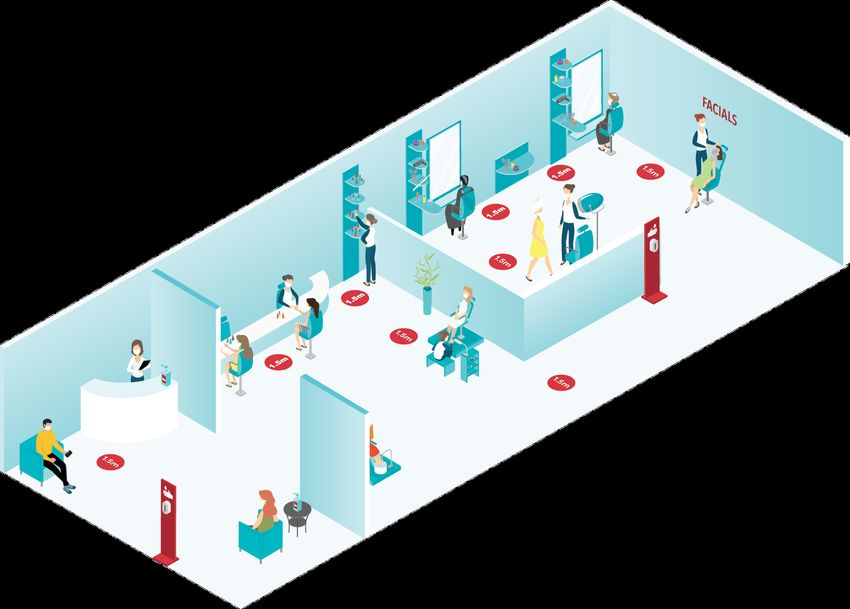
Current restrictions for your industry
                        Current restrictions
       Sector guidelines      for reopening
                Open with COVIDSafe requirements
 Record keeping         •   Staff should, where possible, confirm that visitors have checked in upon entry to the premises.
 (cont)                 •   Information advising workers, customers and visitors on how to check-in using QR codes should
                            be displayed in a prominent location(s).
                        •   If a worker or visitor to the workplace does not have a mobile phone or other device that allows
                            them to access the electronic record keeping system, the workplace should make reasonable
                            efforts to record the relevant information using its own electronic devices (e.g., a tablet or terminal).
                            If it is not possible to record the information electronically because no device is available, the
                            workplace should use an alternative record keeping method to record the information.
                        •   Employers must keep records to show compliance with directions in force including all logs created
                            during the time of directions being in force, rosters, time and attendance records and payroll data.

 Face masks             For all Victorian workplaces:
                        • You must always carry a face mask with you when you leave home unless you have a lawful
                           reason not to.
                        • Face masks continue to be mandatory in some locations, unless a lawful reason not to wear one
                           applies.
                        • For a full list of settings where masks continue to be mandatory, see: Face masks page.

 Signage                For all Victorian workplaces:
                        • Where a workplace has a publicly accessible space, employers must display signage at each
                           public entry to each indoor and outdoor space, indicating maximum capacity and face mask
                           restrictions where required.

 Cleaning               For all Victorian workplaces:
                        • Employers should ensure shared spaces and public spaces are cleaned with disinfectant regularly,
                           with frequently touched surfaces cleaned at least twice each day. Shared equipment should be
                           cleaned between uses.

        For additional information and FAQs, visit:
   3    https://www.coronavirus.vic.gov.au/guidance-sectors
Six COVIDSafe Principles
All work premises must Create a COVIDSafe Plan. The plan applies the six COVIDSafe Principles and
     Sector guidelines for reopening
explains ways to prevent the spread of COVID-19

                   1. Practise physical distancing
                   Where possible within the workplace, aim for workers and visitors to maintain physical distancing of
                   1.5 metres.
                   • Display signs to show capacity limits, where density quotients apply
                   • Minimise the build up of people waiting to enter and exit the premises
                   • Consider using floor markings to provide minimum physical distancing guides
                   • Ensure the workplace abides by the relevant density quotient.

                   2. Wear a face mask
                   •   You must always carry a face mask with you when you leave home unless you have a lawful
                       reason not to
                   •   Face masks continue to be mandatory in some locations, unless a lawful reason not to wear one
                       applies
                   •   For a full list of settings where masks continue to be mandatory, see: Face masks page.

                   3. Practise good hygiene
                   Operators must regularly clean high touch-surfaces and encourage good hygiene practises by
                   workers and customers. This means:
                   • Schedule regular cleaning and disinfecting of frequently touched surfaces
                      (including all surfaces and handrails) and make gloves available for this purpose
                   • Encourage regular handwashing by workers and customers, and make soap and
                      hand sanitiser available for all workers and customers throughout the workplace.

                   4. Keep records and act quickly if workers become unwell
                   Have a strict policy that any workers who feels unwell must stay at home. This means:
                   • Support workers to stay home and get tested even if they only have mild symptoms
                   • Have a plan in place to immediately close down for cleaning and contact tracing if there is a
                     confirmed case of COVID-19
                   • Keep records of workers and customer details for contact tracing (electronic record keeping is
                     mandatory in many settings, and preferred in all others)
                   • Ask workers to complete a pre-shift declaration (recommended).

                   5. Avoid interactions in enclosed spaces
                   Where possible, move activities to an outdoor area. This includes:
                   • Meetings
                   • Lunch breaks
                   • Customer registration.

                   6. Create workforce bubbles
                   Limit the number of people that workers are in prolonged close contact with. This means:
                   • Keep pools of workers rostered on the same shifts
                   • Avoid overlap in shift changes
                   • Limit or decrease the number of visitors or workers attending multiple worksites where possible.

 4
Creating a COVIDSafe workplace: Hair and beauty services
   All hair and beauty service businesses must ensure they apply the six COVIDSafe Principles
   to help prevent the introduction of COVID-19 in the workplace.

   Workplaces include: Hairdressing and barbering businesses, nail and skin care services, massage
   therapy, ear and body piercing services and tattoo parlours.

 Keep electronic records
                                                                                   Face mask requirements
 of all workers and visitors                                                       Adhere to current face mask restrictions (see
 Display QR codes in a prominent           Reduce or eliminate                     Current Restrictions page at the start of this
 location and check that visitors          recirculation of air and                document). You must also adhere to specific face
 have checked-in upon entry. See           increase the use of                     mask or other PPE guidelines for your industry.
 the Current Restrictions table for        outdoor air where possible.
 more information.                         See public health advice on
                                           safely cooling your workplace.

Manage customer
bookings to ensure
physical distancing and                  Floor markings to
minimise client overlap                  reinforce physical
Limit walk-in appointments and           distancing
customer interaction at the counter.
Ensure record keeping for all
visitors is completed on entry.
A density quotient of one person
per two square metres applies

                                                                                                                One towel or cape
                                                                                                                per customer
                                                                                                                All towels and capes
                                                                                                                must be laundered
                                                                                                                using hot water and
                                                                                     Ensure customers           completely dried before
                                                                                                                re-use.
                                                                                     and workers are
                                                                                     provided with hand
                                                                                     washing facilities
                                                                                     or appropriate
                                                                                     alcohol-based
                                                      Any surfaces used by           hand sanitisers
                                                      customers must also
  Remove high-touch items                             be cleaned between
  such as magazines from                              customers                             Display signage at each public
  waiting areas                                       Consider disposable and/or            entry to each indoor and
                                                      single use products where             outdoor space that meets
  Consider suspending the serving of                  appropriate.
  refreshments to customers to avoid                                                        current signage requirements
  contamination of kitchenware.                                                             (see Current Restrictions page
                                                                                            at the start of this document)

         For the latest information on restrictions in Victoria, visit:
     5
         https://www.DHHS.vic.gov.au/victorias-restriction-levels-covid-19
1. Practise physical distancing
    Keep at least 1.5 metres between people whenever possible.

    Physical distancing remains one of the most effective ways to minimise the spread of
    COVID-19 and is a vital part of creating a safe working environment.

    Worker breaks                                              Work from home arrangements
    Spread out break times to reduce the number of             Develop and provide workers with IT related
    workers using communal facilities at the same time.        guidance to enable remote working
    Encourage workers to take breaks outdoors.                 arrangements, for periods in which such
                                                               arrangements are necessary, including
    Minimise contact                                           connecting to the internet, use of VPN services,
                                                               accessing relevant software and utilising
    Consider removing excess chairs and tables from            platforms to facilitate virtual collaboration.
    communal break areas to encourage workers to
    maintain a minimum of 1.5 metres from one another.
                                                               Carpooling
    Maintain physical distancing                               Carpooling is permitted. Workers should sit in an
    Consider providing physical barriers to ensure physical    arrangement that maintains physical distancing
    distancing is maintained; consider installation of         as much as is possible. Workers are
                                                               recommended to wear masks if carpooling.
    sneeze guards between operational areas or desk
                                                               Increase ventilation in the vehicle by opening the
    spaces between workers; and separate entry and exit
                                                               windows and avoiding recirculated air flow.
    points if practicable.

    Training for workers                                       Reduce crowding
    Provide all workers with training and guidance on          Consider using floor markings to provide physical
    physical distancing expectations while undertaking         distancing guides in areas that are likely to create
    work tasks and socialising during breaks.                  a congregation of workers, customers or visitors
                                                               (e.g. entrances and exits, counters, cashiers
                                                               and break areas).
    Provide site inductions
    Establish appropriate site induction and training
    materials to inform workers of relevant COVID-19 risk
    management policies and procedures.

    Worker change rooms                                        Waiting areas
    Increase the number of areas for changing and              Optimise physical distancing in the layout by reviewing
    consider staggering change times where practicable.        flow of workers and customers to treatment rooms,
                                                               workstations or shampoo sinks.

    Manage flow of customers
                                                               Control the number of customers
    Manage customer bookings to ensure physical
    distancing and minimise client overlap. Limit walk-in      Display a sign at the entrance to your business that
    appointments and customer interaction at the counter       advises customers of the maximum number of
    by online or phone bookings.                               customers allowed inside at any time.

    Customers should be encouraged to wait in a personal
    vehicle or outside the business where they can be
    contacted by mobile phone when it is their turn for hair
    and beauty treatments.

6
Industry Guidance:
         2. Wear       Hospitality
                  a face mask
             Face masks should be fitted, meaning they cover the nose and mouth. Face shields,
             bandanas, scarves, loose snoods, or loose neck gaiters are not sufficient. The Chief Health
             Officer recommends using a cloth face mask with three layers, or a surgical mask.

             Face masks are one of the most important ways we can help slow the spread of COVID-19
             in the community.

              Stay up to date with face mask
              requirements
              Regularly check the face masks web page to see
              whether face masks are mandatory in your
              workplace.

              Responsibility for wearing
              a face mask
              Responsibility for wearing a face mask rests with
              the individual. Individuals must always carry a face
              mask when they leave home, unless they have a
              lawful reason not to.
              Provide training on how to use PPE
              Consider providing all workers with
              training/guidance on how to use PPE (e.g. face
              masks, face shields, gloves, etc) while undertaking
              work tasks and socialising during breaks.

              Display signage
              When face masks are required appropriate,
              signage (e.g. posters) must be displayed at
              entrances to indicate face mask requirements. A
              workplace could also consider displaying signage
              that highlights appropriate hygiene practises for
              changing face masks, such as the importance of
              washing hands before and after changing a face
              mask.

     For additional information on face mask restrictions in Victoria, visit:
7    https://www.DHHS.vic.gov.au/face-masks-vic-covid-19
Industry Guidance: Hospitality
           3. Practise good hygiene

           Practise good hygiene by regularly cleaning and disinfecting shared surfaces - make soap
           and hand sanitiser available throughout the work premises.

           Hand hygiene is an effective way to prevent infection and is especially important after
           coughing or sneezing, before eating, when in contact with others, and after going to the
           toilet.

           Workplace cleaning and disinfecting                  Educate workers and visitors
           Undertake initial pre-opening comprehensive          Display posters on good hygiene and handwashing
           cleaning and implement an environmental cleaning     practices in prominent places and establish
           schedule to ensure frequent cleaning and             hygiene stations (with hand sanitiser) at entrances
           disinfection of high touch surfaces and bathrooms.   and throughout the workplace to encourage hand
           Further advice about cleaning can be found at        hygiene of workers and customers. Check
           Department of Health cleaning and disinfecting       information about appropriate disposal of masks
           information.                                         and other PPE.

           Cleaning and disinfecting schedule                   Free infection control training
           Ensure surfaces are cleaned regularly, with          Free, short, accredited training is available to help
           frequently touched surfaces cleaned at least twice   workers identify and manage the ongoing risk of
           on each day.                                         COVID-19 infections in the workplace.
                                                                Free infection control training will help businesses
                                                                prepare to safely reopen and ensure their
           Accessible cleaning products                         customers and workforce are protected. It is
           and disinfectants                                    recommended that someone from each work
           Make cleaning products available near frequently     premises completes this training (alternative
           touched surfaces where possible (e.g. placing hand   training is available here).
           sanitiser near the printer/copiers, on tables and
           chairs, and in bathrooms).
                                                                Hygiene tips for workers
                                                                q Stay home if you are sick.
           Reduce high touch-points
                                                                q Wash your hands often with soap and
           Reduce touch points where possible, such as using      water or alcohol-based hand sanitiser.
           contactless payments and workplace access-cards,
                                                                q Wash or sanitise hands after making
           and using contactless drink fountains and entry-
                                                                  or receiving deliveries.
           points.
                                                                q Sneeze and cough into your sleeve.
                                                                q If you use a tissue, discard immediately
                                                                  and wash your hands afterwards.
                                                                q Avoid touching your eyes, nose or mouth.
                                                                q Avoid contact with people who are sick.
           Towels and capes
                                                                q Avoid high-touch areas, where possible,
           All towels and capes must be laundered using hot       or ensure you clean your hands after.
           water and completely dried before re-use.
                                                                q If you are required to wear gloves do not
                                                                  touch your face with gloved hands.
                                                                  Take care when removing gloves. Ensure
                                                                  you wash your hands after removing them.
                                                                q Wash your clothes as soon as you get home.

8
4. Keep records and act quickly if workers
or customers become unwell
Industry Guidance: physical recreation
Record the first name, surname, phone number, date and time of every person who
attends your work premises - unless a lawful exemption applies. These records must be
maintained for 28 days and kept in line with the restrictions in place. Electronic records
are mandatory in some instances.
Your COVIDSafe Plan must have a response plan in the event a customer or worker with COVID-19 visits
your premises while infectious.
Keeping records makes contact tracing possible in the event of an outbreak of COVID-19.
Workplace attendance register
If a customer or worker
Under current public health advice, all Victorian
who is a confirmed case of COVID-19
workplaces are required to establish and has attended your business while
maintain a ‘workplace attendance register' of they are infectious, you must:
every person who attends the workplace for a
period of more than 15 minutes. This includes
q Undertake a risk assessment
all workers (including sub-contractors) and any
customers or visitors permitted in the workplace You must undertake a risk assessment to help
(including workplace inspectors). Employers determine what actions are required. This may
should ensure they adhere to the record include closing part or all of the work premises to
keeping requirements for their workplace. allow a comprehensive clean, as well as the
identification and notification of close contacts.
If a worker or customer tests positive For more information see the Workplace guidance
for COVID-19, a current and accurate for managing suspected and confirmed cases
workplace attendance register will allow the (including risk assessment template).
employer to immediately identify anyone who
has been in close contact with that person
within the 48 hours prior to the onset of their q Contact Department of Health and
symptoms. WorkSafe
For more information regarding the definition • Notify Department of Health of the case as per
of a close-contact, see: DH COVID-19 the Employer obligations in the Workplace
Information Directions, providing it with your workplace
attendance registers.
Electronic record keeping • Consult with Department of Health on whether
Many customer-facing workplaces are required the business is required to stay closed for a
to use electronic record keeping (e.g. QR code short period to facilitate cleaning and enable
systems) to record attendees. See the current contact tracing.
restrictions table for the rules that apply to you.
• Report the case to WorkSafe
Maintain business records
Under current public health advice, all Victorian q Determine hot spots
workplaces must keep records to show • Determine what areas of the business were
compliance with these restrictions and must visited, used or impacted by the persons with
record worker movements, including rosters; COVID-19.
time and attendance records; and payroll data.
Pre-shift declaration q Clean the premises
It is recommended that workers declare in • Close the affected area to prevent access prior
writing at the start of each shift and before to and during cleaning and disinfection.
entering a work premises that they are free of • Consider engaging suitably qualified personnel
COVID-19 symptoms, have not been in contact to clean and disinfect the area.
with a confirmed case and are not currently • Open doors and windows to increase
required to self-isolate or self-quarantine. air circulation. Fans are not recommended.
Refer to the Staff Health Questionnaire within
these guidelines. • The workplace should be thoroughly cleaned
and disinfected before it can be reopened and
workers can return to work.
For more information, see How to clean and
disinfect after a COVID-19 case in non-healthcare
settings
9Industry Guidance: physical recreation
4. Keep records and act quickly if workers
or customers become unwell – continued
Next steps: Slowing the spread
Department of Health actions Contingency plans
The Department of Health (DH) will liaise with If multiple workers are directed to be quarantined
operators where someone has been at the and this affects operational capacity, the business
business or workplace while infectious with COVID- or workplace will need to consider its own
19. DH may request information from the operator contingency plans
to assist with contact tracing. DH may also request for disposing of raw materials (especially fresh
the operator to assist with contact tracing. DH will ingredients), any work in progress, or short
contact anyone who is identified as a close contact shelf-life stock to ensure food safety is maintained.
of the case.
A note on privacy
Business actions
Please respect the privacy of people with
Work with DH to ensure that all appropriate
a confirmed case of COVID-19
preventative measures have been taken prior
and treat their condition with understanding and
to reopening the business or workplace. compassion. If a worker is quarantining, check in
Provide DH with a list of the customers, workers on their wellbeing regularly and monitor their
and other visitors (e.g. contractors, delivery mental health.
workers) who may be close or casual contacts.
Employers must keep a record of all workers and
visitors who attend the workplace for longer than 15 Additional resources
minutes over the past 28 days. Workers who have been required to self-quarantine
after a COVID-19 test may be eligible to receive a
Any worker who tests positive for COVID-19 should one-off payment of $450 from the Victorian
remain in home isolation until they have been Government. Workers who are confirmed
notified by DH that they are no longer required to as COVID-19 positive may be eligible to receive a
self-isolate and have met its criteria for release. one-off $1500 payment from Commonwealth
The worker should follow DH guidance and their Government’s Pandemic Leave Disaster Payment
employer’s policy. for Victoria. Further information on coronavirus-
related pay and leave entitlements can be found
through the Fair Work Ombudsman at:
Close contacts • Pay and Leave During Coronavirus
Workers who are determined by DH as close • Health and Safety in the Workplace During
contacts of a person with COVID-19 should not Coronavirus
come to work until they have been cleared by the
Department of Health. Close contacts includes both
primary and secondary close contacts.
10Industry5.
Guidance: Hospitality in enclosed spaces
Avoid interactions
Limit interactions conducted indoors where possible, and maximise ventilation, air quality
and use of outdoor spaces.
COVID-19 spreads more easily in enclosed spaces.
Air quality and ventilation Consider steps to improve ventilation
Open windows and outside doors where possible to Work with your building owner or manager to
maximise ventilation. Reduce or eliminate improve ventilation indoors. Measures include
recirculated air and increase the use of outdoor air increasing the percentage of outdoor air and
where possible. Use air conditioning to enhance disabling demand-control ventilation (DCV) controls
the flow of air, ensuring that the fresh air mode is that reduce air supply based on temperature or
selected (rather than the recirculated air function). occupancy.
All air conditioning and ventilation systems should
be regularly inspected, maintained and cleaned. Filter performance
Fans (ceiling or free-standing) which move or Monitor and manage filters in accordance with
disperse air are suitable for use in work and manufacturer instructions. However, upgrading
industrial settings provided they are not moving air HVAC systems by incorporating higher grade filters
across adjacent or nearby workers. Exhaust and can be very expensive and is not always feasible.
industrial fans may also be beneficial in hot Further, even a high-efficiency particulate air
weather when strategically placed to move heat or (HEPA) filter will not eliminate all concerns about
air outside a building. Fans should not be used in airborne transmission.
enclosed indoor spaces such as elevators.
See public health advice on safely cooling your
workplace. Elevators
Work with your building owner or manager to
consider whether supplemental air ventilation or
Air quality when cleaning local air treatment devices should be added to
Open outside doors and windows to increase air frequently-used elevator cars.
circulation before commencing cleaning and
disinfection. Keep doors and windows open after
cleaning and disinfection to allow the cleaning
agents to disperse in the airflow.
Move activities outside
Where possible, move internal meetings and
activities to an outdoor area. Encourage workers to
take their lunch breaks and any other breaks
outdoors as well.
Additional resources
For further information on how to reduce or
eliminate the risks from hazardous substances in
the hairdressing and beauty industries, see
‘Management of hazardous substances in the
hairdressing and beauty industry’.
11Industry Guidance: Hospitality
6. Create workforce bubbles
A ‘workforce bubble’ is a group of workers who limit their in-person interactions to other
members of the group. This can help minimise the risk of infection and support contact
tracing.
If a worker tests positive or has symptoms of COVID-19, a workforce bubble helps contain
the spread to a minimum number of people avoiding the need to quarantine your entire
workforce.
Limit
the number of people that workers have prolonged close contact with
Modify
processes to minimise interactions between workers during breaks or when transitioning into or out of work
periods where possible
Consult
with workers whose work is not essential to the physical operation of the business to determine if working
from home or remotely is reasonably practicable
Review
shift arrangements to create smaller teams and avoid mixing workers across shifts.
Actions you can take
Set up workplace bubbles Limit worker movement between sites
Review shift arrangements to create smaller teams Where possible, limit each worker’s movements to
and have each team work independently (known as one worksite.
cohorting) and avoid mixing workers across shifts.
Keep contact records
Stagger shifts
Keep records that will help manage workforce
Stagger or increase the time between shifts bubbles, such as knowing which workers are in
to eliminate bottlenecks and avoid intermingling different pools, start and end times of shifts etc.
between different teams. Employers must keep a record of all workers and
visitors who attend the workplace for longer than 15
minutes in the past 28 days.
Define work zones
Encourage assignment of workers to specific
workstations to minimise the need to go into other Separate communal areas
spaces. Limit role or task rotation where possible Separate communal areas such as change rooms
so that workers can remain at a single workstation and tea rooms per workforce bubble to minimise
where possible. If workstations need to be shared, intermingling between different teams.
they should be shared by the smallest possible
number of people.
Limit the sharing of tools and Limit contact with shared equipment
equipment between workers Identify areas where there may be direct contact
between teams as a result of passing shared
Encourage workers to use their own kit of equipment back and forth. Consider ways to
equipment where possible (e.g. scissors, remove direct contact such as by using drop-off
combs and hairdryers). points or transfer zones.
12Creating a COVIDSafe Plan
On-site operations must complete a COVIDSafe Plan
All Victorian businesses with on-site operations
must have a completed COVIDSafe Plan for each
workplace to continue operating in Victoria. This
includes home-based businesses, and businesses
that provide services in other people’s homes.
As part of a spot check by Victoria Police or other
authorities, businesses must be able to
demonstrate that they have an adequate
COVIDSafe Plan
If a business has an existing COVIDSafe Plan,
you must conduct regular reviews to ensure it
meets up-to-date requirements (e.g. on face
masks).
Your COVIDSafe Plan must set out
ü Your actions to help prevent the introduction
of COVID-19 in your workplace.
ü The level of face mask or personal protective
equipment (PPE) required for your workforce.
ü How you will comply with the record keeping
requirements of your workplace.
ü How you will prepare for, and respond to,
a suspected or confirmed case of COVID-19 in
your workplace.
ü How you will meet all of the requirements set
out by the Victorian Government. Some higher-
risk industries or workplaces may have
additional requirements of employers and
workers.
Workplaces should regularly check that they are complying with
current directions and advice provided by health authorities.
Occupational Health and Safety Act the OHS Act, please visit the WorkSafe website.
A COVIDSafe Plan forms part of the development For more information about creating
of a safe system of work. a COVIDSafe workplace, please visit:
Workplaces should also note that the workplace • WorkSafe: COVID-19
health and safety obligations remain under the • WorkSafe: Preparing a pandemic guide
Occupational Health and Safety Act 2004 (OHS
• Department of Health: Business and industry -
Act) with respect to identifying hazards and
COVID-19
eliminate or, where is not possible to eliminate,
reduce risks as far as reasonably applicable. • Department of Health: Preventing infection in
the workplace
Workers must also comply with their obligations
under the OHS Act. • Department of Health: Workplace obligations
• Department of Health: Confirmed case in the
workplace
For further information on your obligations under
For more information and FAQs, visit:
13 COVIDSafe Plan FAQsCompliance and enforcement
Regularly check you comply with current restrictions and advice from the Chief Health
Officer and relevant authorities. Compliance and Enforcement officers may request to see
evidence of your compliance with the restrictions in place.
Each business or organisation has an obligation to ensure that their workplace is comprehensively cleaned
prior to reopening or recommencing operations. Comprehensive cleaning involves a thorough and extensive
cleaning and disinfection regime with a focus on surfaces that may have been exposed to the virus.
Workplaces may consider nominating a worker to be the COVID Marshal (or similar) to oversee the
implementation of the workplace's COVIDSafe plan, ensuring that correct processes are being followed, any
relevant documentation is complete, workers are trained, and procedures are kept to up-to-date to comply
with current health information.
Evidence of compliance with the directions of the Victorian Chief Health Officer may be requested from
a relevant compliance/enforcement officer. Victoria Police, and other authorities involved in the regulation
of businesses, may conduct spot checks to ensure compliance with the directions issued under the
Public Health and Wellbeing Act. WorkSafe will continue compliance and enforcement action under
the Occupational Health and Safety Act 2004 (OHS Act).
Where can I find further information on safely operating my workplace?
Business Victoria is ready to support businesses and workplaces and answer questions about keeping your
workplace COVIDSafe. Business Victoria can be contacted on 13 22 15 or online by the Contact Us form.
For information on health and safety requirements under the OHS Act, businesses should refer to WorkSafe
Victoria’s website or contact its advisory service on 1800 136 089.
How will you enforce compliance? Who will enforce it?
Victoria Police and Victorian Government Authorised Officers may conduct spot checks to ensure compliance
with the directions of the Victorian Chief Health Officer.
WorkSafe will continue compliance and enforcement action under the Occupational Health and Safety Act
2004 (OHS Act). For information on health and safety requirements under the OHS Act, businesses should
refer to WorkSafe Victoria’s website or contact its advisory service on 1800 136 089
Fines and penalties
Authorised Officers can issue on the spot fines of up to $1,652 for individuals and businesses and up to
$9,913 for businesses for:
• Refusing or failing to comply with the emergency directions;
• Refusing or failing to comply with a public health risk power direction; or
• Refusing or failing to comply with a direction by the Victorian Chief Health Officer (including those relating
to electronic record keeping)
Fines can be imposed through the Magistrates' Court to a maximum of $20,000 for individuals and $100,000
for businesses.
WorkSafe may take a range of compliance and enforcement action against an employer which fails to comply
with its duties under the OHS Act.
For more information and FAQs, visit:
14 COVIDSafe Plan FAQsCleaning guidelines
This diagram provides guidance on cleaning your premises based on current restrictions and
recommendations. The diagram is not exhaustive. You should also refer to the more detailed information on
cleaning and hygiene located throughout this guideline.
Clean and safe environment
Documentation It is the responsibility of the building
Storage
Consider maintaining a owner or business owners to ensure
Ensure your buildings’ cleaning
cleaning log and schedule that cleaning is performed to the expected
and laundry supply rooms are standard. This can be achieved by
set out dates, times and
frequency each area has been clean and workers can come in either an in-house or contracted
and out easily. cleaning services.
cleaned. If you outsource your
cleaning services, the Ensure equipment, cleaning products
documentation should clearly and personal protective equipment is
specify the cleaning activities provided to enable best practice
and standards expected of the cleaning to be performed. Check
service provider. information about appropriate disposal
of masks and other PPE.
Communication Roles and responsibilities
Clear lines of communication need Risk-based cleaning Define the responsibility for each role that
to be set up between all parties Target high use communal areas like chilled has a cleaning duty.
i.e. building occupier/manager and areas, kitchens and toilets that may require Agree who will be responsible for monitoring
its occupants (workers, tenants, higher frequency cleaning with appropriate cleaning quality and that it meets
visitors, customers) the cleaning cleaning products. the expected standard.
service provider and the cleaning
Have ability to increase cleaning services Provide workplace cleaning training for
staff.
in the event of a confirmed or suspected workers who have site specific cleaning
COVID-19 case. duties and to support any changes in
cleaning schedules.
15 For the latest information on cleaning guidance, visit: coronavirus.vic.gov.auOperating Safely
Please note that the checklists below outline the restrictions and requirements that apply
as at publication of this guideline
Checklist for business owners/managers
q Prepare your COVIDSafe Plan
q Every business is required to have a COVIDSafe Plan that is regularly updated in order to reopen their
workplace.
q Ensure workplace is set up to adhere to relevant limits and density quotient
q Workplaces must adhere to the relevant capacity limits and density quotients for their industry (see current
restrictions table)
q Prepare a cleaning schedule
q Business must regularly clean shared spaces and areas accessible to the public using a surface
disinfectant.
q Establish new processes and schedules for cleaning and sanitising to maintain good hygiene,
including frequent cleaning of high touch points (see our Cleaning and Sanitising Fact Sheet).
q Signage requirements
q Display signage for workers and customers in appropriate, high visibility locations, to include:
• At workplace entrances to advise of the maximum number of customers allowed
• Information about the symptoms of COVID-19 and the need to stay home when unwell
• Hygiene and physical distancing practises.
• Face mask restrictions where required.
• Where electronic record keeping is mandatory, ensure you are following the current requirements
q Promote physical distancing, including between workers and customers, with floor or wall markings or
signs. Use physical barriers where appropriate (e.g. installation of sneeze guards).
q Establish your record keeping
q Record the contact details of any worker or customer who attends your workplace for longer than 15
minutes (this includes contractors and delivery workers) including: first name, surname and a contact
phone number to support contact tracing. Retain for at least 28 days following the visit. Check whether
electronic record keeping is required at your workplace.
q Where electronic record keeping is mandatory, ensure you are following the current requirements
q Recommend collecting Staff COVID-19 Health Questionnaires from workers at the start of each shift.
q Set up a roster to ensure workers do not work across multiple sites unless impractical to do so. For
those who do work across multiple sites employers should keep records of these workers.
q Consult with workers
Employers must, so far as is reasonably practical, consult with workers and HSRs (if any), on matters related
to health or safety that directly affect, or are likely to directly affect them.
16Operating Safely
Checklist for business owners/managers cont.
q Worker and management policies, practices and training
q Ensure you as the operator or manager understand your obligations under the Occupational
Health and Safety Act and have reviewed the COVID-19 guidance from WorkSafe Victoria
available at here.
q Encourage workers to complete free infection control training and download the COVIDSafe
App (alternative training is available here). It is the Government’s expectation that:
• at least one worker at every workplace will have completed the training
• workers should make themselves familiar with these guidelines
q Consider appointing a worker to be your COVID Marshal to ensure policies and practices are
being followed, workers are trained, and records are kept. More information on the roles and
responsibilities of COVID Marshals is available here.
Additional resources
For additional information about creating a COVIDSafe workplace, please refer to the following guidance:
• WorkSafe: Industry obligations
• WorkSafe: Managing COVID-19 risks – face coverings in workplaces
• Department of Health: Preventing infection in the workplace
• Department of Health: Preparing for a case of COVID-19 in your workplace
• Department of Health: Cleaning and disinfecting to reduce COVID-19 transmission
• WorkSafe: Other relevant industry specific guidance
17Working safely
Please note that the checklists below outline the restrictions and requirements that are
effective as at publication of this guideline
Checklist for workers
q Complete free infection control training (optional)
All current workers are encouraged to complete free infection control training (alternative training is available
here). Any new workers being engaged are also encouraged to complete this training.
q Adhere to current face mask restrictions (see Current Restrictions page at the start of
this document). You must also adhere to specific face mask or other PPE guidelines for
your industry.
q Follow record keeping requirements
q All workers and visitors will have their contact details recorded when attending the workplace for
longer than 15 minutes.
q Where electronic keeping is mandatory, ensure you are following the current requirements
q Practise good hygiene
q Be rigorous in maintaining the new cleaning and sanitising schedule (for example,
frequently touched surfaces such as tables and counters need to be cleaned and sanitised before
and after use by customers).
q Wash your hands thoroughly with soap and water for at least 20 seconds
at the very minimum:
q On arrival at work
q Before preparing or delivering food and/or beverages to tables
q After collecting/clearing used food and beverage items
q Before returning to food or beverage preparation areas
q At the start and end of each meal break
q Before and after touching a customer or their belongings
q After handling money
q Before leaving work
q After blowing your nose, coughing, sneezing, or using the toilet.
q Avoid interacting with colleagues in enclosed spaces where possible
q Avoid working across multiple work sites where possible
q Stay home if unwell
q If you have symptoms, get tested for COVID-19. Stay in isolation at home
until you get the result and it is negative for COVID-19.
q Do not come to work if you have a fever (a temperature of 37.5C or greater),
or if you have any symptoms.
18Staff health questionnaire
STAFF COVID-19
HEALTH QUESTIONNAIRE
We encourage each worker to complete this questionnaire before starting any shift and give
your completed questionnaire to the shift manager for record keeping purposes.
Worker name: ________________________________________________________________
Date: ___________________________ Time of shift ___________________________
Are you currently required to be in quarantine because you have been diagnosed
with COVID-19?
□ YES □ NO
Have you been directed to a period of 14-day quarantine by the Department of Health
and Human Services (DHHS) as a result of being a close contact of someone with COVID-19?
□ YES □ NO
Have you been to a Tier 1 exposure site?
□ YES □ NO
Have you been in an interstate red zone in the last 14 days?
□ YES □ NO
Have you recently been tested for COVID-19 and not yet received a result?
□ YES □ NO
If you answered YES to either of the above questions you should not attend work until
advised by the Department of Health that you are released from
quarantine or until your 14-day quarantine period is complete.
If you answered NO to the above questions, proceed to the symptom checklist below.
Are you experiencing any of these symptoms?
Fever (If you have a thermometer, take your own temperature. You are considered
to have a fever if above 37.5C) □ YES □ NO
Chills □ YES □ NO Cough □ YES □ NO
Sore throat □ YES □ NO Shortness of breath □ YES □ NO
Runny nose □ YES □ NO Loss of sense of smell □ YES □ NO
If you answered YES to any of the above questions you should not enter your workplace
(or you should leave your workplace, if already there). Tell your employer, go home, and get tested for COVID-19.
If you answered NO to all the above questions, you can enter your workplace.
If you develop symptoms, stay at home and seek further advice from the 24-hour COVID-19
hotline 1800 675 398 or your general practitioner.
19You can also read


