Innovations in Agriculture and Rural Development - John Mann (517) 353-2129
←
→
Page content transcription
If your browser does not render page correctly, please read the page content below
Innovations in Agriculture and Rural Development

                      John Mann
                   mannjoh3@msu.edu
                     (517) 353-2129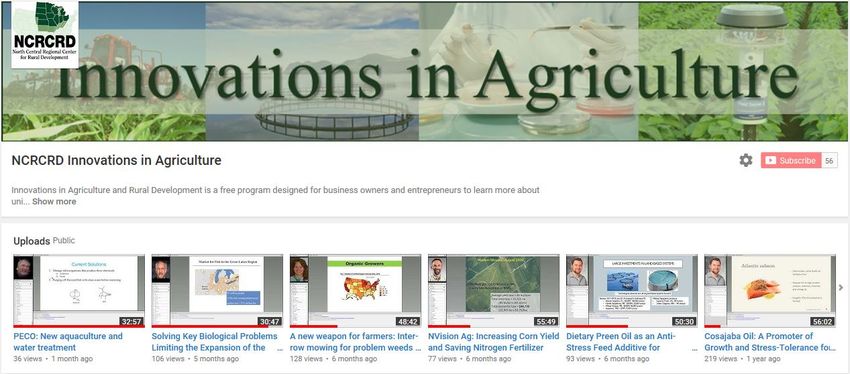
NCRCDC

                  NERCRD

WRDC

       SRDC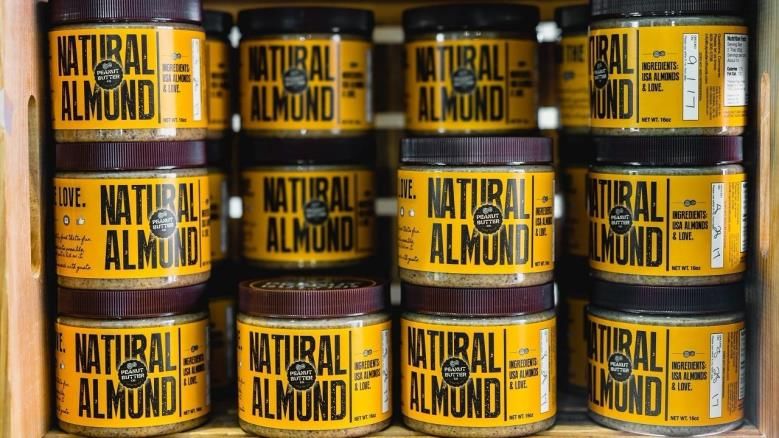
Share of Dollars
                       Ag Tech – Share of total VC
                                                             Share of Deals

                0.8%

                0.7%

                0.6%
                                                                                                  October 2009
                0.5%
% of Total VC

                                                                                “Food production must double by 2050 to Meet
                0.4%                                                             Demand from World’s Growing Population…”
                0.3%
                                                                                   Source: UN General Assembly 2009
                0.2%

                0.1%                                                                          IPCC Report 2008
                                                                                          Climate Change and Water
                0.0%
                                                                                  “Changes in water quantity and quality
                                                                                  due to climate change are expected to
                                                   Year
                                                                                  affect food availability, stability, access and
                                                                                  utilisation.” (P. 3)
                 Source: Chart constructed from PWC MoneyTree VC data series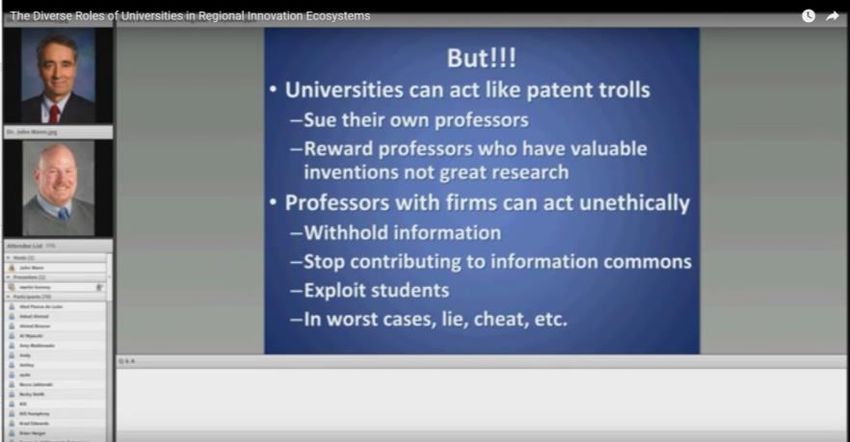
2014 Investment in Ag-Tech ($2.4B total – 90% US)

                  Bioenergy
          Food Ecommerce                                                  Top North Central States
           Soil & Crop Tech
        Sustainable Protein
   Biomaterials & Biochem                                                 Illinois      $207M
         Indoor Agriculture                                               Missouri      $59M
          Waste Mitigation
     Decision Support Tech                                                Minnesota     $40M
  Smart Equip & Hardware                                                  Michigan      $28M
         Drones & Robotics
     Farm2Consumer (F2C)
                                                                          Ohio          $6M
             Miscellaneous                                                Nebraska      $4M
 Food Safety & Traceability
              Food Storage
                     Water                                                *California top state $967M
 Animal Nutrition & Health
                              0           100           200   300   400
                                  $ Millions    Deals

Source: AgFunder AgTech Investing Report: Year in Review 2014
NCRCRD focus area:
       Innovation Diffusion for
         Rural Development

Other background
• University technology transfer challenge,
  innovations slow to move off the shelf
• Need more CEOs/firms to match with faculty
• Maybe connect with US rural firms?

                       North Central
                          Region                    Agriculture Experiment Stations

                                               Identify North Central faculty with Ag-tech

                                                Connect to small rural/agricultural firms
1. Ag-tech venture capital investment data

                2014: PitchBook’s/PWC’s $340M/$148M (US)
                           ≠ AgFunders $2.2B (US)
Some caveats…
                2. Tech transfer offices
                   a. Primary focus - “billion-dollar winners”
                   b. Limited marketing channels for Ag-tech
As a RRDC, state borders
were not a limiting factor
                             OR
                                                      SD            WI

                              And, our network is different than TTOs’.
                             Ours is small rural firms, many in agriculture.   VA

  Solution in state “A”

  Problem in state “B”
“Discoveries” along the way
Rural innovators less likely to seek formal IP protection
 – OECD (2012); Renski & Wallace (2012)

Formal/Informal IP and R&D                                                   Urban          Rural     Difference
Patent                                                                       6.1%           4.6%        32.2%
Register trademark                                                           11.7%          7.2%        63.2%
Licenses patents                                                             6.7%           5.8%        15.4%
Conduct in-house R&D                                                         34.5%          31.1%       11.0%
Purchase R&D                                                                 11.1%          8.2%        36.2%
Use trade secrets                                                            18.7%          16.1%       15.9%
First mover in market with innovation                                        30.4%          30.1%        0.9%
Train staff to develop innovations                                           40.5%          38.0%        6.7%
Source: Table produced from summary statistics of 2014 Rural Establishment Innovation Survey (REIS)
“Discoveries” along the way
                                            Could new approaches of TTOs managing
                                            IP be helpful for small rural firms?

https://www.canr.msu.edu/ncrcrd/webinars/

Martin Kenney at UC Davis:                  Our observations:
                                            • Some faculty-entrepreneurs frustrated with TTOs –
  “Should universities                        may need improved path for informal IP
  patent everything?”                       • If innovation not patentable, faculty may get sent
                                              back to do more research
Potential Opportunities
• Academic engagement – with rural firms
• Solution for “stalled” university tech
• Pipeline for innovative rural startups
USDA NIFA • Bridge gap between rural firms and TTOs
(1) Rural and Community Development
• “Alternate” for faculty/rural firms
(2) Small and Mid-Sized Farms
Apply existing technology to solve problems
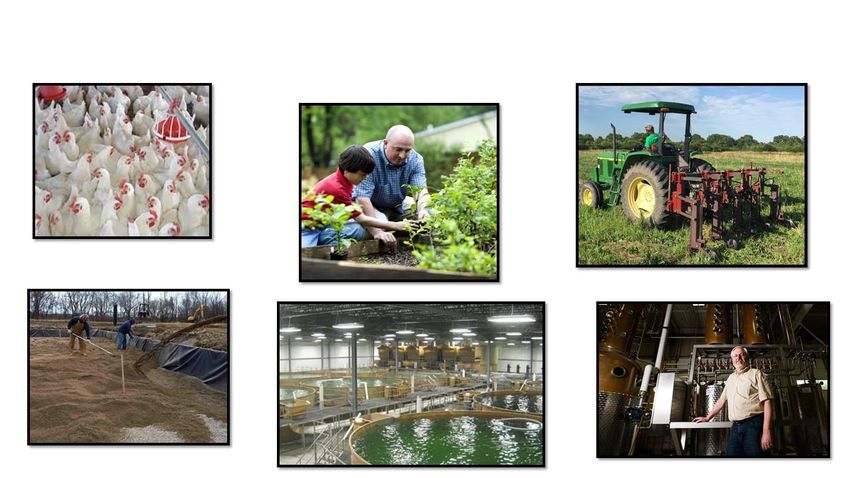
in rural areas and for small/medium sizedExample technologies in Food and Agriculture
Weed management for
organic producers
Solution for livestock
antibiotic resistance
New media marketing
strategies for small producers
UV light treatment for
Waste water treatment contaminated aquaculture water
Fermentation technology
for swine operations for spiritsSetting:
1. Baby boomer’s retiring from state and federal
regulatory agencies.
2. Surge in small, processed-food launches.
Concern:
Loss of institutional knowledge on state and federal
regulations may impede ability of new processed-food
www.startupfoodbiz.com startups.
Solution:
Develop online/virtual training platform to fill in this
knowledge/experience gaps.
Q: SBIR worthy?Small
University Tech, Rural/Agricultural
Faculty-Entrepreneurs Firms
SBIR
Rural Economic
Development
University Tech & Small Rural/Agricultural Firm Pipeline2017 Investment in Ag-Tech ($10.1B total – 45% US)
eGrocer
Restaurant Marketplaces
Top North Central States
Midstream Technologies
In-Store Retail & Restaurant Tech
Ag Biotechnology Illinois $69M
Novel Farming Systems Missouri $68M
Agribusiness Marketplaces Minnesota $55M
Online Restaurants & Mealkits
Farm Mgmt SW, Sensing & IoT
Innovative Food *California top state $2,206M
Bioenergy & Biomaterials
Robotics, Mechanization & Other …
Home & Cooking
Miscellaneous
0 500 1000 1500 2000 2500
$ Millions Deals
Source: AgFunder AgriFood Tech Investing Report: Year in Review 2017Why Does Rural Matter?
Rural areas have important resources to help:
• Feed the growing global population
• Potentially mitigate challenges from climate change/volatility
Negative externality from the urban-rural innovation gap?
• Could the rural landscape change if we improved rural innovative
startup opportunities?YouTube NCRCRD Innovations in Ag Channel
NCRCRD Website
John Mann
mannjoh3@msu.edu
(517) 353-2129References
1. PricewaterhouseCoopers (2018). “MoneyTree Explorer.” Available at:
https://www.pwc.com/us/en/industries/technology/moneytree/explorer.html#/
2. AgFunder. (2015). “AgTech Investing Report: Year in Review 2014.” Available at:
https://research.agfunder.com/2014/AgFunder-AgTech-Investing-Report-2014.pdf
3. AgFunder. (2018). “Year in Review ‘17: AgFunder AgriFood Tech Investing Report.” Available at:
https://research.agfunder.com/2017/AgFunder-Agrifood-Tech-Investing-Report-2017.pdf
4. Kenney, M. & Mann, J. (2015). “The Diverse Roles of Universities in Regional Innovation Ecosystems.” Webinar available
at: https://www.canr.msu.edu/ncrcrd/webinars/innovations_in_agriculture_and_rural_development
5. Lyons, T., Miller, S., & Mann, J. (2018). A New Role for Land Grant Universities in the Rural Innovation Ecosystem?
Journal of Regional Analysis and Policy, 48(2):32-47.
6. Mann, J., Loveridge, S. & Miller, S. (2015). “Firm Specialization in Technology Transfer Grants.” Paper presentation at
the Mid-Continent Regional Science Association Meeting, St. Louis, MO, May 27-29, 2015.
7. Mann, J. (2018). “Firm Behavior Across Increasing Levels of Innovation Activity.” Paper presentation at the annual
Southern Regional Science Association meeting, Philadelphia, PA, March 15-17, 2018.You can also read


