Insight IN THIS ISSUE - Mint Industry Research Council
←
→
Page content transcription
If your browser does not render page correctly, please read the page content below
Mint Industry Research Council                                                                                       SPRING 2018

                                                                                                 Insight
                                                                                                                   IN THIS ISSUE
                                                                                                                  Irrigation Research Project Finds
                                                                                                                                 Extensive Support 1
                                                                                                                 Four Honored at Annual Meeting 2
                                                                                                     New Committee to ‘Get Out in Front of Issues’ 3
                                                                                                     Morlan, Carlson Join MIRC Board of Directors 4
                                                                                                        Turnover at EPA, USDA Raises Importance
                                                                                                                             of Annual D.C. Trip 5
                                                                                                         Interest in Mint Scent Research Increasing 6
                                                                                                                   New SAC Chair Sees Challenges
                                                                                                                        and Opportunities Ahead 7
                                                                                                                     Several Changes Occur Within
                                                                                                                             the Board of Directors 7
                                                                                                                                Chairman’s Report 9
                                                                                                                     Research & Regulatory Update 10

Irrigation Research Project Finds Extensive Support
A   mint research project that could lead
    to improved water conservation, lower
energy costs and better yields has received
                                                   difference between crops irrigated with
                                                   drag hoses and those under conventional
                                                   irrigation.
                                                                                                       many sprinklers on each pivot to compensate
                                                                                                       for the wider application patterns in
                                                                                                       standard mid-elevation spray application
backing from several sources, including the        “It is much more efficient,” Peters said of         (MESA) systems. Peters estimates it will
Mint Industry Research Council (MIRC),             the drag hose irrigation technique. “You get        cost growers about $1,000 per pivot span to
Alberta mint growers, Mars Wrigley                 more water to the soil.”                            transition to the drag hose system. But, he
Confectionery, Oregon Mint Commission                                                                  said, growers should recoup their costs in a
and Washington Mint Commission.                    In conventional systems, between 15 and 20          matter of a few years.
                                                   percent of water is lost to evaporation, Peters
The backing shows the importance mint              said. In the drag-hose system, water loss is        The two-year project has its origins in a
growers place on water conservation,               estimated at about three percent.                   project Peters conducted for the Washington
according to Steve Salisbury, research and                                                             Mint Commission on low elevation precision
regulatory coordinator for the MIRC, and           Preliminary research also shows savings in          application (LEPA) irrigation in spearmint
highlights the industry’s progressive outlook      energy costs given that the system runs on          production. “This is an expansion of that,”
on mint production.                                lower pressure than conventional irrigation         Peters said. “It is a bigger project and we are
                                                   systems.                                            doing it in both peppermint and spearmint.”
The project involves irrigating mint with
drag hoses in the latest iteration of irrigation   “There are water savings, energy savings and        Peters said he received considerable support
research projects in mint from Washington          better yields,” Peters said.                        from Salisbury in developing and promoting
State University Extension Irrigation              Peters also is looking at the effect the system     the proposal and he noted that he finds
Specialist Troy Peters.                            has on lodging. “We think because we aren’t         it encouraging that the project received
Preliminary data with drag hoses shows an          getting the canopy wet, it will result in less      backing from so many sources.
increase in oil yields of about ten percent        lodging,” he said.                                  “It feels good that a lot of people find it
per acre, Peters said. In water-short years,       And Peters is looking at hay yields.                useful and are interested to see the results,”
researchers were able to show an even greater      The drag-hose system requires about twice as        he said. F

MINT INDUSTRY RESEARCH COUNCIL                                            1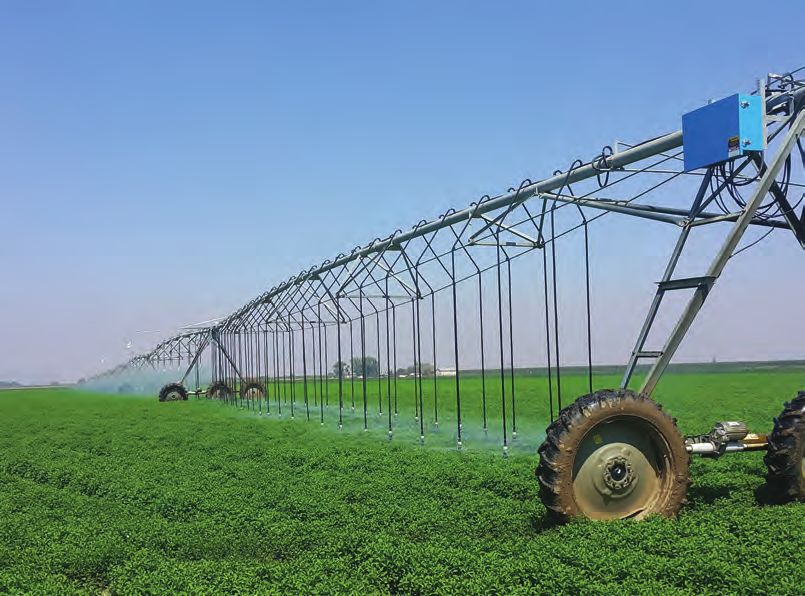
Insight

  Four Honored at Annual Meeting

  F  our individuals were honored at the
     MIRC’s Annual Meeting in January for
  their contributions to the MIRC and the
                                              praise for the Council. “I think it is a good
                                              organization and it is almost altruistic
                                              in the amount of help the MIRC gives
  mint industry.                              farmers,” she said.
  Sonya Johnson of Mars Wrigley               Johnson said she and her husband are
  Confectionery was honored for her nearly    moving to a small farm they recently
  27 years on the MIRC Board of Directors,    purchased near the small town of
  where she served as an alternate to John    Rushville, Illinois.
  Buckley, and as a long-time member of       “There are a lot of reasons for it,” she
  the Scientific Affairs Committee. The       said. “We have a lot of family in the area,
  meeting in January was her last with the    it fits our needs and we wanted to have a
  MIRC.                                       simpler life.” The couple plan to lease out
                                              the farm’s production acreage.
                                                                                               Les Toews, Callisons and Steve Salisbury, MIRC
                                              Les Toews, who has retired after more            Research and Regulatory Coordinator
                                              than 25 years with Callisons, also was
                                              honored for his contributions to the
                                              industry. Toews finished his career as Vice     Steve Weller, who retired June 30, 2017
                                              President of Purchasing for the Chehalis,       after 37 years at Purdue University, was
                                              Washington, company. The position               honored for his work in advancing weed
                                              involved purchasing North American              science for the mint industry.
                                              peppermint and spearmint oils, managing         “Steve was instrumental for many
                                              operations of four field offices and            years in helping Midwest growers with
                                              overseeing variety trials.                      their weed-control efforts,” said Steve
                                              His involvement with the MIRC goes              Salisbury, research and regulatory
                                              back to the early 1990s and included            coordinator
  Sonya Johnson, Mars Wrigley Confectionery   serving for many years as chairman of the       for the MIRC.
  and Greg Biza, MIRC Chair                   Integrated Pest Management Committee            “And he also had
                                              and as an alternate to the Board of             a passion for
                                              Directors.                                      mint that went
  “On behalf of the Mint Industry Research    “On behalf of the Mint Industry Research        beyond weeds.
  Council, it is my pleasure to wish Sonya    Council, it is my pleasure to wish Les          He wanted to
  Johnson a happy and healthy retirement,”    Toews of Callisons a happy and healthy          be involved in
  said Board Chair Greg Biza. “Although       retirement,” Biza said. “His knowledge          helping anywhere
                                                                                              he could,                       Steve Weller,
  now retired, she will remain personal       of mint and its agronomy will surely be                                   Purdue University
  friends with many of us and always a        missed by our industry. We wish him well        from varietal
  friend to our industry.”                    in all his endeavors.”                          improvement to general agronomy. He
                                                                                              was a real champion for mint in the
  Johnson said she enjoyed her years                                                          Midwest and beyond.”
  with the MIRC and had high

  MINT INDUSTRY RESEARCH COUNCIL                                    2
Insight

Salisbury added that when nearing             Prosser) station.                              Boydston said he was surprised and
retirement, Weller worked hard on             Registrants were                               humbled to receive the award.
identifying a successor at Purdue to          always talking                                 “It is quite an honor and something I
continue research into mint. “That says       to him, seeking                                wasn’t expecting,” Boydston said. “We are
a lot about how he felt about the mint        his expertise                                  a service research agency. We work for the
industry,” Salisbury said. “He will be        and input on                                   growers and the consumers and it is nice
greatly missed.”                              potential new                                  when they recognize your work.”
Rick Boydston, weed scientist at the          herbicides. And
                                              when we started                                Boydston added that he enjoyed working
USDA Agricultural Research facility in                                 Rick Boydston, WSU    with the mint industry.
Prosser, Washington, also was honored at      the Cooperative
the annual meeting for his many years of      Weed Management Project for the MIRC,          “They have been my favorite group to
service to the mint industry.                 Rick took the lead role.                       work with,” he said. “They have been very
                                              “He is highly regarded by many people in       supportive of our research all through my
“Rick was kind of the go-to guy for us                                                       career and I appreciate that. I owe them
in weed science, especially out West, but     the mint industry and the weed science
                                              community and is certainly leaving a           a lot.” F
also throughout the industry,” Salisbury
said. “He worked in the field with            huge hole out in the West and in the
growers, as well as on the (USDA ARS          entire industry,” Salisbury said.

New Committee to “Get Out in Front of Issues”

T   he Mint Industry Research Council
    has formed a Risk Mitigation
Committee to collect, review and advise
                                              the MIRC membership and the mint
                                              industry. The members are Gloria
                                              Sheldon, Mars Wrigley Confectionery;
                                                                                             The committee is expected to issue its
                                                                                             first report at this fall’s Scientific Affairs
                                                                                             Committee meeting. F
the Council on issues that could threaten     Tracy Bariexca, Colgate Palmolive; Devin
the North American mint industry,             Dekker, RCB International; Kevin Allen,
particularly in areas of regulation and       Norwest Ingredients and Dr. Ruewei
legislation.                                  Strange, Labbeemint.
MIRC Chairman Greg Biza, who                  “Their charge will be to report
originally proposed the committee, said       out twice per year – at
the panel will monitor and report on          the fall Scientific Affairs
local, state and federal issues from bodies   Committee Meeting and
such as the Environmental Protection          Annual Meeting – issues that
Agency and the Food and Drug                  are arising that may threaten
Administration, including issues arising      the sustainability of our
from the Food Safety Modernization            industry,” Biza said.
Act (FSMA) or the Global Food Safety          “We believe this is an
Initiative (GFSI).                            important committee which
As of late May, Biza said five MIRC           will allow us to get out in
members had volunteered to serve on           front of issues as they arise,” he said. “We
the committee, which will be made up          look forward to their participation and
of a team of individuals representing         your support of their mission.”

                                                                    3                                                         SPRING 2018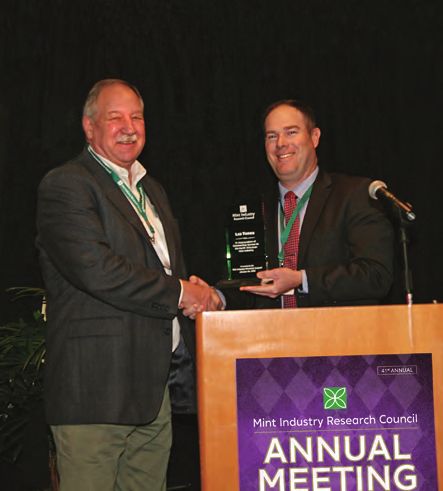
Insight

  Morlan, Carlson Join MIRC Board of Directors

  In the mid-1970s, as a young mint farmer
   still attending college, Mark Morlan
  recognized the importance of centralizing
                                                Morlan’s experience with the MIRC
                                                dates back to when as an officer of the
                                                Oregon Essential Oil Growers League, he
                                                                                               Carlson, who described Young Living
                                                                                               Essential Oils as an aromatherapy
                                                                                               company, said the company decided to
  mint research.                                collaborated with Dick Carrington, head        join the MIRC because it wants “to be
  Today, as CEO and co-founder of Essex         chemist with Callisons at the time and one     more involved in the mint community and
  Laboratories in Chehalis, Washington, that    of the driving forces behind the formation     to give back.”
  is still the case.                            of the MIRC, on the need for centralizing      “We are immensely interested in the
                                                mint research.                                 growing of mint,” Carlson said. “A
  Morlan, who co-founded Essex with Doug
  Walker, Bob Franke, Joe Carlson and Dick      “Back then, all the different states were      component of Young Living is we
  Jones, is one of two new MIRC Board           doing their own thing and I was in the         partner with growers and we are farmers
  members. He and Richard Carlson of            process of trying to unite all the different   ourselves. They are small farms relative to
  Young Living Essential Oils of Lehi, Utah,    states to get together to try to get funding   the MIRC growers, but we do grow mint.
  joined the Board at the MIRC Annual           for a mint-breeding program,” Morlan           “Young Living wants to be involved in
  Meeting in January.                           said. “I saw that we had fractured research    the science of growing and producing
                                                going on between states and it included a      mint products and to be a good steward of
  With his experience as a mint farmer and      lot of duplication.
  a flavor-house executive, Morlan brings a                                                    mint,” Carlson said.
  unique perspective to the Board which, he     “I saw the need for coordination of the        “Peppermint is something everybody
  said, helps shape his opinions regarding      research,” he said.                            loves,” he added. “It is one of our most
  which research projects to back and how       Morlan noted that he attended the very         popular products.”
  to approach political issues.                 first MIRC meeting in Chicago in the mid-      “I love being part of the MIRC and being
  “I have a unique perspective of a customer,   1970s.                                         part of the cusp of everything mint,” he
  dealer and grower and I believe I can help    Asked why he rejoined the MIRC, Morlan         said. F
  direct research that is really meaningful     said, “We saw the benefits in joining and
  and meets the needs of the industry as a      the need and responsibility to pay our fair
  whole,” he said.                              share.”

            Mint inDUstry research council

                                                                                   St. Anthony Hotel
             January 23 - 24, 2019                                                 300 East Travis Street, San Antonio
                                                                                   usmintindustry.com/meetings

  MINT INDUSTRY RESEARCH COUNCIL                                     4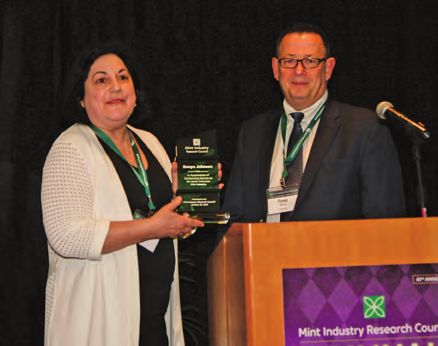
Insight

Turnover at EPA, USDA Raises Importance of Annual D.C. Trip

M      IRC Administrator Bryan Ostlund
       and the Council’s Research and
Regulatory Coordinator Steve Salisbury
                                                  for the mint industry that we keep those
                                                  facilities running.”
                                                                                                  “If they have a question on mint, they
                                                                                                  know who to pick up the phone and
                                                                                                  call,” Salisbury said. “They can attach a
                                                  Also on the agenda is connecting with
moved up by three weeks their annual              the new director of the National Institute      name with a face and you have that open
visit to Washington, D.C. this year. Being        of Food and Agriculture (NIFA), which           dialogue with them, whether it is through
in D.C. the third week of June, just ahead        administers funding for the IR-4 Program.       email, phone calls or in-person visits once
of when budget decisions are made, helps          USDA Acting Deputy Undersecretary               a year. And that is a big deal.”
ensure MIRC priorities are given voice,           for Research, Education and Economics           “Quite frankly,” Ostlund said, “if we did
Ostlund said.                                     Chavonda Jacobs-Young on April 20               not have a presence there, if no one from
Particularly this year, with a large turnover     named Thomas Shanower as NIFA’s new             the mint industry in the last five years
in key positions, the D.C. visit is important     acting director.                                had gone in and met with the EPA to start
to both establish new relationships and           Ostlund and Salisbury had a good                that discussion, (the Tough herbicide file)
connect with established contacts in a            connection with the outgoing director,          would just be a dead file. Nothing would
timely fashion.                                   Sonny Ramaswamy, who was dean of                have happened. EPA has plenty to do, and
“People come and go,” Ostlund said.               the College of Agricultural Sciences at         if you aren’t in there championing your
“Going back there once a year is                  Oregon State University before taking the       issue, good luck.”
minimal to making sure you have these             NIFA directorship in 2012. The two hope         The two also plan to meet with personnel
relationships with key people and that you        to establish the same type of working           at the EPA’s Office of Pesticide Programs,
don’t let it go stale. You go back there and      relationship with Shanower.                     which reviews pesticide registration
talk to as many people as you can because         Ostlund and Salisbury also will meet with       requests and registers pesticides. “Those
there is going to be turnover.”                   personnel in both the EPA and the USDA’s        folks are key players,” Salisbury said.
Ostlund and Salisbury have scheduled              Office of Pest Management Policy, which         “Everything we do at IR-4 goes to the
meetings with key personnel in several            provides benefit analysis on behalf of          Office of Pesticide Programs at the EPA.
federal agencies important to mint, as            growers as part of EPA’s review of pesticide    All of our pesticide registration requests
well as with key congressional personnel.         registrations.                                  are approved or denied there. It’s very
Among items on their agenda, one                                                                  important for the mint industry to have
                                                  “We maintain those relationships to make        healthy relationships in this agency.”
involves lobbying for support of several          sure they know who to contact if there is a
USDA Agricultural Research Service                mint issue,” Salisbury said. “If that occurs,   As for congressional visits, Ostlund said
(ARS) facilities that are in danger of being      we can provide a voice for them, which          they are planning to meet with senators
shuttered.                                        is something we just recently did on a          and representatives from key mint-
“Around 20 percent of the capacity of the         pesticide product (Tough herbicide) now         producing states, as well as with members
IR-4 Program is in the ARS,” Salisbury            labeled on mint.”                               of key committees, such as the House and
said, “so if they cut those ARS facilities,                                                       Senate committees on agriculture.
                                                  “This is an active relationship,” Ostlund
that is a big loss. It is critical to make sure   said. “It is not something where we sit back    “We want to make sure that they know
that ARS understands that it is important         and are being reactive.”                        what our priorities are,” Ostlund said. F

                                                                        5                                                       SPRING 2018
Insight

  Interest in Mint Scent Research Increasing

  T   he benefits of mint scent have long
      resonated with Bryan Raudenbush,
  a physiological psychologist at Wheeling
                                                in general, improve performance in a
                                                wide range of activities.
                                                                                                   lead to an overall body stimulation.”
                                                                                                   The MIRC has backed proposals from
                                                The underlying reason, Raudenbush                  Raudenbush now for two years and, to
  Jesuit University in Wheeling, West           said, is that peppermint scent has a               date, Green said he has been happy with
  Virginia.                                     physiological effect on an area of the             Raudenbush’s work.
  Now those in the mint industry are            brain known as the reticular activating            “I think he is very mindful of the
  paying attention.                             system. “If you monitor what is                    proposal process and getting reports in
  Raudenbush has recently provided                                                                 and being accountable for the dollars that
  presentations on his research to the            “There is an untapped market                     he receives,” Green said.
  Oregon Mint Commission, to Takasago’s
  U.S. headquarters in New Jersey and is
                                                  out there in the use of mint                     Raudenbush said he plans to continue to
                                                                                                   submit research proposals to the MIRC.
  expected to speak to professionals at           and maybe Bryan helps us
  Young Living Essential Oils in Lehi, Utah.      with that.”                                                   Differences Between Odorant and Non-Odorant
  Raudenbush also spoke at the last two                                                                                  Conditions: Typing Accuracy

                                                                                                                                                                     Dr. Bryan Raudenbush, Human Psychophysiology Laboratory
  MIRC annual meetings and is a regular           Carter Green, Takasago                                        83
                                                                                                                             82.31                      Peppermint
  presenter at the annual meeting of the                                                                        82
                                                                                                                                                        No Odor
  Association for Chemoreception Sciences,                                                                      81
  a research organization dedicated to          happening in that area of the brain when
                                                                                                                80

                                                                                                 Accuracy (%)
  understanding the science of senses such      people sniff peppermint, what you find is                       79
  as taste and smell.                           there is a lot of activity going on,” he said.                  78                              77.42
                                                “This area, when active, is responsible                         77
  It was at an Association for                  for sending out stimulation or general                          76
  Chemoreception Sciences meeting where         arousal to the other parts of the brain                         75
  MIRC Board member Carter Green of             and into the muscle system. So, just                            74
  Takasago met Bryan.                           stimulating this one part of the brain can                                           Variable

  “I got to talking to him about all of
  the research he has done in mint and
  encouraged him to submit a proposal to
  MIRC,” Green said. “And it just took off
  from there.”
  After two years, Green said all seems to be
  going in the right direction. “I think he
  has a good following among the farmers
  and other members of the MIRC. People
  think what he is doing is good for the
  MIRC in helping to promote additional
  benefits for mint oil.”
  In more than 20 years of researching how
  scents can influence human performance,
  Raudenbush has uncovered that mint
  scent can distract people from pain, keep
  people more focused when performing
  clerical tasks or when taking exams and,

  MINT INDUSTRY RESEARCH COUNCIL                                      6
Insight

                                                                        Differences Between Odorant and Non-Odorant    “That is my goal,” he said. “We always      Raudenbush’s research is showing for
                                                                             Conditions: Net Speed & Gross Speed       like to see our research being made into    mint scent and the potential for further
                                                                                                                       a product and MIRC seems to be doing        expansion of mint’s uses widens even
                                                                        25
                                                                               Peppermint                              that for us.”                               further.
                                                                               No Odor
Dr. Bryan Raudenbush, Human Psychophysiology Laboratory

                                                                                                        21.8           Green sees tremendous potential in          “Who is to say you couldn’t have a
                                                                        20
                                                                             18.88                                     utilizing findings from Raudenbush’s        product line for your morning shower
                                                                                                               17.28   research, including expansion of            or your evening shower,” Green said. “I
                                                                        15
                                                                                                                       traditional mint markets into areas such    believe Bryan’s research expands how
                                                          Speed (wpm)

                                                                                     14.04
                                                                                                                       as personal care, in which mint is not      we think about using mint and that it
                                                                        10
                                                                                                                       used in high amounts.                       becomes the challenge of the (MIRC)
                                                                                                                       The scent of mint already is viewed as      members to go out there and try to tap
                                                                         5                                                                                         into these markets and for the MIRC to
                                                                                                                       clean and fresh, Green said. “Bryan’s
                                                                                                                       research could contribute to use of mint    try to promote it that way.
                                                                         0
                                                                              Net Speed                 Gross Speed    in laundry detergents, soap, hair care      “There is an untapped market out there
                                                                                             Variable                  and other personal care products.” Add      in the use of mint and maybe Bryan helps
                                                                                                                       in the mood and emotional benefits          us with that,” Green said. F

                                                           San Antonio Site of Annual Meeting

                                                           T  he 42nd Annual Meeting of the Mint
                                                              Industry Research Council will be
                                                           held on January 23-24, 2019, in San
                                                                                                                       Research Council where all segments of
                                                                                                                       the mint industry gather.
                                                                                                                       Make your hotel reservations directly:
                                                           Antonio, Texas.                                                                                               Mint inDUstry research council
                                                                                                                       St. Anthony Hotel
                                                           The meeting will feature two days of                        300 East Travis Street
                                                           special invited guest speakers from                         San Antonio, Texas
                                                           around the country, in addition to
                                                           industry research reports and updates.                      Online Hotel Reservations
                                                                                                                       or call 855-811-0218
                                                                                                                                                                       January 23-24, 2019
                                                           The meeting comes to a close with a
                                                           Thursday evening industry reception,                        When you call, ask for the MIRC Annual
                                                           which allows the opportunity to socialize                   Meeting group rate to receive the special
                                                           in a relaxed and enjoyable atmosphere.                      room rate of $219 (plus tax) single or
                                                           Make plans now for a January get-a-way                      double occupancy.
                                                           to San Antonio and attend the 42nd                          Deadline for hotel reservations:
                                                           Annual Meeting of the Mint Industry                         Friday, December 21, 2018 F

                                                                                                                                            7                                                   SPRING 2018
Insight

  New SAC Chair Sees Challenges and Opportunities Ahead

  E  ric Dowd, the new chair of MIRC’s
     Scientific Affairs Committee (SAC),
  sees challenges and opportunities ahead
                                                  positions in Project Management, Gum
                                                  Formulation Technology and Science and
                                                  Technology.
                                                                                                 “For me, personally, mint is something
                                                                                                 pretty near and dear to my heart,” Dowd
                                                                                                 said, “and for Mars Wrigley, mint is a really
  for the U.S. mint industry and he believes      In his current position, he is responsible     critical ingredient. It goes into around 65
  the MIRC can play a significant role in         for managing a team of scientists              percent of our gum and mint formulas.”
  securing positive results in both arenas.       and research programs within the               As chair of the Scientific Affairs
  “In a small specialty crop it is critical to    Global Science team for Mars Wrigley           Committee, Dowd said he hopes to
  get the critical mass together that you         Confectionery.                                 ensure that the panel prioritizes research
  need to effect change and prioritize needs                                                     programs that “are well linked into the
  and areas to focus on,” Dowd said. “And I                                                      needs of the industry.”
  think the MIRC is uniquely positioned to         “In a small specialty crop it is
                                                                                                 “I want to make sure that we are
  do that.                                         critical to get the critical mass             addressing the current and future
  “Within the MIRC you have almost a               together that you need to                     challenges and opportunities that are out
  consortium of everyone from the growers          effect change and prioritize                  there for the industry in a way that ensures
  to the mint suppliers to the flavor houses                                                     we are getting the most bang for our buck,”
  all the way up to some of the consumer           needs and areas to focus                      Dowd said.
  product manufacturers,” Dowd said. “I            on. And I think the MIRC is                   Among challenges, Dowd identified issues
  think the MIRC and the SAC play a really         uniquely positioned to do that.”              with pests and diseases that can affect the
  important role in this industry.”                                                              long-term sustainability of the U.S. mint
  Dowd, Senior Manager Flavor/Mint                 Eric Dowd, Chair                              crop.
  Science at Mars Wrigley Confectionery,           MIRC Scientific Affairs Committee
                                                                                                 As for opportunities, Dowd said, “I
  has been with the Chicago-based                                                                believe there are opportunities out there
  company for 15 years, starting in product                                                      to increase the use of mint in different
  development for the legacy Wrigley              Dowd holds a bachelor’s degree in
                                                  chemistry from Kalamazoo College in            products around the world, which is always
  company and taking on a variety of                                                             a good thing for the industry.” F
  positions over the years, including             Kalamazoo, Michigan.

  Several Changes Occur Within the Board of Directors

  B   etween new faces joining the Board and
      the familiar ones changing positions,
  several changes are taking place within the
                                                  mint is well recognized by all that have had
                                                  contact with her over the years,” Biza said.
                                                                                                 Board in 2016, moves into the position
                                                                                                 of Secretary/Treasurer, replacing Dana
                                                                                                 Wendel, who moved into the Chairman-
                                                  “While as an alternate to John Buckley she
  MIRC Board of Directors.                        did not sit at the Board table, she was very   Elect position. Wendel replaced Greg Biza
  Among the more significant changes,             active in committee work and very much a       as Chairman-Elect, while Biza took over as
  Sonya Johnson of Mars Wrigley                   player,” said Bryan Ostlund, administrator     Chairman.
  Confectionery has retired. Johnson served       of the MIRC. “She certainly had a voice at     The Board also welcomed two new
  Mars Wrigley Confectionery and the mint         the MIRC level and she will be missed.”        members at the 2018 MIRC Annual
  industry for 29 years and served the MIRC       Johnson retired this spring.                   Meeting in New Orleans as Mark Morlan
  for nearly 27 years on the Scientific Affairs                                                  of Essex Laboratories in Chehalis,
  Committee and as the Alternate to the           Another significant change involves            Washington, and Richard Carlson of
  Board of Directors.                             Karla Farina of Labbeemint, who has            Young Living Essential Oils in Lehi, Utah,
                                                  taken a position on the Board’s Executive      joined the organization. F
  “Sonya’s dedication and knowledge of            Committee. Farina, who joined the

  MINT INDUSTRY RESEARCH COUNCIL                                       8
Insight
Chairman’s Report
Greg Biza
F irst and foremost, I’d like to say thank
you to the Board of Directors of the
MIRC and the membership for allowing
a FEMA (Flavor Extract Manufacturers
Association) leadership meeting recently
there is an outreach to member companies
As an example,
perhaps rather
than trying to
me to have the opportunity to serve as the to solicit information and data to support implement certain
Chairman of the Board for a second time. GRAS (Generally Recognized as Safe) projects alone we
It is truly an honor and I will endeavor to reviews to maintain the current status. align our group
lead this organization as you desire during However, this rejuvenation will be short with crops that
my tenure as Chairman. lived if we do not direct our efforts in have similar
tangible areas that make an impact for all interests to obtain
Greg Biza
Reality Check members. funding for
Historically, in the MIRC we’ve oft time Regulations are being increased by pesticide residue studies. Steve Salisbury
neglected the world view of our approach governmental bodies throughout the mentioned in January that the IR-4 has
to the business of the MIRC. We rely on world for either safety or economic designated mint as the model crop for
member groups to bring challenges and reasons. As I mentioned in January, NGOs essential oil crop residue studies. While it’s
issues to the organization and “react” (non-governmental organizations) are a big crop in comparison to others, there
accordingly. In the global environment filing more and more disclosure lawsuits are other crop organizations or growing
in which we operate today, there are few associations that could potentially pool
things that can’t be gleaned from some funds to get labels for registrations.
time in reflection about where we are Bridging into other organizations
headed as an industry. “Regardless whether it is
like FEMA and IOFI (International
The goal and objective of the MIRC related to pesticide use, Organization of the Flavor Industry)
is to fund and direct research and water utilization, distillation or IFRA (International Fragrance
activities needed to sustain and enhance research, FSMA/Regulatory Association) to provide insight in areas of
the productivity of a high quality and research or support to meet the challenges
compliance or varietal ahead of us is one way to focus research
economical North American mint.
improvement by any means, projects and make a relevant difference to
Translation – Sustainability of North
American Mint at the end of the day it’s about our industry. To support this notion, any
new varieties produced and intended to be
Regardless whether it is related to pesticide sustainability.”
used for flavors will need some measure
use, water utilization, distillation research, of review by FEMA. This is not a difficult
FSMA/Regulatory compliance or varietal Greg Biza,
process but, none-the-less, a process that
improvement by any means, at the end of MIRC Chair needs attention.
the day it’s about sustainability. It has been
In summary, we as an organization are
difficult keeping the enthusiasm around
evolving from a research council with a
the MIRC in recent years as there has been as people around the world want to know singular focus on North America to one
little thought beyond the North American exactly what they are consuming. These that although chartered to support and
Mint Industry and our needs. We live in a challenges and opportunities to tell our sustain the North American mint industry
global economy and must think that way story and promote our industry shouldn’t must be ever mindful of our global
when directing research. I am happy to say be squandered. strengths, challenges, opportunities and
that there appears to be a turnaround in
We must seek out research within our weaknesses. Our Board, committees and
that area as our meeting in January had a
organization and outside that brings membership should be focused on this and
larger attendance than we’ve seen in many
real, measurable and useful agronomical respond accordingly. F
years. Interest by our end-user members,
techniques and information to our mint
flavor companies, dealers and growers
community that allows us to continue to
is on the rise. Having recently attended
compete worldwide.
9 SPRING 2018Insight
Research & Regulatory Update
Steve Salisbury
I know it’s been a while, but it seems
like January was just the other day and
we were in New Orleans at the annual
of years. A big “thank you” to Jason
Stromme, Norwest Ingredients, our past
chairman, as he did a terrific job leading
and energy
conservation
while
MIRC meeting. The meeting was very the Council for the past two years. We maintaining
well attended and certainly considered appreciate his leadership and we thank oil production.
a great success. We appreciate all your Norwest for allowing Jason the time to The treatment
feedback and time to attend and/or serve the MIRC as chair. comparisons
participate to make it a great meeting. In The Council is still serving its purpose will evaluate
addition to a solid program, it was very of funding mint research. The Scientific differences
nice to acknowledge and celebrate some Affairs Committee (SAC) recommended between the Steve Salisbury
key people who have made significant a strong slate of funding proposals to low-elevation
contributions to the MIRC. And, who the Board. Our proposal submissions precision application (LEPA) using drag
can forget the specialty mint-drink bar at continue to be competitive and make it tubes versus the common mid-elevation
the reception sponsored by our friends at increasingly difficult for SAC members spray application (MESA) sprinkler
Belchim Crop Protection, the registrant to make funding decisions due to the heads on center pivot.
for Tough herbicide! It truly was a high quality of projects presented. We Previous research demonstrated that
successful annual meeting and reflected appreciate the interest in mint from the LEPA is able to get 15–20 percent more
the positive momentum of the MIRC. research communities and we continue water to the ground per gallon pumped
One of the goals within the MIRC each our efforts to expand interest in mint to than MESA. Therefore, the LEPA drag
year is to grow our membership. We are new potential scientists who may be able tube system will be designed so that
pleased to welcome our newest members to contribute to the mint knowledgebase. 15–20 percent less water is applied than
to the MIRC, Essex Laboratories and Irrigation management and water the MESA treatment. Equivalent or
Young Living. The MIRC truly appreciates conservation continue to be an area of better yields in the LEPA sections would
their passion for mint and their interest focus for the MIRC. This focus is a result validate the water savings. Furthermore,
in advancing the industry through of the FieldRise industry stewardship energy savings are achievable and
the MIRC. Both have jumped right in survey that we all participated in 2016. expected with the LEPA treatment. These
and began providing excellent input to Since then we have been working on savings will be calculated in this project.
committee and board discussions. In building interest by irrigation specialists Overall, the MIRC has a great deal of
2018, we will continue our efforts in to conduct useful and applicable research. good momentum right now. The Council
sharing the values and achievements Dr. Troy Peters, Washington State has a lot of productive collaboration
of the MIRC with other prospective University, submitted a proposal that was happening amongst members which is
members. discussed in the January SAC meeting. really a positive quality for the industry.
We welcome in a new Executive The committee and Dr. Peters diligently The Council will continue to coordinate
Committee including the new MIRC worked to revise the proposal to ensure its members’ efforts to keep building
Chairman, Greg Biza with Callisons. Greg the potential value to the grower and the on this momentum, which in turn will
will serve as the chairman for the next two industry with the research outcomes. provide greater benefit and value back to
years and we are eager to see the MIRC The revised proposal was approved for the industry and its members.
continue to grow under his leadership. funding and the research is underway As always, this is your industry’s council.
Dana Wendel, RCB International, is in the 2018 crop season. This is another Your input is important so please
serving as Vice-Chairman after holding notable example of cooperative interests contact me if you have any questions or
the Secretary-Treasurer position for the and efforts and a few MIRC members comments. Thank you for being involved.
past two years. And, we welcome Karla stepping up and investing additional
Farina with Labbeemint into the executive funds into a project that is addressing Tough™ Herbicide Update
committee as the new Secretary-Treasurer. an important industry-wide topic. The The 2018 Section 18 registration has been
This new slate of officers will provide scope is focused on irrigation water approved for Oregon, Washington and
great leadership for the next couple
MINT INDUSTRY RESEARCH COUNCIL 10Insight
Idaho. At press time, we are still waiting the form and send it to the MIRC your production. We have submitted a
for authorizations in Wisconsin, Indiana office. You can email a scanned copy to request to IR-4 to conduct the residue
and Michigan. info@mircnews.org, or fax it to (503) studies needed to reduce the PHI to
Keep in mind this authorization is for 581-6819, or mail it to Mint Industry 30 days. That request is supported by
double-cut mint acres and only for Research Council, PO Box 4059, Salem, Belchim and we will attempt to get this
application to be made between cuttings. OR 97302. research prioritized for 2019 in the IR-4
That is why the use window is limited As of now, Tough herbicide is still on program.
by the EPA. The effective use dates by track for a full federal label for mint Please let me know if you have any
state are: Washington – May 21-August in 2019. When we get that federal questions regarding the status of Tough.
31; Oregon and Idaho – June 20-August registration, the herbicide will be It is a great tool to have in your arsenal
10. Please adhere to the label application labeled in all of our production states. and we certainly want to keep it on track
dates. Additionally, that full label will allow for to a more permanent registration. Thank
It is required that you complete and use on all mint, both single and double- you again to our friends at Belchim Crop
submit the waiver agreement at the time cut, and up to two applications per Protection for supporting us with Tough.
of purchase. This form and labels can season. F
be found on the MIRC website, www. The Pre-Harvest Interval (PHI) is still
usmintindustry.com under the “News” 49 days. I appreciate everyone providing
section. Please be sure you complete input on what PHI would be best for
11 SPRING 2018Mint Industry Research Council
P.O. Box 4059, Salem, OR 97302
MIRC Board of Directors
Industrial/Commercial
State/Grower Representatives
Greg Biza, Chairman
ALBERTA MINT GROWERS ASSOCIATION - Dale Thacker
Callisons
IDAHO - Robert McKellip
Dana Wendel, Vice Chairman INDIANA - Randy Matthys
RCB International, Ltd.
MICHIGAN - Doug Irrer
Karla Farina, Secretary/Treasurer OREGON - John Reerslev
Labbeemint
TULELAKE GROWERS ASSOCIATION - Mike McKoen
A.J. Todd WASHINGTON - Todd Wheeler
A.M. Todd Co. a division of WILD Flavors
WISCONSIN - Dennis Zeloski
Bob Vogt
Colgate Palmolive Co. Research & Regulatory Coordinator
Mark Morlan Steve Salisbury
PO Box 483, Sublimity, OR 97385
Essex Laboratories, LLC
503-551-3747 • steve@pacificagresources.com
Jason Stromme
Norwest Ingredients Administrators
Bryan Ostlund & Kari Puffer
Carter Green M.I.R.C.
Takasago PO Box 4059
Rich Carlson Salem, OR 97302
Young Living Essential Oils 503-371-5936 • bryan@ostlund.com • kari@ostlund.com
John Buckley
Mars Wrigley ConfectioneryYou can also read


