INTRODUCING NATIONAL HISTORY DAY 2019 - History Education MN
←
→
Page content transcription
If your browser does not render page correctly, please read the page content below
INTRODUCING
    NATIONAL
HISTORY DAY 2019

      Your name here!
TABLE OF CONTENTS
Your History Day adventure is divided into three parts: Research, Analysis, and Presentation.
Research Presentation
Research is the most important part of Once you have completed your research you need
creating a History Day entry. to design an effective entry for your category.
History Day Theme ………………………………………………….. 3 Choosing a Category ………………………………………………………. 14
Selecting a Topic ……………………………………………………… 4 History Day Rule Book ……………………………………………………. 14
Worksheet: Topic Brainstorm ………………. 4 Category: Exhibit …………………………………………………………….. 15-16
Narrowing Topic ………………………………………………………. 5 Worksheet: Planning Your Exhibit ……………. 17
Worksheet: Narrowing Funnel ……………… 5 Category: Documentary …………………………………………………. 18
Finding Information ………………………………………………… 6 Worksheet: Documentary Organization .….. 19
Primary and Secondary Sources …………………………. 7 Category: Performance ………………………………………………….. 20
Research Questions ………………………………………………… 8 Worksheet: Performance Planning ..……………. 21
Worksheet: Research Questions …………. 8 Category: Website ……………………………………...………………….. 22-23
Worksheet: Research Strategy …………... 9 Worksheet: Website Organization …………….. 24
Group Size ………………………………………………………..………. 15 Category: Research Paper…………………………………………….… 25
Worksheet: Category and Group ………… 15 Process Papers and Bibliographies ……………………………… 26
Analysis
Once you’ve located your materials, it’s time to
figure out what it all means.
Analysis Overview …………………………………………………… 11
Worksheet: Thesis Statements …………….. 12
Worksheet: Historical Context ……………... 13
Co-Sponsored By:
The Minnesota Historical Society and the University of Minnesota, College of Liberal Arts
Major funding provided by:
3M Foundation, The Gerald and Patrice Halbach Charitable Fund, the Ralph and Virginia Kurtzman
Fund, David and Janis Larson Foundation, the State of Minnesota/Arts and Culture Heritage Funds,
National Checking, the Richard M. Schulze Family Foundation, Margaret and Lee Skold Fund, Thomson
Reuters, Frank W. Veden Charitable Trust, the Wells Fargo Foundation Minnesota, and the WEM
Foundation.
Project dollars for National History Day in Minnesota are provided in part by the Arts and Cultural
Heritage Fund, from the Clean Water, Land and Legacy Amendment, through partnership with the
Minnesota Department of Agriculture.
Questions?
More information about National History Day in Minnesota for students, parents, and teachers is
available on our website. Contact us anytime! http://education.mnhs.org/historyday/PART ONE
RESEARCH
The Annual History Day Theme
Each year National History Day picks a theme. Every student who participates in History Day has to choose
a topic connected to this theme. Themes are designed to be very broad. You can pick topics connected to
local, state, national, or world history. Why do we need a theme? The theme unites all History Day
students around the country and world. The annual theme will also help you to see the connections
between your topic and bigger issues in history. Your History Day project will be about more than dates
and facts. It will be about the historical significance of your topic.
2019: Triumph & Tragedy in History
Many people will think of topics related to war and politics after hearing about this
year’s National History Day theme. With a little more creativity, you can connect far
more topics to this year’s theme.
Start with the definitions. There are a few ways you can think of each theme word.
x Triumph: A victory or conquest by or as if by military force, or a notable
success
x Tragedy: A disastrous event
With these definitions in mind, think about an area of history that interests you. Art? Politics? Agriculture?
Medicine? Local History? Protest? Social issues? It’s important that you are interested in your topic.
Things to Consider
x Point of View: Think about multiple points of view when researching your topic. One person’s triumph
may be another’s tragedy. One group may feel that an event is both a triumph and a tragedy.
x Human Responsibility: Unless your topic is completely natural, the triumph and tragedy in your topic
were caused by the actions of people. You need to ask questions about who and why.
x Use Caution: Both natural and manmade tragedies are likely to bring up some of the darker events in
history. Get the advice of teachers or family members when picking a topic. You may need their help as
you research challenging issues in history.
The Big Questions
We think that many students will have a few common questions about this year’s theme.
x Does my topic need both triumph AND tragedy? You may focus on triumph or tragedy for your
project. If a topic includes both ideas, however, you need to talk about both in your project. If you
discuss both ideas, they do not need to be equal. One idea may be more important to your topic.
x Where should I talk about my theme connection in my project? There’s no magic formula for success
with this year’s theme. The theme is flexible and can connect to any triumph or tragedy that had a
significant impact in history. You should try to include triumph or tragedy in your thesis statement.SELECTING A TOPIC
The key to an effective History Day entry is the combination of a good topic with good research. Here are
some characteristics to think about in selecting a topic for History Day this year.
x Make sure it fits the theme. Your topic needs to have a connection to the History Day theme.
You may need to do some preliminary research to figure this out.
x You are interested in this topic. You will be spending a lot of time researching. It helps if you
are interested and want to learn more. If you’re working in a group, all members should agree on
the topic.
x There is research out there about your topic. Do some preliminary searching to figure out if
there are a variety of primary and secondary sources you can find about your topic.
x Your topic has significance. In a successful History Day project, you need to be able to make an
argument about how your topic was important in history. This doesn’t mean you need a world-
famous topic. Even local history topics had an impact in history.
x Your topic is historic. If you select a topic that’s too
recent, you’re going to have a hard time discussing your topic’s long-term significance in
history. Selecting a topic that took place at least 20 years in the past will
help to ensure you’re not focusing on current events.
WORKSHEET: TOPIC BRAINSTORM
A good way to choose a topic is to start with a general area of history you find interesting. This might be
something you read about in your textbook or something related to family history. Using the chart below,
brainstorm one topic in each category that fits this year’s theme, Triumph and Tragedy in History.
Topic Topic
Idea: Idea:
Topic Topic
Idea: Idea:
Topic Topic
Idea: Idea:
Topic Topic
Idea: Idea:
Topic Topic
Idea: Idea:NARROWING YOUR TOPIC
Once you know your interest, the next step is to narrow your general ideas into a more focused topic.
Why? History Day projects aren’t huge. If you pick a topic that’s too big, you’re not going to have enough
space or time to include all the information you want in your project.
Consider this example. Your
group is interested in racial
equality movements, but Theme
realizes that this topic needs to
be narrowed down. Because it
is an election year you decide
to research “U.S. Civil Rights General Interest
Movement.” However, this
topic is still too broad. You
have not defined the “where”
and “when” for your study. Broad Topic
At this point one of your group
members decided it would be
best to focus on Martin Luther Narrow Topic
King Jr.’s involvement in civil
rights in the United States.
After doing some research, you
read about his work to fight Thesis
segregation in Birmingham,
Alabama. This would be a great,
narrow topic to focus on for History Day!
Your narrowing won’t stop there. As you dig into this topic you will come up with research questions.
What was happening in Birmingham? What sort of opposition did they face? How did their actions change
history?
WORKSHEET: THE TOPIC NARROWING FUNNEL
Using the funnels below, try narrowing down two of your general interests into more focused topics.FINDING INFORMATION
Research Strategy
As you start to gather information it is important to have a research strategy. Your strategy has two parts:
1. Finding sources of information
2. Keeping track of notes and sources
Where should I start?
The best place to begin your search for sources on your topic is in your school or
local library. An encyclopedia is a good place to find basic information about your
topic. Searching the Internet may also lead to some primary and secondary
sources. It is important to find other sources of information and not depend only
on encyclopedias and the Internet.
How can I find more sources?
Once you have collected the basic information and sources
on your topic, you may want to try to locate some unique
sources. Consider looking for primary sources and more
scholarly secondary sources at:
x Municipal, County, or College Libraries: These libraries have more resources than school
libraries. They are especially helpful because they have primary sources, such as old newspapers.
x Historical Societies: If your topic is on Minnesota history, a historical society may be helpful.
State and local historical societies specialize in collecting information about Minnesota. Some
historical societies and archives also have specialized collections that relate to national topics.
x Interviews: If people connected to your topic are still living, you can conduct oral history
interviews with them. Contact your interview subject to set up a time and place to meet. Write
your questions in advance and be prepared to take notes or record the interview. If you cannot
meet in person you can send them questions in the mail, by e-mail or over the phone. Make sure
to remember to send a thank you note to them afterwards!
x Talk To a Librarian: One of the best resources for finding information on your topic is a librarian
or media specialist. These people are professional information-gatherers and are helpful in
answering your research questions.
Using the Internet for History Day Research
The Internet is an extraordinary resource for research of all kinds, but it is not the answer to all your History
Day research challenges. What the Internet can do for you…
x Along with reference books at your school library, the Internet is a great place to start your
research. Find basic information about your topic or even figure out ways to narrow a topic.
x The Internet can even make your research trips to libraries more efficient! You can save valuable
research time at the library by finding the library’s available resources before you go.
x There are a growing number of sites that provide web access to primary sources. Once you
narrow your topic, check to see if there are any primary sources available online.
Caution! Caution! Caution!
x Beware of questionable Internet sites. Remember, anyone can post information on the web! A
site hosted by the Library of Congress is more likely to have accurate information than a site
hosted by “Jane the Civil War buff.” Think about the credibility of Internet sites just as you would
other types of sources.
x Only a small percentage of source material is available on the Internet. Online research should be
done in combination with more traditional historical research, not instead of it.
x Often students complain that they are finding the same information on each website they visit.
Books often offer a deeper level of analysis than websites. Going offline can broaden your
understanding of your topic.PRIMARY & SECONDARY SOURCES
When historians study a topic, they try to gather a wide variety of sources during their research. Historians
use sources like a lawyer uses evidence. Both need information to "make their case." But not all sources are
the same. Historians classify their sources in two categories: Primary and Secondary. You are going to
need to use both types of sources for a successful History Day project.
Secondary Sources
Secondary sources are usually published books or articles by an author who makes a personal
interpretation about a topic based on primary sources. The writer is not an eyewitness to, or a participant
in, the historic event. Most books, encyclopedias, and websites are secondary sources. Secondary sources
are useful because they provide important background information about your topic. The footnotes and
bibliographies of secondary sources will also lead you to primary sources.
Examples of Secondary Sources:
x Biographies x History textbooks x Books about the topic x Articles about the topic
x Encyclopedias x Media documentaries x Interviews with x Websites
scholars/experts
Primary Sources
Primary sources are materials directly related to a topic by time or participation. They provide a first-
hand account about a person or an event because they were written or produced in the time period you
are studying, are eyewitness accounts of historic events, are documents published at the time of specific
Examples of Primary Sources:
x Historic objects x Government records x Photographs
x Manuscript collections x Newspapers from the era x Music of the era
x Interviews with participants x Letters x Original film footage
x Autobiographies
STAYING ORGANIZED
Information is only valuable if you can record it and use it later. One of the best ways to organize your
research is to use note cards. Use one set of cards to record notes and quotes that you find in your
sources. Use another set of cards to record the information about your sources that you will need for your
annotated bibliography. Here are examples of index cards for a bibliographic entry and research notes
about a women’s rights crusader from Minnesota named Clara Ueland.
Note Cards track your notes, ideas, and quotes.
Bibliography Cards track the sources you used. Fill
these out as you use each source. It will make your life
easier when you go to create your bibliography later.RESEARCH QUESTIONS
Successful research involves more than just finding all the information out there about a topic. You will
never be able to find—or read—all this information. Having a narrow topic will help you to keep their
projects to a manageable size, but you can focus your research and project even more by developing
research questions.
Writing Research Questions
Good historical research questions will allow you to investigate issues of cause and effect, change over
time, differences in perspective, etc. What were the causes of past events? What were the effects? How
did past decisions or actions affect future choices? What has changed?
x Research questions are different than information-seeking questions. Information-seeking questions
help you to understand the basic facts about your topic. When was the 19th amendment passed? Who
was the first president of the United States? How does a bill become a law? You will likely answer these
questions just by reading an encyclopedia article about your topic.
WORKSHEET: WRITING RESEARCH QUESTIONS
Brainstorm a variety of questions about your topic. Try selecting the most interesting two or three
questions to guide your research.
Part of Project Your Topic
Long Before
x What outside people, ideas or
events were going on to influence
your topic?
x What other information does your
viewer need to know to understand
the background of your topic?
Right Before
x Who are the main players and what
are they doing to prepare for the
main events of the topic?
x What are the events leading up to
the main event
Main Event
x What happened?
Right After
x What are some of the reactions to
the main event? Include both
positive and negative
x Did anything change right away?
Long After
x How are things different because of
the topic?
x Did this topic influence other
historical events?
x Why is this topic important in
history?WORKSHEET: RESEARCH STRATEGY
Plan a strategy for your History Day research, including what to search for and where to look.
1. What are some important words, dates, or people related to your topic? These words will help you to search
for sources. Remember to check spelling!
________________________ ________________________ ________________________
________________________ ________________________ ________________________
2. What types of secondary sources might exist about your topic? Circle the types of sources you think you
could find about your topic.
Book Video Documentary Encyclopedia Interview with Scholar
History Textbook Biography Website
3. What types of primary sources might exist about your topic? Circle the types of sources you think you could
find about your topic.
Diary Manuscript Collection Government Records Letters
Interview with Participant Autobiography Photographs Historic Objects or Site
Original Film Footage Music of the Period Newspaper from the
Time Period
4. Where can you go to find this information? Answer the following questions and think about the places you
could look for sources. Tried Doesn’t work
It! for my topic.
School Library—Name:
Public Library—Name:
College/University Library—Name:
History Textbook—Title:
Electronic Library of Minnesota (www.elm4you.org)
Encyclopedia Britannica
Academic Search Premier
ProQuest
Student Resources in Context
Minnesota Historical Society
MNopedia (www.mnopedia.org)
Library Guides (http://libguides.mnhs.org)
Minnesota History Magazine (www.mnhs.org/market/mhspress/minnesotahistory/)
Google
Google Search
Targeted Search: “Primary Sources” or “History” plus your topic
Google Books (www.books.google.com)
Other Idea:
Other Idea: WORKING ON YOUR OWN OR IN A GROUP
Working On Your Own
There are some advantages to taking your History Day journey on your own. Working alone is less
complicated and presents fewer potential distractions than you might encounter in a group. There is no
confusion over who is responsible for meeting deadlines. With no one else to depend on, the success or
failure of your History Day project is your own.
Working in a Group
Becoming part of a group has some distinct advantages. You and your fellow group members can share
the work. Each member will bring a different set of skills and interests to the group. From deciding who will
do what and agreeing on the interpretation of your research, to big-picture design decisions, your History
Day journey will be one of compromise.
Be careful when choosing your group members. Remember, working with your best friend is not always
the best idea. When selecting group members, ask yourself the following questions:
x What type of people do I like to work with?
x What skills will each group member bring to the project?
x What qualities make someone a good group member?
x What traits in people do I want to avoid when picking my partners?
x If you need to work outside of class, will you be able to get together?
WORKSHEET: CATEGORY AND GROUP CHOICES
Use this worksheet to explain your choices about category and working alone or in a group.
1. Which category do you want to select? ______________________________________________________
2. Why is this the best category for you and your topic?__________________________________________
________________________________________________________________________________________
________________________________________________________________________________________
3. Do you plan on working individually or in a group? (Circle one) Individually Group
4. Fill out the questions below for whichever group size that you plan on selecting for History Day.
Working Alone Working in a Group
A. What will be some of your responsibilities if A. What will be some of the challenges you face
you work alone? when you work in a group?
B. Why is working alone the best choice for you? B. Why is working in a group the best choice for
you?PART TWO
ANALYSIS
Now that you’ve done your research, it’s time to figure out what it all means. In this phase of History Day,
you are going to be making an argument about the significance of your topic in history. This argument,
also called your thesis statement, is the central focus of your entire History Day project!
Thesis Statements
Your thesis statement is the essential element of your History Day project. It will be the centerpiece of any
project. It should be clearly included in your website or exhibit. Your thesis should be woven into the
beginning and the end of your performance or documentary script. The thesis should make an appearance
within the first two paragraphs of a research paper.
Using your thesis as a guide, you will decide what information you need to include in the rest of your
project as supporting information and evidence. Everything you include in your project should directly
support to your thesis.
Writing a thesis statement can be hard work. You should go through several drafts of your thesis. Don’t
expect it to be perfect the first time. The worksheet on the following page will give you a few ideas about
how to get started.
Remember when we talked about research questions? They can also come in handy when writing your
thesis statement. The answer to well-written research questions can form the basis for a good thesis
statement. Check out the example below about Rosa Parks.
Research Questions Sample Thesis
Why did Rosa Parks refuse to give Protesting the tragedy of racial segregation, Rosa Parks was arrested on
up her seat on the bus? What other December 1, 1955 in Montgomery, Alabama for refusing to give up her
events were going on in the Civil bus seat to a white passenger. Through the year-long bus boycott that
Rights Movement? What impact did followed, boycott leaders triumphed in desegregating public
her actions have on the Civil Rights transportation, opening doors for other civil rights movement victories.
Movement?
Remember Your Theme Connection
As you are thinking about developing your thesis statement, it’s important to revisit
your theme connection. The strongest History Day projects will weave the central
ideas of the theme into the thesis, as well as the project itself.
At the very least, you should include either the idea of triumph or tragedy in your
thesis. If your topic connects to both ideas, and you can weave both into the thesis,
that’s great… but not required by History Day. Look for ways to include the theme
words in your section heading or text. This will help to show the judges your theme
connection.
Historical Context
Nothing in history happened in isolation. Every topic was influenced by people, ideas, or events that came
before it. The impacts of every topic went on to influence other people, ideas, and events. This relationship
of a topic to the environment surrounding it is called historical context.
In order to have a full understanding of your topic, you have to investigate its historical context. The chart
on page 13 gives you some guiding questions to help figure this out.WORKSHEET: THESIS STATEMENTS
SAMPLE TOPIC: Rosa Parks and the Montgomery TOPIC: ____________________________________
Bus Boycott
WHO: Who was involved? Who was affected? Rosa WHO: Who was involved? Who was affected?
Parks, Citizens in Montgomery, Civil Rights Movement leaders,
Montgomery’s government officials
WHAT: What happened? Rosa Parks refused to give up WHAT: What happened? What was the main event?
her bus seat to a white passenger, which violated a law
enforcing segregation on Montgomery city buses.
She was arrested and went to jail. Civil rights leaders,
including Martin Luther King, Jr., organized a boycott of
buses and challenged the law as unconstitutional.
WHERE: Where was/were the place(s) it took place? WHERE: Where was/were the place(s) it took place?
Montgomery, Alabama
WHEN: When did it happen? How long of a time period WHEN: When did it happen? How long of a time period
was it? Rosa Parks was arrested on December 1, was it?
1955. The boycott started on December 5 and lasted for
381 days.
WHY: Why did it happen? What caused it? Civil Rights WHY: Why did it happen? What caused it?
Movement leaders wanted to overturn segregation laws.
Rosa Parks attended training for non-violent protest at
the Highlander Folk School.
WHY: Why is it important? What were the outcomes? WHY: Why is it important? What were outcomes?
The boycott forced change in Montgomery and
succeeded in overturning the law requiring segregation
on public transportation. This success inspired other
Civil Rights Movement protests and helped Martin
Luther King, Jr. develop nonviolent strategies to fight
segregation.
THEME CONNECTION: Triumph and Tragedy in History THEME CONNECTION: Triumph and Tragedy in History
Remember: You can connect your topic to triumph or Remember: You can connect your topic to triumph or
tragedy, but if your topic connects to both, you need to tragedy, but if your topic connects to both, you need to
discuss both! discuss both!
x Triumph: The bus boycott eventually succeeding in x Triumph:
overturning segregation laws established with Plessy v.
Ferguson on city buses and was victorious in its Supreme
Court case for equality.
x Tragedy: Plessy v. Ferguson established “separate but x Tragedy:
equal” under its ruling and legalized segregation in the US.
Put it all together into a thesis statement. Put it all together into a thesis statement.
Protesting the tragedy of racial segregation, Rosa Parks was
arrested on December 1, 1955 in Montgomery, Alabama for
refusing to give up her bus seat to a white passenger. Through
the year-long bus boycott that followed, boycott leaders
triumphed in desegregating public transportation, opening
doors for other civil rights movement victories.WORKSHEET: HISTORICAL CONTEXT Historical context means understanding how your topic influenced and was influenced by other people, events, and ideas. When you think about historical context, you have to consider what happened both before and after the main events of your topic.
PART THREE
                                                                 PRESENTATION
The third part of this guide offers ideas on how to present your research in one of the following History
Day categories, including planning projects and category tips.

       x   RESEARCH PAPER
       x   EXHIBIT
       x   DOCUMENTARY
       x   PERFORMANCE
       x   WEBSITE

Remember, the research paper category is only open to individual entries. Exhibits, Documentaries,
Performances, and Websites may be created as individual or group entries. Ask your teachers for rules
about how many members you can have in a group. The suggestions presented here are not complete.
These ideas are only a starting point, and you are encouraged to create your own strategies for developing
your project.

Choosing a Category
When selecting a category it is important to consider the following:
      x Which category best fits your interests and skills (or the talents of group members)?
      x Will you have access to the equipment or materials you need to present your entry? This is
         especially important for documentaries and websites!
      x Does your research fit one category better than another? For example, do you have enough
         pictures and illustrations for a documentary?

Once you have selected a category, try to look at examples created by other students. Go to http://
education.mnhs.org/historyday/ and click on the Students page for example projects. This may help give
you ideas about the best way to present your topic. Your own creativity, in combination with good
research, will make your presentation stand out.

The History Day Contest Rule Book
After choosing your category be sure to consult the History Day Contest Rule Book for complete
information on the rules that relate to your entry. The Contest Rule Book will also describe the judging
criteria for evaluating History Day entries. Your teacher may be able to supply you with a Contest Rule
Book or you can download one from our website. Go to http://education.mnhs.org/historyday/ and click
on “Project Help” and “First Steps.”
CATEGORY: EXHIBIT
Exhibits are visual representations of your research and analysis.
They are easy to understand and attractive, similar to exhibits in
a museum. To be successful, an exhibit must create an effective
balance between visual interest and historical explanation.
Size Requirements
The overall size of your exhibit when
displayed for judging must be no larger
than 40 inches wide, 30 inches deep,
and six feet high. Measurement of the
exhibit does not include the table on
which it rests; however, it would
include any stand that you create and
any table drapes. Circular or rotating
exhibits or those meant to be viewed
from all sides must be no more than 30
inches in diameter.
Word Limit
There is a 500-word limit that applies
to all text created by the student that appears on or as part of an exhibit entry.
This includes the text you write for titles, subtitles, captions, graphs, timelines,
media devices (e.g., video or computer files), or supplemental materials (e.g.
photo albums, scrapbooks, etc.) where you use your own words. You must give a
brief credit for each visual on your board, these do not count towards your word
limit. If you use a media device, you are limited to three minutes of audio or
video.
Common Exhibit Types
Three-Panel Exhibit
The most common style of exhibit entry is a three-panel display. This style
is the least complicated to design and build, but is still a very effective way
to present your information.
x Be sure your title is the main focus your project.
HEART x Try to use the center panel to present your thesis.
OF THE x Remember that you read from left to right, so your exhibit should
STORY be in a logical order, beginning with the left panel.
x Artifacts or other materials may also be
placed on the table between the side
panels. Make sure they relate directly to
your topic.
Three-Dimensional Exhibit
A three-dimensional exhibit is more complicated to construct but can be
especially effective for explaining themes where change over time is important.
Like the three-panel display, one side should contain your title and main theme.
As you move around the exhibit the development of your topic can be
explored. It is not necessary for the project itself to be able to spin. You may
set it on a table (or the floor) so people can walk around it.Planning Your Exhibit
A successful exhibit entry must be able to explain itself. The judges shouldn’t need to
depend on your interview to understand your argument. It is important that you design
your exhibit in a way that your photographs, written materials, and illustrations are easy
to understand and to follow.
Avoiding Clutter
It is always tempting to try to get as much onto your exhibit as possible, but this usually
makes for a cluttered and confusing display. Try to select only the most important items
for your exhibit. If your panels look like this , there’s too much stuff!
Plot it Out Advance
It’s important to plan out your exhibit in advance. Each section should be labeled. These
labels for your title and main ideas are very important because they direct the viewer’s eye around your
exhibit. Figure out what you want in each section, including drafts of your text and ideas for quotes,
photos, and other illustrations. Be sure to lay everything out BEFORE you glue it down.
Exhibits Must Include Credits for All Visual Sources
Students must include a brief credit, on the exhibit itself, for all visual sources (e.g. photographs, paintings,
charts, graphs, etc.). They must also fully cite these sources in their annotated bibliography. (See: IV.
Individual Category Rules – B. Exhibit, Rule B4, pages 24-25)
x Keep in mind that a credit will be much briefer than a full citation. For example: The credit
below includes the organization where this picture can be found (Library of Congress), but does
NOT include the details that are part of the bibliographic citation.
x Students may consider including these credits in a smaller font, below the image on the exhibit,
similar to how a credit appears in a book.
x These brief credits do NOT count toward the student-composed word count.
Alice Paul, 1918, Library of Congress
A brief, factual credit
is required and does
not count toward the
500-word limit.
Consider including A student-written caption
your credit in a does count toward the 500
smaller font either word limit.
below or along the
side of the image. A caption is not required,
Alice Paul was
responsible for the but is sometimes a good
campaign for idea to help show how the
women’s suffrage image supports your
and the introduction argument.
of the Equal Rights
Amendment.WORKSHEET: PLANNING YOUR EXHIBIT
Plan out what ideas you want to include in each section. Be sure to come up with creative titles for each section on your exhibit.
Background Short-Term Impact
Put your topic into historical context. THESIS Focus on what happened shortly
after the main events of your topic.
x What was taking place before or at
the same time as your topic that
influenced it? x What are some of the reactions to
the main event, shortly after it
x What outside people, ideas, or events
happened? Be sure to consider both
were going on to influence your positive and negative reactions.
topic?
Heart of the x Did anything change right way? New
x What other information does your
Story laws? New ways of thinking?
viewer need to know to understand
the background of your topic? x Who was affected by the event?
x Were there intended/unintended
consequences?
The “Heart of the Story” or “Main
Events” describe the key details of
Build-Up your topic. Long-Term Impact
x Give the major details about the main Take a step back and think about
Give more specific information
related to your topic than the event(s) in your topic. What actually the historical significance of your
“background” section. You can also happened? topic. Be sure to connect this back
think of this as “the spark” that set x Include specific details about the most to your thesis!
the main event into action. critical people and events related to
your topic. x How are things different because of
x Who are the main players and what are x This section generally covers a smaller your topic?
they doing to prepare for the main time period (several months to several x What is the long-term significance?
events of your topic? years).
x Did your topic influence other
x What are the events leading up to the historical events?
main event(s)?
x Why is this topic important in history?
x What was life like before the main
event(s) of your topic?
x Theme Connection: There is no requirement for where you should discuss “Triumph and Tragedy” in your project You should try to work these ideas into your project
in the sections where it makes the most sense, based on your theme connection and thesis statement.CATEGORY: DOCUMENTARY
In the documentary category you will create a ten-minute film like the ones on PBS or the History Channel.
Two popular technologies used for documentaries are computer-generated slide presentations and digital
video presentations. Whichever technology you choose, keep the following in mind:
x Make a storyboard of the types of images you want to use to explain your topic.
x Collect a large number of images to avoid too much repetition. You’ll need about 100 images for
a ten-minute documentary.
x Use appropriate music as an important addition to your recorded script.
x Write your script or narrative first and then add images.
x Make sure that the script fits with the image on the screen.
x Preview early and re-edit at least once.
Video Presentations
The availability of home video cameras and easy-to-use digital video editing computer software, such as
iMovie or Windows MovieMaker, has made this type of documentary the most popular. Here are some
suggestions for video presentations:
x Remember: Students must operate the camera and the editing equipment.
x Stay organized. Draw up a storyboard of the scenes you will be shooting.
x Present a variety of panning shots, interviews, original footage, and still photographs.
x Appropriate music is an effective addition to your soundtrack, but remember that the music
must match your presentation. Do not let it overshadow the verbal presentation.
x Watch professional documentaries for ideas.
x At events, be sure to test the available equipment so that your DVD works correctly.
x If you are burning your documentary to a disc, make sure you burn the whole video, not just the
file!
Computer-Generated Slide Presentations
Computer slide-show software programs, such as
PowerPoint, provide excellent tools for combining the
audio and visual aspects of a documentary. When
using computers to develop slide shows, don’t rely on
screen after screen of text to tell your story. Images
driven by a recorded audio track are much more
effective than bullet points or text pages. If you plan to
run your slide show from a computer, be sure to bring
all the necessary equipment with you to the History
Day event. They are less common than video
presentations.
Storyboards
Regardless of what type of documentary you decide to
create, a storyboard is a great tool that helps you
combine the audio and visual elements of your project.
It will also save you time when you go to create your
final product.
You can make a storyboard form by creating a three-
column table similar to the one shown on the right.
Label the columns Notes, Visual and Audio. Use the
Visual and Audio columns to match your narrative with
the images you intend to use to illustrate your points.
Use the Notes column to add any information about
the section that will help you during the production
stage.THE DOCUMENTARY ROLL
Title End Titles/
(15 sec.)
Credits
Background/ Main Event Short and Long-Term (15 sec.)
(2 min. 30 sec.) Impact
Buildup Conclusion x Credit the main
Thesis (2 min. 30 sec.) x Major details about the (2 min. 30 sec.) sources of
main events in your topic (1 minute)
(1 minute) x Place your topic in x What are some of the audio and visual
x Include specific details immediate reactions x Restate your
x About 50 historical context sources
about the most critical to the main event, thesis
words x What information do x Thank people,
people and events shortly after it x Focus on the
x Incorporate we need to know to organizations,
related to your topic happened? main points
theme words help us understand you want and libraries
x Don’t have to x This section generally x What changed? New who helped or
your topic? your
label “thesis” covers a smaller time laws? New ways of contributed to
x What outside people, period (several months thinking? audience to
or put on take away your project.
ideas, or events were to several years)
screen x Who was affected by
going on to influence x So what?
x Remember, it’s your topic? the event?
x How is the world x Why is this
the road map x Who are the main topic
to your project players and what are different after the
main events of your important in
they doing to history?
prepare for the main topic?
Heart of the x What is the long term x Incorporate
events of your topic? theme words
x What are the events Story significance?
leading up to the x Where there
main event? intended/unintended
x What was life like consequences?
before the main x Did it influence other
events of your topic? historical events?
Track 1: Student-read narration and oral history interviews
Track 2: Historically appropriate music and sound effectCATEGORY: PERFORMANCE
The performance category allows you to create a historical
argument using acting. It will be a dramatic portrayal of your
topic’s significance in history. Entries in this category must have
dramatic appeal, but not at the expense of historical information.
Basic Rules
x No longer than 10 minutes
x Must be an original production
x You must set up the props before your performance by yourself
Research Comes First
Don’t jump right in and start writing a script. Do good research first.
This is the foundation for your entire project!
Develop a Thesis
Even in the performance category, it’s important that you are discussing the significance of your topic in
history. After you’ve done your research, develop your thesis before you start planning your performance.
Brainstorm Scenarios
Once you have a thesis, it’s your chance to figure out which characters and scenarios will best help you to
discuss this for your viewers. Be creative! Consider not just the major players in your topic. What people
were connected to this topic that might provide an interesting point of view on the issue? Remember: You
want to avoid presenting an oral report on a character that begins with when they were born and ends
with when they died. Become the historical figure and write your script around an important time or place
that will explain your ideas.
Write the Script
The average script for a ten-minute performance is four to five double-spaces pages. Make sure your thesis
is clear in your performance, ideally incorporated into the beginning and ending of your performance. Make
sure your script contains references to the historical evidence, particularly the primary source material you
found in your research. Using actual dialogue, quotations, or taking excerpts from speeches are good ways
to put historical detail into your performance.
Practice!
Once you have a solid script you can begin practicing. This will include blocking, memorizing, costumes
and set design. Often times the more simple props and costumes are the better. Good costumes help make
you convincing, but be sure they are appropriate to your topic. Consult photographs or costume guides if
you are unsure about appropriate dress. See examples of historical plays to get ideas about stage
movements, use of props, etc.
Remember What’s Important
Don’t get carried away with props! Content is the most important
factor in your performance and any props you use should be directly related to your theme. Props should
help you to emphasize the key concepts of your performance. Remember, you only have five minutes to
put up and take down your props.WORKSHEET: PLANNING YOUR PERFORMANCE
By their very nature, performances are the most creative History Day category. It’s impossible to give you
a formula for a successful performance. They can take many different formats and will vary based on the
number of people, characters, scenarios, and topic. Below are two tools to help you begin brainstorming
your performance. Keep in mind that these are not the only successful approaches to the performance
category—just a place to get stared. Be creative!
DRAFTING YOUR SCRIPT SCENARIO BRAINSTORM
Brainstorm at least two different scenarios, using different characters in
What Key Questions and each. Which one is the best approach for presenting your ideas?
Elements
Intro x Set the scene.
Scenario #1
(1 minute) Who are you? Character(s) (historical figures, composite characters, narrators):
When is this taking
place? Where are _______________________________________________________________
you?
x Introduce your Setting: ________________________________________________________
thesis
Timeframe: _____________________________________________________
Historical x What happened Describe Scenario: _______________________________________________
Context/ before your topic
Background to influence it? _______________________________________________________________
(2 minutes) x Were there other
movements, _______________________________________________________________
people or ideas
that influenced it? _______________________________________________________________
x What events led
up to the topic? _______________________________________________________________
Heart of x Key events and
Story issues related to Scenario #2
(3 minutes) your topic Character(s) (historical figures, composite characters, narrators):
Short and x What were the _______________________________________________________________
Long -Term immediate
outcomes of your Setting: ________________________________________________________
Impact
(3 minutes) topic?
x What has been Timeframe: _____________________________________________________
the long-term
Describe Scenario: _______________________________________________
significance of
your topic in
_______________________________________________________________
history?
_______________________________________________________________
Conclusion/ x Reinforce your
Wrap-Up thesis _______________________________________________________________
(1 minute) x Conclude your _______________________________________________________________
character’s actions
What Would Your Characters Know?
When selecting characters for your performance, it’s important to think about what they would or wouldn’t
know. If your character is Abraham Lincoln, it’s impossible for him to know what happened in 1870
because he was assassinated in 1865. Sometimes selecting a different character—maybe someone who
wasn’t a major player—gives you the chance to take a step back and discuss your topic’s significance in
history in a different way. Instead of Abraham Lincoln, one of his advisors or aides who lived after his
death would give you a more long-term perspective on Lincoln’s presidency.CATEGORY: WEBSITE
The website category allows you to create an interactive,
educational website. The key to the website category is a strong
historical argument and evidence supported by clear organization,
simple navigation tools, and interactivity without glitz.
The NHD Website Editor
Students creating a website must built their site using the NHD
Website Editor, a free, online web-building tool. You can access
this at http://nhd.weebly.com.
Students can save and edit their website throughout the History
Day year, though you will be locked out of editing your website
while judging is taking place. At the end of the school year, you can
save or convert your website before they are cleared from the
system on September 1.
General Technical Specs
x No more than 1,200 visible, student-composed words. This doesn’t count words you don’t write
(such as quotes or words in primary sources). It also does not count recurring menus and titles
in the navigational structure of your site.
x Sites can be no larger than 100 MB. The NHD Website Editor will limit you to this amount.
x Your use of multimedia clips may not exceed 4 minutes. It’s up to you if you do multiple short
clips, or a few longer ones. You may not narrate audio/video clips.
x All visual and multimedia material must include a brief credit on your website as well as be
included in your annotated bibliography. These do not count towards your word limit.
x Your process paper and bibliography must be included as an integrated part of your website.
They do not count towards your total website word limit.
x See the National History Day Contest Rule Book for complete rules.
x Make sure to publish your website as you make changes!
Research and Planning out Your Website First
It may be tempting to begin using the NHD Website Editor right away, but actually building your website is
one of the final steps in your process. You will want to do your research and develop a thesis first. Once
you have an idea of what you want to say, plan your website out on paper. Decide on the pages you need,
how they will be organized, and what sort of supplemental media content you might want to use.
Consider Including...
The most successful websites are more than just a paper on a computer screen. This category gives you
the opportunity to share your ideas in a variety of engaging formats, including multimedia clips, images,
and primary sources within your website. As you decide which elements to include, remember to only
include those that relate most directly to your argument.
Competing with Websites
x After your website is built, be sure to test it on a number of
browsers (Internet Explorer, Safari, Firefox, Chrome) to
ensure that it has the visual impact you desire.
x Keep track of your project’s assigned web address as you
will need this to register.
Example Projects
If you would like to see some examples of other History Day websites,
visit http://education.mnhs.org/historyday and select the “Project
Help” and look at the “Categories” page.Organizing Your Pages
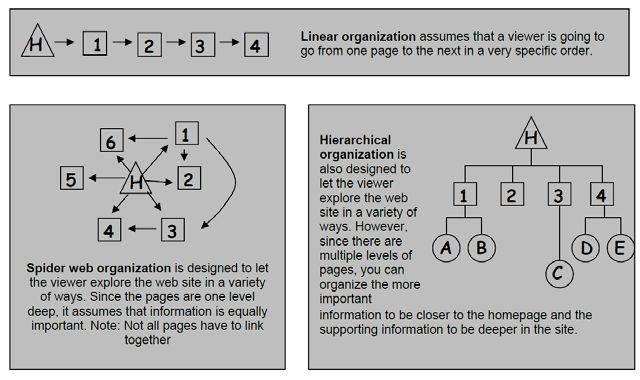
Once you’ve decided which pages you need on your website, there are several different ways to
think about organizing and linking them together. No matter which approach you select, it’s
important that it makes sense and isn’t confusing to viewers.
Website Rule Reminders!
Website: Multimedia is Limited to No More than Four Minutes for Entire Website
A website may contain multimedia, audio, video, or both, but the grand total for all multimedia used within
the website may total no more than four minutes. Clips are no longer limited to just 45 seconds each.
Rather, students have a grand total of four minutes to divide up at their discretion. It is the student’s
decision to divide up this overall media limit to best provide supporting evidence in their website. (See: IV.
Individual Category Rules – E. Website, Rule E4, page 32)
x Please note that any music or song that plays after a page loads is included in this total.
x A website could include many, smaller clips or include fewer, longer clips. The choice is up to
the student.
Website: Quotes and Visual Sources Must Be Credited Within Website
Students must include a brief credit, in the website itself, for all VISUAL and WRITTEN sources (e.g.
quotes, photographs, paintings, charts, graphs, etc.). They must also fully cite these sources in their
annotated bibliography. (See: IV. Individual Category Rules – E. Website, E5, page 33)
x Keep in mind that a credit will be much briefer than a full citation.
x These brief credits do NOT count toward the student-composed word count.Before the Main Event
These pages are the basics
you will need to cover all the
Home Background Build-Up Main Event Short-Term Long-Term Written Work Home Background Build-Up Main Event Short-Term Long-Term Written Work Home Background Build-Up Main Event Short-Term Long-Term Written Work
information about your topic
in your website. You may end Home Background or Build-Up or
up adding more pages, but Long Before the Event Right Before the Event
start with the basics first. x Thesis
x What background x Who were the main
Directions: Use your thesis to x Name(s), title, division,
information does your players?
decide which major ideas you number of student-
reader need to know about x What are they doing to
want to include on each page. composed words in site,
your topic? get ready for the main
x Start with the Heart of the number of words in
process paper, and x What events, ideas, or events of your topic?
Story (section one). people happened before
navigational menu x What events or ideas led
x Follow the numbers (two your topic to influence it? up the main event?
through five) to plan the x What was going on in the
rest of your pages. x What was life like at this
world? time?
During the Main Event After the Main Event
Home Background Build-Up Main Event Short-Term Long-Term Written Work Home Background Build-Up Main Event Short-Term Long-Term Written Work Home Background Build-Up Main Event Short-Term Long-Term Written Work
Home Background Build-Up Main Event Short-Term Long-Term Written Work
Short-Term Impact or Long-Term Impact or Written Work
Heart of the Story or
Right After the Event Long After the Event x Process Paper
During the Event
Look for the 5W’s and an H: x What are some things that x So what? x Annotated Bibliography
x What happened? happened or changed x Why is your topic
right away? important in history?
x How did it happen?
x Think about positive and x How has your topic
x When did it negative changes. changed history?
happen?
x How did this event impact x Why is the event still
x Why did it happen? different groups of people. important today?
x Who was involved or
affected?
x Where did it happen?CATEGORY: RESEARCH PAPER
The process of the research paper is similar to the writing of articles
and books by college professors. Throughout your schooling, you will
be expected to write research papers.
A research paper requires three basic steps.
1. Collection of information
2. Organization of information
3. Presentation of the topic in an interesting way
There are many books available on how to write research papers and
you may find it helpful to look at one or more of them before you
begin. Ask your history or English teacher to suggest some useful guides. Here are some of the most
common questions about research papers:
What is a footnote?
Footnotes are explanations provided by writers about ideas or quotations presented in the paper are
not their own. Footnotes not only give credit to the originators of ideas, but also serve as “evidence” in
support of your ideas. Usually footnotes occur in three situations:
1. Quoting a Primary Source: An example of this would be including a selection from a speech
or interview.
2. Quoting a Secondary Source: If you take a direct quotation from someone’s book, you must
footnote it.
3. Paraphrasing a Secondary Source: Even if you change an author’s ideas into your own
words, you must footnote where you found this information.
How long does this paper have to be?
History Day papers are 1,500 to 2,500 words in length (approx. 6-10 pages). Each word or number in
the text counts as one word. The word limit does not apply to: notes, annotated bibliography,
illustration captions, and supplemental appendix materials.
Must the paper be typed?
No, but typing is always best, and you may have
someone type your paper for you.
Be sure to refer to your Contest Rule Book for more
information about title pages, footnote style, and
entry requirements.
Evaluating History Day Projects
At all levels of History Day competitions, judges are looking at the
following criteria, which heavily focuses on the history behind your
project.
x 60% Historical Quality: Historical accuracy, analysis and
interpretation, historical context, wide research, uses
available primary sources, research is balanced.
x 20% Connection to Theme: Clearly relates topic to theme,
demonstrates significance of topic in history, draws
conclusions.
x 20% Clarity of Presentation: Uses the category effectively
to explain ideas.
x Rules Compliance: Project follows general guidelines for
History Day as well as category-specific rules.You can also read


