The New Era of Canine Science: Reshaping Our Relationships With Dogs
←
→
Page content transcription
If your browser does not render page correctly, please read the page content below
PERSPECTIVE
                                                                                                                                                  published: 15 July 2021
                                                                                                                                         doi: 10.3389/fvets.2021.675782

                                             The New Era of Canine Science:
                                             Reshaping Our Relationships With
                                             Dogs
                                             Evan L. MacLean 1,2,3*, Aubrey Fine 4 , Harold Herzog 5 , Eric Strauss 6 and Mia L. Cobb 7
                                             1
                                              School of Anthropology, University of Arizona, Tucson, AZ, United States, 2 College of Veterinary Medicine, University of
                                             Arizona, Tucson, AZ, United States, 3 Cognitive Science, University of Arizona, Tucson, AZ, United States, 4 California State
                                             Polytechnic University, Pomona, CA, United States, 5 Department of Psychology, Western Carolina University, Cullowhee, NC,
                                             United States, 6 Center for Urban Resilience, Loyola Marymount University, Los Angeles, CA, United States, 7 Animal Welfare
                                             Science Centre, Faculty of Veterinary and Agricultural Sciences, The University of Melbourne, Melbourne, VIC, Australia

                                             Canine science is rapidly maturing into an interdisciplinary and highly impactful field with
                                             great potential for both basic and translational research. The articles in this Frontiers
                                             Research Topic, Our Canine Connection: The History, Benefits and Future of Human-Dog
                                             Interactions, arise from two meetings sponsored by the Wallis Annenberg PetSpace
                                             Leadership Institute, which convened experts from diverse areas of canine science to
                                             assess the state of the field and challenges and opportunities for its future. In this
                                             final Perspective paper, we identify a set of overarching themes that will be critical for
                                             a productive and sustainable future in canine science. We explore the roles of dog
                             Edited by:      welfare, science communication, and research funding, with an emphasis on developing
             Tamara Alejandra Tadich,        approaches that benefit people and dogs, alike.
       Austral University of Chile, Chile

                       Reviewed by:          Keywords: canine science, dog, animal welfare, human-animal interaction, science communication, funding,
                       Cristian Torres,      sustainability
           Universidad de Chile, Chile
                Naomi Donna Harvey,
          Dogs Trust, United Kingdom             Dogs have played important roles in the lives of humans for millennia (1, 2). However,
                 *Correspondence:
                                             throughout much of scientific history they have been dismissed as an artificial species with little
                   Evan L. MacLean           to contribute to our understanding of the natural world, or our place within it. During the last
            evanmaclean@arizona.edu          two decades, this sentiment has changed dramatically; canine science is rapidly maturing into
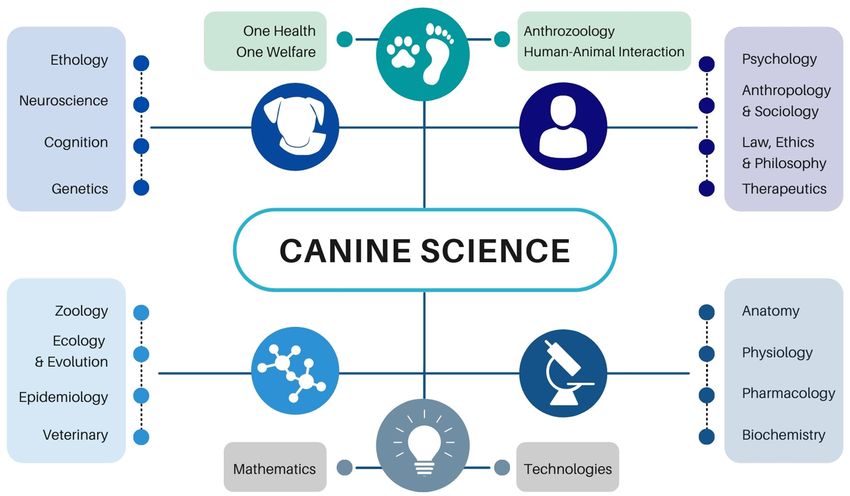
                                             an established, impactful, and highly interdisciplinary field (Figure 1). Canine scientists, who
                    Specialty section:       previously occupied relatively marginalized roles in academic research, are increasingly being hired
         This article was submitted to       at major research universities, and centers devoted to the study of dogs and their interactions with
         Animal Behavior and Welfare,        humans are proliferating around the world. The factors underlying dogs’ newfound popularity
                a section of the journal
                                             in science are diverse and include (1) increased interest in understanding dog origins, behavior,
        Frontiers in Veterinary Science
                                             and cognition; (2) diversification in our approaches to research with non-human animals; (3)
            Received: 03 March 2021          recognition of dogs’ value as a unique biological model with relevance for humans; and (4) growth
             Accepted: 11 June 2021
                                             in research on the nature and consequences of dog-human interactions, in their myriad forms, from
             Published: 15 July 2021
                                             working dog performance to displaced canines living in shelters.
                             Citation:           This Perspective represents the final article in a collection of manuscripts arising from two
      MacLean EL, Fine A, Herzog H,
                                             workshops sponsored by the Wallis Annenberg PetSpace Leadership Institute. Leadership Fellows
  Strauss E and Cobb ML (2021) The
          New Era of Canine Science:
                                             from around the world gathered in 2017 and 2020 to discuss the state of research and future
   Reshaping Our Relationships With          directions in canine science. The individual articles in this collection provide a detailed treatment of
     Dogs. Front. Vet. Sci. 8:675782.        key topics discussed at these events. In this final article, we identify a set of overarching challenges
     doi: 10.3389/fvets.2021.675782          that emerge from this work and identify priorities and opportunities for the future of canine science.

Frontiers in Veterinary Science | www.frontiersin.org                               1                                               July 2021 | Volume 8 | Article 675782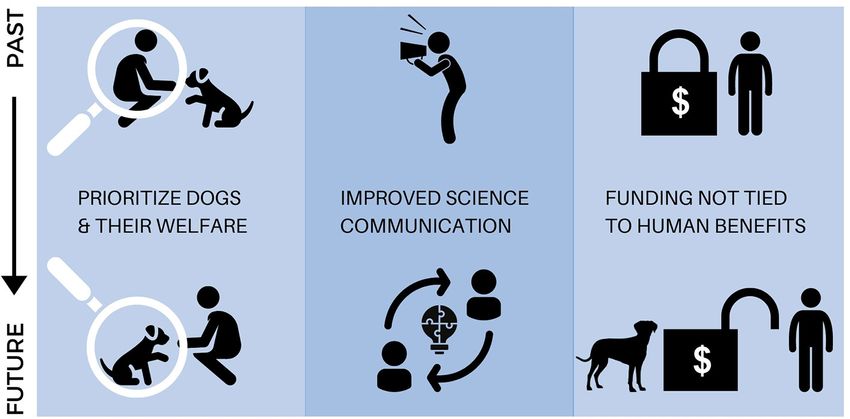
MacLean et al.                                                                                                                                 New Era of Canine Science

 FIGURE 1 | Canine science is an interdisciplinary field with connections to other traditional and emerging areas of research. The specific fields shown overlap in ways
 not depicted here and are not an exhaustive list of disciplines contributing to canine science. Rather, they are included as examples of the diversity of scholarship in
 canine science.

   The rise of canine science has benefited substantially from                          canine science even more valuable in the years ahead. However,
public interest and participation in the research process. Unlike                       maturing this model toward a sustainable future that serves its
many research studies, which unfold quietly in the ivory towers                         diverse stakeholders—who include scientists, research funders,
of research universities, the new era of canine science is                              members of the public, and dogs themselves—will require careful
intentionally public facing. The dogs being studied are not                             navigation of key challenges related to dog welfare, science
laboratory animals, bred and housed for research purposes, but                          communication, and financial support (Figure 2).
rather are companions living in private homes, or assisting
humans in capacities ranging from assistance for people with
disabilities, to medical and explosives detection. Campus-based                         DOG WELFARE
research laboratories have opened their doors to members of the
public who bring their dogs to participate in problem-solving                           Globally, animal welfare has been linked to the public
tasks, social interactions, and sometimes even non-invasive                             acceptability that underpins sustainable animal interactions and
neuroimaging studies. Increasingly, dog owners themselves play                          partnerships (6). Where human-animal interactions have failed
a significant role in the scientific process, serving as community                      to meet community expectations, practices and in some case
scientists who contribute to the systematic gathering of data from                      entire industries, have been disrupted or ceased. Recent examples
the convenience of their homes.                                                         include whaling for profit and greyhound racing (6, 7). Science is
   This new research model in conjunction with emerging                                 not exempt from this necessity to meet with public expectations
technologies, makes canine science a highly visible field that                          and the new era of canine science must place canine welfare at the
engages public stakeholders in unprecedented ways. From a                               forefront. Considering dogs as individuals and co-workers, rather
scientific perspective, society has become the new laboratory, and                      than tools for work or subjects, reflects a community moral and
in doing so, has facilitated research with dogs of a scope and                          ethical paradigm shift that is currently underway. Reimagining
scale that was heretofore unthinkable. As tens of thousands of                          our relationship with domestic dogs in research will also help
dogs contribute to research on topics ranging from cognition                            inform our treatment of other animals. In this way, studies of
and genetics (3, 4) to aging and human loneliness (5), canine                           dogs and our interactions with them can serve as a pioneering
science is entering the realm of “big data” and eclipsing many                          new model for many areas of science.
traditional research approaches. Importantly, these advances are                           As scientists advocate for the revision of community and
occurring simultaneously across diverse fields of science, creating                     industry practices with dogs in light of new evidence, we must
powerful new opportunities for consilience that will make                               apply the same criteria to the conduct of our research. This

Frontiers in Veterinary Science | www.frontiersin.org                               2                                                July 2021 | Volume 8 | Article 675782
MacLean et al.                                                                                                                                  New Era of Canine Science

 FIGURE 2 | Visual summary of the key issues identified in this Perspective. A sustainable future in canine science will require (1) research approaches that prioritize
 and monitor the welfare of dogs, (2) improved science communication to avoid incorrect reporting of study results, and to translate research findings to meaningful
 change in practices relating to dogs, and (3) availability of research funding that is not tied exclusively to studying the possible benefits of dogs for humans.

includes adjusting canine research and training methods to                               and reported. Impediments to this work arise not from lack of
acknowledge the sentience of dogs, and the importance of the                             researcher interest or access to dogs, but rather from challenges
affective experience for dogs in both research and community                             to securing funding that is independent from a focus on human
settings (8–11). The discipline of animal welfare science has                            health outcomes, or other tangible outcomes of work that dogs
progressed rapidly over the last two decades, and we have                                perform. To be able to optimize canine welfare, there is an urgent
many animal-based, welfare-outcome measures available to us                              need for increased funding specifically to study the welfare of
(6, 11). Ensuring the well-being of the dogs we study will be                            dogs, in all their diversity. The new era of canine science will
as critical to ongoing social license to operate (i.e., community                        identify what dogs need to thrive, propelling us toward a mutually
approval) for canine science as it is for working dog interests                          sustainable partnership between people and dogs.
(12). Being transparent about the issues of animal consent and
vulnerability, as well as offering animals agency with regard to
their participation in science are valuable suggestions offered                          COMMUNICATION
within this special issue. We encourage our colleagues to not
just consider this paradigm shift, but to effect it through                              One area that has not received much attention in relation
prioritizing and representing the dog’s perspective and welfare in                       to canine science is the way in which research findings are
their research.                                                                          communicated outside the empirical literature. Fueled by media
    Although increasingly, researchers may include a single or                           reports, interest in canine science and the impact of dogs on
limited set of canine stress measures in studies exploring dogs’                         human health and well-being has grown substantially in the
potential benefits to humans, this approach alone does not                               last 10 years. A survey by the Human-Animal Bond Research
fill the need for studies that prioritize an understanding of                            Institute found that 71% of pet owners were aware of studies
canine welfare as their central focus. Canine welfare should be                          demonstrating that pets improve mental and physical health.
considered not just as an emergent population-level measure (13)                         Some of these claims are justified. For example, many studies
but rather with respect to the way in which it is experienced: from                      have found that interacting with therapy dogs reduces stress
the perspectives of individual dogs. Commonly used statistical                           and anxiety and increases positive emotional states in a variety
methods from human research, such as group-based trajectory                              of settings including hospitals, schools and nursing homes (15,
analysis (14) may offer proven techniques that allow meaningful                          16). In other cases, high public expectations about the healing
reporting on populations while reflecting the nuance of shared,                          power of pets are not matched by the results of empirical
sub-group patterns. Such approaches will better reflect individual                       studies. For instance, while the Human-Animal Bond Research
differences, for example variations in canine personality, social                        Institute survey found that 86% of pet owners believe pets
support and relationship styles, as well as other significant factors.                   relieve depression, the majority of studies on pet-ownership and
One impediment to robust measurement of animal welfare in                                depression do not support these conclusions (17).
canine science has been limited funding.                                                     Because so many people have extensive personal experiences
    We believe that all granting bodies who fund exploration                             with dogs, investigators face unique challenges in sharing
of the possible benefits to people from dogs should also fund                            research results with the public. In their hearts, dog owners
and require the canine perspective to be robustly monitored                              believe that their canine companions make them feel less

Frontiers in Veterinary Science | www.frontiersin.org                                3                                                July 2021 | Volume 8 | Article 675782
MacLean et al. New Era of Canine Science
depressed, or that dogs feel guilty when they’ve eliminated diverse media, it is vital that the communication of our work is
indoors or explored the kitchen garbage—even though research honest, relevant, and effective, to ensure that our field stays on
might suggest otherwise. In addition, when it comes to animal the radar of key stakeholders, funding bodies and change agents.
companions, people much prefer to read a news article in which
visits with a therapy dog improved the well-being of a child
undergoing chemotherapy than an article about a randomized FUNDING
clinical trial which found no differences between the well-being of
children in a therapy dog group and a control group (18). Nor is A third key challenge in the future of canine science concerns
there likely to be much press coverage devoted to methodological research funding and a careful balancing of the priorities of
issues such as small effect sizes and inappropriate attributions of scientists and funding agencies. In the last decade, canine science
causality to the results of correlational studies. has received considerable support from the pet care sector,
Canine scientists and scholars of human-animal interactions as well as human health and defense agencies [e.g., (29)].
(anthrozoologists) are fortunate that the public is intrinsically Fine and Andersen (30) stress that although funding is still
interested in our research. We feel that it is critical for a challenge in human-animal interaction research, there are
investigators to make efforts to communicate the findings of now more options to be found. In 2008, the Waltham Petcare
important studies to the public. We caution however, that Science Institute initiated a public-private partnership with the
researchers should not overstate the implications of their findings Eunice Kennedy Shriver National Institute of Child Health and
in press releases and conversations with journalists, despite Human Development. Over the past decade, this partnership
frequent pressure to do so. These distortions could have a has provided funding for research aimed at measuring the
negative impact on misleading the public and misrepresenting impact of specific Animal-assisted interventions. Since 2014, the
the actual findings, a problem that is particularly acute in Human Animal Bond Research Institute has funded a total of
canine science where well-intentioned pet owners may eagerly 35 academic research grants investigating the health outcomes
adopt practices based on media coverage of scientific studies. of pet ownership and/or human-animal interaction, both for the
The now-established discipline of science communication offers people and non-human animals involved. Despite clear benefits
guidance for how best to engage with community and research for enabling research, there remains a limited group of agencies
stakeholders in meaningful ways. responsible for funding this work. This has potential to constrain
Traditionally, science communication has relied on the the range of topics being studied. In addition, scientists may feel
knowledge deficit model of communication (19). Directionally compelled to support the agendas of industry groups, such as
one-way, the deficit model operates on the assumption that those in the pet sector, who often encourage research that will
ignorance is the reason for a lack of community support and demonstrate the benefits of pets and human-animal interactions.
application of scientific evidence. Examples where practices have These constraints were recognized by Wallis Annenberg
not been updated in response to research findings include dog PetSpace in 2017 when they envisioned their Leadership
training methodology (9) and breeding selection for extreme Institute Program with a mission to promote interdisciplinary
body types, such as brachycephaly in pugs and bulldogs, scholarship and convene meetings to accelerate research and
even though the health and welfare impacts are scientifically policy development (https://www.annenbergpetspace.org/about/
well understood (20). Scientists who share their research leadership). This model for engagement inspired the organization
results thinking that knowledge disseminated—to “educate” the to offer two invited retreats (2017, 2020) for a total of 33 experts
public—is enough to result in different dog care decisions, in the field that provided opportunities for open ended and
industry practices or legislation, will generally find this to be frank discussion about the nature of human-animal interaction
ineffective (21). This is because the deficit model overlooks the research, and the maturing field of canine science. By providing
underlying beliefs, existing attitudes and motivations for current the space and financial support, plus the opportunity to work
practices. We now recognize that the deficit model is not the most together and publish, Annenberg PetSpace provided a way to
effective way to communicate, engage stakeholders and effect both illuminate current limitations, and to identify priorities
change (22, 23). for the future, free of constraints from outside interest groups.
Further exploration of the effect of targeted and intentional These intellectual salons have no specific agenda other than to
science communication, informed by human behavior change consider the future of the field and what kinds of questions
research, will improve the translation of canine science to need to be asked based on what we already know. The results
meaningful outcomes for dogs and people alike (12). This is of these two retreats include 14 published refereed papers,
important, as many studies in canine science have applied plus a suite of collaborations that might otherwise not have
aims designed to inform global policies and the creation of happened. We hope that these fellowships and retreats continue
best practices (24, 25). Applied research from the livestock and inspire others to support similar initiatives so that scholars
and farming sector suggests that coordinating human behavior across multiple disciplines have the opportunity to experience the
change strategies from social and psychological sciences can transformational exchanges that occur during these programs.
influence beliefs and attitudes to motivate changes in the ways The new era of canine science will require diverse funding that is
people behave toward animals, resulting in improved animal not limited to how dogs can benefit humans, from health, safety
welfare (26–28). In the era of attention economics, where and economic perspectives. This change will enable researchers
scientists are competing for public attention alongside other the freedom to further our understanding of dogs and their needs
Frontiers in Veterinary Science | www.frontiersin.org 4 July 2021 | Volume 8 | Article 675782MacLean et al. New Era of Canine Science
for optimized welfare. In turn, this will allow us to identify how the axes of fundamental understanding and considerations of use
dogs and people can thrive together. (34). Both canine research and urban ecology seek fundamental
understanding, but also expect to directly apply the knowledge
LOOKING AHEAD gained to improve outcomes for their subjects and stakeholders.
By including the public in canine science we not only
We hope that the publications emerging from these retreats will increase the quantity of the data that we can gather, we serve
reach a diverse community of stakeholders, including students, as ambassadors for a new model of responsible animal research.
early career researchers, animal welfare and advocacy groups, The result increases the value of human-animal interaction
legislators and policy makers, philanthropies, and traditional research and creates opportunities for the next generation of
agency funders. The goal of these papers is to spark imagination interdisciplinary scientists. The goal of this collection has been
for projects not yet engaged and to help set the agenda for both to highlight specific recent advances in canine science as well
future research that can enhance our understanding of human- as to identify emerging and overarching issues that will shape the
dog interactions and identify paths to ensure a future of symbiotic future of this field. The multidisciplinary nature of our work with
relationships between these species. dogs allows scientists to contribute to a robust research agenda,
The vision of this collective group of scholars includes the enhancing our understanding of canines and their impact on
goal of establishing studies with dogs as a sustainable and society. Ultimately, the nexus of our discoveries should have
broad-reaching research focus. Although dogs provide many profound effects on reshaping and enriching our relationships
advantages as a “model species” —including their phenotypic with dogs.
diversity, and shared environments and evolutionary history
with humans—a research model centered around dogs has many DATA AVAILABILITY STATEMENT
additional benefits. Dogs provide a rich, interactive and sentient
model with deep implications for the way scientists approach The original contributions presented in the study are included
animal research, and animal welfare. Dogs also increase the in the article/supplementary material, further inquiries can be
accessibility of research, both literally, due to their ubiquity directed to the corresponding author/s.
and opportunities for large-scale public participation in research
(31, 32), and figuratively, through a body of work with appeal to AUTHOR CONTRIBUTIONS
the broader public.
The field of canine science has much in common with a similar All authors listed have made a substantial, direct and
emerging science, that of urban ecology. Humans are historically intellectual contribution to the work, and approved it
at the core of the subject material, but non-human elements are for publication.
often the focus of the study. As such, the work is always culturally
embedded, relevant to a variety of stakeholders, and ultimately FUNDING
expected to improve quality of life. The urban ecologists coined a
term Use-Inspired Research (33) from modifying the existing idea We thank Wallis Annenberg PetSpace for supporting the
of Pasteur’s Quadrant which organizes research questions across open-access publishing fees associated with this manuscript.
REFERENCES 8. Cobb M, Lill A, Bennett P. Not all dogs are equal: Perception
of canine welfare varies with context. Anim Welfare. (2020)
1. Serpell JA. Commensalism or cross-species adoption? A critical 29:27–35. doi: 10.7120/09627286.29.1.027
review of theories of wolf domestication. Front Vet Sci. (2021) 9. Hall NJ, Johnston AM, Bray EE, Otto CM, MacLean EL, Udell MA. Working
8:662370. doi: 10.3389/fvets.2021.662370 dog training for the 21st century. Front Vet Sci. (2021).
2. Wynne C. The indispensable dog. Front Vet Sci. (2021). 10. Horowitz A. Considering the “dog” in dog-human interaction. Front Vet Sci.
3. Chen F, Zimmermann M, Hekman JP, Lord KA, Logan B, Russenberger J, (2021). doi: 10.3389/fvets.2021.642821
et al. Advancing genetic selection and behavioral genomics of working dogs 11. Mellor DJ, Beausoleil NJ, Littlewood KE, McLean AN, McGreevy PD,
through collaborative science. Front Vet Sci. (2021). Jones B, et al. The 2020 five domains model: including human–
4. Gnanadesikan GE, Hare B, Snyder-Mackler N, MacLean EL. Estimating the animal interactions in assessments of animal welfare. Animals. (2020)
heritability of cognitive traits across dog breeds reveals highly heritable 10:1870. doi: 10.3390/ani10101870
inhibitory control and communication factors. Anim Cogn. (2020) 23:953–64. 12. Cobb ML, Otto CM, Fine AH. The animal welfare science of working dogs:
doi: 10.1007/s10071-020-01400-4 current perspectives on recent advances and future directions. Front Vet
5. McCune S, Promislow D. Healthy, active aging for people and dogs. Front Vet Sci. (2021).
Sci. (2021). doi: 10.3389/fvets.2021.655191 13. Richter SH, Hintze S. From the individual to the population–and back
6. Broom DM. International Animal Welfare Perspectives, Including Whaling again? Emphasising the role of the individual in animal welfare science.
and Inhumane Seal Killing as a Wto Public Morality Issue. In: Animal Law and Appl Anim Behav Sci. (2019) 212:1–8. doi: 10.1016/j.applanim.2018.
Welfare-International Perspectives. New York, NY: Springer (2016). p. 45–61. 12.012
7. Markwell K, Firth T, Hing N. Blood on the race track: an analysis of ethical 14. Nagin DS, Odgers CL. Group-based trajectory modeling
concerns regarding animal-based gambling. Ann Leisure Res. (2017) 20:594– in clinical research. Ann Rev Clin Psychol. (2010) 6:109–
609. doi: 10.1080/11745398.2016.1251326 38. doi: 10.1146/annurev.clinpsy.121208.131413
Frontiers in Veterinary Science | www.frontiersin.org 5 July 2021 | Volume 8 | Article 675782MacLean et al. New Era of Canine Science
15. Barker SB, Gee NR. Canine-assisted interventions in hospitals: Best 27. Fernandes J, Blache D, Maloney SK, Martin GB, Venus B, Walker FR,
practices for maximizing human and canine safety. Front Vet Sci. (2021) et al. Addressing animal welfare through collaborative stakeholder
8:615730. doi: 10.3389/fvets.2021.615730 networks. Agriculture. (2019) 9:132. doi: 10.3390/agriculture9
16. Gee NR, Rodriguez KE, Fine AH, Trammell JP. Dogs supporting human 060132
health and wellbeing: a biopsychosocial approach. Front Vet Sci. (2021) 28. Vigors B. Reducing the consumer attitude–behaviour gap in animal welfare:
8:630465. doi: 10.3389/fvets.2021.630465 the potential role of ‘nudges’. Animals. (2018) 8:232. doi: 10.3390/ani8
17. Rodriguez KE, Herzog H, Gee NR. Variability in human-animal interaction 120232
research. Front Vet Sci. (2021) 7:619600. doi: 10.3389/fvets.2020.619600 29. McCune S, McCardle P, Griffin JA, Esposito L, Hurley K, Bures R, et al.
18. McCullough A, Ruehrdanz A, Jenkins MA, Gilmer MJ, Olson J, Pawar A, Human-animal interaction (hai) research: a decade of progress. Front Vet Sci.
et al. Measuring the effects of an animal-assisted intervention for pediatric (2020) 7:44. doi: 10.3389/fvets.2020.00044
oncology patients and their parents: a multisite randomized controlled trial. J 30. Fine AH, Andersen SJ. A commentary on the contemporary issues
Pediatr Oncol Nurs. (2018) 35:159–77. doi: 10.1177/1043454217748586 confronting animal assisted and equine assisted interactions. J Equine Vet Sci.
19. Simis MJ, Madden H, Cacciatore MA, Yeo SK. The lure of rationality: why (2021) 103436. doi: 10.1016/j.jevs.2021.103436
does the deficit model persist in science communication? Public Understand 31. Kaeberlein M, Creevy KE, Promislow DE. The dog aging project:
Sci. (2016) 25:400–14. doi: 10.1177/0963662516629749 Translational geroscience in companion animals. Mamm Genome. (2016)
20. Packer RM, O’Neill DG, Fletcher F, Farnworth MJ. Great 27:279–88. doi: 10.1007/s00335-016-9638-7
expectations, inconvenient truths, and the paradoxes of the dog-owner 32. Stewart L, MacLean EL, Ivy D, Woods V, Cohen E, Rodriguez K, et al.
relationship for owners of brachycephalic dogs. PLoS ONE. (2019) Citizen science as a new tool in dog cognition research. PLoS ONE. (2015)
14:e0219918. doi: 10.1371/journal.pone.0219918 10:e0135176. doi: 10.1371/journal.pone.0135176
21. Seethaler S, Evans JH, Gere C, Rajagopalan RM. Science, values, and science 33. Grove JM, Childers DL, Galvin M, Hines S, Muñoz-Erickson
communication: competencies for pushing beyond the deficit model. Sci T, Svendsen ES. Linking science and decision making to
Commun. (2019) 41:378–88. doi: 10.1177/1075547019847484 promote an ecology for the city: practices and opportunities.
22. Philpotts I, Dillon J, Rooney N. Improving the welfare of Ecosyst Health Sustain. (2016) 2:e01239. doi: 10.1002/ehs
companion dogs—is owner education the solution? Animals. (2019) 2.1239
9:662. doi: 10.3390/ani9090662 34. Stokes DE. Pasteur’s Quadrant: Basic Science and Technological Innovation.
23. Westgarth C, Christley RM, Marvin G, Perkins E. The responsible dog Washington, DC: Brookings Institution Press (2011).
owner: the construction of responsibility. Anthrozoös. (2019) 32:631–
46. doi: 10.1080/08927936.2019.1645506 Conflict of Interest: The authors declare that the research was conducted in the
24. Bray EE, Otto CM, Udell MA, Hall NJ, Johnston AM, MacLean EL. Enhancing absence of any commercial or financial relationships that could be construed as a
the selection and performance of working dogs. Front Vet Sci. (2021) potential conflict of interest.
8:644431. doi: 10.3389/fvets.2021.644431
25. Feldman S, Fine AH, Melfi L. Research, practice, science public policy: How Copyright © 2021 MacLean, Fine, Herzog, Strauss and Cobb. This is an open-access
they fit together in the context of aai. In: Fine AH, editor. Handbook on Animal article distributed under the terms of the Creative Commons Attribution License (CC
Assisted Therapy. 5th ed. San Diego, CA: Elsevier/Academic Press (2019). BY). The use, distribution or reproduction in other forums is permitted, provided
p. 417–24. the original author(s) and the copyright owner(s) are credited and that the original
26. Coleman G, Hemsworth PH. Training to improve stockperson beliefs and publication in this journal is cited, in accordance with accepted academic practice.
behaviour towards livestock enhances welfare and productivity. Rev Sci Tech. No use, distribution or reproduction is permitted which does not comply with these
(2014) 33:131–7. doi: 10.20506/rst.33.1.2257 terms.
Frontiers in Veterinary Science | www.frontiersin.org 6 July 2021 | Volume 8 | Article 675782You can also read


