International Students: Working in Canada & Pathways to Permanent Residence
←
→
Page content transcription
If your browser does not render page correctly, please read the page content below

International Students:
                                                          Working in Canada &
                                                          Pathways to Permanent
                                                          Residence
                                                            Pascale Fortin Giguère
                                                            Outreach Officer - IRCC
                                                            June 2020

IMPORTANT: The information in this presentation is accurate as of the date of the presentation. Policies &
programs are subject to change. For the latest updates, please consult www.Canada.ca.
Overview
Visa and legal status in Canada.
Working on & off campus during studies.
Pathways to Permanent Residence: Overview
Working after graduation
Applying for permanent residence - Express Entry
Questions and Answers
2
Temporary Resident Visa & Legal Status

• A visa does not confer legal status in Canada. It only gives you
  permission to apply for entry to Canada.

• It is only when you appear before a Canadian boarder officer
  that a decision will be made regarding your entry in Canada,
  your legal status and the duration of that status in Canada.

                                                                     3
Student Immigration Journey & Options
                     Studying              Post Graduation       Permanent Residence

           •   On-Campus Work          Post Graduation Work      •   Quebec Experience Program
                                       Permit:
           •   Off-Campus Work                                   Express Entry:
                                       •   Open work permit      • Federal Skilled Worker
Programs   •   Co-op / Internship          for up to 3 years     • Federal Skilled Trades
                                                                 • Canadian Experience Class

           •   Full-time studies       •   Graduation from an
                                                                 •   Work experience
                                           eligible full-time
           •   Valid Study Permit                                    (requirement varies by
                                           study program at a
 How to                                                              program)
                                           Designated Learning
 Qualify   •   Off-Campus & Coop:          Institution
                                                                 •   Language proficiency
                 •   Minimum 6-month
                     study program     •   Minimum 8-month
                                                                 •   Educational qualification
                                           study program
                 •   Other specific
                     requirements
                                                                                                 4
Work on Campus
Admissibility criteria:
  • Be registered in full-time studies + have a valid study permit.
  • Employer can be the designated learning institution OR a private
    business.

Conditions:
  • Can work on campus without a work permit.
  • No maximum number of hours.
  • Must have a Social Insurance Number (SIN) to work/ be paid

                                                                       5
Work off Campus
Admissibility criteria:
  • Be full-time students enrolled at a designated learning institution (DLI)
    + have a valid study permit
   • Program of study must be at least 6 months

Conditions:
  • Can work off campus without a work permit
   • Up to 20 hours per week during academic sessions
   • No maximum # of hours during regularly scheduled breaks between
     sessions
   • Must have a SIN to work/be paid

                                                                                6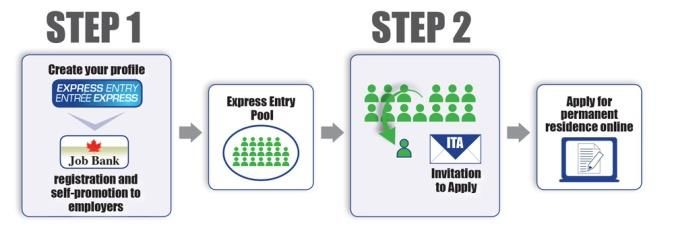
Working off-campus
• Most post-secondary study permit holders are allowed to work up to 20 hours
  per week during the regular academic sessions of their program and full-time
  during scheduled breaks, including winter, spring and summer breaks.

• International students who were eligible to work can continue to work, even if
  they have been forced to drop to part-time studies or take a break in studies
  due to COVID-19.

• Designated learning institutions should be prepared to provide a letter of
  support if their student is later asked by an officer about how COVID-19
  impacted their status as a full-time student.

                                                                                   7
Temporary exception to 20-hour/week limit
• IRCC has temporarily lifted the 20-hour-per-week restriction on study permit
holders working off-campus during their academic session
• To be eligible, students must be:
a study permit holder in an academic session
eligible to work off-campus, and
providing an essential service or function
• Consult the Government’s Guide on Essential Services and Functions During the
COVID-19 Pandemic to determine if the work the student is or will be doing is
considered an essential service or function
• This special measure will be in place April 22 to August 31, 2020
8
Coop and Internship Program

Admissibility criteria:

   • Have a valid study permit
   • Have a mandatory co-op/internship requirement as part of the
     academic program
   • Co-op work cannot be more than 50% of total academic program
   • Must submit acceptance letter by a learning institution stating the work
     is an essential part of the program
   • Must be for a program of study offered by a designated learning
     institution (DLI)

                                                                                9
Coop and Internship Program (cond’t)
Remarks:
• Open work permit will be issued with the institution as your employer
• A note on your work permit should state: "Issued under R205(C)(I); only
for work forming an essential/integral part of the course as per …
(name of institution)."
• A student wanting to complete an optional internship must respect the
requirements for Off Campus work conditions
10Post-Graduation Work Permit (PGWP) Program
• Allows students who have graduated from a designated learning institution (DLI) to gain valuable
Canadian work experience.
• May be eligible if you have completed a study program in Canada of at least 8 months (full-time).
• PGWP validity depends on the length of the program of study completed in Canada.
Duration of study program Duration of PGWP
(determined by DLI)
at least 8 months same as study program
but less than 2 years
2 years or longer 3 years
• Apply within 180 days of receiving written notification of completion of studies. To be eligible, your
study permit must have been valid at some point during these 180 days.
• PGWP is an open work permit – You can only apply for a PGWP only once. 11Permanent Resident Programs Canada v/s Quebec
Permanent Resident (PR) programs enable immigrants to settle
permanently in Canada. In Quebec, immigration is a shared jurisdiction.
Quebec Experience Program (PEQ):
PEQ - Québec graduate
PEQ - Temporary Foreign Worker
Other Immigration Program - consult MIFI Website
Certificat de sélection du Québec (CSQ) is required in Quebec.
Express Entry manages intake of immigration applications for:
• Federal Skilled Worker Program (FSWP)
• Federal Skilled Trades Program (FSTP)
• Canadian Experience Class (CEC)
• A portion of the Provincial Nominee Program (PNP)
12Immigration: Canada vs Quebec
Express Entry Shared Juridiction
Selection: Gouvernement of
Quebec (MIFI)
Admissibility: Federal
Government
13
13Express Entry for International Students
User friendly, online system from profile creation to application for permanent residence;
Creating an Express Entry profile is free and a profile is active for up to one year;
Candidates may be eligible for more than one program
Points are awarded to former international students who completed at least a one year program of
education in Canada
The top scoring candidates in the pool are invited in every round
Fast processing of permanent residence applications – within 6 months in most cases
14National Occupational Classification
• The National Occupation Classification (NOC) is a classification system used by the
Government of Canada to classify occupations (jobs).
• NOC codes are used to classify work by occupational area and skill level.
• Work experience for Express Entry: NOC 0, A and B.
NOC 0 Management Jobs
NOC A Professional Jobs (usually require university education)
Technical Jobs and Skilled Trades (usually require college education or
NOC B
apprenticeship training)
NOC C Semi-skilled jobs (usually require secondary school or vocational training)
NOC D Entry level jobs (on-the-job training)
• Don’t rely on job title alone. Duties under the NOC should also match your work experience.
15Federal Skilled Worker Program
Key Criteria:
• At least one year of continuous work experience within the last 10
years (in a NOC 0, A or B job), in Canada or in another country.
• Language skills (CLB 7 in all 4 abilities).
• Education (Canadian secondary or post-secondary certificate, diploma
or degree, or the foreign equivalent).
• A score of 67 or higher out of 100 on the Federal Skilled Worker points
grid (which assesses six selection factors: language skills, education, work
experience, age, arranged employment, adaptability).
16Federal Skilled Trades Program
Key Criteria:
• At least 24 months of work experience in an eligible skilled trade
within the last five years.
• Meet job requirements of the skilled trade as set by the NOC
(except the requirement related to certification).
• Language skills (CLB 5, speaking and listening; CLB 4, reading and
writing).
• Have a valid job offer in the skilled trade for at least one year, or a
Canadian certificate of qualification in the skilled trades.
• *All work experience in this program falls under NOC B.
17Canadian Experience Class
Key Criteria:
• At least 12 months of skilled Canadian work experience (in a NOC 0, A or
B job) within the last 3 years.
Full-Time: 30 hours/week for 12 months (at same job or at more than one job)
= 1 year full time (1,560 hours).
Part-Time: 15 hours/week for 24 months = 1 year full time (1,560 hours).
• Language skills:
NOC 0 and A jobs (CLB 7 in all 4 abilities)
NOC B jobs (CLB 5 in all 4 abilities)
18Canadian Experience Class: Work Experience
What DOES count: What DOESN’T count:
Full-time (or part-time Any employment in Canada
equivalent) work experience in during full-time study (e.g.
Canada at NOC 0/A/B level in while on a co-op work permit
the past 3 years or off-campus work, while a
full-time student)
Work experience gained while
legally authorized to work in Self-employment, even if
Canada, (e.g. on a Post skilled
Graduate or other work
permit) Unauthorized work
19Federal Immigration Programs
Federal Skilled Canadian Federal Skilled Trades
Worker Program Experience Class Program
At least 1 year continuous skilled At least 12 months skilled work At least 2 years work experience in a
work experience experience skilled trade
(in Canada or elsewhere) (in Canada)
Official Language Proficiency
Official Language Proficiency (CLB 4-5)
(CLB 7) Official Language Proficiency
(CLB 7 for NOC 0, A;
Secondary education or above CLB 5 for NOC B) Meet the job requirements of that
(supported by ECA) trade as described by the NOC
Full-time employment offer or a
At least 67 points in the Federal Secondary education or above certificate of qualification in a trade
Skilled Worker points grid (supported by an ECA) from a Canadian province or territory
Provincial Nominee Program
To be nominated by a province or territory, you must follow the
instructions on their website and contact them directly.
2021
Comprehensive Ranking System (CRS)
                  Core Human Capital        Single     Spouse   Skill Transferability     100 points max
                  Factors                   500        460
                                                                Education                 50
                  Age                       110        100      (with OL or CDN exp)
                  Education                 150        140      Foreign work experience   50
                                                                (with OL or CDN exp)
                  1st Official Language     136        128
                                                                Qualification cert        50
                  2nd   Official Language   24         22       (with OL)

                  Canadian work             80         70       Additional Points         600 points max
                  experience
                                                                Provincial Nomination     600
                  Spouse Factors            40
                  Education                 10                  Valid job offer           200 (max)
                  1st Official Language     20                  Canadian Education        30 (max)
                  Canadian work             10
                  experience                                    French proficiency        30 (max)

                                                                Siblings in Canada        15 (max)
This tool will help you calculate your Comprehensive
Ranking System (CRS) score:                                               Total: 1200 points max
www.cic.gc.ca/english/immigrate/skilled/crs-tool.asp                                                       22
Admissibility for All Permanent Residence
Application
Once eligibility criteria are met OR when a CSQ for resident of Quebec is
ussued, IRCC assesses admissibility in Canada and processes fees.
Admissibility:
• Health
• Criminality and security (incl. Biometrics)
Fees:
• Application & Right of Permanent Residence
23Automatic biometrics extension
• Applicants now automatically have 90 days (instead of 30) to give their
biometrics
• They don’t need to contact IRCC to get this extension, and they don’t need a
new biometrics instruction letter for a future appointment
• Applicants who cannot give biometrics within 90 days can use the Web form to
tell us why
• Applications won’t be refused or closed if applicants can’t give biometrics
during this period
• Keep visiting canada.ca/biometrics for updates on when biometrics collection
will start again
24How Much Money Do I Need?
• Application Fee:
• $825 for principal applicant
• $825 for spouse or partner
• $225 per dependent child
• Right of Permanent Residence Fee:
• $500 for principal applicant
• $500 for spouse or partner
• Proof of Funds:1
• $12,960 for a family of 1
• $16,135 for a family of 2
• $19,836 for a family of 3
• $24,083 for a family of 4
• Biometrics:
• 85$ per person
1 Proof of funds are only required for FSW and FST streams if the candidate does not have a valid job offer. Not required for CEC or PNP. 25What if I’m Not Eligible for Express Entry?
Work Permit Options: Temporary Foreign Worker Program & International
Mobility Program
www.canada.ca/en/immigration-refugees-citizenship/services/work-canada
Other Immigration Programs:
www.canada.ca/en/immigration-refugees-citizenship/services/immigrate-canada
Provincial Nominee Programs:
• May include options for candidates who do not meet EE entry requirements.
• Visit your Province or Territories’ website to find out more information.
26For More Information
English: Canada.ca/ExpressEntry
French: Canada.ca/EntreeExpress
http://www.cic.gc.ca/english/helpcentre/index-featured-can.asp
http://www.cic.gc.ca/francais/centre-aide/index-en-vedette-can.asp
English: CitCanada English: @CitImmCanada CitImmCanada
French: CitImmCanFR French: @CitImmCanFR
27You can also read


