Introducing Positive Behavioural Support (PBS) Within a Medium Secure Forensic Mental Health Service - Dr. Bronwen Davies John Griffiths. Caswell ...
←
→
Page content transcription
If your browser does not render page correctly, please read the page content below

Introducing Positive Behavioural
        Support (PBS) Within a
       Medium Secure Forensic
         Mental Health Service

Dr. Bronwen Davies
John Griffiths.
Caswell Clinic, Medium Secure Unit.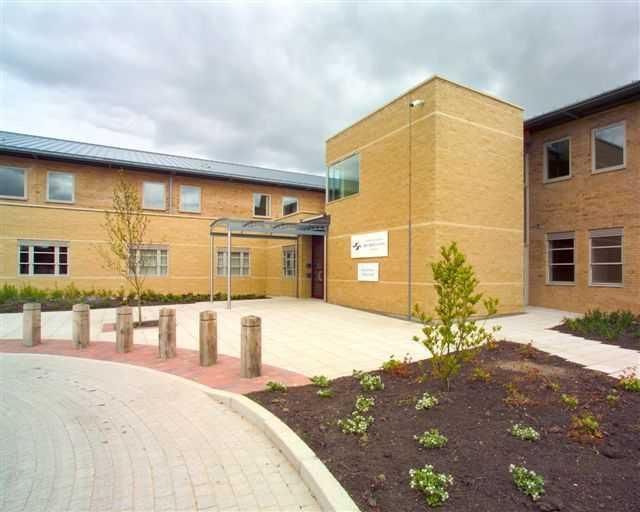
Caswell Clinic
5 Wards:- 61 service users
Penarth Ward:- Intensive Care Unit
(Male). 8 beds
Tenby Ward:- Admission/Assessment
(Male). 14 beds
Ogmore Ward:- Continuing Care-
Recovery. (male). 14 beds
Cardigan Ward:- Continuing Care-
Recovery (Male only). 14 beds
Newton Ward:- Admission &
Assessment (Female). 11 beds
What is PBS? An understanding of a person’s behaviour is developed based on functional analysis, considering environmental triggers and reinforcing consequences. This is the basis for formulation and intervention. It is values led and promotes service user involvement. It focuses on prevention of challenging behaviour through feedback, skills training, altering or reducing triggers or reinforcements, and improving service user quality of life. It eliminates the use of punitive approaches. It has a long term focus- is developmental and can be service user directed.
What is PBS? Reduction of challenging behaviour as a side effect of the intervention. The PBS model identifies early warning signs that challenging behaviour may occur and suggests de-escalation and distraction techniques prior to crisis management. Post incident support is outlined within the plan. The PBS plan is a live document and should change with a persons needs and wishes. Collaboration, empowerment and choice are central
PBS: The Model
Crisis
Management
Secondary Prevention
Primary PreventionPrimary Prevention: Largest
Part of the Plan
Changing the environment Increasing rates of access to
preferred reinforcers
Improving communication styles
and opportunities Increasing rates of engagement
Offering programmes of activities Modifying demands
Addressing mental and physical Providing additional help
health
Embedding disliked tasks
Improving carer confidence and between more preferred tasks
competence
Teaching skills e.g. Coping skills,
Eliminating or modifying triggers social skills, general skills,
functionally equivalent skills
Reinforcing pro-social behaviour
Positive role-modelling by carers
Empowerment and choiceSecondary Prevention Active listening Stimulus change/ removal Prompting to use coping skills De-escalation Not ignoring as this may increase distress/ behaviour Strategic capitulation Diversion to reinforcing or compelling activities
Crisis Intervention Proxemics Breakaway Minimal physical intervention As required medication Post incident support Can be employed as advanced directives as promoted within policy
Why PBS at Caswell?
High levels of challenging behaviour being experienced.
Skills and knowledge existed within the service (clinical nurse
specialist and psychologist).
Value base attractive to clinical teams and service management.
Recognition that more restrictive approaches were not working, or
were having a detrimental impact on therapeutic relationships.
Approaches reactive to crisis resulting in longer term crisis
management- not proactive or preventative.
Little or no understanding of the causes and functions of challenging
behaviour by clinical staff.
Caswell Perspective
Previous Approaches and Barriers
RAID (Reinforce Appropriate, Implode Disruptive) training
undertaken – circa 2005 for 1 ward – PICU. This is an approach
based on differential reinforcement- reinforcing pro-social
behaviours and ignoring challenging behaviours.
Only one ward trained and the skill base was dispersed across
the clinic as new wards opened.
Inconsistent approach to functional analysis – often ABC
charts were not analysed or findings considered within care
plans.Caswell Perspective
Previous Approaches and Barriers
Review of Aggressive Incidents on PICU between January 2008 and
June 2010 undertaken. Triggers often not identified and Inconsistent
and unstructured approaches to managing incidents identified. Little
thought or plan on how to prevent incidents occurring.
PBS launched on PICU in 2011- PBS link nurses identified.
Focus on ‘positive’ aspects of engagement and prevention of challenging
behaviours was appealing to clinicians.
No cost issues due to in house expertise and knowledge.
Links with Swansea University to Develop Practice Innovation Unit
status.
Published paper in “Mental Health Practice” (Griffiths and Wilcox, 2013).Barriers Encountered
Staff Attitude!!!! – Some staff believed we were rewarding challenging
behaviours, or they felt they were being ‘manipulated’ by the service users.
Comments of “there must be a consequence to this”, “they shouldn’t be
allowed to get away with this..”, “they have got to learn”
Limitations of initial training:
Focus only on one ward – service users and staff moved – dilution of
skills and knowledge. Lack of consistency in following care plans.
Small service user group to focus on (8 max – not all on PBS plans). Led
to some inconsistent decisions and clinical team approaches.
Feeling of “What next....” PBS seen as effective but somehow limited.
Limited capacity of the psychologists to provide on-going training and
support to ward staff.Next Steps……
Survey PICU 2013.
PICU staff surveyed on their views/ hopes/ and needs in relation to
PBS. This highlighted:
Staff were still trying to implement PBS within the area, however:
Staff often felt excluded from writing the PBS plans and wanted more
input in their development so they had a better understanding of them.
There was a desire for more training- some staff had not received any
whilst others had only received parts of the training and not all of it. Those
that had received training wanted to be updated to refresh their skills.
Primary nurses wanted more support from other disciplines in promoting
a PBS approach.
There was a need for assessment tools that could be used to analyse
challenging behaviours.
There was a need to audit and evaluate the success of PBS plans.
The approach adopted varied across the team, there was a need for
more consistency and commitment to the PBS approach on the ward.Where we are now!! Functional analysis tools have been introduced to compliment ABC charts and are included in the training for qualified staff. These are: “Contextual Assessment Inventory” “Brief Behavioural Assessment Tool”- Smith and Nethell (2013) Service User Assessment Tool. Individual PBS plans developed (I-PBS)- Currently there are eleven live plans. Two more underway in the men’s service. Three women identified for plans, we are beginning the process. I-PBS plan- developed within ABMUHB LD Services. Service users perspective and narrative (written in first person). Service user involvement central, all plans agreed with the service user before implementation.
Where we are now!! The PBS training and resources have been re-developed and provided to nurses, OTs and psychologists. A full days training is being provided to qualified staff. Half a day to unqualified staff. To date 97% of R.N’s and 68% of HCSW’s, 100% OT’s and 83% psychologists across the clinic have had training. Staff from fellow disciplines (e.g. Medicine and social work) have also received training. Qualified staff being supervised/ supported through their first functional analysis and I-PBS plan. 10 staff have commenced Advanced Professional Diploma training in PBS and will become Behaviour Specialist upon completion of course.
Where we are now!! Current Challenges: Specialist Support Across the Clinic Rotation of staff across the wards leaving clinical areas without a trainee behavioural specialist insitu. Change Management: Scepticism by some staff although largely outweighed by positive responses. It does highlight the challenges of implementing change and engaging staff in a fundamentally different approach to challenging behaviour. Managing Expectations: Supporting staff to recognise when crisis management is the only option for managing imminent risk of violence and realising this is not a failure of either PBS or team members. Resources: Only one person still maintaining responsibility for developing plans and supervising trainees, this will change when the specialists have completed their training. Communication: It can be difficult to organise effective communication to ensure PBS plans are known to all, particularly when service users move wards.
Governance: PBS
Implementation Group
Core PBS implementation group set up 2013- involving ward
managers PICU + Acute admissions ward, psychologists and head
OT. Functions of the group:
Review and agree assessment tools to be used within the clinic.
Agree process of implementation of PBS within the clinic.
Consider PBS training needs, review training and plan training dates
to meet needs.
Identify potential service users appropriate for PBS and monitor their
progress.
Develop service user information.PBS Implementation
Group cont...
Evaluate the effectiveness of PBS and training within the clinic-
agree process.
Feed back process to service managers/ clinical governance
systems.
Dissemination of results i.e. via publications and conferences.
Network with learning disability specialist services within the
health board and external forensic services implementing PBS.
PBS Action Plan has been developed and reviewed continually.Results of Training Evaluation
Confidence:
Confidence in working with challenging behaviour significantly increased
after training for both qualified (t (29) = -6.56, p=0.000) and unqualified
staff (t (27)=-5.67, p=0.000).
Qualified staff showed significant reductions in attributing the cause of
challenging behaviour to the service user (pResults of PBS Plan
Evaluation
12 plans evaluated pre- implementation and 3 monthly
post implementation
Evaluated using the Challenging Behaviour Checklist
(Harris et al. 1994) adapted for use within this service.
Currently significant difference between baseline and
last measurement (z=-3.297, p=0.001)Frequency Pre and Post PBS
Intervention
70
SU2
60
SU3
SU 4
50
SU 5
SU 6
40
SU 7
30 SU 8
SU 9
20 SU10
SU11
10
SU12
SU13
0
Baseline Time 1 Time 2 Time 3 time 4 SU14Results of PBS Qualitative Plan Evaluation:
Service Users Experiences (n=10)
Master Theme Sub Theme Number of
SU
1. My Plan A- Understanding me / sharing my story 9
B- Good days, bad days, triggers 3
C- My Involvement 10
2. How I understand A- What it is 8
PBS B- Why Me 8
C- Accessibility 4
D- An efficient summary 4
3. How PBS has A- Reflecting on my behaviour 5
helped me; the B- Noticing and wanting change 6
benefits
4. Making the Plan A- Staff fidelity to the model and plan 4
work B- Keeping the plan alive 6
C- Implementation (barriers & 2
suggestions)Next Steps
Recommendations
Options appraisal in relation to interim report underway.
One behavioural specialist on each ward and clinical teams.
Training days attended by all staff across the clinic.
Development of a structured review process.
Improve communication systems.
Interim plan development for new admissions to PICU.
Set up audit trail based on good practice framework.
Disseminate and share outcomes via publications and
conferences.Take home messages: From our experience within the clinic the effectiveness of PBS is based on a number of factors: Service user collaboration from the start. Multi-disciplinary involvement and commitment to PBS. A service wide commitment to embedding the value base of PBS within it’s practice, reducing the need for reactive strategies. Training of staff across the clinic in the principles of PBS On-going evaluation of effectiveness being fed back to clinical teams and service user feedback being used to improve processes
Case Study Gwyn- age 26. Gwyn had history of poly substance misuse and petty offending to fund addiction. IQ in borderline range, limited social skills, aggressive assertion to get his needs met. Index offence- Unlawful wounding, assault occasioning actual bodily harm- 3 assaults included in these charges. History of violent offending 2005- 2013. Presented with paranoia and psychosis exacerbated by substance misuse. Section 37/41 MHA.
Case Study Assessment – BBAT, CAI, client assessment. Important for his motivation to be engaged in the process and set his own recovery goals. Behaviours: Throwing things at people- kicked a ball at someone’s head Self harm- cutting arms (mainly in prison) Slamming doors Shouting and swearing at people Threatening to hurt others or damage the environment Refusing to do things/ non-compliance/ breaking clinic rules Anti-social- pro-criminal/ pro-violent attitude shared with peers “Egging on” others behaviours
Triggers:
Case Study
Slow Fast
Psychosis- particularly When asked to do something
paranoia and anxiety new or difficult
Female/ inexperienced staff Requests refused without
Boredom explanation
Large groups of peers Authoritarian or stern
Lack of confidence and low approach from staff
self esteem Being given corrective
Medication changes and side feedback insensitively
effects Feeling criticised- especially
Borderline IQ in front of peers
Having requests declined
Maintaining functions: Escape/avoid difficult situations, acceptance and
admiration from peers, feeling less vulnerable.Case Study
Primary Prevention:
Communication Strategies: Simplify language, no complicated or abstract terms,
check understanding, rephrasing, provide rationale if say no/ make changes, use
calm friendly tone, give feedback sensitively and on a 1:1- not in front of peers etc.
Social role modelling- giving feedback sensitively and showing appropriate ways to
manage social situations.
Providing 1:1 sessions to discuss goals and progress
Activity Timetable- more structure and distraction- preventing boredom.
General skills- parenting skills, independent living skills- role modelling and
breaking skills down into smaller steps.
Support to maintain drug abstinence- drug education and relapse prevention group.
Differential reinforcement- offer praise and positive feedback when he walked away
from difficult situations and did not get involved, or asking staff for support
Secondary Prevention and Crisis Management:
Early indicators, distraction, validation of feelings, opportunity to talk to staff,
give time and space to calm, prn, safe holds etc.Case Study
Evaluation- moved from PICU, acute then rehab within 3 month period
Checklist for Challenging Behaviour:
Pre Post
Frequency 30 2
Management Dif 13 1
Severity 2 0
Qualitative feedback from Service User:
“Helped me move to where I am today”
“Clear to understand”Thank You
Any questions?
Contact details:
Bronwen.Davies2@wales.nhs.uk
John.Griffiths@wales.nhs.ukYou can also read


