Investing in South Australia's heart health - THE BEST RETURN FOR THE STATE BUDGET - The Heart ...
←
→
Page content transcription
If your browser does not render page correctly, please read the page content below
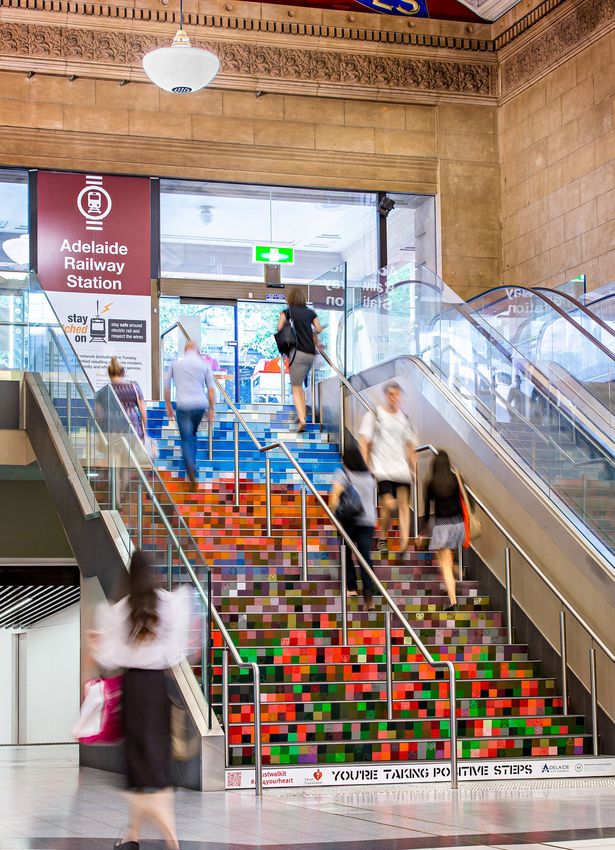
Budget submission 2020-21

Investing in South Australia’s
heart health
THE BEST RETURN FOR THE STATE BUDGET

   HEART FOUNDATION SUBMISSION TO THE SA BUDGET 2020-21

Investing in South Australia’s heart health

                                                     										Estimated costs

                                                     1.   Reduce risk factors through regional community program
                                                                                                                 $380,000 per year

                                                     2.   Get South Australians walking
                                                     2.1 DPTI and Wellbeing SA to develop and fund a Walking Strategy		 $2.5M to develop strategy and
                                                     			                                                                implement the action plan
                                                     			                                                                over 3 years
                                                     2.2 DPTI to implement a Household Travel Survey

                                                     3.   Address childhood obesity

                                                     3.1 DPTI to boost children’s active school travel		 $4M over 4 years to expand
                                                     			                                                 the bike education program
                                                     3.2 SA Health and Department for Education partnership to revitalise 		 $2M first year for Right Bite boost
                                                         and strengthen SA school food policy implementation
                                                     3.3 Ban unhealthy food and beverage advertising on 		 No cost for implementing
                                                         government owned spaces		 advertising ban

                                                     4.   Stop people smoking and vaping
                                                          SA Health to keep tobacco and e-cigarette control a priority

                                                     5.   Support heart attack survivors
                                                          SA Health to invest in cardiac rehabilitation for patients in the
                                                          Greater Adelaide area

                                                      WE ARE LIVING LONGER BUT CARDIOVASCULAR DISEASE
                                                    REMAINS OUR BIGGEST KILLER AND MOST EXPENSIVE DISEASE

                                                                                         1 LIFE
                                                                                         LOST EVERY
                                                                                                                                           $5
                                                                                            13
NATI O NAL HE ART FO U N DATI O N O F AU STR ALIA

                                                                                                                                           BILLION^
                                                                                          MINUTES*

                                                    Sources:
                                                    * Australian Bureau of Statistics 2019, Causes of Death 2018, cat. no. 3303.0, September
                                                    ^ Australian Institute of Health and Welfare 2017, Australian Health Expenditure – demographics and diseases: hospital admitted patient
                                                      expenditure 2004-05 to 2012-13, Supplementary tables, Health Expenditure and Welfare series no. 59, cat. No. HWE 69,

2                                                   INVESTING IN SOUTH AUSTRALIA’S HEART HEALTH • HEART FOUNDATION SUBMISSION TO THE SA BUDGET 2020-2021
Empowering individuals and
communities, and providing
supportive environments, is at the
heart of our recommended actions.
Imelda Lynch, CEO Heart Foundation SA
The Heart Foundation is leading the fight to save Australian hearts
Heart disease continues to be the leading cause of death of South Australians.1
In 2017- 18 we had 43,000 people with heart disease in South Australia.2 There is continuing increasing
rates of hospitalisations for atrial fibrillation and heart failure. This largely preventable disease is not
going away!
We urge the South Australian government to consider the following low-cost high-value proposals for
the State Budget 2020 -2021:
Increase screening programs for heart disease;
Develop a walking strategy to get South Australians moving;
Continue the fight against tobacco and vaping;
Address overweight and obesity particularly in children and;
Prevent readmission to hospital through cardiac rehabilitation programs
Together we can improve the health and wellbeing of our communities; in turn, reducing the burden
on our health system.
NATI O NAL HE ART FO U N DATI O N O F AU STR ALIA
Imelda Lynch
Chief Executive Officer, South Australia
National Heart Foundation of Australia
INVESTING IN SOUTH AUSTRALIA’S HEART HEALTH • HEART FOUNDATION SUBMISSION TO THE SA BUDGET 2020-2021 3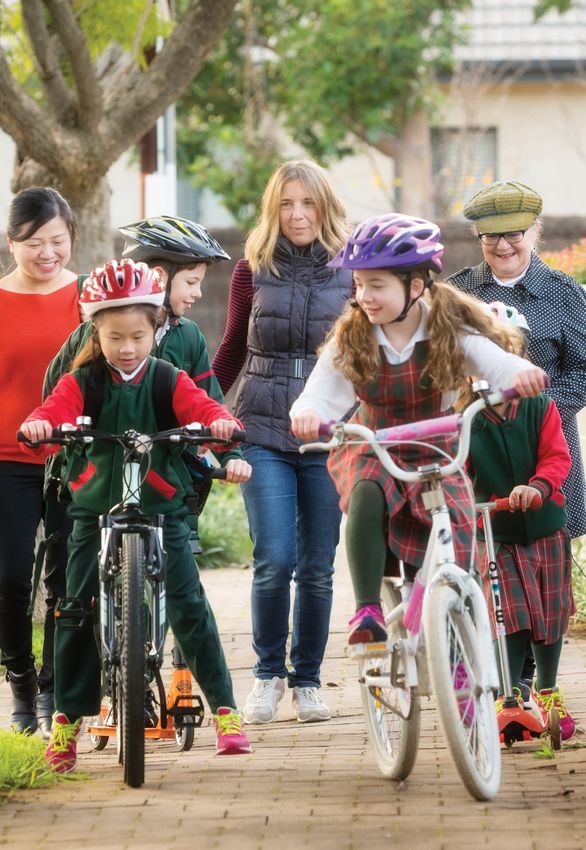
1. Risk factor reduction through
regional community program
Recommended action: SA Health to fund a regional
community heart health project
Heart disease is the leading cause of death in South
Australia yet there is no community-based awareness
and/or screening program for risk factors.
In 2019 the Heart Foundation SA piloted the
Community Hearts Program where we travelled
through regional South Australian communities
conducting blood pressure and cholesterol tests and
raising awareness of the importance of visiting a GP
for a full Heart Health Check (Absolute Cardiovascular
Risk Assessment).
Preliminary results indicate that engaging individuals
in community settings can motivate them to
attend primary health care services for Absolute
Cardiovascular Risk Assessments.
The Heart Foundation seeks funding to continue
to support the heart health of South Australians by
expanding the pilot project.
Funding will allow us to continue to:
Raise awareness of heart disease, risk factors
and the importance of Heart Health Checks ie,
comprehensive Absolute Cardiovascular Risk
Assessments;
Support the local community to help improve heart
health opportunities;
Monitor the population over time and provide
potential research opportunities and
Potentially reduce the number of future heart
attacks and stroke by thousands.
Estimated Costs: $380,000 for connection with
approximately 16,000 people along with significant
community educational presentations within each
community.
NATI O NAL HE ART FO U N DATI O N O F AU STR ALIA
4 INVESTING IN SOUTH AUSTRALIA’S HEART HEALTH • HEART FOUNDATION SUBMISSION TO THE SA BUDGET 2020-2021
2. Get South Australians Walking
2.1 Recommended action: DPTI and Wellbeing SA
    to develop a Walking Strategy and Action Plan

Why walking?
A staggering 83% of adults,2 and 80% of children do not
meet recommended physical activity levels.2
Physical inactivity accounted for 2.6% of the total burden
of disease and injuries in Australia in 2011,21 and leads to
overweight and obesity, other chronic conditions and
poor mental wellbeing.
Walking is the most equitable means of improving
population health by increasing physical activity.
Our vision is one where people of all ages, both men and
women, feel safe and comfortable to walk, and choose
to walk to their destinations, for recreation and, for their
health.
Walkability is the future.
WALKABILITY = LIVEABILITY = SUSTAINABILITY
Action MUST be taken by the government to help South
Australians include some physical activity, such as
walking, into their day.
We recommend a coordinated whole-of- government
approach to get South Australians back on their feet.

How?
Develop and implement a fully funded South Australian
Walking Strategy and action plan that highlights walking
as a critical mode of transport that is also good for your
health, the environment and the economy.
Estimated costs: $2.5m to develop and implement over
3 years.

2.2 Recommended action: DPTI to conduct a regular
    household travel survey

“What gets measured gets done”
                                                                                                                                    NATI O NAL HE ART FO U N DATI O N O F AU STR ALIA

The last household travel survey in SA was conducted
in 1999.9
Up-to-date data will help us to understand how, when
and why South Australians are walking. This information
will inform the walking strategy along with transport
modelling and planning for cycling.
Walking data should be collected as part of a Household
Travel Survey to inform decisions and to set targets, with
the aim of getting more people walking more often.

                             INVESTING IN SOUTH AUSTRALIA’S HEART HEALTH • HEART FOUNDATION SUBMISSION TO THE SA BUDGET 2020-2021                                             5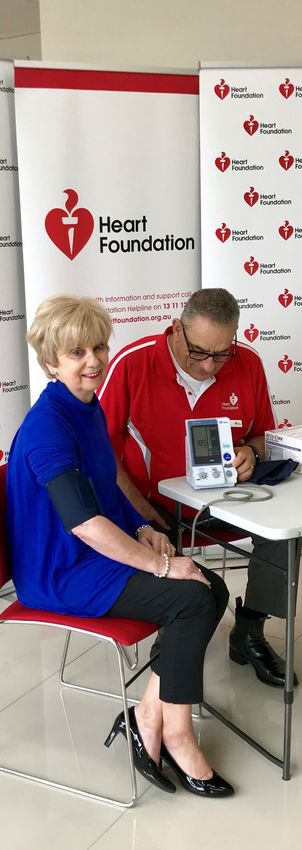
PROMOTE INTAKE OF
HEALTHY FOODS 3. Address childhood overweight
1 and obesity
WEIGHT PROMOTE
MANAGEMENT PHYSICAL ACTIVITY Sadly 26.4% of our children are overweight or obese, with
disadvantaged children consistently higher at 33.7%.6
6 2
Childhood obesity sets children up for lifelong poor health
and wellbeing. The problem is urgent.
We urge the state government to invest in the following
ENDING three strategies to address children’s heart health:
CHILDHOOD
OBESITY 3.1 Boost children’s active school travel
5 3
Active travel, such as walking, scooting and cycling to
school, is one of the easiest ways to incorporate physical
activity into everyday life.
4
We know:
HEALTH, NUTRITION PRECONCEPTION AND While 52% of school children live within 2 km of their
AND PHYSICAL ACTIVITY PREGNANCY CARE
FOR SCHOOL-AGE school 3 only 20% actively travel to/from school; 4
CHILDREN
71% of children would prefer to actively travel to/from
EARLY CHILDHOOD DIET
AND PHYSICAL ACTIVITY
school; 4
Over 70% and 90% of children and young
people respectively do not meet physical activity
recommendations.5
Rates of active travel to school have declined
substantially in Australia since the 1970s, with walking and
cycling trips replaced mainly by car trips.7
More needs to be done to address known barriers and
to increase the numbers of children walking, cycling or
scooting to school.
How?
In line with the consensus statement released from the
Australian Health Policy Collaboration8, we recommend to:
1. Expand the Way2Go Program in South Australia
to create safe, active catchment areas around all
schools, that prioritise pedestrians and cyclists, and
provide bike education for all children;
2. Collect robust active travel to school data from
NATI O NAL HE ART FO U N DATI O N O F AU STR ALIA
all schools that is comparable across states, as
recommended in the report card on Physical Activity
for Children and Young People.22
Estimated costs: $4M over 4 years for an expanded
bike education program
6 INVESTING IN SOUTH AUSTRALIA’S HEART HEALTH • HEART FOUNDATION SUBMISSION TO THE SA BUDGET 2020-2021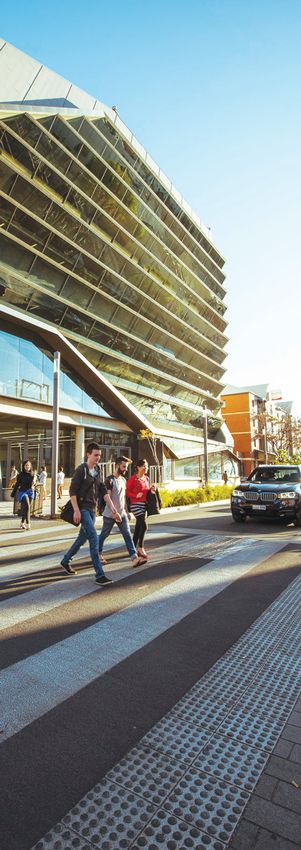
3.2 Revitalise and strengthen SA school food policy
    implementation

Why?
Only 4.9% of South Australian children meet
the government’s fruit and vegetable daily
recommendations.10
Setting up healthy eating behaviours as a child is
essential as it determines future eating behaviours and
relationships with food for life.11
Schools and their canteens have the potential to model
behaviours and encourage healthy eating12 through the
Government’s Right Bite Easy Guide to Healthy Food and
Drink Supply.
Schools are required to comply with this Guide but there
is evidence that adherence is poor in many schools.13-14-15

How?
Revitalise the well-regarded Right Bite Easy Guide to
Healthy Food and Drink Supply through commitment
to the policy and improved monitoring and support for
canteen adherence.
Estimated costs: $2M in the first year

3.3 Ban unhealthy food and beverage advertising on
    government owned spaces

The Heart Foundation strongly supports the South
Australian Government in regulating food and beverage
advertising particularly directed to children, who are
vulnerable to commercial exploitation. Regulations need
to provide them with a high level of protection.
The Heart Foundation is calling for a ban on advertising
of unhealthy food and beverages specifically directed
to children under 16 years of age in public spaces that
are state government owned and managed, such as
transport stops, and other outdoor advertising space.
This strategy will be a positive first step to help minimise
children’s exposure to unhealthy food advertising.
                                                                                                                                          NATI O NAL HE ART FO U N DATI O N O F AU STR ALIA

      A CHANGE OF HEART NEEDS LEADERSHIP
          Regulation to change consumption,
      just like we achieved with tobacco smoking

                                                         ?

Source: Baker IDI, 2016. Change of Heart

                                   INVESTING IN SOUTH AUSTRALIA’S HEART HEALTH • HEART FOUNDATION SUBMISSION TO THE SA BUDGET 2020-2021                                             7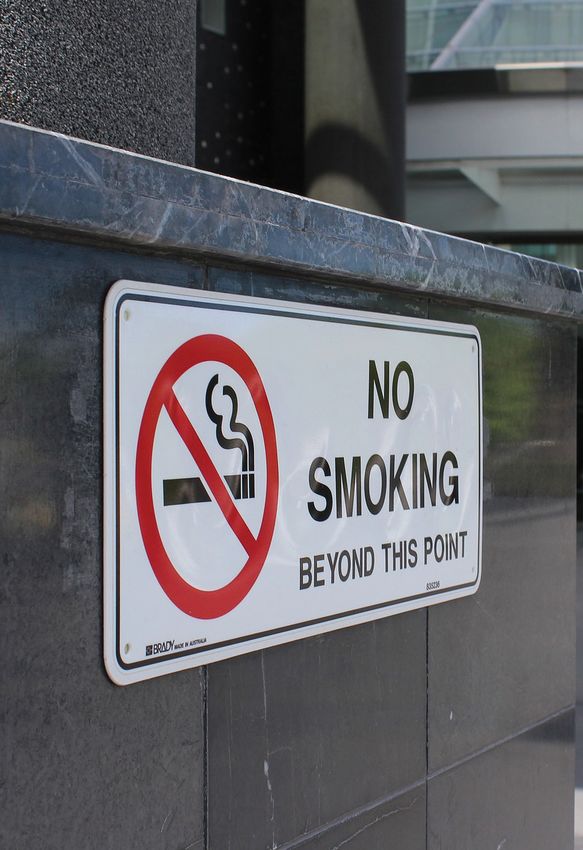
4. Continue the fight against
people smoking and vaping
Recommended action: SA Health to keep tobacco and
e-cigarette control a priority
The Heart Foundation strongly supports greater
investment in tobacco control and strict regulation of
e-cigarettes.
The battle against tobacco use is far from over.
The tobacco and e-cigarette industry continue to target
children and young people.
E-cigarettes have the potential to threaten the health of
our community by keeping smokers addicted to nicotine
and addicting a new generation of smokers.
Smokers have around triple the risk of dying from
cardiovascular disease compared to people who have
never smoked.17
We must continue the fight through:
the provision of cessation support for individuals
through the provision of the Quitline,
continued funding and boosting of mass media ‘Quit’
smoking campaigns,
extending smoke free/vape free areas
Strengthening our state Tobacco Control Act with
comprehensive bans on all forms of promotion.
NATI O NAL HE ART FO U N DATI O N O F AU STR ALIA
8 INVESTING IN SOUTH AUSTRALIA’S HEART HEALTH • HEART FOUNDATION SUBMISSION TO THE SA BUDGET 2020-2021
5. Support heart attack survivors
Recommended action: Invest in cardiac rehabilitation
for patients in the Greater Adelaide area

South Australian hospitals manage around 39,000 heart
disease related admissions per year*
Cardiac rehabilitation is a coordinated program delivered                  “As with all cardiologists, I want my patients to have
over several weeks, educating the patient around lifestyle                 the best possible life after their cardiac event. I refer
modification18 and includes physical activity, nutrition,                  my eligible patients to cardiac rehabilitation because
stress management, medication management and                               it leads to better health. I strongly support increasing
advice.                                                                    the options available for my patients to enable them
                                                                           to complete cardiac rehab.”
It is a vital step in a patient’s recovery after a heart attack
and international studies report that within one year                      Cardiologist, Associate Professor Matthew Worthley19
cardiac rehabilitation can reduce hospital readmissions
by up to 56% and deaths by 30%.20 It also results in
improvements in exercise capacity, quality of life and
psychological well-being, and is now recommended in
international guidelines.
However, only 30% of eligible patients take-up a cardiac
rehabilitation programs, the exception being the very
successful CATCH program run in Country SA which
has 70% uptake, and continues to have a very high
completion rate (up to 97%), improving patient risk factors
and mortality rates.16
For the first time our regional areas are receiving a level
of best practice care better than their metropolitan
counterparts.
The Heart Foundation recommends extending the CATCH
                                                                           Source: saheart.com.au
program throughout Greater Adelaide.

* Private and public hospitals combined

                                                                                                                                         NATI O NAL HE ART FO U N DATI O N O F AU STR ALIA

                                  INVESTING IN SOUTH AUSTRALIA’S HEART HEALTH • HEART FOUNDATION SUBMISSION TO THE SA BUDGET 2020-2021                                             9
References

                                                     1 Australian Bureau of Statistics 2018. Causes of Death 2017, cat NO. (3303.0), September.
                                                     2 Australian Bureau of Statistics 2018. National Health Survey: First results 2017-18.
                                                     3 DPTI. Way2Go Program GIS Residential data from 26,910 primary school students (2015-2018)
                                                     4 DPTI. Way2Go school survey data from 11,944 year 3-7 students (2015-2018)
                                                     5 Cancer Council Victoria. National Secondary Students Diet and Activity Survey 2012-13 – unpublished data
                                                     6 SA Health. Chief Public health officers Report July 2016-June2018.
                                                     7 Booth V, 2013. Trends in physical activity among South Australian school children from 1985-2013.
                                                     8 Australian Health Policy Collaboration. 2018. Active Travel: Pathways to a healthy future.
                                                     9 Transport South Australia for the Department of Planning, Urban Planning and the Arts: Metropolitan Adelaide
                                                       Household Travel Survey (AHTS) 1999.
                                                     10 Australian Bureau of Statistics, Australian Health Survey 2014/15
                                                     11 Friedl, et al. 2014. Report of an EU-US symposium on understanding nutrition-related consumer.
                                                     12 Waters, et al. 2011. Interventions for preventing obesity in children. Cochrane Database of Systematic Reviews.
                                                     13 Heart Foundation SA 2013. Analysis of sugary drinks, sold in private and public high school within metropolitan
                                                        Adelaide and rural SA, according to RB categories. Unpublished report.
                                                     14 Woods, et al. 2014. Australian school canteens: Menu guideline adherence or avoidance? Health Promotion Journal
                                                        of Australia. 25(2):110-5.
                                                     15 Yoong, et al. 2015. Assessment of the School Nutrition Environment: A Study in Australian Primary School Canteens.
                                                        American Journal of Preventive Medicine. 49(2):215-22.
                                                     16 Government of SA. COUNTRY HEALTH SA LOCAL HEALTH NETWORK 2018-19 Annual Report.
                                                     17 Banks E et al. Tobacco smoking and risk of 36 cardiovascular disease subtypes: fatal and non-fatal outcomes in a
                                                        large prospective Australian study, 2019.
                                                     18 De Gruyter, et al. 2016. Economic and social impact of increasing uptake of cardiac rehabilitation services. Heart,
                                                        Lung and Circulation.
                                                     19 Private correspondence 2019
                                                     20 National Health Service of the United Kingdom. NHS Improvement; Heart. Making the case for cardiac rehabilitation:
                                                        modelling potential impact on readmissions. London: National Health Service 2013.
                                                     21 AIHW. 2017. Impact of physical inactivity as a risk factor for chronic conditions: Australian Burden of Disease Study
                                                     22 Active Healthy Kids Australia 2018. The 2018 Active Healthy Kids Australia Report Card.
 NATI O NAL HE ART FO U N DATI O N O F AU STR ALIA

10                                                   INVESTING IN SOUTH AUSTRALIA’S HEART HEALTH • HEART FOUNDATION SUBMISSION TO THE SA BUDGET 2020-2021
NATI O NAL HE ART FO U N DATI O N O F AU STR ALIA INVESTING IN SOUTH AUSTRALIA’S HEART HEALTH • HEART FOUNDATION SUBMISSION TO THE SA BUDGET 2020-2021 11
For heart health information
and support, call our
Helpline on 13 11 12 or visit
heartfoundation.org.au

For further information contact:
Ms Tuesday Udell
Senior Policy Advisor
Heart Foundation
155 Hutt Street Adelaide SA
T: 08 8224 2863
E: tuesday.udell@heartfoundation.org.au

© 2019 National Heart Foundation of Australia, ABN 98 008 419 761 (Heart Foundation)

Terms of use: This material has been developed for information and educational purposes only. It does not constitute
medical advice.
Please consult your health care provider if you have, or suspect you have, a health problem. The information contained
in this material has been independently researched and developed by the Heart Foundation and is based on the
available scientific evidence at the time of writing. It is not an endorsement of any organisation, product or service.
The Heart Foundation and its employees do not accept any liability, including for any loss or damage, resulting from the
reliance on the content, or in regards to its accuracy, currency and completeness. Any use of Heart Foundation material
by another person or organisation is done at the user’s own risk.
This work, except as identified below, is licensed by the Heart Foundation under a Creative Commons Attribution –
Non commercial – No Derivative Works (CC BY-NC-ND) 4.0 Australia licence. To view a copy of this licence, visit: http://
creativecommons.org.au/. You are free to copy and communicate this publication (however in no way commercialise
the material), in accordance with the rules of attribution set out at https://creativecommons.org.au/learn/howto/.
Third party material that is not licenced under a Creative Commons licence may be referenced within this document.
All content not licensed under a Creative Commons licence is all rights reserved. Please contact the relevant third-party
copyright owner if you wish to use this material.

The Heart Foundation acknowledges the Traditional Owners and custodians of Country throughout Australia and their continuing
connection to land, waters and community. We pay our respect to them and their cultures, and Elders past, present and future.

HH-SCPE-002.1.1219
You can also read


