Joint Legislative Budget Hearing on Higher Education - Dr. Betty A. Rosa, Interim Commissioner of Education and President of the University of the ...
←
→
Page content transcription
If your browser does not render page correctly, please read the page content below

Joint Legislative Budget Hearing on Higher Education

   Dr. Betty A. Rosa, Interim Commissioner of Education and President
   of the University of the State of New York

                                                                   February 4, 2021
Why College Access & Completion Matters –
Earnings and Unemployment

                                            2
Access and Opportunity Programs
The Regents encourage the Legislature to maintain 2020-21 enacted funding
levels for the following opportunity programs:
Liberty Partnerships Program ($18.4M)
Higher Education Opportunity Program (HEOP)($35.5M)
Science and Technology Entry Program (STEP)($15.8M)
Collegiate Science and Technology Entry Program (CSTEP)($12M)
The state’s higher education opportunity programs are available for students
attending public and private colleges throughout the state.
These programs currently serve over 40,000 underrepresented and
disadvantaged students.
These programs are effective at increasing graduation rates.
3
Increase Access to Higher Education –
Arthur O. Eve Higher Education Opportunity Program (HEOP)
HEOP provides financial assistance,
pre-freshman summer programs,
remedial coursework, tutoring and
counseling to students attending
independent colleges.
Students in this program do not meet
traditional academic criteria when
admitted to college, however, they
typically earn degrees at rates that
equal or exceed general admission
students.
HEOP serves over 4,800 students
through 50 programs.
4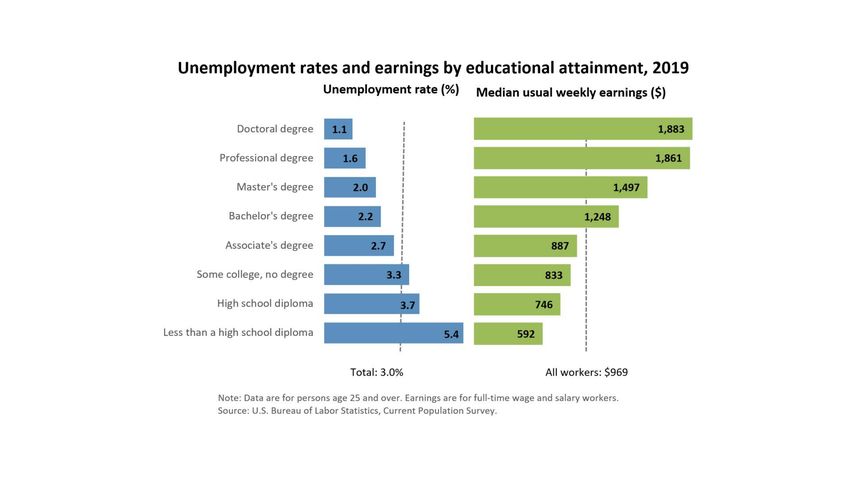
Increase Access to Higher Education –
Science and Technology Entry Program (STEP)
STEP provides academic enrichment
in science and mathematics with the
purpose of increasing the number of
historically underrepresented and
economically disadvantaged high
school students prepared to enter
college and improve their
participation rates in mathematics,
science, technology, health-related
fields, and the licensed professions.
STEP serves over 12,500 students
through 60 programs.
5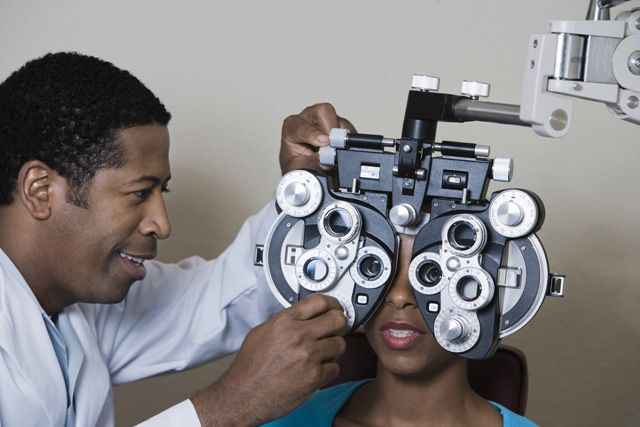
Increase Access to Higher Education –
Collegiate Science and Technology Entry Program (CSTEP)
CSTEP provides academic enrichment and
research experience in STEM content areas to
increase the number of historically
underrepresented and economically
disadvantaged undergraduate and graduate
students who complete programs of study that
lead to professional licensure and careers in
mathematics, science, technology, and health-
related careers.
CSTEP currently serves over 8,000 students
through 55 programs.
6
Increase Access to Higher Education –
Liberty Partnerships Program (LPP)
LPPs are partnerships between institutions of higher education, schools and
community-based organizations that offer comprehensive pre-collegiate/dropout
prevention programs to middle and high school students.
LPPs provide tutoring, counseling, college and career exploration, crisis intervention
and other supportive services to over 15,000 students in 46 programs across New
York State.
LPP has demonstrated value in positively impacting youth at risk of dropping out of
school.
7
Increase Access to Higher Education –
Enhancing Supports & Services for Individuals with Disabilities
SED requests $7 million in new state funds to provide much-needed enhanced
supports and services to over 77,000 identified individuals with disabilities in New
York State degree granting colleges and universities.
Funding would be authorized, for one or more of the following purposes to:
supplement funding for supports and accommodations of individuals with
disabilities;
support summer college preparation programs to assist individuals with
disabilities transitioning to college, and prepare them to navigate campus
facilities and systems;
provide full and part-time faculty and staff with disability training; and
improve the identification process of individuals with disabilities and enhance
data collection capabilities.
8
Increase Access to Higher Education –
Funding the Expansion of the Readers Aid Program
SED requests an additional $706,000 to increase Readers Aid Program funding,
from the current $294,000 annual level to $1 million, to enable the program to
provide grants ranging from $1,000 to $4,000 to serve approximately 400 students
per year.
The Readers Aid Program provides funding to colleges and universities to use
on behalf of students who are blind, deaf, deaf-blind, or hard of hearing.
Funding is used to help meet the costs of note-takers, readers, and
interpreter services.
In the 2020-21 academic year, over 263 students from 26 colleges and
universities received Readers Aid funding. However, the current annual
appropriation for this program is insufficient to meet the needs of the
increased number of eligible students and cannot support the increase in
annul reimbursement levels.
9
Bridge to College and Careers Pilot Program
2021-22 $3M Budget Request
Enable Out-of-School Youth and Adults to Prepare for Postsecondary Study and Careers
SED requests $3 million in new state funds
to establish a pilot program to enable out-
of-school youth and adults to obtain critical
basic skills and high school equivalency
diplomas as well as industry-recognized
credentials for employment or a college
degree.
These programs would include:
Career exploration and career assessment;
Relationships with employers and colleges;
Apprenticeships and internships; and
Job placement, retention and advancement.
10Licensed Professionals Serve and Protect the Public
Access to Competent Professional Services
Licensing is inextricably linked to education.
There are nearly 1 million
The professions are at the core of the state’s economy. licensed professionals
Licensees must be qualified and competent to provide health, design, registered to practice in
New York.
or business services – professional practice affects all New Yorkers.
Public Protection Through Professional Oversight and Discipline
The annual responsibilities of the Office of the Professions include:
Hundreds of thousands of practice interpretations and clarifications.
Investigation and prosecutions across the state.
Implementation of Enforcement Actions.
2020 Disciplinary Actions:
o 432 Regents Actions
o 22 Cease and Desist Orders Illegal Practice Cases Opened: 120
o $388,000 in Regents Fines 2020 Compliance Agreements: 201
o 432 Suspensions/Revocations 2020 Cease and Desist Letters: 22
o 136 Corrective Action Required Letters Pending Criminal Cases: 85
o 21 Administrative Warnings
o 6 Moral Character Final Actions
o 239 Violations Committee Resolutions
11
o 7 Restoration Applications Considered2020 Office of the Professions Data
Operational Responsibility 2020
New licenses issued 58,127
Registrations processed 311,543
Pharmacies, manufacturers, re-packers, wholesalers and
8,896
outsourcing facilities registered
Pharmacy inspections conducted 689
Disciplinary investigations completed 4,226
Professional education programs completed 424
Individual reviews of education from non-registered programs 18,180
New filings for professional corporations 5,397
Candidates taking OP-developed licensing exams 1,848
Email/telephone inquiries answered Over 1,000,000
12Growing Numbers of Licensed & Registered Professionals
1,000,000
500,000
0 600,558 783,310 948,723
1997 2000 2003 2006 2009 2012 2015 2018 2020
13OP Modernization Project:
Enhanced Services for Licensed Professionals
As demand for licensing has grown, improvements have been
made to the licensure process.
In 2020, the Office of the Professions’ website traffic nearly
doubled receiving more than 18 million individual visits,
leading to more than 41 million page views. We continue to
update all Department web pages to increase accessibility
and readability for customers.
Our most popular feature is the online verification of licenses,
which received more than 25 million visits in 2020.
The hashtag #ProfessionProfile and #PathsToTheProfessions
are used in social media by the Department to inform the
public and licensees about professions and public protection.
Online registration renewal rates are nearing 95 percent.
14OP Modernization:
Enhanced Services for Licensed Professionals
OP’s Modernization plan is underway to replace our antiquated computer
system with a robust custom-built electronic licensing system, which will
include enhancements to the customer experience and improvements to
back-office processes, over the next 3 years.
Initial online applications are now available in all 50+ professions, enabling
applicants to submit documents and pay electronically.
An enhanced “self-service” FAQ database and an updated, fully accessible
website is under development which will enable customers to find
information quickly and easily.
A new customer ticketing system is being implemented which will streamline
the routing of inquiries.
2021-2022 Budget Request – Authorizes the Department, within Capital
Appropriations, at no cost to the state, to use the $7.8 million of existing
revenue in 2021-22 to continue building the new electronic licensing and
document management system along with enhancing customer service
tools.
15Enhanced Discipline Authority of the Licensed
Professions- Regents Legislative Priority
SED supports legislation that would enhance SED’s disciplinary authority over all
licensed professions it oversees by:
Authorizing the Commissioner or his/her designee, after an investigation and
a recommendation by a professional conduct officer, to order a temporary
suspension of practice privileges of a licensee or registered entity when there
is an imminent danger to the health and/or safety of the public;
Requiring all licensed professionals to report to SED moral character issues
upon application for licensure; and
Requiring, at minimum, that all licensed professionals report to SED any
record of a conviction of a crime in a timely manner.
2019-20 Legislation:
A.1184-A (Glick)/ S.6240-A (Stavisky)- Relates to mandatory reporting of certain
convictions, professional misconduct and/or adverse employment actions.
16Implementation of Critical New Laws
The Professions
New laws impacting the Professions were enacted in 2020, including:
Chapter 110 (Paulin/Hoylman): Authorizes pharmacists to administer an approved COVID-19
vaccine.
Chapter 124 (L. Rosenthal/Metzger): Allows for audio-only or video-only communication under
the definition of telehealth services and allows such services to be eligible for reimbursement.
Chapter 180 (McDonald/Stavisky): Provides chapter amendments to Chapter 517 of the Laws of
2019 authorizing ophthalmologists and optometrists to supervise trained personnel to instill
dilating eye drops and associated anesthetic eye drops to the surface of patients' eyes.
Chapter 182 (Glick/Stavisky): Authorizes the Department to renew limited and provisional
permits for certain licensed professionals for an additional 12 months for good cause shown due
to the state disaster emergency by the Governor.
Chapter 260 (Englebright/Stavisky): Relates to continuing education for professional engineers,
land surveyors and professional geologists.
Chapter 328 (Gottfried/Rivera): Relates to requiring parity in the standards of dental telehealth
services.
17Thank You.
Follow the Department on Twitter:
@NYSEDNewsYou can also read


