PANDEMIC PLAN Colton School District 2020
←
→
Page content transcription
If your browser does not render page correctly, please read the page content below
PANDEMIC PLAN
                        Colton School District
                                            2020

Developed by Dr. Jan Olson in collaboration with Dr. Koreen Barreras-Brown

COLTON SCHOOL DISTRICT                                                       1|Page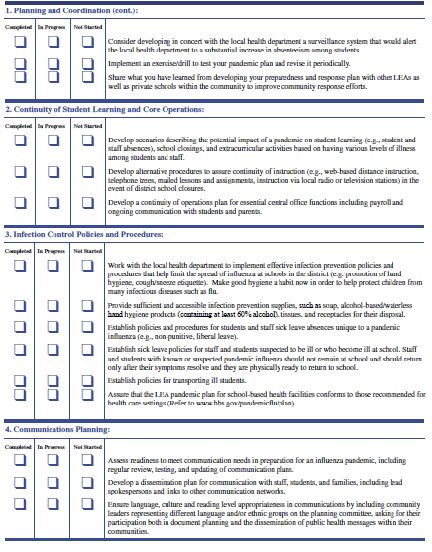
Introduction
Seasonal Respiratory Illness and Seasonal Influenza
Seasonal Respiratory Illness
There are several viruses that routinely circulate in the community to cause upper viral respiratory
illnesses. These viruses include rhinoviruses, coronaviruses, adenoviruses, enteroviruses, respiratory
syncytial virus, human metapneumovirus, and parainfluenza. The “common cold” is caused by
rhinoviruses, adenoviruses, and coronaviruses. The symptoms of these seasonal illnesses may vary in
severity but include cough, low-grade fever, sore throat (SDDH, 2019; Weatherspoon, 2019).

Seasonal Influenza
Influenza (flu) is a contagious respiratory illness caused by influenza viruses. There are two main
types of influenza (flu) virus: Types A and B. The influenza A and B viruses that routinely spread
in people (human influenza viruses) are responsible for seasonal flu epidemics each year .
Influenza can cause mild to severe illness. Serious outcomes of flu infection can result in
hospitalization or death. Some people, such as older people, very young children, and people
with underlying health conditions or weak immune systems, are at high risk of severe flu
complications. Routine symptoms associated with flu include fever, cough, sore throat, runny
nose, muscle aches, headaches, fatigue, and sometimes vomiting (CDC, 2020).
Novel, Variant and Pandemic Viruses
Novel viruses refer to those not previously identified. A novel virus may a new strain or a strain that has
not previously infected human hosts. When a virus that has historically infected animals begins to infect
humans, this is referred to as a variant virus. Pandemic refers to the global circulation of a novel or
variant strain of respiratory viruses. The most common viruses associated with novel and pandemic
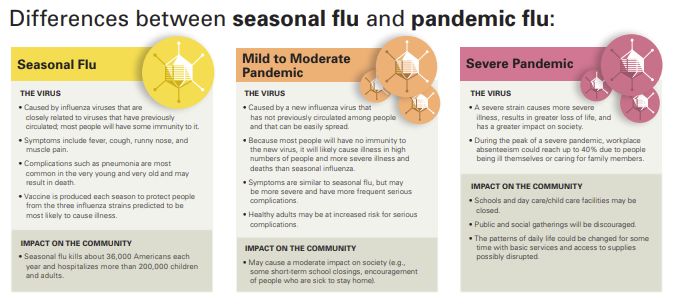
outbreaks are influenza A and human coronavirus. A flu pandemic occurs when a new virus that is
different from seasonal viruses emerges and spreads quickly between people, causing illness worldwide.
Most people will lack immunity to these viruses. Pandemic flu can be more severe, causing more deaths
than seasonal flu. Because it is a new virus, a vaccine may not be available right away. A pandemic could
therefore overwhelm normal operations in educational settings (CDC, 2016).

(Image: CDC)

COLTON SCHOOL DISTRICT                                                                         2|Page
Purpose
The purpose of this document is to provide a guidance process to non-pharmaceutical interventions
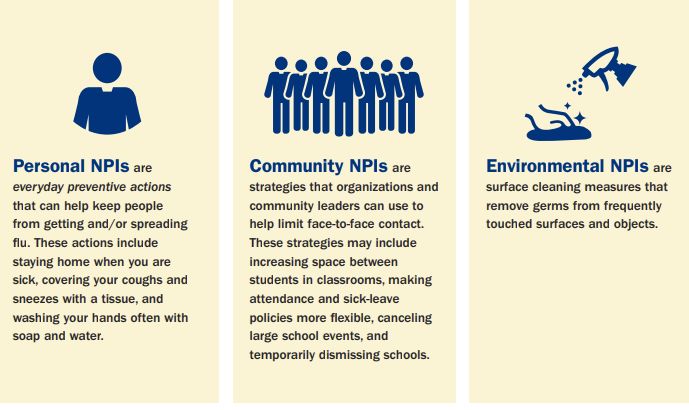
(NPIs) and their use during a novel viral respiratory pandemic. NPIs are actions, apart from getting
vaccinated and taking antiviral medications, if applicable, that people and communities can take to help
slow the spread of respiratory illnesses such as pandemic flu or novel coronaviruses. NPI’s, specifically
in regards to pandemic planning are control measures that are incrementally implemented based on the
level of threat to a community. This document should be used as a contingency plan that is modified
with a response planning team based on the current level of pandemic threat.

Control Measures
While prophylactic vaccine and anti-viral medication are appropriate interventions in some viral
respiratory conditions, specifically seasonal influenza. These are not always accessible for novel strains.
Non-pharmaceutical interventions (NPI’s) are essential actions that can aid in the reduction of disease
transmission. It is important to note that disease that is widely spread in the community has many
options for transmission beyond the school setting, and the school district can only account for NPI’s in
the school setting and at school-sponsored events (CDC, 2017).

(Image: CDC)

Everyday Measures
Control measures to limit the spread of communicable diseases should be an active part of the school
comprehensive and preventative health services plan. Routine control measures include:

COLTON SCHOOL DISTRICT                                                                          3|Page
Hand hygiene (washing your hands for 20 seconds with soap and water with appropriate
friction).
Respiratory etiquette (cover your coughs and sneezes and throw the tissue in the garbage each
use)
Routine sanitizing of shared areas and flat surfaces
Stay home when you are sick and until 24 hours fever free, without the use of fever-reducing
medication.
Control Measures for Novel or Variant Viruses
Control measures associated with novel or variant viruses are based on the severity of the specific virus.
Some novel viruses are so mild they may go undetected, while others may present with more
transmissibility or severity. Since new viruses have no historical context, public health guidance evolves
as increased numbers of cases are identified, and patterns and risks are identified, and thus the
guidance is unique to each specific event respectively.
That being said, historical pandemic responses have provided a baseline set of evidence-based guide to
create a framework for response plan for such events in the school setting.
Control measures are incremental based on the current situation. The current situation will be defined
by the public health entities based on the severity, the incidence and the proximity to the school setting
lending to level based responses
When cases of novel viruses are identified globally
When novel disease is identified, it is the due diligence of school health services personnel and school
administration to pay close attention to trends. When a novel strain is identified routine control and
exclusion measures should continue. Other situations that may arise including foreign travel by
students or staff, which may results in extended absenteeism. In cases where student or staff travel is
restricted secondary to pandemic events, it is the staff and parent’s responsibility to communicate this
restriction to the school district. Routine infection control and communication should continue.
ROUTINE PRACTICES
Personal NPI’s Community NPI’s Environmental NPI’s Communication
Routine hand Routine illness Routine sanitizing. Routine seasonal
hygiene. exclusion illness prevention
Respiratory (Appendix A). and exclusion
Etiquette communication.
Stay home when ill.
When cases of novel viruses are identified regionally or nationally
When novel disease is identified in the U.S. It is important to identify the geographical location and the
specific public health messaging and direction. The Centers for Disease Control and Prevention (CDC)
will have current guidance. When novel viruses emerge in the state the Oregon Health Authority (OHA)
will provide direct guidance. OHA will have an alert for pandemic specific content that can be subscribed
COLTON SCHOOL DISTRICT 4|Page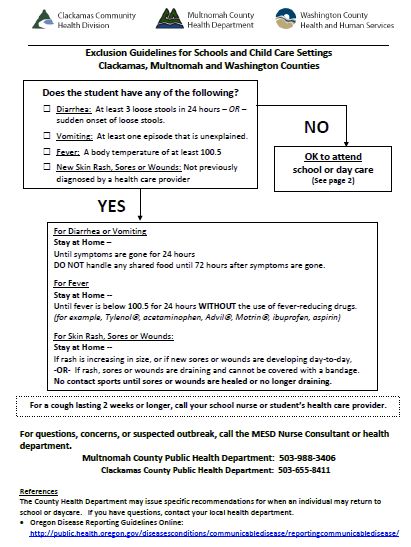
to for updates. An individual within the district should be subscribed to this alert to keep the team
updated. If the region impacted is in Clackamas County the Local Health Department (LHD) will provide
school-centered communication and will potentially host conference calls. When cases are identified in
the local region a response team should be assembled within the district and responsibilities assigned
within the school district.
Response team should consist of individuals who can fulfill roles with expertise in district policy and
administration, clinical information, human resources, building-level management, risk management
and facilities at minimum to meet the general structure of Incident Command.
(Image: prepare.gov)
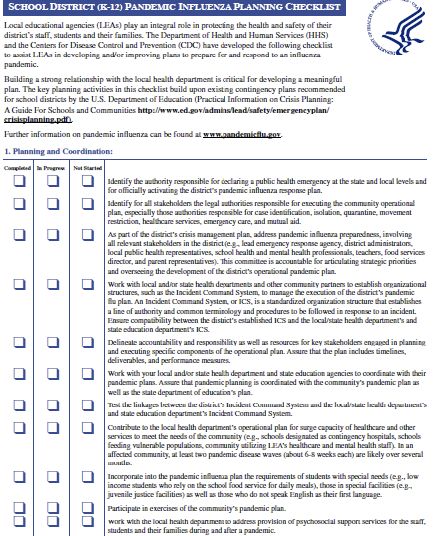
When public health has deemed a novel virus a pandemic threat, defer to the CDC checklist for schools
(Appendix B) in order to establish a specific emergency response framework with key stakeholders.
During this time planning will need to be initiated on continuity of education in the event of school
closure. The response team should hold regular meetings.
LEVEL ONE ACTIONS: VIRUS DETECTED IN THE REGION-PREVENTION FOCUSED
Personal NPI’s Community NPI’s Environmental NPI’s Communication
Increase routine Identify baseline Increase sanitizing of Provide
hand hygiene. absentee rates to flat surfaces and communications to
Use alcohol based determine if rates shared surfaces families based on the
hand sanitizer have increased by Devise prevention and current situation,
when hand washing 20% or more. post-exposure general information,
is not an option. Increase sanitizing strategies and public health
Cover communication and based on current guidance.
coughs/sneezes, education on recommendations. Provide
throw away tissues respiratory etiquette Isolate students who communication to
become ill at school
COLTON SCHOOL DISTRICT 5|Page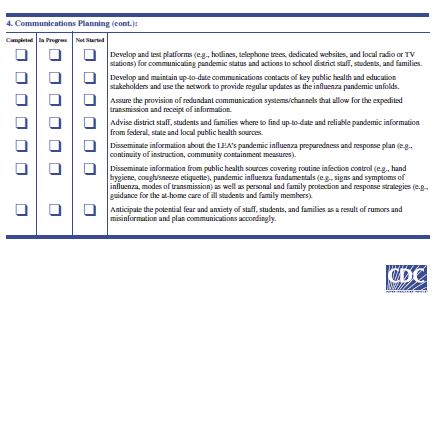
at each use, wash and hand hygiene in with febrile staff of the current
your hands. the classroom. respiratory illness situation.
Stay home when ill Teachers can provide until parents can pick Provide
for at least 24 age-appropriate up. communication to
hours after fever education. Discourage the use of immunocompromised
free without the Communicable shared utensils in the student families to
use of fever Disease surveillance - classroom. defer to personal
reducing monitoring and providers in regards
medication. reporting student to attendance.
illness (Appendix C).
Increase space
between students in
the classroom.
Instruct students in
small groups as
feasible.
When cases of novel viruses are identified in the community
When novel viruses are identified in the community, but not in a student or staff, the district will defer
to local public health guidance. This guidance will vary by event based on transmissibility, severity, and
incidence. It is important to note that the school district can only apply controls around the school
setting and school-sponsored events and activities. The school district cannot advise control measures
around private clubs, organizations, or faith communities. Each of these congregate settings are
responsible to follow local public health guidance as well.
When the local transmission is detected planning for dismissal and academic continuity should be
prioritized. As well, plans for prolonged staff absences should be prioritized.
LEVEL TWO ACTIONS: INTERVENTION FOCUSED [INCLUDES LEVEL 1 ACTIONS]
Personal NPI’s Community NPI’s Environmental NPI’s Communication
Public health- Public health Public health-specific Work with LHD to
specific guidance guidance guidance. establish timely
Modify, postpone, or communication
Be prepared to Increase space
allow your staff and cancel large school with staff and
between people at
students to stay events as coordinated families.
school to at least 3 with LHD.
home if someone in feet, as much as Provide
their house is sick. possible. communication to
Temporarily dismiss staff about the use
students attending of sick time and a
childcare facilities, K- reminder to stay
12 schools (Teachers home when sick.
report to work,
COLTON SCHOOL DISTRICT 6|Pagestudents do not report Advise parents to
to school). report actual
symptoms when
calling students in
sick as part of
communicable
disease
surveillance.
When cases of novel viruses are identified in the school setting
When novel viruses are identified in the school setting, and the incidence is low, the local health
department will provide a direct report to the district nurse on the diagnosed case. Likewise, the LHD
will impose restrictions on contacts. However, it is important to note that if the incidence is high in
disease trends, the LHD may not have the man power to impose individual restrictions and may create
public statements that the school district should reiterate.
LEVEL THREE ACTIONS: RESPONSE FOCUSED [INCLUDES LEVEL 1 & 2 ACTIONS]
Personal NPI’s Community NPI’s Environmental NPI’s Communication
Follow public health Follow exclusion Follow local public Coordinate
direction. guidance designated health direction on Communication
by the Local Public environmental cleaning, with the Local
Health Authority, which may include Public Health
which may include school closure and Authority.
student dismissal. canceling major events. Identify potentially
immediately
impacted student
populations such as
Seniors and
graduation track.
POST EVENT
Personal NPI’s Community NPI’s Environmental NPI’s Communication
Routine hand Routine illness Routine sanitizing when Routine seasonal
hygiene and exclusion when LPHA LPHA deems processes illness prevention
respiratory etiquette deems processes may may return to baseline. and exclusion
when LPHA deems return to baseline. communication.
processes may Participate in post-
return to baseline. event evaluation to
COLTON SCHOOL DISTRICT 7|Page Stay home when ill determine what
and until 24 hours worked in a
fever free without response plan and
the use of fever- what needs to be
reducing revised.
medications. Determine the
plans needed to
make up lost
academic time.
Special Considerations
Employee Sick Leave
Administration and human resources should work together to determine the need to temporarily revise
or flex sick leave to accommodate any public health guidance in regards to lost work, such as maximum
incubation period exclusion (10-14 days). Prolonged exclusion may occur with individuals who are
contacts to identified cases, who are immunocompromised or who are identified as potential cases.
School Closures
If school closure is advised by the local public health department, consultation should occur between
legal, union and district administration to ensure processes are consistent with legal preparedness
processes.
Immunocompromised Students
Students with immunocompromising health conditions and treatments may require exclusion from
school outside of public health guidance. These students should provide documentation from their
provider.
COLTON SCHOOL DISTRICT 8|PageReferences
Centers for Disease Control and Prevention. (2020). Influenza. Retrieved from
https://www.cdc.gov/flu/about/index.html
CDC (2016) Variant Influenza Viruses: Background and CDC Risk Assessment and Reporting.
Retrieved from https://www.cdc.gov/flu/swineflu/variant.htm
South Dakota Department of Health (2019) Seasonal Respiratory Viruses. Retrieved from
https://doh.sd.gov/diseases/infectious/diseasefacts/viral-respiratory.aspx
Weatherspoon, D. (2019) Acute Viral Respiratory Infections. Retrieved from
https://www.healthline.com/health/acute-respiratory-disease
Images: Prepare.gov
CDC.gov
COLTON SCHOOL DISTRICT 9|PageAppendix A
COLTON SCHOOL DISTRICT 10 |
PageAppendix B
COLTON SCHOOL DISTRICT 11 |
PageCOLTON SCHOOL DISTRICT 12 |
PageCOLTON SCHOOL DISTRICT 13 |
PageAppendix C
1. Determine baseline absence rates (daily average)
2. Identify with your administrator when absence rate has increased 20%
a. Report this increase to the RN
3. Use the Respiratory Surveillance spreadsheet to document students with respiratory
illness.
a. Request that parents report symptoms students are experiencing
rather than just calling their students in sick.
b. Identify symptoms students are experiencing when students are
going home sick.
4. Document these accordingly. Do not use student names use initials and numbers,
because this is a shared spreadsheet.
COLTON SCHOOL DISTRICT 14 |
PageYou can also read


