TALKING WITH PARENTS & STUDENTS ABOUT HEALTHIER FOODS AT SCHOOL - ALICIA WHITE, MS, RD BARBARA JIRKA, PHD, SNS
←
→
Page content transcription
If your browser does not render page correctly, please read the page content below
Talking with Parents &
Students about Healthier
    Foods at School

      Alicia White, MS, RD
     Barbara Jirka, PhD, SNS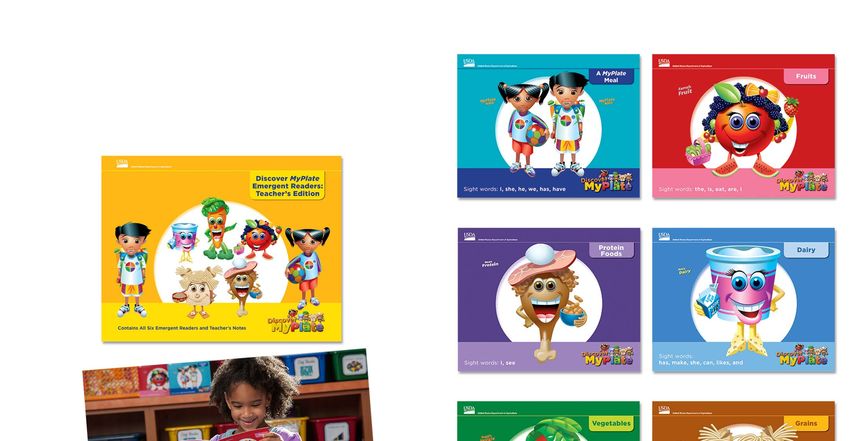
Session Objectives
Participants will be able to:
  1. Identify examples of popular school nutrition events.
  2. Access new resources for introducing kindergarten
     students and their parents to school lunch,
     breakfast, and healthy snacks.
  3. Use audience-tested nutrition messaging to
     encourage students to try healthful food offerings.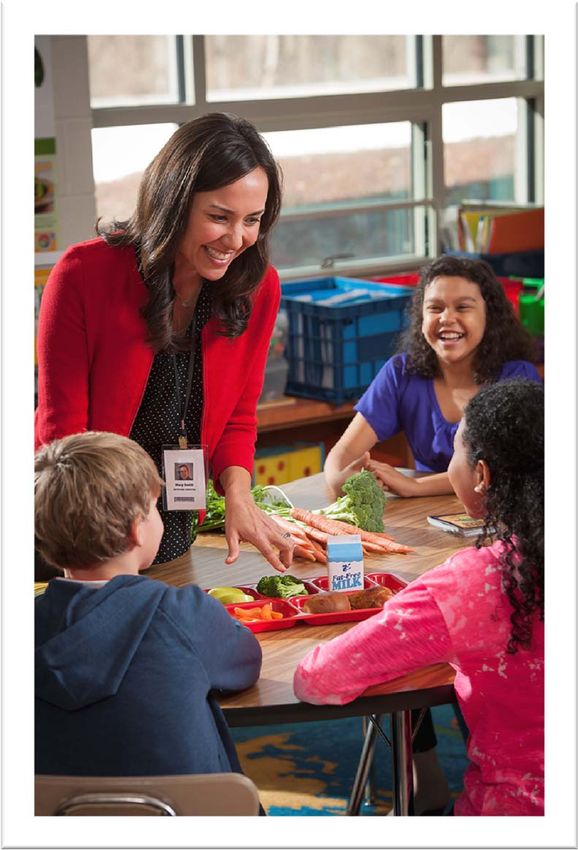
Team Nutrition
  Initiative of the
  USDA’s Food and
  Nutrition Service to
  support the Federal                                 Provides curricula,
  Child Nutrition                                     posters, parent
  Programs                                            handouts, and other
                                                      resources free of
                                                      charge to schools

                    Aims to improve children’s lifelong
                    eating and physical activity habits

http://teamnutrition.usda.gov                                @TeamNutrition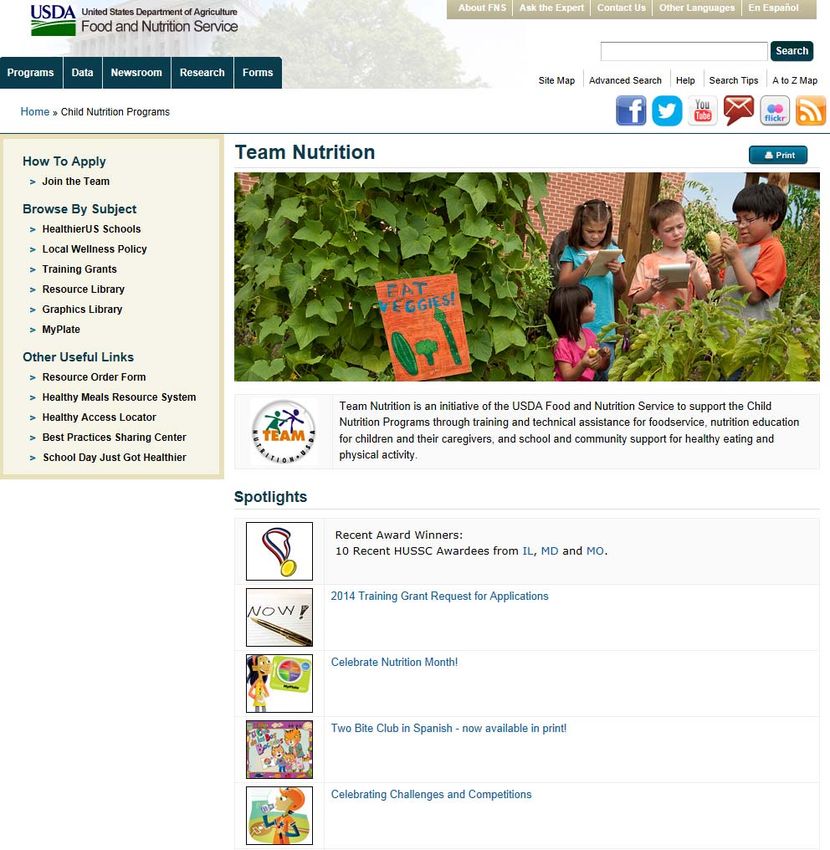
Food
          Etc.

          Nutrition &
           Health              School
          Messages                         Eating Habits
                             Environment
Etc.
               Food &                        Physical
              Beverage                       Activity
                                              Habits
              Marketing
                             Physical
                             Activity
       Etc.                Opportunities
Communication Channels
 • Classroom
 • Cafeteria
 • School
 • Home
 • Community
 • Media
Fun ways to
  promote nutrition
and physical activity
 at your elementary
  or middle school
• Ideas for 20 themed
  events, large and small
• Spotlights of real-life
  events at Team
  Nutrition schools
• Ways to team up for
  success
  http://teamnutrition.usda.gov
School nutrition and physical activity
events support school wellness policy
goals and implementation by:

• Generating awareness about the importance of healthy
  food choices and physically active lifestyles;
• Engaging students, families, school staff, and the
  community in nutrition and wellness efforts;
• Providing positive experiences with healthy food
  choices so children will be less reluctant to try them and
  more likely to eat them again in the future; and
• Providing children with positive role models for
  healthy behaviors.
Each Event Description Includes:
• Objective – A clear description of what you
  can hope to achieve by hosting the event
• The Event – Details about the event
• Planning – Instructions that guide you
  step by step in planning and conducting
  your event
• Team Up for Success – Ways to use six
  communication channels to strengthen
  and reinforce your event’s message
• Schools in Action – Real-life examples of
  activities conducted by Team Nutrition
  schools
• Templates and Handouts (some)

Event Examples:
• 45 school events
  highlighted
• Taste-Testing Ballots
• Food Explorer
  (Scavenger Hunt) Clue
  Sheet and Recipe
• Healthy Food
  Heritages Interview
  Questions
• MyPlate Grocery Store
  Treasure Hunt
  Handout
• MyPlate Food Drive
  Wish List
Popular Events Idea Booklet Handouts

      Audience-Tested Activity Sheets for Kids
Popular Events Idea Booklet Templates • Letter to Community Members • Letter to Family Members/Guardians (English) • Letter to Family Members/Guardians (Spanish) • Letter to Other Schools • Sample Press Release
Team Nutrition Poster Development
• Concept Development
  – 16 poster concepts
  – 6 focus groups in each of 4 cities (Memphis, TN;
    Iselin, NJ; Columbus, OH; Los Angeles, CA)
  – Grades 3-4, 5-6, 7-8; separated by gender
  – 12 interviews with School Nutrition Directors

• Poster Testing
  – 8 posters
  – 6 focus groups in each of 4 cities (Providence, RI;
    Des Moines, IA; Bethesda, MD; Houston, TX)
  – Grades 3-4, 5-6, 7-8; separated by gender
Team Nutrition Elementary School Posters
• Try-Days offer children
  and school staff the
  chance to try new foods
  in a fun and supportive
  environment.
• Stickers provide
  positive reinforcement
  for younger children.
• Incorporate popular
  foods on the school
  menu.
• Increase awareness of the
  importance of a healthy
  breakfast.
• Encourage School Breakfast
  Program participation.
• Consider a space theme.
Team Nutrition
Middle School
Posters
• Give middle school
  students a voice in
  selecting healthy school
  menu items.
• Empower them to make
  nutritious choices.
• Share voting results in
  innovative ways.
• Promote favorites as the
  students’ choice on the
  menu.
• Involve students in
  naming menu items.
• Increase awareness of how healthy
  food choices are important for
  active bodies.
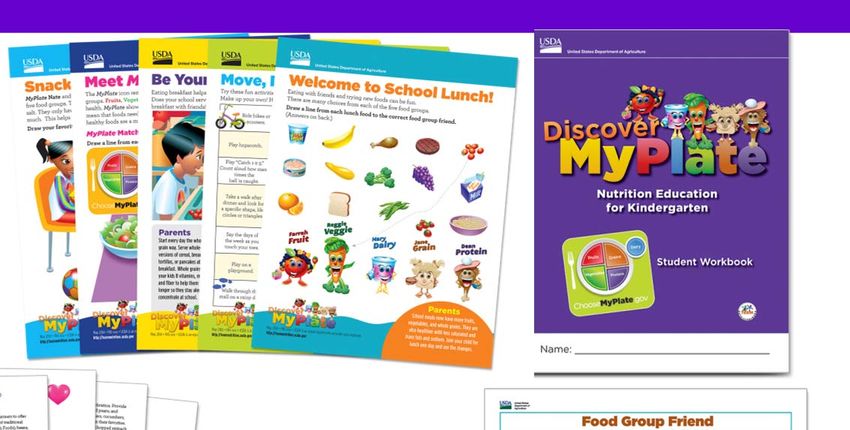
Discover MyPlate:
    Nutrition Education for Kindergarten

                       • Meet the Five Food Groups

                       • Discover MyPlate

                       • Eat Your Colors!

                       • Discover the Seeds for Healthier Eating

                       • Starting Our Day With MyPlate

                       • Let’s Play, Let’s Party

2
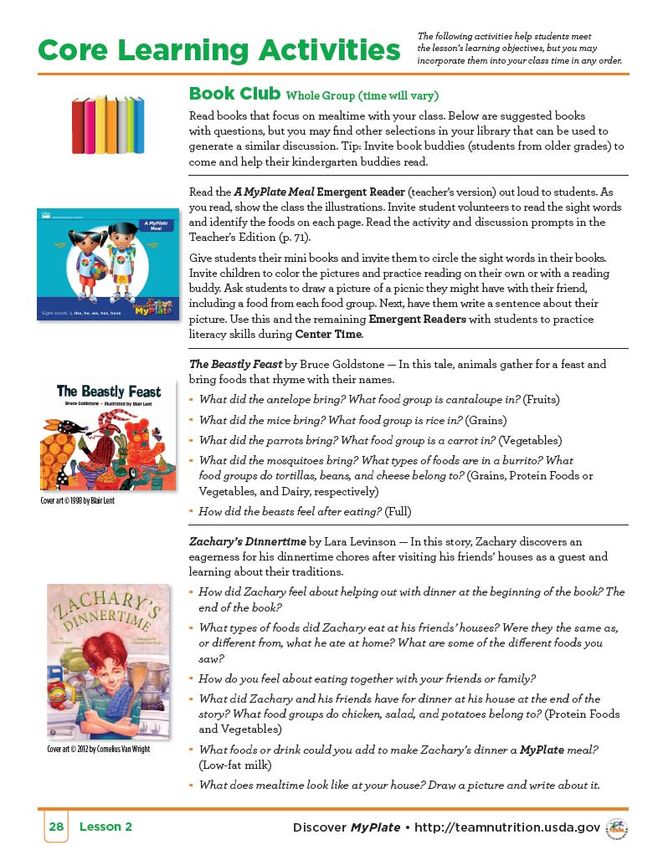
Discover MyPlate Lesson Content
• Lesson Overview
• Supplies and Preparation
• Learning Objectives
• Essential Questions
• Introduction
• Core Learning Activities
(Book Club, Food Club,
Cafeteria Connections)
• Center Time (Literacy Center,
Student Workbook, Food
Cards, Dramatic Play)
• Reflection & Assessment
3“All we know are the few lunch
ladies on our side of the line, but
we don’t know everyone else and
what they do. I think the kids would
really like to know what they do,
and how they pick the food.”
-Kindergarten Teacher, IA
Pilot Test“The cafeteria connection/poster
was a big hit. The children were so
excited to show off their artwork.”
-Kindergarten Teacher, IA
Pilot TestDiscover MyPlate Emergent Readers
One workbook for
each student
included in kit
30
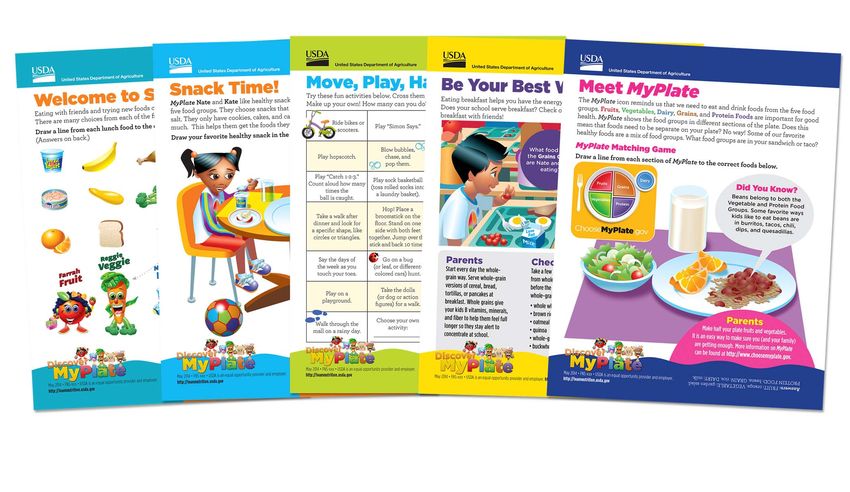
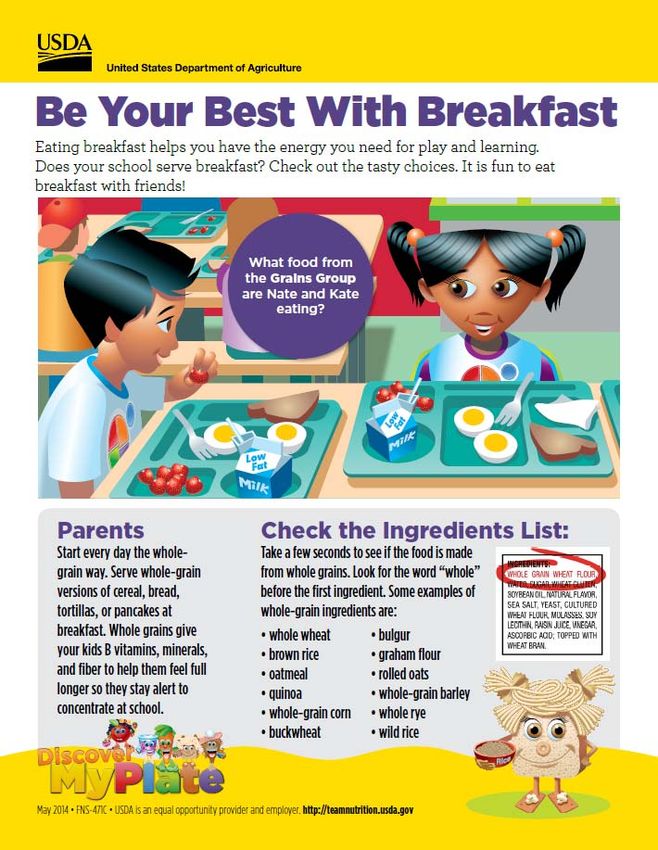
Discover MyPlate Parent Handouts
Discover MyPlate Parent Handouts
Discover MyPlate Parent Handouts
Discover MyPlate Parent Handouts

“I just recently changed my bread to whole wheat. I didn’t read the
ingredients before but now I do.”
                          -Parent in Spanish Language Focus Group, IA

“The little facts have really helped me. I was surprised at how much
sugar was in soda! I haven’t bought any since.”
                          -Parent in English Language Focus Group, IA

“She’s more into eating her fruits in the morning now, She’ll eat her one
bowl of cereal and some fruit, where she used to eat 2-3 bowls of
cereal.”
                         -Parent in English Language Focus Group, CT
Discover MyPlate Training Materials
Team Nutrition Graphics Library
       http://www.fns.usda.gov/tn/graphics-library
For menus, newsletters, Web site, signs, labels, stickers
                                 Sample Graphics
Cookbooks/Recipes
Discover MyPlate Look and
Recipes for Healthy Kids:
Cook Recipes (English and
Cookbook for Homes
Spanish)Free Materials
Follow Us on
@TeamNutrition
http://teamnutrition.usda.govActivity Makes Your Message
Memorable
• Involve Students, Teachers, Administrators, Parents,
Community
• Amount of Effort
– Minimal to Complex
• Farmers Market Speaker to International Food Fair
• Keep Message Focused
– Remember: A positive school nutrition director and staff create
a favorable image for the nutrition program!
http://teamnutrition.usda.govWhere to Begin
Objective ‐ message to communicate
Target Audience
• Students, Parents: Elementary, Middle / High School
• Teachers, School District Administrators
Event‐ determine what type of event and budget
Promote the Event
Link to an existing event
Follow up
http://teamnutrition.usda.govTarget Your Message
Design your event to address common questions
Encourage
students to try new Promote Your
vegetable and Summer Meal
fruits Program
Showcase the
variety of food Parents, students,
choices you offer Elementary, Middle
school, high SchoolUSDA Team Nutrition Resources
Designed to help you communicate your
message
• Healthy Meals Resource System
Find out what has worked for your peers
http://teamnutrition.usda.govTime to Talk
4 Opportunities to Communicate with
Parents and Students…
• Determine what type of event to plan
• Message
• Amount of effort
• Who to involve
• Budget
• Resources
http://teamnutrition.usda.govScenarios
1. Back to School Night
You want to explain elementary meal program to parents
2. PTA approached you and wants to help with a
school garden
3. Middle school students voice concern over
plate waste
4. You want to increase acceptance of whole
grain foods among High School students
http://teamnutrition.usda.govTime to Talk
Scenarios Considerations
1. Back to School Night • Type of event
Elementary parents • Message
2. PTA request to help with
school garden • Amount of effort
3. Middle school students • Who to involve
voice concern over plate • Budget
waste • Resources
4. Increase acceptance of
whole grain foods in high
schools
http://teamnutrition.usda.govShare Your Success Stories
• Healthy Meals Resource System
http://healthymeals.nal.usda.gov/best‐practices
Recipes, Menu Planning, Best Practices, Nutrition
Education, Wellness Policies, State Sharing Center,
HealthierUS School Challenge (HUSSC) Resources,
Professional Standards
Submit a best practice
Materials may be submitted
via email to
hmrs@ars.usda.gov
http://teamnutrition.usda.govScenario 1: Back to School Night
• Your school website, district newsletter or
district TV network, local media, invite
parents to have a school meal with child
USDA Resources
– Team Nutrition Popular Events Booklet
• Food Crusade Video Challenge
– Team Nutrition Graphics Library E‐Clip Art
– Posters
– Eat Smart to Play Hard handout
– MyPlate 10 Tips HandoutsScenario 2: PTA wants to help with
School Garden
• Involve community
– Extension office, Master Gardeners , 4‐H, Senior
citizens
USDA Resources
– Gardening Resources
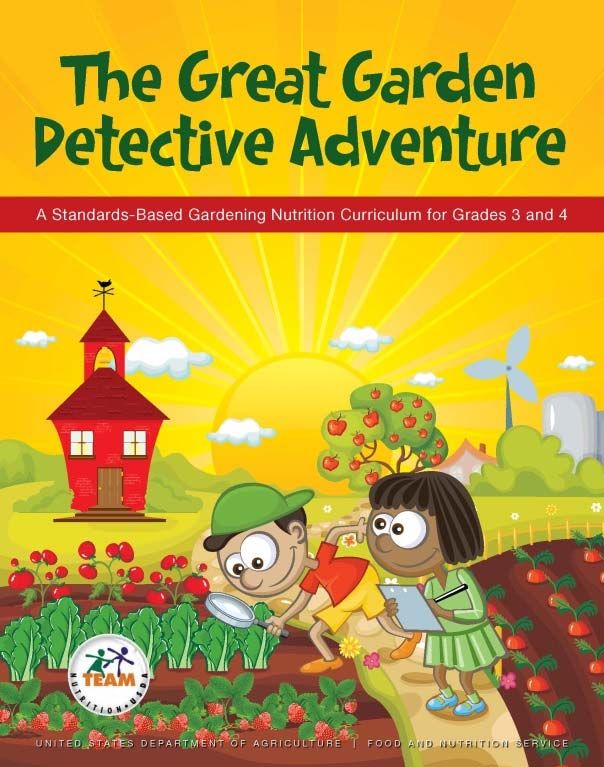
• Great Garden Detective Adventure ‐ Grades 3‐4
• Dig In! ‐ Grades 5‐6Team Nutrition
Garden Resources
Pre‐K GR 3‐4 GR 5‐6Scenario 3: Middle School Plate Waste
• Get students and parents involved
• Elect student and parent leaders
USDA Resources
• Employ Smarter Lunchroom Techniques
• Team Nutrition Popular Events Idea Booklet
– You Control the School Menu
• Nutrition Voyage
– Grade 7 Trek 3: Leading the Way [as Agents of Change]
• USDA Food Waste Challenge
– http://www.usda.gov/oce/foodwaste/resources/K12_schoo
ls.htmlFood Waste Challenge Schools across the country are stepping up to the challenge with innovative new programs such as: • Using techniques listed on Smarter Lunchrooms Self‐Assessment Scorecard to help reduce food waste • Setting up a sharing table for kids to place items they are not going to consume (milk and packaged or pre‐portioned items) • Letting kids self‐serve and self‐portion • Working to ensure kids have ample time to eat • Using wholesome excess foods for classroom cooking projects • Composting food waste for school gardens • Collaborating with local farmers on composting or food‐scrap projects • Joining the EPA Food Recovery Challenge to work with an expert to measure and reduce food waste
Healthier Middle Schools: Everyone Can Help
Scenario 4: Increase Acceptance of
     Whole Grains in High School
• Involve Student Nutrition Advisory Council
USDA Resources
• Team Nutrition Popular Events Booklet
  – The Whole World of Whole Grains ‐ Celebrating
    Cultures and Food (minimal effort activity)
      • By trying whole grains from different countries and
        cultures, students an take part in a world tour of good
        for you grains.
  –    You Control the School Menu‐ taste testing menu
Tools for Schools
• Your one-stop guide to nutrition
standards for school meals and
snacks:
– Free nutrition materials, training, and
recipes for school food service
– Smarter Lunchroom strategies
– Tips for offering more fruits,
vegetables, and whole grain-rich
foods
– Grant opportunities
– Best practices from other schools
– Regulations and policies
http://www.fns.usda.gov/healthierschooldayFlexibilities
• Phased-in Breakfast • Lifted the weekly
implementation maximums on grain and
meat/meat alternates
• Option to offer a daily
Meat/Meat Alternate at • Allowed frozen fruit with
breakfast added sugar
• Allowed students to take • Clarified allowable whole
just one-half cup of fruit or grain-rich corn products
vegetables under OVS
• Provided two-year flexibility
• Removed the starchy for schools that cannot
vegetable limit obtain acceptable whole
grain-rich pasta
• Pushed out the second
sodium target by an • Provided Smart Snack
additional year exemption for grain-only
entrees served at breakfastWe want your feedback! • Keep sharing your best practices, challenges, and concerns. Share best practices at - http://healthymeals.nal.usda.gov/best-practices
Talking With Parents and Students About
        Healthier Foods at School
• Share Success Stories
• Involve Parents and Students
• Use USDA Resources:
   Healthier School Day
http://www.fns.usda.gov/healthiersc
   hoolday/school‐day‐just‐got‐
   healthier‐toolkit

   Team Nutrition
http://teamnutrition.usda.gov
                                 http://teamnutrition.usda.gov
You can also read


