Transportation Commission - June 19, 2019
←
→
Page content transcription
If your browser does not render page correctly, please read the page content below
Transportation Commission
June 19, 2019
Public Comment Period
3 min per speaker
Agenda Item #1

COMMISSION MINUTES:
May 15, 2019 Meeting
Agenda Item #2

Updates to Receive
Agenda Item #3
Commission Updates
Agenda Item #4
Eisenhower East
Agenda Item #5
eisenhower east
       Transportation Commission 06.19.2019
                                       7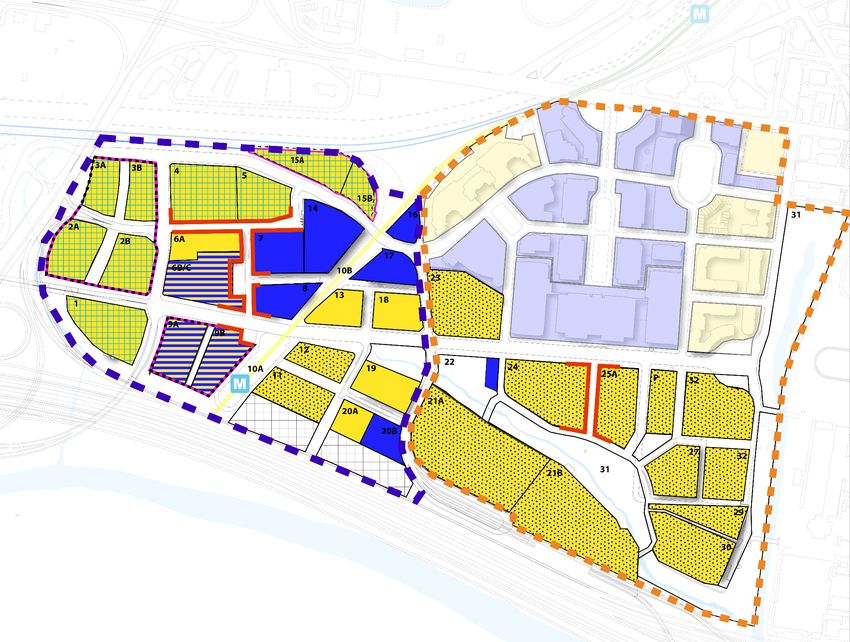
That the Transportation Commission endorse the Eisenhower
East Small Area Plan draft mobility recommendations as
consistent with the Transportation Master Plan and Vision
Zero Action Plan.

                                                        8
Stovall St
                                 AMC

                                 NSF
                                                  PTO

                             M
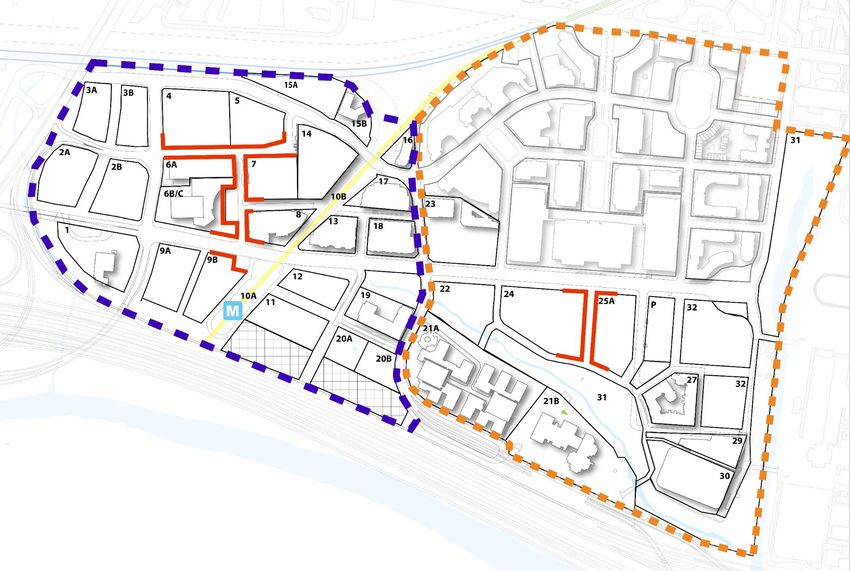
   Focus Area
   Recent approvals
   Constructed
   Eisenhower East Boundaries
 # Block numbers
   Dominion 230 KV Line

2003 Existing Plan 12M
                                       (+/-) SF

                                                        9
2019 Plan Update 6.8M
Key Concepts

 Under the tracks Open Space                            Heights

   School         Housing      Crossing @ Metro   Urban Metro     Bike

                                                                         10
Land Use
11M
Neighborhood 1
Stovall St
Concept:
1. Concentrated
retail/entertainment AMC
locations within an easy Neighborhood 2
10 minute walk NSF
2. Connected to open PTO
space
M
Retail/Entertainment Districts
and Placemaking 122019 Land Use M
Neighborhood 1
Neighborhood 2
NSF
PTO
M
13Resident/ Employee Balance
Mobility
Building on…
• Transportation Master
  Plan;
• Complete Streets Design
  Guidelines;
• Vision Zero Action Plan;
• Environmental Action
  Plan;
• Feedback from
  community.
The plan will be include
recommendations prioritizing a
safe environment for
people         of all ages and
abilities moving in and around
Eisenhower East and beyond.
Recommendations
                                                              •   Complete grid of
                                                          M       streets
                                                              •   Standardization of
                                                                  signals
                                                              •   Increase bus
                                                                  services
                                NSF
                                                    PTO       •   Low parking ratios
                                                              •   Improved bicycle
                                   M
                                                                  infrastructure
                                                              •   Implement
                                                                  transportation
Multimodal Transportation Study                                   technologies
May 31, 2019
                                                              •     Site specific
Proposed increase in density and changes in uses
in the 2019 EESAP update will have manageable                     mitigations
impact on the surrounding transportation network.
M
Pedestrian
Network
PTO
The plan will prioritize a safe
M
environment for people
of all ages and abilities moving
in and around Eisenhower East
and beyond.
18M
Bike
Network
MTransportation Master Plan and
Vision Zero Action Plan goals
• A continuous, connected and accessible
network that enables pedestrians - particularly
children and those with mobility impairments -
to move safely and comfortably between places
and destinations.
• A safe pedestrian environment through
effective law enforcement and implementation
of pedestrian safety countermeasures.
• A safe bicycle environment and reduce user
conflict on shared-use paths through effective
law enforcement, detailed crash analysis and
implementation of bicycle safety
countermeasures.
• Build Safe Streets for Everyone
20Proposed Mobility Recommendations
GENERAL intersection consistent with Figure 1 (Pedestrian Network).
1. Implement network improvements consistent with the 8. Improve connectivity for people walking and biking to and
City’s Complete Street Design Guidelines, Vision Zero from the Eisenhower Avenue Metrorail Station.
Action Plan, and the Environmental Action Plan. 9. Develop a comprehensive on- and off-street bicycle
2. Provide a continuous, connected, and accessible network network consistent with Figure 2 (Bike Network).
that enables people of all ages and abilities to move safely 10. Provide a safe and accessible pedestrian and bicycle
and comfortably within the neighborhoods and to connection for people of all ages and abilities between
destinations outside the neighborhoods. Witter Field and the Eisenhower area via improvements to
the existing connection at Mill Road or another
PEDESTRIANS + CYCLISTS comparable connection.
3. Provide internal pedestrian connections shown in Figure 1 11. Explore options for an interim and future dedicated bike
(Pedestrian Network) within the blocks, where feasible. facility on Eisenhower Avenue.
4. Prioritize safe pedestrian crossings consistent with Figure 1
(Pedestrian Network). STREETS
5. Provide an enhanced pedestrian crossing on Eisenhower 12. Provide a complete grid of streets and blocks.
Avenue at the Eisenhower Avenue Metrorail Station 13. Dedicate to the City (or provide public access easements
consistent with Figure 1 (Pedestrian Network). on) all streets and rights-of-way.
6. With redevelopment, enhance pedestrian crossings on
Eisenhower Avenue east of the Metrorail Station, with EISENHOWER AVENUE METRORAIL STATION
particular attention to the location of the future 14. Pursue the feasibility of a northern Metrorail Station
retail/entertainment district in Neighborhood 2. entrance.
7. Improve the Mill Road and Eisenhower Avenue 2122
That the Transportation Commission endorse the Eisenhower
East Small Area Plan draft mobility recommendations as
consistent with the Transportation Master Plan and Vision
Zero Action Plan.

                                                       23
Jose Carlos Ayala, CNUa
Project Manager
Department of Planning and Zoning
jose.ayala@alexandriava.gov
Carrie S. Beach
NPCD Division Chief
Department of Planning and Zoning
carrie.beach@alexandriava.gov
eisenhower east
Transportation Commission 06.19.2019
24Transportation Alternative Set-Aside / Revenue Sharing Grant Applications Agenda Item #6
Transportation Alternatives Set-Aside
• Federal funding available to localities for
  “non-traditional” projects
 • Formerly the TAP Grant
 • Funds many bike/ped projects

• Reimbursement program (80 / 20)

• Maximum award - $2 million
 • $1 million/year
 • 2 year cycle
                                                26
Seminary Road Sidewalk Project
(Option A)
• Close .25 mile sidewalk
gap
• Top 10 priority sidewalk
gap from Ped/Bike Plan
• Close proximity to
community amenities and
transit
• Dependent on City Council
decision
• Sept. 2019
• ~$1.5 million
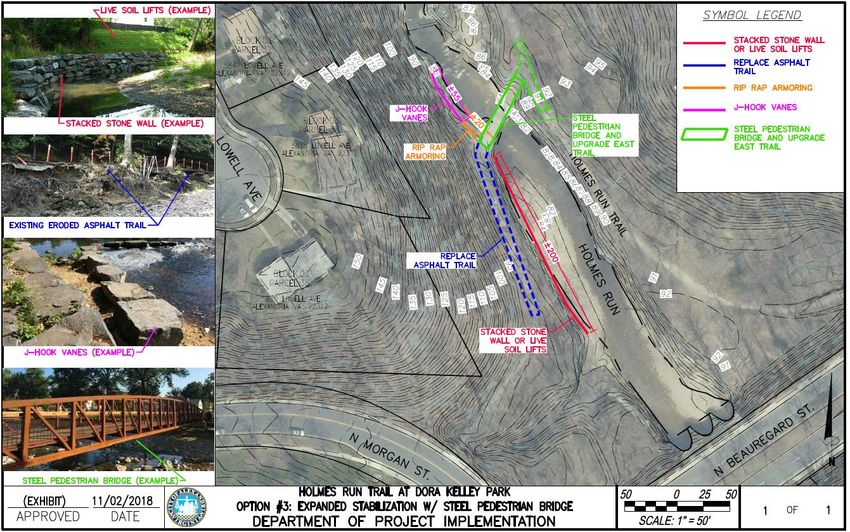
27Holmes Run Trail at Dora Kelly
(Option B)
• Collapsed in Fall 2018
• Rebuilding west bank
(blue)
• Add all-weather bridge
(green)
• Stream stabilization
• ~$1.7 million
28VDOT Revenue Sharing Program
• Funding for FY 2021 and FY 2022
• Two year application cycle
• Provides additional funding for road repaving and
reconstruction
• Locality funds are matched with state funds (50-50)
• Max award of $5 million per year
29Repaving Projects
• City typically applies for half the repaving budget
• Typically $2-$3 million/year
• The final project list is currently under development
• New PCI index in summer 2019
32Timeline
TA-Set Aside + Revenue Sharing
Council
Pre- endorsement
applications in
due July 1 September
VDOT Full application
validation of due October 1
pre-
applications by
August 15
33Motions
• Endorse the grant application for the TA Set-Aside
program in FY 2021-2022 that gives staff the
flexibility of applying for one of two projects
(based on City Council’s recommendation).
• Endorse the grant application for the VDOT
Revenue Sharing Grant at an amount not to
exceed $5 million per year to provide funding
for resurfacing and/or reconstruction in FY 2021
and FY 2022.
34NVTA 70% Grant Application Agenda Item #7
Overview of NVTA 70% Program
• Funding for FY 2024-2025

• Primary Goals
 • Reduce Congestion
 • “Increase Quality of Life”

• Supports projects with regional significance

• Generally used for large projects ($10’s of Millions)

• Approximately $400M available for region
                                                          36
Criteria
• TransAction Analyses
• Congestion reduction
• Safety and efficiency of existing network
• reduce emissions
• Congestion Reduction Relative to Cost
• Person hours of delay/cost
• Qualitative Considerations
• Past performance
• Leveraging outside funding
• Modal/geographic balance
• Long-term benefit
• Benefit must be approx. equal to cost
37Recommended Project:
Duke Street Transitway
• Background:
• Initially recommended in 2008 Transportation Master Plan (Corridor B)
• Concept refined in 2012 Transitway Corridor Feasibility Study
• Council recommended a phased approach
• City received $12 million for FY20 from NVTA for design and environmental
• Full build is anticipated to cost between $115 million and $160 million
• Funding request – Phase 1
• Up to $75 million for final design and construction (Alternative 1a)
• Signal upgrades, some dedicated travel lanes, pedestrian improvements
• Phase 2 (alternative 3c) implemented with later funding request
• Additional ROW for transit lanes, bicycle and pedestrian improvements
• Benefits
• Increases travel options to reduce single occupancy vehicle travel
• Serves regional and local trips
• Supports development approved in the Eisenhower West, Eisenhower East and
Landmark/Van Dorn Small Area Plans as well as upcoming small area plans along Duke 38
StreetTimeline*
• July 1 Call for Regional Transportation Projects posted
• September 27 Deadline for applications
• March 13 thru April 19, 2020 Public comment period, jurisdictional Town Hall
meetings (optional)
• April 9, 2020 NVTA hosts Public Hearing/Open House
• June 11, 2020 Adoption of FY 2024-25 Six Year Plan Update
*Subject to Authority approval (scheduled for June 13, 2019) and CTB adoption of the SYIP
(scheduled for June 19, 2019):
40Motion
• Endorse the NVTA Regional Revenue 70% grant
application for up to $75 million for design and
construction of Phase I of the Duke Street
Transitway.
41Bus Transformation Project Agenda Item #8
BUS
TRANSFORMATION
PROJECT
Draft strategy briefing

May 2019

                          0
DRAFT
Bus faces several core
The Challenge: challenges that will continue to
ustomers are turning to other travel options. Traditional
C grow unless changes are made
definitions of bus service are not keeping pace with rapid
technology and social change.
today:
S ince 2012, bus ridership has fallen by 13 percent across the Meet changing customer
region. needs
Regional bus ridership per year (M)
Keep up with changing
-13%
technology
200
Coordinating across
150 region
100 188 190 187 182 172
Maintain sustainable cost
163
structure
50
Deciding how service is
0
paid for
4
2012 2013 2014 2015 2016 2017
www.BusTransformationProject.comDRAFT
The Transformation starts immediately, while tactical
solutions will continue to be developed as we move
through implementation
This Draft Strategy lays out
the desired direction for
the regional bus system,
and is not a detailed
implementation guide.
The proposed
recommendations will be
revised, and will be
analyzed further.
Once finalized, a 10-year
Roadmap will be developed
that lays out a series of
specific implementation
steps that will help the Bus
Transformation gain
momentum over time.
8
www.BusTransformationProject.comDRAFT
Project Vision:
Bus will be the mode of
choice on the region’s
roads by 2030, serving as
the backbone of a strong
and inclusive regional
mobility system.
10DRAFT
Goals for bus in the region as voiced by stakeholders
1 • Provide reliable on-street transit options that efficiently connect
Regional connectivity
people to places and improve mobility
2 Rider experience • Ensure a convenient, easy-to-use, user-centered mobility option
3 Financial stewardship • Maintain a transit mode that is financially sustainable in the long
term
4 Sustainable economic
• Encourage vibrant, economically-thriving and sustainable
health & access to
communities
opportunity
5 Equity • Create a bus system that is affordable and equitable
11
www.BusTransformationProject.comDRAFT
Strategy Elements
The strategy to achieve the vision and goals is built around six elements – with a set of recommendations underlying each:
The bus system should be customer-focused and an easy-to-use
1 Customer Focused option that people want to ride
Prioritizing buses on major roads is the fiscally responsible way to
2 Priority to Buses on Major Roads move the most people quickly and reliably
Frequent and convenient bus service is fundamental to accessing
3 Convenient Bus Service opportunity, building an equitable region, and ensuring high
quality of life
Balance local and regional provider responsibilities by positioning
Balanced local and regional provider local bus systems to meet their jurisdictional needs and the
4 responsibilities regional bus system to meet regional needs and deliver regional
benefits
Optimize back-office functions through sharing, streamlining and
Streamline Back-Office Functions and
5 Share Innovation
shared innovation by consolidating regional resources and
devoting more resources to operating bus service
Regional Steward to Transform the Bus Customers in a region with multiple bus providers need a regional
6 System steward to transform the bus system
13
www.BusTransformationProject.comDRAFT 1
Element: The bus system should be
customer-focused and an easy-to-use
option that people want to ride
Recommendations to drive strategy: What the strategy will achieve:
If bus agencies deliver outstanding end-to-end trip experiences for all
A• Expand marketing efforts related to bus to enhance visibility
of bus options and benefits riders, the region will see:
B• Make buses easy to understand with legible maps and • Increased customer satisfaction
consistent route naming conventions • Reduced safety incident rates at bus stops and on buses
C• Create a mobile solution that allows riders to plan and pay for • Reduced environmental impact of transportation
trips and access real-time service information
• Increased transit ridership
• More affordable transportation for residents that need it most
D• Make bus fares clear and consistent across the region
• Less congestion on our region’s roads
E• Introduce pass products that work across all bus systems
F• Enhance reduced fare products for low-income residents
G• Allow customers to transfer for free between bus and rail
H• Incentivize more employers to offer transit benefits
I• Make bus stops safe, convenient, and accessible across the
region
J• Modernize the region’s bus fleet with advanced technologies 15
that improve the environment, safety, and the rider
experience www.BusTransformationProject.comDRAFT 2
Element: Prioritizing buses on
major roads is the fiscally
responsible way to move the most
people quickly and reliably. What the strategy will achieve:
Recommendations to drive strategy: If the region commits to priority treatment of bus, it will
experience:
A Obtain commitments from each local and state jurisdiction • Reduced journey time for bus riders
to prioritize bus on major corridors within their
boundaries • Increased ridership
• Greater on-time performance for bus
B Adopt consistent priority guidelines for corridors across the • Decreased bus operating costs
region
• Improved traffic conditions across modes
C Develop enforcement programs that maximize the • Improved regional productivity and competitiveness
effectiveness of bus priority efforts
D Offer incentives to jurisdictions to encourage
implementation of the regional priority guidelines
E Coordinate with regional congestion mitigation efforts,
including congestion pricing, curb access management,
and parking limitations to move more people more
efficiently 16
www.BusTransformationProject.comDRAFT 3
Element: Frequent and convenient bus service is
fundamental to accessing opportunity, building an
equitable region, and ensuring high quality of life
Recommendations to drive strategy: What the strategy will achieve:
A Develop a regional bus network plan Strategic investment in enhancing access to
that realigns routes to create the bus will result in:
most efficient and customer focused • Increased responsiveness to customer
bus system demand for service
Elements of
convenient • Increased access to transit (frequency,
B Adopt consistent guidelines across schedule, span)
bus service
the region to provide customers with
the right amount of bus service by • Increased bus ridership
location and time of day • More efficient use of resources
C Provide flexible, on-demand transit
services to markets where customers
are not well-served by conventional
bus service
17
www.BusTransformationProject.comDRAFT 4
Element: Balance local and regional
provider responsibilities by
positioning local bus systems to
meet their jurisdictional needs and
the regional bus system to meet
regional needs and deliver regional
benefits What the strategy will achieve:
Balancing local and regional provider responsibilities will:
Recommendations to drive strategy:
• Better align bus service with regional needs
Position the regional bus system to provide the services that • Reduce cost of bus service regionally
A
meet regional needs • Improve regional coordination of bus service delivery
Revise the cost local jurisdictions pay WMATA for local • Improve responsiveness of bus service to rider needs
B
service to better match the actual cost to provide service
C Develop a 10-year plan to optimally allocate services
between bus systems for applicable routes
18
DRAFT www.BusTransformationProject.comDRAFT 5
Element: Streamline back-office
functions and share innovation by
consolidating regional resources
and devoting more resources to
operating bus service What the strategy will achieve:
If the region pursues centralization of select business
Recommendations to drive strategy:
functions and shared innovation across bus operators, it will
onsolidate back-office support functions to realize shared
C experience:
A
benefits of scale for bus systems that choose to participate • Annual Cost saving potential of ~$11.7 million due to
economies of scale, which can be redirected into
Establish a Regional Mobility Innovation Lab to drive improving service
B
continuous improvement in customer experience • Greater consistency in service for customers
• Greater understanding of bus system usage, which will
C evelop regional standards for bus data collection,
D enable additional cost savings and efficiencies
formatting, sharing, and analysis
• Improved customer experience, leading to ridership
growth
19
www.BusTransformationProject.comDRAFT 6
Element: Customers in a region with
multiple bus providers need a
regional steward to transform the
bus system
Action recommendations to drive strategy: What the strategy will achieve:
A Form a task force responsible for Bus Transformation If the region commits to strengthening coordination and
Project execution; after a three-year period, transfer governance, it will experience:
responsibilities to a formal Coalition of jurisdictional • Increased customer focused decision making
representatives with authority for implementation
• More cost efficient use of resources
B Hold transportation and transit agencies accountable for • Improved coordination among bus operators and across
prioritizing bus as a primary mode of transportation within mobility modes
their organizations
C Publish an annual Bus Transformation and bus performance
scorecard to drive accountability for results
20
www.BusTransformationProject.comDRAFT
More Information
Additional information, case studies, and analysis are available on the project website.
Including:
White Paper #1 Project Overview, including key challenges https://bustransformationproject.com/resources/#documents
Strategic considerations and supporting analysis to
White Paper #2 help set the strategic direction for the Strategy
https://bustransformationproject.com/resources/#documents
Summary of key information about the regional bus https://bustransformationproject.com/resources/the-bus-system-and-
Bus System Today system its-riders-today/
Public Input Survey Summary of the results of the public survey on https://bustransformationproject.com/resources/public-survey-
Report regional bus priorities conducted in Fall 2018 results/
BusTransformationProject.com/Resources/#documents
22
www.BusTransformationProject.comAlexandria Initiatives Underway
• Alexandria Transit Vision Study
• Network redesign to align routes with demand
• Transitway Corridors
• Payment app for DASH bus
44Local Implications
• 12 Metrobus routes would become DASH routes
• Elimination of rail to bus transfer fee may require
additional subsidy
45Staff Response Letter
• Supports efforts for improved customer experience
and transit priority measures
• Encourages WMATA to build off the Alexandria Transit
Vision (ATV) in a regional bus network redesign
• This planning process is not appropriate venue to
determine operators of routes
• Impacts not been fully considered
• Conversations with local providers needed
46Transportation Commission Response
Feedback options:
• No feedback
• Letter with:
• Input on biggest priority(ies)
• Input on messaging
• Support for staff feedback
47Other Business Agenda Item #7
You can also read


