Type III School Bus Training - Cloquet Public Schools
←
→
Page content transcription
If your browser does not render page correctly, please read the page content below

Type III School Bus Training
Disclaimer
While every effort has been made to assure the information provided
here is complete and accurate; it is not intended to take the place of
published rules, statutes or regulations concerning school bus
operations in Minnesota. The contents may not be relied upon as a
substitute for the most current official text or information.
The Minnesota State Patrol and publisher cannot assume any
responsibility for omissions, errors, misprinting, or ambiguity contained
within this publication and shall not be held liable in any degree for any
loss or injury caused by such omissions, errors, misprinting, or
ambiguity presented in this publication.
This publication is designed to provide reasonably accurate and
authoritative information in regard to the subject matter covered. This
power point presentation is current to the date of release. It is given
with the understanding that the Minnesota State Patrol is not engaged in
rendering legal or other professional service. If legal advice or other
expert assistance is required, the services of a competent professional
person should be sought.

Type III School Bus Training

This training will provide valuable information for the safe
operation of a Type III School Bus.

You should check with your district or bus contractor for specific
policies and procedures regarding Type III school bus operations
to ensure your compliance with applicable items.

Your individual school district or bus contractor’s policies may be
more restrictive than the minimum requirements set forth by the
State of Minnesota and must be followed as directed.

Type School Bus Legislation

The specific laws governing Type III School Bus operations
in Minnesota is located under Minnesota Statute 171.02
subdivision 2b.

Type III Vehicle Standards are located under 169.454

Many other rules, regulations and laws governing Type III
school buses are located within different sections of
Minnesota State laws, please consult with your district or
private contractor for additional information.
What are some types of school buses?
 Type “A” school bus is a van conversion or bus is constructed utilizing a
 cutaway front section vehicle with a left-side driver’s door. The Gross
 Vehicle Weight Rating (GVWR) is less than or equal to14,500 pounds or
 Type A II with a GVWR greater than 14,500 pounds and less than or equal
 to 21,500 pounds.

 TYPE C: A Type “C” school bus is constructed utilizing a chassis with a
 hood and front fender assembly. The entrance door is behind the front
 wheels. A “type C school bus” has GVWR greater than 21,500 pounds.

 Type C, are the most common type of bus used.
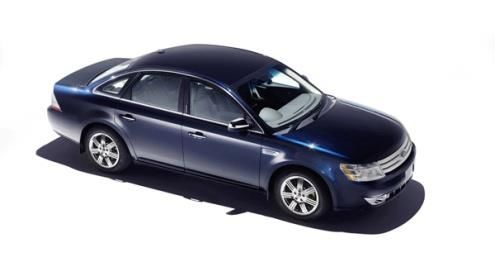
What is a Type III School Bus ?
Type III school buses and type III Head Start buses are restricted to
passenger cars, station wagons, vans, and buses having a maximum
manufacturer’s rated seating capacity of 10 or fewer people including
the driver.

A van or bus converted to a seating capacity of ten or fewer and
placed in service on or after August 1, 1999, must have been
originally manufactured to comply with the passenger safety
standards.

They have a gross vehicle weight rating of 10,000 pounds or less.
What is NOT allowed?

They must not be outwardly equipped and identified as a type A,
B, C, or D school bus.

They cannot be yellow in color, have a stop arm, or the eight
light system.

A Type III school bus cannot be used to transport students if the
vehicle is 12 or more years old
Annual Requirements

The following are must be performed ANNUALLY

•   Training on proper operation of a Type III school bus
•   Behind the wheel evaluation
•   Pre-trip evaluation
•   School bus driver evaluator certification
•   Annual Driver License Status Verification MS 171.02 sub. 2b (g)

    A Type III school bus operators driver license must be verified
    annually by the entity that owns, leases, or contracts for the Type III
    school bus to ensure the driver meets minimum qualifications with a
    valid license.
Type III School Bus Legislation
171.02 sub. 2b
At a minimum a Type III school bus driver must receive training
and instruction in the;
(1) safe operation of a type III vehicle;
(2) understanding student behavior, including issues relating to
students with disabilities;
(3) encouraging orderly conduct of students on the bus and
handling incidents of misconduct appropriately;
(4) knowing and understanding relevant laws, rules of the road,
and local school bus safety policies;
(5) handling emergency situations;
(6) proper use of seat belts and child safety restraints;
(7) performance of pre trip vehicle inspections; and
(8) safe loading and unloading of students.Minnesota State Laws and Rules of the Road • Must have your driver license in possession while driving • Must have a current/signed/completed pre-trip inspection form in your possession for the current day of operation • State law requires you to wear your seat belt at all times when operating the Type III school bus. • Must follow all state and federal road laws • Must give the right of way to pedestrians • Must operate the vehicle with due care in consideration of traffic and road conditions . This may require you to drive slower than posted speed limits to ensure student safety.
Rules of the Road Cont.
• You are not required to stop at railroad crossings, but instead use due
  caution

• You are responsible to ensure all required safety equipment is present
  when transporting students.

• All students must be in vehicle while you are backing up

• Ensure compliance with local school bus safety policies adopted by
  your district.

• Having students cross the roadway to or from a Type III school bus
  should be avoided. If unavoidable, the driver or an aide must personally
  escort the student across the street. If the driver does the escorting, the
  driver must stop the motor, remove the key from the ignition, and set
  the brake.
Fueling

Students must never be in the Type III school bus
while it is being fueled. There are no exceptions to
this rule.
Understanding student behavior, including
   issues relating to students with disabilities
• There many different Types of Disabilities. Special needs
  students may not fully understand all the safety rules necessary
  for a safe ride.
• Know that if routine is changed some special needs students will
  not understand and may act out.
• Questions you may have regarding a particular special needs
  students may best be answered by their parent, guardian, or
  teacher.
• Some special needs students with behavioral disorders may
  require assigned seats.
• Always make sure special equipment is
   properly secured.
Understanding Student Conduct
Control behavior by communicating the rules
• Stay seated
• Stay buckled up
• Face forward
• Do not distract the driver
• Deal with misconduct by
  pulling over if necessary,
  control the behavior, then
  proceed.
• Do not allow bad behavior to go unchecked, know your
  district/company policy and ask for help if necessary
• Always put safety first for all students that ride your Type
  III school bus
• All breaches of discipline must be reported by the driver
  to the authorized person.
Physical Examination of Driver

• Type III school bus drivers hired solely to operate a
  Type III school bus must submit to a physical
  examination as required by section 171.321,
  subdivision 2b (e).

• If you are required to submit to a physical exam, you
  must carry physical examination card with you while
  operating a Type III school bus as this will be the only
  proof of your physical qualification.
Disclosure Requirements
       MS 171.02 sub 2b (h), (i), (j), (k)
• Employee notification requirements to be given
  to your employer of;
  • DWI
  • Disqualifying offenses
  • Moving violations
• The employee is required to disclose in writing
  within ten (10) days of conviction any of the
  above violations to the employer.
Sample Disclosure Form
A sample form can be found at
https://dps.mn.gov/divisions/msp/commercial-
vehicles/Pages/school-bus-safety.aspxDisqualification – Moving violations Example
MS 171.02 sub 2b (h), (i), (j), (k)
A person who sustains a conviction of a moving offense in
violation of chapter 169 within three years of the first of three
other moving offenses is precluded from operating a Type III
school bus for one year from the date of the last conviction.
Example: 02-10-2016 Speed
11-21-2016 Speed
03-31-2017 Speed
05-10-2017 Disobey sign (triggering conviction)
Loss of Type III driving privileges for one (1) year from the
last conviction, eligible for reinstatement 05-11-2018Loss of Driving Privileges Driving While
Intoxicated (DWI)
Driver’s of Type III school buses are subject to the same set
of standards adopted for regular school bus driver’s holding
a commercial driver license (CDL) with regards to DWI
convictions.
Convictions of any DWI laws, including those occurring in
a personal vehicle, will automatically result in a five (5)
year disqualification of your Type III school bus driving
privilege.Criminal Background Investigations
MS 171.02 sub 2b (d)
All Type III school bus operators are subject to an initial
background check or background investigation of the operator
that meets the requirements under section 122A.18, subdivision
8, or 123B.03
• for school district employees; section 144.057 or chapter 245C
• for day care employees; or section 171.321, subdivision 3,
• for all other persons operating a type A or Type III school bus
under this subdivision.Controlled Substance and Alcohol Testing
MS 171.02 sub 2b (f)
• MS 181.951, subdivisions
• Sub 2: Pre-employment testing
• Sub 4: Random testing
• Sub 5: Reasonable suspicion testing
• Post crash / work related vehicle accident
Type III school bus drivers operating a Type III school bus may
be subject to controlled substance / alcohol testing by your
employer if the operator's employer has adopted and
implemented a policy that provides for mandatory drug and
alcohol testing of applicants for operator positions and current
operators, in accordance with section 181.951, subdivisions 2,
4, and 5.Personal Cellular Phone Call Prohibited
MS 169.443 sub 9
A school bus driver may not operate a school bus or Type
III school bus while communicating over, or otherwise
operating, a cellular phone for personal reasons, whether
hand-held or hands free, when in motion.
This includes text messaging.School Bus Annual Inspection Decal Ensure the Type III school bus has a current inspection decal for the current year.
Handling emergency situations

Emergency Equipment every Type III Vehicle must have on
  Board
• First Aid Kit for 10 people– synthetic vinyl gloves (No Latex)
• Body Fluid Clean up/Spill Kit
• Fire Extinguisher, charged and in the green zone on the indicator
• Seat Belt Cutter (within reach of the driver)

Ensure that if you use any safety equipment you replace it or notify a
supervisor to have it replaced.

If emergency equipment is not located in the driver area a label shall
be located in the driver compartment indicating the location of the
emergency equipment.
Type III school bus emergency equipment must be properly
secured in the vehicle to prevent movement. In this picture
the equipment is mounted to the floor in other cases it may
be secured in a bag or container.
EMERGENCY SITUATIONS

• Plan evacuations for your Type III school bus
• Make sure the students know all the exits and how to use them
• Keep a list of contact names and phone numbers in case of a
  mechanical problem
• Make sure all students are dressed for inclement weather in
  case your Type III school bus is unable to provide a proper
  shelter until help arrives
• Plan your route before you leave to avoid an emergency
  situation
• Make sure that all safety equipment is available if needed
Proper use of seat belts and child safety
                  restraints
Seat Belt Requirements- MS169.686
• State law requires seatbelt usage of all passengers in
  the vehicle.
• Check with your district or private carrier concerning
  any additional seat belt usage policies.
• Air bag technology has improved over the years,
  however air bags can still present a significant danger
  to students.
• It is recommended students avoid riding in the front
  passenger seat of a Type III school bus until they are
  twelve years of age and/or adult size
Booster Seat Requirements
MS 169.685 sub. 5(a)
Every motor vehicle operator, when transporting a child who is
BOTH under the age eight and shorter than four feet nine inches
on the streets and highways of this state in a motor vehicle
equipped with factory-installed seat belts, shall equip and install for
use in the motor vehicle, according to the manufacturer's
instructions, a child passenger restraint system meeting federal
motor vehicle safety standards.Performance of pre trip vehicle inspections • A daily pre trip inspection of the vehicle must be completed by the driver or the designated person. A copy of the pre trip must be kept with the vehicle for the current date. • Not completing a pre-trip form will result in a citation being issued by law enforcement to the driver of the Type III school bus. • While completing your pre-trip inspection ensure all items are checked. • Contact your supervisor if you don’t find pre-trip forms in the school vehicle, are having difficulty completing the form, or there is a defect.
Pre-trip Inspection Forms

All evaluation and inspection forms are available
online at the Department of Public Safety

 https://dps.mn.gov/divisions/msp/commercial-
      vehicles/Pages/school-bus-safety.aspx
Conduct external inspection Including mechanical check under hood
There are various Type III school buses and the locations the oil
filler cap and dip stick may be in different locations. Consult
with a supervisor or shop maintenance personnel for assistance in
locating these items.
Each Type III will be different but know and learn the other fluids
to be checked under the hood such as the brake fluid being
pointed out here
Conduct internal inspection

   Check gauges, including fuel level
    Adjust seat, seatbelt and mirrors
When you first start up the When you first start up the vehicle the
vehicle the Brake light will come Anti-lock Breaking System (ABS) light
on for a few seconds and if all is will come on for a few seconds and if all
working correctly it will go out is working correctly it will go out on it’s
on it’s own. own, as will the rest of the systems self
checks.
If a indicator light stays on it is an indication of a problem with a vehicle
system and should be checked by a qualified TechnicianInside the Vehicle • Check all gauges • Check lights and signals • Check that wipers operate properly • Check that washer fluid operates properly • Check the horn • Check inside mirrors for adjustment • Check all lights and signals • Check Brake pressure
Inside the Vehicle

• Check that seat belts operate properly
• Check Defrost and Heater fans
• Check that windows are clean
• Check that headlights and tail lights are lit whenever students
  are on board
• Check steering play, 10 degrees either side of center is
  acceptable
• Check 4 way flasher lights.
Pre-trip routine

To ensure a thorough Pre-trip inspection is completed is to
develop a routine.

After you are done under the hood we recommend you
proceed around the vehicle in a counter clockwise manner
checking not only the components but also check for body
damage and anything out of the ordinary
Always check tire tread depth, Front
   tires 4/32 inch, rear 2/32 inch

                              Edge of coin to
                              top of head 4/32”
Check Tires • Irregular tire wear can be spotted early when tires are checked daily • Blow outs are not only frightening but can also result in loss of vehicle control • Blow outs can result in accidents, inconvenience, lost time, & increased cost • Road calls or Towing are often necessary • Worn tires create balance and alignment issues as well. • If lug nuts are exposed ensure they are tight and secure.
What if I find something wrong
      during the pre-trip inspection?

           Good
         Question?
If you discover a mechanical problem during the
pre-trip inspection contact a supervisor or
maintenance shop personnel to ensure repairs are
made prior to operating the Type III school bus.
Safe loading and unloading of students. Loading and Unloading of Students MS 171.02 sub. 2b, 8 (i) Safe loading and unloading of students includes Utilizing a safe location for loading and unloading students at the curb, on the non-traffic side of the roadway, or at off street loading areas, driveways, yards, and other areas to enable the student to avoid hazardous conditions Refraining from loading and unloading students in a vehicular traffic lane, on the shoulder, in a designated turn lane, or a lane adjacent to a designated turn lane
Loading and Unloading of Students
            MS 171.02 sub. 2b, 8 (iii)
Because Type III school buses do not have the traffic-controlling
features that Types A, B, C and D school buses have, they are
operated differently.

Avoid a loading or unloading location that would require a pupil
to cross a road, or ensuring that the driver or an aide personally
escort the pupil across the road if it is not reasonably feasible to
avoid such a location

The driver of a Type III school bus must place the transmission
in “park” while loading or unloading of students is occurring
At the end of each trip check for students that
may have fallen asleep. Check for items left
behind and cleanliness of vehicle.Resources For a complete list Minnesota Department of Education Transportation Division website at: http://education.state.mn.us/MDE/SchSup/SchFin/Trans/index.html Department of Education Home page: http://education.state.mn.us/MDE/index.html Department of Public Safety Type III School Bus Information: https://dps.mn.gov/divisions/msp/commercial-vehicles/pages/school-bus-safety.aspx
Zero Tolerance Alcohol 169A.31 Alcohol –
           Related School Bus - Driving

Subdivision 1.Crime described.
  It is a crime for any person to drive, operate, or be in physical
  control of any class of school bus (includes a Type III vehicle)
  or Head Start bus within this state when there is physical
  evidence present in the person's body of the consumption of any
  alcohol…

  …a person who violates subdivision 1 is guilty of misdemeanor
Zero Tolerance Alcohol 169A.31 Alcohol – Related
School Bus - Driving
Subd. 2.Gross misdemeanor alcohol-related school bus
driving.
A person who violates subdivision 1 is guilty of gross
misdemeanor alcohol-related school bus (includes a Type III
vehicle) or Head Start bus driving if:
(1) the violation occurs while a child under the age of 16 is
in the vehicle, if the child is more than 36 months younger
than the violator; or
(2) the violation occurs within ten years of a qualified prior
impaired driving incident.May 17, 2007 at 4:05 pm this Type III school bus (van) slams into the rear of a stopped school bus dropping off at a student stop. The Type III driver and the 14 year female student are killed in the crash…
Type III Vehicle Post Crash Inspection
          Requirement MS 169.4511
A peace officer responding to an accident involving a school
  bus (Type III) or Head Start bus must immediately notify
  the State Patrol if the accident results in;

- a fatality;
- bodily injury to a person who, as a result of the injury,
   immediately receives medical treatment away from the
   scene of the accident; or
- one or more motor vehicles incurring disabling damage as a
   result of the accident, requiring the motor vehicles to be
   transported away from the scene by tow truck or other
   motor vehicle.
This presentation provides a basic understanding of the requirements for a Type III school bus driver. Please remember the regulations, rules and laws governing school bus operations are subject to change which will require continuing education and updates. Follow your employer’s policy and procedures to verify your training requirements for Type III school bus training before you start driving students
You can also read


