JUNE 2021 - International Rescue ...
←
→
Page content transcription
If your browser does not render page correctly, please read the page content below
This World Refugee Day,
Restore Welcome at Home
 WORLD REFUGEE DAY I JUNE 2021
JUNE 2021

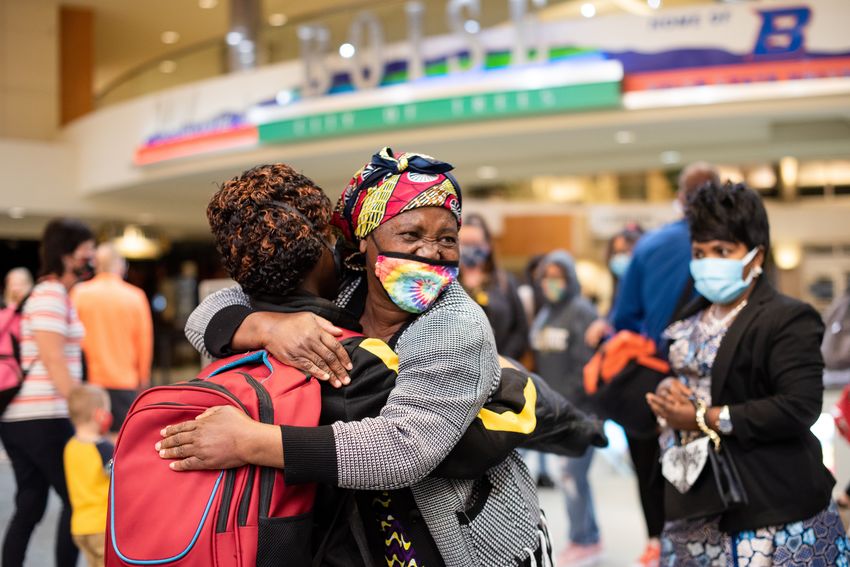
Cover: family members embrace after being reunited through the U.S. Refugee Admissions Program in Boise, Idaho. May
2021. Photo Credit: Jonathan McBride/IRC

The International Rescue Committee (IRC) helps people affected by humanitarian crises to survive,
recover and rebuild their lives. We deliver lasting impact by providing health care, helping children learn,
and empowering individuals and communities to become self-reliant, always with a focus on the unique
needs of women and girls. Founded in 1933 at the call of Albert Einstein, we now work in over 40 crisis-
affected countries as well as communities throughout Europe and the Americas.

International Rescue Committee
1730 M St. NW, Washington DC 20036 | Rescue.org

© International Rescue Committee
This World Refugee Day,
  Restore Welcome at Home
This World Refugee Day, the U.S. should redouble its efforts to address the regional
displacement crisis in the Americas by increasing its commitments to refugee protection in
three key areas:

            Address the humanitarian crisis in Northern Central America
            Expand refugee resettlement from the Western Hemisphere
            Restore a protection-forward asylum system

Please reach out to JC.Hendrickson@rescue.org for additional information on the
recommendations contained within this report.

Maha proudly waves the American flag after becoming a U.S. citizen.
Photo Credit: Andrew Oberstadt/IRC                                                      PAGE 3
Address the humanitarian crisis in
  Northern Central America
                                     This humanitarian crisis has only become more dire with the
In 2020 alone, gang                  compounding effects of COVID-19. Pandemic lockdown-induced
and gender-based                     economic slowdowns have led to even fewer economic opportunities
violence, poverty,                   with an estimated 709,000 people fleeing the region in FY2019
insecurity, and                      followed by an estimated 139,000 people in FY2020. Vulnerable
                                     populations such as members of the LGBTQI+ community and women
climate change were
                                     have become specific targets of violence, with one woman murdered
the cause for 1.4                    every 6 hours in 2019. Femicides in El Salvador alone increased by 43
million people to be                 percent during the first quarter of 2021 and 163 femicides were
internally displaced                 reported in Honduras. In Guatemala, domestic violence reports
across Northern                      increased by nearly 19 percent. In El Salvador, 454,000 people were
Central America.                     displaced in 2019 by conflict and violence. In Honduras, between
                                     2004 and 2018, 247,090 people were displaced by conflict.

The U.S. has historically been the global leader in providing humanitarian protection; now, its leadership is
sorely needed to address the protracted humanitarian crises in El Salvador, Guatemala, and Honduras.The
following policy recommendations should form the basis of a comprehensive U.S. government (USG)
response:

 Invest in humanitarian assistance in the region.

INGOs can partner with USG to address needs, such as: developing a robust shelter system in Northern
Central American countries, providing humanitarian cash support (cash-based programs, food, and shelter),
bolstering and funding case management services, and improving access to information.

 Support opportunities for safety and protection in communities of first refuge.

Developing protection-based programs is essential to provide life sustaining opportunities for internally
displaced persons.

 Improve regional challenges by addressing the leading root causes of migration.

Together with a cycle of chronic violence, lack of power and resources, climate change and natural
disasters have exacerbated existing regional problems. In November 2020, Hurricane Eta and Iota
impacted the lives of nearly 7 million people. Hunger has increased from 2.2 million people in 2018 to
close to 8 million people in 2021 stemming from ongoing extreme climate events and the COVID-19
pandemic. The Biden administration must implement a humanitarian response that includes economic
development and trauma-based wrap-around services to address the impacts of climate change, violence
and the support and services needed for individuals who have experienced trauma.

                                                                                                       PAGE 4
Expand refugee resettlement from the
Western hemisphere
Over the last half century, the U.S. Refugee Admissions Program (USRAP) has
been a bipartisan initiative that has offered new hope to more than three million
refugees. The USG has an opportunity to leverage this humanitarian program as
part of its protection-forward solution to prioritize the safety of refugees in the
region.
Increase resettlement slots for the region. Fix family reunification processing for
refugees.
The Biden administration should increase the
regional admissions cap from 5,000 refugees to Many refugee families are separated in the chaos
15,000 to recognize the profound unmet of humanitarian emergencies. The USRAP
resettlement need in the region. While projected provides a critical way for refugee families to
refugee resettlement needs increased 3 percent reunite: after being resettled to the U.S., refugees
globally from 2020 to 2021, needs in Latin America can apply to have their refugee family members
jumped 489 percent. The UN Refugee Agency join them. Under the Trump administration, family
estimates that there are 29,195 refugees from the reunification pathways were ground to a near halt
Americas in need of resettlement this year, including by policies and practices that hampered
21,239 refugees from Venezuela and 5,945 application processing. USG should devote special
refugees from the Northern Central American attention to these systems and take rapid
countries of Guatemala, El Salvador, and Honduras. measures to increase the processing rate for
So far this fiscal year, just 179 refugees from the family reunification applications.
Americas were resettled to the U.S., including just 3
refugees from Venezuela and 144 refugees from Increase resettlement capacity in the
Northern Central America. region.
25,000 USG should coordinate with the UN Refugee
Venezuela
Resettlement need
21,239 Agency to expand referral operations in the region.
20,000 in Northern Central National and local NGOs are well positioned to
America refer persons with acute protection needs who
15,000 might face barriers to access, such as LGBTQI
individuals and persons in remote locations. The
10,000 Guatemala
El Salvador State Department should remind its embassies that
Honduras Venezuela
5,945 Guatemala they have the authority to make referrals and
5,000 El Salvador
Honduras should use this authority to the full extent possible.
179 USG should also create a remote, roving
0
Refugees in need of Refugees
Resettlement Support Center (RSC) that can be
resettlement from Northern resettled to the U.S. deployed to this and other crises for rapid response
Central America in FY21 to-date
and intensive processing.
PAGE 5Support a regional approach to refugee resettlement.
USG should leverage its commitments to resettle refugees from the Americas to encourage other countries
to expand their resettlement programs and should work with countries in the region to establish Protection
Transfer Arrangement (PTA) programs, which allow for refugee claims to be processed in a safe host
country. USG should also provide support in the form of technical capacity through initiatives like the Latin
America Resettlement and Integration Technical Assistance (LARITA) program, which has already provided
support in Argentina, Brazil, Chile, and Uruguay.
Restore a protection-forward asylum
system
The Biden administration has committed to reversing anti-asylum policies and rebuilding a safe, humane
and orderly asylum system. Current detention and expulsion policies implemented by USG have failed to
reflect promised protections outlined
in domestic and international laws for vulnerable The development of a fair and credible
individuals who have a legal right to seek asylum.
asylum system that welcomes asylum
seekers is dependent on the ability for
End Title 42, under the pretext of public health individuals fleeing persecution to have
concerns.
the right to access protection without
On March 20, 2020, the Centers for Disease government-sanctioned inhumane
Control and Prevention issued an order, under the practices, barriers, and bans.
pretext of public health, that permitted the
Department of Homeland Security to expel
individuals arriving at the U.S. southern border
(referred to as Title 42). USG’s continued use of Invest in community-based case
management programs.
Title 42 has forced adults and families to wait in
Mexico, return to life-threatening situations, or A protection-forward approach for the reception of
attempt to enter between ports of entry in search asylum seekers should include providing support
of protection. In recent processing of families and services and not detention for individuals awaiting
children at the U.S. southern border, USG has the adjudication of their asylum claim. An effective
demonstrated that the U.S. can implement safe case management model for asylum seekers
measures during the COVID-19 pandemic. The should provide opportunities for asylum seekers to
continued use of Title 42 is in direct conflict with meet their essential needs, while also providing
the administration's promises of upholding the right access to information, wrap-around services, and
to seek asylum and in violation of international legal assistance as they navigate the asylum legal
refugee conventions to which the US is a signatory. process. An investment in community-centered
USG should center its policies on increasing programming should draw on the expertise of non-
protection capacity to combat a growing governmental organizations and provide necessary
humanitarian crisis, including by investing in funding to provide wrap-around support services
personal protective equipment at U.S. ports of entry and assistance for legal representation. Moreover,
and COVID-19 testing to mitigate health risks. utilizing the
PAGE 6Unaccompanied Refugee Minor program as a
model, the development of a child-centered case
management program is also necessary to
promote the welfare and well-being of vulnerable
Unaccompanied Children. A case management
model with a rights-based approach focused on
best practices and not as solely an alternative to
detention will aid in ensuring compliance and
support services for asylum seekers.
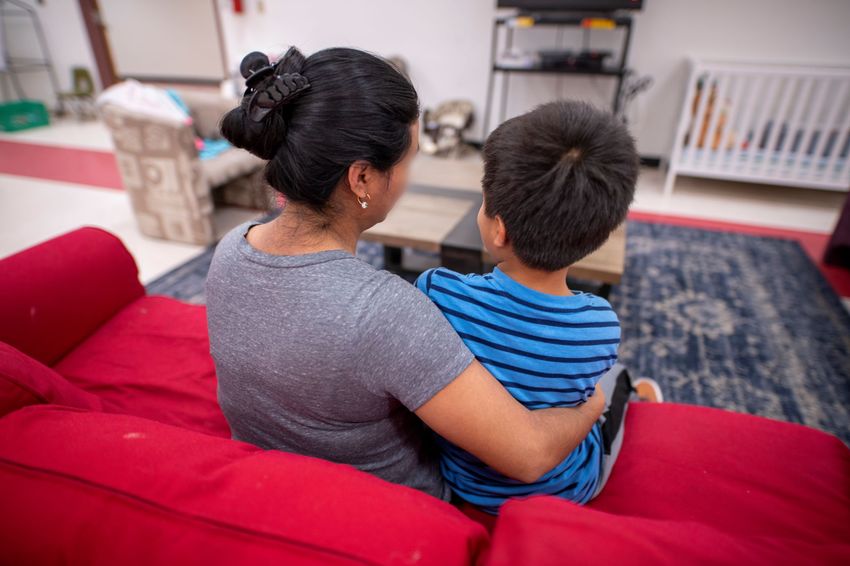
A family rests after safely seeking asylum in the United States.
Photo Credit: Joshua Morganstein/IRC PAGE 7You can also read


