Kapiti Coast District Council - Closing report to Council for the audit of the 2021-41 Consultation Document - Item 8.2 Adoption of ...
←
→
Page content transcription
If your browser does not render page correctly, please read the page content below
Kapiti Coast District Council

Closing report to Council for the audit of
the 2021-41 Consultation Document

Contents   Executive summary                   4
           Infrastructure assets                5
           Funding                             8
           Three waters reform                 10
           COVID-19 and climate change         11

           Audit differences                   12

           Assessment of control environment   13

           Appendices                          14
           Outstanding matters                 15
           Independence                        16
Kapiti Coast District Council
                                                                                                                                                          2021-41 Consultation Document

        Executive summary                           Areas of audit focus                         Audit differences            Control environment                   Appendices

Welcome
Dear Council Members

      We have substantially completed our audit of the 2021-41 consultation document for Kapiti Coast District Council (‘Council’).

      Subject to the adequate resolution of the outstanding matters listed in the appendices, we confirm that we will issue an
      unmodified audit report with emphasis of matter paragraphs to draw attention to the disclosure in the consultation document
      relating to the uncertainty over three waters reform and the delivery of the capital works programme.

      We have provided this report in our role as the appointed auditor of the Council on behalf of the Auditor-General in accordance
      with the Public Audit Act 2001. This report is intended solely for the use of Council, committees of Council and senior
      management, and should not be used for any other purpose nor given to any other party without our prior written consent.

      We would like to thank your staff for the assistance provided to us during the audit.
      If you have any queries in the meantime, please feel free to contact Dave on 021 923 431 or Ahmed on 021 679 586.
      Yours faithfully

      David Borrie                                    Ahmed Sofe
      Partner                                         Senior Manager

                                                                                                                                                    Go to Executive              Ex
                                                                                                                                                    Summary                      ec
                                                                                                                                                                                 ut
                                                                                                                                                                                 iv
                                                                                                                                                                                 eS
                                                                                                                                                                                 u
                                                                                                                                                                                 m
                                                                                                                                                                                 m
                                                                                                                                                                                 ar
                                                                                                                                                                                 y

3 | Audit closing report for the 2021-41 Consultation Document – Kapiti Coast District Council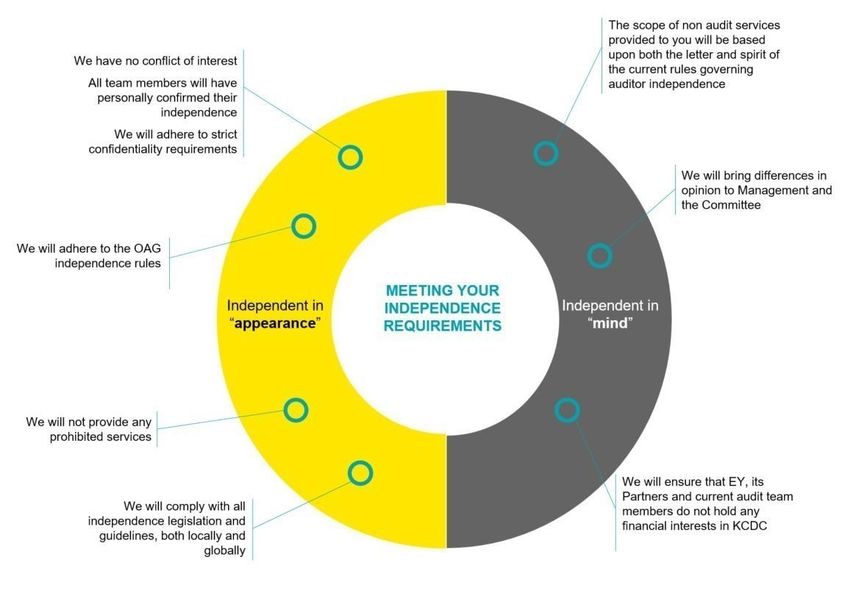
Kapiti Coast District Council
                                                                                                                                                                              2021-41 Consultation Document

        Executive summary                           Areas of audit focus                           Audit differences                        Control environment                             Appendices

                                                                                    Executive summary
                     STATUS OF AUDIT                                                 AREAS OF AUDIT FOCUS                                                    SCOPE & MATERIALITY

                                 6
                    outstanding items for an
                                                                                                     4
                                                                                    key areas of focus where there
                                                                                                                                                                $3.6m
                                                                                                                                                               final materiality based on
                    unqualified audit opinion                                       are potential risks and exposure                                              average expenditure

    We have substantially completed our audit of Council’s            The areas of audit focus and level of complexity or management
    consultation document for the period 2021-41. Subject to          judgement applied are:                                                Our audit procedures have been performed using a materiality of
    satisfactory completion of the outstanding items outlined in                                                                            $3.6m.
    the appendices on page 15, we will issue an unqualified audit                                                        HIGH
                                                                          Infrastructure assets                                             This is based on 2.25% of average expenditure over the 20-year
    opinion with emphasis of matters relating to three waters                                                          MEDIUM
                                                                          Funding                                                           period.
    reform and the capital works programme.
                                                                          Three waters reform                          MEDIUM               The threshold for reporting audit differences to the Committee is
                                                                          COVID-19 and climate change                    LOW                $179k.

                   AUDIT DIFFERENCES                                  ►     See Areas of Audit Focus section for more details
                                                                                                                                                          CONTROL OBSERVATIONS

                              nil
                  unadjusted audit differences
                                                                                                                                                                            3
                                                                                            INDEPENDENCE                                         observations and recommendations to improve
    ►    There are no unadjusted audit differences pertaining to                                                                                            processes and controls
         the financial modelling for the 2021-41 consultation         We confirm that we have complied with PES AG 1 Code of ethics
         document.                                                    for assurance practitioners, and in our professional judgement, the   None of the improvement opportunities identified were categorised
    ►    All audit adjustments identified during our audit have       audit team and the Firm are independent.                              as high-risk issues.
         been corrected by management. See Audit Differences
         section for more details.                                                                                                          See assessment of Control environment section for more details.

4 | Audit closing report for the 2021-41 Consultation Document – Kapiti Coast District Council
Kapiti Coast District Council
2021-41 Consultation Document
Executive summary Areas of audit focus Audit differences Control environment Appendices
Infrastructure assets
Key Judgements: Condition, performance, underlying data quality, ability to deliver HIGH
Our Understanding EY Perspective
► Infrastructure assets is the most significant balance on Council’s balance sheet with a 30 In completing our assessment of the asset planning process we have completed the following
June 2020 carrying value of approximately $1.48 billion. This is expected to double by the procedures:
end of the 20-year long-term plan (“LTP”) period.
► The financial modelling for the 20 year period show Council intend to invest significantly in
infrastructure assets with the capital works programme representing a two to three-fold
increase in the capital spend previously forecast in the 2018-38 LTP, particularly in the early
years of the period.
► In addition to being a significant financial statement balance, infrastructure assets allow
Council to deliver critical services to the community.
Asset condition and performance information Asset condition and performance information
► The starting point for forward planning relating to infrastructure assets, and the delivery of ► Reviewed Asset Management Plans and checked consistency between the Asset
core transport and water services, is Council’s information on asset condition and Management Plans, Infrastructure Strategy and consultation document. ✓
performance. This information is collated from multiple sources including surveys,
investigations, asset renewal activity, asset age, and interaction with third party consultants ► For a sample of significant Asset Management Plans, we obtained an understanding of
in their capacity as valuers or subject matter experts. how management assess and monitor the condition and performance of the assets. We
checked that adequate performance and conditioning information was available and ✓
► Council’s asset information is detailed in the asset management plans and summarised in the that those assets that are near the end of their lives or underperforming have been
infrastructure strategy. For water assets (water supply, wastewater and stormwater) this factored into the capital works programme.
includes descriptive information such as age, length, diameter, age profiles, condition and
performance information, risk profile such as criticality of the assets and likelihood of ► We checked the alignment of the Infrastructure Strategy and Financial Strategy with a
failure. For transport assets, it includes physical parameters such as the nature of assets, particular focus on whether the planned capital works programme included in the
Infrastructure Strategy is appropriately funded through the proposed funding in the ✓
length, width, formation, but also condition, age profile and performance of the network.
Financial Strategy.
► The asset management plans also detail the confidence Council has over the information
underpinning asset decisions such as condition and performance and how these are updated
regularly. For roading, a network survey is completed periodically and provides information
on condition and performance of assets through measuring and plotting the trend in the
extent of shoving, rutting, potholes, cracking, scabbing and flushing. For the waters asset
ongoing condition evaluations are undertaken through a systematic process based on
5 | Audit closing report for the 2021-41 Consultation Document – Kapiti Coast District CouncilKapiti Coast District Council
2021-41 Consultation Document
Executive summary Areas of audit focus Audit differences Control environment Appendices
Our Understanding EY Perspective
lifecycle knowledge, results of sampling and risk profiling, specific critical asset evaluations
and sighting of assets by service crew when undertaking routine maintenance.
Whilst having measures of asset condition and performance is important it is also key that the
quality of the data on which such measures are based is well understood. To evaluate the
asset condition and data confidence Council uses a rating scale of 1 -5.
Asset Group Asset Condition Data Confidence
Water Supply 2 - Good B - Reliable
Wastewater 2 – Good B – Reliable Key capital works activity for the next 20 years
Stormwater 2 - Good B – Reliable ► Selected a sample of capital projects based on size, complexity and some from areas
where Council has previously not delivered against budget and checked that the ✓
Coastal 4 - Poor B – Reliable
capital spend is supported by third party inputs or robust estimates.
Access & Transport 3 - Satisfactory A - Highly to B - Reliable
► Through our detailed review of a sample of projects we noted several needed adjustments
whereby the capital expenditure for certain projects did not factor in inflation adjustments to
Key capital works activity for the next 20 years determine the correct future cost. We have included these in our adjustment section below.
► As part of the planning process, that included reviewing the asset condition and performance Achievability of capital works program
information included in the Infrastructure Strategy and Asset Management Plans we also
considered the key planned projects for the LTP period including: ► The following analysis shows Council’s historical performance in delivering against capital budgets
► Kapiti Link road with a total planned spend of circa $25m over the first three years; on a category by category basis.
► Construction of the Waikanae Library for $13.8m over the first three years; Activity Average delivery against budget
► Replacement of the Paekakariki seawall for approximately $17m over the first 5 years;
Water supply 96%
► The continuation of Town Centre projects consulted in 2015/35 LTP with costs
estimated at $41m; Stormwater 112%
► Completion of the Waikanae Water Treatment Plant in 2022 at approximately $12m; Wastewater 100%
► Increasing yearly investment in stormwater upgrades and renewals from $3.6m to
$6.4m, with total budget of $178m over 20 years; Access & Transport 88%
These and other projects will combine to result in over $200m of capital spend for the first Coastal 85%
three years of the LTP period. Parks and Open Spaces 93%
Achievability of capital works program
6 | Audit closing report for the 2021-41 Consultation Document – Kapiti Coast District CouncilKapiti Coast District Council
2021-41 Consultation Document
Executive summary Areas of audit focus Audit differences Control environment Appendices
Our Understanding EY Perspective
► The financial modelling assumes that the capital works program will be completed without
► The forecast capital works program, particularly over the first three years of the LTP period, is a
projects being delayed or deferred. This assumption has been critically assessed by both the
step change from what has been delivered historically. KCDC’s approach to mitigating the risks
management team and ourselves as auditors.
associated with delivering a larger capital works programme has focused on:
► A key consideration in determining Council’s ability to deliver a program of capital work is ► Increasing the capability and capacity of the relevant teams;
historical performance in delivering capital projects. In addition, there needs to be
consideration of any step changes in the scale of the capital works program. ► Establishing a dedicated project management office;
► The use of third party experts to assist with matters such as planning, design and costing,
Sustainable investment in infrastructure assets where appropriate;
► Capital expenditure, as a percentage of depreciation, is planned to be significant over the ► Considering alternative procurement models such as partnering or collaboration with
early years of the LTP period, before gradually reducing ahead of the next expected increase neighbouring Councils; and
in capital spending to address a notable amount of renewals work for underground water ► Securing contracts for key projects occurring near future where possible.
assets. A high-level benchmark that can be used to determining if capital renewals work is
► Whilst management is confident that the capital works programme will be able to be delivered the
progressing at a reasonable pace is the extent to which capital renewals are equal, or greater
implicit assumption that this significant programme of work will be delivered over the coming
than depreciation.
three years is a key assumption underpinning the financial modelling for the LTP.
Essential service benchmark - capital expenditure / depreciation ► We are satisfied that the disclosures in the consultation document and the assumptions paper
appropriately outline the risks and mitigating actions relating to the forecast programme of
350%
capital work. As a result of the significant change in scale of the programme we will include an
300% emphasis of matter paragraph in our audit report to draw reader’s attention to the uncertainty
associated with the delivery of the capital works programme and the disclosures included in
250% the consultation document that adequately describe the risks and mitigating factors along with
LTP 2015 the implications if the increased capital programme isn’t delivered.
200%
LTP 2018 Sustainable investment in infrastructure assets
150%
Actual ► The graph of capital expenditure against depreciation shows the significant level of capital
100%
LTP 2021 expenditure that is needed in order to be able to cover renewals, new assets, and capital work to
50% accommodate growth. The higher level of capital work is focused in years one to three before
reducing to a lower level for the remainder of the LTP period and then starting to increase again
0% as notable renewals for underground water assets get underway post the end of the current LTP
22/23
32/33
14/15
15/16
16/17
17/18
18/19
19/20
20/21
21/22
23/24
24/25
25/26
26/27
27/28
28/29
29/30
30/31
31/32
33/34
34/35
35/36
36/37
37/38
38/39
39/40
40/41
planning period.
7 | Audit closing report for the 2021-41 Consultation Document – Kapiti Coast District CouncilKapiti Coast District Council
2021-41 Consultation Document
Executive summary Areas of audit focus Audit differences Control environment Appendices
Funding
Key judgements: Balanced budget, financial prudence MEDIUM
Our Understanding EY Perspective
► Rates levied represents KCDC’s primary revenue source. Rates along with subsidies and debt
are the main funding sources to finance KCDC’s activities. A key principle in the Local
Government Act (the Act) is the requirement for Councils to manage their finances prudently.
Balanced Budget
Balanced Budget
► Section 100 of the Act requires Councils to balance the budget for each year forecasted ► KCDC has not met the balanced budget benchmark for four of the last five reporting years due
to not funding some of the depreciation expense. The Council is working towards balancing its
meaning operating revenue is required to be equal to, or greater than, operating expenditure. If
a Council chooses to not balance the budget for a particular year a resolution must be passed budget through committing to a financial strategy that progressively funds depreciation, with a
target of fully funding depreciation by 2025. In the 2021-41 LTP KCDC have not forecasted any
that it is prudent to do so having regard to levels of service, ability to fund the maintenance of
assets, the equitable allocation of funding responsibility over the life of assets and the Council’s further deficits.
funding and financing policies. ► The prospective statement of comprehensive revenue and expenses shows significant operating
► Below we have provided a graphical representation of the range of balanced budgets that surpluses of $48m, $28m and $37 for years one to three that is mainly due to the anticipated
vesting of parts of state highways. The remainder of the LTP period shows an average surplus
Council will be adopting for this LTP as well as the last two LTP’s and the actual benchmarked
of $10m that is primarily the result of capital work funded through operating revenue.
achieved for each year from 2015/16.
► Adjusting the surpluses for the elements relating to vested assets, development contributions
Balanced budget: Revenue/ Operating expenses and capital grants, results in the forecast performance for each year being approximately
break-even.
120%
► The consultation document clearly articulates KCDC’s approach to financial management and
110% the rationale for this.
100%
LTP 2015
90% LTP 2018
80% Actual
LTP 2021
70%
60%
21/22
37/38
15/16
16/17
17/18
18/19
19/20
20/21
22/23
23/24
24/25
25/26
26/27
27/28
28/29
29/30
30/31
31/32
32/33
33/34
34/35
35/36
36/37
38/39
39/40
40/41
8 | Audit closing report for the 2021-41 Consultation Document – Kapiti Coast District CouncilKapiti Coast District Council
2021-41 Consultation Document
Executive summary Areas of audit focus Audit differences Control environment Appendices
Debt levels and rates setting Debt levels and rate setting
► To fund the uplift in the capital programme, debt is forecast to increase substantially over the Our work in relation to rates and debt included:
period of the long-term plan. Net borrowing will increase by $100m over the next three years or
an average of $31m per annum over the next 5 years before gradually reducing from 2026 ► Obtaining an understanding of, and walking through the process for, how rates and
debt are incorporated into the financial model. ✓
onwards as the capital programme is scaled back. At the end of this long-term plan period net
borrowing is projected to be $430m (187% of revenue) compared to $166m in 2021 (177% of ► Obtaining the model for calculating borrowing and other capital funding and testing a
revenue) both of which meet the Council green line strategy of maintaining debt at less than sample of items of expenditure to check that the borrowing and other funding have ✓
200% of revenue. been correctly calculated for those items.
► Checked that the Council’s assumption that interest rates will be 3.45% in year 1,
Debt affordability benchmark, trends in net debt ($000) 3.15% in year 2 and 2.95% for the remaining period of the long-term plan had been ✓
consistently applied.
500,000
450,000 ► Checked that the debtor’s balances moved in line with rates.
400,000
✓
350,000 ► Checked the correlation between debt levels and the interest expense. ✓
300,000 LTP 2015
250,000 LTP 2018
200,000
Actual We note that one of the key assumptions with respect to the modelling of rates and debt is the
150,000
100,000
interest rate assumed for the debt for the 20-year period. KCDC have assumed that borrowing rates
LTP 2021 will be between 2.95% and 3.45% for the 20-year period. While we acknowledge that Council is
50,000
- currently able to borrow at a lower rate than this through the LGFA there is a risk that these rates
increase over the period covered by the long-term plan. Interest rates are currently at historical lows.
24/25
39/40
15/16
16/17
17/18
18/19
19/20
20/21
21/22
22/23
23/24
25/26
26/27
27/28
28/29
29/30
30/31
31/32
32/33
33/34
34/35
35/36
36/37
37/38
38/39
40/41
► The forecast rates across the 20-year period are expected to increase on average by 3.8% (with
a range of 2% to 8.6%). Substantial rates increases are forecasted for the first three years of
the long-term plan as Council increase its capital spending.
► The rates increases forecasted are higher than those forecast in previous long-term plans (the
last 2018 LTP proposed rates increase between 0% and 5.5%).
9 | Audit closing report for the 2021-41 Consultation Document – Kapiti Coast District CouncilKapiti Coast District Council
2021-41 Consultation Document
Executive summary Areas of audit focus Audit differences Control environment Appendices
Three waters reform
Key Judgements: Uncertainty relating to the reform programme MEDIUM
Our Understanding EY Perspective
► Central and local government organisations continue to consider the challenges of regulating We will include an emphasis of matter in our opinion with respect to the uncertainty associated with
and delivering three waters services. New legislation has been passed and a new water services the proposed three water reforms programme. Key considerations in coming to this conclusion are
regulator, Taumata Arowai, has been established. as follows:
► Key challenges in delivering water services include obtaining relevant and reliable information ► The proposed three water reforms programme considers structural changes to how water
about assets and appropriately reinvesting in the three waters’ networks. The Government supply and waste-water assets are owned and managed (with the potential for stormwater
considers structural reform as the most effective way to address these challenges. As a result, it assets to be included).
has started the three waters reform programme.
► These changes, whilst still uncertain, are likely to occur in the medium term and will also likely
► The three waters reform programme will likely result in water service delivery entities that: significantly change what Council has assumed will be in its remit for the long-term plan period.
► Have sufficient scale to generate benefits from aggregation;
► Have ownership of the water assets with a mandate to explore how to achieve better
access to capital and alternative funding mechanisms; and
► Will be structured as statutory entities.
► SOLGM has proposed that territorial authorities assume no change in the current structure of
the three waters delivery in long-term plans.
10 | Audit closing report for the 2021-41 Consultation Document – Kapiti Coast District CouncilKapiti Coast District Council
2021-41 Consultation Document
Executive summary Areas of audit focus Audit differences Control environment Appendices
COVID-19 and climate change
Key Judgements: Impact of COVID-19 and climate change LOW
Our Understanding EY Perspective
► On 11 March 2020, the COVID-19 outbreak was declared a pandemic by the World Health ► We have obtained the assessment performed by management regarding the impact of COVID-
Organization. Two weeks later, New Zealand declared a state of emergency and moved to COVID- 19 and climate change on the district. Through our testing of key Asset Management Plans,
19 Alert level 4 in response to the pandemic. assumptions, and strategies we checked the assumed impact has been consistently factored
into planning and modelling.
► The outbreak and the response of the Government in dealing with the pandemic continues to
interfere with general activity levels within the community, the economy and the operations of ► The financial forecast reflects the potential impacts from Covid-19 in the short term, with
businesses generally. In particular border controls and the timing and availability of vaccines reduced migration and economic activity limiting growth in the first three years. Growth is
creates ongoing uncertainty. then anticipated to recover to levels similar to those experienced in more recent years.
► KCDC has factored into the financial modelling the impact of Covid-19 on expected growth levels ► To counter the effect of Covid-19 Council has adopted a recovery plan that covers a wide
and the implications of Council’s larger capital programme that is intended to have a financial range of actions including an increased capital spend.
stimulus effect. The pandemic has also impacted the global supply chain which may affect the
availability and cost of some infrastructure asset components. These factors are considered when ► For areas identified as being impacted or at risk of being impacted by climate change, we
have checked that the future costs include an element of climate change as outlined in the
assessing the deliverability of the capital programme forecasted.
respective Asset Management Plan and Supporting document to the consultation document.
► Councils are responsible for planning for and providing infrastructure, managing land use, and Council has used the climate change assumptions provided by the Greater Wellington
avoiding or reducing risks from natural hazard events such as floods, storms, and sea-level rise. Regional Council for Kapiti.
Climate change is changing the severity and frequency of these events.
► We have reviewed the assumptions and disclosures that Council have included in relation to
► Responding to climate changes is key theme of this long-term plan driven by the declaration of a both COVID-19 and Climate change against the levels of risk they determined for each area
climate emergency by KCDC in May 2019 which reaffirmed its commitment to carbon neutrality and we are satisfied that Council have adequately considered these and provided readers with
by 2025. a sufficient level of detail that matches the level of impact and risk.
► Areas of potential impact include:
► three waters services - increased waste-water overflows from heavy rainfall, and flood
mitigation assets not working;
► the transportation network – disruption from sea-level rise or flooding and landslides leading
to increased maintenance costs; and
► coastal infrastructure and property – sea-level rise causing coastal erosion that will put
property and assets at risk.
11 | Audit closing report for the 2021-41 Consultation Document – Kapiti Coast District CouncilKapiti Coast District Council
2021-41 Consultation Document
Executive summary Areas of audit focus Audit differences Control environment Appendices
Audit differences
Summary of adjusted audit differences – 20-year financial model
The following table contains a list of adjustments that have been corrected by management.
Assets Liabilities Equity/P&L
(Decrease) / Increase Decrease / (Increase) (Decrease) / Increase
($000) ($000) ($000)
Adjustment to correct projects with no inflation factor applied. 12,951 (12,951) 0
Total 12,951 (12,951) 0
Summary of unadjusted audit differences – 20-year financial model
There are no unadjusted audit differences relating to the prospective financial statements
12 | Audit closing report for the 2021-41 Consultation Document – Kapiti Coast District CouncilKapiti Coast District Council
2021-41 Consultation Document
Executive summary Areas of audit focus Audit differences Control environment Appendices
Assessment of control environment
Internal Controls Detailed findings
As part of our audit of the consultation document, we obtained an understanding of the internal Increasing the impact of documents used for community engagement
control environment relevant to forecasting and planning for the coming 20 year period in
Community engagement is always a balance of keeping communication succinct and communicating
order to sufficiently plan our audit and determine the nature, timing and extent of testing the key information that is pertinent to the decisions to be made. Keeping material succinct and
performed. Although our audit was not designed to express an opinion on the effectiveness of clear allows it to be more accessible. While we acknowledge there is a lot to communicate in the
internal control, we communicate to you significant deficiencies in internal control. We confirm 2021-41 Consultation Document, we would suggest in future documents there would be an
that there are no significant deficiencies that we would like to bring to your attention. opportunity to be more concise without losing the key message in the story that needs to be told.
For context management could refer to documents produced by other Councils that have been
Throughout our audit we communicated to management observations regarding control
acknowledged by SOLGM, the OAG or other independent parties for their effectiveness.
matters and other issues arising from our procedures. Suggested improvement points that we
are currently working through with management are as follows: Approach to financial modelling
Council uses MagiQ software as the modelling tool to prepare some of the forecast financial
Risk Ratings H M L Total information. The statements of comprehensive revenue and expenses and funding impact
statements are modelled within this system. However; due to system limitations the balance sheets,
Increasing the impact of documents used for community - - 1 1 statements of changes in equity and statements of cash flows are prepared manually using
engagement spreadsheets. Spreadsheets are also used for preparing the financial prudence benchmarks and
other information relating to the Consultation Document. Completing financial modelling manually
Approach to financial modelling - - 1 1 in excel is more time consuming and there is a greater risk of errors. We recommend management
consider completing more modelling in MagiQ and understand this is currently being investigated.
Balancing the content of community engagement documents - - 1 1
Balancing the content of community engagement documents
Total points - - 3 3
The primary purpose of a Consultation Document is to obtain community feedback on the preferred
Key: options for matters being consulted on. For the KCDC 2021-41 Consultation Document these
matters are community housing, the Paekakariki seawall, setting up a CCO and the airport. While all
High Risk – Matters and/or issues are considered to be fundamental to the mitigation of material
risk, maintenance of internal control or good corporate governance. Action should be taken either
of these matters are important to the community in different ways none have a significant impact
H
immediately or within 3 months. on Council’s finances in the near term or are critical to the delivery of core water and transport
activities. Conversely the scaling up of the capital works programme will approximately triple
Medium Risk – Matters and/or issues are considered to be of major importance to maintenance of planned capital spend in some years and double debt over the long-term plan period. Outside of
M internal control, good corporate governance or best practice for processes. Action should be taken those items required to be consulted on because they trigger Council’s Significance and
within 6 months. Engagement Policy there is judgement regarding matters where Council determine consultation is
Low Risk – A weakness which does not seriously detract from the internal control framework. If warranted. In future documents used for community engagement we recommend Council consider
L the balance between consulting on items that have a notable impact on Council’s financial position
required, action should be taken within 6-12 months.
and performance and those that are of importance for other reasons.
13 | Audit closing report for the 2021-41 Consultation Document – Kapiti Coast District CouncilKapiti Coast District Council
2021-41 Consultation Document
Executive summary Areas of audit focus Audit differences Control environment Appendices
Appendices
Outstanding matters Independence
The items in here relate to outstanding matters at the Describes how we have complied with independence
date of the release of this report. requirements.
14 | Audit closing report for the 2021-41 Consultation Document – Kapiti Coast District CouncilKapiti Coast District Council
2021-41 Consultation Document
Executive summary Areas of audit focus Audit differences Control environment Appendices
Outstanding matters
The following items relating to the completion of our audit procedures are outstanding at the date of the release of this report:
Item Actions to resolve Responsibility
Final Consultation document Our review of the updated consultation document after final changes have been made including the formatting. M
Final Asset Management Plans Receipt of final Asset Management Plan which include the latest budget and our review thereof. M
Consultation Document Supporting Information Our review of the information supporting the consultation document that will be adopted by Council. M
Representation letter Receipt of signed representation letter M
Council approval of the Consultation Document Receipt of Council approval of both documents.
and the Consultation Document Supporting M
Information
Subsequent events review Completion of subsequent events procedures to the date of signing the audit report M
Key:
EY responsibility
M Management responsibility
15 | Audit closing report for the 2021-41 Consultation Document – Kapiti Coast District CouncilKapiti Coast District Council
2021-41 Consultation Document
Executive summary Areas of audit focus Audit differences Control environment Appendices
Independence
We confirm that in our professional judgment the engagement team and the Firm are
independent.
We are satisfied that all EY locations world-wide which have provided services in the past or are
currently providing services to Council have complied with the relevant independent
requirements. We are satisfied that the services provided by EY do not impact our
independence.
We are not aware of any relationships between the Firm or other firms that are members of the
global network of EY firms and Council that, in our professional judgment, may reasonably be
thought to bear on independence.
We highlight the following services that we have performed:
Description of relationship or service Safeguards adopted
Debenture Trust Deed reporting Independent assurance services
Audit of the Annual Report Independent assurance services
We consider that our independence in this context is a matter that should be reviewed by both
you and ourselves.
Independence
We confirm that we have complied with the NZICA Code of Ethics’ and the Professional and
Ethical Standard 1: Code of Ethics for Assurance Practitioners’ independence requirements,
and in our professional judgement, the engagement team and the Firm are independent.
16 | Audit closing report for the 2021-41 Consultation Document – Kapiti Coast District CouncilEY | Assurance | Tax | Transactions | Consulting About EY EY is a global leader in assurance, tax, transaction and consulting services. The insights and quality services we deliver help build trust and confidence in the capital markets and in economies the world over. We develop outstanding leaders who team to deliver on our promises to all of our stakeholders. In so doing, we play a critical role in building a better working world for our people, for our clients and for our communities. EY refers to the global organisation, and may refer to one or more, of the member firms of Ernst & Young Global Limited, each of which is a separate legal entity. Ernst & Young Global Limited, a UK company limited by guarantee, does not provide services to clients. Information about how EY collects and uses personal data and a description of the rights individuals have under data protection legislation is available via ey.com/privacy. For more information about our organisation, please visit ey.com. © 2021 Ernst & Young, New Zealand All Rights Reserved. ED None This communication provides general information which is current at the time of production. The information contained in this communication does not constitute advice and should not be relied on as such. Professional advice should be sought prior to any action being taken in reliance on any of the information. Ernst & Young disclaims all responsibility and liability (including, without limitation, for any direct or indirect or consequential costs, loss or damage or loss of profits) arising from anything done or omitted to be done by any party in reliance, whether wholly or partially, on any of the information. Any party that relies on the information does so at its own risk. ey.com
To the reader:

INDEPENDENT AUDITOR’S REPORT ON KAPITI COAST DISTRICT COUNCIL’S CONSULTATION DOCUMENT
                                                FOR ITS PROPOSED 2021-41 LONG-TERM PLAN

I am the Auditor-General’s appointed auditor for Kapiti Coast District Council (the Council). The Local Government
Act 2002 (the Act) requires the Council to prepare a consultation document when developing its long-term plan.
Section 93C of the Act sets out the content requirements of the consultation document and requires an audit report
on the consultation document. I have done the work for this report using the staff and resources of Ernst & Young.
We completed our report on xx March 2021.

Opinion

In our opinion:
          -      the consultation document provides an effective basis for public participation in the Council’s decisions
                 about the proposed content of its 2021-41 long-term plan, because it:

               -      fairly represents the matters proposed for inclusion in the long-term plan; and

               -      identifies and explains the main issues and choices facing the Council and the District, and the
                      consequences of those choices; and

          -      the information and assumptions underlying the information in the consultation document are
                 reasonable.

Emphasis of matters

Without modifying our opinion, we draw attention to the following disclosures.

Uncertainty over three waters reforms

Pages xx and xx outline the Government’s intention to make three waters reform decisions during 2021. The effect
that the reforms may have on three waters services provided is currently uncertain because no decisions have been
made. The consultation document was prepared as if these services will continue to be provided by the Council, but
future decisions may result in significant changes, which would affect the information on which the consultation
document has been based.
Uncertainty over the delivery of the capital works programme

Pages xx and xx outline that the council is proposing an ambitious capital expenditure work programme. While the
Council has put in place a number of initiatives to deliver its work programme it recognises the challenging

A member firm of Ernst & Young Global Limited
environment it is operating in, with pressures on the availability of materials and specialist contractors. If a project is
affected by this, it could have implications for costs and associated funding, and levels of service.
Basis of opinion
We carried out our work in accordance with the International Standard on Assurance Engagements (New Zealand)
3000 (Revised): Assurance Engagements Other Than Audits or Reviews of Historical Financial Information. In
meeting the requirements of this standard, we took into account particular elements of the Auditor-General’s
Auditing Standards and the International Standard on Assurance Engagements 3400: The Examination of
Prospective Financial Information that were consistent with those requirements.
We assessed the evidence the Council has to support the information and disclosures in the consultation document.
To select appropriate procedures, we assessed the risk of material misstatement and the Council’s systems and
processes applying to the preparation of the consultation document.
We did not evaluate the security and controls over the publication of the consultation document.
Responsibilities of the Council and auditor
The Council is responsible for:
- meeting all legal requirements relating to its procedures, decisions, consultation, disclosures, and other
actions associated with preparing and publishing the consultation document and long-term plan, whether
in printed or electronic form;
- having systems and processes in place to provide the supporting information and analysis the Council
needs to be able to prepare a consultation document and long-term plan that meet the purposes set out
in the Act; and
- ensuring that any forecast financial information being presented has been prepared in accordance with
generally accepted accounting practice in New Zealand.
We are responsible for reporting on the consultation document, as required by section 93C of the Act. We do not
express an opinion on the merits of any policy content of the consultation document.
Independence and quality control
We have complied with the Auditor-General’s:
- independence and other ethical requirements, which incorporate the independence and ethical
requirements of Professional and Ethical Standard 1 issued by the New Zealand Auditing and Assurance
Standards Board; and
- quality control requirements, which incorporate the quality control requirements of Professional and
Ethical Standard 3 (Amended) issued by the New Zealand Auditing and Assurance Standards Board.
Other than our work in carrying out all legally required external audits, we have no relationship with or interests in
the Council.
A member firm of Ernst & Young Global LimitedDavid Borrie Ernst & Young On behalf of the Auditor-General Wellington, New Zealand A member firm of Ernst & Young Global Limited
You can also read


