Kingston Graffiti Action Plan 2020-2025 - An action plan of the City of Kingston's Public Health and Wellbeing Plan - Kingston City Council
←
→
Page content transcription
If your browser does not render page correctly, please read the page content below
HPE 20/59346

      Kingston Graffiti Action Plan
              2020-2025
An action plan of the City of Kingston’s Public Health
and Wellbeing Plan

   Graffiti Action Plan                            1 of 23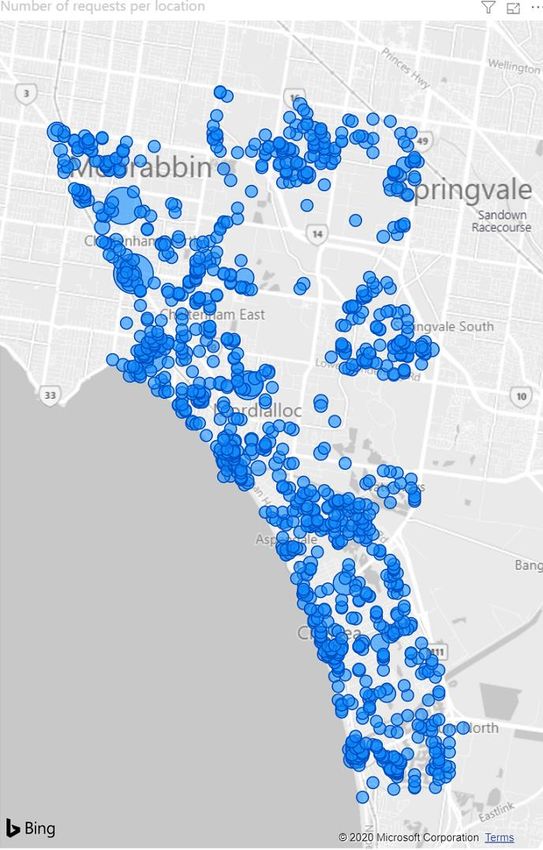
Aboriginal Acknowledgement
Kingston Council acknowledges and pays our respects to the Elders, past and present and people
of the Kulin nation and recognise them as the custodians of the land on which the Kingston
municipality is situated.

     Graffiti Action Plan                                                             2 of 23
Contents
Introduction ................................................................................................................ 4

Priority 2: A Safe and Secure Community .................................................................. 5

Actions ....................................................................................................................... 6

   Priority 1: Address the environmental conditions that promote and sustain crime .. 6
   Priority 2: Eliminate risk factors and enhance protective factors to reduce the
   likelihood that individuals will engage in offending behaviour ................................. 9
   Priority 3: Strengthen communities by addressing social exclusion and promoting
   community cohesiveness ...................................................................................... 10
   Priority 4: Enhance the capacity of criminal justice agencies to prevent crime and
   reoffending............................................................................................................ 12
Background information ........................................................................................... 14

   Definitions of graffiti .............................................................................................. 14
   Reasons for graffiti................................................................................................ 15
   About graffiti writers .............................................................................................. 15
   Impact of graffiti .................................................................................................... 15
   Legislative and policy context ............................................................................... 19
   Data and demographic profile ............................................................................... 20
   How we developed this action plan....................................................................... 20
   How we will implement this action plan ................................................................. 21
   How we will monitor this action plan ..................................................................... 21
   References ........................................................................................................... 22

      Graffiti Action Plan                                                                                        3 of 23
Introduction
Everyone has a right to feel safe and a responsibility to contribute to a safer community. Perceived
levels of safety (how people feel about their safety) can have a real impact on actual safety. For
example, if an area is avoided due to poor perceptions of safety, the area may become a haven for
anti-social and criminal activity. Perceptions of safety can also limit people’s participation in
activities that would make the community safer and build their personal resilience.

Graffiti can have a significant impact on community perceptions of safety; through diminishing
amenity, making people feel unsafe in public spaces that appear uncared for and uncontrolled, and
directly impacting property owners who incur the inconvenience and cost of repairing damaged
surfaces to their property. Tax and rate payers also incur additional costs through government
removal, investigation and enforcement against graffiti.

In areas with more prolific graffiti, graffiti can be a factor in higher insurance premiums and lower
property values. Graffiti can also be dangerous for those performing it, when done in unsafe
locations or when leading to a conflict with other graffiti writers. Conversely, graffiti can also have a
positive socialisation aspect for those performing it, and sometimes can lead to artistic skills
development and careers in the arts. Additionally, some graffiti can have positive beautification and
economic benefits to areas.

Ongoing work is required to reduce undesirable graffiti in Kingston. Kingston’s Graffiti Action Plan
2020-2025 is a Council document that outlines Council’s role in the management of graffiti across
the Kingston municipality. Council is responsible for the management of graffiti on Council property
and is well placed to take a leading role in the management of graffiti on other properties within the
Kingston municipality due to its strong partnerships and collaborative approach in working with
residents, community organisations, and the Victorian Government.

For the purpose of Council’s management of graffiti, Council distinguishes between various types of
property owners. The type of property owner has implications for Councils involvement in the
removal of graffiti, or ability to alter the physical environment for the purpose of establishing a
mural or ‘target hardening’ a location to reduce the likelihood of graffiti.

 Property Category                    Description                          Council’s Role
 Council Property                     Property owned by Council            Responsible for all graffiti
                                                                           management.
 Utility provider and Victorian or    Property owned by other levels       Report graffiti to relevant
 Australian Government property       of government or a utility           authority for their
                                      provider, such as rail corridors,    management.
                                      arterial roads, electricity boxes
                                      etc.
 Large sized commercial business      Property owned by large              Report graffiti to relevant
                                      commercial businesses (such as       commercial business for
                                      Bunnings, Woolworths, Harvey         their management; or issue
                                      Norman etc.)                         a notice to comply with the
                                                                           Community Local Law.
 Small - medium sized businesses      Property owned by a small –          Partner with the business
                                      medium local business (Cafés,        owner to arrange the
                                      Milk bars, Beauty Salons, small      management of graffiti on
                                      retail shops etc.)                   their property.

     Graffiti Action Plan                                                                    4 of 23
Residential property Privately owned residence Make graffiti removal
materials available to the
property occupier; or seek
the property owners’
permission to manage
graffiti.
Priority 2: A Safe and Secure Community
Guided by Council’s Public Health and Wellbeing Plan
Kingston’s Public Health and Wellbeing Plan (PHWP) is an overarching strategic plan for addressing
key health and wellbeing issues in Kingston. There are a range of action plans / strategies across
Kingston Council that deliver the priorities of the PHWP, including the Safe and Secure Action Plan
which outlines the strategic objectives that Council undertakes to improve safety and security for
the community. The Graffiti Action Plan 2020-2025 responds to the objectives of the Safe and Secure
Action Plan, by improving perceptions of safety through the management of graffiti.
• Kingston's Public Health and Wellbeing Plan
• Kingston's Safe and Secure Action Plan
• Kingston's Graffiti Managment Action Plan 2020-2025
Graffiti Action Plan 5 of 23Actions
The National Crime Prevention Framework was developed by the Australian Institute of Criminology
(AIC) to outline the most effective approaches to the prevention of crime, including:
• address the environmental conditions that promote and sustain crime;
• eliminate risk factors and enhance protective factors to reduce the likelihood that
individuals will engage in offending behaviour;
• strengthen communities by addressing social exclusion and promoting community
cohesiveness; and
• enhance the capacity of criminal justice agencies to prevent crime and reoffending.
This framework has been used to determine Council’s approach to managing graffiti in Kingston.
The Action Plan below provides an outline of Council’s activities to manage graffiti, corresponding
with the responsible department for leading the implementation of the actions and measuring to
evaluate the actions effectiveness. Not all actions are useful to measure, or able to be measured
within Council’s current resources. As such, priority has been given to measuring actions that are
achievable and provide a useful indication of Council’s performance in managing graffiti. The
measures include both ‘output’ and ‘outcome’ measures: where ‘output measures’ describe what
was delivered; and ‘outcome measures’ describe the impact of what was delivered.
The actions will be implemented over the life of this Action Plan.
PRIORITY 1: ADDRESS THE ENVIRONMENTAL CONDITIONS THAT
PROMOTE AND SUSTAIN CRIME
“Environmental approaches to crime prevention include both situational approaches and
broader planning initiatives where the aim is to reduce crime by designing and/or modifying
the physical environment to reduce the opportunities for crime to occur.” (National Crime
Prevention Framework, p.5)
The amenity and aesthetic of public spaces significantly impacts how members of the community
experience and use the space. Graffiti ‘hot spots’ i.e. locations where graffiti tagging is prevalent,
often prompts fear of crime. Aesthetically pleasing design responses can improve the amenity of
public spaces and reduce areas that experience high levels of tagging or vandalism. Activated spaces
which invite natural surveillance and legitimate use of the area contributes to positive feelings of
community safety.
Objectives Actions Responsible Output Outcome
Department Measure Measure
1.1.1 Remove Graffiti
Community 100% of Reduction in
from Council assets
Buildings graffiti the visibility
within 7 days of it
Graffiti Action Plan 6 of 23being reported to removed of
1.1.1 Reduce the visibility of Road
Council within 7 days undesirable
undesirable graffiti in Infrastructure
of being graffiti in
Kingston
Parks and reported to Kingston,
Open Space Council. gauged by a
reduction in
1.1.2 Remove
Community 100% of the volume
obscene or offensive
Buildings offensive of annual
graffiti within 24
hours of it being graffiti reported
Road removed
reported to Council graffiti
Infrastructure within 24 (Source:
hours. Council
Parks and
Pathway
Open Space
Data)
1.1.3 Continue to
Community Assess 2 sites
consider application
Buildings per year for
of anti-graffiti
coatings to Council their
buildings where the suitability for
potential cost of an anti-
rectification or graffiti
restoration may coating.
outweigh the cost of
a protective coating
1.1.4 Continue to
Customer Care
provide an incentive
scheme for Council
staff to report graffiti
and other
maintenance issues
in the municipality
1.1.5 With property
Community
owners’ permission,
Buildings
remove graffiti from
residential or small -
medium business
owners property
that is highly visible
to the community
1.1.6 Continue
Community
membership of the
Buildings
Inner South
Metropolitan
Mayors Forum
(ISMMF) to advocate
Graffiti Action Plan 7 of 23to asset owners to
improve their graffiti
removal practices.
1.2 Re-develop public spaces 1.2.1 Finalise and City Strategy
using design principles that Implement
reduce the likelihood of Council’s Street
undesirable graffiti, such as Art Guidelines to
applying anti-graffiti film or guide the
coatings, screen planting, implementation
and incorporating mural of murals at
artwork at key graffiti hot appropriate
spots. locations.
1.2.2 Implement Kingston Arts
Council’s Public
Art Policy to
ensure the
provision of
quality,
progressive and
varied public art
into the urban
landscape.
1.2.3 Have regard Urban
to the Urban Planning
Design Guidelines
for Victoria’s Community
guidance for the Buildings
development of
Parks and
public spaces and
Open Space
community
assets.
1.2.4 Conduct Social
Safety Audits of Development
‘hot spot’
locations for
graffiti and apply
for funding to
implement Target
Hardening or
Crime Prevention
Graffiti Action Plan 8 of 23Through
Environmental
Design (CPTED)
outcomes.
PRIORITY 2: ELIMINATE RISK FACTORS AND ENHANCE PROTECTIVE
FACTORS TO REDUCE THE LIKELIHOOD THAT INDIVIDUALS WILL ENGAGE
IN OFFENDING BEHAVIOUR
“Developmental crime prevention, which involves intervening early in critical transition
points in a person’s development to address those factors that may lead them on a pathway
to future involvement in crime, is an important crime prevention measure. There are positive
outcomes for young people, their families and the broader community.” (National Crime
Prevention Framework, p.6-7)
Council provides support to young people during their transition into adulthood through Council’s
Youth Services team guided by the Kingston Youth Strategy. This Graffiti Action Plan will
complement the efforts of the Youth Services team by engaging young people in the community in
graffiti prevention activities. Given graffiti offenders are generally aged between 12 and 25 years in
Kingston, there are opportunities for increased provision of alternative creative outlets to divert
young people who are likely to engage in graffiti tagging. Graffiti art programs, mentorship
opportunities and graffiti education workshops can effectively redirect young people towards
permissible street art. Vibrant, colourful places that reflect the experiences of young people in
Kingston are more likely to be respected by young people.
Objective Action Responsible Output Outcome
Dept. Measure Measure
2.1 Support young people to 2.1.1 Implement Youth Services
reduce the likelihood of their Kingston’s Youth
engagement in illegal graffiti Strategy to support
activity. healthy decision-
making, encourage
participation in
legitimate
opportunities, and
value young people’s
contribution.
2.1.2 Work with Social Values-based Reduction in
Common Cause Development message/s that graffiti on
Australia to develop communicate Council assets.
values-based the value of
messages that public assets to
increase young young people
Graffiti Action Plan 9 of 23people’s were developed
understanding of the with young
value of public assets people and
and importance of promoted by
not defacing them Council.
with graffiti.
2.1.3 Involve young Kingston Arts Percentage of
people in the murals
development of local commissioned
mural projects and by Council that
other artistic involved young
projects identified people in the
through Council’s murals’
Public Art Policy and creation.
informed by Street
Art Guidelines.
2.1.4 Partner with Social Percentage of
schools, Council’s Development graffiti grant
youth consultative applications
committees, and where young
local organisations to people were
gather young consulted.
people’s feedback
and input into graffiti
prevention strategies
when developing
Graffiti Prevention
Grant funding
applications.
PRIORITY 3: STRENGTHEN COMMUNITIES BY ADDRESSING SOCIAL
EXCLUSION AND PROMOTING COMMUNITY COHESIVENESS
“The risk of becoming involved in crime, or being victimised, is greater in those communities
that experience high levels of social exclusion or a lack of social cohesion.” (National Crime
Prevention Framework, p.7)
Graffiti tagging requires a whole-of-community response. The responsibility to manage graffiti
cannot solely lie within Council, Victoria Police and the Department of Justice. Effective strategies
depend upon localised, place-based activities which build stronger connections within the
community to increase social ties and community cohesion.
Graffiti Action Plan 10 of 23Objective Action Responsible Output Outcome
Department Measure Measure
3.1 Engage the community to 3.1.1 Promote Social KYC article, Increase in
report graffiti. community reporting Development media release, graffiti reporting
of graffiti to Victoria and social to Victoria
Police: media post Police each
during year.
Call 000 to report
Community
graffiti in progress
Safety Month
If you have (October)
information on promoting
illegal graffiti graffiti
offences, contact reporting.
your local police
station or call Crime
Stoppers on 1800
333 000. You can
provide information
to Crime Stoppers
without giving your
details.
3.1.2 Encourage the Social
community to report Development
graffiti to the
relevant government
or utility provider via
information
provided on the
Council website.
3.2 Provide the opportunity for 3.2.1 Provide group Community Facilitate 3 Increase in
community involvement in the volunteer Buildings and community participants’
removal of graffiti opportunities for the Social graffiti clean-up feelings of
community to Development sessions per community
remove graffiti using year. connection and
Council’s graffiti contribution.
removal equipment.
3.2.2 Provide free Social Increase in the
graffiti removal kits Development use of graffiti
and wipes to the removal kits and
community to wipes as
remove graffiti from indicated by
their property. Pathway
requests.
Graffiti Action Plan 11 of 233.2.3 Continue to Community
support the Buildings
Community Work
Order program of
Corrections Victoria
for the removal of
graffiti by criminal
offenders.
3.2.4 Promote Economic Growth
Graffiti Information and Innovation
Packs to local
businesses
requesting
assistance to
manage graffiti.
PRIORITY 4: ENHANCE THE CAPACITY OF CRIMINAL JUSTICE AGENCIES
TO PREVENT CRIME AND REOFFENDING
“Criminal justice agencies make a valuable contribution to effective crime prevention
strategies. There is strong evidence that effective criminal justice processes can contribute to
reductions in offending behaviour.” (National Crime Prevention Framework, p.8)
Graffiti management must be actioned in alignment with local and state laws. Instances of non-
permitted graffiti will be dealt with in accordance with laws enforceable by Victoria Police under the
Graffiti Prevention Act (2007).
Objective Action Responsible Output Outcome
Department Measure Measure
4.1 Administer local laws 4.1.1 Continue to Local Laws
relating to graffiti. enforce Kingston’s
Community Local
Law to issue a Notice
to Comply to
property owners to
clean an unsightly
property.
4.2 Support Police in the 4.2.1 Continue to Community Council Council supplies
investigation and prosecution of maintain accurate Buildings continues to Police with
graffiti offenders. graffiti removal collect data on information
records for graffiti reported about graffiti
enforcement and removed by removal upon
purposes. request.
Graffiti Action Plan 12 of 23Council and its
contractors.
4.2.2 In consultation Community Number of Council supplies
with Victoria Police, Buildings graffiti hot spot Police with
erect CCTV cameras locations where CCTV footage
in hot spot locations temporary or evidence of
for graffiti. fixed cameras graffiti upon
are installed. request.
4.2.3 Establish a Community A reporting Council has
reporting process for Buildings process is records of the
Police to update established for outcomes of
Council on the Police to update graffiti offences
outcomes of any Council on the where Council
information supplied outcome of any supplied
to Police about evidence evidence.
graffiti offenders. supplied by
Council to Police
in relation to
graffiti.
Graffiti Action Plan 13 of 23Background information
DEFINITIONS OF GRAFFITI
‘Tagging’ and ‘street art’ are terms related to graffiti that are commonly confused with one another.
Whilst both terms represent subversive art movements, they can also be described as a method of
communication seeking to reach different audiences.
There are various forms of graffiti including tags, etching, stencils, pieces, throw-ups, paste-ups,
stickers and murals.
Tags ‘Tagging’ or ‘tags’ are acts of personal branding by scratching, marking or spray
painting a signature-like marking into a wall or infrastructure identifying an
individual through an alias. Tagging most frequently occurs without permission
from the property owner.
Etching Etching involves scratching or applying acid or mordant to cut into a surface.
Stencils Stencil graffiti makes use of a paper, cardboard, or other media to create an
image or text that is easily reproducible. The desired design is cut out of the
selected medium and then the image is transferred to a surface using spray paint
or roll-on paint.
Pieces A "piece" is a more elaborate representation of the artist's name, incorporating
more stylized letters, usually incorporating a much larger range of colours. A
"blockbuster" or "roller" is a large piece, almost always done in a block shaped
style, done simply to cover a large area solidly with two contrasting colours. A
more complex style is “wildstyle”, a form of graffiti usually involving interlocking
letters and connecting points. These pieces are often harder to read as the
letters merge into one another in an often-undecipherable manner.
Throw-ups Also known as a "bombing", throw-ups are normally painted very quickly with
two or three colours, sacrificing aesthetics for speed. Throw-ups can also be
outlined on a surface with one colour.
Stickers / Stickers or paste-ups are drawings or words on paper that are applied to surfaces
Paste-ups with an adhesive. They can be quite detailed and are often used in conjunction
with other materials.
Street Art / ‘Street art’ is often undertaken in the public realm by artists, some of whom are
Murals formally trained, with permission or commissioned by property managers.
Graffiti Action Plan 14 of 23‘Street art’ often uses different materials to tagging, such as stickers, stencils,
wheat-paste posters, and use symbolic imagery to create an emotional response.
As identified in the Consultation Report, tags are the most controversial form of graffiti in Kingston.
This Plan differentiates ‘graffiti tagging’ from ‘street art,’ where street art is defined as artwork that
has been deliberately permitted and commissioned in public areas of Kingston.
REASONS FOR GRAFFITI
Illegal acts of graffiti involve personal risk that give graffiti a counter-culture, anti-establishment
edge. People who ‘tag’ are generally seeking to communicate with other graffiti writers, and may be
marking territory, related to feelings of belonging to a group, challenging ideas of the status-quo,
seeking notoriety from other ‘taggers’ or are simply engaging in anonymous mark-making. Many are
also seeking to destroy or vandalise public property.
Street art or murals are often created to be viewed by and engage everyone, seeking to disrupt their
day-to-day experience.
ABOUT GRAFFITI WRITERS
Kingston’s local Police Inspector identified the following demographic characteristics of graffiti
offenders in Kingston:
The general demographic of graffiti offenders is between 12 and 25 years with a median age
of 15 years. Those that are involved do come from all socio-economic environments,
however the largest percentage are from mid to high-level income families. This information
is supported after analysis of the age of offenders processed for graffiti incidents in Kingston
Police Service Area (PSA) since 01-Jan-2019. It is noted that youngest offender processed
was aged 12 years and the oldest 26 years. All of the offenders processed were male.
This profile generally reflects the feedback collected through the community consultation.
IMPACT OF GRAFFITI
The following information shows the financial, location, time, and criminal impacts of graffiti in
Kingston.
COST OF GRAFFITI
A complete picture of the cost of graffiti to the Kingston municipality is unable to be obtained
due to the multiple agencies involved in removal, and undefined variety of other graffiti
management activities. However, Council is able to provide data on the annual cost of graffiti
Graffiti Action Plan 15 of 23removed by Kingston City Council. The annual graffiti removal cost to Kingston fluctuates, with
the average annual cost for the past 4 years equalling just over $100k annually.
Financial Year 2015-16 2016-17 2017-18 2018-19 2015-2019 Average
Cost of Graffiti Removal $83,903 $111,506 $95,467 $114,122 $101,249.5
(Kingston City Council, 2020)
WHERE GRAFFITI OCCURS
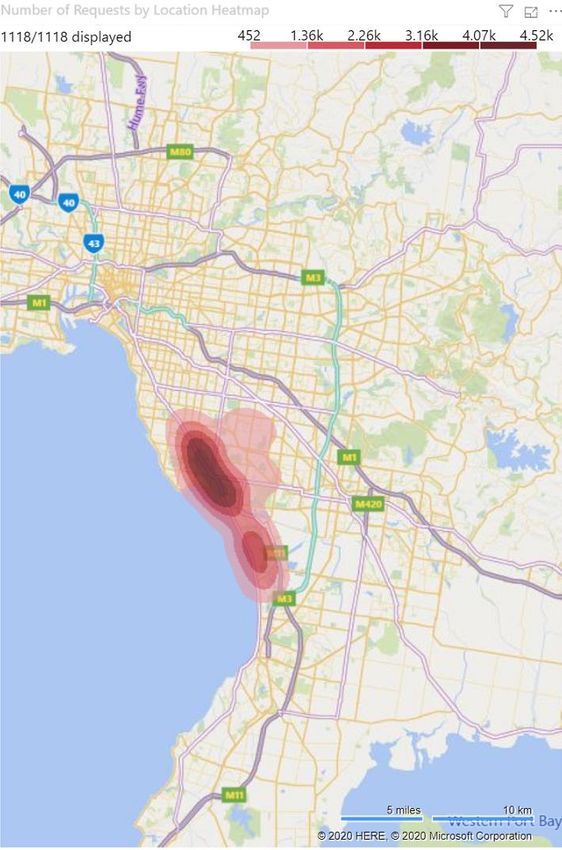
The following heat map and location map shows the location of graffiti in Kingston from January
2016 - January 2020. Graffiti predominantly occurs on public assets or public facing assets
throughout the municipality.
The following is a breakdown of graffiti by postcode of Kingston:
Number of graffiti removal requests per postcode by financial year
Postcode 2016-17 2017-18 2018-19 2019-20 Grand Total
3169 1 1
3190 1 1
3194 2 2
Graffiti Action Plan 16 of 233195 2 2
3196 1 1
3197 1 1
3167 3 8 5 4 27
3169 18 14 20 24 88
3172 34 36 38 75 194
3189 10 36 47 69 196
3190 23 29 24 42 130
3192 15 30 35 50 142
3194 62 121 91 35 327
3195 77 150 238 259 821
3196 39 61 98 89 335
3197 21 45 40 43 173
3202 5 1 1 2 10
Total 315 531 637 692 2451
(Kingston City Council, 2020)
The 3195 postcode, incorporating suburbs of Aspendale, Aspendale Gardens, Braeside, Mordialloc,
Parkdale and Waterways clearly stands out as the predominant area where graffiti is requested to be
removed. This may reflect the dominance of graffiti in this area and/or a lack of tolerance for graffiti
by residents in the 3195 postcode.
WHEN GRAFFITI OCCURS
Although the following table is not a complete picture of all graffiti removal per square metre
performed by Council, as it only captures graffiti removed by Council’s removal contractor and not
by Council Officers, it does however provide an indication of the busier times of the year for graffiti
removal. These times tend to co-inside with school holidays and warmer weather.
‘GraffitiRid’ Monthly Graffiti Removal 2018-19 by Square Metres
Month Total sq. Mtrs
June 2018 439.5
July 2018 450.5
August 2018 472
Graffiti Action Plan 17 of 23September 2018 566.5
October 2018 570.7
November 2018 270
December 2018 882
January 2019 791
February 2019 513
March 2019 514.5
April 2019 740.25
May 2019 634
(Kingston City Council, 2020)
RECORDED RATES OF GRAFFITI
Most instances of graffiti are not reported as a criminal offence. Many variables can impact recorded
crime statistics, such as: public awareness, reporting culture, report handling, data collection
methodology etc. For these reasons, reported crime statistics do not always match actual crime
rates, or other data sources such as Council’s graffiti removal records. The table below shows the
annual record of graffiti in Kingston reported to Victoria Police. There has been a reduction in the
average number of incidents of graffiti recorded as a criminal offence; from a 5-year average of
231.4 from 2010-2014; to a 5-year average of 128.4 from 2015-2019.
Kingston Graffiti Criminal Offences (Category B22 Graffiti) Recorded by Calendar Year
2010 2011 2012 2013 2014 2010-2014 average
433 229 171 155 169 231.4
2015 2016 2017 2018 2019 2015-2019 average
100 124 200 121 97 128.4
(Victorian Crime Statistics Agency, 2020)
In addition to a record of individual instances of graffiti reported to Police, the Victorian Crime
Statistics Agency provides rates of crime per 100,000 population, which allows for crime levels to be
compared to other locations or crime types. The table below shows the annual record of graffiti
reports per 100,000 population and compares Kingston’s reported graffiti to neighbouring
municipalities and the Victorian average. Reporting of graffiti in Kingston is higher than the state
average, which may relate to higher rates of graffiti, or lower tolerance for graffiti and increased
willingness to report graffiti.
Graffiti Action Plan 18 of 23Graffiti Criminal Offences (Category B22 Graffiti) Rate per 100,000 population comparing Kingston to
Victorian Average
2010 2011 2012 2013 2014 2015 2016 2017 2018 2019
Bayside 73.2 121.7 114.5 114 63.1 80 80.7 54.7 53.9 39.3
Frankston 190.6 101.3 160.4 144.4 182.8 84.2 92.5 112.3 68.4 67
Glen Eira 186.8 113 84.1 87.8 54.3 59.6 57.2 105 63.7 56.6
Greater 17.8 38 33.8 38.4 41.4 51.3 22.5 31.8 15.1 10.7
Dandenong
Kingston 293.7 154.4 113.7 101.7 109.6 64 78 124.2 74.0 58.7
Monash 92.8 69.9 37.7 27.3 37.6 33.3 48.3 42.7 32.5 32.1
Victorian 58.9 68.2 58.5 61.9 54.6 54.6 52.7 48.7 42.3 46.2
Average
(Victorian Crime Statistics Agency, 2020)
Overall the impact of graffiti in Kingston is multifaceted and difficult to quantify. However, some
clear trends emerge from the data above and the community consultation:
• Graffiti removal costs Council approximately $100k annually. However, this is not the
complete cost of all graffiti removal across Kingston, nor the complete cost of all Council
graffiti management activities.
• Graffiti writers prefer to graffiti public assets or publicly facing assets.
• Most illegal graffiti in Kingston is performed by young people and in school holidays,
particularly during the warmer months.
• Graffiti is of particular concern in the 3195 postcode, which incorporates the suburbs of
Aspendale, Aspendale Gardens, Braeside, Mordialloc, Parkdale and Waterways.
• Kingston’s graffiti is under-reported to Police. However, graffiti in Kingston is being reported
to Police more often than the Victorian average.
LEGISLATIVE AND POLICY CONTEXT
Kingston’s Graffiti Action Plan 2020-2025 was developed with reference to the national, state and
local plans, strategies, frameworks and guidelines, as listed below:
AUSTRALIAN GOVERNMENT
• National Crime Prevention Framework
Graffiti Action Plan 19 of 23VICTORIAN GOVERNMENT
• Victorian Graffiti Prevention Act 2007
• Summary Offences Act 1966
• Victorian Public Health and Wellbeing Plan 2019-2023
• Urban Design Guidelines for Victoria
KINGSTON CITY COUNCIL
• Public Health and Wellbeing Plan
• Public Art Policy
• Draft Street Art Guidelines
• Community Local Law, specifically: clause 27 that enables Council to consider premises
‘unsightly’ and issue a Notice to Comply to the property owner; and clause 120 that
prohibits any person/business who sells aerosol spray paint cans to store or display the cans
in an area accessible to the public.
DATA AND DEMOGRAPHIC PROFILE
Collation and analysis of data and demographics from a variety of sources such as the Australian
Bureau of Statistics, VicHealth and the Crime Statistics Agency Victoria informs the development of
the PHWP and Safe and Secure Action Plan. This is presented in the City of Kingston Health and
Wellbeing Profile and is available on Kingston Council’s website: www.kingston.vic.gov.au
HOW WE DEVELOPED THIS ACTION PLAN
The actions and partnerships detailed in this action plan were identified within the development
process for the PHWP 2017-2021; and through the development of this Graffiti Action Plan in 2020.
Data and information was gathered during these processes to inform the development of the PHWP
and its action plans. The process involved an analysis of relevant data and demographic information,
policy and legislative contexts, and stakeholder and community consultation. The consultation
process for developing this plan included a co-design workshop with internal Council stakeholders,
an online survey, workshops with advisory committees, phone call interviews with graffiti artists and
taggers, and pop-up events in a local reserve and skate park. The Graffiti Action Plan consultation
was partly funded by the Victorian Government’s Community Crime Prevention Program.
DATA AND LITERATURE
The data and literature review consisted of:
• An evaluation of Council’s Safe and Secure Action Plan 2017-2021, and previous
Graffiti Management Plan 2012-2017.
Graffiti Action Plan 20 of 23• A review and analysis of other local government, state and federal policies and
literature from the Australian Institute of Criminology (AIC).
• Collation and analysis of health and demographic data from a variety of government
sources such as the Australian Bureau of Statistics, VicHealth, Crime Statistics Agency
Victoria, and Council’s graffiti removal records.
COMMUNITY ENGAGEMENT
The following engagement activities were held for the development of this Action Plan:
• Council engaged CAPIRE Consulting to consult the Kingston community, key
stakeholders and graffiti writers in Kingston between February – March 2020 to gather
local information about, and attitudes towards, graffiti in Kingston. The consultation
report is available via Kingston’s website.
• Kingston Council’s 2016 Health and Wellbeing Survey, which provided a representative
sample of Kingston’s residents and their views on health, wellbeing and safety in
Kingston.
• Consultation with other local government officers who manage graffiti action plans.
• Discussions with internal Council staff to identify opportunities manage graffiti through
Council’s services.
HOW WE WILL IMPLEMENT THIS ACTION PLAN
This action plan outlines details about what Council commits to doing to manage graffiti in the
municipality. Each action lists what will be done, which team in Council will lead the initiative, and
where appropriate, how the initiative will be evaluated for its effectiveness.
The Social Development Team will oversee the development and co-ordination of this Action Plan
and support and guide other teams with their actions. Working collaboratively within Council and
with external organisations and with the community is an important aspect of implementing the
identified actions.
HOW WE WILL MONITOR THIS ACTION PLAN
An annual review of output and outcome measures will provide short term feedback about the
successes and challenges of this Action Plan, informing any amendments to the Graffiti Action Plan
2020-2025 during its lifecycle, and tracking how Council is progressing in achieving its safe and
secure objectives of the PHWP.
Councillors will be informed of the outcomes of all health and wellbeing work across Council and
their impact on the long-term measures of the PHWP objectives in this Action Plan. This will also be
available to the Kingston Community via the Kingston website every four years. The Graffiti Action
Plan 2020-2025 will be redeveloped in line with the review and redevelopment of the PHWP in 2025.
Graffiti Action Plan 21 of 23REFERENCES
CAPIRE Consulting, 2020, Graffiti Management Plan Community Engagement Report. Available at
www.kingston.vic.gov.au
Crime Statistics Agency Victoria, Crime Statistics and Crime by Location. Available at
https://www.crimestatistics.vic.gov.au/ Accessed April 2020.
Department of Justice and Regulation, 2018, Graffiti Prevention Grants 2016-2017 Summary of
Evaluation Findings
Inner South Metropolitan Mayors Forum, 2017, Inner South Metropolitan Mayors Forum. Available
at http://ismmf.com/
Kingston City Council, Graffiti Records, Pathway system. Accessed March 2020.
The Kingston Graffiti Action Plan was supported by the Victorian Government’s Community Crime
Prevention Program.
Graffiti Action Plan 22 of 23Graffiti Action Plan 23 of 23
You can also read


