Labour Market Profile Colombia 2020/2021 - Danish Trade Union Development Agency
←
→
Page content transcription
If your browser does not render page correctly, please read the page content below
Labour Market Profile
Colombia – 2020/2021
                                                                      Danish Trade Union
                                                                      Development Agency

   This updated profile provides a comprehensive overview of the
                            labour market situation in the country.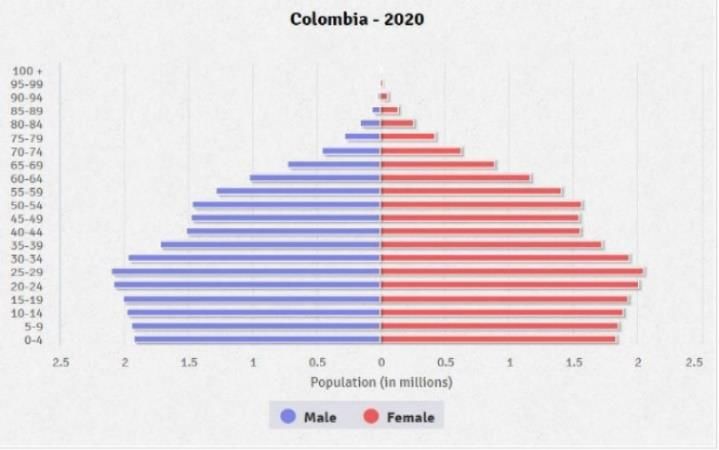
Danish Trade Union Development Agency
Colombia Labour Market Profile 2020/2021

PREFACE
Danish Trade Union Development Agency (DTDA) is the            Primary sources of data and information for LMPs are:
development organisation of the Danish trade union
movement. This agency was established in 1987 by the           •   As part of programme implementation and
two largest Danish confederations – Danish Federation              monitoring, national partner organisations provide
of Trade Unions (Danish acronym: LO) and Danish                    annual narrative progress reports, including
Confederation of Professionals (Danish acronym: FTF).              information on labour market developments.
These confederations merged to become the Danish                   Furthermore, specific types of data and information
Trade Union Confederation (Danish acronym: FH) in                  relating to key indicators are collected using a
January 2019. Correspondingly, former known as                     unique data collection tool.
LO/FTF Council was changed to DTDA.
                                                               •   National statistical institutions and international
The work of DTDA is in line with the global Decent Work            databanks are used as a source for collection of
Agenda (DWA) based on its pillars: creating decent jobs,           general (statistical) data and information such as
guaranteeing rights at work, extending social protection,          ILOSTAT and NATLEX, World Bank Open Data,
and promoting social dialogue. The overall development             ITUC Survey of Violations of Trade Union Rights,
objective of DTDA’s interventions in the South is to               the U.S. Department of State as well as other
eradicate poverty and support the development of just              international recognised labour-related global
and democratic societies by furthering the DWA.                    indexes.

DTDA works in partnership collaboration with trade union       •   Academia and media sources (e.g. LabourStart,
organisations in Africa, Asia, Latin America, and the              national news, among others) are furthermore used
Middle East. The immediate objective of the programme              in the available research on labour market issues.
implementation is to assist the partner organisations in
becoming change-agents in their own national and               Labour Market Profiles for more than 30 countries are
regional labour market context, capable of achieving           available on DTDA’s website:
tangible improvements in the national DWA conditions,          https://www.ulandssekretariatet.dk/.
and towards the achievement of the labour-related
Sustainable Development Goals (SDGs).                          DTDA prepared the Labour Market Profile in
                                                               collaboration with the DTDA MENA sub-Regional Office
The format of the Labour Market Profile (LMP) provides         in Tunisia. If any comments or questions arise to the
a comprehensive overview of the labour market situation        profile, please contact Mr. Kasper Andersen
in the individual countries of engagement. The profile is      (kan@dtda.dk) from DTDA.
divided into nine thematic sections describing the
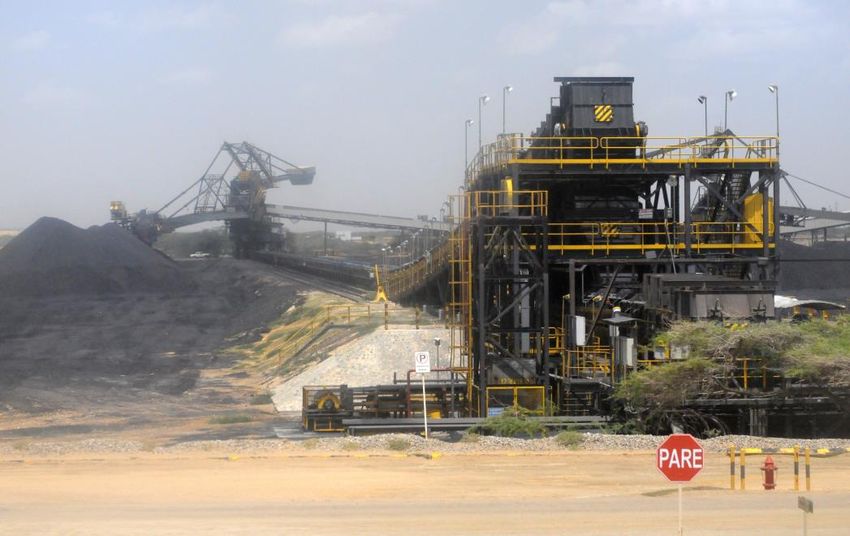
economic performance, labour legislation, social               Cover photo covers Cerrejón, a large open-pit coal mine
partners, social dialogue, violations of trade union rights,   in Colombia, located in the southeast of the department
working conditions, the general status of the workforce,       of La Guajira, close to the border with Venezuela. It was
education, and social protection.                              photographed by Carsten Flint Hunneche

In the framework of DWA and SDGs, LMPs are following           Address:
several central indicators addressing aspects of labour        Ulandssekretariatet
market development, especially the unionism evolution,         Islands Brygge 32D
social dialogue and bi-/tri-partite mechanisms, policy         DK-2300 Copenhagen S
development and legal reforms, status vis-à-vis ILO            Denmark
conventions and labour standards, among others.                Telefon: +45 33 73 74 40
                                                               http://www.ulandssekretariatet.dk/

                                                                                                                   Page i
Danish Trade Union Development Agency
Colombia Labour Market Profile 2020/2021

EXECUTIVE SUMMARY
Colombia has been among the fastest-growing                   not changed as rapidly. The youth unemployment rate
economies in Latin America, and in May 2020 formally          fell but remained relatively high, challenged by skill
entered the Organisation for Economic Co-operation and        mismatch and insufficient job creation. Only a small
Development (OECD). The minimum wage experienced              minority of unemployed workers receive unemployment
an upward trajectory during the 2010s, supporting the         benefits. Share of manufacturing in the GDP is nowadays
advancement of the middle-class among the employed.           half of what it was in the 1980s, and this sector is
It remains one of the lowest minimum wages in South           grappling with competing in global markets. Labour
America, though. Income inequality continues to be            productivity was rising during the 2010s, which
rampant. The economy entered a deep recession in 2020         contrasted the diminishing regional trend, benefitted
caused by the global coronavirus (COVID-19) pandemic.         from a lower dependency of exports and boundless low-
This condition mounted an overwhelming challenge on all       paid workforce.
fronts, and a series of employment-related measures
were launched. For example, the main economic sectors         Migration flows also altered during the last decades. The
were in quarantine that triggered a high increase in the      long-standing low-intensity civil conflict in the country
unemployment rate, which signalled an upsurge in              drove one of the highest internally displaced persons in
poverty. Progress in the education system was stalled.        the world. The urbanisation rate rose and reached
The scope of a system of subsidies for those who are          relatively high, at 81%. Net migration shifted
worst off was far below the minimum wage.                     significantly during the 2010s due to the Colombian
                                                              returnees as part of settling the internal conflict and an
Central international trade agreements created attention      extremely high influx of Venezuelans. This situation has
to addressing workers’ rights in the country during the       generated further demand for job creation and access
2010s. Although it prompted legal changes, the results        to social systems. Personal remittances have not been an
reached just partial progress or even some with no            essential part of the economy and significantly lower
progress due to the persistent rigid labour regulations.      than foreign direct investments.
For example, at the branch-level in the private sector,
the application of outsourcing methods stymied collective     Informal employment was on a declining trend at the
bargaining. Also, up to 95% of Colombian firms are            beginning of the 2010s, supported by economic growth
micro-enterprises that most often operate in the informal     and specific law reforms. The rate was stalled since 2014
economy, contesting the improved measurements, e.g.           at around 62% of employment due to the economic
labour inspections. On the positive side, a novel process     slowdown, migration challenges, stiff labour regulations,
of collective bargaining in the public sector increased       and general lack of awareness or incentives among
significantly during the 2010s.                               informal workers concerning labour and business
                                                              regulations.
Tripartite institutions structures are performing.
Colombian employers are ranking cooperation in labour-        Significant labour gender gaps are echoed in women’s
employer relations at medium-level. For the last three        relatively high youth not in employment, education, or
decades, the trade union membership rate was                  training (NEET) rate, which is associated with cultural
negatively affected by the application of controversial       stereotypes. Despite the impressive improvement in
employment methods and anti-unionism measures. Even           enrolment rates on all levels during the 2010s, the
in the 2010s, the trade union density punctured, reaching     education system continues to be challenged by
around 12% of employees in 2019, which was four               inadequate school infrastructure, alarming dropout rates,
percentage points lower than Latin America average.           and a high degree of teacher absenteeism. Relatively
Although the number of registered cases concerning            fewer students are enrolled in vocational training in
violations against unionists dropped during the 2010s, it     comparison to the regional average.
continues to be unacceptably high. The country stays
ranked at the bottom of the Global Rights Index.              Colombians social protection coverage improved
                                                              significantly in the last decades, especially in social
Colombia’s population structure transformed: gradually,       health coverage boosted by an upsurge in public health
the fertility rate fell, and the share of generations older   expenditure. The relatively low pension coverage at
than 60 years increased, which puts mounting pressure         25% among employed is stuck in insufficient enforcement
on the social protection system. While the workforce is       of employers’ obligation to pay the pension contribution
getting better educated, the labour market structure has      and widespread informality.

                                                                                                                 Page ii
Danish Trade Union Development Agency
Colombia Labour Market Profile 2020/2021
The table below presents key labour market indicators in In the next page, Page iv, the second table presents an
the framework of the Decent Work Agenda (DWA) that overview of the current value and targets of the
are related to central unionism issues. Sustainable Development Goals indicators’ in relation to
the labour market issues.
Status of key labour market indicators in the framework of the Decent Work Agenda (DWA) in Colombia
Creating decent jobs
The labour market policy reform since 2013 introduced important changes with the
Policy reforms addressing creation of decent aim of integrating active and passive labour market policies to facilitate the return
employment.
to work in the event of job loss.
ILO standard setting on improvement of status of
T he Colombian government lack responds to follow-up on the Transition from the
Informal to the Formal Economy Recommendation (No. 204) to monitor the transitions
workers from the informal economy.
to the formal economy and decent work deficits.
Guaranteeing rights at work
Growth in trade union members, 2012-2019 (%) -9% based on the aggregate membership rate from CTC, CGT, and CUT.
Violations of trade union rights. Ranking 5 out of 5 (5+ is the worst) in 2020. *
The creation of the Group for Attention to Users; the assignment of an advisor to
trade unions; the participation of Colombia’s union confederations in the Committee
for the Evaluation of Risk and the Recommendation of Measures (CERREM); and its
Labour legislation is improved according to ILO participation in the Inter-institutional Commission of Workers’ Human Right. In 2019,
standards. the Ministry of Labour issued non-binding legal concepts concerning workplace
harassment measures enforcement for interns and electronic means for labour
contract signatures. In 2020, a wide range of employment-related measures were
launched to curb the COVID-19 crisis.
Partner organisations with minimum 30% women
Yes.
representation in decision-making bodies
Extending social protection
Coverage of social protection and labour
66% in 2014.
programmes as % of total population.
Social health protection can be extended to informal economy workers through
Workers from the informal economy have access to various financing mechanisms, including subsidised contributions to national health
national social security schemes.
insurance schemes for the poor in Colombia.
Promoting social dialogue
Trade union density of employment (%) 5.8% of employment (12% of employees) in 2019.
Cooperation in labour-employer relations. Ranking 66 out of 141 (1 is best) in 2019. **
Number of Collective Bargaining Agreements Yearly 368 on average from 2010 to 2016.
(CBAs).
0.8% of employees on overage from 2011 to 2016, excluding Collective Pacts and
Workers’ coverage of Collective Bargaining Union Contracts – broader estimations of all collective agreements were estimated
Agreements.
at 3.7%.
New National State Agreement covering 1,200,000 workers in the public sector,
Bi-/tri- partite agreements concluded.
which provides for a wage rise of 1.3% above the inflation rate for 2019 and 2020.
* This is interpreted as “no guarantee of rights”. Countries with the rating of 5 are the worst countries in the world to work in. While the legislation may spell
out certain rights, workers have effectively no access to these rights and are therefore exposed to autocratic regimes and unfair labour practices.
** This indicator is based on data from the Global Competitiveness Index that represents employers’ opinion from surveys.
Sources: ILO, MINTRABAJO, ITUC, World Economic Forum, National Trade Union School of Colombia; DTDA own calculations.
Page iiiDanish Trade Union Development Agency
Colombia Labour Market Profile 2020/2021
Status of key Sustainable Development Goals in labour market related issues in Colombia (estimates)
Indicators Value Year SDG Targets
1.1.1: Working poverty rate (percentage of By 2030, eradicate extreme poverty for all people everywhere,
1.4 % * 2020
employed living below US$1.9 PPP) currently measured as people living on less than $1.25 a day
1.3.1: The population effectively covered by Implement nationally appropriate social protection systems and
a social protection system, including social 41 % ** 2016 measures for all, including floors, and by 2030 achieve substantial
protection floors. coverage of the poor and the vulnerable
Ensure women’s full and effective participation and equal
5.5.2: Women share of employment in
53 % 2009 opportunities for leadership at all levels of decision-making in
managerial positions
political, economic and public life
Sustain per capita economic growth in accordance with
8.1.1: Annual growth rate of real GDP per national circumstances and, in particular, at least 7 per cent
- -
capita gross domestic product growth per annum in the least
developed countries
Achieve higher levels of economic productivity through
8.2.1: Annual growth rate of real GDP per
diversification, technological upgrading and innovation
employed person (GDP constant 2011 1.9 % 2020
through a focus on high-value added and labour-intensive
international $ in PPP)
sectors
8.3.1: Proportion of informal employment in Promote development-oriented policies that support
47 % 2017
non-agriculture employment productive activities, decent job creation, entrepreneurship,
8.3.1: Women 50 % 2017 creativity and innovation, and encourage the formalisation
and growth of micro-, small- and medium-sized enterprises,
8.3.1: Men 45 % 2017 through access to financial services
8.5.1: Average hourly earnings of women and
3.305 COP 2005
men employees
8.5.2: Unemployment rate (Total, 15+) 10 % 2019 By 2030, achieve full and productive employment and decent
8.5.2: Women, 15+ 13 % 2019 work for all women and men, including young people and
persons with disabilities, and equal pay for work of equal
8.5.2: Women, 15-24 years 25 % 2019
value
8.5.2: Men, 15+ 7.9 % 2019
8.5.2: Men, 15-24 years 16 % 2019
8.6.1: Proportion of youth (15-24 years) not By 2020, substantially reduce the proportion of youth not in
24 % 2019
in education, employment or training) employment, education or training
8.7.1: Proportion and number of children Take immediate and effective measures to eradicate forced
aged 5-17 years engaged in economic 3.3 % 2016 labour, end modern slavery and human trafficking and secure
activity (Total) the prohibition and elimination of the worst forms of child
8.7.1: Girls 2.0 % 2016 labour, including recruitment and use of child soldiers, and by
8.7.1: Boys 4.5 % 2016 2025, end child labour in all its forms
8.8.1: Frequency rates of fatal occupational
- - Protect labour rights and promote safe and secure working
injuries per 100.000 workers, annual
environments for all workers, including migrant workers, in
8.8.2: Level of national compliance with
particular women migrants, and those in precarious
labour rights (freedom of association and - -
employment
collective bargaining)
Promote inclusive and sustainable industrialisation and, by 2030,
9.2.2: Manufacturing employment as a significantly raise industry’s share of employment and gross domestic
12 % 2019
proportion of total employment product, in line with national circumstances, and double its share in
least developed countries
10.4.1: Labour income share as a percent of Adopt policies, especially fiscal, wage and social protection policies,
54 % 2017
GDP and progressively achieve greater equality
* Projections. ** Population covered by at least one social protection benefit.
Source: United Nations, Sustainable Development Goals, Knowledge Platform, UNICEF 2016 and ILO, Key Indicators of the Labour Market (KILM)
Page ivDanish Trade Union Development Agency
Colombia Labour Market Profile 2020/2021
COUNTRY MAP
Source: CIA, World Factbook
Page vDanish Trade Union Development Agency
Colombia Labour Market Profile 2020/2021
TABLE OF CONTENTS
PREFACE ............................................................................................................................................................................... I
EXECUTIVE SUMMARY ........................................................................................................................................................ II
Status of key labour market indicators in the framework of the Decent Work Agenda (DWA) in Colombia ................................ iii
Status of key Sustainable Development Goals in labour market related issues in Colombia (estimates) ....................................... iv
COUNTRY MAP ................................................................................................................................................................... V
ECONOMIC PERFORMANCE ................................................................................................................................................ 1
Free Trade Zones (FTZ)......................................................................................................................................................................................... 2
LABOUR LEGISLATIONS....................................................................................................................................................... 3
Observations on Labour Legislation .................................................................................................................................................................. 4
Ratified ILO Conventions ...................................................................................................................................................................................... 5
Trade Agreements ................................................................................................................................................................................................. 6
SOCIAL PARTNERS .............................................................................................................................................................. 7
Government ............................................................................................................................................................................................................. 7
Employers’ Organisations..................................................................................................................................................................................... 7
Trade Unions ........................................................................................................................................................................................................... 8
SOCIAL DIALOGUE .............................................................................................................................................................. 9
Central Tripartite Institutions ............................................................................................................................................................................. 10
TRADE UNION RIGHTS VIOLATIONS ................................................................................................................................. 12
WORKING CONDITIONS.................................................................................................................................................... 12
WORKFORCE ..................................................................................................................................................................... 13
Unemployment and underemployment .......................................................................................................................................................... 15
Sectoral Employment .......................................................................................................................................................................................... 16
Migration .............................................................................................................................................................................................................. 18
Informal Economy ................................................................................................................................................................................................ 19
Child Labour ......................................................................................................................................................................................................... 21
Gender .................................................................................................................................................................................................................. 22
Youth ...................................................................................................................................................................................................................... 23
EDUCATION ...................................................................................................................................................................... 24
Vocational training ............................................................................................................................................................................................. 26
SOCIAL PROTECTION ........................................................................................................................................................ 27
APPENDIX: ADDITIONAL DATA ........................................................................................................................................ 30
Table 22: List of approved labour related legislations in Colombia, 2014-2017 ............................................................................. 30
Table 23: Ratified ILO Conventions in Colombia ........................................................................................................................................ 34
Table 24: Number of Trade Unions and Membership per Sector in Colombia, 2016 ....................................................................... 35
Table 25: Number of violations of unionists’ cases in Colombia, 2012-2019...................................................................................... 35
Table 26: Ease of Doing Business in Colombia, 2019-2020 .................................................................................................................... 35
Table 27: Net migration rate in Colombia, per 1,000 persons, 2010-2020 ...................................................................................... 36
Table 28: Social security contributions and payroll taxes in Colombia, 2020 .................................................................................... 36
REFERENCES ...................................................................................................................................................................... 37
Page viDanish Trade Union Development Agency
Colombia Labour Market Profile 2020/2021
TABLES
Table 1: Key economic data in Colombia and Latin America & Caribbean, 2019 ....................................................................... 1
Table 2: Estimation and projection of employment by economic class in Colombia, 2000-2019 ............................................... 2
Table 3: Labour Market Efficiency in Colombia, 2019 ......................................................................................................................... 7
Table 4: Status of trade unions in Colombia, 2019 ............................................................................................................................... 8
Table 5: Central trade union confederations membership rate and growth, and ratio of members from public sector to total
members in Colombia .................................................................................................................................................................................... 9
Table 6: Freedom of Association cases in Colombia, 2020 (August) ...............................................................................................12
Table 7: Wages and Earnings per month in Colombia, 2020 ...........................................................................................................13
Table 8: Working Conditions in Colombia .............................................................................................................................................13
Table 9: Employment-to-Population Ratio in Colombia and South America, %, 2019 ................................................................14
Table 10: Unemployment and underemployment rates in Colombia and South America, %, 2019 ........................................15
Table 11: Employment sector distribution in Colombia, 2019 ...........................................................................................................17
Table 12: GDP Share by Subsector and GDP per Worker by Sector in Colombia, 2019 ........................................................18
Table 13: Net migration status and personal remittance in Colombia and Latin America & Caribbean (LAC) .....................19
Table 14: Status of the informal economy in Colombia ......................................................................................................................20
Table 15: Status of Child Labour in Colombia and Americas, 2016 ...............................................................................................21
Table 16: Estimation on workforce key indicators gender gaps in Colombia, 2020 (estimations) ...........................................22
Table 17: Employment by education in Colombia, % of employment distribution, age 15+, 2019 ........................................24
Table 18: Status of Vocational Training, 2018 .....................................................................................................................................26
Table 19: Proportion of population covered by social protection systems in Colombia, %, 2015/2016 ..............................27
Table 20: Expenditure of health and social protection issues in Colombia and Latin America and the Caribbean (LAC),
2010-2017 average ..................................................................................................................................................................................28
Table 21: Social protection coverage in Colombia, % of population, 2014 .................................................................................29
Table 22: List of approved labour related legislations in Colombia, 2014-2017 .......................................................................30
Table 23: Ratified ILO Conventions in Colombia ..................................................................................................................................34
Table 24: Number of Trade Unions and Membership per Sector in Colombia, 2016 .................................................................35
Table 25: Number of violations of unionists’ cases in Colombia, 2012-2019 ...............................................................................35
Table 26: Ease of Doing Business in Colombia, 2019-2020 .............................................................................................................35
Table 27: Net migration rate in Colombia, per 1,000 persons, 2010-2020 ................................................................................36
Table 28: Social security contributions and payroll taxes in Colombia, 2020 ..............................................................................36
Page viiDanish Trade Union Development Agency
Colombia Labour Market Profile 2020/2021
FIGURES
Figure 1: GDP per capita, inflation and current account balance in Colombia, % growth, 2010-2021 .................................. 1
Figure 2: Evolution of collective agreements in the private sector in Colombia, 2008-2016 ....................................................10
Figure 3: Minimum wage trend in Colombia, COP, 2010-2020.......................................................................................................13
Figure 4: Population Pyramid for Colombia, 2020..............................................................................................................................14
Figure 5: Labour Force Participation Rate in Colombia and South America, %, 2000-2020 ....................................................14
Figure 6: Status of Employment in % in Colombia, %, 2000-2020 .................................................................................................14
Figure 7: Labour Productivity output per worker, 2000-2020 .........................................................................................................15
Figure 8: The unemployment rate trend in Colombia and South America, %, 2000-2019 ........................................................16
Figure 9: Employment by Aggregate Sector in Colombia, %, 2000-2020 ...................................................................................16
Figure 10: GDP value-added per aggregate sector, Colombia and Latin America and the Caribbean (LAC), %, 2000-
2019 ...............................................................................................................................................................................................................17
Figure 11: Net Migration in Colombia, 1993-2017 ............................................................................................................................18
Figure 12: Informal employment rates in Colombia, %, 2010-2019 ..............................................................................................20
Figure 13: Enterprise Survey in Colombia, Women participation, %, 2017 ..................................................................................23
Figure 14: Youth NEET rate in several countries in South America, %, 2020 .................................................................................23
Figure 15: Enrolment in Primary, Secondary and Tertiary Education in Colombia and Latin America & the Caribbean, %,
2010-2018 ...................................................................................................................................................................................................24
Figure 16: Enrolment in secondary vocational and its ratio to secondary education trends, numbers and %, 2010-201826
Figure 17: Out-of-Pocket Expenditure as a Percentage of Total Expenditure on Health in %, 2008-2017 .........................28
Page viiiDanish Trade Union Development Agency
Colombia Labour Market Profile 2020/2021
ECONOMIC PERFORMANCE The country’s inflation in consumer prices has been stable
during the last decade following the below 4% upper-
Colombia is a middle-income country and the fourth-
tolerance limit policy. During 2015-2016, it crossed the
largest economy in Latin America and the Caribbean
line, though. It was an impact of rising food prices
(LAC), not to mention it became the 37th member country
triggered by weak crop yields hit by El Niño weather
of the Organisation for Economic Co-operation and
cycle and sharp currency depreciation increased the
Development (OECD) in April 2020. The country is among
price on imports heavily. This situation was reflected in
the fastest-growing countries in the region but with a
the significant drop in the current account balance (Figure
significantly lower GDP per capita (see details in Table
1). Colombia’s inflation rate in the period 2015-2019
1). The economy’s steady track record was supported by
was double as high as the LAC average, 4.7% and 2.2%,
prudent macroeconomic policy and fiscal management.
respectively. The real minimum wage (deducted inflation)
An economic boom at the beginning of the 2010s
growth was on the margin but secured in recent years
generated high revenue of crude petroleum and coal
(see more in Working Conditions section). The inflation
briquettes. The bubble burst in 2014 due to a downturn
rate was expected to stay below the 4% upper-
in international energy prices. The economy decelerated
tolerance limit in 2020.
gradually until it finally rebounded in 2018-2019. In
2020, the growth plummeted to at least -3.4% of GDP
Manufacturing was strong in the economy but becoming
as an impact of the global coronavirus (COVID-19)
less relevant and less competitive (see more in Sectoral
pandemic. The GDP growth was initially projected to
Employment sub-section). Fuels and mining products such
pick up in 2021 (see Figure 1).
as crude petroleum and coal briquettes accounted for
more than half of exports, 24% were manufactured
Table 1: Key economic data in Colombia and Latin America
& Caribbean, 2019 products, and the rest were mainly agricultural products
Values Colombia LAC (average)
(22%) such as coffee and bananas. A drop in
government revenues due to declining international
GDP (current US$) US$329 billion US$572 billion energy prices prompted tax reforms. Tax Law 2010 was
GDP per capita (current enacted in December 2019, and it focuses on investment,
US$ 6,432 US$ 8,847
US$)
fostering the formation of a business, reducing the
GDP per capita growth
1.0 % -0.2 % corporate tax rate, and rules that are intended to
(2015-2019, av.)
Export of goods and provide value-added tax (VAT) benefits for the general
services (% of GDP) 15 % 22 % population. The country’s economic development was
(2015-2019, av.)
challenged by inadequate infrastructure, drug-
Tax revenue (% of GDP)
14 % 14 % trafficking, and an uncertain security situation. Moreover,
(2017/2018)
Sources: World Bank, World Development Indicators. Colombia received a massive and accelerating inflow of
migrants from Venezuela that supported domestic
Figure 1: GDP per capita, inflation and current account
balance in Colombia, % growth, 2010-2021
demand (see more in Migration sub-section).
10
Colombia has a significant income inequality but on a
8 declining trend: the Gini Index (based on 0 represents
6 ‘perfect’ equality, while an index of 100 implies ‘perfect’
4 inequality) measured from 58.7 in 2000 to 50.4 in
2018.1 It is interesting to observe that the proportion of
2
the GDP constituted by salaries decreased from 39% in
0 2000 to 32% in 2015. This development signalled a
-2 gained labour productivity supported by the fact of
-4 relatively low wages (see more in Working Conditions
and Workforce sections).
-6
-8
2010 2011 2012 2013 2014 2015 2016 2017 2018 2019 2020 2021 Table 2 below shows that poverty among employed was
Gross domestic product per capita, constant prices marginalised during the last two decades, and the
Inflation, average consumer prices middle-class was on a fast rise, peaked at 83% in 2019.
Current account balance
Around 31% of the workforce are excluded from these
Source: International Monetary Fund, World Economic Outlook
Database. estimations since they are statistically economically
inactive. Based on broader poverty headcount ratio at
Page 1Danish Trade Union Development Agency
Colombia Labour Market Profile 2020/2021
US$5.5 a day confirmed that it fell steady but at higher behaved similarly, situated slightly below Columbia with
levels: from 54% in 2000 to 28% in 2018. Overall, the an FDI value on 3.9% of GDP on average in 2015-2019.
declining poverty rates hint some real wealth gains for It is worthwhile to mention that personal remittances are
the Colombian population, also for people on the lower 2.1 percentage points lower than the FDI average (see
parts on the income scale. Economic toll and the fast- more in Migration sub-section).
rising unemployment rate in 2020 suggested that the
poverty rate increased, hitting hardest the vulnerable On the Doing Business Index, Colombia was ranked at
groups such as informal workers and migrants. 67 out of 190 countries in 2020. Out of the ten
indicators, the country’s best ranking is in getting credit
Table 2: Estimation and projection of employment by (11), followed by protecting minority investors (13) and
economic class in Colombia, 2000-2019 resolving insolvency (32). These three rankings indicate a
Moderately labour market where a sound credit system is in place;
Extremely Near poor
poor Middle-class
Year poor
(>=US$1.90 &
(>=US$3.20
(>=US$5.5) minorities’ rights are respected when it comes to business
(Danish Trade Union Development Agency
Colombia Labour Market Profile 2020/2021
From 2005 to 2012, the number of FTZs went from 10 to COVID-19 pandemic. Just a few examples: the
104. Few of these are multi-purpose areas but cater to government launched actions with the personnel who
a specific cluster in manufacturing or services.5 In 2017, works in transportation and infrastructure projects that
39 FTZs and 72 single-enterprise zones, which were not are underway during the health emergency; establishing
counted as FTZ, were registered in Colombia. The latter preventive sanitary and mitigation measures were
group is active in a range of industries including established for the commerce, industry, tourism,
agribusiness, ports, hospitals and clinics, and offshore technology and communications sector and specific
exploration activities. It further resulted in many domestic measures that must be taken by companies that provide
small and medium enterprises obtaining free-zone status. home service, messaging and digital platform operators;
Free trade zones are popular in many other countries in the temporary reduction of the pension contribution to
Latin America, especially in Costa Rica, Nicaragua, provide greater liquidity to employers and dependent
Honduras, and Brazil.6 The FTZs accounted for US$7.8 and independent workers; a temporary measure was
billion in investments and contributed to 13% of exports. implemented in order to protect the rights of the
In 2017, FTZs employed more than 65,000 direct jobs (a beneficiaries of the complementary social service, called
share of 0.5% of employees), and 155,000 indirect jobs. periodic economic benefits; and no default interest would
be caused by the contributions to the General Social
Working conditions in free trade zones are challenged Security System, which are paid out of time, during the
since the employed do not have the same rights as they term of the health emergency.10
do in the rest of Colombia’s workforce. For example,
employers do not have to compensate employees for the The status of central labour-related legislation
night, dominical and holiday surcharges and they can summarised below.
subscribe labour contracts that apply the integral salary
regime to workers with three times the minimum salary Political Constitution
compared to the standard ten. 7 An integral salary The constitution from 1991 received several
regime is an all-inclusive contract, which indicates that the modifications, the latest in 2013 and 2015. In principle,
base salary is relatively high. In contrast, the worker signs it provides for freedom of association, the right to
off any extra over/night-time compensation, bonuses, organise and bargain collectively, and the right to strike.
pension, severance payment or other employment On the other hand, other laws and practices limit these
benefits.8 rights that stymie the application of basic principles of
freedom of association and bargain collectively.
Central articles set the fundamental labour rights. Among
LABOUR LEGISLATIONS others, they include equality of opportunity for workers;
Colombia’s labour market is regulated by complexed minimum essential and flexible remuneration
laws and decrees that set standards and restrictions. proportional to the amount and quality of work;
International Labour Organisation (ILO) has registered employment stability; irrevocability of minimum benefits
591 national labour, social security, and human rights- established in labour regulations; options to negotiate
related legislation. A series of reforms to tackling the about and reconcile uncertain and arguable rights; a
rigid labour regulations were launched in the 2010s (see situation more favourable to the worker in case of doubt
examples in Appendix Table 22). These attempted to in the application and interpretation of the bases of the
integrate active and passive labour market policies. law; the primacy of facts over established formalities in
Besides, it aimed at to make the work search easier and issues of labour relations; guarantees to social security,
facilitate access to skills training, e.g. for those who are training, instruction, and necessary rest; special
more likely to be unemployed or have a weak protection of women, mothers, and minor-age workers.11
attachment to the labour market: young people, women,
informal low-skilled workers, populations affected by the The State guarantees the right of suitable payment and
armed conflict of the recent past, and people with the periodic adjustment of legal retirement benefits.
disabilities.9 It has, to some extent, supported the fact of
slowly declining informal employment rate, but struggled The right of collective bargaining to regulate labour
to curb the growing youth unemployment rate and lack relations, with the exceptions provided for by statute, is
changes in the employment structure. guaranteed. The State must promote agreement and
other measures for the peaceful solution of collective
During 2020, a massive series of employment-related labour conflicts.
measures were launched to curb the impact of the
Page 3Danish Trade Union Development Agency
Colombia Labour Market Profile 2020/2021
Substantive Labour Code A series of modifications regarding labour legislation
The framework for the code was issued by the Legislative were launched in 2019, which were focused on the
Decree 3743 of 1950. The law establishes the specific workplace harassment law measures enforcement for
rules of compilations for different labour-related aspects interns; electronic means for labour contract signatures;
such as social security, procedural rules and employment new reach for workplace harassment regulations as a
law, and employment agreements (e.g. wage, hours, result of ILO Convention on Violence and Harassment in
collective bargaining agreements, vacation and sick time, the World of Work (C190); the congress prohibited the
and employment benefits). use of asbestos in the country; and presumption of the
trial period for domestic workers.13
During 1990s and 2000s, the law was structurally
modified to introduce more flexibility to the labour The Labour Code contemplated a presumption of a trial
legislation’s framework concerning the international period during the first 15 days of service for domestic
standards. Among others, it provides the possibility to use workers unless an agreement between the worker and
forms of employment without major restrictions as well as the employer stipulated otherwise. In January 2019, the
high flexibility regarding dismissal. In recent years, some Constitutional Court declared the presumption of a trial
of the main modifications regarding the code have been period for domestic workers unconstitutional and
listed below: In 2015, the government issued the 1072 therefore unenforceable, as it considered trial periods to
Decree to condense all existing normativity regarding be an exception of employment stability that needed to
labour matters in a document to ease their access. In be agreed upon by the worker and the employer.
2018, the Ministry of Labour decided to derogate a
Decree, which established stricter rules on outsourcing Several other issues are put on the table for reforms.
and the responsibilities from the contractor. In 2019, the First, adjustments of the pension system touch partial
Ministry of Labour issued non-binding legal concepts privatisation, retirement age, increase individual
concerning workplace harassment measures enforcement contributions and does away with benefits for higher-
for interns and electronic means for labour contract income pensions. Second, formalisation self-employed
signatures. persons who are not covered by any social security
scheme. Third, improve the collective bargaining
The government launched several plans during the 2010s procedure rules.
to enforce the central international trade agreements
(see more in Trade Agreements sub-section). Part of the Foreigners are only allowed to work in Colombia through
initiatives was to introduce improvements in aspects a work permit or with a residence permit if they are
concerning labour and unionism rights. Main changes planning to stay permanently in the country.
during the 2010s regarding improvements in the system
of protection for unionists are listed as i) the increase in Social Protection Code
the number of unionists given protection schemes; ii) an Law 100 of 1993 set up the legal framework of the
increase in the number of studies of risk; iii) the Colombian health care system. The reform unified social
implementation of measures aimed at speeding up the security, public, and private sub-systems under the
state’s response to requests for protection; iv) the General System of Social Security in Health. It
increase in economic and human resources devoted to the reorganised the system around functions and
protection of unionists; v) the creation of the Committee responsibilities rather than population groups.
for the Evaluation of Risk and the Recommendation of Furthermore, it created mandatory universal health
Measures (CERREM); vi) the provision of labour insurance to improve the equity and performance of
guarantees for threatened teachers (see more in DWA public spending on health (see more in Social Protection
table in Page iii). Some adjustments with modest progress section).
were detected; not to mention, the development of some
facets – resolving the challenges of illegal labour
outsourcing, legislative guarantee union rights, and Observations on Labour Legislation
harmonising national laws with ILO Conventions – were Despite the extensive labour-related legislation
stalled. Part of this situation was interrelated to the framework in Colombia, some flaws are detected
widespread informal economy as well as the legal concerning international standards in the right to
framework and counter-productive policies hindered the organise, the right to collective bargaining, and the right
improvements.12 to strike. The International Trade Union Confederation
(ITUC) registered the following issues:14
Page 4Danish Trade Union Development Agency
Colombia Labour Market Profile 2020/2021
• There are problems related to various contractual and regular collection of fines related to these
arrangements, such as workers’ cooperatives, service protections and structural challenges adversely affected
contracts and civil and commercial contracts, which prosecutions, which supported a continued high rate of
cover genuine employment relationships and are used impunity for violators of these rights, including in cases of
to prevent workers setting up trade unions. A law of threats and violence against unionists.15 It is worthwhile
July 2008 on workers’ cooperatives has not resolved to mention that the widespread informal economy
the situation, say the trade unions. In 2011, the loopholes many workers from the labour and business
government adopted a decree that stipulates that no regulations due to lack of awareness or incentives.
worker, including the workers associated with
cooperatives, could be hired without the labour rights
established in law, and imposes severe penalties on Ratified ILO Conventions
cooperatives that practice labour mediation (Decree The ILO conventions cover principles and rights at work.
2025 of 2011). During the 2010s and based several vigorous plans
interlinked to trade agreements, the government
• The pension system is not covered by collective launched initiatives to protect internationally recognised
bargaining (Law no. 100 of 1993). labour rights. It reached meagre results, though.
Currently, out of 61 conventions ratified by Colombia,
• Article 417 of the Labour Code still prohibits 52 are in force, 5 conventions have been denounced; 4
federations and confederations from calling strikes, instruments abrogated; none have been ratified in the
which makes it extremely difficult to make legal past 12 months. The latest ratification was of Domestic
general strikes as every single trade union need to Workers Convention (C189) from May 2014. In June
call the strike separately. 2019, ILO adopted the Convention concerning the
Elimination of Violence and Harassment in the World of
• Article 450 of the Labour Code also allows for the Work (C190), and Colombia is in the process of ratifying
dismissal of workers who have taken part in a strike this Convention.
that was declared illegal, even when the illegality is
the result of requirements that are contrary to the The status of the conventions categorised are updated in
principles of freedom of association. Appendix Table 23 and below:
Eight fundamental conventions are the most important
• Laws, which ban strikes, remain applicable to a wide
range of public services that are not necessarily conventions that cover four fundamental principles and
rights at work. Colombia has ratified all om them.
essential.
ILO has four designated Governance Conventions that
The Labour Code furthermore limits strike to periods of
are important to build national institutions and capacities
contract negotiations or collective bargaining and allows
that serve to promote employment, i.e. these conventions
employers to fire trade unionists who participate in
support a well-regulated and well-functioning labour
strikes or work stoppages ruled illegal by the courts.
market. The country has ratified three of them, leaving
In 2019, the ILO’s Committee of Experts on the out the Employment Policy Convention (C122).
Application of Conventions and Recommendations
ILO has 178 technical conventions, out of which 79 are
(CEACR) also listed a wide range of direct comments and
observations to the national legislation’s status for the “Up-To-Date” and actively promoted. An Up-To-Date
Convention is one that is ready for ratification by the
ratified international standards (see more in next sub-
Member States and/or has been examined by the ILO
section).
Governing Body and deemed still to be relevant. 16
Colombia has ratified 61 of the Technical Conventions,
It was noted that government enforcement of applicable
and 15 are Up-To-Date.
laws was inconsistent. Among others, the labour market
has been challenged by weaknesses in the labour
In June 2019, the ILO’s member, including Colombia,
inspection system due to shortage of staffing and
adopted the Convention concerning the Elimination of
resources. Generally, establish a consistent national
strategy to protect the rights to freedom of association Violence and Harassment in the World of Work (C190).
In this convention, labour harassment is not limited to a
and collective bargaining is likewise a pending issue.
labour relationship derived from a labour contract but
Besides, the government lack a system to ensure timely
Page 5Danish Trade Union Development Agency
Colombia Labour Market Profile 2020/2021
reach to other non-labour relations, such as contractors or Colombia also has been a member of the Andean
interns. The country initiated the process of ratifying this Community (AC) that includes Bolivia, Ecuador, and Peru;
Convention. So far, internal regulation regarding Venezuela left in 2011. This association forms
workplace harassment is still in place with the previously collaboration with the Southern Common Market (known
mentioned new non-binding legal concept of workplace as MERCOSUR) that consisting of Brazil, Argentina,
harassment measures enforcement for interns. Paraguay, and Uruguay. 20 The MERCOSUR agreement
was updated in July 2017. 21 Another recent trade
In ILO, an independent body exists named the Committee integration initiatives include the Pacific Alliance
of Experts on the Application of Conventions and Agreement between Mexico, Colombia, Peru, and Chile,
Recommendations (CEACR), composed of 20 legal which was in force since July 2015.
experts at the national and international levels. CEACR
examines the application of ILO Conventions and Back in 2011, the governments of Colombia and the
Recommendations by ILO member states. CEACR United States signed an agreement known as the Labour
forwarded to the Colombian government a wide range Action Plan (LAP) aimed at addressing worker rights
of direct request and observations to 16 ratified ILO violations and overcoming the obstacles for ratifying the
conventions in 2019 concerning their compliance.17 For free trade agreement by the U.S. Congress. The U.S.-
example, the Freedom of Association and Protection of Colombia Free Trade Agreement (FTA), which entered
the Right to Organise (C087) with loophole by trade into force in 2012, is aiming to benefit both countries.
union rights and civil liberties, collective compensation Colombia’s limited export diversification is reducing the
measures for the trade union movement, trade union ability to take full advantage of this agreement. It has
contracts, judicial cancellation of trade union registration, been raised that the protection of intellectual property,
and right of workers’ organisations to organise their customs and arbitration, delayed the trade pact,
activities and to formulate their programmes. Other including with concern for the rights of unionists. In
flaws to compliance for the Right to Organise and addition, legislative processes in Colombia have
Collective Bargaining Convention (C098) detected the delayed the implementation of the FTA, including the
means of protection against anti-union discrimination, approval of pre-requisite laws, decrees, and
collective accords with non-unionized workers, the resolutions. 22 LAP has since its implementation been
personal scope of collective bargaining, exclusion of criticised for failing to improve the Colombian export
pensions, and promotion of collective bargaining in the and hurting the agricultural sector. The planned
private sector.18 protection of trade unionists and general labour
conditions have not been changed drastically.23
Trade Agreements In 2012, the Resolution 2628 of the European Parliament
Trade agreements regulate international trade between also scripted a Road Map that reinforced and
two or more nations. An agreement may cover all imports broadening the scope of the former mentioned LAP. A
and exports, certain categories of goods, or a single joint comprehensive Trade Agreement between the
category. A trade agreement is an opportunity to open European Union (EU) with Colombia and Peru was
another part of the world to domestic producers. provisionally applied with Colombia since August 2013.
Generally, trade agreements, including labour The Agreement gradually opens markets on both sides
provisions, are on the rise but remains a minority and and increases the stability and predictability of the trade
becoming progressively more accepted. and investment environment. Like the LAP results, the
Road Map delivered meagre results.
Colombia has been a member of World Trade
Organisation (WTO) since April 1995 and a member of Colombia has free trade agreements with several other
the General Agreement on Tariffs and Trade (GATT) associations and individual countries. These include the
since October 1981 that aims to liberalise trade, to European Free Trade Association (EFTA: Switzerland,
create an organisation to administer more liberal trade Norway, Iceland, and Lichtenstein), the Central American
agreements, and to establish a mechanism for resolving Northern Triangle (El Salvador, Guatemala, and
trade disputes. Regarding dispute cases involving Honduras), South Korea, Costa Rica, Canada, Mexico,
Colombia: five cases as the complaint, 7 cases as and Chile. In 2012, Colombia helped form the Pacific
respondent, and 64 cases as the third party per August Alliance, which is a regional trade block (Chile, Mexico,
2020.19 and Peru), to promote trade and economic integration.24
Colombia has also signed agreements with Panama and
Page 6You can also read


