LARGE RURAL PUBLIC HIGH SCHOOLS - Sport for All, Play for Life A Playbook to Develop Every Student Through Sports - The Aspen Institute
←
→
Page content transcription
If your browser does not render page correctly, please read the page content below
LARGE RURAL
 PUBLIC HIGH
   SCHOOLS

   Sport for All, Play for Life
   A Playbook to Develop Every
        Student Through Sports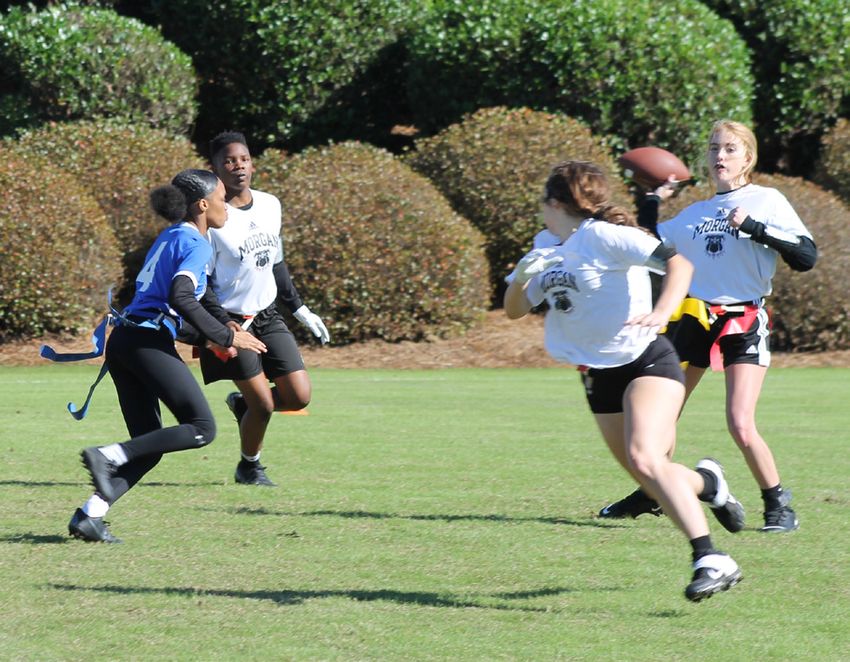
Sport for All, Play for Life: A Playbook to Develop Every Student Through Sports    LARGE RURAL PUBLIC HIGH SCHOOLS

A Project Play initiative of the Aspen Institute Sports
& Society Program, “Reimagining School Sports” rec-
ognizes the essential role that high schools play in                       About Project Play
preparing young people for life – and the cognitive,
educational and health benefits that flow to students
                                                                           Project Play is an initiative of the Aspen
whose bodies are in motion. The initiative aims to
                                                                           Institute’s Sports & Society Program, the
make quality sport and physical activities accessible
                                                                           mission of which is to convene leaders,
to all students by identifying strategies that adminis-
                                                                           facilitate dialogue and inspire solutions
trators and other leaders can adopt, aligned with the
                                                                           that help sport serve the public interest.
mission of schools and within the context of a com-
                                                                           Since 2013, Project Play has shepherded
prehensive education.
                                                                           the national conversation around what
In the United States, school decisions are made largely                    good looks like in youth sports. Hun-
at the local and state levels. Further, the ability to                     dreds of organizations have used Project
engage students in sports is shaped by a school’s size,                    Play frameworks and ideas to introduce
mission and resources. So, Project Play launched a                         programs, expand grantmaking, shape
national search to find the trailblazers in eight school                   government policy, advance research,
types. That way, principals, superintendents, athletic                     and develop tools to train coaches,
directors, coaches, physical education teachers and                        empower parents and mobilize leaders.
others can draw inspiration from their best peer fit.

The eight school types:                                                    To learn more about the value of sports
                                                                           and physical activities, please visit
• Large urban public high schools
                                                                           as.pn/sportsfacts
• Small urban public high schools
• Large rural public high schools
• Small rural public high schools
• Large suburban public high schools
• Small suburban public high schools
• Private schools
• Charter schools

The Aspen Institute invites any school to share their
innovations and apply for recognition. A $20,000 award
will be given to one winner in each category, made
possible by our project partners – Adidas/Reebok, The
Dick’s Sporting Goods Foundation, and Hospital for
Special Surgery. Reports on each school type are being
released in 2021, followed by a final report in early 2022                 Learn more about this project
that will make systems-level recommendations that                          and find all reports at:
can drive progress across all school types.                                as.pn/schoolsports

                                                             Page 1
Sport for All, Play for Life: A Playbook to Develop Every Student Through Sports       LARGE RURAL PUBLIC HIGH SCHOOLS

Challenges and Opportunities: Large Rural Public Schools
Nationally, 73% of rural public high schools offer
interscholastic sports, according to an Aspen Insti-
                                                                            Characteristics of Rural Schools
tute-commissioned analysis of 2017-18 Civil Rights
Data Collection by Resonant Education.1 More rural
students (42%) play on teams than their suburban                            For purposes of this report, the Aspen
(41%) and urban (33%) peers, with those teams often                         Institute defines a large rural school as a
serving as rallying points for their communities. But                       public school in a rural area with more
the challenges today run as deep as local enthusiasm                        than 350 students. The Census Bureau
for those proud programs.                                                   defines a rural area as any population,
                                                                            housing or territory not in an urban area
Even in large rural public schools, filling rosters can be
                                                                            (50,000 or more residents) or urban cluster
difficult amid declining student populations. Wrote one
                                                                            (2,500-50,000 residents).
analyst in Forbes magazine: “Even if some place hasn’t
lost its school yet, they may be losing their teams, and                    Land-wise, rural areas cover most of the
that’s a very stark reminder of how they’re losing their                    country. However, only 19% of Americans
identity.” Some school districts have resisted consol-
         2                                                                  live in these places – down from 60% at the
idation in part to preserve crosstown rivalry games.    3                   turn of the 20th century when sports were
                                                                            first introduced in schools.7 Today, 53% of
From 2008 to 2018, high school sports participation
                                                                            U.S. school districts are located in a rural
declined by a combined 4% in the five most rural U.S.
                                                                            community8 with 17% of state education
states (Maine, Vermont, West Virginia, Mississippi,
                                                                            funds going to rural school districts.9 Jobs
Montana). During that same period, participation
                                                                            continue to shift to the cities. From 2014
increased 7% among the five least rural states (Califor-
                                                                            to 2018, 43% of rural counties experienced
nia, New Jersey, Nevada, Massachusetts, Hawaii). The
                                                                            negative employment growth compared
gap is even more pronounced when comparing 1998 to
                                                                            with just 17% elsewhere. The poverty rate
2018 rates: the least rural states saw 37% growth, while
                                                                            is nearly three percentage points higher.
participation in the most rural states grew just 9%.4
                                                                            Rural counties with a manufacturing base
These are worrying trends, especially in areas with                         do better than those dependent on farms,
high poverty. There’s a racial and ethnic dimension                         with those reliant on mining or govern-
as well: Economically distressed counties are home to                       ment jobs at the bottom.10 Shrinking tax
more than half of rural Black residents and 45% of rural                    bases have led to decisions to close and
Native American residents, compared to only 18% of                          consolidate some schools, imposing trans-
rural White residents. But the challenges transcend
                        5                                                   portation challenges on families.
race, with many rural schools requiring students to
travel from far distances. In a national survey of high
school students by the Aspen Institute, youth from
rural schools were twice as likely as those from urban                Compared to their urban and suburban peers, students
areas to cite transportation as a reason they don’t play              at rural schools are the most likely to say they don’t play
sports more often. In Pennsylvania, only 16% of rural                 sports because they lack the time due to work or family
schools offer activity buses for transportation.  6
                                                                      responsibilities, according to the Institute’s survey.

                                                             Page 2
Sport for All, Play for Life: A Playbook to Develop Every Student Through Sports      LARGE RURAL PUBLIC HIGH SCHOOLS

They more often believe they aren’t good enough to                    Highly specialized athletes are less common at rural
play. Winning games and making their family feel                      high schools (one in 20) than suburban schools (seven
proud matter more to rural youth — especially among                   in 20). Rural athletes are three times less likely than
girls — than students elsewhere At the same time,                     suburban athletes to play 60 or more games per year in
athletes can get burned out by parents, drawn by the                  their primary sport.12 Rural schools tend to need more
allure of college athletic scholarships, who turn sports              students – usually the best athletes – to play multiple
for their child into a “pass/fail test that makes it feel             sports in order to field teams. During the pandemic,
like a job,” one rural athletic director told us.                     some are playing three sports at once. Said one athletic
                                                                      director: “If we made our kids pick one sport, every
Fewer school resources can bring health risks. More
                                                                      team would suffer and lose.”
than 78% of schools nationally with low athletic trainer
availability are in rural and inner-city areas, according             With so few businesses to help rural schools finan-
to the National Athletic Trainers’ Association. Athletes              cially, administrators say they view fundraisers,
in these communities are 50% more likely to have a                    donated equipment, community service by athletes,
sports-related concussion that goes unidentified, unas-               and attendance at local games as a valuable connection
sessed, or mismanaged.    11
                                                                      with their community. Rural areas have much larger
                                                                      issues to address than a decline in sports, “but there’s
Some bright spots for rural schools: 71% of students
                                                                      a final nail-in-the-coffin quality to seeing your local
said they enjoy PE, a higher rate than for all schools
                                                                      school sports teams struggle or disappear.”13 Some
(62%), according to the Institute’s survey. Students in
                                                                      fresh perspective can help update the model.
rural communities report the highest levels of partici-

                                                                                     1 in 20
pation in basketball, softball, and track and field. Foot-
ball in rural areas is especially popular among Black
students (42%), who have played the sport more often
than Black students from suburban (27%) and urban                          rural students specialize in one sport
(25%) schools. Also, 58% of rural Hispanic students say                                    compared to

                                                                                     7 in 20
they have played soccer, well above the national aver-
age for students in all schools (39%).

                                                                                    at suburban schools14

                                                                                          41%
                                                                            of rural students say they play
                                                                               to make their family proud

                                                                                          28%
                                                                           didn’t try out because they think
                                                                              they weren’t good enough15

                                                             Page 3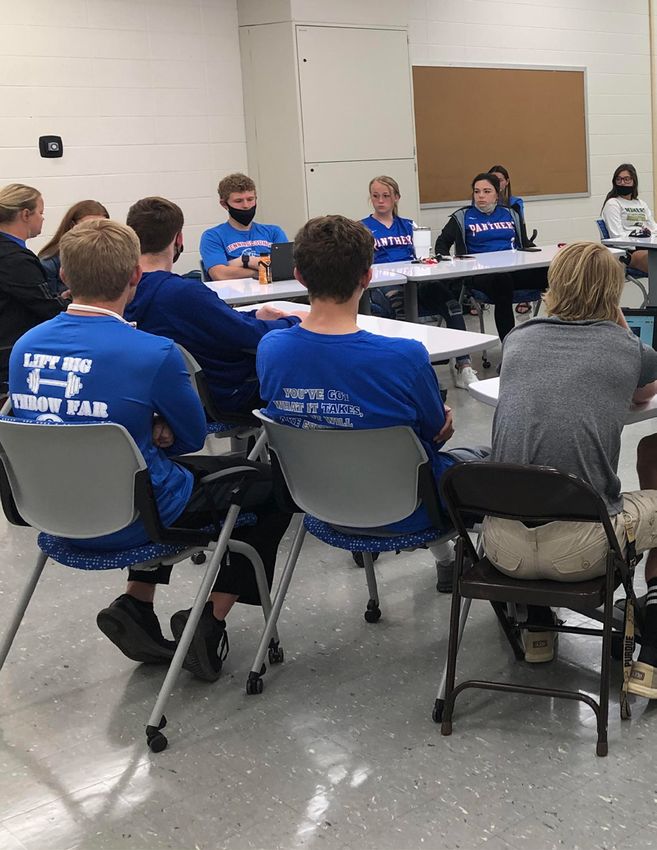
LARGE RURAL PUBLIC HIGH SCHOOLS

The Aspen Institute conducted a national survey of ninth- to 12th-graders between September 2020 and March 2021.
The sample represented students from public, charter and private schools across the country. The survey was conducted
via an online platform and results were analyzed by Resonant Education. Here is what rural students told us.

Top sports rural students play at school
(played at least one full season on a team)

Female                                        Male                                    All
      31%   Volleyball                           40%       Tackle Football                  28%   Basketball
     29%    Basketball                           23%       Track and Field                  25%   Track and Field
     28%    Track and Field                      21%       Baseball                         20%   Tackle Football
      21%   Softball                             28%       Basketball                       18%   Volleyball
      15%   Soccer                               20%       Soccer                           17%   Soccer
      11%   Cheerleading                             11%   Wrestling                        11%   Softball
       9%   Tennis                                   9%    Cross Country                    10%   Baseball
       8%   Cross Country                            8%    Tennis                            9%   Cross Country
       5%   Swimming                                 8%    Weightlifting                     8%   Tennis
       3%   Golf                                     6%    Swimming                          6%   Cheerleading
                                                                                             6%   Wrestling

Top sports that rural students wish their school offered

Female                                        Male                                    All
     15%    Gymnastics                           13%       Archery                          13%   Archery

     12%    Archery                              12%       Bowling                          10%   Bowling

      11%   Lacrosse                                 9%    Ice Hockey                        9%   Gymnastics

     10%    Dance                                    8%    Ultimate Frisbee                  9%   Lacrosse

      9%    Bowling                                  7%    Lacrosse                          9%   Ice Hockey

      8%    Ice Hockey                               6%    Flag Football                     6%   Flag Football

      7%    Cheerleading                             6%    Weightlifting                     6%   Skiing

      6%    Flag Football                            5%    Skiing                            6%   Dance

      6%    Skiing                                   5%    Badminton                         6%   Ultimate Frisbee

      6%    Badminton                                5%    Water Polo                        5%   Badminton

      6%    Swimming                                                                         5%   Swimming

      6%    Soccer                                                                           5%   Weightlifting
                                                                                             5%   Water Polo

                                                            Page 4
Other physical activities rural students want to try
Female                                       Male                                           All
     30% Dance                                      45% Strength training                           34% Strength training
     29% Yoga                                       26% Biking                                      25% Biking
     27% Strength training                          22% Climbing                                    22% Climbing
     24% Skateboarding                              22% Parkour                                     21% Skateboarding
     23% Biking                                     19% General fitness classes                     19% General fitness classes
     21% Climbing                                   18% Outdoor recreation                          18% Yoga
     19% General fitness classes                    17% Skateboarding                               18% Dance
     15% Outdoor recreation                         17% Adventure Racing                            16% Outdoor recreation

Why rural students play sports                                   What prevents rural students from
                                                                 playing sports

 Reason                      Female   Male    All                  Reason                  Female       Male         All

 Have fun                     82%     81%     81%                  Too much
                                                                                            46%         35%         42%
                                                                   schoolwork
 Exercise                     77%     78%     77%
                                                                   I don’t enjoy sports     32%         27%         30%
 Learn and
                              69%     66%     67%
 improve skills                                                    Didn’t try out/not
                                                                                            31%         24%         28%
                                                                   good enough
 Playing with and
                              66%     61%     63%
 making new friends                                                Work schedule            25%         24%         25%
 Competing                    57%     67%     61%
                                                                   No offered sports
                                                                                            19%         26%         23%
 Winning games/                                                    interest me
                              53%     63%     57%
 championships
                                                                   Family
                                                                                            26%         17%         23%
 Emotional/                                                        responsibilities
                              53%     39%     47%
 mental health
                                                                   I don’t feel welcome     18%         12%         16%
 Improve college
                              46%     38%     42%                  My friends don’t play    16%         11%         14%
 application

 College scholarships         40%     44%     41%                  Too expensive            15%         10%         13%

 Making my                                                         Transportation
                              44%     37%     41%                                           14%         12%         13%
 family proud                                                      challenges

                                                        Page 5
Sport for All, Play for Life: A Playbook to Develop Every Student Through Sports            LARGE RURAL PUBLIC HIGH SCHOOLS

       WINNER: LARGE RURAL PUBLIC SCHOOLS

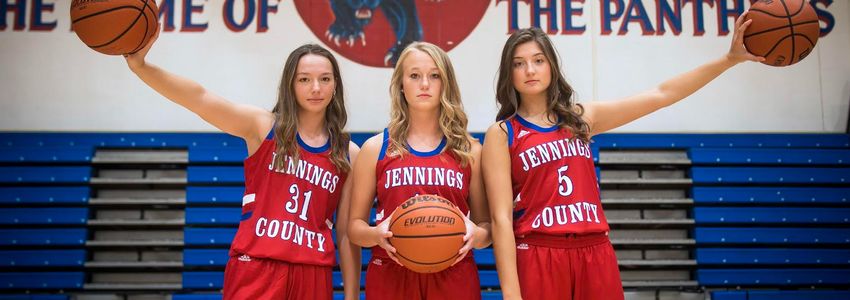
       Jennings County High School
       North Vernon, IN

                                                       White (89%)
                                                       Hispanic (7%)
                                                       Two or more races (2%)                      17%               57%
                                                       Other (2%)
                                                       Hawaiian Native/
                                                       Pacific Islander (0.3%)
            Location              Race/ethnicity       Black (0.2%)                            Disability     Free/reduced lunch

       Sports program costs:   $287,37916                                          Students who play interscholastic/intramural
                                                                      44%          sports or participate in school clubs involving
                                                                                   physical activity (out of 1,168 students)
       Percentage of total school costs:   3.3%

        Interscholastic                                                                                             Intramural

            Archery               Cross Country              Softball                 Track and Field               None

            Baseball              Football                   Swimming                 Volleyball
                                                                                                                    Club
            Basketball            Golf                       Tennis                   Wrestling
                                                                                                                    None
            Cheerleading          Soccer

        Website                              Contact   Cory Stevens, Athletic Director,
        jchs.jcsc.org                                  cstevens@jcsc.org

                                                                                             OUR WINNING SCHOOL RECEIVES

                                                                                           $20,000 AWARD
                                                                                                            COURTESY OF

                                                                Page 6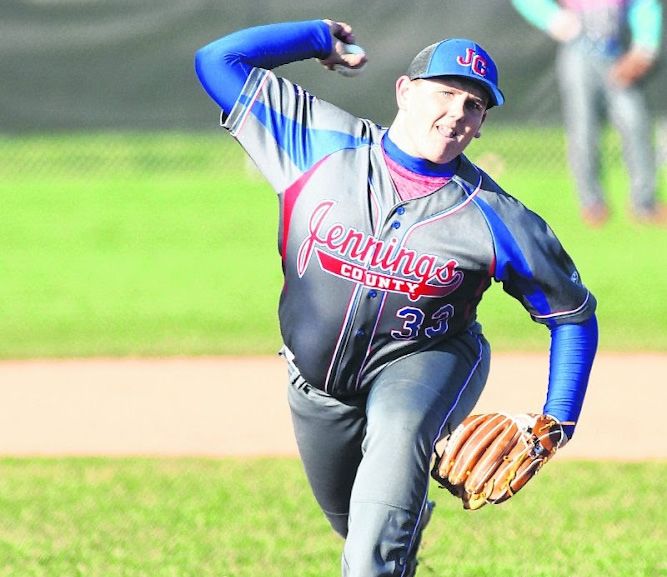
Sport for All, Play for Life: A Playbook to Develop Every Student Through Sports      LARGE RURAL PUBLIC HIGH SCHOOLS

WINNER’S INNOVATION / JENNINGS COUNTY HIGH SCHOOL

Don’t Judge Coaches by Wins
As Jennings County High School searched for a new
athletic director in 2019, Principal Dustin Roller decided
his next hire needed to better evaluate coaches. A
rumor had circulated that some school board members
wanted to require all coaches from the North Vernon,
Indiana school win at least 60% of their games for their
contract to be renewed.

Roller researched the school’s history since 1968 and
found only one coach would have reached that bench-
mark. Historically, the school wins about half of its
games in most sports – the football team only wins
                                                                      “Don’t get me wrong: I’m as competitive as they come,”
27%, with just one winning season since 199817 – and
                                                                      he says. “But I also want our coaches to know that in
cycles through up and down seasons. Last season, the
                                                                      high school athletics, it’s bigger than wins and losses.
boys basketball team won 52% of its games while the
                                                                      I want kids to leave here with the lessons learned in
girls won 70%, including two playoff games. Multiyear
                                                                      athletics that make them better teachers, doctors,
contracts are provided to coaches in football, boys bas-
                                                                      managers, employees, father and mothers.”
ketball and girls basketball – a mix of full-time teachers
and outside employees paid to coach; all other coaches                The measures that school administrators put in place
are renewed annually.                                                 to encourage that type of coaching is a model for other
                                                                      schools that seek the same outcomes. For its courage
                                                                      and leadership, Jennings County is recognized as the
                                                                      Aspen Institute’s Project Play winner in the Large

I want kids to leave here with the                                    Rural Schools category of our Reimagining School

lessons learned in athletics that make                                Sports initiative.

them better teachers, doctors, managers,                              Prior to 2019, Jennings County’s evaluation process of
employees, father and mothers.                                        coaches involved a written narrative by the athletic
Cory Stevens, Athletic Director                                       director that lacked consistency or any real standards
                                                                      on what was being reviewed. The coach signed the
                                                                      form and usually had one brief discussion with the
                                                                      AD. One Jennings County coach laughs now at how
Basketball dominates the sports culture of Indiana,                   basic the process used to be.
whose coaching icons over the generations have
shaped national ideas about what’s right about coach-                 The school board never adopted a policy attaching win-
ing (John Wooden’s Pyramid of Success) and what’s                     ning to coaching success. But the rumor led Jennings
wrong with it (Bob Knight’s tirades while worshiped                   County to something more valuable: The hiring of Ath-
by fans). Roller worried that a minimum winning                       letic Director Cory Stevens, who brought a more com-
percentage would incent coaches to prioritize game                    prehensive process to evaluating coaches while, the-
results over youth development.                                       oretically, taking wins and losses out of the equation.

                                                             Page 7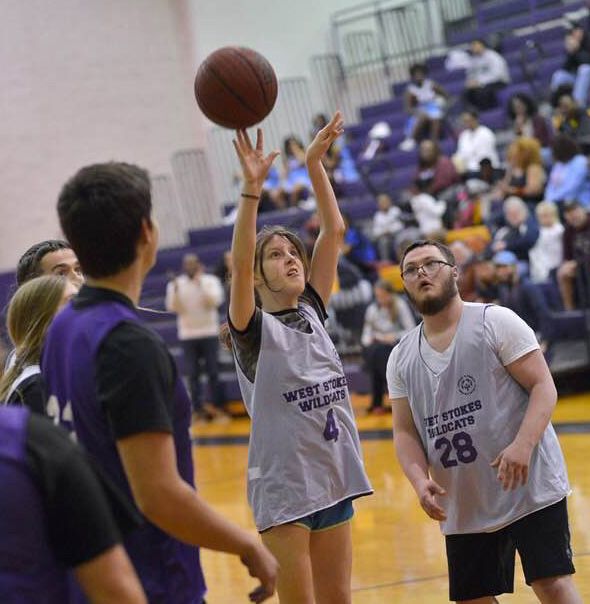
Sport for All, Play for Life: A Playbook to Develop Every Student Through Sports     LARGE RURAL PUBLIC HIGH SCHOOLS

The two-page document Stevens now uses is called the                “I was replicating the way I had been coached, and you
Deserve to Win Grid (read the entire document here).                have to get rid of the one-size-fits-all Bear Bryant approach
It covers 28 areas in which Jennings County coaches                 of either kids quit or they get better,” he says. “Some kids
are evaluated, including: creating a safe environment,              need your confidence until they can form it themselves.”
increasing sports opportunities for younger children,
                                                                    That’s easier said than done In Indiana. “Our basket-
providing academic opportunities for athletes beyond
                                                                    ball coaches are very talented, and as a whole, they still
maintaining playing eligibility, understanding racial
                                                                    have a little Bob Knight influence on the game with their
and gender discrimination, and demonstrating inter-
                                                                    combustible attitude at times,” says Paul Neidig, commis-
personal relationships with athletes, parents, cowork-
                                                                    sioner of the Indiana High School Athletic Association.
ers, and administrators.
                                                                    The school’s community of North Vernon (population
“I really like the idea of focusing on the process and
                                                                    6,700) is an economically distressed area18 dotted with
not necessarily the results while giving coaches exactly
                                                                    basketball hoops outside houses. Before the pandemic,
what they are being measured on,” Stevens says.
                                                                    6,000 fans could pack into the high school gym for big
So did girls basketball coach Kristi Sigler, a former               games. Even though fifth-year Jennings County boys
All-Big Ten player at Indiana University. “I had never              basketball coach Josh Lands believes his AD does not
seen anything like it before,” she says. “It really made            evaluate him based on his record, he says, “I get eval-
me step back and think, ‘Where is our program on                    uated by the rest of the community. Their criticisms
all of this? Do we do something worse than we                       may solely be based on wins and losses and the stuff
should? Where will we be in the future?’ I like it. It              said at the dinner table. That’s important to me too.
holds you accountable.”                                             But I believe coaches that win do all those other little
                                                                    things and winning will take care of itself.”
School officials say their approach can be modeled by
other schools if they commit to two features: Embrace               Stevens, the new AD, came from the Chicago suburbs,
a more professionalized approach to coaching – don’t                where he previously handled major gifts and spon-
just throw ideas against the wall and hope something                sorships at a college. He was used to metrics defining
sticks – and recognize that each athlete is a unique                success. Roller was looking for someone who does not
person. Roller, a former football coach until 2016, says            necessarily always see the world as he does.
he cringes now at how he used to coach.

                                                           Page 8
Sport for All, Play for Life: A Playbook to Develop Every Student Through Sports     LARGE RURAL PUBLIC HIGH SCHOOLS

                                                                     I really like the idea of focusing on
                                                                     the process and not necessarily the
                                                                     results while giving coaches exactly
                                                                     what they are being measured on.
                                                                     Cory Stevens, Athletic Director

                                                                     The process can be time-consuming, but Stevens believes
                                                                     it’s worth it. Some coaches, for example, realized through
                                                                     the new process that they never reach out to alumni – a
                                                                     valuable resource in rural communities. Alumni can help
                                                                     mentor students and fundraiser for the program.
“It’s been so valuable to us in a rural community bring-
                                                                     Sigler, the girls basketball coach, learned she could
ing a different view to hear what Cory saw in the sub-
                                                                     communicate better to players and parents about play-
urbs,” Roller says.
                                                                     ing time and roles after nearly having a sophomore
Listening is also the value of the Deserve to Win Grid               player quit. “Girls compare themselves to others, and
because it serves as a jumping-off point for conversa-               if they don’t see themselves being a true contributor
tions. Stevens talks with his coaches in the presea-                 or hear that from their friends or parents, they step
son, using the grid as a planning guide. Conversations               away,” she says. “I wasn’t communicating well enough
continue organically throughout the season. After the                with her on where she fit.” The girl stayed on the team
season, Stevens and the coach each complete the form,                and was honored as a senior at the awards banquet.
including sections to write in details about the coach’s
                                                                     Brantley Wathen, a senior track and field athlete and
strengths and opportunities for growth. Then they
                                                                     cheerleader, says she appreciates that Jennings County
meet to discuss the evaluation.
                                                                     coaches are now evaluated by helping players become
Coaches are evaluated in each area by a four-point scale:            better people. “My coaches can see that our parents are
not acceptable (1), needs improvement (2), meets the                 hard on us, and (the coaches) tell us you’re not running
expectation (3), and exceeds the expectation (4). Stevens            against other teams, you’re running against yourself to
does not calculate the data, adding that’s “a great next             get better,” she says. “They never yell. They’re always
step” to better define what the scores mean. The data                calm with us. They don’t treat us like we’re below them.
have not been used as a tool to provide raises – some-               They make us feel we’re all on the same playing field.”
thing that some coaches say they wouldn’t mind seeing.
                                                                     Creating that safe space is important, given the Aspen
“If you’re getting 2s and 1s in multiple areas, there                Institute national survey showing that 18% of female
needs to be a real conversation on what your role is                 students and 12% of male students in rural public
moving forward in our athletic department,” Stevens                  schools say they don’t play sports because “I don’t feel
says. “I’m getting ready to have one of those conversa-              welcome.” Both figures are above the national averages
tions (with a coach) very soon.”                                     for all schools (14% and 10%, respectively).

                                                            Page 9
Sport for All, Play for Life: A Playbook to Develop Every Student Through Sports LARGE RURAL PUBLIC HIGH SCHOOLS
Rural students are twice as likely as suburban students As a result of the conversations, Jennings County has
to say they don’t feel safe playing sports because of piloted coed PE for several classes without any prob-
their gender identity or sexual preference. lems and the change resulted in fewer discipline issues
than the split-gender classes, Roller says. Next year,
At Jennings County, Roller learned this three years
every PE class will be coed.
ago when two incoming students who are transgen-
der expressed concern about physical education classes By intentionally leaving its comfort zone, Jennings
upon entering the school. Roller says he was – and County serves as a model for others to prioritize devel-
probably still is – “really ignorant” about challenges opment over winning at all costs in high school sports.
facing transgender youth. He says he told the students
and their families: Help teach me, be honest about “As a society, we’re always so shocked when we hear
your feelings, and provide me some grace if I mess up. about coach abuse or cheating,” Roller says. “But we
Roller discovered the students felt uncomfortable that create that as administrators, fans and boosters based
Jennings County had separate PE classes for boys and off our expectations. If you tell me it only matters if I
girls – an unusual practice for any school these days. win or lose, I’m going to do everything I can to win.
He says it’s not clear why the school split PE. That’s a natural, human element.”
“That’s just the way it’s always been – which is some- Jennings County is now banking on the opposite to
thing you hear in our community a lot,” Roller says. “In be true: Don’t judge coaches based on game results,
rural, conservative communities, sometimes you say, and maybe they will naturally produce more well-
if it’s not broken, why fix it? Well, sometimes it can be rounded people who become athletes for life. That’s
better for everybody.” a win worth chasing.
The Art and Science of Coaching
There’s room to improve Jennings County’s approach. While its Deserve to Win Grid identifies many well-rec-
ognized dimensions of positive youth development, the framework could be improved to address the art and
science of coaching, says Vincent Minjares, who has a Phd in coaching and pedagogy and studies coaching
models in the U.S. and New Zealand. If society truly wants coaches to be viewed as teachers, Minjares says,
the learning experience of a sport should be part of evaluating coaches by asking questions like these:
• How does the coach define success? • Does the coach ask questions that encourage
• Does the coach create a sense of belonging the players to find answers themselves?
where each player has a meaningful role? • Does the coach use process-focused praise?
• Does the coach empower players by • Does the coach design learning games,
providing opportunities for independent with multiple possible solutions, to develop
decision-making and athlete ownership? problem solving?
• Does the coach emphasize play as the
primary learning tool?
Page 10Sport for All, Play for Life: A Playbook to Develop Every Student Through Sports LARGE RURAL PUBLIC HIGH SCHOOLS
HONOR ROLL IDEAS
Strategies that Jennings County High School uses that stood out as exemplary to the Aspen Institute
and our project advisory board:
Partner with Expand the leadership Require in-person PE
elementary schools roles of athletes for freshmen
Jennings County is That’s what Jennings County Jennings County is one of
hiring the community’s does through its Student-Athlete the last schools in Indiana
first elementary school Leadership Team (one athlete that mandates in-person
athletic director, thanks per team), which focuses on six PE for freshman. Roller
to a partnership with areas: blending Unified sports says many schools try
the NFL’s Fuel Up to into the school culture, improving to get around that as a
Play 60 that will teach event attendance, rewriting the cost-cutting measure by
elementary students athletic code on behavioral rules offering summer online
about healthy life choices, and punishments, motivating classes or credit from sports
including physical activity athletes to play sports all or band participation.
and nutrition. High school year, representation on local Physical activity offers a
athletes will help teach committees and boards, and valuable release during
the younger students. mentoring younger athletes. the school day.
Tool for School Leaders
Among the top 10 sports played by boys and girls in
high schools nationally, soccer (boys) and basketball
(girls) deliver the most social and emotional benefits.
That’s one of many findings in the Healthy Sport
Index, a data-driven project of the Aspen Institute
and Hospital for Special Surgery that analyzes the
relative benefits and risks of playing each sport.
Learn more at:
healthysportindex.com
Page 11Sport for All, Play for Life: A Playbook to Develop Every Student Through Sports LARGE RURAL PUBLIC HIGH SCHOOLS
MORE HONOR ROLL IDEAS
Strategies that our other three finalists use that stood out to us as exemplary:
Morgan County High School | Madison, GA
65+24+731 48+52
White (65%) Students who play
Black (24%) interscholastic/intramural
Hispanic (7%) 48% sports or participate in
Two or more races (3%) school clubs involving
Asian (1%) physical activity
Location Race/ethnicity
Interscholastic Invest in new activities tailored to local interests
Baseball Golf The value of offering outdoor recreation options
Basketball Soccer in rural areas was made clear in the Aspen Insti-
Bass Fishing Softball tute’s national survey, in which archery was iden-
Cheerleading Swimming tified by both boys and girls as among the sports
Cross Country Tennis they most want to try (see Scoreboard on page 5).
Dance Track and Field
Morgan County, which is located near two major
Flag Football Volleyball
lakes, introduced bass fishing as a club and it is now
Tackle Football Wrestling
a sanctioned varsity sport. The school’s PE depart-
ment includes a course in outdoor education, where
Intramural None students learn about fishing, building docks, basic
swimming, and lifeguard duty.
Club Rugby Given the cultural significance of football in many
rural areas, flag football is increasingly popular
among girls. Alabama recently became the fifth
state to add the sport in high schools, joining Alaska,
Website Nevada, Florida and Georgia. Morgan County started
morgan.k12.ga.us/mchs flag this year with a six-game season that generated
student excitement. The school’s digital media class
created video commercials to recruit players for flag
Contact – a sport that doesn’t need to be confined to girls. As
Doug Connelly, athletic director, tackle football participation rates drop, flag could be
doug.connelly@morgan.k12.ga.us
an option to engage boys as well.
Page 12Sport for All, Play for Life: A Playbook to Develop Every Student Through Sports LARGE RURAL PUBLIC HIGH SCHOOLS
Pender High School | Burgaw, NC
48+31+1641 34+66
White (48%) Students who play
Black (31%) interscholastic/intramural
Hispanic (16%) 34% sports or participate in
Two or more races (4%) school clubs involving
Asian (1%) physical activity
Location Race/ethnicity
Interscholastic
Help athletes come to believe “I matter”
Baseball Soccer
Basketball Softball Pender focuses heavily on community service and
Cheerleading Track and Field leadership opportunities for its athletes through a
Cross Country Volleyball systematic approach of moving students from what
Football Wrestling
it calls “I’m Here” to “I Belong” to “I Matter.” The idea
is to help athletes see how they fit within a broader
context of their school and community.
Intramural None
The initiative started out as one team with one
Club Dance
project and grew into seven teams completing nine
Strength Training
projects. Athletes have participated in reading, pen
General Fitness Classes
pal and donation projects with local elementary
schools, relief work after a hurricane, food drives,
Website
stockings for soldiers, and summer camps with
sites.google.com/a/pender.k12.nc.us/phs/
kids. Students take the lead on the projects. Pender
Contact has won a community service award by the North
Matthew Davis, athletic director,
Carolina High School Athletic Association in four of
matthew_davis@pender.k12.nc.us the past six years.
Growing Sports for Native Americans
“Keepers of the Game” is an award-winning of the Salmon River High School girls lacrosse
film by The DICK’S Sporting Goods Foundation team, both on the field and in their Native
that celebrates the strength and perseverance American community.
Watch: tribecafilm.com/studios/keepers-of-the-game
Page 13Sport for All, Play for Life: A Playbook to Develop Every Student Through Sports LARGE RURAL PUBLIC HIGH SCHOOLS
West Stokes High School | King, NC
85+7+42 38+62
White (85%)
Students who play
Hispanic (7%) interscholastic/intramural
Two or more races (4%) 38% sports or participate in
Black (2%) school clubs involving
Other (2%) physical activity
Location Race/ethnicity
Interscholastic Embrace Unified Sports
Baseball Soccer Young people with disabilities do not often get a
Basketball Softball chance to play on their school sports teams. About
Cheerleading Swimming 1.4 million people worldwide take part in Special
Cross Country Tennis
Olympics Unified Sports, breaking down stereo-
types about people with intellectual disabilities in
Football Track and Field
a fun way.19 Unified Sports joins people with and
Golf Volleyball
without intellectual disabilities on the same team,
Lacrosse Wrestling
inspired by the idea that training together and
playing together is a quick path to friendship and
understanding. More students from rural schools
Intramural None than any other school type say their disability is
not accommodated to play sports, according to an
Aspen Institute survey.
Club None
West Stokes is one of 150 high schools nationally
recognized as a Special Olympics Unified Cham-
pion School – and one of only four from North Car-
olina. This distinction means West Stokes plays
Website at least two Unified sport seasons throughout the
west.stokes.k12.nc.us/ academic year, has an adult coach trained on Uni-
fied, and has a self-sustainable plan to maintain
the program financially into the future. “You can
see it on these kids’ faces who volunteer to help,”
Contact
says West Stokes Athletic Director Travis Gam-
Travis Gammons, athletic director,
mons. “They really enjoy the whole process.”
travis.gammons@stokes.k12.nc.us
Page 14Sport for All, Play for Life: A Playbook to Develop Every Student Through Sports LARGE RURAL PUBLIC HIGH SCHOOLS
ENDNOTES
1. Analysis of 2017-18 Civil Rights Data Collection conducted by Resonant Education. The
participation rate represents the percentage of roster spots compared to the total population
of students that year, rather than the percentage of students who were participating in sports.
Some students, of course, participated in more than one sport. For schools which reported sin-
gle-sex athletics information, there were some omissions of urbanicity and Title I status. How-
ever, 81% of urbanicity data and 93% of Title I data were able to be reconciled, and any analysis
referring to this information used only complete data entries. Another point of context: In the
Aspen Institute’s survey of students in 2020-21, 38% of ninth- to 12th-graders in rural schools said
they had played at least one season of a sport with a school team, at any point during high school.
2. “School Sports Decline Symbolizes Rural Towns’ Struggle to Survive.” Bob Cook,
Forbes, October 22, 2016.
3. “Why Schools are Resisting Consolidating,” Katherine Barrett and Richard Greene,
Governing.com, Sept. 18, 2014.
CREDITS
4. These participation rates were calculated by the Aspen Institute using data from the National Jon Solomon, editorial director
Federation of State High School Associations from the 2018-19, 2008-09 and 1998-99 academic
of Aspen Sports & Society
years. The states with the biggest and smallest rural populations were identified by Stacker.com
in 2019 using U.S. Census data from 2010. Program, was principal
5. Redefining Rural: Towards a Better Understanding of Geography, Demography and Economy in investigator of this report.
Rural Places. Economic Innovation Group, March 2021. Tom Farrey, executive director,
6. Exploring Disparities in School Sports Participation in Rural Pennsylvania. M. Blair Evans; edited the report. Staff
Penn State University, November 2020.
including Funmi Animashaun,
7. Rural America, U.S. Census Bureau.
program assistant, provided
8. Rural Education in America, National Center for Education Statistics.
project management. Members
9. Why Rural Matters, Rural School and Community Trust, November 2019.
of the Reimaging School
10. Redefining Rural: Towards a Better Understanding of Geography, Demography and Sports Advisory Committee,
Economy in Rural Places. Economic Innovation Group, March 2021.
representing perspectives from
11. The Influence of Athletic Trainers on the Incidence and Management of Concussions in High
School Athletes. Timothy A. McGuine, Adam Y. Pfaller, Eric G. Post, Scott J. Hetzel, Allison Brooks, education, youth sports, health,
Steven P. Broglio; National Athletic Trainers’ Association, Journal of Athletic Training, 2018. The academia, government, and
researchers determined the level of athletic trainer availability at each school based on the
philanthropy, contributed to
number of athletes the athletic trainer was expected to serve per hour he or she was on site.
Using that metric, a school categorized as having a high or low level of athletic trainer availability. the development of this report.
12. Sport Specialization Characteristics Between Rural and Suburban High School Athletes.
David R. Bell, Eric G. Post, Stephanie M. Trigsted; Orthopaedic Journal of Sports Medicine, 2018.
To learn more visit
13. “School Sports Decline Symbolizes Rural Towns’ Struggle to Survive.” Bob Cook, Forbes,
as.pn/schoolsports
October 22, 2016.
14. Sport Specialization Characteristics Between Rural and Suburban High School Athletes. Our gratitude to the
David R. Bell, Eric G. Post, Stephanie M. Trigsted; Orthopaedic Journal of Sports Medicine, 2018. funding partners
15. Results from Aspen Institute national survey of high school students, September 2020-March supporting this project:
2021. The sample represented students from suburban, rural and urban public schools, charter
schools, and private schools.
16. Most of the sports costs come from coaching stipends and contracts ($212,379), paid for by the
Jennings County School Corporation. Additional expenses are for referees ($30,000), uniforms/
equipment ($18,000), team meals/concessions ($12,000), transportation ($10,000), and awards/
banquets ($5,000). The total figure does not include a $10 million bond used by the corporation
to improve athletic facilities over the past three years and $54,300 spent by Jennings County
High School in that period to supplement the projects with smaller improvements.
17. Jennings County High School Football History, AlamancSports.com.
18. Distressed Communities Index interactive map, Economic Innovation Group.
19. Special Olympics Unified Sports website.
Page 15You can also read


