Lessons from Countries Phasing Down Dental Amalgam Use - March 2016
←
→
Page content transcription
If your browser does not render page correctly, please read the page content below
Lessons from Countries
Phasing Down Dental Amalgam Use

           March 2016
Title: “Lessons from countries phasing down dental amalgam use”

Copyright © United Nations Environment Programme, 2016
Citation: UNEP, 2016, Lessons from countries phasing down dental
amalgam use
UNEP Chemicals and Waste Branch, Geneva, Switzerland
Job Number: DTI/1945/GE

Disclaimer
The designations employed and the presentation of the material in this
publication do not imply the expression of any opinion whatsoever on
the part of the United Nations Environment Programme concerning the
legal status of any country, territory, city or area or of its authorities,
or concerning delimitation of its frontiers or boundaries. The views ex-
pressed do not necessarily represent the decision or the stated policy
of the United Nations Environment Programme, nor does citing of trade
names or commercial processes constitute endorsement.

Reproduction
This publication may be produced in whole or in part and in any form
for educational or non-profit purposes without special permission
from the copyright holder, provided acknowledgement of the source
is made. Material in this report can be freely quoted or reprinted. UNEP
would appreciate receiving a copy of any publication that uses this re-
port as a source. No use of this publication may be made for resale or for
any other commercial purpose whatsoever without prior permission in
writing from the United Nations Environment Programme.

Overall supervision
Chemicals and Waste Branch, Division of Technology, Industry and Eco-
nomics, United Nations Environment Programme:
Jacob Duer, Eisaku Toda, Desiree Narvaez

Acknowledgments                                                                                    UNEP promotes
The UNEP Chemicals and Waste Branch gratefully acknowledges the                          environmentally sound practices
contributions of Hiroshi Ogawa and Poul Erik Petersen – our col-                     globally and in its own activities. Partners
leagues working with the World Health Organization – in review-
                                                                                  are encouraged to use the digital version of this
ing, commenting and providing over-all technical assistance; and
the contributions of Michael Bender, Director of the Mercury
                                                                                  publication. This report is printed on paper from
Policy Project, and Peter Maxson, consultant, in researching and              sustainable forests including recycled fibre. The paper
drafting this brochure. Design and layout was done by Zoï En-                 is chlorine-free. Our distribution policy aims to reduce
vironment Network.                                                                            UNEP’s carbon footprint.
We also offer our sincere thanks to officials of Bulgaria, Den- Mr. Dag Lestander, Economist
mark, Finland, Hungary, Japan, Netherlands, Norway, Singa- Industry and Consumer Chemicals Department
pore, Sweden and Switzerland for responding to the survey Swedish Chemical Agency
questionnaire. In alphabetical order by surname, they include: Sundbyberg, Sweden
Ms. Elisabeth Fadum, Senior Advisor Ms. Gabriella Molnar-Fule, Chemicals Expert
Section for Biocides and Global Chemical Conventions Ministry of Rural Development
Norwegian Environmental Agency Department of Environmental Development Policy
Oslo, Norway Budapest, Hungary
Ms. Hristina Filipova, Chief Expert Ms. Mary-Anne Pan, Senior Assistant Director
Hazardous Chemicals Department International Policy
Preventive Activities Directorate Ministry of the Environment & Water Resources
Ministry of Environment and Water Singapore
Sofia, Bulgaria
Mr. Eirik Hovland Steindal, Senior Advisor
Ms. Anna Fransson, Senior Advisor Section for Biocides and Global Chemical Conventions
International Secretariat Norwegian Environmental Agency
Swedish Chemicals Agency Oslo, Norway
Sundbyberg, Sweden
Mr. George Stobbelaar
Ms. Bettina Hitzfeld, Head of Section Ministry of Infrastructure and the Environment
Waste Management, Chemicals and Biotechnology Division Directorate for Sustainability
Federal Office for the Environment The Hague, The Netherlands
Berne, Switzerland
Prof. Patrick Tseng, Chief Dental Officer
Ms. Kozue Hoshino Ministry of Health
Global Environment Division Singapore
International Cooperation Bureau
Ministry of Foreign Affairs Mr. Matti Verta, Chief Scientist
Tokyo, Japan Centre for Sustainable Consumption and Production
Finnish Environment Institute
Mr. Martien Janssen Helsinki, Finland
Centre for Safety of Substances and Products
National Institute for Public Health and the Environment (RIVM) Mr. Loïc Viatte, Head of Section
Bilthoven, The Netherlands Unit for Chemicals
Division for Chemicals
Mr. Frank Jensen, Chief Advisor Ministry of the Environment
Chemicals Stockholm, Sweden
Environmental Protection Agency
Danish Ministry of the Environment
Copenhagen, DenmarkLESSONS FROM COUNTRIES
PHASING DOWN
DENTAL AMALGAM USE
Introduction 6
Objectives 6
Methodology 7
Dental amalgam and alternatives 8
Dental amalgam fillings 8
Alternatives to dental amalgam fillings 10
Amalgam phase-down measures 11
Experiences of countries phasing down dental amalgam 11
Lessons from successful amalgam phase down approaches 14
Limiting mercury releases to the environment 14
Involvement of the dental sector 18
Public awareness of mercury in dentistry 20
Modify or strengthen legislation and regulation 21
Improve public health, promote oral health and prevent disease 23
The importance of minimally invasive dentistry 24
Time to Act Now! 25
References 26Introduction
Dentistry may not be the first use of mercury that comes to One of the key provisions of the Minamata Convention is the
mind when considering this heavy metal. Nevertheless the requirement for countries to phase down their use of dental
United Nations Environment Programme (UNEP) Global Mer- amalgam. Based on official country responses to a UNEP sur-
cury Assessment 2013 revealed that mercury in dental use ac- vey questionnaire, this report presents a range of measures
counted globally for 270-341 metric tons in 2010 (AMAP/UNEP already taken by some countries in pursuit of their objectives
2013). This represents some 10% of global mercury consump- to phase down or entirely eliminate the use of dental amal-
tion overall, and over 20% of global mercury consumption in gam. It is intended that these examples may inspire and in-
products, as Figure 1 below demonstrates. struct other countries’ efforts to implement this provision of
the Minamata Convention.
Figure 1: Mercury consumption in products,
by product category (2010)
Objectives
21% Batteries
Among other significant applications of mercury, dental
Other products 20% amalgam has attracted increased interest (WHO, 2011). Like
other mercury uses, since mercury does not degrade in
the environment, dental amalgam further contributes to
the accumulation of mercury in the global environment, as
described previously.
Dental application Measuring devices The Minamata Convention on Mercury, adopted in October
21% 17% 2013, has the objective to protect human health and the
environment from anthropogenic emissions and releases
of mercury. The Convention requires Parties to phase
down amalgam use, taking at least two of the nine steps
Lamps outlined in the Convention’s Annex A, Part II (see "Time to
Electrical devices
9% act now!" section below). It is intended that coordinated
implementation of the provisions of the Convention will lead
Source: AMAP/UNEP 2013
11% to an overall reduction in mercury levels in the environment
over time. However, the World Health Organization has
noted that some low- and middle-income countries may face
Due to growing concern regarding impacts of mercury on the particular challenges in encouraging the use of mercury-
environment, governments decided to negotiate a legally free dental restorative materials. They may need external
binding instrument on mercury, and the text of the Minamata assistance and additional time to adopt the most appropriate
Convention on Mercury was completed and adopted in 2013. mercury-free alternatives (WHO, 2011).
6 Lessons from Countries Phasing Down Dental Amalgam UseIn order to assist countries in the phase-down process, been significantly reduced or eliminated. MPP assisted
the UNEP Chemicals and Waste Branch commissioned the UNEP in developing a survey questionnaire, which also
Mercury Policy Project, a project of the Tides Center, to benefited from review and input by officials from Sweden
develop this brochure based on specific steps taken and and the World Health Organization. The survey questionnaire
methods used by countries that have already significantly sought information on a range of issues related to dental
reduced or eliminated the use of dental amalgam. UNEP’s amalgam and alternative dental restoration materials,
mandate to the Mercury Policy Project (MPP) included: including national strategies and policies, issues of dental
waste management and mercury releases, regulatory and
1. Identifying countries that have significantly reduced voluntary initiatives, awareness raising, programs to prevent
the use of dental amalgam. The identification process is dental caries, potential impacts of reducing the use of dental
described in the “Methodology” section below. amalgam, etc.
2. Developing a survey questionnaire, which benefited from
questions formulated in a European Commission report After final review, the survey questionnaire was sent out to
(DG ENV 2012). the countries identified in the above mentioned reports;
3. Collecting responses to the survey questionnaire officials in Bulgaria, Denmark, Finland, Hungary, Japan,
from targeted countries, which were augmented with Netherlands, Norway, Singapore, Sweden and Switzerland
interviews, country reports and articles. Most of the generously responded. This report is, therefore, largely
responding countries completed a majority of the survey based on responses submitted by higher income countries,
questionnaire. which have tended to take the lead in implementing policies
4. Preparing this brochure – based on the responses to the to reduce amalgam use. Nevertheless their experiences are
survey questionnaire, interviews, country reports and equally valuable for developing countries that choose to
scientific articles – which was to include reported trends, move in the same direction.
variations and commonalities as well as the main obstacles
to reducing amalgam use, and how those obstacles were Unless otherwise noted, information on phase-down mea-
overcome. sures reported in this brochure was obtained directly from
the government officials listed in the acknowledgements
in response to the survey questionnaire, or was received in
Methology follow-up communications or related research. The figures
and tables not obtained from the countries surveyed are
The selection of countries to be surveyed was based on the sourced with the corresponding graphic.
findings of two reports: “Future Use of Materials for Dental
Restoration” (WHO 2011), and the “Study on the potential
for reducing mercury pollution from dental amalgam
and batteries” (DG ENV 2012). These reports identified
countries whose dental amalgam use appeared to have
Lessons from Countries Phasing Down Dental Amalgam Use 7Dental amalgam and alternatives
Dental amalgam fillings
Dental restoration is a common technique to treat dental • Producing mercury from sources such as mines and recy-
caries. Left untreated, dental caries often leads to severe pain cling;
or discomfort, eventually requiring the removal of affected • Storing, selling and shipping elemental mercury worldwide;
teeth. Dental amalgam is a widely employed restorative • Manufacturing and selling amalgam products to the dental
material that contains approximately 50% mercury (WHO trade;
2011). This material has been employed for more than 150 • Placing and removing amalgam fillings in dental practices;
years for dental care, in hundreds of millions of patients • Disposing, recycling or storing amalgam products and
around the world (CDA 2006). For example, based on wastes; and
estimates for the European Union, approximately 370 million • The final fate of any amalgam fillings in the deceased via
restorations were carried out in 2010, of which 125 million burial or cremation.
were done with amalgam (DG ENV 2012). Since amalgam
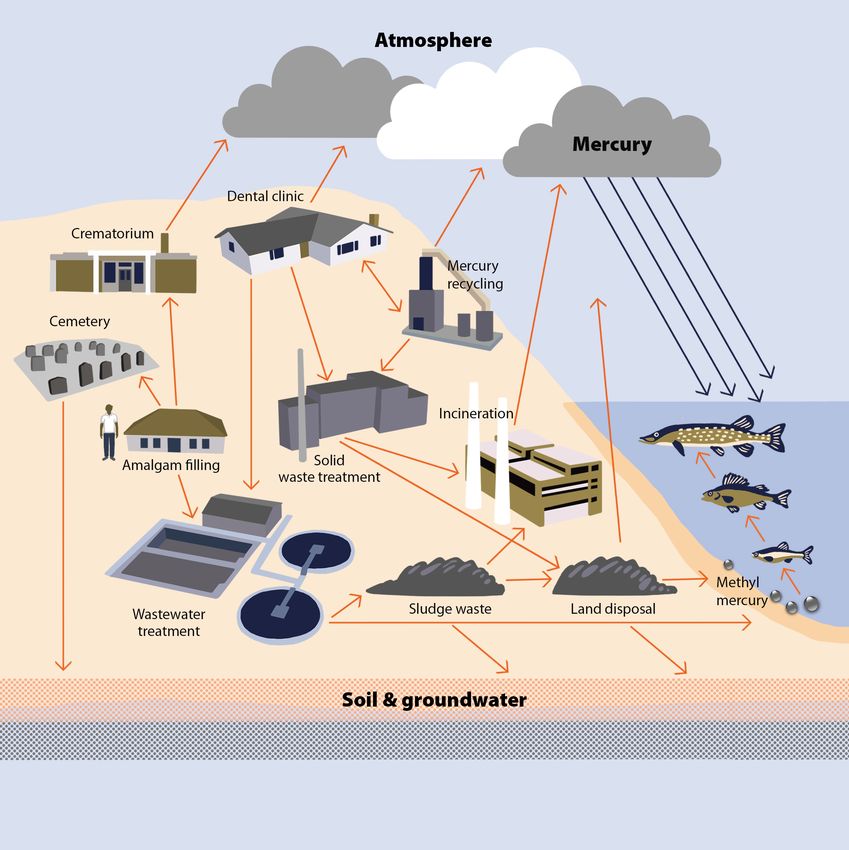
fillings remain so common in so many countries, significantly Figure 2 shows the various pathways for mercury emissions
phasing down the use of mercury in dentistry will require a and releases following the placement or removal of amalgam
range of measures adapted to each country’s circumstances. fillings at the dental clinic. Mercury pollution may occur during
any of these stages: during production of amalgam capsules;
In the meantime, the life-cycle of mercury used in dental during preparation, placement and removal of dental resto-
amalgam needs to be more widely understood and rations; when dental amalgam residues are discharged into
acknowledged in order to achieve an effective reduction in wastewater (e.g. at the clinic or via normal human waste at
mercury releases to the environment. The main pathways home), discarded into solid, medical or hazardous waste, or
of mercury in dentistry through the world economy and otherwise disposed of; through disposal or land application of
environment include: municipal sewage sludge that is contaminated with mercury
from amalgam; and from amalgam fillings in the deceased, es-
pecially when the remains are cremated.
8 Lessons from Countries Phasing Down Dental Amalgam UseFigure 2: Mercury releases to the environment from dental care
Lessons from Countries Phasing Down Dental Amalgam Use 9
Source: Concorde 2007Because the removal and replacement of old amalgam is not Table 1: Mercury used in dentistry - pathways to the
a ‘closed system,’ the mercury wastes and releases generated environment
by dentistry are difficult to monitor and control. The majority
of dental mercury (about two-thirds) is eventually released to Global releases/ Mercury
the environment as indicated in Table 1. pathways (metric tons/year)
Atmosphere 50-70
Surface water 35-45
Groundwater 20-25
Soil 75-100
Recycling of 40-50
dental amalgam
Sequestered, 40-50
secure disposal
Total 260-340
Sources: Maxson 2009, as cited in WHO 2011 and AMAP/UNEP 2013
Alternatives to dental amalgam fillings
Composite, glass ionomer, compomer and ceramic are materi- are willing to pay a higher price for mercury-free fillings. Al-
als that are commonly used as alternatives to amalgam (WHO though the 2011 World Health Organization report confirmed
2011). These filling materials are now familiar in most countries that “recent data suggest that RBCs [resin-based composites]
and have been employed for decades in many (SCENIHR 2008). perform equally well” as amalgam, nevertheless the WHO rec-
ommended that research and development of high quality
Currently mercury-free filling alternatives are more prevalent alternative materials should be further pursued (WHO, 2011)
in higher income countries, where the materials and related and the use of such materials should be further encouraged
dental equipment are more readily available, where there are in public health care globally in parallel to the phasing-down
more dentists trained to use them, and where more patients of dental amalgam.
10 Lessons from Countries Phasing Down Dental Amalgam UseAmalgam phase-down measures
Experiences of countries phasing down dental amalgam
Despite the broad challenges inherent in reducing amalgam Sweden – During the 1980s an intense debate was raised in
use in dentistry, some countries have already considerably the Swedish media by patient groups concerned about the
restricted or banned its use. While every country needs to health effects of amalgam in Sweden. Environmental con-
develop an approach that is appropriate to its own circum- cerns were also increasingly noted. Various expert groups
stances, the various measures described below may provide and investigations were convened, and in 1991 the National
inspiration to other governments taking steps to phase down Board of Health and Welfare investigated the preconditions
the use of amalgam in their own populations. for eliminating the use of dental amalgam (KemI 2005).
As cited in the country responses to the survey questionnaire, In 1995 there was a voluntary agreement between the state
the main factors that have contributed to a decline in amal- and county councils to put an end to amalgam use in dental
gam use include national and/or individual environmental restorations for children and young people. However, by 1997
concerns, patient and professional preferences to avoid mer- the voluntary measures had not achieved the objective that
cury, patient preferences for tooth-colored fillings, profes- had been established. In 1999 the Swedish Parliament decid-
sional preferences to favor viable techniques that preserve as ed that patients should no longer be reimbursed for the cost
much of the natural tooth structure as possible, etc. Moreo- of amalgam fillings under the national healthcare system. As
ver, oral health and dental hygiene programs that reduce the a result, the cost to patients for amalgam became compara-
overall incidence of dental caries have also contributed to a ble to the cost for composites (KemI 2005). Figure 3 reflects
decline in the need for dental restorations – both amalgam the decline in amalgam use in Sweden since the 1970s.
and non-amalgam (WHO 2011).
Since 2009 there has been a general ban on mercury in Swe-
The experiences of various countries that responded to the den that includes dental amalgam. Meanwhile the cost of
survey questionnaire are summarized below. mercury-free restorations has continued to decline with new
technologies, and with further training and experience of
dental practitioners.
Lessons from Countries Phasing Down Dental Amalgam Use 11Figure 3: Mercury used annually in dentistry in Sweden
Sources: DG ENV 2012, p. 59 (with permission)
Norway – Interest in reducing amalgam use in Norway amalgam fillings should not be placed in front teeth or “milk
emerged during the 1980s as part of a broader policy to limit teeth,” nor should it be generally used for dental care of chil-
all releases of mercury, and also due to health concerns raised dren. The health authority recommended that mercury-free
in the media by a patient association. In 1991, Norway issued alternatives should be the first choice for new fillings, except
guidelines that the use of amalgam should be limited due to where: 1) it is not possible to keep the area dry; 2) it is difficult
environmental impacts. Stronger guidelines were issued in to access the cavity; 3) there is a particularly large cavity; or
2003, requiring materials other than amalgam to be consid- 4) the distance to the proximate tooth is too great. By 2013
ered as the first choice in tooth fillings. Since 2008 Norway amalgam was used in only 5% of restorations.
has had a general ban on mercury products. This included a
ban on amalgam, with an exemption period – now expired Finland – After consultation with an expert group in 1993,
– for special cases. Amalgam use has been eliminated since Finland issued the following recommendations: the use of
2011. amalgam should be reduced for environmental reasons and
amalgam should be used only when other dental filling mate-
Denmark – The sale of mercury has been forbidden in Den- rials cannot be used. Since 1994 Finland’s national guidelines
mark since 1994, but an exemption was initially granted for stipulated that amalgam should not be used in restorations.
mercury in dental amalgam. A subsequent “Recommenda- The use of amalgam has declined significantly, recently ac-
tion” of the Danish health authority stipulated that from 1999 counting for no more than 3% of dental restorations.
12 Lessons from Countries Phasing Down Dental Amalgam UseNetherlands – In the Netherlands a major shift away from Hungary and Singapore – In 2012 amalgam was reportedly
amalgam took place in the 1990s after consultation with the used in only around 12% of all fillings placed in Hungary. Sin-
dental sector, which eventually embraced the use of mercu- gapore reported that amalgam was used in about 16% of all
ry-free dental restorations. Consequently, the average use of dental restorations in 2012.
amalgam in the 2000s was around 7% of all dental restorative
fillings, dropping to less than 1% by 2011. Three of the countries registering the most marked decline
in the use of mercury in dentistry in recent decades are
Japan – Since the 1980s Japan has moved almost completely highlighted in Figure 4.
away from amalgam for aesthetic and environmental rea-
sons. Amalgam has been replaced by composite resin, glass
ionomer and gold/silver/palladium alloy. Amalgam was used
in approximately 11% of all dental restorations in the 1980s,
declining to less than 4% in the 1990s. In 2010 only 20 kg of
mercury were used in dentistry.
Figure 4: Mercury use (kg) in dentistry by country, 1980-2011
Source: Survey questionnaire responses from government officials in Norway, Sweden and Denmark
Lessons from Countries Phasing Down Dental Amalgam Use 13Lessons from successful amalgam phase down approaches
Countries that have successfully phased down dental amal- These two approaches need to be implemented in parallel,
gam have used similar approaches to achieve their goal. Their including a phase down in the use of amalgam, in order to
approaches include a number of measures that ultimately most effectively reduce the environmental impact. The follow-
resulted in a smooth transition to greatly reduced amalgam ing part of the brochure discusses the different measures that
use. Those examples may be combined to provide a general may be taken to keep dental mercury out of the environment.
framework that other countries may use to address this issue,
with more specific measures depending on their economic,
Limiting mercury releases to the environment
cultural and social environment.
There are a range of measures that countries may take to
There are two main approaches to reducing mercury releases greatly limit dental mercury releases to the environment.
from dentistry: First, an accurate inventory of amalgam use is very useful to
estimate the quantity of mercury used by the dental sector.
• First, there is the pollution management approach which This may be done by:
aims to reduce the environmental impact of mercury re-
leases by using appropriate waste management measures, • Requesting or requiring amalgam manufacturers, distribu-
amalgam preparation procedures and air treatment sys- tors and/or importers to supply data;
tems, for instance. • Examining the country’s amalgam supply-demand chain
• Second, there is the need for source reduction measures in and costs;
the form of appropriate policies or regulations to reduce • Assessing the number of dentists in the country and deter-
the use of mercury in society. mining average amalgam use; and
• Tracking imports of encapsulated dental amalgam and el-
emental mercury imported for use in dental restorations.
14 Lessons from Countries Phasing Down Dental Amalgam UseTable 2: Indicative annual cost (in USD) of amalgam separators by size of dental office
Type of cost Small (1-4 chairs) Medium (5-12 chairs) Large (>12 chairs)
Purchase 228-1,370 760-2,510 2,850-10,000
Installation 114-228 143-297 228-1,140
Maintenance 0-228 0-228 0-228
Replacement 57-856 86-856 571-2,400
Estimated annual cost 211-1,073 293-1,110 1,990-4,630
Source: US EPA 2008 (Note that these costs are likely somewhat greater at present than they were in 2008)
This data establishes a baseline from which to gauge the sub- additional cost could range between 95 USD and 750 USD per
sequent phase down progress of a country, it facilitates set- year, depending upon the size of the dental clinic and other
ting a reduction target, and it sheds light on any mechanisms local circumstances.
at the national level that could present problems or oppor-
tunities. Such costs may take some time to recover, especially for den-
tists in low- and middle-income countries, and should be
During the phase down, it is also important to limit any mer- considered in that context. Furthermore, if amalgam is not
cury releases to the environment, to the extent possible. This widely used in a given low- or middle-income country, lim-
may be achieved with a waste management scheme that ited resources may be more effectively used to phase down
isolates amalgam scrap, capsules, or removed amalgam, and the ongoing amalgam use, rather than for amalgam related
where possible (see discussion of waste management costs waste management. Separators potentially have a high de-
below), treats this solid waste in an appropriate manner. “Best gree of mercury removal (98.7% on average, according to a
management practices” for dental clinics also include the use recent US EPA report) and can significantly reduce contami-
of amalgam separators as the most effective method to mini- nation of the wastewater stream. However, adequate atten-
mize the amount of mercury released into wastewater. De- tion has to be given to regular removal of the collected mer-
pending on the size of the dental office and the number of cury and maintenance of the separator because improper use
separators required, the annual cost of amalgam separators or poor maintenance will decrease its efficiency. Finally, the
(purchase, installation, maintenance) may vary between 60 recovered mercury wastes need to be sent to appropriate
USD and 270 USD per chair as shown in Table 2. treatment facilities to minimize any releases into the environ-
ment. This last requirement may be problematic in countries
More recent information indicates that the recovered mer- where there is limited infrastructure to properly manage and
cury also needs proper handling and disposal, for which the dispose of hazardous waste.
Lessons from Countries Phasing Down Dental Amalgam Use 15Table 3: National requirements for separators and best management practices
Separators, Separators, Separators, Separators, Periodic
Country BMPs required, BMPs required, maintenance maintenance inspection
new clinics existing clinics required documented
Finland X X X
Japan X
Hungary X X
Denmark X X X X X
Switzerland X X X X X
Sweden X X X X X
Norway X X X X X
Netherlands X X X X
Sources: Survey questionnaire responses from Finland, Japan, Hungary, Denmark, Switzerland, Sweden, Norway and the Netherlands
As presented in Table 3, surveyed countries used a combina- Countries also report that crematoria are among their larg-
tion of regulations, guidance, and inspections to promote est sources of mercury emissions to the atmosphere. Mercury
best management practices (BMPs), including the installation emissions are projected to become even larger in the EU
and proper maintenance of amalgam separators in dental (OSPAR 2011) and the USA due to the significant increase in
clinics to ensure proper recovery of mercury. Alternatively, in cremations and in the number of amalgams in the deceased
countries where enforcement measures may be more difficult – at least until a larger percentage of the deceased have fewer
to implement, it may be preferable to focus primarily on an- amalgam fillings. Figure 5 shows the projected rise in the inci-
nual reporting from dental clinics. dence of cremation in the EU and the USA, which is believed
to also reflect the global trend.
Also key to maintaining a safe working environment is at-
tention to good mercury handling practices. Rather than As illustrated below in Table 4, installing pollution control
mixing amalgam directly from elemental mercury, the use devices on crematoria is by far the most costly mercury emis-
of pre-portioned capsules is strongly recommended since sions abatement measure. Consequently, it is
it guarantees proper composition of the dental filling mate- much more cost-effective to eliminate the
rial, ensures optimal quality and reduces haphazard releases need for such pollution control devices
and the chance of coming into contact with toxic materials. over time by phasing down the use of
Where amalgam is mixed by hand, mercury releases are more amalgam fillings.
significant and spills are more likely, resulting in even higher
mercury releases and exposures to workers and patients.
16 Lessons from Countries Phasing Down Dental Amalgam UseDespite the high cost, installation of pollution control devices
on crematoria is playing an increasing role in reducing mer-
cury emissions to air, particularly in the EU. Countries indicate
that 44% to 100% of their crematoriums have installed mer-
cury control equipment.
Figure 5: Cremation trends in the EU-27 and U.S.
Sources: CSGB 2004; Reindl 2007
Other challenges faced by governments include the in-
creased cost of managing and disposing of sewage sludge
contaminated by dental mercury released to wastewater – a
problem highlighted by several countries responding to the
survey questionnaire.
Lessons from Countries Phasing Down Dental Amalgam Use 17Table 4: Country statistics on controlling mercury releases from cremation
Sources: Survey questionnaire responses from Sweden, Switzerland, Finland, Norway, Denmark and the Netherlands
Involvement of the dental sector
Dentists and, in particular, their dental associations will also • Were not aware of the environmental impacts of mercury
need to be consulted at an early stage and throughout the from amalgam, and the social benefits of reducing mer-
phase down process. It is important to understand their con- cury emissions (DG ENV 2012).
cerns regarding a phase down of amalgam use as well as to • Were initially reluctant to invest in new equipment re-
explain to them their country’s obligations under the Mi- quired to reduce mercury pollution or to support mercury-
namata Convention. free fillings (Klif 2011).
• Were not initially convinced of the durability of alternative
When planning the amalgam phase down, Nordic countries filling materials (Klif 2011).
experienced some initial resistance from the dental industry • Demonstrated varying levels of skill in applying mercury-
sector (DG ENV 2012). As surveyed countries reported, these free techniques.
challenges included the fact that some dentists:
18 Lessons from Countries Phasing Down Dental Amalgam UseThe survey questionnaires returned by countries showed Other challenges have been overcome in close cooperation
that during the phase down of amalgam use the commit- with dental schools. Countries can play a key role in sup-
ted involvement of the dental sector is necessary in order to porting the reduced use of amalgam by encouraging dental
achieve an efficient transition to alternatives. schools to:
• In Denmark, there were some initial objections from den- • develop curricula training dental students to use mercury-
tists. Subsequently, dental associations were directly con- free alternatives;
sulted and then actively participated in the development • provide continuing education for dentists who are cur-
of the health authority’s 1999 policy to allow amalgam rently practicing; and
only in special cases. • educate current and future dentists about amalgam’s im-
• In Norway, the opinions of dentists changed over time. pacts on the environment.
At first “emotions were high”, but dental practitioners ac-
cepted the principles developed through the consultative Dental schools may accomplish this by prioritizing knowl-
process of the Norwegian authorities. This included many edge about and proficiency in the use of alternatives to amal-
consultations with stakeholders, a national hearing, and gam. For example:
vetting the proposed regulation through the World Trade
Organization and EU notifications (VACMP 2004). • In Sweden amalgam placement was not taught for several
• In Sweden, dentists’ attitudes changed gradually as gov- years prior to its ban. To reduce spills and exposure, mer-
ernment agencies held a variety of consultations with dif- cury hygiene was emphasized along with the shift to pre-
ferent stakeholders, including circulating a questionnaire encapsulated amalgam. Dental schools have since demon-
on the impact of amalgam reduction, meetings with the strated the efficacy of mercury-free alternatives and also
affected parties to discuss specific problem areas, two can provide information on best management practices
study visits concerning amalgam, and the opportunity to and amalgam separators as a number of countries do.
comment on a draft report (KemI 2004, 2005). • In Denmark dental schools are actively collaborating in
• In Finland, the authorities worked with an expert group in amalgam phase down efforts. Use of mercury-free alterna-
the 1990s to prepare recommendations to reduce amal- tives is a part of dental schools’ obligatory training.
gam use, which declined significantly after the recommen- • In the Netherlands the dental schools stopped teaching
dations were introduced. the placement of amalgam between 1995 and 2005, on a
• In the Netherlands, a stepwise approach for eliminating voluntary basis.
the use of amalgam was employed after involving as many • In Japan dental amalgam is no longer emphasized in the
stakeholders as possible. educational system.
Lessons from Countries Phasing Down Dental Amalgam Use 19Public awareness of mercury in dentistry
In the higher income countries surveyed, there is general The acceptance, performance and use of mercury-free den-
public awareness concerning the environmental and health tal restorative materials have grown markedly in the coun-
issues associated with mercury. However, a surprising number tries surveyed, among others. Reasons for reduced use of
of people are not aware that amalgam contains about 50% amalgam as cited in responses to the survey questionnaire
mercury. Some people are misled by terms commonly used included the general desire to preserve as much of the
to describe amalgam (for example, a “silver” filling in English, tooth structure as possible, the general preference for tooth
or “plombage” in French, from the French word for “lead”). colored fillings, the awareness of environmental and other
Raising public awareness is an important factor that countries concerns associated with releases of mercury from dentist-
should consider because many people are not aware of the ry, etc. Governments that actively promoted reductions in
pros and cons of different dental restorations: amalgam use observed more rapid progress toward phase
down. Likewise, in the course of phasing down dental amal-
• In Norway, the government adopted measures to present gam, countries noted that initial investments were required
information on alternative dental restorative materials in a to train dentists and purchase equipment, but these were
balanced manner (UNEP 2010). As a result, the move away neither significant nor lasting barriers to the process of phas-
from amalgam started even “before the general ban on ing down amalgam use.
mercury in products was introduced” (Klif 2012).
• In Denmark, dentists were required to inform patients
about the different dental restoration materials. Now “pa-
tients ask for alternatives due to public awareness.”
• In Sweden, the government attributes “high awareness
of the environmental and health risks of mercury among
patients” as one of the “most important explanations” for
that country’s ability to virtually eliminate amalgam use
(KemI 2011).
20 Lessons from Countries Phasing Down Dental Amalgam UseModify or strengthen legislation and regulation
Avoiding the use of amalgam for women and children In the Netherlands, amalgam use has declined significantly in
Countries wishing to phase down amalgam use may con- children and adults after it was discouraged in children. Other
sider adapting their legislation to both set an objective and countries have had similar experiences, according to the re-
to achieve it. For example, Norway and Sweden introduced sponses to the survey questionnaire:
step-by-step legislation that allowed time for the industry
and for dentists to adapt to the new restrictions or guide- • In Finland, national guidelines recommend that amalgam
lines. The process started with a recommendation against the should not be used in pregnant women and children.
use of amalgam for vulnerable populations such as children • In Singapore, amalgam use in children has dropped from
and pregnant women. Governments could also recommend 50% of restorations in 2000-2009 to 20% in 2010-2011.
mercury-free fillings instead of amalgam as a first choice • In Hungary, amalgam use in children was reduced to 14%
(SCENIHR 2015). in 2011.
Following the lead of Norway and Sweden, some other Eu- Substituting less hazardous chemical substances
ropean countries (Denmark, France, Germany) are following Some countries also adhere to a policy of substituting less haz-
a similar precautionary approach by strictly limiting the use ardous chemical substances. This approach states that when
of amalgam in pregnant women and in the “milk teeth” of chemical substances with elevated health or environmental
children. Dental amalgam use in Swedish children was re- risks are in use, an assessment should be made (VACMP 2004).
duced from 30% of restorations in 1991 to 1.5% in 1995, and If less hazardous alternatives exist, they should be used in or-
subsequently Sweden adopted a ban on amalgam fillings for der to reduce the health or environmental risks (NBH 1999).
all young persons. In Norway amalgam use in children was For example, in Switzerland the 1989 Swiss Ordinance on Risk
reduced by 90% between 1995 and 2002. Amalgam use in Reduction related to chemical products stated that amalgam
Danish children was restricted in 2003. may not be used if a mercury-free alternative can be applied
in its place.
Norway began a process to phase down amalgam use in the
late 1990s. They first issued guidelines that amalgam should
be avoided in pregnant women, and subsequently included
children in the guidelines.
Lessons from Countries Phasing Down Dental Amalgam Use 21Table 5: National dental insurance schemes
Country Covered
Type of insurance scheme
population
Japan Universal entitlement The statutory health insurance coverage guarantees dental care. Recipients typically pay
30% of the cost, while those 70 years and older pay 10%. Routine dental examinations are
provided for infants, children and adolescents as part of public health and school health
programmes, and most municipalities subsidise these costs for infants and children.
Switzerland Special scheme for Basic health insurance is mandatory for all persons, although dental care is not included in
dental care the basic healthcare scheme. Under a separate scheme, dental treatment is fully covered
for children 18 and under.
Denmark Universal entitlement Dental care for children, adolescents, nursing home residents and disabled people is
publicly financed. Dental care for adults is largely private with support from public health
insurance; patients have to cover 70% of costs.
Finland Universal entitlement Patients contribute 20% of costs on average of both amalgam and non-amalgam fillings.
Singapore Government subsidies are available for dental restoration materials.
Sweden Universal entitlement Dental treatment for children is fully covered, and for adults 50% of the treatment cost is
covered. Amalgam fillings are not covered at all (KemI 2011).
Norway Children, seniors Dental care is fully covered for children up to age 18. Amalgam fillings are not permitted.
and others.
Netherlands Universal entitlement Children are publicly insured until age 18. Adults can purchase insurance and be partly
reimbursed for any type of filling.
Sources: Questionnaire responses from Japan, Switzerland, Denmark, Finland, Singapore, Sweden, Norway and the Netherlands; and Nomura (2008)
Better balanced dental insurance schemes
Some countries have found that addressing imbalances in in- be revised to help phase down amalgam use. Likewise, third-
surance schemes can be a very important measure for phas- party payment systems for dental care can also be adapted so
ing down amalgam use (KemI 2004, 2005). As Table 5 above as to help phase down amalgam use.
shows, countries vary substantially in their systems of pub-
licly financed insurance coverage or reimbursement schemes Sweden lists its “decision to stop financial support for amal-
for dental restorations. gam fillings from the national dental insurance service” as
among the “most important explanations” for ending the
The responses to the survey questionnaire confirm previous use of amalgam (KemI 2011). The result was that the cost to
findings that traditional health insurance schemes often con- the patient of an amalgam filling became as high as, or even
tain an inherent financial incentive in favor of amalgam (Con- higher than, the cost of a composite restoration. When insur-
corde 2007; WHO 2011). Therefore, where appropriate, coun- ance coverage for amalgam was eliminated, its use dropped
tries should examine how national insurance practices may substantially.
22 Lessons from Countries Phasing Down Dental Amalgam UseImprove public health, promote oral health and prevent disease
The World Health Organization has suggested that the de- The changing diet in many low- and middle-income coun-
creased incidence of caries in children in higher income coun- tries has resulted in a higher consumption of sugars and thus
tries during the 20 years up to 2002 (see Figure 6) is the result a higher caries risk among 12-year-olds (WHO 2003). The in-
of various public health measures, coupled with changing liv- creasing need for dental restorations in these countries can
ing conditions, healthy lifestyles and improved oral hygiene only be reversed with the development and implementation
practices. Nonetheless, WHO has concluded that “despite of a public oral health policy adapted to the local situation.
much effort in health promotion and disease prevention,
dental restorations are still needed” (WHO 2011). Improving global oral health at the roots will not only con-
tribute to the phasing down of amalgam, but will also deliver
In fact, amalgam use in higher income countries remains a social and economic benefits to the population. Nevertheless,
prime target for phase down, with 124 metric tons of mercury the limitations of programs for dental hygiene to adequately
consumed for dental applications in the European Union and address the problem of dental mercury are noted in a report
North America in 2010 alone (AMAP/UNEP 2013). for the European Commission, “…preventative policies are only
one instrument among others as they cannot fully address
mercury pollution caused by dental amalgam” (DG ENV 2012).
Figure 6: Caries in 12-year-olds, expressed in DMFT (decayed, missing and filled teeth)
Sources: The World Oral Health Report (WHO 2003)
Lessons from Countries Phasing Down Dental Amalgam Use 23The importance of minimally invasive dentistry
A Norwegian guideline was developed promoting minimal-
ly invasive dentistry on the basis of health care legislation,
which took several years to complete. After reviewing the
research, the Norwegian health authorities came to the fol-
lowing conclusions:
• When a dental filling is placed, the technique should in-
volve the least possible amount of tooth tissue removal.
• While, on the basis of available information at the time,
they considered amalgam to be the longest lasting, least
expensive, and most durable filling material, it requires
the removal of more healthy tooth tissue than mercury-
free fillings.
• Every effort should be made to reduce the exposure of pa-
tients and dental health care personnel to chemical sub-
stances during dental treatment, both when placing and
removing dental fillings.
In summary, despite efforts to prevent caries, dental amal-
gam use remains high even in many higher income countries
(AMAP/UNEP 2013). Those countries implementing amalgam
reduction measures may find it useful to develop evidence-
based guidelines encouraging the use of mercury-free dental
fillings. Moreover, in parallel with minimally invasive mercu-
ry-free dental fillings, health promotion and disease preven-
tion programs should be an integral part of responsible oral
health care.
24 Lessons from Countries Phasing Down Dental Amalgam UseTime to Act Now!
The experiences with mercury-free dental restorations in Each country adhering to the Convention is obliged to
surveyed countries demonstrate that amalgam use can be implement two or more of the measures listed above to phase
phased down and even eliminated. The major force now down amalgam use, while taking into account the country’s
driving global momentum toward reducing mercury use domestic circumstances and relevant international guidance.
in dentistry is the Minamata Convention, which identifies In implementing these measures, it is hoped that countries
a number of actions that can be taken: will benefit from the experiences and evidence presented in
this brochure.
1. Setting national objectives aiming at dental car-
ies prevention and health promotion, thereby
minimizing the need for dental restoration.
2. Setting national objectives aiming at minimizing
the use of dental amalgam.
3. Promoting the use of cost-effective and clinically
effective mercury-free alternatives for dental res-
toration.
4. Promoting research and development of quality
mercury-free materials for dental restoration.
5. Encouraging representative professional organi-
zations and dental schools to educate and train
dental professionals and students in the use of
mercury-free dental restoration alternatives and
in promoting best management practices.
6. Discouraging insurance policies and programs
that favor dental amalgam use over mercury-free
dental restoration.
7. Encouraging insurance policies and programs
that favor the use of quality alternatives to dental
amalgam for dental restoration.
8. Restricting the use of dental amalgam to its en-
capsulated form.
9. Promoting the use of best environmental practic-
es in dental facilities to reduce releases of mercu-
ry and mercury compounds to water and land.
Lessons from Countries Phasing Down Dental Amalgam Use 25References
AMAP/UNEP (2013) – Technical Background Report for the Global KemI (2005) – Mercury-Free Dental Fillings, Phase-out of amalgam in
Mercury Assessment 2013, Arctic Monitoring and Assessment Pro- Sweden, Swedish Chemicals Inspectorate (KemI), 2005;
gramme, Oslo, Norway/UNEP Chemicals Branch, Geneva, Switzer- http://www.who.int/ifcs/documents/forums/forum5/pm9_05.pdf
land http://www.amap.no/documents/doc/technical-background-
report-for-the-global-mercury-assessment-2013/848 KemI (2011) – Mercury Phase-Out: A Study of the Experience of
Swedish Companies, Swedish Chemicals Inspectorate (KemI), Octo-
CDA (2006) – Amalgam: Its History and Perils, JM Hyson Jr., California ber 2011
Dental Association Journal, March 2006, pp.215-229; http://www. https://www.kemi.se/global/pm/2011/pm-2-11-phase-out-of-mer-
cda.org/Portals/0/journal/journal_032006.pdf cury.pdf
Concorde (2007) – Mercury in Dental Use, Environmental Implications Klif (2011) – Norwegian experiences on phasing out the use of den-
for the European Union, Concorde East/West Sprl for the European tal amalgam, presentation by E. Fadum (Norwegian Climate and Pol-
Environmental Bureau, Brussels, Belgium, 2007 lution Agency), in Chiba, Japan, 24 January 2011
http://www.zeromercury.org/index.php?option=com_phocadown http://www.unep.org/chemicalsandwaste/Portals/9/Mercury/Docu-
load&view=file&id=17%3Amercury-in-dental-use-environmental- ments/products/Presentation%20of%20Norwegian%20experienc-
implications-for-the-european-union-&Itemid=70 es%20on%20phasing%20out%20amalgam.pdf
CSGB (2004) – International Cremation Statistics 2004, The Crema- Klif (2012) – Review of Norwegian experiences with the phase-out
tion Society of Great Britain of dental amalgam use, Climate and Pollution Agency, Norway, June
2012
DG ENV (2012) – Study on the potential for reducing mercury pollu- http://www.miljodirektoratet.no/old/klif/publikasjoner/2946/
tion from dental amalgam and batteries, BIO Intelligence Service for ta2946.pdf
the European Commission (DG Environment), 2012
http://ec.europa.eu/environment/chemicals/mercury/pdf/final_re- Lynch (2010) – C.D. Lynch et al., State-of-the-art techniques in op-
port_110712.pdf erative dentistry: contemporary teaching of posterior composites in
UK and Irish dental schools, accepted 24 June 2010, DOI:10.1038/
DHSA (2003) – A National Clinical Guideline for the Use of Den- sj.bdj.2010.674, British Dental Journal, Volume 209:129-136.
tal F illing Materials, Department for Municipal Health and Social
Services, Directorate for Health and Social Affairs, Universitetsgata 2, Lynch (2011) – C.D. Lynch et al., Contemporary teaching of poste-
Oslo, Norway, ISBN 82-8081-031-5, December 2003 rior resin-based composite placement in U.S. and Canadian dental
http://www.keytoxins.com/hgbiblio-files/Norwegian%20den- schools, Journal of the American Dental Association (June 2011)
tal%20guidelines%20July%201%202003.pdf
Lynch (2013) – C.D. Lynch and N.H. Wilson, Managing the phase-
Goldberg (2007) – In vitro and in vivo studies on the toxicity of dental down of amalgam: part II. Implications for practicing arrangements
resin components: a review, Goldberg M., Clin Oral Invest, 2007 and lessons from Norway, British Dental Journal 2013: 215:159-162
(24 August 2013)
Hylander & Meili (2005) – L.D. Hylander and M. Meili, The rise and fall
of mercury: converting a resource to refuse after 500 years of mining Maxson (2009) – P. Maxson presentation to WHO Expert Consultation
and pollution. Crit. Rev. Environ. Sci. Technol. 35:1-36 (2005) on the Future Use of Dental Restorative Materials (16-17 November
2009, Geneva); calculations based on EU dental mercury mass bal-
KemI (2004) – Mercury – investigation of a general ban, report 4/04 ance (source: Options for reducing mercury use in products and
by the Swedish Chemicals Inspectorate (KemI) in response to a com- applications, and the fate of mercury already circulating in society,
mission from the Swedish Government, October 2004 COWI and Concorde East/West for the European Commission, report
http://www3.kemi.se/Documents/Publikationer/Trycksaker/Rap- ENV.G.2/ETU/2007/0021, December 2008) extrapolated to the rest of
porter/Rapport4_04.pdf the world in accordance with industry estimates of regional dental
26 Lessons from Countries Phasing Down Dental Amalgam Usemercury consumption and regional waste disposal characteristics 23/9 IV, United Nations Environment Programme – Chemicals, Ge-
neva, November 2006
NBH (1999) – The use of dental filling materials in Norway, Norwe- http://www.unep.org/chemicalsandwaste/Portals/9/Mercury/Docu-
gian Board of Health, Parliamentary Report no. 58 1996/97, August ments/Publications/HgSupplyTradeDemandJM.pdf
1999
https://www.helsetilsynet.no/upload/publikasjoner/andrepublikas- UNEP (2010) – Norway’s contribution to UNEP’s Request for Infor-
joner/dental_filling_materials_norway_ik-2675.pdf mation on Mercury in Products and Processes, Quantities Used,
Demand, Level of Substitution, Technology Change-over, Available
Nomura (2008) – Dental healthcare reforms in Germany and Japan: Substitutes (Ad Hoc Open-ended Working Group on Mercury), 2010.
A comparison of statutory health insurance policy, Mayumi Nomura,
Japanese Dental Science Review (2008) 44, 109-117 UNEP (2013) – Mercury: Acting Now!, UNEP Chemicals Branch, Ge-
http://www.sciencedirect.com/science/article/pii/ neva, Switzerland
S1882761608000525 http://www.mercuryconvention.org/Portals/11/documents/publi-
cations/MercuryActingNow.pdf
OSPAR (2011) – Overview assessment of implementation reports on
OSPAR Recommendation 2003/4 on controlling the dispersal of mer- US EPA (2008) – Health Services Industry Detailed Study – Dental
cury from crematoria, Ospar Commission (2011) Amalgam
http://www.ospar.org/documents/dbase/publications/p00532_ http://water.epa.gov/lawsregs/lawsguidance/cwa/304m/up-
rec_2003-4_overview_report.pdf load/2008_09_08_guide_304m_2008_hsi-dental- 200809.pdf
Reindl (2007) – Summary of References on Mercury Emissions from VACMP (2004) – Interview with Liljan Smith Aandahl, Chief Dental Of-
Crematoria (draft), J. Reindl, Dane County Department of Public ficer, Directorate for Health and Social Affairs, Norway, Meeting #52,
Works, Madison, Wisconsin, 23 January 2007 Vermont Advisory Committee on Mercury Pollution, 13 May 2004;
http://www.mercvt.org/acmp/minutes/2004/2004-05-13.htm
SCENIHR (2008) – The safety of dental amalgam and alternative den-
tal restoration materials for patients and users, Scientific Committee WHO (2003) – The World Oral Health Report 2003, Oral Health Pro-
on Emerging and Newly Identified Health Risks (SCENIHR), European gramme, Noncommunicable Disease Prevention and Health Promo-
Commission (Directorate-General for Health and Consumer Protec- tion, World Health Organization (WHO), Geneva, 2003
tion), 6 May 2008 http://www.who.int/oral_health/media/en/orh_report03_en.pdf
SCENIHR (2015) – The safety of dental amalgam and alternative den- WHO (2011) – Future Use of Materials for Dental Restoration, World
tal restoration materials for patients and users, Scientific Committee Health Organization, Geneva, 2011;
on Emerging and Newly Identified Health Risks (SCENIHR), European http://www.who.int/oral_health/publications/dental_materi-
Commission (Directorate-General for Health and Food Safety), 29 al_2011.pdf
April 2015
http://ec.europa.eu/health/scientific_committees/emerging/docs/
scenihr_o_046.pdf
UNEP (undated) – Phasing down dental mercury use: Advisory note
for the insurance working group of UNEP Finance Initiative, United
Nations Environmental Programme, Chemicals Branch (undated)
http://www.mercury-free.org/UNEP--changing-dental-ins.aspx
UNEP (2006) – Summary of Supply, Trade and Demand Information
on Mercury, analysis requested by UNEP Governing Council decision
Lessons from Countries Phasing Down Dental Amalgam Use 27You can also read


