Libraries and the Community - REPRESENTING AND REFLECTING CULTURAL DIVERSITY IN LIBRARY RESEARCH, POLICY AND PRACTICE 27-28 FEB 2020 | SYMPOSIUM ...
←
→
Page content transcription
If your browser does not render page correctly, please read the page content below

Libraries and
the Community
REPRESENTING AND REFLECTING CULTURAL DIVERSITY
IN LIBRARY RESEARCH, POLICY AND PRACTICE

27-28 FEB 2020 | SYMPOSIUM
RMIT University Melbourne, Australia

#LIBCOMM2020
RMIT University acknowledges the people of the Woi
wurrung and Boon wurrung language groups of the
eastern Kulin Nation on whose unceded lands we
conduct the business of the University.

The Libraries and the Community Symposium is proudly hosted by the RMIT University’s
Centre for Urban Research. It is supported by an Australian Research Council Linkage grant
(LP170100222 Representing Multicultural Australia in National and State Libraries).

2020 CONFERENCE ORGANISING COMMITTEE
Associate Professor Ian McShane, Deputy Director, RMIT Centre for Urban Research
Dr Jodie Boyd, Research Fellow, RMIT Centre for Urban Research

https://www.diversityandlibraries.com/

Building 8, Level 11
RMIT University
124 La Trobe Street
Melbourne, VIC 3000

DISCLAIMER
The organisers have made every attempt to ensure that all informaton in this program
handbook is correct. Some information printed has been provided by external sources. The
organisers take no responsibility for changes to the program or any loss that may occur as a
result of changes to the program.
PROGR AM
Day 1 - Thursday 27 February
Location: Emily McPherson Building 13.3.9 (Ethel Osborne Lecture Theatre) Russell Street (cnr Victoria
Street)
8.30 - 9.00                          Registration
9.00 -10.00                          Welcome to Country

                                     Opening remarks Ian McShane

                                     Keynote address: Kate Torney, CEO State Library Victoria

Session 1                            Jo Ritale & Libby Cass NED the polyglot – collecting electronic material
10.00 -11.30                         across language and culture

Ø Multi-platform = Multi-vocal?      Hilary Berthon & Andrew Finegan Trove’s many voices

Chair: Leisa Gibbons                 Hollie White and Denise Woods: Public Library Collections as
                                     Representation of the Asian Australian Community in Western Australia

11.30-11.45                          Morning tea
Session 2                            Gavin Bannerman Showcasing untold stories in Queensland
11.45 - 1.15
                                     Oriana Acevedo and Ellen Forsyth What if I speak another language?
Ø Diversity beyond the Collections   Many libraries, many languages

Chair: Steve Wright                  Ian McShane Comparing Library Collection Policies in Settler Countries of
                                     Immigration

1.15 - 2.15                          Lunch
Session 3                            Leonee Ariel Derr, Cory Greenwood, Hayley Martin, Subha Simpson &
2.15 - 3.45                          Caz Smith Who Do We Think We Are? Understanding Diversity in the
                                     Victorian Public Library Workforce
Ø Critical librarianship, cultural
policy, leadership and the power     Louisa Willoughby, Simon Musgrave, Steve Wright & Tom Denison
and politics of diversity            Who’s reading what? Superdiversity and public library multilingual
                                     collections: a case study
Chair: Sophie Couchman
                                     Jodie Boyd Oral history’s place in the multicultural imaginaire of Australia’s
                                     National Library
3.45 - 4.00                          Afternoon tea
Session 4
                                     Keynote address: Nathan Sentance, Australian Museum
4.00 - 5.00                          Diversity means disruption

Chair: Ian McShane

From 5.30pm                          Informal Drinks & Dinner: Oxford Scholar
                                     (Building 81, 427 Swanston St, theoxfordscholar.com.au)
Day 2 - Friday 28 February
Kaleide Theatre: Building 8, 360 Swanston Street
9.00 -10.00 Remote keynote address: Liz Stainforth, University of Leeds
Collections challenges / Challenging collections: The Case of Trove and Digital
Chair: Ian McShane Heritage Aggregation
Session 5 Sophie Couchman Reflections from a community museum curator
10.00 - 11.30
Biftu Hawas & Ivy Tucker Exploring cultural identity with children and
Ø Collecting in the community – families: Addressing cultural and language representation for children raised
creating connections or cultural in Australia who come from diverse backgrounds
silos?
Kieran Hegarty Histories and practices of multiculturalism in Australian
Chair: Subha Simpson libraries: A case study of the Victorian Working Group on Multicultural Library
Services
11.30 -11.45 Morning tea
Session 6 Libby Cass & Anthony McLaughlin Surfacing Indigenous Australian
11.45 -1.15 languages: Aboriginal and Torres Strait Islander Studies and the National
Library of Australia
Ø Tools for the trade - Libraries,
standards and education in and Jessie Lymn & Leisa Gibbons A question of diversity in Australian library and
for diverse communities information studies (LIS) education
Chair: Gavin Bannerman Mary Carroll Reflections on a diverse workforce: barriers and opportunities for
LIS education
1.15 - 2.15 Lunch
Session 7 Leisa Gibbons Funding diverse community heritage and histories in Australia
2.15 - 3.45
Alexandra Dellios Public and Private: Ethnic Minority Women in the NLA
Ø Collections policy and
development - Shaping the Morgan Harrington Diversity beyond catalogue representation
national narrative?
Chair: Hollie White
3.45 - 4.00 Afternoon tea
Session 8 Panel: A picture is worth a 1000 words - Multiple views of a multicultural
4.00 - 5.00 society
Chair: Paul Mercieca Lizzy Tait, Huan Vo-Tran, Michelle Matheson, Sue Reynolds with Wendy
Frerichs
(To be followed by drinks and discussion or join us to discuss the JALIA
special issue)
JALIA publication session (optional) If you are intending to submit a paper to the Symposium Special Issue of the
5.00 - 5.30pm Journal of the Australian Library and Information Association (JALIA), then
please join us for this overview. We will be discussing paper formats, dead-
lines and the overarching themes that we hope to explore in the special issue.SPEAKERS
ORIANA ACEVEDO JODIE BOYD
Oriana works at State Library of NSW as the Multicultural Jodie is a Research Fellow at the Centre for Urban
Consultant for Public Libraries. She provides advice and Research at RMIT University. She is a member of the
supports the development of multicultural library services Representing Multicultural Australia in National and
within the State Library and NSW public libraries. She State Libraries project. She holds a PhD in history and is
represents the State Library in government and NGOs a former law librarian. She researches and publishes in
for the advancement, participation and settlement of cultural policy, legal and trade history and in oral history.
migrants and refugees in NSW. Oriana manages the
Multicultural Cooperative that assists public libraries
with the acquisition of materials in Languages other MARY CARROLL
than English (LOTE) and also manages the State Mary is Associate Professor and Courses Director
Library’s bulk loans services that provide contemporary at the Faculty of Arts and Education, Charles Sturt
lending collections in 49 languages. Oriana works University, NSW.
with multicultural communities to facilitate access and
participation in the State Library activities.
LIBBY CASS
Libby is Director of Australian Collections Management
GAVIN BANNERMAN
at the National Library of Australia. She is a member of
Gavin is Director, Queensland Memory, at State Library National and State Libraries Australia (NSLA) National
of Queensland. A qualified archivist, he has worked at edeposit steering group.
State Library of Queensland for 14 years. In this time he
has had experience with many facets of documentary
heritage: from archives to oral history, digital SOPHIE COUCHMAN
storytelling and contemporary collecting. Gavin leads
Sophie is a freelance curator and historian based in
the Queensland Memory team, which is committed
Melbourne with a particular interest in migration history
to collecting a trusted record of Queensland life, and
and the role photographs play in how we tell history.
growing engagement with those collections.
She has published in the area of Chinese-Australian
history, have worked as a curator at the Chinese
Museum in Melbourne and the Immigration Museum
HILARY BERTHON
and have worked closely with Chinese-Australian
Hilary is currently Assistant Director, Trove Outreach, at family historians through my involvement in the Chinese
the National Library of Australia. Over her career, Hilary Australian Family Historians of Victoria. She will enjoy
has maintained a strong interest in nurturing collaborative telling stories in interesting ways that draw on objects,
approaches to the digitisation and preservation of library oral histories and place.
materials. At the National Library, she has worked in a
variety of roles including as Manager, Digitisation and
Photography; and as Coordinator of the Australian ALEXANDRA DELLIOS
Newspaper Plan, fostering the National Library’s
Alexandra is a historian and lecturer in the Centre
emerging digitisation partnership program.
for Heritage and Museum Studies at the Australian
National University.TOM DENISON current materials for local studies and has experience
with collaborative projects.
Tom is a senior lecturer in the Faculty of Information
Technology at Monash University. He conducts research
within the fields of social and community informatics, WENDY FRERICHS
specialising in research relating to the effective use of
Wendy Frerichs is an Information Literacy Librarian
information and communications technologies (ICTs)
with RMIT University Library, she also teaches into the
by communities and their members.
Information Management Master’s program. Wendy
is passionate about information literacy and teaching
LEONEE ARIEL DERR and strives to make an impact. She tries to stay across
current trends and issues within the profession and
Leonee has over 13 years’ experience enhancing
is always looking for new methods of maintaining
public libraries via collection, space, and program
engagement. Before starting at RMIT she spent two
management. In 2011 she was awarded the State Library
years with Holmesglen TAFE as a Liaison librarian and
of Victoria’s Barrett Reid Scholarship to research space
Information Literacy Library concurrently, before that
and place as engagement for youth. She has advocated
Wendy was with Defence Library Services for eight
for the importance of story as a tool for achieving public
years.
libraries’ goals of education, discovery, inclusion and
connection. That advocacy was and continues to
be through nurturing library teams as a team leader, LEISA GIBBONS
designing community programming, reimagining
Leisa is a Lecturer in the School of Media, Creative Arts
library spaces, and inclusion of non-traditional library
& Social Inquiry (MCASI) at Curtin University. Leisa
content to diversify reading opportunities.
primarily teaches subjects on archives, preservation
and management of information services. Her research
ANDREW FINEGAN focusses on digital archives with a particular interest
in social media archives. Leisa Gibbons has a Ph.D.
Andrew has over a decade of prior professional
and Master in Information Management & Systems
experience as an information professional, both in
from Monash University, and is an accredited Records
Australian libraries and in International development
Manager, Archivist & Librarian. Her professional
work overseas. Andrew is currently an acting Trove
background is primarily in business archives and
Outreach Officer at the National Library of Australia. In
she ran her own consultancy working with small and
his recent career, he has focused his experience on
medium community and not-for-profit organisations.
delivering outreach programs and forming partnerships
with diverse communities.
CORY GREENWOOD
ELLEN FORSYTH Cory is currently Coordinator Community Programs
and Marketing at Yarra Libraries and is committed to
Ellen is a Consultant, Public Library Services at the State
developing innovative and inclusive programs that
Library of New South Wales. Ellen is interested in how
utilise creative technologies and game-based learning
public libraries manage collecting current materials
principles. In 2015 he was awarded funding from
for local studies and has experience with collaborative
the UNESCO Melbourne City of Literature Office to
projects. Her work involves providing advice to public
investigate creative writing and publishing centres within
libraries, reviewing their services and in coordinating
public libraries (something he is still investigating!) and
statewide working groups for local studies, readers’
is currently researching controlled vocabularies and
advisory and reference and information services. Ellen
their relationship with website usability, with the view of
is interested in how public libraries manage collectingestablishing an inclusive and consistent vocabulary for Kieran is also a Research Support Officer at the Monash
Victoria’s public libraries. Migration and Inclusion Centre at Monash University,
where he has supported major projects evaluating how
public institutions and neighbourhoods are responding
MORGAN HARRINGTON to increasing social and cultural diversity. He has
Morgan is a writer and researcher with a PhD in published on religious visibility, consumer culture and
anthropology and a background in journalism. He the lived experience of diversity in urban spaces.
has worked as a lecturer at The Australian National
University, and as a Native Title anthropologist. He
JESSIE LYMN
was the National Library of Australia-based Research
Fellow for the Representing Multicultural Australia in Jessie is a Lecturer in Information Studies at Charles Sturt
National and State Libraries project. University in Wagga Wagga. Her research considers
non-normative material in collections, arguing for a
consideration of non-linearity, disruption, and productive
BIFTU HAWAS effects, which includes DIY publications in institutional
Biftu was born in Ethiopia and came to Australia and non-institutional collections and queer memories
as a refugee. She currently works in community in GLAM sector institutions. She also researches in the
development running Women’s Friendship Cafés area of library and archives studies education.
with Victorian Immigrant and Refugee Women’s
Coalition (VIRWC), volunteers extensively to support
HAYLEY MARTIN
and advocate for the Oromo community and has
previously done youth work. She has a Bachelor of Hayley is currently the Team Leader, Learning Literacy
Arts in International Community Development and a and Partnerships at Melton City Libraries and has over 8
Certificate IV in Language Teaching. She speaks Afaan years’ experience working in roles in Victoria and South
Oromoo, Amharic and English, and founded the Oromo Australia connected to the transformation of service
language school for children born in Australia. She delivery in the public library space. She believes strongly
recently founded the Gutama Hawas Foundation (GHF) in the ability for public libraries to build stronger, more
in Oromia to help provide basic needs for children and cohesive, connected and resilient communities through
women in the developing region of Oromia/Ethiopia. space, program and collection commitments.
She seeks to continue to support her community to
link them with services and the wider community in
Melbourne and to maintain regular engagement with MICHELLE MATHESON
local social and community organisations and events Michelle is a Masters by research student at RMIT
such as the storytime program. University where she is conducting research on the
topic of LGBTIQ+ inclusion and representation in the
academic library . She is also a Teaching and Research
KIERAN HEGARTY
Librarian with RMIT University Library. Her research
Keiran is a Librarian and PhD candidate at the Centre interests are in social inclusion in academic libraries
for Urban Research at RMIT University, where he and in library staff skills development.
is researching migrant heritage and community
knowledge structures. His doctoral research will
contribute to the ARC Linkage project ‘Representing PAUL MERCIECA
Multicultural Australia in National and State Libraries’, Paul is the Program Manager for the postgraduate
run in partnership with National and State Libraries Information Management degrees at RMIT University.
across Australia. With a background in Sociology, His teaching and research interests are associatedwith digital information access, especially that related history of the Library of the Supreme Court of Victoria
to open access content and resources. Prior to from Charles Sturt University, published as Books
academia, he was a digital publisher and has also for the Profession (Australian Scholarly, 2012). She
worked in a number of library environments, managing teaches information organisation, and the professional
their information services experience in the Master of Information Management
program and researches in the areas of library history,
LIS education and library operations.
ANTHONY MCLAUGHLIN
Anthony is the Senior Collections Officer in the Print and
JO RITALE
Published team at the Australian Institute of Aboriginal
and Torres Strait Islander Studies (AIATSIS). Anthony Jo is Head of Collections at the State Library Victoria.
was instrumental in the adoption of the AUSTLANG She is a member of National and State Libraries
codes as a language source for MARC cataloguing. Australia (NSLA) National edeposit steering group.
He worked closely with AIATSIS and National Library
colleagues in preparing the application to the Library
of Congress; he and AIATSIS’ senior Linguist, Amanda NATHAN “MUDYI” SENTANCE
Lissarrague, in collaboration with NLA colleagues, Nathan is a Wiradjuri man from the Mowgee clan who
developed and presented the May 2019 webinar grew up on Darkinjung Country, NSW. Nathan is a
“In search of Indigenous Australian languages” and proud descendant of Diana Mudgee. He currently
prepared the associated handout, and took an active works as a project officer in First Nations programming
role in the code-a-thon during NAIDOC week. Anthony at the Australian Museum and as Wingara Mura Advisor
is committed to strengthening the community of practice at the University of Sydney.
around the indigenisation of collections and collaborating
on matters of cultural safety in resource description.
SUBHA SIMPSON
Subha is Area Manager, North, at the Geelong Regional
IAN MCSHANE
Library Corporation. She has been in the library sector
Ian is an associate professor in RMIT’s Centre for Urban for 5 years and made the move after a 13-year career as
Research. His research focuses on informal and formal a journalist and sub editor in Australia and overseas. She
education systems (especially museums, libraries and is passionate about libraries, the diverse communities
schools), local infrastructure and community services, they serve and the staff that make this happen.
and digital technologies.
CAZ SMITH
SIMON MUSGRAVE
Caz is Coordinator at Darebin Libraries responsible
Simon is a lecturer in the Linguistics program at for community learning and collections for adults,
Monash University. His research covers various areas in youth and children. In 2015, she provided a strategic
linguistics and sociolinguistics, linked by the themes of approach to engaging with and delivering services for
the use of computational tools in linguistic research and the CALD community through the development of the
the relationship between Linguistics & Digital Humanities. ‘Darebin Libraries CALD Framework 2015’ and has
been a member of the State Library of Victoria Project
Development Team responsible for the development
SUE REYNOLDS
of the ‘Reading and Literacy for All: A Strategic
Sue is a Senior Lecturer in the School of Business Framework for Victorian public libraries: 2015-2018’
IT & Logistics at RMIT University. Her PhD was a and its revision.LIZ STAINFORTH HOLLIE WHITE
Liz is currently a Lecturer in Heritage Studies at the Hollie is a Lecturer in Libraries, Archives, Records and
School of Fine Art, History of Art and Cultural Studies at Information Science (LARIS) at the School of Media,
the University of Leeds. Creative Arts, and Social Inquiry (MCASI) at Curtin
University in Perth. She has a PhD in Information and Library
Science from the University of North Carolina at Chapel
ELIZABETH TAIT Hill in the United States. She teaches in researches in the
Elizabeth is a lecturer in Information Management at areas of library evaluation and assessment, knowledge
RMIT University where she teaches digital curation and organization systems, and metadata.
records management. Her research interests are in
the socio-cultural impact of digital technologies with a
LOUISA WILLOUGHBY
particular focus on marginalised communities. Prior to
joining RMIT in 2018 she worked in Aberdeen, Scotland Louisa is a senior lecturer in Linguistics at Monash
and conducted projects with remote rural communities University. Her work explores linguistics diversity and
and the political engagement of young people. multilingualism and the ways in which minority and
majority language speakers and institutions respond to it.
IVY TUCKER
DENISE WOODS
Ivy has worked for Casey Cardinia Libraries for
over 5 years. She facilitates the Library has Legs Denise is a Lecturer in the School of Media, Creative Arts
Early Years Literacies Outreach Program, which is and Social Inquiry at Curtin University. She teaches and
funded by Communities for Children. She relies on coordinates first year and second year core units in the
the support and partnership of many community Mass Communication programme which is offered at
members, playgroup facilitators and other staff to Curtin’s Bentley as well as offshore campuses at Dubai,
help her produce programs that engage children and Mauritius, Sarawak Malaysia and Singapore. Her areas
families in many varied contexts. She has a Master of of research include representations of race, gender and
Information Studies qualification, a Bachelor of Arts, disability in online games, representation of Australia in
Bachelor of Education, and a Certificate IV Training the media in Asia, and media production in Asia. She
and Assessment. She was born in the USA and came has published in the Journal of Australian Studies,
to Australia as a permanent migrant in 2000. Media International Australia and the book Alter/Asians:
Asian-Australian Identities in Art, Media and Popular
Culture. She is an executive committee member of the
HUAN VO-TRAN Asian Australian Studies Research Network.
Huan Vo-Tran is an Information Management lecturer
in the School of Business IT & Logistics at RMIT
STEVE WRIGHT
University. He obtained his PhD in 2014 where he
explored the information management and sharing Steve is a senior lecturer in the Faculty of Information
practices of architects and builders as they completed Technology at Monash University. His research centres
a multi-million dollar complex construction project. upon information creation and use, from the experiences
Huan currently serves on the Australian Library and of public libraries and community archives, to the place
Information Association (ALIA) Research Advisory of documents in social movements.
Committee whose focus is to promote the value of
research in the profession and to provide advice on
ALIA’s role in research in general.ABSTR ACTS
KEYNOTE SPEAKERS: Tsing notes, to better understand these dynamics we
Diversity means disruption must also ‘pause to consider how universals work in
a practical sense’ (2005: 7). Tsing’s call for practical
Nathan Sentance (Australian Museum)
investigation is the point of departure for the paper,
Why hire First Nations people into your mostly white
which analyses the workings of Trove and assesses
structure and expect/want/demand everything to
its potential to unsettle the scaling of knowledge within
remain basically the same? Many libraries, archives
local, national and global frameworks. The final part
and museums will talk about how they value diversity
of the paper touches on community-driven efforts to
and many individual institutions and professional
create digital heritage environments for alternative
organisations will have their own diversity and inclusion
knowledge ontologies, and addresses possible ways in
policies and initiatives. However, these are often
which mass aggregation can support these initiatives.
shallow exercises without disruption.
---
Collections challenges / Challenging collections:
The Case of Trove and Digital Heritage
Aggregation
What if I speak another language? Many libraries,
Liz Stainforth (University of Leeds) many languages
This paper explores practices of digital heritage Oriana Acevedo and Ellen Forsyth (State Library NSW)
aggregation at scale, focusing on the National Library This paper will look at work that the State Library of
of Australia’s Trove system. Trove facilitates free web NSW is doing with and for NSW public libraries for
access to a range of documentary heritage resources their collections and services for people who speak
and is one among a number of aggregators, including languages other than English. One of the projects is
Europeana, Digital NZ, the Digital Public Library of working with ALIA seeking changes to the Classification
America (DPLA) and the National Digital Library of (Publications, Films and Computer Games) Act 1995.
India (NDLI). In different ways these initiatives point This would enable films in languages other than English
towards the re-structuring and re-imagining of cultural which don’t have a classification in Australia to be
collections online, transformations that are driven by able to be purchased for public libraries. At present
the logic of increased data integration. Aggregation unclassified films can only be purchased overseas.
involves making collections centrally accessible, In 2018 research was conducted into multicultural
reflecting the earlier aspirations of universal knowledge public library services across NSW. This research
systems, while at the same time operating as part of led to benchmark to identify the current services
distributed technical infrastructures. Such conceptions and to aim for improvement. Another project we are
of universal knowledge are not without issue and the working on that of portable local studies. This is with 16
racist, gendered and classist assumptions underlying libraries public libraries who are collecting local studies
them – specifically regarding uneven access to material which includes working with people from their
knowledge and the entanglement of universals in the culturally and linguistically diverse communities as
establishment of European colonial power – have well as Aboriginal and Torres Strait Islander people.
been widely critiqued (see, e.g., Byrne 1991; Smith There other services will be described in more detail
2006). Yet, as the anthropologist Anna Lowenhaupt in the subsequent paper including books and other
library materials for loan to public libraries in forty-twolanguages, and Telstra Tech Savvy Seniors which has community. With the breadth and quantity of content
provided technology training to over 7000 people in brought together through partnerships and digital
over eight languages collecting, as well as the National Library’s own
digitisation program, Trove is uniquely positioned to
Showcasing untold stories in Queensland engage a multicultural community in conversations
Gavin Bannerman (State Library of Queensland) about this content and to enable the uncovering and
State Library of Queensland has recently undertaken sharing of multicultural stories. The National Library of
a range projects that have worked with specific Australia is now undertaking a program to renew and
communities to assist them in telling their stories, revitalise the Trove experience for a modern culturally
including their experiences in the collection and and linguistically diverse audience, consulting with
engaging them in the services of the organisation. both Trove’s current and potential users to ensure that
Two projects – working with the Australian South Sea Trove is a welcoming place for all Australians. Trove’s
Islander and Queensland Greek communities – have patrons will be able to easily discover content in non-
led to exhibition outcomes that have showcased untold English languages, including the Indigenous language
stories and raised broader public awareness of these varieties coded by Austlang.
communities’ experiences. These two exhibitions
Plantation Voices and Meet me at the Paragon, and Oral history’s place in the multicultural imaginaire
their development demonstrate the symbiotic nature of Australia’s National Library
of collection building and collection engagement. Jodie Boyd (RMIT University)
Through growing collections, engagement becomes In Australia’s National Library, the acquisition or
possible. And through engagement, collecting commissioning of oral histories is accepted as one
opportunities emerge. This presentation will outline of the methods by which it can fulfil its representative
State Library’s collecting approach to reflecting mission as a socially inclusive and culturally diverse
diversity in its collections, and how it has worked with institution. In this goal, oral history has carved a space
specific communities to assist them in telling their for itself as a method by which the stories and voices
stories now, and for future generations. of “traditionally” underrepresented or marginalised
people and communities may have a presence in
collections otherwise accepted as, among other
Trove’s many voices
deficiencies, largely Anglo-centric. In this vein, oral
Hilary Berthon and Andrew Finegan (National Library
history projects which focus on underdocumented,
of Australia)
minoritised or marginalised individuals, groups or
Trove is a place to discover and engage with the many
communities commonly stake their value on the claim
voices that make up our Australian community. Since
that such projects can work to fill the “gaps” in the
its launch in 2009, Trove has evolved to expose an
national story, contribute to a more complete historical
ever-widening array of perspectives and histories. As
record, or recover lost, overlooked or hidden histories.
well as aggregating collections from organisations
This article considers oral histories as “collections”
across the community, cultural and research sectors,
within an institution which, in addition to its function as a
Trove also hosts a growing corpus of both born digital
repository of the nation’s history, is also overtly situated
content and content digitised in partnership with
as an instrument of state social and cultural policy; that
around 180 libraries, historical societies, universities,
is, as tools of liberal governance. This paper asks two
schools, businesses, local councils, faith, cultural and
questions: does the production or acquisition of oral
community groups. Over the last decade, a range of
histories by the Library work to reinforce the concept of
collaborative strategies have been used to build a
a core Australian culture and history with a few “gaps”
digital collection which reflects a diverse Australianto be filled. Or, do oral history collections construct the National Library of Australia and the Australian
a kind of heterotopic space in the Library offering Institute of Aboriginal and Torres Strait Islander Studies
counter-narratives and transformative possibilities, (AIATSIS) collaborated on a significant and enduring
within the existing terms of the institution? project to surface Indigenous Australian language
materials in library collections. In an international first,
Reflections on a diverse workforce: barriers and the Library and AIATSIS secured approval from the
opportunities for LIS education. Library of Congress to incorporate AIATSIS’ AUSTLANG
Mary Carroll (Associate Professor and Courses language codes for Australian Indigenous languages
Director, Faculty of Arts and Education, Charles Sturt into international standards. Previously librarians could
University, NSW) only apply one language code to indicate an item was
The issue of developing a diverse workforce for the in an Australian Indigenous language. By applying
Australian information professions is a complex one set these codes in the library context librarians can now
within a wider historical and structural context where precisely identify Australian Indigenous languages
lines have been drawn between what has been called using a comprehensive and authoritative source.
‘education for the head’ and ‘for the hand’. This divided AUSTLANG codes, when applied to bibliographic
educational model has been subscribed to almost from records, enhance the discovery of language materials
the establishment of formal LIS programmes in tertiary in Library collections. This is an important step towards
institutions in Australia. By using this practice/theory more visible recognition of indigenous voices and
divide some commentators suggest the professions cultures in our collections. With AIATSIS, the National
have been defined by constructs reflecting particular Library of Australia has been encouraging the uptake
attitudes towards the nature and limits of intelligence, of AUSTLANG codes among Australian libraries. Team
labour divisions within the workforce, professional AUSTLANG has presented at conferences, published
territorialism/protectionism, socio-economic status and articles, produced training guides and, in May 2019,
gender. More generally it has been contended that convened a webinar broadcasting to over 70 libraries
professional associations have acted as gatekeepers from all states and territories. The promotional and
using this educational structure as a de facto barrier training strategy culminated in an AUSTLANG code-a-
to access to professions in the name of quality and thon held in NAIDOC Week in July 2019. By week’s end
professional status. In so doing it has been argued, 8017 records in the Australian National Bibliographic
they have limited the diversity of those allowed entry to Database, related to 465 unique languages, received
professional status. By considering the intersecting and an AUSTLANG Indigenous Australian language code.
parallel workforces and educational environments in This presentation will detail this initiative, provide an
which Australian information professions has operated evaluation of its success and implications for practice,
this paper will reflect on these issues and on Australian and outline the next steps.
LIS education and discuss what the evidence has to
tell us about the structural and educational barriers to Reflections from a community museum curator
diversity which may exist within the sector. Sophie Couchman (Freelance Curator)
When I first started work as curator at the Chinese
Surfacing Indigenous Australian languages: Museum in Melbourne in 2009 I quietly questioned
Aboriginal and Torres Strait Islander Studies and whether the museum should exist at all. Much of the work
the National Library of Australia
of Chinese-Australian history has been about trying to
Libby Cass (National Library of Australia)
draw Australia’s Chinese history into national narratives
Anthony McLaughlin (Australian Institute of Aboriginal
and conversations. By collecting Chinese Australian
and Torres Strait Islander Studies (AIATSIS))
material culture in its own museum, we were denying
In the 2019 International Year of Indigenous Languagesit a place in a state or national museum where it might collections that are mostly dominated by the voices of
find a role in bigger stories and bigger audiences. But Anglo-Celtic Australians. Ethnic minority women were
on the other hand, I knew that these larger museums harder to access, not because they did not participate
had to prioritise what they collected and any collecting in these collective struggles (they did), but because
they did needed to be balanced against the need to narrative framings of their lives, and thus their sources,
represent every other ethnic community. I was also was different—not only within the catalogue and library
painfully aware that one of the legacies of anti-Chinese or archival classification/subject of their life stories, but
discrimination and the white Australia policy is a paucity in the methods and line of questioning that, for example,
of Chinese Australian histories, archival sources and interviewers pursued when conducting oral histories
material culture and that we needed to work hard to with these women. This came down to a separation
make up for this absence if we wanted to tell Chinese- between the public and private sphere, which I believe
Australian histories. A dedicated Museum can also collecting institutions may perpetuate with the gaps in
build expertise in not only Chinese Australian history their collections. Representation of the intersectional
but also Chinese languages and cultures that mean reality of multiethnic lives is key to building collections
it can better interpret and assess Chinese Australian that are reflective of multicultural realities. This paper
collections. I worked at the Chinese Museum until 2016 offers some examples for my recent research.
and in the end decided that the answer was a dance
between the two and the need for a close relationship Who Do We Think We Are? Understanding
between an ethnic museum like the Chinese Museum Diversity in the Victorian Public Library Workforce
and national museums such as Museums Victoria Leonee Ariel Derr (Youth Advocate), Cory Greenwood
(which embraces the Immigration Museum). Using the (Yarra Libraries), Hayley Martin (Melton City Libraries),
Chinese Museum as a case study, I would like to reflect Subha Simpson (Geelong Regional Library Corporation)
this and other issues I faced that relate to balancing the & Caz Smith (Darebin Libraries)
local, the national and the transnational within a small Research into diversity and inclusion practices
ethnic community museum. continues to highlight the positive relationship
between a diverse workforce and organisational
Public and Private: Ethnic Minority Women in the success in both the public and private sector. These
NLA benefits include financial rewards (organisational
Alexandra Dellios (Australian National University) and individual) as well as optimal organisational
In beginning my documentary research on the advancement through innovation, function, advocacy
‘migrant rights activists of 1960s and 1970s Australia’, and stakeholder engagement. As part of Public
I encountered a number of gaps and barriers in the Libraries Victoria Shared Leadership Program 2019, a
archive and library. Some of them were expected— team of five library staff from services across the state
certain voices speak louder than others, and when it undertook research to explore the implications of this
comes to ethnic minority groups in post-war Australia, for public libraries by inviting Victorian public library
sources are more readily offered to (and accepted staff to respond to the question “who do we think we
by) collecting institutions from agents that are able to are?” Between July and September 2019, this group
communicate mostly in English, and who have achieved conducted a survey of public library staff in Victoria
some level of public and professional success within receiving feedback from 400 staff out of a workforce of
mainstream Anglo-Australian institutions. I found the 1800 FTE (22%), capturing and evaluating the current
voices of familiar male figures from the group of Left- state of diversity and notions of belonging within
wing and Greek-origin migrant rights activists that I am the Victorian public library workforce through these
studying. They have made valuable contributions to responses. The findings from this state-wide surveyspeak to a preservation bias within the workforce that organising concept, drawing from multiple methods to
favours the ‘stereotypical librarian,’ and also unearth present the data as stories on the various intersections
rich information about the psyche of public library between memory institutions and community identity
staff that shed light on entrenched and systematic and representation in Australia. Key to the research is
cultural frameworks that are creating roadblocks to communicating how the concept of cultural identity and
achieving a diverse and inclusive workforce. As the representation is situated in Australia.
Victorian public library sector begins to shift gears with
a new overarching strategy (PLV Strategic Plan 2019- Diversity beyond catalogue representation
2022) now has become a vital time to understand how Morgan Harrington (RMIT University)
diversity and inclusion is represented in order to plan This paper will briefly present the methodological
for and administer effective workforce development for approach and limitations to the attempt to evaluate
a sustainable and successful future. the collection of the National Library of Australia’s
collection for its representation of culturally and
Funding diverse community heritage and histories linguistically diverse Australians and then suggest
in Australia some alternatives. A few examples of actual library
Leisa Gibbons (Curtin University) collection items will highlight the incredible complexity
Since 1996, the National Library of Australia’s (NLA) of individual and shared identities that exist within
Community Heritage Grant (CHG) program has Australia and, in doing so, consider the implications
been funding and preservation activities to support for libraries endeavouring to catalogue items in ways
the ‘urgent need to preserve Australia’s rapidly that are culturally appropriate. How can libraries
deteriorating documentary heritage’ (1996). The Public balance the need to catalogue items in a way that
Record Office of Victoria (PROV) has since 2001 accurately reflects their content and ensures they are
administered a funding program to support local history discoverable by a large number of people with the
(2019). Previous research into the NLA’s CHG program goal of reflecting the complexity of diverse identities?
has highlighted several key issues including a lack of How could cataloguers capture a multitude of possible
support for digital initiatives, questions over the role intended uses of a collection item that might not be
of the NLA in funding community heritage, insufficient ‘about’ diversity but is nevertheless a representation
training support, and a lack of access to conservation of diversity? By discussing the outcomes of this pilot
professionals to carry out funded projects in remote project, and presenting key findings, this paper aims to
areas of Australia (Gibbons, 2019; McCausland & provide an informed starting point for more-productive
Thompson, 2014; Meredith, Sloggett, & Scott, 2019). future research. Specifically, the paper will argue that
To date, there is no published research on the PROV collection evaluation be contextualised within a wider
program. An examination of cultural diversity and appraisal of how the library as a ‘living institution’
how it is represented and supported via the funding presents itself and the story of Australia through
schemes is only touched on in the existing research. exhibitions, websites and other public programs. How
This paper draws from public data shared by the NLA does the institution, as a source of ideas and messages
and PROV about successful grant applications (1996 - about Australian society reflect the diversity of the
2017) to explore what organisations have successfully Australian people? How are the stated policy intentions
received grant funding. Building on an existing enacted in practice?
typology of organisations, created using the NLA data
(Gibbons, 2019), this research classifies organisations
around cultural identity to identify what stories are
being funded. The analysis utilises ‘narrative’ as anExploring cultural identity with children and representation of varied perspectives including culture,
families: Addressing cultural and language language, identity and ability. In this paper we situate
representation for children raised in Australia who
our understanding of diversity in LIS within the literature
come from diverse backgrounds
related to representation of identity, and explore
Biftu Hawas (Victorian Immigrant and Refugee
the possibility of a diversity of perspectives being
Women’s Coalition; Gutama Hawas Foundation) & Ivy
represented in LIS educational curriculum, resources
Tucker (Casey Cardinia Libraries)
and work integrated learning as well as LIS educators
The Library has Legs program at Cranbourne Library
themselves. In 2011 the ALTC funded project Re-
has a range of programs aimed at engaging CALD
conceptualising and re-positioning Australian library
communities. One aspect aims to work with staff and
and information science education for the 21st century
volunteers of diverse languages and cultures to produce
(Partridge et al 2011) reported on higher education in
storytimes that give an opportunity for communities to
the sector, and more recently the 2019 ALIA Workforce
celebrate language and culture, in particular for their
Diversity Trend Report provided an analysis of the
children to connect and engage with the culture and
diversity of the LIS workforce through census data.
languages of their families. It is important to note that
The tension between these reports raises two critical
this may not be their first language, despite being the
questions. Firstly, with an existing awareness of a lack
mother tongue of their family’s culture. In the case of
of diversity in the Australian LIS workforce, how are ALIA
the Oromo community, there are few children’s books
and the other LIS higher education accrediting bodies,
available that are printed in this language from Ethiopia.
the Australian Society of Archivists (ASA) and the
Oromo people have been persecuted in the past,
Records and Information Management Professionals
and Afaan Oromoo was suppressed by the Ethiopian
of Australasia (RIMPA) framing diversity and identity
government. Children raised there were forced to
in their accreditation requirements? Secondly, LIS
learn and speak Amharic. Practicing their culture and
workforce diversity necessarily includes LIS educators
language in their homeland has not been easy. Having
(Partridge et al 2011), but a reflection on educators and
this storytime and a dedicated volunteer from this
diversity is noticeably absent from both major reports.
community willing to translate and tell stories gives an
So, how diverse are Australian LIS curricula and
opportunity to hear stories read in their mother tongue
educators? In this paper, we present preliminary
and to celebrate and learn their mother language
findings from research into LIS courses and educators
together in public without fear of discrimination. In this,
drawing from publicly available information about
it provides another opportunity for these families in
each ALIA/ASA/RIMPA accredited higher education
their work towards the reclamation of their language by
institution. We extend the work done by Partridge et al
their children in a safe space, planned and presented
in 2011 and ALIA in 2019 to suggest a more nuanced
both by the library service, but most importantly, by a
attention to defining and measuring diversity in the LIS
respected member of their community. It also benefits
workforce, including education.
by creating a sense of belonging and connectedness
among the families and children who attend.
Comparing Library Collection Policies in Settler
Countries of Immigration
A question of diversity in Australian library and
Ian McShane (RMIT University)
information studies (LIS) education
Australia has long been recognised as an international
Jessie Lymn (Charles Sturt University) & Leisa Gibbons
leader in the design and provision of library services
(Curtin University)
in multicultural societies (International Federation of
The notion of ‘diversity’ in Library and Information
Library Associations 2009). However, there has been
Studies (LIS) includes explorations into a range of
little comparative research on the policy frameworks
disciplinary topics, trends, skills and knowledge,
which govern these practices, particularly as they
checklists of demographics as well as notions ofrelate to collection development. This presentation Public Library Collections as Representation of the
examines the legislative mandates and collection Asian Australian Community in Western Australia
policies of major public libraries in seven “settler Hollie White and Denise Woods (Curtin University)
countries” (Koopmans and Michalowski 2017) to Klinenberg describes public libraries as ‘palaces for
compare Australian practices of collecting and making the people’, an important part of ‘social infrastructure’
accessible materials documenting our diverse society, - “places and organizations that shape the way we
with the approaches of comparable immigrant nations. interact.” (Dowling, 2018, p.29). Serving the needs of the
general public within a certain geographic area, public
libraries collect materials in all formats and genres
NED the polyglot – collecting electronic material
across language and culture based on institutional priorities related to community or
Jo Ritale (State Library Victoria) Libby Cass (National user needs and interests (Johnson, 2018). The 2016
Library of Australia) Australia Bureau of Statistics data showed that 35.0%
In 2019 the national, state and territory libraries joined of people living in Western Australia (895,400 people)
forces to launch one giant national digital collection of were born overseas, with migrants from Asia listed in
Australian publications. It’s called National edeposit the top 15 countries (Australian Bureau of Statistics,
– or NED for short. By ‘Australian publications’ we’re 2018). Our paper examines how the Asian Australian
talking books, journals, magazines, music, pamphlets, community is represented by collections in Western
newsletters, novels, children’s stories, self-published Australian public libraries. Media and non-book format
poetry anthologies, maps, government reports. You collections (i.e. films and newspapers) play a crucial
name it, regardless of where it was published in this role in the lives of Asian Australian communities. For
vast continent, NED will have it. NED is a system and migrants like Claire Cao’s father, the library was where
a service, connecting a network of publishers and he would go for access to films from Hong Kong and
libraries. Publishers go to the NED website to deposit Taiwan. The library provided access to resources they
and describe their electronic publications using a would not have been able to otherwise afford (Cao,
simple tool, choosing where and how they want them 2019). These materials provide Asian Australians
to be accessed. For the rest of us, these publications a way of negotiating their identity/identities. Using
show up through the national discovery service, Trove. conceptual frameworks and theories from cultural
This is a world-first collaboration for the library studies, this paper presents survey and interview
sector. It dismantles barriers by opening our systems findings that explore how Western Australian public
to publishers so that they can describe their own libraries develop their collections on Asia, focusing
publications, choose the access conditions they prefer specifically on media and other non-book formats.
(within the Copyright Act). For the public, it means
that a large percentage of Australian publications Who’s reading what? Superdiversity and public
can be accessed directly from home, and something library multilingual collections: a case study
published in Cooktown can be read in Coober Pedy. Louisa Willoughby, Simon Musgrave, Steve Wright &
Speaking at the launch on 16 August, author Peter Greste Tom Denison (Monash University)
summed up the ambitious scale of the project as “frankly Australia has long been a multicultural society, and its
mind-boggling in its scale, and incredibly powerful in population growth continues to be driven by migration
its potential”. This presentation will detail NED and its from overseas. At the same time, migrant communities
potential as powerful community engagement tool to are increasingly superdiverse – in other words, they
facilitate the improved representation and discovery come from a wide range of language and cultural
of culturally and linguistically diverse societies in our backgrounds with different socio-economic profiles
libraries. and migration trajectories. Superdiverse migrants often
possess complex language repertoires, extendingbeyond both the English dominant in Australia and principles of respecting community differences and
the majority language(s) of their place of origin. supporting cultural and linguistic maintenance through
Superdiversity thus poses challenges for libraries in information access and provision. This was largely
terms of both understanding the language needs and achieved through measuring and improving the
desires of their patrons (which may not be readily linguistic diversity in collections and services according
discernible from large-scale demographic data) and in to the presence of ‘ethnic minorities’ among potential
terms of servicing these needs over an increasing array user groups. Over the next two decades, the group
of languages. In this paper we report on a pilot study was active in continuing to support such changes
conducted between 2016 and 2018 in a public library to library services and collections across the state,
system based in Melbourne’s southeast that aims to lobbying and promoting these “multicultural library
unpack some of these issues. Drawing on analysis services’’, that is, “fair and equitable library service[s]
of borrowing data as well as the views of library staff to all Victorians, whatever their culture or language”.
and patrons, we demonstrate that borrowing behaviour In doing so, the group sought to position libraries as
for language other than English materials does not a central pillar in supporting cultural maintenance and
align neatly with the proportion of speakers for each the promotion of “intercultural understanding” in a
language recorded in the local community at the 2017 multicultural society. Using primary sources from the
census. Rather it reflects a complex array of factors group and interviews with key group members, this
including the availability and presentation of quality paper will reflect on the emergence of this “multicultural
materials, level of English proficiency of speakers/ librarianship” in Australia, outlining the assumptions,
readers of the language, migration histories and ethics, and politics of such practices. By reflecting on
commitment to language and cultural maintenance. this history, I hope to show how cultural difference has
We close by reflecting on how these insights might been defined, inscribed and reinforced in conventional
inform multilingual collection management and help library practices. In doing so, I ask if such practices
in identifying opportunities for further research and and understandings can be disrupted to re-imagine,
collaboration. rather than reproduce, dominant narratives around
national identity, culture and heritage.
Histories and practices of multiculturalism in
Australian libraries: a case study of the Victorian
Working Group on Multicultural Library Services
(1979-2001)
Kieran Hegarty (RMIT University)
Four decades on from the first National Conference
on Multiculturalism and Libraries, this paper will
examine how libraries and librarians have historically
understood and responded to the emergence of
multiculturalism in Australia. The group responsible
for the 1980 conference, the Working Group on
Multicultural Library Services (Victoria), formed the
year prior, and played an active role in translating the
emerging policy orientation of multiculturalism into a
set of practices in the Australian library sector. The
Fraser Government’s adoption of the recommendations
of the Galbally Review in 1978 energised this small
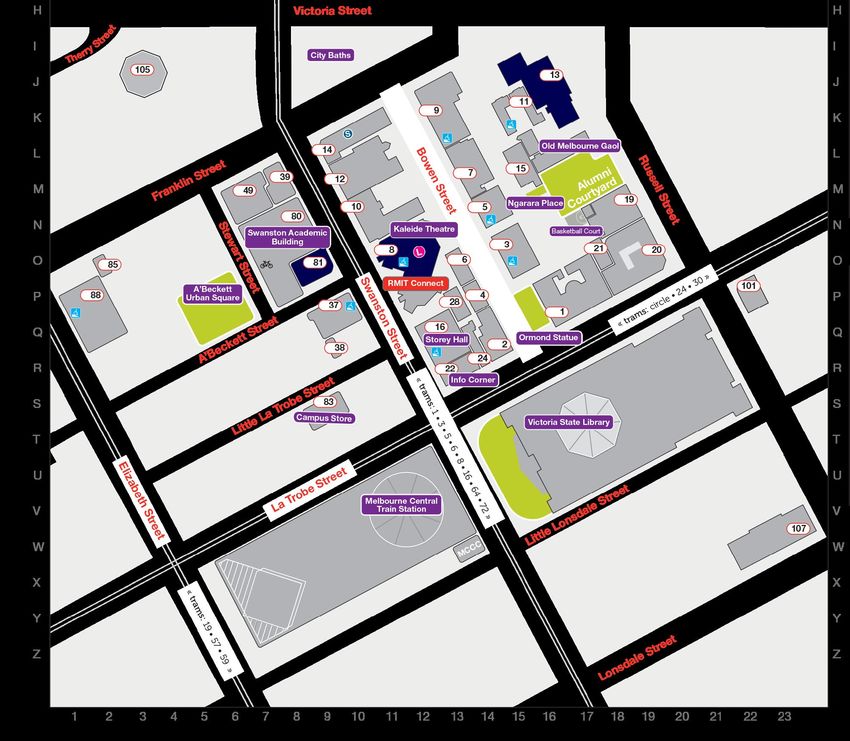
group of librarians who sought to implement its guidingMAP & VENUES Building 8 Kaleide Theatre Building 13 Emily McPherson Building 81 Oxford Scholar
NOTES
Centre for Urban Research
    Building 15, Level 4
RMIT University City campus
    124 La Trobe Street
   Melbourne VIC, 3000
          Australia

    T: +61 3 9925 0917
    E: cur@rmit.edu.au

www.cur.org.au
You can also read


