Listen Up! Using Audio Books for English Teaching - Presenter: Jennifer Hodgson
←
→
Page content transcription
If your browser does not render page correctly, please read the page content below
+
Listen Up!
Using Audio Books
for English Teaching
Presenter: Jennifer Hodgson
americanenglish.state.gov 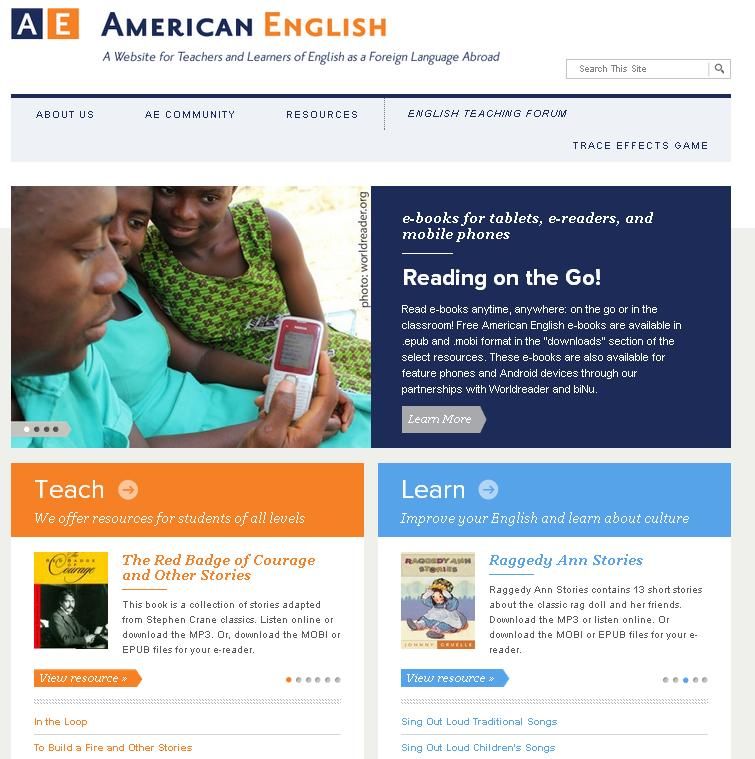
+
             Audio Book Series

Downloadable text and audio at: americanenglish.state.gov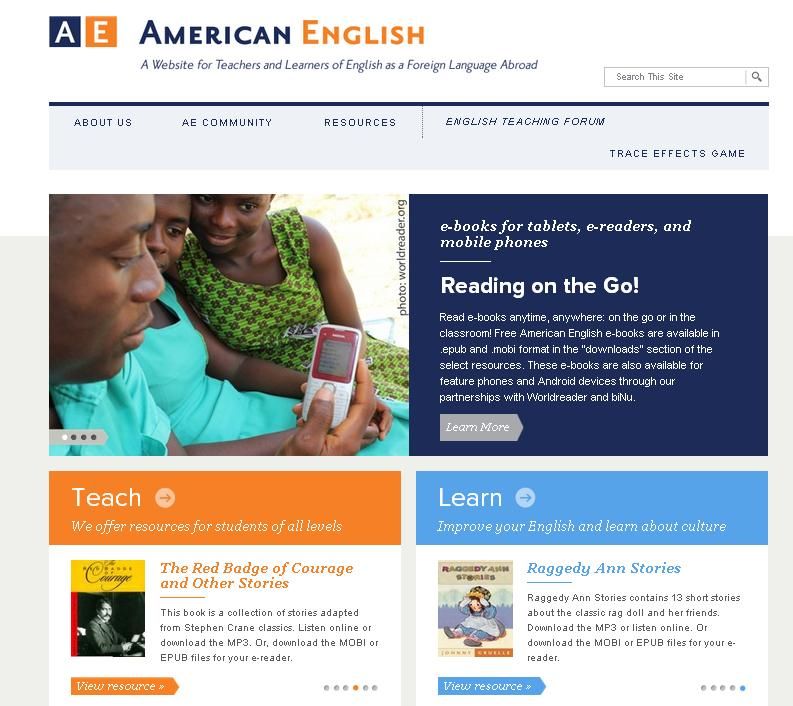

to download audio files: right click on the file, select “save link/target as”

+
Benefits of Using
Audio Books with
English Language
    Learners

Can you think
   of any
  benefits?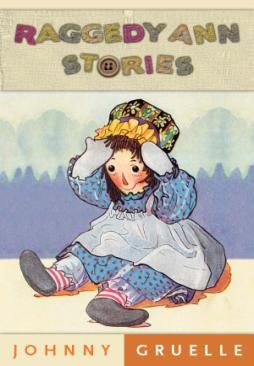
+ Why Use Audio Books?
Exposure to patterns, intonation, expressions, different accents
& dialects, and pronunciation of a language
Provides example of fluent reading
Dramatized audio books can increase students interest in the
text
Allows “readers” to enjoy a book at their interest level, even if it
is above their reading level
Students can work at the same pace
With text & audio: a multisensory approach to reading
Supports auditory learners
Helps with literacy development
Improves comprehension of text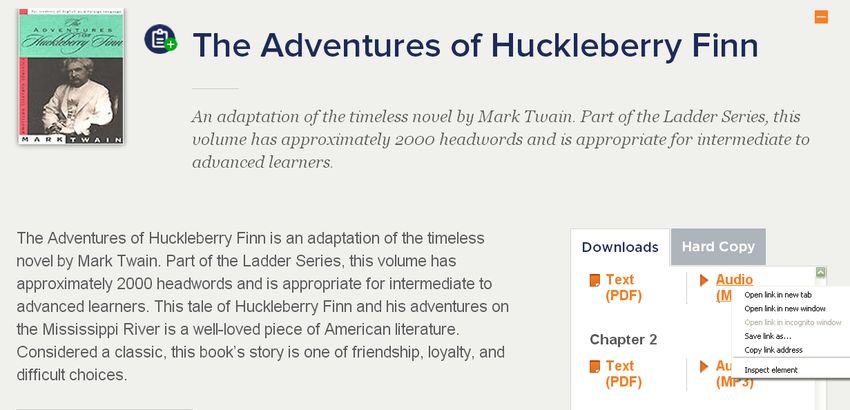
+
 Ways to Use
Audio Books in
the Classroom
  and Beyond
•Whole   Class

•Reading   Centers (In Groups)

•Classroom   Management

•Independently

+
     Reading Centers (Groups)
    Classroom Setup 1   Classroom Setup 2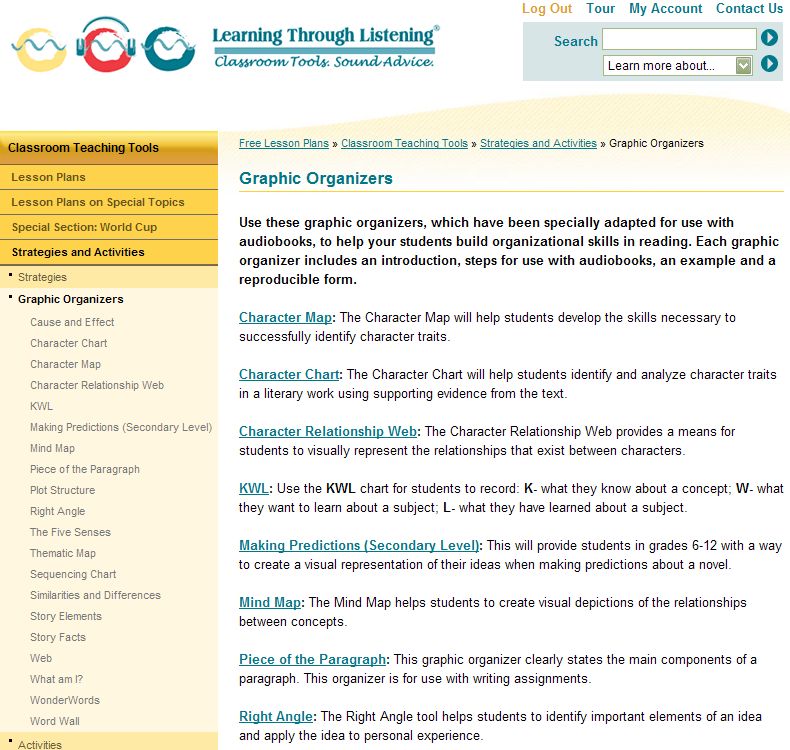
+

                    “Audio Books & Literacy”
                       Dr. Frank Sarafini
    http://www.audiobookexpress.ca/Audiobooks_Literacy.pdf
+
Classroom Independently
Management
Rewards Commuting/Traveling to
and from school
Warm-ups, closings,
transitions While doing daily chores
During “boring” tasks An incentive program
Ex: clean-up+ Reading & Listening Skills •Vocabulary Building •Listening/Reading Comprehension •Listening/Reading for Details •Summarizing & Sequencing •Prediction •Analysis
+
Vocabulary Building
Listening for Vocabulary
High frequency words
(articles, forms of “to be”, question words, etc.)
New vocabulary
(places in a town, emotions, etc.)
Highlighting a specific grammar point
(example: present perfect verbs, going to)
Activities
Raise hand
Stand up
Tally
Categorizing+
Vocabulary Building
Activity 1: Listening for Vocabulary
Assign each student (or groups of students
depending on class size) one word that they
will hear.
Have students stand up (raise their hand or
tally) each time they hear their assigned word.
If the word is an action word, they can stand up
and do the action.+
Vocabulary Building
Activity 1: Listening for Vocabulary
In chapter 36 of The Raise your hand
each time you hear:
Adventures of Huckleberry
Finn, students will hear Rats
these four words. Assign
Poisonous Snakes
each student one of these
words. Have them stand Bugs
up each time they hear
their assigned word. Harmless Snakes+
Vocabulary Building
Activity 2: Categorizing
In chapter 1 of The Autobiography of Mark
Twain, students will hear Mark Twain
describe his hometown. Have students make a
list of the places they hear. Next, have
students listen again and make a list of all of
the descriptions of the places they hear.Vocabulary Building
Activity 2: Categorizing
Locations in a City/Town/Village
NounsVocabulary Building
Activity 2: Categorizing
Locations in a City/Town/Village
Nouns
Village
House
Palace
Streets
Church
School house
StoreVocabulary Building
Activity 2: Categorizing
Locations in a City/Town/Village
Noun Description
Village
House
Palace
Streets
Church
School house
StoreVocabulary Building
Activity 2: Categorizing
Locations in a City/Town/Village
Noun Description
Village
Made of logs, not of brick or stone
House
Palace
A couple hundred yards, thick black mud in
Streets wet times, deep dust in dry times
Church Made of logs
School house is the church
small
Stores+
Vocabulary Building
Activity 2: Categorizing
What are some words or phrases that your students
might not understand?
What are some concept checking questions you might
ask?
Was there a palace in the town?
Do you think Mark Twain’s house was big or small? How do you
know?
The streets were “a couple of hundred yards”? What unit of
measurement (used in our country) is similar to yards (used in
America)?Vocabulary Building
Activity 2: Categorizing
In pairs, have students discuss what they
believe the town to look like (based on the
descriptions) and draw a picture or map of
the town.
+Sequencing & Summarizing
Activity 3
Have students listen to a segment of a story
(preferably with a lot of action) 2-3 times and
quickly write down what happens in the story.
Next, have students rewrite what happens in
complete sentences
In pairs, have students compare their stories.
In pairs, have students select 4-6 of the most
important parts write their sentences on strips
of paper.
Have each pair mix their sequence and trade
with another group.
Each group should try to sequence the other
group’s cards.+
Character Comparison
Activity 4
In chapter 1 of The Adventures of Tom Sawyer,
students will hear Aunt Polly and Tom interact.
Have students describe each character based
on their interactions.+
Character Comparison
Activity 4
Aunt Polly Tom Sawyer+
Character Comparison
Activity 4
Huck Tom Jim
Physical
Description
Personality Traits
Feelings/Emotions
Alternative Graphic Organizer+
Predicting
Activity 5
In the beginning of The Gift of the Magi (0:24-0:55),
students will listen to the very beginning.
Then they will make a prediction (or creative
story) of what they think will happen.+
Predicting
Activity 5
Have students listen to a piece of the
story 2-3 times.
Put students in pairs or groups and have
students create a scenario to finish the
story
Have students perform act 2 of the story
or have students write part 2 of the story
Other Activities:
Chain story
Writing a prequel+
Additional Resources for
Audio Books & Lesson IdeasIdeas for Teaching with Audio Books learningthroughlistening.org
Audio files for English Language Learners
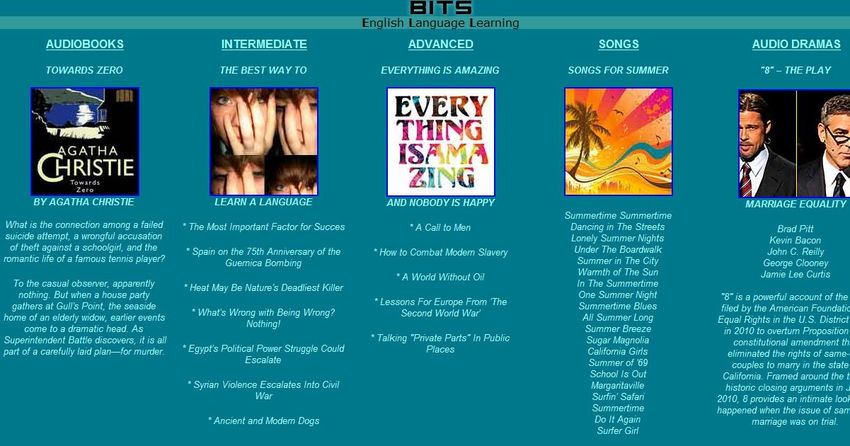
                 esl-bits.net
Free Audio Books & eBooks
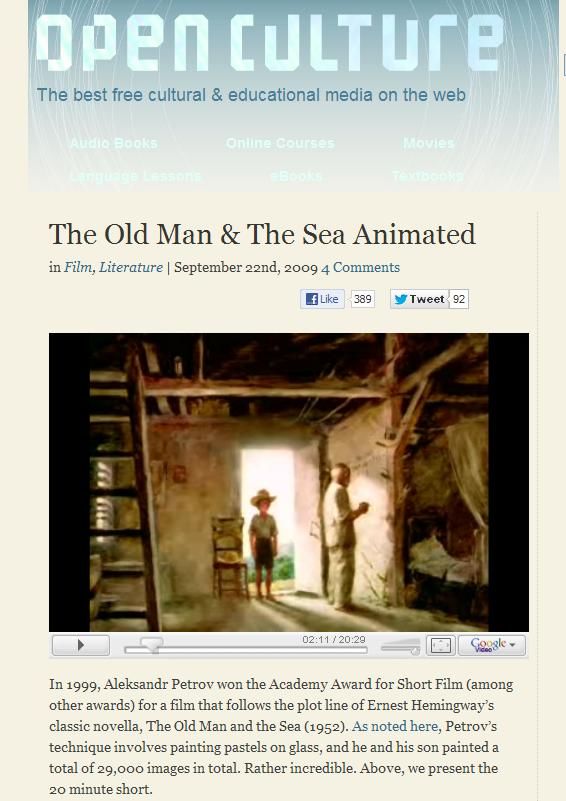
openculture.com+ Visit our Website
Access 8 audio books for English Language Learners
Access other downloadable resources for teaching
americanenglish.state.govYou can also read


