BBC News School Report WW1 Assignment and Production Guide
←
→
Page content transcription
If your browser does not render page correctly, please read the page content below
BBC News School Report
            WW1 Assignment and
              Production Guide
If you are is visiting World War One battlefields why not share the experience with other students,
staff and maybe even your local community, by producing a report about the trip?

This resource includes an example and template ‘Assignment Sheet’ to use to help gather
information when on location, and some simple journalistic tips for producing a written report.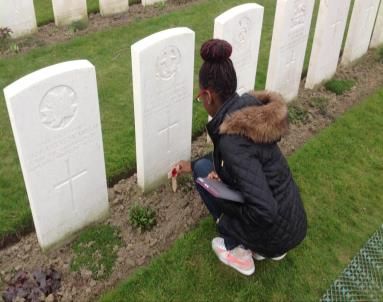
EXAMPLE BBC NEWS ASSIGNMENT SHEET
Use the attached assignment sheets to gather information for your own
battlefield report. Use one per day or one for the different locations you visit.
Assignment: WW1 Battlefields
tour
Name: Robert Hall, BBC News Correspondent
Equipment Checklist
Recording device [i.e. phone]
Stills Camera always take a pen and notepad as a back-up
Spare charger/batteries
Location details Details
Date 19 March
These are people you’re going to speak to for
Location
information to include in your report
Contributors Content
Interviewees
Name Charlotte, 14 Don’t forget, first names only for people under 18
Consent Her great-
Credentials great uncle lies in a cemetery and a century on she can mark
Notes How is his sacrifice on behalf of his family.
their `It was a bit emotional but I just wanted to say a little prayer in
Have they given expertise my head and I think it’s really important because you feel a
permission for the photo relevant? connection to the people that are here. ‘
to be used?
Full audio on iPhone file aud.1243.mpg
Visuals – Picture number Caption
1. Cemetery. Jpg camera Charlotte lays flowers on her relative’s grave
2. Ypres.jpg phone
3. What is the file Where is the photo saved so you can use it later?
4. name of the photo
5.
Headlines Top line from today
New initiative for young This is the first visit of the new three day battlefields tour. Lots
people to visit the WW1 of students from different schools accompanied by teachers and
battlefields tour guides. speaking to serving soldier. It was a moving
Sum up the day with a few experience – emotional to see so many gravestones
words to help you remember This is the key piece of information you want to get across to
your audience in your report.
Summary / Notes
Over the next four years young people are being given the opportunity to visit the WW1
battlefields in Belgium [When back at school remember to check exact number of pupils - details
on press release]. The aim is for every student to better understand the story of a global conflict
and how it involved real people who they can connect with still today and to share their
experiences and their knowledge back home bringing history alive for their classmates and
families. Sum up the story with a paragraph so you can get the facts across in your report
SAMPLE STRUCTURE FOR WRITTEN REPORT

Headline:   WW1 Battlefield Trip Captured by School Reporters

[Don’t forget to give your photo a caption]

Top line: Your report’s headline is key to grabbing your audience but keep them reading by writing a
punchy opening paragraph including the `top line’ of the story. The top line goes under your headline and
needs to encapsulate the most important and interesting parts of the story.

Body: The next four paragraphs need to tell the story in a clear, concise and correct way. You need to
answer all the W’s here. Where have you been? Who have you been with? What have you been doing?
Why – what makes this so important? And When did you do it?

Truth and accuracy are two of the BBC’s key values so double check your facts and spellings. Get someone
else, a `sub-editor’, to double check your work to make sure it makes sense.

Setting the scene
How do you get the feeling of where you are reporting it to others?
Can you put yourself in a soldier’s shoes? Can you see over the trenches?
Are you tall enough to be a WW1 soldier? Describe what you see.

`Tease the audience’
Think about a good sub-heading or quote which breaks up your news story and
keeps your audience reading it. Whatever you refer to in your quote or              You can use lots of photos to illustrate
sub-heading should be explained further down in your story.                         your story - give them captions to help
                                                                                    explain and expand your report
Research
Refer back to your booklet and / or some of the background information you have gathered which will help
set the scene. Speak to the tour guides to help fill in any gaps whilst you are on your trip. They will be a
mine of information, what can they tell you which can add colour to your piece? Get some quotes and facts
to include in the body of your report.

Conclusion: Round-up your report with a powerful, poignant and thoughtful paragraph.

How do you get your report linked to by the BBC? Want some more top tips on reporting?
Get your school to sign up to bbc.co.uk/schoolreport
Assignment: Name: Equipment Checklist Recording device [i.e. phone] Stills Camera Spare charger/batteries Location details Details Date Location Contributors Content Name: Consent: Credentials: Notes: Visuals – Picture number Caption 1. 2. 3. 4. 5. Headlines Top line from today Summary / Notes
Assignment:
Name:
Equipment                       Checklist
Recording device [i.e. phone]
Stills Camera
Spare charger/batteries
Location details                Details
Date
Location

Contributors                    Content
Name:
Consent:
Credentials:
Notes:

Visuals – Picture number        Caption

1.
2.
3.
4.
5.

Headlines                       Top line from today

Summary / Notes
Assignment:
Name:
Equipment                       Checklist
Recording device [i.e. phone]
Stills Camera
Spare charger/batteries
Location details                Details
Date
Location

Contributors                    Content
Name:
Consent:
Credentials:
Notes:

Visuals – Picture number        Caption

1.
2.
3.
4.
5.

Headlines                       Top line from today

Summary / Notes
You can also read


