Make your RSD more effective - PerioChip
←
→
Page content transcription
If your browser does not render page correctly, please read the page content below
2.5 mg dental insert [chlorhexidine digluconate]

                           Make your RSD more effective

                            Would you like to introduce PerioChip® into your practice?
Call 0800 013 2333, visit www.periochip.com or email team@periochip.co.uk to arrange a free Educational Visit.

                                                                                                                 DPD/15/0021 | Date of preparation Aug 2017
                                               For medical staff only
Make your RSD
more effective

        call: 0800 013 2333 | visit: www.periochip.com | email: team@periochip.co.uk
01

                 Offering choice

The importance of offering choice to your patients is
significantly increasing.

In its 2016 “The Good Practitioner’s Guide to Periodontology”,

The British Society of Periodontology advises that:
‘options for care and their benefits, costs and risks should be
discussed (with patients) and documented.‘

(BSP, 2016. The Good Practitioner’s Guide to Periodontology. London: British
Society of Periodontology)

In its 2012 report, the BDA identified that:
‘a quarter of patients felt that they have not been involved in
decisions about their treatment.’

(BDA, 2012. Public perceptions of choice in UK dental care: finding from a
national survey. London: British Dental Association)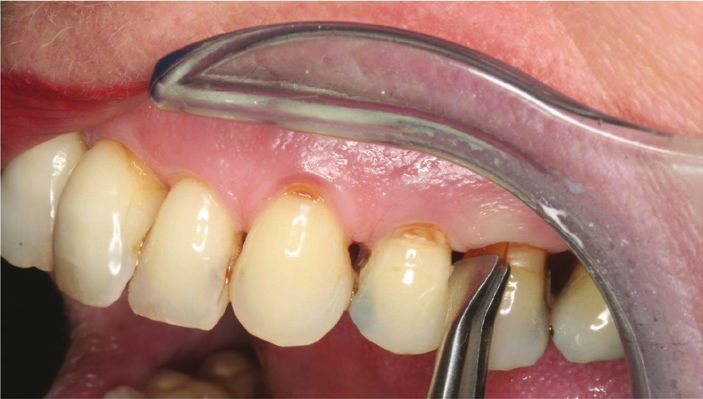
02

                                                                Periodontal disease in the UK

      % of patients with at least one periodontal pocket 1                                                                                                       Reason for tooth loss 2

     ››Periodontal Disease is on the rise                                                                                       ›› 73% of tooth loss in the UK is due to Periodontal
                                                     3
     ››Pocket Depth ≥ 4 mm = 45%                                                                                                    Disease
     ››50/50 localised vs. generalised

                                                      1%

                                               7%                                                                                                                                6%
                                                                                                                                                                       8%

                               37%                                                                                                                             13%

                                                                     55%                                                                                                                              73%

              No pocketing              4 mm - 5.5 mm             6 mm - 8.5 mm              > 9 mm                                          Periodontal disease               Endodontics              Root caries             Other

          1. NHS, 2011. Adult Dental Health Survey, 2009. London: NHS Digital. 2. Ravald, N., Johansson, C. S., 2012. Tooth loss in periodontally treated patients. A long-term study of periodontal disease and root caries.
          J Clin Periodontol, 39(1):73-9. 3. PerioChip® is indicated for use on pockets with a minimum depth of 5mm (PerioChip SmPC).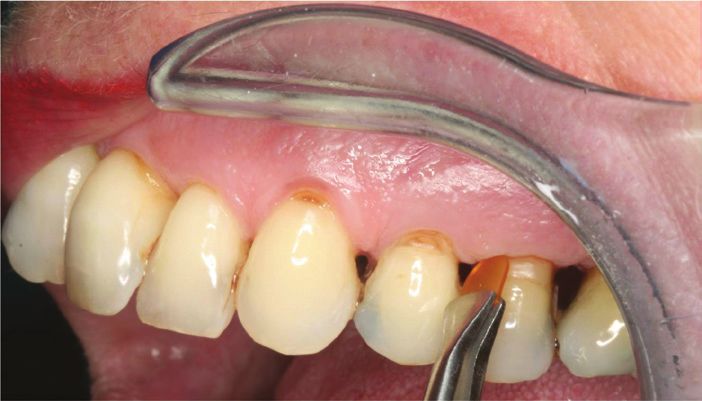
03

          What is PerioChip ?                    ®

  01                        02              03

                                                              › Localised and sustained release of
                                                                  chlorhexidine digluconate
                                                              ›   Suppresses growth of bacteria in
                                                                  subgingival plaque 4
                                                              ›   Minimal patient compliance needed
                                                              ›   Easy insertion
                                                              ›   Biodegrades after placement
is an innovative, easy             makes RSD more             ›   Locally active within the crevicular fluid
 to insert biodegradable           effective by killing 99%   ›   Non-antibiotic
chip containing 2.5 mg             of periopathogenic
                                                              ›   Well established positive safety profile
of chlorhexidine                   bacteria in the pocket,
digluconate (CHX),                 suppressing bacterial
making it an effective             growth for up to 11
non-antibiotic adjunct             weeks, therefore
treatment to be used               promoting clinical
alongside RSD* in the              reattachment. 4
treatment of adult
periodontitis.                     It can also be used as a
                                   part of a periodontal      4. Soskolne, W. A., et al. (1998). An in vivo study of Chlorhexidine release profile
                                   maintenance program,       of the PerioChip in the gingival crevicular fluid, plasma and urine. J Clin Perio,
                                                              1998(25): 1017-21.
                                   which includes good oral
* RSD - Root Surface Debridement   hygiene and RSD.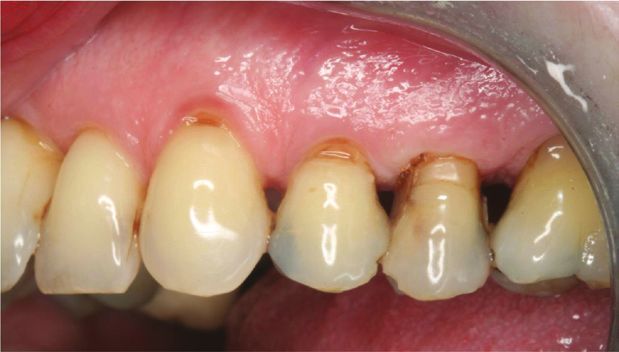
04

                       Clinical benefits                                                          Non-clinical benefits

     • Reduces tooth loss                                                                   • Offers patient choice
     • Kills 99 % of periopathogenic bacteria 4                                             • Increases in-house referrals
     • Suppresses bacterial flora for up to 11 weeks                                        • Upskills clinicians
     • No bacterial resistance                                                              • Increases private revenue
     • Makes RSD more effective                                                             • Increases patient retention
     • Reduces risk associated with PD                                                      • Reduces risk (health & legal)

     4. Soskolne, W. A., et al. (1998). An in vivo study of Chlorhexidine release profile
     of the PerioChip in the gingival crevicular fluid, plasma and urine. J Clin Perio,
     1998(25): 1017-21.
05

                              Periodontal assessment and treatment options5

                    Assessment, diagnosis & treatment planning                                              Adjunct           PerioChip®   Antibiotic        Gel

                                                                                                            Frequency of         Every     Every 10 days     Every
              Oral hygiene                                             Other risk factors                   application        3 months     for 6 weeks    3 months
           instructions (OHI)                                           (e.g. smoking)

                                                                                                            Active                         Tetracycline
                                                                                                                                 CHX                         CHX
                                                                                                            ingredient                        based

                                                  RSD
                                                                                                            Suppresses
                                                                                                            bacterial flora   11 weeks        1 day        15 days
                                                                                                            for

                                          Re-assessment
                                                                                                            Localised            ✓              ✓            ✓

         Surgical therapy                                        Non-surgical therapy                       Sustained            ✓              ✗             ✗

                                                                                                            No risk
                                                                                                            of bacterial         ✓              ✗            ✓
                                                                                                            resistance
5. BSP, 2016. The Good Practitioner’s Guide to Periodontology. London: British Society of Periodontology.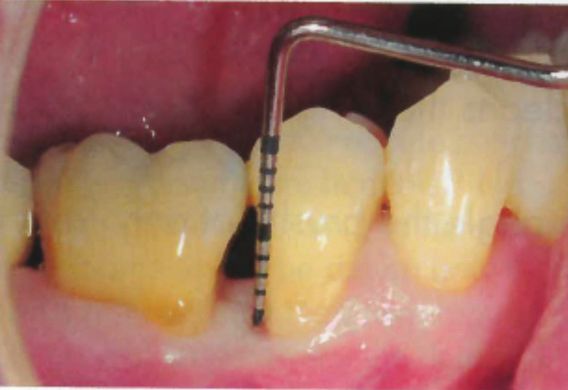
06

                                                                            Antimicrobial resistance

     “Antimicrobial resistance threatens the very core of modern                            “ There are few public health issues of greater importance than
      medicine and the sustainability of an effective, global public health                   antimicrobial resistance (AMR) in terms of impact on society.
      response to the enduring threat from infectious diseases. It is a                       This problem is not restricted to the UK. It concerns the entire
      crisis that must be managed with the utmost urgency. As the world                       world and requires action at local, national and global level.
      enters the ambitious new era of sustainable development, we
                                                                                             Health professionals must work more closely with their patients,
      cannot allow hard-won gains for health to be eroded by the failure
                                                                                             before deciding if an antibiotic is really needed and, in the event
      of our mainstay medicines”
                                                                                             that it is, which one is most appropriate.”

      (World Health Organisation, 2015. Global action plan on antimicrobial resistance.      (Department of Health, 2013. UK 5 Year Antimicrobial Resistance Strategy 2013 to 2018.
      Geneva: World Health Organisation)                                                     London: Department of Health)

                                          PerioChip® effectively reduces a wide
                                          spectrum of microbes, including:
                                          Porphyromonas gingivalis,
                                          Prevotella intermedia,                                         has no risk of antimicrobial resistance due to
                                          Actinobacillus actinomycetemcomitans                           its mode of action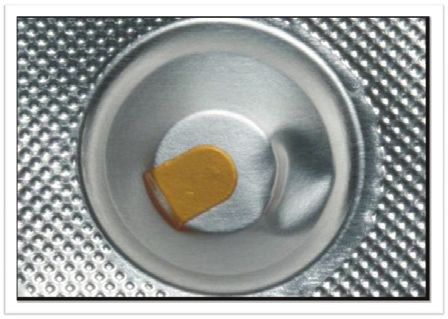
07

                  How to apply?                                                                             Easy application6

         01                                   02                                                   How easy was the placement of PerioChip®?

                                                                                                            45
                                                                                                            40
                                                                                                                                40.4                     Extremely easy
                                                                                                                                                         Very easy
Remove the foil packet from          Using tweezers, grasp the                                              35
                                                                                                                        30.8                             Somewhat easy

                                                                                           Percentage (%)
the box and peel back the            PerioChip® at the flat                                                 30                                           Somewhat difficult

foil to reveal one PerioChip®        end. Insert the PerioChip®,                                            25

(chlorhexidine digluconate           curved end first, into                                                 20
                                                                                                                                         15.4
                                                                                                            15                                   13.5
2.5mg) dental insert                 the periodontal pocket
                                                                                                            10
                                     subgingivally
                                                                                                             5
                                                                                                             0

         03                                   04                                                            Was the chip easier to place over time?

                                                                                                            70
Press the PerioChip® apically        After insertion, the                                                              61.5                           Definitely easier
                                                                                                            60                                        Somewhat easier
to the base of the pocket            PerioChip® should rest

                                                                                           Percentage (%)
                                                                                                                                                      Remained just as easy
                                                                                                            50
                                     subgingivally at the base of                                                                                     Continued to be difficult
                                                                                                            40
                                     the pocket
                                                                                                            30
                                                                                                                               21.2
             01                 02             03                  04                                       20                         15.4

                                                                                                            10
                                                                                                                                                1.9
                                                                                                             0

                                                                        6. McNeill et al, 1998. The Time and Ease of Placement of the Chlorhexidine Chip Local Delivery System.
                                                                        Compendium, 19(11): 1164-5.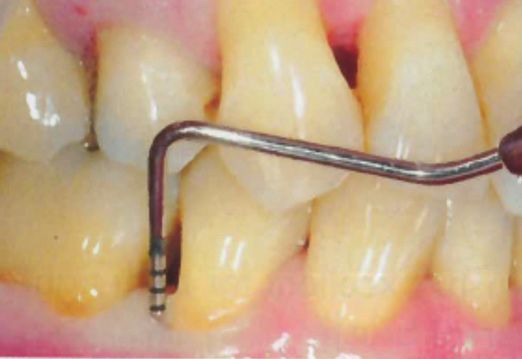
08

                                                                                                                                Results

                          ››The safety and efficacy of PerioChip® has been proven in a number of clinical studies.
                                  Soskolne et al. evaluated and compared the treatment outcomes for RSD* alone versus the combined use of RSD and PerioChip®
                                  by undertaking a randomised, blinded, multi-site study (Number of patients: 118, Baseline pocket depth: ≥ 7mm) : 7

                                                                      RSD alone 7                                                                                                                    RSD + PerioChip® 7

                          ››After 6 Months: 56% of pockets were reduced to 6 mm or less.                                                                          ››After 6 Months: 81% of pockets were reduced to 6 mm or less.
                            This includes 6% of pockets which were reduced to 4 mm or less.                                                                         This includes 29% of pockets which were reduced to 4 mm or less.
                                                         RSD alone                                                                                                                           RSD + PerioChip®
                                  100                                                                                                                                  100
                                   90             100%                                          7-8 mm        5-6 mm        2-4 mm                                      90             100%                                      7-8 mm     5-6 mm    2-4 mm
     Percentage of patients (%)

                                                                                                                                          Percentage of patients (%)
                                   80                                                                                                                                   80
                                   70                                                                                                                                   70
                                   60                                                                                                                                   60
                                                                       58%                                                                                                                                        58%
                                   50                                                                                                                                   50
                                                                                                                50%                                                                                                                           52%
                                   40                                                                 44%                                                               40
                                   30                                         37%                                                                                       30
                                                                                                                                                                                                           27%                                        29%
                                   20                                                                                                                                   20
                                                                                                                                                                                                                                      19%
                                   10                                                                                                                                   10                                                 15%
                                                                                         5%                                6%
                                    0                                                                                                                                    0
                                        Baseline prior to treatment          Month 3                          Month 6                                                        Baseline prior to treatment         Month 3                    Month 6

        * RSD - Root Surface Debridement
                  7. Soskolne, W. A. et al, 1997. Sustained Local Delivery of Chlorhexidine in the Treatment of Periodontitis: A Multi-
                                                                                                                                                                                               is significantly more effective than RSD alone
                  Centre Study. J Periodontol, 61(1): 32-8.
09
Discussing with your patient How potential
PerioChip to apply?results ®
1 st
7
2 nd
7
3rd
application
7
9
maintenance
month
8
application application
(baseline)
1. Check if PD* 1. Check if PD 1. Check if PD 1. Check if PD
is ≥ 5 mm is ≥ 5 mm is ≥ 5 mm is ≥ 5 mm
Following assessment and diagnosis, the initial phase 2. RSD 2. RSD** 2. RSD** 2. RSD**
should be OHI followed by at least one round of RSD. 3. PerioChip ®
3. PerioChip ®
3. PerioChip ®
3. PerioChip®
At the reassessment visit, you may discuss with your
patient and decide to further treat or maintain any 1st visit Month 3 Month 6 Month 9+
pockets which are greater than 5mm with PerioChip®.
• PerioChip® is a medium to long-term treatment plan
• PerioChip® can be used as an ongoing
maintenance plan 7
≥ 7 mm 6 mm 7 5 mm 7 if ≥ 5 mm
8
• Set expectations with your patient
• Work together to achieve the best result For more information about results please go to page 8 or see
clinical studies referenced below and available at
• Provide oral hygiene instructions at every visit
www.periochip.com/articles
• Discuss other systemic factors which may affect
results – such as smoking and other pre-disposing * PD - Pocket Depth ** RSD - Clinical Preference
health factors 7. Soskolne, W. A. et al, 1997. Sustained Local Delivery of Chlorhexidine in the Treatment of Periodontitis: A Multi-Centre Study.
J Periodontol, 61(1): 32-8. 8. Soskolne, W. A., Proskin, H. M., and Stabholz, A. 2003. Probing depth changes following 2 years of
periodontal management therapy including adjunctive controlled release of Chlorhexidine. J Periodontol, 74(4): 421-7.10
Reduce Risk
Failure to diagnose and
treat Periodontal Disease Diabetes
£2.8 million is a common and rapidly
was paid out in increasing source of
complaints, claims and
dental claims regulatory challenges for Heart Disease
and a further the dental team. Record
£2.8 million keeping should be designed to
facilitate patient management
in legal fees*. and will assist Clinicians with Cancer
becoming more compliant
with regulatory and dento-
legal standards.
Respiratory Disease
76% of all claims are either due
to periodontitis or are periodontal-related*
As more medical conditions
Average claim £31,000 *
become associated with
Periodontal Disease, the Premature Birth Risk
Highest claim £170,000 * effects of the infection from
the highly toxic bacteria
GDC may also investigate* lodged underneath the gums
echo throughout our bodies Osteoporosis
Claims are on the rise* and can cause or contribute
significantly to other illnesses.
*
Dental Defence Union. 2014. DDU pays out £2.8 million to Reduce your patients’
compensate patients with gum disease. [online] Available at: risks by diagnosing and
https://www.theddu.com/press-centre/press-releases/ddu-pays-out-
treating Periodontal Disease Stroke
2-million-to-compensate-patients-with-gum-disease
[Accessed 1 July 2017]. effectively.11
TESTIMONIALS
What professionals say about PerioChip ® Charlotte Curran RDT, RDH Kathryn Carey RDT, RDH
“The reduction in pocket depth “Going back to the first time
after just one application is I ever used it, besides the fact
fantastic, which is difficult to that it works exactly as promised
achieve with root surface – in that it does indeed reduce
debridement alone.” pocket depth when used with
scaling and root planing - there
“I would strongly recommend was a surprising side effect
PerioChip to other practitioners in my patients. And that was,
because it really helps with having opted for PerioChip, they
stubborn pockets and has seemed to make even more effort
become a staple in my armoury between appointments to keep
against periodontal disease.” their dentition and gingiva clean.”12
Case #1 Case #2
Case study
A 45 year old, non-smoking male In another case, a 55 year old, non-
presented with pus draining from his smoking female was diagnosed with
lower right premolar tooth. He also localised moderate to severe chronic
complained of food trapping between periodontitis. After full consultation
teeth. a periodontal pocket of 6 mm was
observed to the upper lateral tooth.
After a full consultation, a diagnosis
of generalised moderate to severe The patient underwent a course of
chronic periodontitis was made. It was Figure 1: Severe bone loss noted LR5 initial therapy, which included oral
also noted that the LR5 had severe distal aspect hygiene instructions, with techniques
bone loss with an intra-bony defect to improve her dental health routine. Figure 5: Severe bone
Dr Amit Patel and the tooth was vital to Endofrost. Treatment options were discussed and loss noted on the UR2
The patient underwent a course of the patient opted for a non-surgical,
Specialist in Periodontics and more conservative solution.
initial therapy, which included oral
implants hygiene instruction. The use of large
interdental brushes and a circular RSD using local anaesthetic was
oscillating electric tooth brush carried out to stabilise the periodontal
was recommended. Root surface disease. After subgingival plaque
debridement then commenced using removal from the site, a PerioChip®
Figure 2: Initial probing depth of was then placed into the periodontal
local anaesthetic 10 mm Figure 6: Placement of PerioChip® in
pocket. the UR2 periodontal pocket
At the three month periodontal
reassessment appointment all the At the first periodontal review three
periodontal pockets had healed apart months later, the pocket had reduced
from the LR5 distal pocket, which was to 3 mm.
7 mm deep. Periodontal regeneration
surgery was discussed but patient Both patients have now been placed
expressed a preference for non- on a bespoke perio-maintenance
surgical therapy. programme. The patients are called
Figure 3: Probing depth after for three-four monthly visits with
After performing subgingival plaque utilising PerioChip® – three the hygienist for subgingival plaque
removal of the site, a PerioChip® was months post placement showing a removal of any deep sites and
placed into the pocket as an adjunct reduction in pocket depth to 3 mm placement of PerioChip® if necessary. Figure 7: Radiograph shows bony
to suppress bacterial flora. As part To implement an effective lifetime healing 12 months post non-surgical
of the post treatment instructions therapy and PerioChip® placement
regime, oral hygiene education
the patient was asked to avoid using is reinforced at every visit so that
larger interdental brushes for two patients remain motivated to clean
weeks before carrying on with his thoroughly and to preserve not only
improved routine. their teeth but also their health and
Another periodontal review took wellbeing.
place three months later, which
showed significant improvement; Figure 4: Radiograph shows bony Figure 8: Three months post
the periodontal pocket reduced to healing six months after non-surgical placement of PerioChip® – showing
3 mm. therapy and PerioChip® placement Periodontal pocket reduction to 3 mm13
PerioChip ®
Abbreviated Prescribing Information
PerioChip® 2.5 mg Dental Insert [chlorhexidine digluconate]
For full prescribing information, including side Undesirable effects: During the first few days
effects, precautions and contraindications, see after insertion, transient pain or discomfort
Summary of Product Characteristics (SmPC). of gums or teeth; redness and/or swelling of
the gums.
Presentation: Dental insert: bullet shaped Overdose: Not reported.
FAQ
orange brown containing chlorhexidine Pregnancy/ Lactation: Controlled studies in
digluconate 2.5 mg. pregnant women have not been conducted,
Indications: PerioChip® is an adjunctive so weigh expected benefits against possible
antimicrobial treatment for moderate to foetal risks: caution in nursing mothers (see
severe chronic periodontal disease in adults SmPC).
with pocketing, combined with Root Surface Legal category: P, Product Licence Number:
Debridement (RSD). Not indicated in children
and adolescents.
PL 14017/0035 Frequently asked questions
MA holder: Full prescribing information is
Dosage and Administration: One PerioChip® available on request from:
is inserted into a periodontal pocket with a
probing pocket depth of ≥ 5 mm. Retreatment Dexcel Pharma Ltd,
with PerioChip® following mechanical plaque 7 Sopwith Way, Drayton Fields Industrial
removal at 3 month intervals may provide Estate, Daventry, Northants, NN11 8PB.
additional benefit if pocket depth remains
≥ 5 mm. For details see SmPC. Removal is
unnecessary as PerioChip® biodegrades. Adverse events should be reported.
Contraindications: Hypersensitivity to chlor-
hexidine digluconate or excipients. Reporting forms and information
can be found at :
Precautions: Allergic reactions have occurred
but are rare. www.mhra.gov.uk/yellowcard
Interactions: Avoid nystatin: antagonistic of Adverse events should also be reported to:
chlorhexidine. Chlorhexidine is incompatible Dexcel Pharma Ltd on 01748 828784
with anionic agents present in some
toothpastes and with dietary sucrose, but
there is no significant impact on the efficacy
of PerioChip®. DPD/15/0021 Date of preparation Aug 201714
01 PerioChip® should be
stored at a room
temperature,
not exceeding 30°C.
04 PerioChip® comes in a
pack of 20 individual
chips.
07 If placed as indicated
– in pockets of 5 mm
or deeper, PerioChip®
remains subgingival
How to store What is Can chips fall and adheres to the
PerioChip®? the pack size? out? tooth meaning that it
will not fall out.
We advise that patients
refrain from any inter-
dental cleaning for
24 h post application.
02 PerioChip® is suitable
for pockets of 5 mm or
deeper. Clinical studies
in pregnant or breast
05 Yes, patients can still
use CHX mouthwash. 08 Chlorhexidine can stain
teeth. However,
as PerioChip® is placed
subgingivally, there
Are all patients Can the patient Will the patient
suitable feeding women have still use get staining? should be no visible
not been conducted staining above the
for PerioChip®? CHX mouthwash?
and use on such gum line.
patients is a clinical
decision between the
dentist and the patient.
03 This depends on the
number of pockets
x the number of
visits. Please refer to
06 There is no maximum
number. 09 Patients should be
advised against
carrying out any
inter-dental cleaning
How many How many chips What are the
patients does one page 9 for suggested can be placed post operative for 24 hours after
pack treat? treatment plan. in the mouth at instructions for placement.
any one time? patients?You can also read


