Determination of KCNQ1OT1 and H19 methylation levels in BWS and SRS patients using methylation-sensitive high-resolution melting analysis
←
→
Page content transcription
If your browser does not render page correctly, please read the page content below
European Journal of Human Genetics (2008), 1 – 7
                                                                 & 2008 Macmillan Publishers Limited All rights reserved 1018-4813/08 $32.00
                                                                 www.nature.com/ejhg

    ARTICLE

Determination of KCNQ1OT1 and H19 methylation
levels in BWS and SRS patients using
methylation-sensitive high-resolution melting
analysis
Marielle Alders*,1, Jet Bliek1, Karin vd Lip1, Ruud vd Bogaard1 and Marcel Mannens1

1
    Department of Clinical Genetics, Academic Medical Centre, University of Amsterdam, Amsterdam, The Netherlands

Beckwith –Wiedemann syndrome (BWS) and Silver –Russell syndrome (SRS) are caused by imprinting
defects on chromosome 11p15.5. Standard diagnostic tests for these syndromes include methylation
analysis of the differential methylated regions of the H19 and KCNQ1OT1 genes. Traditionally this has been
conducted by Southern blot analysis. PCR-based methods greatly improve the turn around time of the test
and require less DNA. One of the newly emerging techniques for SNP genotyping and mutation scanning,
high-resolution melting (HRM) analysis, has been shown to be also applicable for methylation analysis. We
tested methylation-sensitive HRM analysis as a method for the detection of methylation defects in a group
of 16 BWS and SRS patients with known methylation status (determined previously by Southern blotting),
as well as 45 normal controls. HRM analysis was able to detect all methylation aberrations in the patients
and appeared to be more sensitive than Southern blotting. Variation in normal controls is minimal and the
presence of SNPs in the amplified fragment does not influence the outcome of the test. We conclude that
methylation-sensitive HRM analysis is a robust, fast, sensitive and cost effective method for methylation
analysis in BWS and SRS.
European Journal of Human Genetics advance online publication, 15 October 2008; doi:10.1038/ejhg.2008.197

Keywords: Beckwith–Wiedemann syndrome; Silver–Russell syndrome; methylation; imprinting; methylation-
sensitive high-resolution melting analysis

Introduction                                                     methylated and methylation is only present at the paternal
The Beckwith – Wiedemann syndrome (BWS, MIM130650)               allele. The second cluster contains, among others, the
and Silver – Russell syndrome (SRS, MIM180680) are caused        CDKN1C and KCNQ1OT1 genes and is controlled by
by disturbed imprinting at 11p15. This region harbours           imprinting centre 2 (IC2) overlapping the KCNQ1OT1
two independently regulated clusters of imprinted genes.         promoter. This region is methylated on the maternal allele
The first cluster contains the IGF2 and H19 genes and is         only.
under the control of the imprinting centre 1 (IC1)                  The Beckwith – Wiedemann syndrome is an overgrowth
upstream of the H19 promoter. This IC is differentially          syndrome. A small percentage of the patients have a
                                                                 mutation in the CDKN1C gene, whereas the majority of the
*Correspondence: Dr M Alders, Department of Clinical Genetics,   patients display a methylation defect, namely, hyper-
Academic Medical Center, Meibergdreef 15, Amsterdam 1105AZ,      methylation of IC1, hypomethylation of IC2, or both.
Netherlands. Tel: þ 31205667899; Fax: þ 31205669389;             Aberrant methylation of both ICs is usually caused by a
E-mail: m.alders@amc.uva.nl
Received 18 June 2008; revised 10 September 2008; accepted       (mosaic) paternal UPD or, in a few cases, by a paternal
17 September 2008                                                duplication of 11p15.1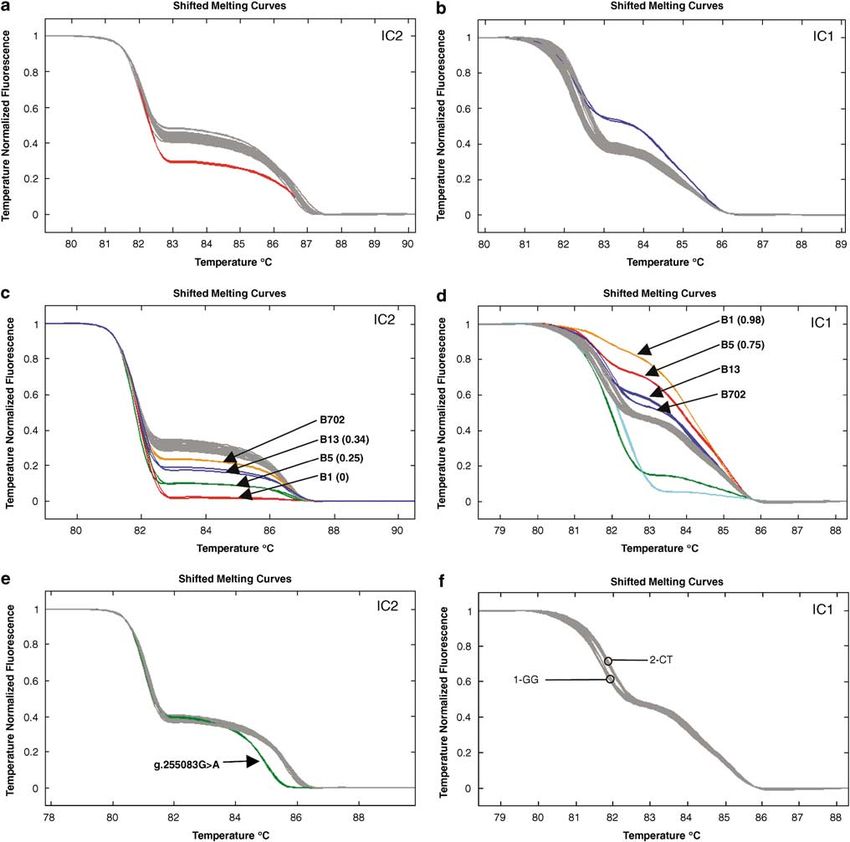
Determination of KCNQ1OT1 and H19 methylation levels
                                                 M Alders et al
2
       Silver – Russell syndrome is a growth retardation              (IC2) and H19 (IC1) genes. KCNQ1OT1 (IC2) primers were
     syndrome and is genetically heterogeneous. In a subset           LIT1_1F TTGGTAGGATTTTGTTGAGG and LIT1_1R CAA
     of patients (30%) hypomethylation of IC1 is found,2 – 4          CCTTCCCCTACTACC corresponding to bases 254 969 –
     which is opposite to the aberrations found in BWS                254 988 and 255 127 – 255 109 of sequence AJ006345.1
     patients.                                                        (Genbank) respectively. H19 (IC1) primers were H19_5F
       Molecular genetic analysis for confirmation of a clinical      ATGTAAGATTTTGGTGGAATAT, H19_5R ACAAACTCACA-
     diagnosis of BWS and SRS is done by methylation analysis         CATCACAACC, corresponding to bases 8242 – 8222 and
     of both IC1 and IC2. The methylation defects in BWS and          7971 – 7996 of sequence AF125183.1 (genbank) respec-
     SRS are mosaic and therefore the test for methylation must       tively. These primers amplify specifically the 6th CTCF-
     be quantitative. In the past, this was done by Southern          binding site. Specificity of the primers was confirmed by
     blotting using methylation-sensitive enzymes and mea-            sequencing of the PCR products.
     surement of the intensity of the bands representing the             DNA was treated with bisulphite using the EZ DNA
     methylated and unmethylated allele. Methylation indices          methylation Kit (Zymo research, Orange, CA, USA) accord-
     were scored aberrant when methylation indices are o0.4 or        ing to the manufacturer’s instructions. This was followed
     40.6.5 This method requires a large amount of DNA and is         by PCR amplification, in duplicate, of 1 ml bisulphite
     very time consuming. Therefore, the use of PCR-based             treated-DNA in the presence of 50 mM Tris pH 9, 56 mM
     methods is preferred. These methods include methylation-         (NH4)2SO4, 2% DMSO, 1.5% Tween 20, 1 M Betaine,
     specific multiplex ligation-dependent probe amplification        2.5 mM MgCl2, 0.125 mM dNTPs, 0.2 pmol (IC1) or
     (MS-MLPA), methylation-specific PCR (MS-PCR) and                 0.4 pmol (IC2) forward and reverse primer, 0.5 U Taq DNA
     pyrosequencing.6 – 12 For most PCR-based methods                 polymerase (Supertaq, SphaeroQ, Leiden, The Netherlands)
     (except MLPA) the DNA is modified with bisulphite, which         and 1  LCGreenplus þ (Idaho Technologies, Salt Lake City,
     converts unmethylated cytosines to uracil, inducing              UT, USA). The PCR conditions were 951C for 3 min,
     sequence differences between methylated and unmethy-             followed by 35 cycles of 951C 2000 , 551C (IC1) or 581C
     lated DNA.                                                       (IC2) 2000 , 721C 3000 , and a final elongation step of 5 min
       High-resolution melting (HRM) analysis is based on             at 721C.
     differences in melting profiles of fragments differing up           Products were melted from 65 to 981C using the Light-
     to only 1 bp and is therefore able to detect methylation         Scanner System (Idaho Technologies, Salt Lake City, UT,
     differences in amplicons derived from bisulphite-modified        USA). Data were analysed using the dedicated LightScanner
     DNA.13 – 16 The advantages of this method are that it is fast,   software. Normalization regions, to correct for differences
     cost effective and requires no post-PCR handling. Wodjacz        in the amount of PCR product per sample, were set before
     et al16 described an HRM-based test to determine the             and after the major fluorescent decrease representing the
     methylation status of the H19 gene (IC1). However,               melting of the PCR product. They were in the range of
     aberrant methylation of IC1 is only present in approxi-          78 – 80.51C and 88 – 901C for IC1, and 79 – 801C and
     mately 25% of the BWS patients and the majority of BWS           87 – 891C for IC2. The curve shift function brings together
     cases are caused by hypomethylation of IC2. We developed         all the curves at a single point to compensate for small
     an HRM assay to assess the methylation status of both IC1        temperature variations across the plate. Shift levels were set
     and IC2, which makes this assay suitable for the detection       at 0.95 for IC2 and at 0 – 0.05 for IC1, depending on the
     of all methylation defects found in BWS and SRS patients.        methylation level of the sample with the lowest methyla-
                                                                      tion level in the test. The curve shift level of IC1 must be
                                                                      below the level of the plateau phase of the sample with the
     Methods                                                          lowest methylation level to prevent erroneous alignments.
     HRMA                                                             The sensitivity level used for grouping of the samples was
     To validate the method a group of 16 patients with               set at a level that results in all the normal control samples
     different levels of IC1 hyper- or hypomethylation and            being included in a single group (grey colour).
     IC2 hypomethylation were analysed by HRM. The methy-
     lation indices ranged from 0.38-0 and 0.63 – 0.98 as             Sequencing
     determined earlier by Southern blotting.5 This group             Sequencing of the regions analysed by HRM was performed
     consisted of eight patients with a UPD (aberrant methyla-        by amplification of the genomic untreated DNA with
     tion of both IC1 and IC2), five patients with hypermethy-        primers LIT1gF CACCGGGAGAATCGTGCT and LIT1gR
     lation of IC2, and three patients with hypermethylation of       AGGACACGGCACATCACTTT for IC2 and H19gF AGT
     IC1 (SRS). In addition, a set of 45 normal controls was          TGTGGAATCGGAAGTGG and H19gR GAGCTGTGCTC
     analysed to determine the normal methylation variation in        TGGGATAGA for IC1 comprising the binding sites of the
     this test.                                                       primers used for HRMA. Subsequent sequencing of the
        Primers were developed that amplify both methylated           fragments was done using the Bigdye kit v1.1 (Applied
     and unmethylated DNA in the DMRs of the KCNQ1OT1                 Biosystems, Foster City, CA, USA) run on an ABI3700

European Journal of Human Genetics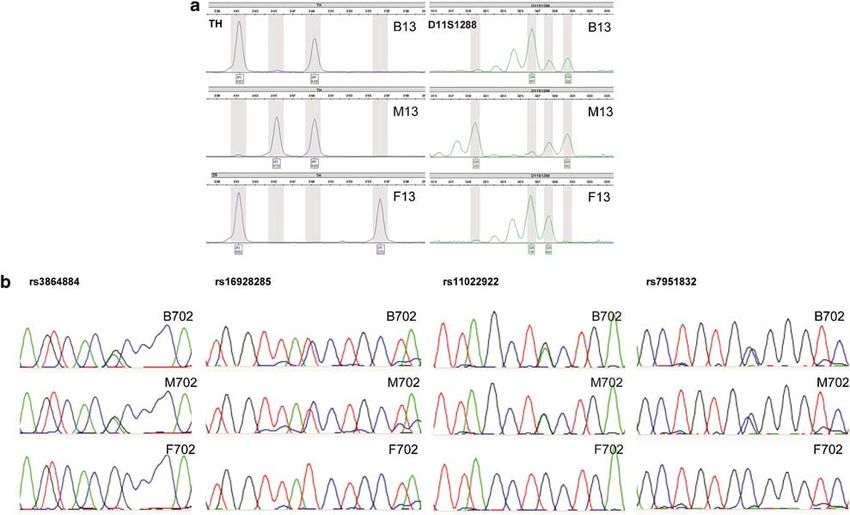
Determination of KCNQ1OT1 and H19 methylation levels
                                                               M Alders et al
                                                                                                                              3
sequencer (Applied Biosystems, Foster City, CA, USA) and       mined by Southern blotting. However, HRM analysis also
analysed using codoncode aligner (Codoncode Corpora-           showed hypermethylation of IC1, suggesting the presence
tion, Dedham, MA, USA).                                        of a UPD. This was confirmed by analysis of microsatellite
                                                               markers in the 11p15 region (Figure 2a).
Confirmation of UPD                                               The group of 45 normal controls showed little variation.
Presence of UPD was analysed by PCR amplification of           The patient with the lowest level of hyper- and hypo-
microsatellite markers or analysis of SNPs in the 11p15        methylation (B13) was clearly different from the control
region on DNA from the patients and their parents. PCR         population (Figure 3a and b).
amplification of microsatellite markers D11S1288, TH and          After implementation of this technique in routine
D11S988 was done using either FAM6 or HEX-labelled             diagnostics, a patient B702 was identified with a slight
primers. Products were run on an ABIPrism 310 sequencer        but consistent hypomethylation of IC2 and hypermethyla-
(Applied Biosystems, Foster City, CA, USA) and analysed        tion of IC1, indicative of a very low percentage UPD cells
using genemapper software (Applied Biosystems, Foster          (Figure 3c and d). The patient with the lowest level of UPD
City, CA, USA).                                                in the positive control population, B8, has methylation
  Twelve SNPs, rs16928285, rs11022922, rs3864884,              indices of 0.38 (IC2) and 0.64 (IC1), which corresponds to a
rs2023818, rs1811815, rs800338, rs800337, rs800336,            UPD percentage of B25%. B702 thus must have a UPD
rs739677, rs7951832, rs739502 and rs163150 were                percentage considerably lower than 25%. UPD analysis
analysed by direct sequencing (primers available on            using microsatellite markers was inconclusive and is
request).                                                      probably not sensitive enough to detect such small
                                                               aberrations. Therefore, we analysed 12 SNPs in the 11p15
                                                               region by direct sequencing. Patient B702 was hetero-
Results                                                        zygous for seven SNPs. The ratio of the two alleles in this
In normal individuals the methylation ratio of the             patient was slightly but consistently different from the
differentially methylated regions in imprinted genes is        ratio seen in normal controls. In all informative cases (6)
0.5. The contribution of the methylated allele derived from    the over-represented allele was derived from the father
one parent is equal to the contribution of the unmethy-        (Figure 2b), which makes the presence of a low percentage
lated allele derived from the other parent. We analysed the    UPD plausible. This finding demonstrates the sensitivity of
methylation status of the 6th CTCF-binding site of the H19     the HRM method.
DMR (IC1) and the DMR of KCNQ1OT1 (IC2) in 16 BWS or              Although the plateau phase in the melting curves of all
SRS patients with known methylation defects using HRM          the normal control samples is at the same fluorescence
analysis. HRM measures the fluorescence signal of an           level, the melting curves do sometimes show differences.
intercalating dye in double-stranded DNA. When the DNA         For IC1 the normal controls can be divided in two different
melts, the dye is released and the intensity of the signal     groups and for IC2 one sample had a differently shaped
drops. Melting profiles of both IC1 and IC2 amplicons          curve (Figure 3e and f). This might be caused by the
derived from bisulphite-modified DNA of normal controls        presence of SNPs in the analysed fragments. No common
showed two melting domains, caused by the relatively           SNPs are present in the fragment amplified from IC2, but
early melting of the unmethylated allele (containing more      a previously unknown variant g.255083G4A (genbank
AT bonds) and the later melting of the methylated allele.      accession no. AJ006345.1) was identified in the sample
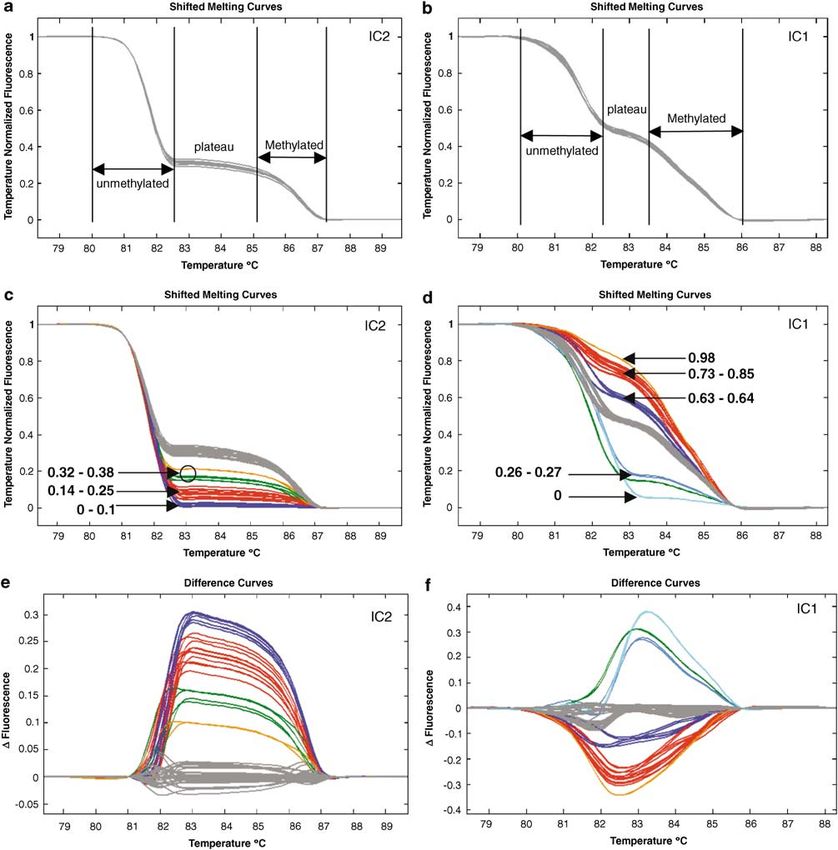
The two domains are separated by a plateau phase (Figure       showing a different melting pattern (Figure 3e). In the IC1
1a and b). The position of the plateau at the vertical scale   fragment, three SNPs are present, rs4930098 (G/C),
represents the ratio between the unmethylated and the          rs2107425(C/T) and rs2071094 (G/T). Rs2107425 is a C/T
methylated allele. In case of hypomethylation, there is an     polymorphism and does not change the DNA after
increased contribution of the unmethylated allele resulting    bisulphite conversion.
in a relatively longer melting phase of the unmethylated          The remaining two SNPs are in complete LD in all
allele, which results in a plateau phase at a lower            individuals tested and the normal control samples are
fluorescence level. Similarly, hypermethylation results in     either homozygous for the rs4930098 C allele in combina-
a relatively small contribution of the unmethylated allele,    tion with the rs2071094 T allele, homozygous for
leaving the plateau phase at higher fluorescence. All          rs4930098 G allele in combination with the rs2071094 G
patients with aberrant methylation, as determined by           allele, or heterozygous for both SNPs. Homozygous
Southern blotting, showed melting profiles different from      rs2071094C/rs4930098T (TT after bisulphite conversion)
the normal controls and the degree of deviation was            individuals all show melting pattern 1, all rs2071094G/
consistent with the degree of hypo- or hypermethylation as     rs4930098G homozygous individuals show melting pattern
determined by Southern blotting (Table 1, Figure 1).           2 and the heterozygous individuals show either pattern 1
Duplicate curves overlapped. One patient (B13) was             or pattern 2, probably depending on the parental origin of
thought to have hypomethylation of IC2 only, as deter-         the genotype (Figure 3f). Although the SNPs do alter the

                                                                                            European Journal of Human Genetics
Determination of KCNQ1OT1 and H19 methylation levels
M Alders et al
4
Figure 1 (a and b) Melting curves of IC2 (a) and IC1 (b) amplicons show a relative early melting of the unmethylated allele, followed by a plateau
phase, and a later melting of the methylated allele. (c – f) HRMA results of the BWS/SRS patient group. Melting curves of the BWS/SRS patient group
and eight control samples (in duplicate) for IC2 (c) and IC1 (d) as well as the corresponding difference curves (e and f) are shown. The grouping is as
calculated by the LightScanner software and the sensitivity is set such that all normal controls are coloured alike (grey). The corresponding methylation
indices of the patients as determined by Southern blotting are indicated.
shape of the melting curves, they do not change the Discussion
position of the plateau that represents the ratio of In the BSW/SRS patient group included in this study, all
methylated and unmethylated DNA. As methylation aberrant methylation patterns previously identified by
testing is based on changes in the position of the plateau Southern blotting were confirmed by HRM analysis and
phase, these SNPs do not interfere with the assessment of the degree of hypo- or hypermethylation found was
the methylation state. comparable between the two techniques. One patient
European Journal of Human GeneticsDetermination of KCNQ1OT1 and H19 methylation levels
M Alders et al
5
Table 1 The results of the HRMA analysis in the group of 16 BWS/SRS patients
IC2 IC1
Patients Defect MIa HRMA Colourb MIa HRMA Colourb
B1 UPD 0 LOM Blue 0.98 GOM Orange
B2 UPD 0.14 LOM Red 0.77 GOM Red
B3 UPD 0.17 LOM Red 0.85 GOM Red
B4 UPD 0.22 LOM Red 0.82 GOM Red
B5 UPD 0.25 LOM Red 0.75 GOM Red
B6 UPD 0.25 LOM Red 0.73 GOM Red
B7 UPD 0.32 LOM Green 0.63 GOM Blue
B8 UPD 0.38 LOM Green 0.64 GOM Blue
B9 LOM IC2 0 LOM Blue 0.59 N
B10 LOM IC2 0 LOM Blue 0.59 N
B11 LOM IC2 0.1 LOM Blue 0.45 N
B12 LOM IC2 0.22 LOM Red 0.56 N
B13 LOM IC2 0.34 LOM Orange 0.56 GOM Blue
S1 LOM IC1 0.47 N 0.26 LOM Green
S2 LOM IC1 ND ND 0.00 LOM Light blue
S3 LOM IC1 ND N 0.27 LOM grey Blue
GOM, gain of methylation ¼ hypermethylation; LOM, loss of methylation ¼ hypomethylation. Discrepancies are indicated in bold.
a
The methylation indices as determined by Southern blotting.
b
Indicates the colour of the sample in Figure 1.
Figure 2 UPD analysis. (a) A mosaic paternal UPD is demonstrated with microsatellite markers TH and D11S1288 in patient B13. There is an
unequal contribution of the parental allele, the paternal allele being over-represented. Electropherograms are shown for the patient (B13), his father
(F13) and his mother (M13). (b) A low mosaic paternal UPD is demonstrated by sequence analysis of SNPs rs3864884, rs16928285, rs11022922 and
rs7951832 in patient B702. The ratio between the two bases is different from normal controls and when informative, the over-represented allele is
paternal.
who was found to have normal methylation of IC1 by confirmed by the assessment of a mosaic UPD in this
Southern blotting showed a small degree of hypermethyla- patient, which favors for the sensitivity of the HRMA
tion when analysed by HRMA. The hypermethylation was analysis.
European Journal of Human GeneticsDetermination of KCNQ1OT1 and H19 methylation levels
M Alders et al
6
Figure 3 (a and b) Melting curves of 45 normal control individuals and patient B13 for IC2 (a) and IC1 (b). (c and d) Melting curves of patient
B702 and a selection of positive controls for IC2 (c) and IC1 (d). Methylation indices of the samples are, if known, given in brackets. (e and f) Melting
curves of normal control samples showing different melting patterns. The individual showing the different patterns for IC2 (e) carried a previously
unknown heterozygous variant g.255083G4A. The differences in the curves of IC1 are caused by the common SNPs rs4930098 (G/C) and rs2071094
(G/T).
HRMA enables discriminating between fragments differ- position of the plateau in the melting profile, representing
ing in only 1 bp.15 The IC1 amplicon used in this study the ratio between the unmethylated and methylated
contains frequent SNPs resulting in slightly different alleles, is not altered. The presence of SNPs thus does not
melting patterns. Alternative amplicons, not containing interfere with the accuracy of the test.
known SNPs, were tested but best test results were obtained A limitation of analysis by HRM is that this system does
with the amplicon described here (data not shown). The not allow absolute quantification and calculations of
European Journal of Human GeneticsDetermination of KCNQ1OT1 and H19 methylation levels
M Alders et al
7
methylation indices. A range of degree of hypo- or methylation: occurrence of KCNQ1OT1 hypomethylation in
hypermethylation is visible, but cannot be quantified. familial cases of BWS. Hum Mol Genet 2001; 10: 467 – 476.
6 Priolo M, Sparago A, Mammı̀ C, Cerrato F, Laganà C, Riccio A:
Quantification should be possible by measuring the position MS-MLPA is a specific and sensitive technique for detecting
of the plateau phase of the patient sample relative to those all chromosome 11p15.5 imprinting defects of BWS and
of standard samples, but this will need software adaptations. SRS in a single-tube experiment. Eur J Hum Genet 2008; 16:
Until this is available, the methylation indices of samples 565 – 571.
7 Coffee B, Muralidharan K, Highsmith Jr WE, Lapunzina P, Warren
can be roughly estimated by comparing the profile with ST: Molecular diagnosis of Beckwith-Wiedemann syndrome using
those of patients with known methylation status used as quantitative methylation-sensitive polymerase chain reaction.
reference samples. In our diagnostic laboratory we imple- Genet Med 2006; 8: 628 – 634.
8 Scott RH, Douglas J, Baskcomb L et al: Methylation-specific
mented this technique for DNA diagnostics for BWS and
multiplex ligation-dependent probe amplification (MS-MLPA)
SRS. To each run we add samples with known methylation robustly detects and distinguishes 11p15 abnormalities associated
indices as standards and use patient B702 as the threshold with overgrowth and growth retardation. J Med Genet 2008; 45:
sample. Hypermethylation at IC1 or hypomethylation at 106 – 113.
9 Zeschnigk M, Albrecht B, Buiting K et al: IGF2/H19 hypomethyla-
IC2 more or equal to this threshold sample is considered tion in Silver-Russell syndrome and isolated hemihypoplasia.
aberrant methylation. The degree of hyper- or hypo- Eur J Hum Genet 2008; 16: 328 – 334.
methylation is estimated by comparing the melting profile 10 Eggermann T, Schönherr N, Eggermann K et al: Use of multiplex
ligation-dependent probe amplification increases the detection
to those of the standard samples.
rate for 11p15 epigenetic alterations in Silver-Russell syndrome.
In conclusion, methylation-sensitive HRM analysis Clin Genet 2008; 73: 79 – 84.
proved to be a fast, reliable and sensitive method for 11 Mackay DJ, Boonen SE, Clayton-Smith J et al: A maternal
methylation analysis as a diagnostic tool for BWS and SRS. hypomethylation syndrome presenting as transient neonatal
diabetes mellitus. Hum Genet 2006; 120: 262 – 269.
12 Tost J, Gut IG: DNA methylation analysis by pyrosequencing.
Nat Protoc 2007; 2: 2265 – 2275.
References 13 Wojdacz TK, Dobrovic A: Methylation-sensitive high-resolution
1 Weksberg R, Shuman C, Smith AC: Beckwith-Wiedemann melting (MS-HRM): a new approach for sensitive and high-
syndrome. Am J Med Genet C Semin Med Genet 2005; 137: 12 – 23. throughput assessment of methylation. Nucleic Acids Res 2007;
2 Gicquel C, Rossignol S, Cabrol S et al: Epimutation of the 35: e41.
telomeric imprinting center region on chromosome 11p15 in 14 White HE, Hall VJ, Cross NC: Methylation-sensitive high-
Silver-Russell syndrome. Nat Genet 2005; 37: 1003 – 1007. resolution melting-curve analysis of the SNRPN gene as a
3 Bliek J, Terhal P, van den Bogaard MJ et al: Hypomethylation of diagnostic screen for Prader-Willi and Angelman syndromes.
the H19 gene causes not only Silver-Russell syndrome (SRS) but Clin Chem 2007; 53: 1960 – 1962.
also isolated asymmetry or an SRS-like phenotype. Am J Hum 15 Reed GH, Kent JO, Wittwer CT: High-resolution DNA melting
Genet 2006; 78: 604 – 614. analysis for simple and efficient molecular diagnostics. Pharmaco-
4 Eggermann T, Schönherr N, Meyer E et al: Epigenetic mutations in genomics 2007; 8: 597 – 608.
11p15 in Silver-Russell syndrome are restricted to the telomeric 16 Wojdacz TK, Dobrovic A, Algar EM: Rapid detection of methyla-
imprinting domain. J Med Genet 2006; 43: 615 – 616. tion change at H19 in human imprinting disorders using
5 Bliek J, Maas SM, Ruijter JM et al: Increased tumour risk for BWS methylation-sensitive high-resolution melting. Human Mutation
patients correlates with aberrant H19 and not KCNQ1OT1 2008; 0: 1 – 6.
European Journal of Human GeneticsYou can also read


