COVID-19 SPECIAL FEATURE - AUGUST - SEPTEMBER 2020
←
→
Page content transcription
If your browser does not render page correctly, please read the page content below
COVID-19
        SPECIAL FEATURE
        AUGUST - SEPTEMBER 2020

  IN THIS FEATURE
  1 – A MESSAGE FROM THE PRESIDENT
  2 – EMBARKING ON TELEHEALTH
  3 – FIGHTING COVID-19
  4 – HOME CARDIOPULMONARY PHYSIOTHERAPY
        DURING CIRCUIT BREAKER
  5 – ADAPTING TO CHANGES
  6 – THE REHAB JOURNEY. GLENEAGLES HOSPITAL
  7 – THE REHAB JOURNEY. TTSH REHAB

EDITORIAL TEAM
JAZIMIN HARON, JULIANA LEONG, AIDEN LIN,
AIKO SEKO, VINCENT WONG
credit: slidesgo.com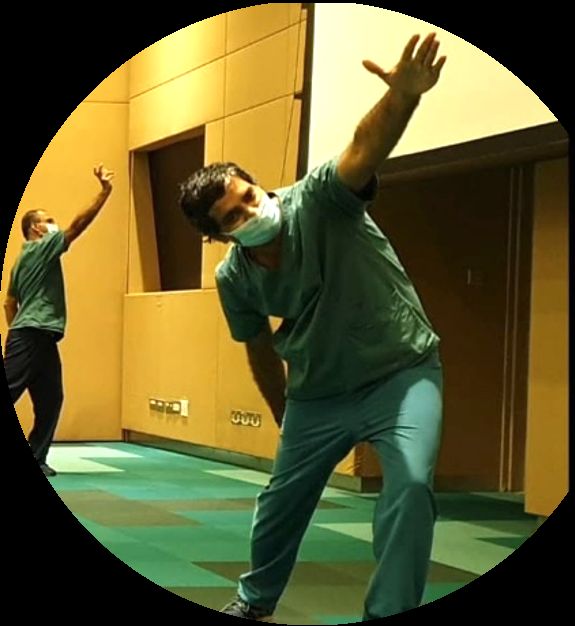
A MESSAGE FROM THE PRESIDENT

Dear Physiotherapy Colleagues and Friends,

This year has been tremendous, in many ways.
When COVID-19 arrived in the world, and upon
Singaporean shores, brave and prompt efforts
were taken to keep the local situation under
control.

As      healthcare      professionals,    many
physiotherapists contributed to not only the
care of patients diagnosed with COVID-19,
some volunteered to help out in other roles
within dormitories or screening centres, while
others continued to serve their patients amidst
challenging guidelines and regulations.

With that, SPA would like to take this
opportunity to recognise the hard work and
sweat of our physiotherapists, no matter their
role during COVID-19. In addition, this SPA
COVID-19 special feature highlights some of
stories of physiotherapists around Singapore
during the first few months of the pandemic.

We are grateful for your courage and
perseverance to always do your best for your
patients, their families and caregivers. Thank
you for being the pillar of strength no matter
how hard times are.

Stay safe, stay well and take care of one
another!

Yours Sincerely
LEE Sin Yi

                               AUG-SEP 2020 | ISSUE 1
                                      credit: slidesgo.com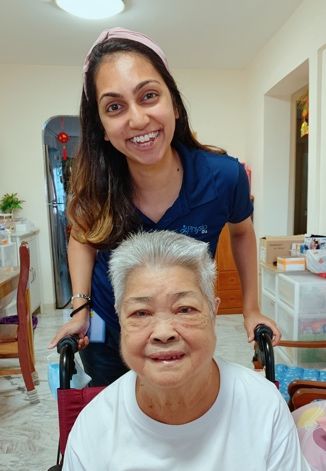
EMBARKING ON

TELEHEATH
           https://www.physiotherapy.org.sg

   On 3rd April 2020, the Singapore government
   announced several nationwide circuit breaker
   measures to curb the spread of COVID-19.

   Face-to-face physiotherapy services had to cease
   while TeleHealth was recommended. There was a
   need to establish TeleHealth guidelines specific to
   our local physiotherapy community.

   On the same day, SPA gathered nine
   physiotherapists from the private sector and started
   drafting the SPA TeleHealth Guidelines for
   Physiotherapy which was published on 12th April.

   The guideline is now available on our website.

                    "We needed to come up with alternative face to
                    face consult. Doctors in Singapore have already
                    embarked on it!

                    Sonya Gill
                    The Clinic Group

                    "With physiotherapy being taken off the essential
                    service list, we had to find a way to continue to
                    care for our patients... Coming up with guidelines
                    would help elevate the profession to another level."
                    Calvin Sim
                    EMW Physiotherapy & TCM

                                                        AUG-SEP 2020 | ISSUE 2
                                                                  credit: slidesgo.com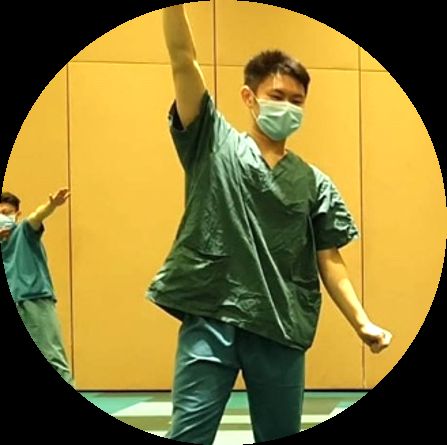
EMBARKING ON

TELEHEATH

       IN CONVERSATION WITH...
      After the completion of the guidelines, we took the opportunity
      to ask members of the workgroup to share their experiences
      working with different physiotherapists through online
      platforms. Many of them have never met each other in person!

     Q: How was it like working with other physiotherapists?

                              “For me, newly arrived in Singapore, it was a great way
                              to meet fellow physios. Particularly meeting people
                              prepared to put in lots of hours, voluntarily, to help
                              move physiotherapy forward. An enormous amount of
                              work went into this project, with messages, ideas,
                              debates flowing in to the group chat.”

                              Aaron Smith, PhysioActive.

                                    “It was challenging because of the nature of
                                    WhatsApp group chats. It makes it easier to
                                    digress and the short quips make discussions
                                    harder than those done in-person.”

                                    Loy Fong Ling, The Physio Movement.

           Q: Do you think there is a place for TeleHealth in
           physiotherapy?

                    “Yes. TeleHealth is an effective tool during the
                           COVID-19 situation. It is a great tool in
                       empowering self efficacy and self care. The
                             client takes ownership in their rehab.”

                       Poon Kok Hoong, KH Poon Physiotherapy.

               “We are now able to develop strong therapeutic
             relationship with clients while they are still able to
          maintain personal space through TeleHealth. Mindful
          that TeleHealth is not, Zoom or doom, i.e. to replace
           in-person physio, but a certainly exciting to develop
                          another mode of physio providence!”

                                    Kylie Siu, Thrive Healthcare.

                                                                 AUG-SEP 2020 | ISSUE 2
                                                                        credit: slidesgo.com
EMBARKING ON

TELEHEATH

      Q: Share with us some of your experiences when
      conducting TeleHealth sessions.

                      “One of my patients had a full recovery from a humeral head
                      fracture! It was mainly through guided exercises via TeleHealth,
                      assistance from family and the use of home equipment (umbrella as
                      canes, water bottles as weights).”

                      “No negative experiences, but after circuit breaker and when we
                      could resume face-to-face physiotherapy services, most came back
                      and said that they prefer the hands-on approach.”

                      Jenny Huang, HelloPhysio.

     “Most of the patients were very positive about the sessions.
     They were quite amazed by what we could achieve during
     the session.”

     “Unfortunately, I encountered several challenges like poor
     Wi-Fi connectivity (especially patients who are overseas),
     cluttered patient environment and disturbances during
     session (children running around).”

     Rahul Gadru, Rapid Physiocare.

SPA would also like to thank the Australian Physiotherapy Association, Podiatry
  Association of Singapore, Speech and Language Therapy Singapore and the
 Singapore Association of Occupational Therapists for sharing their TeleHealth
  resources which provided support to the conceptualisation of our guideline.

                                         "It was definitely a great collaborative effort.
                                         Would participate in such workgroups
                                         again!”

                                         Preet Singh
                                         Embrace Physiotherapy
                                                                     AUG-SEP 2020 | ISSUE 2
                                                                               credit: slidesgo.com
FIGHTING

COVID-19
KHOO TECK PUAT HOSPITAL – WOODLANDS HEALTH

The COVID-19 pandemic threw the world into an unprecedented

state significantly impacted care delivery for patients with COVID-19.

With a transdisciplinary team and the knowledge and experience from

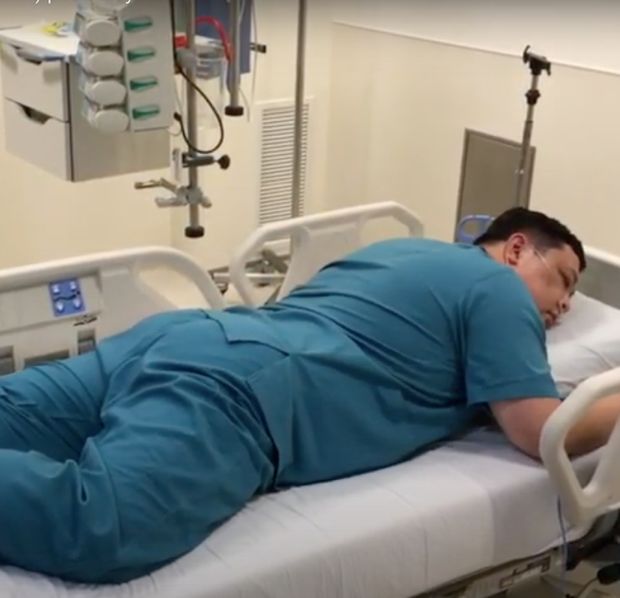
managing ARDS, the KTPH/WHC team initiated the prone position for

patients in the ICU. The same protocol was introduced to the general

wards as it significantly reduced the chances of patients requiring

intensive care. Videos on secretion clearance

were also rolled out to empower patients

to clear their phlegm independently.

The videos have been uploaded on

KTPH YouTube channel.

                                                            AUG-SEP 2020 | ISSUE 3
                                                                    credit: slidesgo.com
FIGHTING

 COVID-19
 KHOO TECK PUAT HOSPITAL – WOODLANDS HEALTH

Over time, younger and more mobile patients

were getting infected with COVID-19. The idea of

a mass workout called the “Teh Tarik Workout”,

which patients were able to participate from their

bedside was conceived. This helped curb the

consequences of prolonged bed rest and also a

means to engage them. Due to its popularity, two

more workout videos named Kampung Building

and Cricket workout were developed.

        COVID-19 has definitely challenged us to think
        away from our comfort zone and we managed
        to overcome the challenges working as one
        transdisciplinary team.
                                         Sunny Tan, KTPH

                                                  AUG-SEP 2020 | ISSUE 3
                                                           credit: slidesgo.com
HOME
       CARDIOPULMONARY
       PHYSIOTHERAPY
       DURING CIRCUIT BREAKER
  The nationwide circuit breaker measures to curb the spread of COVID-19 took effect
  on 7th April 2020. Face-to-face physiotherapy services had to cease and TeleHealth was
  recommended.         However,   patients   in   the   community   who   require   regular
  cardiopulmonary physiotherapy services would not benefit from TeleHealth services.
  During the circuit breaker period, SPA was in close contact with the Chief Allied Health
  Officer from the Ministry of Health and relayed concerns from the ground. Some
  exemptions were later allowed by the Ministry of Trade and Industry.

                           “I have been seeing Mdm Wong daily for her chest
                           physiotherapy prior to the circuit breaker period. However, as
                           the circuit breaker started, there were many uncertainties with
                           regards to the approval of continuing chest physiotherapy.”

                           "Thankfully, my colleagues and SPA advocated for the
                           importance of chest physiotherapy and it had since been
                           allowed to continue as an essential service.”
                                                                         Aruna, Health2U

         “I’m extremely thankful that chest physiotherapy was allowed
         during circuit breaker as my grandmother, who suffers from
         chronic bronchitis and back fracture, struggled to keep her
         chest clear. She is now able to walk short distances and
         breathe better, which has not only improved her lung condition
         but also her overall physical and mental health!”

         Mdm Wong’s grand daughter

AUG-SEP 2020 | ISSUE 4
credit: slidesgo.com
ADAPTING TO

CHANGES
STUDENT’S PERSPECTIVE                                          Dylan Ng
                                                               Year 1 Physiotherapy Student
The COVID-19 pandemic has also                                 Singapore Institute of
affected the way our physiotherapy                             Technology
students learn. Some students had
their clinical placements were
delayed, while most had their school
timetable restructured. Thankfully,                             Shrida Sailli
the university and the lecturers were                           Year 3 Physiotherapy Student
supportive     and    ensured     that                          Singapore Institute of
students are well supported.                                    Technology

Q: What were the changes you experienced during the
COVID-19 pandemic as a physiotherapy student?

             Clinical placements were delayed but
             luckily, I was one of the few who was able
             to go for my first round of clinicals. Sadly,
             the type of patients that students can see
             are even more limited due to the pandemic
                                                                    Trime
                                                                            st
                                                                   restru er 3 has be
                                                                           ctured            en he
                                                                   were             .               av
  Going for placements during circuit breaker                            move Theory les ily
                                                                  of the         d to th           sons
  certainly meant more restrictions. We can’t                             t                e
                                                                 final t rimester, fo first half
  meet our friends after a long and challenging                         heory              llowed
                                                                 middl
  day; only via zoom.                                                  e, whi exams in th by
                                                                sched          le              e
                                                                      uled a practicals w
                                                                               t the l
                                                                                        ater h ere
  Having said that, lower patient load meant                   Havin                          alf.
                                                                     g
  that more time can be allocated in preparing                lesson said that, h
                                                                                       a
                                                             saved s at home d ving
  for our patient and longer discussions with                       travel
                                                                            ling ti
                                                                                      efinite
  our clinical educators.                                                          me! ly
                                         Shrida
                                                                                       Dylan

                                                                        AUG-SEP 2020 | ISSUE 5
                                                                                   credit: slidesgo.com
ADAPTING TO

CHANGES

                    “I would like to thank the SIT
                    management team and our
                    module leads for coming
                    together and still conduct
                    lessons at high standards!”

              “Thank you professors and I hope
                    you are doing well!”

               “My professors were very
               supportive! They check in
               with me as often as they could
               to ensure I was doing well with the
               changes to the clinical placements.”

              “I’m also appreciative of my friends
                  who talked me through the
                   challenges of placements.”

                                                      AUG-SEP 2020 | ISSUE 5
                                                             credit: slidesgo.com
THE REHAB
JOURNEY
GLENEAGLES HOSPITAL
Ever wondered what the
Rachel Ng is a
rehabilitation journey for patients
recovering from COVID-19 physiotherapist from the
infection is like? In this two-part Gleneagles Rehabilitation
series, we interviewed two inpatient team. She was assigned to
physiotherapists from different the critical wards including ICU during
settings.
the COVID pandemic. This is her story.
“During the first few months of the COVID-19 pandemic, three of my colleagues and I
were assigned to Mr T, a patient diagnosed with COVID-19. During his ICU stay, his
conditioned worsened and had to be intubated. After about 1 month in the ICU, Mr T’s
conditioned gradually stabilized but he was deconditioned due to prolonged bed rest.”
“Mr T’s rehabilitation journey was challenging. He initially required
assistance from 2 to 3 staff to get out of bed. It required determination
and perseverance from both Mr T and myself before being able to be
transferred to the general ward where his wife, who was also a COVID-19
patient was admitted. Within 2 weeks, he was able to walk with a walking
frame before he and his wife were declared COVID-free!”
“Through this experience, I realised that we cannot
underestimate the impact of COVID-19 on our daily
lives. Physical rehabilitation is a crucial aspect to a
patient’s recovery and I am grateful to be able to
contribute back to society as we battle this pandemic.”
AUG-SEP 2020 | ISSUE 6
credit: slidesgo.comTHE REHAB
JOURNEY
TTSH REHAB
Physiotherapists play an important role for patients recovering from
COVID-19 infection by prescribing appropriate and functional exercises, as
well as providing sufficient knowledge for patients to understand their
condition for self management.
Simon Lau is a Simon understood that patients
physiotherapist from TTSH recovering from COVID-19
Rehabilitation Centre. infection often experience a
Since May 2020, the centre provides variety of problems including
rehabilitation services for patients desaturation and dyspnea on
recovering from COVID-19. exertion, general physical
deconditioning and fatigue.
Therefore, their rehabilitation journey would be challenging to both
patient and rehabilitation staff. Monitoring their vital signs is also
important in ensuring safe and effective intervention, and guides
intervention for the next session.
”Thank you very much! When I first
came here, I felt very breathless,
weak and barely able to walk within
my room without assistance.”
Patient Mr Y.
AUG-SEP 2020 | ISSUE 7
credit: slidesgo.comBEHIND THE
SCENES…
THE SPA EDITORIAL TEAM
Jazimin Haron Juliana Leong
Physiotherapist, KTPH/AdMC Executive Officer, SPA
Vice President, SPA
Aiden Lin Aiko Seko
Physiotherapist, SKH Physiotherapy Student
Corporate Communications, SPA Membership Sub-Comm, SPA
Vincent Wong
Physiotherapy Student
President, 28th SPA SC
Like what you see? Keen to contribute?
If you’re already a member and would like to be part of SPA Council or as a
sub-committee member, email us at membership@physiotherapy.org.sg
with the email header: Join SPA Council 2020.
credit: slidesgo.comYou can also read


