Clinical safety and activity from a Phase 1 study of LOXO-101, a selective TRKA/B/C inhibitor, in solid-tumor patients with NTRK gene fusions ...
←
→
Page content transcription
If your browser does not render page correctly, please read the page content below
2016 AACR Annual Meeting

     Clinical safety and activity from a Phase 1
study of LOXO-101, a selective TRKA/B/C inhibitor,
  in solid-tumor patients with NTRK gene fusions
          David S. Hong1, Anna F. Farago2, Marcia S. Brose3, Howard A. Burris, III4, Afshin Dowlati5,
         Todd M. Bauer4, Matthew Taylor6, Alice T. Shaw2, Adriana Estrada-Bernal7, Anh T. Le7, Nisha
                               Nanda8, Michael C. Cox8, Robert C. Doebele7

                                                           April 17, 2016

  1MD  Anderson Cancer Center, Houston, TX                                    6Oregon Health & Science University, Portland, OR
  2Massachusetts General Hospital, Boston, MA                                 7University
                                                                                        of Colorado, Aurora, CO
  3University of Pennsylvania, Philadelphia, PA                               8Loxo Oncology, South San Francisco, CA
  4Sarah Cannon Research Institute, Tennessee Oncology, PLLC, Nashville, TN
  5University Hospitals Case Medical Center, Cleveland, OH                                                                        1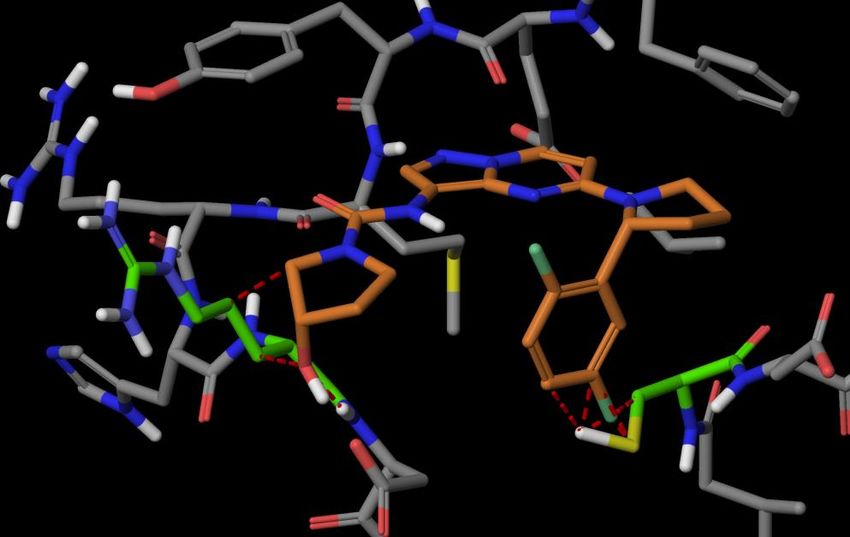
Disclosure Information
AACR 2016
AUTHOR                                         DISCLOSURES
David S. Hong                                  Travel expenses supported by Loxo Oncology
Anna F. Farago                                 None
Marcia S. Brose                                None
Howard A. Burris, III                          None
Afshin Dowlati                                 None
Todd M. Bauer                                  None
Matthew Taylor                                 None
Alice T. Shaw                                  None
Adriana Estrada-Bernal                         Research grant from Loxo Oncology
Anh T. Le                                      Research grant from Loxo Oncology
Robert C. Doebele                              Research grant from Loxo Oncology
Michael C. Cox
                                               Employees and shareholders of Loxo Oncology
Nisha Nanda

I will discuss the following off label use and/or investigational use in my presentation:
Results of the ongoing Phase 1 trial of LOXO-101
                                                                                             2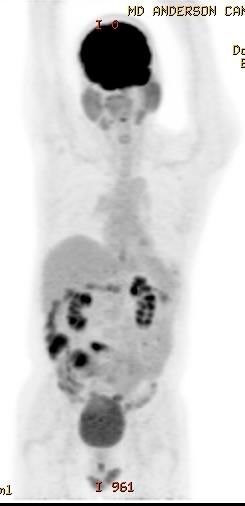
Kinase Fusions Deserve Our Attention

GENETIC ALTERATION      COMMERCIALLY AVAILABLE DRUGS

ABL fusion              dasatinib, imatinib, nilotinib, ponatinib
ALK fusion              alectinib, ceritinib, crizotinib
BRAF mutation           cobimetinib, dabrafenib, trametinib, vemurafenib
BRAF fusion             cobimetinib, trametinib
cKIT mutation           dasatinib, imatinib, nilotinib
EGFR mutation           afatinib, erlotinib, gefitinib, osimertinib
HER2 amplification      lapatinib, pertuzumab, trastuzumab, T-DM1
PDGFR fusion            dasatinib, imatinib, nilotinib
PDGFR mutation          dasatinib, imatinib, nilotinib
RET fusion              cabozantinib
ROS1 fusion             crizotinib

                                                                           3
TRK Fusions are Oncogenic and Signal Through
Canonical Downstream Pathways
Normal TRK Proteins TRK Fusions
Family of neurotrophin • Ligand binding domain replaced by 5’
receptors fusion partner; highly expressed by
promoter of 5’ fusion gene
• TrkA (NTRK1)
Pain, • Ligand-independent activation
thermoregulation
• TrkB (NTRK2) NTRK1/2/3
Movement, memory,
mood, appetite, body
weight TrkA/B/C
• TrkC (NTRK3)
AKT
Proprioception
ERK ERK AKT
4TRK Fusions Found in Diverse Cancer Histologies
TRK FUSION FREQUENCY
75%
CNS Lung Congenital Mammary analogue
Astrocytoma Adenocarcinoma mesoblastic nephroma secretory carcinoma
Brain low-grade glioma Large cell (MASC) of the salivary
Papillary thyroid
Glioblastoma neuroendocrine glands
cancer
GI Other Secretory breast
Pontine glioma
Acute myeloid leukemia carcinoma
Colorectal cancer
Breast invasive Spitz tumors
Cholangiocarcinoma Infantile fibrosarcoma
GIST carcinoma
Pancreatic cancer Melanoma
Sarcoma
Head and neck
Squamous cell
carcinoma
5Enriching for TRK Fusions
Mammary analogue secretory carcinoma1
>50% of nonparotid acinic cell carcinomas may be
MASC tumors harboring TRK fusions
Papillary thyroid cancer2
7 of 28 younger patients (25%) tested TRK fusion positive
Ages 6-18 yo
6 of 7 ages 13-18
GIST3
TRK fusions present in GIST tumors tested wild-
type for KIT/PDGFR/BRAF/SDH
Sarcoma4
TRK fusions may share
myopericytic/haemangiopericytic pattern seen by
routine histologic assessment
1 Bishop JA et al. Am J Surg Pathol. 2013 Jul;37(7):1053-7. 2 Prasad ML et al. Cancer. 2016 Jan 19. 3 Brenca M et al. J Pathol. 2016 Mar;238(4):543-9. 4 Haller F et al. J Pathol. 2016 Feb 11.
6LOXO-101:
A Rationally Designed Selective TRK Inhibitor
TRK
Highly potent against
TRKA, TRKB, TRKC
(5-11 nM IC50)
TRK
Highly selective: limited
inhibition of other kinases
and >1,000x selective over
other off targets
Chartier M, Chénard T, Barker J, Najmanovich R. (2013) Kinome Render: a stand-alone and web-accessible tool to annotate the human protein kinome tree. PeerJ 1:e126 7LOXO-101 Phase 1 Study Design
• Ongoing dose escalation study DOSE COHORT
PATIENTS
ENROLLED
• Advanced or metastatic solid tumors 50mg QD 4
100mg QD 5
• ECOG 0/1, normal organ function
100mg BID 24
• QD or BID oral fixed, continuous dosing,
200mg QD 5
28-day cycles
150mg BID 5
• Outcome measures TOTAL 43
• Safety and tolerability Data cutoff March 25, 2016
• Pharmacokinetics measured at cycle 1, days 1 and 8
• Efficacy assessments conducted every other cycle starting C3D1
8Baseline Characteristics
CHARACTERISTICS SUBJECTS (N= 43)
Median age (range), years 57.0 (28 – 76)
Sex Male / Female 25 (58%) / 18 (42%)
Race White / Black / Other 34 (79%) / 6 (14%) / 3 (7%)
Tumor Type* Head and neck 8 (19%)
Lung 8 (19%)
Breast 3 (7%)
Colorectal 3 (7%)
Pancreatic 3 (7%)
ECOG Status 0 / 1 / 2 / Unknown 13 (30%) / 27 (63%) / 2 (5%) / 1 (2%)
Prior systemic anticancer therapy, n (%) 41 (95%)
Median number of regimens (range) 3 (0-11)
TRK-fusion positive Mammary analogue secretory carcinoma (ETV6-NTRK3) 3
Soft tissue sarcoma (LMNA-NTRK1) 1
GIST (ETV6-NTRK3) 1
Thyroid (ETV6-NTRK3) 1
NSCLC (TPR-NTRK1) 1
Total 7
*Includes n=2 each of sarcoma, thymoma, and thyroid. Includes n=1 each of anal, angiosarcoma, appendiceal peritoneal carcinomatosis, gall bladder, gastric,
GE junction, melanoma, retroperitoneal leiomyosarcoma, retroperitoneal atypical lipomatous, soft tissue carcinoma, and thymus. Includes n=1 unknown. 9Disposition
TRK MUTATION/
ALL PATIENTS TRK FUSION PATIENTS
AMPLIFICATION PATIENTS
N=43 N=7 N=5
On study 13 (30%) 7 (100%) 2 (40%)
Discontinued 30 (70%) 0 (0%) 3 (60%)
Reasons for discontinuation
Disease Progression 23 (53%) -- 3 (60%)
Adverse Event 3 (7%)* -- --
Withdrawal of consent 2 (5%) -- --
Noncompliance 1 (2%) -- --
Other 1 (2%) -- --
*Patients discontinued for adverse events of syncope, pleural effusion, and enterocutaneous fistula.
10LOXO-101 Exposure
LOXO-101 CMAX LOXO-101 EXPOSURE OVER TIME
4000 50 mg QD (n=4) 100 mg BID (n=13)
Day 1 100 mg QD (n=6) 150 mg BID (n= 4)
Day 8 200 mg QD (n=3)
in Plasma (ng/mL)
Concentration of LOXO-101
Cmax of LOXO-101
3000 1000
in Plasma (ng/mL)
2000 TRKA IC90
100
1000
TRKA IC50
10
TRKA IC90
0
50 mg 100 mg 100 mg 150 mg 200 mg
QD QD BID BID QD
1
(n=4) (n=5, 6) (n=17,13) (n=5, 4) (n=4, 3)
0 6 12 18 24
Dose Time (h)
• Linear PK profile following oral administration shows high plasma exposure and no
accumulation
• Slow off-rate; T1/2 = 160 min
The horizontal line representing TRKA IC90 refers to the total plasma concentration of LOXO-101 that is associated with an unbound concentration of LOXO-101 that is equal to its IC90 for inhibition of NGF-
stimulated activity in a cellular assay. The IC90 values for TRKB and TRKC are not shown, but are similar to those of TRKA. Dotted lines in the right panel are inferred PK from the evening BID dose. 11LOXO-101 Phase 1 Interim Treatment-Emergent
AEs, Regardless of Attribution to Study Drug
DOSE 100 MG BID (N=24) TOTAL (N=43)
Gr 3/4 All Gr Gr 3/4 All Gr
Adverse Events (AEs)*
n (%) n (%) n (%) n (%)
Fatigue 0 5 (21%) 2 (5%) 14 (33%)
Constipation 0 3 (13%) 1 (2%) 10 (23%)
Dizziness 0 6 (25%) 0 10 (23%)
Anemia 1 (4%) 4 (17%) 3 (7%) 8 (19%)
Increased AST 1 (4%) 5 (21%) 4 (9%) 8 (19%)
Cough 0 4 (17%) 0 8 (19%)
Diarrhea 0 4 (17%) 0 8 (19%)
Increased ALP 0 5 (21%) 1 (2%) 7 (16%)
Dyspnea 1 (4%) 3 (13%) 1 (2%) 7 (16%)
Nausea 0 4 (17%) 0 7 (16%)
Abdominal pain 0 3 (13%) 1 (2%) 6 (14%)
Increased ALT 1 (4%) 4 (17%) 2 (5%) 6 (14%)
Anxiety 0 2 (8%) 0 5 (12%)
Hypertension 0 4 (17%) 1 (2%) 5 (12%)
Peripheral edema 0 2 (8%) 0 5 (12%)
Pyrexia 0 2 (8%) 0 5 (12%)
Vomiting 0 2 (8%) 0 5 (12%)
Hyperkalemia 1 (4%) 1 (4%) 2 (5%) 3 (7%)
Delirium 1 (4%) 1 (4%) 2 (5%) 2 (5%)
Pleural effusion 1 (4%) 1 (4%) 2 (5%) 2 (5%)
Syncope 0 0 2 (5%) 2 (5%)
*Treatment-emergent adverse events (reported by > 10% of total subjects) or any Grade 3-4 events that occurred in at least 2
patients. 12LOXO-101 Summary of Best Response
Data as of March 25, 2016
TRK MUTATION/
TRK FUSION
ALL PATIENTS* AMPLIFICATION
PATIENTS**
PATIENTS
N=41 N=6 N=5
CR 0 0 0
PR 5 5 0
SD 7 1 3
PD 23 0 2
Off-study prior to first response assessment 6 0 0
Overall Response Rate 12% (5/41) 83% (5/6) 0% (0/5)
CR = complete response (confirmed) SD = stable disease
PR = partial response (confirmed) PD = progressive disease
RECIST v1.1
* Excludes 2 recently enrolled patients, on study for less than 8 weeks as of March 25, 2016.
** Excludes 1 recently enrolled patient, on study for less than 8 weeks as of March 25, 2016. 13Best Response to LOXO-101 for Patients with
TRK Fusions
100%
Stable disease
80%
Confirmed partial response
Maximum Change in Tumor Size (%)
60%
40%
20%
0%
-20% 7+
-30%
-40% 7+
10+
-60% 10+
-80% 7+ 14+
-100% Note: Ongoing cycle number noted for each patient below each bar;
28-day cycles
14PATIENT CASES – TRK FUSIONS
15Patient #1:
LMNA-NTRK1 fusion soft tissue sarcoma
• 42 yo female with
undifferentiated
sarcoma
progressed
through epirubicin,
ifosfamide,
sorafenib, and
doxorubicin
• 100mg BID
• Rapid resolution of
dyspnea and
hypoxemia
• Confirmed partial
response
• Currently on study
in cycle 14 Study baseline Study cycle 3 day 1 Study cycle 13 day 1
16Patient #2: PET
ETV6-NTRK3 fusion GIST
• 55 yo male with
GIST progressed
through imatinib,
sunitinib, sorafenib,
nilotinib, and
regorafenib
• 150mg BID Study baseline Study cycle 3 day 1 Study cycle 9 day 1
CT
• Confirmed partial
response
• Currently on study
in cycle 10
Study baseline Study cycle 5 day 1 Study cycle 9 day 1 17Patient #3:
ETV6-NTRK3 fusion mammary analogue
secretory carcinoma of the salivary gland
(MASC)
• 33 yo male
progressed
through
docetaxel,
carboplatin
and 5FU
• 100mg BID
• Confirmed
partial
response
• Currently on
study in Study baseline Study cycle 3 day 1 Study cycle 9 day 1
cycle 10
18Patient #4: ETV6-NTRK3 fusion mammary analogue secretory carcinoma of the salivary gland (MASC) • 66 yo male progressed through radiotherapy, dasatinib, GDC- 0941+ erlotinib, and ABBV-399 • 100mg QD* • Confirmed partial response • Currently on study in cycle 7 * Patient enrolled at 100mg BID and dose Study baseline Study cycle 3 day 1 Study cycle 7 day 1 reduced to 100mg QD on C1D2 due to transient dizziness possibly related to drug 19
Patient #5:
  ETV6-NTRK3 fusion papillary thyroid cancer
• 33 yo male
  progressed
  through RAI,
  pazopanib,
  trametinib
• 100mg BID
• Confirmed partial
  response
• Rapid
  improvement         Study baseline   Study cycle 3 day 1   Study cycle 7 day 1
  cervical
  lymphadenopathy
• Currently on
  study in cycle 7
                                                                                   20
Patient #6: TPR-NTRK1 non-small cell lung cancer • 28 yo male progressed through cisplatin and etoposide • 100mg BID • 18% reduction; stable disease • Patient’s only RECIST evaluable lesions are in the bone • Non-target lesion regressions in lung and brain • Resolution of cough and pain • Currently on study in Study baseline Study cycle 3 day 1 Study cycle 7 day 1 cycle 7 21
Best Response to LOXO-101 for Patients with
TRK Fusions
                                           100%
                                                                                 Stable disease
                                            80%
                                                                                 Confirmed partial response

        Maximum Change in Tumor Size (%)
                                            60%

                                            40%

                                            20%

                                             0%

                                           -20%      7+
                                                   -30%
                                           -40%                 7+
                                                                           10+
                                           -60%                                        10+

                                           -80%                                                    7+         14+

                                           -100%   Note: Ongoing cycle number noted for each patient below each bar;
                                                   28-day cycles
                                                                                                                       22
LOXO-101 Phase 2 Adult Basket Trial
• Solid tumors, including CNS tumors,
with TRK fusion based on local or pre-
existing testing
• Enrolling patients ≥ 12 yo; ECOG 0-3
• Dose: 100mg BID
• Primary endpoint: Best ORR
• Global study (20-30 sites)
• Patient concierge service for
enrollment, including single patient
protocols
• Hotline: 855-NTRK-123
23TRK Fusions Present Assay Complexity Due to
Varied Fusion Partners
NTRK1/2/3 KINASE DOMAIN
BCAN
CD74
CEL
IRF2BP2
LMNA
MPRIP
NFASC
NTRK1
SSBP2
TFG
TPM3
TPR
AFAP1
AGBL4
NACC2
QKI NTRK2
SQSTM1
TRIM24
VCL
BTBD1
ETV6
NTRK3
Selection of fusion constructs shown. Graphic is not comprehensive for all TRK fusion constructs described in the literature.
24Finding Fusions Requires Careful Assay Design
• NGS, Next-Generation Sequencing
• RT-PCR, Reverse Transcription Polymerase Chain Reaction
• FISH, Fluorescence In Situ Hybridization
• IHC, Immunohistochemistry
Assay designs present varied challenges
for fusion detection
25Different Methods Lead to Variable Estimates of
Fusion Frequency, Ex. ALK in NSCLC
ALK FUSION FREQUENCY IN
DETECTION TECHNOLOGY REFERENCE
LARGE NSCLC COHORTS
DNA NGS 4.4% (n=1,070) Ali et al. ASCO 2014 Annual Meeting;
(hybrid capture) Abstract 8049
RNA NGS 4.3% (n=115) Hovelson et al. Neoplasia. 2015 Apr;
(amplicon) 17(4):385–399
RNA NGS 2.4% (n=741) Farago et al. ASCO 2015 Annual
(anchored multiplex PCR) Meeting; Abstract 8095
RNA NGS 1.0% (n=513) Stransky et al. Nat Commun
(RNA-Seq / whole transcriptome) 2014;5:4846.
RT-PCR 2.7% (n=7,344) Li et al. J Thorac Oncol. 2014 Jan;
9(1):18-25
FISH 5.5% (n=1,500) Kwak et al. NEJM 2010; 363:1693-
1703
IHC 6.5% (n=441) McLeer-Florin et al. J Thorac Oncol.
2012; 7:348–354
FISH + IHC 0.4% (n=227) Rodig et al. Clin Cancer Res. 2009
August 15; 15(16): 5216–5223
Note: Select publications/cohorts shown 26Point Estimates of TRK Fusion Frequency Are
Similarly Varied
LUNG CANCER
DETECTION TECHNOLOGY TRK FUSION FREQUENCY REFERENCE
RNA NGS 2/1,378 (0.1%) Farago et al. J Thorac Oncol. 2015;10: 1670–1674.
(anchored multiplex PCR)
RNA NGS 1/513 (0.2%) Stransky et al. Nat Commun 2014;5:4846.
(RNA-Seq / whole transcriptome)
FISH 11/443 (2.5%) Varella-Garcia et al. WCLC 2015. Abstract 37.01.
DNA NGS + FISH 3/91 (3.3%) Vaishnavi et al. Nat Med. 2013 Nov;19(11):1469-72.
COLORECTAL CANCER
DETECTION TECHNOLOGY TRK FUSION FREQUENCY REFERENCE
RNA NGS 2/286 (0.7%) Stransky et al. Nat Commun 2014;5:4846.
(RNA-Seq / whole transcriptome)
IHC + PCR 1/66 (1.5%) Ardini et al. Mol Oncol 2014;pii:S1574-7891(14)00125–2.
RNA NGS 3/147 (2.0%) Park et al. Oncotarget. 2015 Dec 22. doi:
10.18632/oncotarget.6724.
RNA NGS 2/74 (2.7%) Lee et al. Oncotarget. 2015 Nov 17;6(36):39028-35.
27Considerations for Patient Screening
• TRK fusions have been identified across multiple tumor types
• Trend toward younger patients
• Consider patients lacking other “common” mutations
• Lung: EGFR-negative, ALK-negative, ROS1-negative, KRAS-negative
• Colorectal: KRAS-negative, BRAF-negative
• GIST: KIT-negative, PDGFR-negative
• Thyroid: BRAF-negative
• Panel-based detection available through send-out labs, academic labs, or commercially
available NGS kits
• RNA-based NGS best captures diversity of TRK fusions
• Key question to ask: how well does the selected approach “cover” TRK fusions?
28Acquired Resistance to Kinase Inhibitors
• Universally encountered with targeted therapies
• As of this presentation, no LOXO-101 responder has
progressed
• Most common: mutations that limit drug binding
• Gatekeeper: ABL-T315I, EGFR-T790M, ALK-L1196M
• Solvent front: ALK-G1202R, ROS1-G2032R LOXO-101
595R
667C
• Case reports: two patients with tumor progression
after initial response to a different TRK inhibitor in
the clinic1,2
• Patient 1: NTRK1 G595R (solvent front) + Y667C Solvent front
• Patient 2: NTRK3 G623R (solvent front) Activation loop
1. Russo et al. Cancer Discovery. Published OnlineFirst on November 6, 2015; DOI: 10.1158/2159-8290.
2. Drilon et al. Annals of Oncology. Advance Access published February 15, 2016 29LOXO-195: 2nd Generation TRK Inhibitor
TrkA delta Ig
• LOXO-101 “like” 100 TrkA delta Ig
AR0045747
100
LOXO-101
• Highly potent: nanomolar in cell against TRKA, TRKB, TRKC
AR0045747
AR0047965
80
LOXO-195
AR0047965
80
• Highly selective: >1,000x selective over other off targets 60
POC
60
• Excellent drug properties: orally dosed, high exposure, low
POC
TRK WT 40
clearance
40
20
20
0
0-10 -9 -8 -7 -6 -5 -4
-10 -9 -8 Conc.
-7 (M) -6 -5 -4
• Structural modeling: should be active against acquired Conc. (M)
resistance mutations TrkA delta Ig G595R
100 LOXO-101
TrkA delta Ig G595R
AR0045747
LOXO-195
100 AR0045747
80 AR0047965
• Experimental assays confirm structural insights 80 AR0047965
60
TRK
POC
60
40
G595R
POC
40
20
20
• LOXO-195 active against all acquired resistance
0
0
mutations identified to date
-20
-20-10 -9 -8 -7 -6 -5 -4
-10 -9 -8 Conc.
-7 (M) -6 -5 -4
Conc. (M)
• Entering Phase 1 in 2017
30Conclusions
• LOXO-101 is a purpose-built, oral, selective and potent TRK inhibitor
• PK analyses demonstrate very high Cmax (mean levels >IC90) and linear PK with no
significant drug accumulation
• LOXO-101 is well tolerated, with most common adverse events including Grade 1/2
fatigue, constipation, and dizziness; MTD not yet defined
• LOXO-101 appears broadly active against TRK fusion cancers in this Phase 1 study
• Significant tumor regression observed in all 6 evaluable patients
• Confirmed RECIST responses observed in 5 of 6 evaluable patients
• All TRK fusion patients are currently on study without progression, with the longest patient
over one year
• LOXO-101 Phase 2 basket trial currently enrolling for patients with TRK gene fusions
31Acknowledgements
• LOXO-101 patients and their families and caregivers
• Co-investigators and study support staffs
• This trial sponsored and supported by Loxo Oncology
• LOXO-101 and LOXO-195 invented by Array BioPharma
32You can also read


