Maldives Diamondback Squid Management Plan 2020 - AUGUST 2020 DRAFT Ministry of Fisheries, Marine Resources & Agriculture Malé, Maldives - GOV.MV
←
→
Page content transcription
If your browser does not render page correctly, please read the page content below
Maldives Diamondback Squid
Management Plan 2020

AUGUST 2020
DRAFT

Ministry of Fisheries, Marine Resources & Agriculture
Malé, Maldives
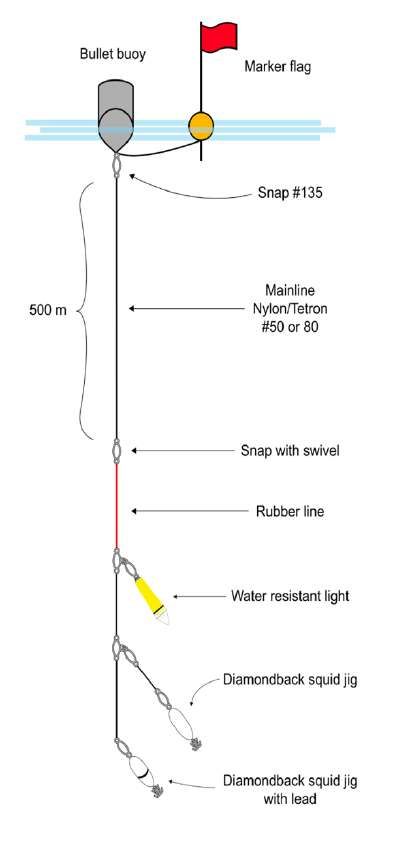
Table of Contents

Table of Figures ......................................................................................................................................... 3

List of Tables .............................................................................................................................................. 3

Abbreviations ............................................................................................................................................ 4

Part 1: Preamble ......................................................................................................................................... 5
   1.1          Introduction and Title .............................................................................................................. 5
   1.2          Scope and Application ............................................................................................................. 5
   1.3          Guiding Principles .................................................................................................................... 6
   1.4          Interpretation............................................................................................................................. 6
   1.5          Entry into Force ......................................................................................................................... 6

Part 2: Biology, Habitat and Behaviour................................................................................................. 7
   2.1          Biology........................................................................................................................................ 7
   2.2          Habitat and Behavioural Traits .............................................................................................. 8

Part 3: Overview of the Diamondback Squid Fishery ....................................................................... 9
   3.1          Fishery ........................................................................................................................................ 9
   3.2          Processing & Export ............................................................................................................... 10

Part 4: Purpose, Objectives and Strategies of the Plan .................................................................... 11
   4.1          Overall purpose ...................................................................................................................... 11
   4.2          Objectives and Strategies ....................................................................................................... 11

Part 5: Management measures .............................................................................................................. 16
   5.1          Establishment of an advisory committee ............................................................................ 16
   5.2          Licensing .................................................................................................................................. 17
   5.3          Best Practices ........................................................................................................................... 22
   5.4          Involvement of foreign nationals in DBS fishery operations ........................................... 22
   5.5          Export requirements............................................................................................................... 22
   5.6          Precautionary measures......................................................................................................... 23
   5.7          Offences and Penalties ........................................................................................................... 24

Part 6: Implementation of the Plan ...................................................................................................... 27
Part 7: Reviewing the Management Plan............................................................................................ 27

References ................................................................................................................................................. 28

Annex ......................................................................................................................................................... 29
   Annex 1: Glossary ................................................................................................................................ 29

Table of Figures

Figure 1: An egg mass of diamondback squid ........................................................................................................ 7
Figure 2: Free-floating bottom-set vertical longline................................................................................................ 9

List of Tables
Table 1: Breakdown of each objective by strategies, actions, timeframe and responsible parties ................. 12
Table 2: Details of licence categories, their respective fees and period of validity .......................................... 21
Table 3: List of offences and their respective penalties ........................................................................................ 24

                                                                                                                                                                3
Abbreviations
CG Coast Guard
EPA Environment Protection Agency
FIS Fisheries Information System
IGO Intergovernmental Organisation
IOTC Indian Ocean Tuna Commission
LGA Local Government Authority
MCS Monitoring, Control and Surveillance
MCS* Maldives Customs Service
ME Ministry of Environment
MFDA Maldives Food and Drug Authority
MIRA Maldives Inland Revenue Authority
MMRI Maldives Marine Research Institute
MNDF Maldives National Defence Force
MoED Ministry of Economic Development
MoFMRA Ministry of Fisheries, Marine Resources and Agriculture
MPS Maldives Police Services
NBS National Bureau of Statistics
NGO Non-Governmental Organisation
RFBs Regional Fisheries Bodies
RFMOs Regional Fisheries Management Organisations
SWIOFC Southwest Indian Ocean Fisheries Commission
TAC Total Allowable Catch
TAE Total Allowable Exports
4Maldives Diamondback Squid Management Plan
Part 1: Preamble
1.1 Introduction and Title
1.1.1 This Management Plan shall be cited as “Maldives Diamondback Squid Management Plan”
(hereinafter referred to as the Plan).
1.1.2 The Plan is made pursuant to Article 18 of the Act No. 14/2019 (Fisheries Act of the Maldives)
and constitutes a regulation made under this Act.
1.1.3 The Plan provides for the management of the fishery stated in Section 17 (a) (9) of the Act No.
14/2019 (Fisheries Act of the Maldives).
1.1.4 The Plan is the primary guiding document that provides direction on the management of sea
cucumber fishery in the Maldives.
1.2 Scope and Application
1.2.1 Species and Activities
(a) The Plan applies to the species Thysanoteuthis rhombus, commonly known as
diamondback squid (DBS).
(b) The Plan shall apply to all activities carried out in the Maldives that may impact
diamondback squid resources, including but not limited to harvesting, processing,
storage, trading, and exporting of DBS products from the Maldives.
1.2.2 Parties
(a) The Plan applies to all person(s) engaging in all activities targeting species listed in
1.2.1 (a).
(b) The Plan also applies to all persons, vessels, processing, and export facilities or
places engaged in or otherwise connected with any activity within the scope of this
Plan.
51.2.3 Exemption
The management measures in this Plan shall not apply to persons or parties who are undertaking an
activity within the scope of this Plan for research purposes with a valid research permit issued by the
Ministry under Research Regulation 2020.
1.3 Guiding Principles
1.1.1 Precautionary Approach: Timely and cost-effective measures shall be taken to safeguard
ecosystems and prevent irreparable damage to them despite the lack of full scientific certainty.
1.1.2 Ecosystem-based management: The various and variety of interactions within an ecosystem,
including anthropogenic elements, shall be recognised as opposed to accounting for matters,
species, or ecosystem services in isolation.
1.1.3 Sustainable Development: In developing the fishery, the needs of the present shall be met
without compromising the ability of the future generations to benefit from the resource.
1.1.4 Equity: Resources shall be acknowledged as shared and common goods and benefits obtained
from the utilisation of resources shall be shared in a fair and just manner among all through the
application of transparency, legitimacy, accountability and decentralisation.
1.1.5 Participatory Approach: All stakeholders, particularly those who are directly affected by a
policy or a measure, shall be engaged in the decision-making process to ensure inclusivity and
consensus-oriented outcomes.
1.4 Interpretation
1.4.1 This plan shall be interpreted and applied in the context of and in a manner consistent with the
Act No.14/2019 (Fisheries Act of the Maldives).
1.4.2 Unless stated otherwise, words or expressions used in this Plan have been given the meaning
specified in Annex 1: Glossary.
1.5 Entry into Force
This Plan shall come into force six months following its publication on the Government Gazette.
6Part 2: Biology, Habitat and Behaviour
2.1 Biology
The diamondback squid, Thysanoteuthis rhombus (Troschel, 1857), Thuthi boavadhilamas in Dhivehi
language, is the only species in the family Thysanoteuthidae. The common name for this species is
derived from its large, distinctive diamond-shaped fin which occupies the whole length of the mantle.
They can grow up to 100 – 130 cm, reaching a body weight of 30 kg (Roper and Jereb 2010). The mantle
lengths of 59 diamondback squids caught in a resource survey conducted in the Maldives in 2016 varied
between 35 – 82 cm (weight range: 1.60 – 16.8 kg) (Ministry of Fisheries and Agriculture et al. 2017).
Sexes can be distinguished visually from specific features such as the structure of oviducts in females and
size of the Needham sac, gonad, and penis in males (Nigmatullin et al. 1991). They have a short life-span
of one year and they begin to mature at the age of 6 – 9 months, when the male reaches 45 – 50 cm and the
female reaches 50 – 60 cm in mantle length (Nigmatullin et al. 1995). Gonads of females are comparatively
heavier than of males, and have been observed to increase in size sharply after the mantle length reaches
60 cm. For instance, in the Maldives, the gonads of males caught in November 2016 weighed 20.8g on
average, while the female gonads weighed 270g on average (Ministry of Fisheries and Agriculture et al.
2017). Thysanoteuthis rhombus is one of the fastest growing squid species, and their growth rate is
accelerated by increases in temperature (Forsythe 2004; Miyahara et al. 2006).
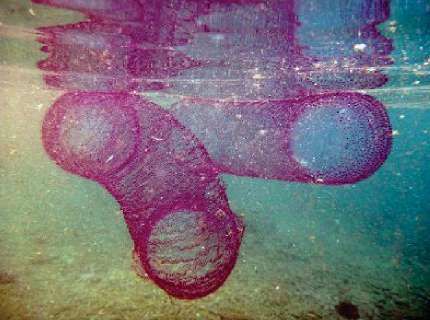
Mating of diamondback squids occur in “head to head” position (Roper and Jereb 2010). They spawn
gelatinous, planktonic, cylindrical shaped egg masses with pink-violet embryos that are distributed in a
double spiral in the outer surface of the formation (Figure 1) (Nigmatullin and Arkhipkin 1998).
Thysanoteuthis rhombus is one of the few species in which planktonic egg masses are observed. The
spawning period may last up to 2 to 3 months (Nigmatullin et al. 1995).
Figure 1: An egg mass of diamondback squid (Nimoho et al. 2014)
72.2 Habitat and Behavioural Traits
Diamondback squids inhabit tropical and subtropical oceanic waters around the world, where water
temperature is typically above 20°C (Nigmatullin and Arkhipkin 1998). They occur at around 600 – 800
meters during the day and ascend to near surface water at night for feeding and reproductive purposes
(Nigmatullin et al. 1995). Their distribution and migration depend on the oceanic currents and surface
circulation. Thysanoteuthis rhombus does not usually swim actively, but undulates slowly using its long,
broad, diamond-shaped fins. However, when threatened, the squid is capable of exhibiting quick bursts
of speed (Roper and Jereb 2010). They have a unique social organisation, where throughout their life
cycle, they occur in pairs constituting a male and a female of the same size.
Juveniles feed on crustaceans, small cephalopods and fishes, while adults prey on non-active mid water
fishes. Predators include different species of ommastrephid squids, dolphin fish, lancet fish, various
species of tuna (e.g. Thunnus albacares, Thunnus obesus, and Thunnus alalonga), sharks, and mammals such
as dolphins.
8Part 3: Overview of the Diamondback Squid Fishery
3.1 Fishery
Diamondback squid fishery is a new and emerging
fishery in the Maldives, with approximately 13-15
commercial vessels engaged in the fishery. Before this
fishery was introduced and promoted by the Ministry,
deep sea fishing had hardly been practiced in the
country. In the interest of diversifying Maldives
fishery products, upon the government’s request, a
research was conducted in 2015 to explore the
potential of commercial exploitation of deep-sea
resources (Ministry of Fisheries and Agriculture et al.
2017). The findings of this study confirmed the
occurrence of DBS in the country and informed on its
spawning season as well as the distribution of the
resource within the coastal areas of the Maldives.
During the resource survey, a total of 59 individuals of
DBS (500.5 kg) was caught at around 5-15 nautical
miles from the atoll rim, where the water depth varied
between 1500 – 2000 meters (Ministry of Fisheries and
Agriculture et al. 2017). The catch was highest near
Raa Atoll (17 DBS) and Lhaviyani Atoll (10 DBS).
Following this, the Ministry launched a pilot project in
2016 to introduce the commercial fishing of DBS and
announced the availability of ten sets of specialised
fishing gear for sale. The Ministry also carried out
educational programmes on the fishery and usage of
Figure 2: Free-floating bottom-set vertical longline
gear for the ten parties who purchased the equipment.
The typical method of fishing involves the use of a bottom-set vertical longline (BVLL) - a 500 meter
dropline with two large squid jigs attached at the bottom end and a pressure float with a flagpole at the top
end (Figure 2). Squids are attracted to the water-resistant light that is attached to the main line.
93.2 Processing & Export
Once the DBS is harvested, it is gutted, packed in polythene bags and chilled in ice. The suggested ratio of
ice to squid is 1:1 (kg). The product can be retained on vessel in ice for a maximum period of five days.
After processing the meat, the product is stored at a temperature of -5°C. The meat of DBS is consumed
in Japan as a premium delicacy priced at 20-30 USD per kg compared to 8-10 USD per kg elsewhere.
However, to date, DBS has not yet been exported from the Maldives and is only sold to local markets and
restaurants. Currently, there is only one commercial party that is involved in DBS processing in the
country.
10Part 4: Purpose, Objectives and Strategies of the Plan
4.1 Overall purpose
4.1.1 The overall purpose of the management plan is to:
(a) Establish an effective management and monitoring structure for the diamondback
fishery and ensure future generations benefit from resources;
(b) Ensure long-term benefits to the people of Maldives through the responsible
management of the fishery; and
(c) Act as the primary basis for guiding the authorities as well as stakeholders in the
sustainable development of the fishery and trade.
4.2 Objectives and Strategies
4.2.1 The plan comprises of five specific objectives;
(1) Ensure that the harvesting, processing and trading of diamondback squid is carried
out in an environmentally sound manner most beneficial to Maldivians through the
application of principles of sustainability, ecosystem-based management and the
Precautionary Approach;
(2) Implement Monitoring, Control and Surveillance and strengthen data collection and
data reporting mechanisms for the diamondback squid fishery and trade;
(3) Prioritise evidence-based policymaking through the collection of biological and socio-
economic data on diamondback squid fishery and associated resources;
(4) Ensure equitable benefits to all Maldivians and improve their livelihoods through
improvement of commercial operations of DBS fishery and trade;
(5) Increase education and awareness amongst stakeholders and the general public.
4.2.2 Strategies and actions developed to achieve these objectives are summarised in Table 2.
11Table 1: Breakdown of each objective by strategies, actions, timeframe and responsible parties
Objective 1: Ensure that the harvesting, processing and trading of diamondback squid is carried out in an environmentally sound manner most
beneficial to Maldivians through the application of principles of sustainability, ecosystem-based management and the Precautionary
Approach
Strategy Action Time frame Responsible parties
1.1.1 Apply minimum harvest / export size limits on
Long-term o MMRI
diamondback squids to allow them to grow and
1.1 Adopt precautionary (5 – 10 years) o MoFMRA
reach maturity before being susceptible to capture
approach for the
management of the fishery
in the absence of reliable
biological or fishery data o MMRI
1.1.2 Establish an input control mechanism by limiting
Immediage o MoFMRA
the number of fishing licences
1.2.1 Implement and enforce the restriction on the use
o MoFMRA
1.2 Promote the use of of any fishing method or gear prohibited by the
Immediate o MPS
environmentally friendly Act No.14/2019 (Fisheries Act of the Maldives) or
o MNDF-CG
gears and techniques in any other regulations
the diamondback squid
fishery Long-term o MMRI
1.2.2 Regulate the use of gear in DBS fishery
(5 – 10 years) o MoFMRA
1.3 Maintain a leading role in
Regional Fishery Bodies
(RFBs) and relevant
1.3.1 Actively participate in the scientific and
Intergovernmental o MoFMRA
management processes of SWIOFC and other Immediate
Organisations (IGOs) in o MMRI
relevant regional and international bodies
management and
conservation of
diamondback squids
12Objective 2: Implement Monitoring, Control and Surveillance and strengthen data collection and data reporting mechanisms for diamondback squid
fishery and trade
Strategy Action Time frame Responsible parties
2.1.1 Establish licensing arrangements for harvesters to
effectively monitor diamondback squid catch rates o MoFMRA
Immediate
and effort and obtain other important fishery o Local Councils
dependent data
2.1 Establish an effectively 2.1.2 Establish licensing arrangements for DBS
controlled and monitored o MoFMRA
processing facilities to effectively monitor Immediate
trade flow o MFDA
methods and scale of processing
2.1.3 Establish registration arrangements in Fisheries
o MoFMRA
Information System (FIS), Keyolhu, to control and Immediate
o MCS*
monitor DBS trade
2.2.1 Require harvesters to submit catch-log data to the o Local Councils
Immediate
Ministry o MoFMRA
2.2 Establish an efficient 2.2.2 Require any facilities processing diamondback
documentation scheme for squids or trading to exporters to maintain and Immediate o MoFMRA
the diamondback squid submit purchase records to the Ministry
fishery and trade
2.2.3 Require exporters to maintain and submit
purchase records to the Ministry, and apply for a
Immediate o MoFMRA
catch certificate for each consignment they intend
to export
132.2.4 Expand the catch documentation scheme to cover
DBS exports and require that an approved catch
o MoFMRA
certificate is submitted along with an export Immediate
o MCS*
declaration form (including a packing list by
weight) for all consignments of DBS exported
2.3 Establish an effective
monitoring, control and 2.3.1 Work with other government agencies (e.g. o MoFMRA
enforcement system to Customs, MFDA, MIRA) and relevant NGO’s to Immediate o MFDA
ensure effective monitor exports o MIRA
compliance
Objective 3: Prioritise evidence-based policymaking through the collection of biological and socio-economic data on diamondback squid fishery and
associated resources
Strategy Action Time frame Responsible parties
3.1.1 Implement nationwide size sampling or
Long term
monitoring programmes for deep sea resources, o MMRI
(5 – 10 years)
including diamondback squids
3.1 Improve data collection on
biological and socio- 3.1.2 Gather geographical information on fishing
economic aspects of grounds using catch logs and field surveys in Short-term o MoFMRA
diamondback squid fishery order to study the spatio-temporal exploitation (1 – 3 years) o MMRI
to support evidence-based patterns in diamondback squid fishery
policymaking
3.1.3 Conduct series of socio-economic surveys to
identify and understand the scale of Immediate o MoFMRA
diamondback squid fishery in the Maldives
14Objective 4: Ensure equitable benefits to all Maldivians and improve their livelihoods through improvement of commercial operations of DBS fishery
and trade
Strategy Action Time frame Responsible parties
4.1.1 Incentivise private investment for oceanic
4.1 Diversify the commercial Long term
fisheries or deep-sea fishery, particularly for o MoFMRA
fisheries sector (5 – 10 years)
longline fishery targeting diamondback squid
4.1.2 Establish, maintain, and update a fishers’
registry, Masveringe Dhaftharu, to understand o MoFMRA
Immediate
fishing community dependence on DBS o Local councils
resources
4.2 Identify and engage
stakeholders to ensure that 4.1.3 Engage with stakeholders and take their views
policy decisions are made and feedback into account in the implementation Immediate o MoFMRA
through a Participatory of management measures
Approach
4.1.4 Work in close liaison with key DBS fishing o MoFMRA
Immediate
communities and traders o Local councils
Objective 5: Increase education and awareness amongst stakeholders and the general public
Strategy Action Time frame Responsible parties
5.1.1 Based on data availability, compile and
o MMRI
5.1 Promote awareness and disseminate information on:
o MoFMRA
understanding of the
• status of stocks; o MoED
diamondback squid fishery Annual
• fishing operations; o MIRA
and its contribution to the
• exports; and o MCS*
Maldives economy
o NBS
• revenue to Maldives
15Part 5: Management measures
In the best interest of DBS fishing communities, it is critical that timely management measures are
introduced through legislative instruments so that this resource is sustainably managed to the benefit of
stakeholders and future generations. To achieve this, the following are proposed.
5.1 Establishment of an advisory committee
5.1.1 An advisory committee will be established to advise on policy matters to the Ministry relating
to DBS fishery conservation, management, sustainable development, research, and trade (herein
referred to as the Committee).
5.1.2 The Committee shall be appointed by the Minister within three months of implementation of
the plan, and will comprise of the following members:
(a) A Chairperson (representative of the Fisheries Department)
(b) A scientist from MMRI
(c) 1 representative of DBS harvesters
(d) 1 representative of DBS processor
(e) A representative from the Ministry of Environment
(f) A representative from the Maldives Customs Service
(g) A representative from the Maldives Police Service
(h) A representative from the Ministry of Economic Development
(i) A representative from Local Government Authority
(j) A representative from a relevant locally registered NGO
5.1.3 The Ministry shall make a public announcement to call for Expression of Interest for the
following Committee positions;
• Representatives of DBS harvesters;
• Representative from the NGO
5.1.4 The Fisheries Management Section of the Ministry shall execute the responsibilities of the
Secretariat, including the maintenance of minutes and sharing of relevant documents with
Committee members prior to meetings.
165.1.5 The Committee may invite specialists/advisors, representatives of the industry, or relevant
government agencies, relevant regional or international organisations / institutions to specific
meetings.
5.1.6 The Committee will meet on a biannual basis with special meetings to be called by the
Chairperson when urgent matters arise.
5.1.7 The quorum for a meeting of the Committee shall be six members.
5.1.8 The mandate of the Committee shall be:
(a) Monitoring the implementation of the Plan and providing advice to the Minister on a
biannual basis;
(b) Discussion of policy matters relating to the DBS fishery;
(c) Reviewing technical and other reports pertaining to the DBS fishery;
(d) Advising on management measures in response to the outcomes and
recommendations from the technical reports and stakeholder workshops.
5.2 Licensing
5.2.1 The following parties operating within the DBS fishery and trade must acquire a license:
(a) All commercial fishing vessels;
(b) All commercial parties that perform any form of processing of DBS.
5.2.2 The general process of application for and issuance of licences shall be in accordance with the
procedures set forth in the Licensing Regulation 2020.
5.2.3 Prior to application for a Fishing Licence, the applicant shall ensure that the following
requirements of the vessel are met:
(a) Vessel is registered at the Maldives Transport Authority;
(b) Vessel has a seaworthiness certificate issued by the Maldives Transport Authority.
(c) Vessel has a valid hygiene certificate issued by the Maldives Food and Drug
Authority.
5.2.4 The total number of DBS fishing licences shall be capped at sixty (60) vessels.
5.2.5 The Ministry shall, in consultation with the Committee and stakeholders, devise a system to
administer, sub-divide and allocate the licences amongst interested vessels.
175.2.6 Terms and conditions of Fishing Licence are:
(a) Licence
• The licensee must keep the license (or a certified copy) on board the vessel at all
times.
(b) Fishing area
• All vessels shall operate strictly within the maritime zones of the Maldives as
defined by Act no.: 6/96 (Maldives Maritime Zones Act).
(c) Catch reporting
• The captain must ensure that a logbook is kept onboard the vessel at all times
and is produced at the request of a fisheries ranger or enforcement officer.
• The captain shall ensure accurate and timely catch log reporting to the Ministry
as per the data reporting guideline published on the Ministry’s website.
• All information provided in this manner shall be true, complete, and accurate.
• Failure to submit the log or provision of inaccurate or falsified information is an
offence.
(d) Cooperating with Enforcement Officers, Fisheries Rangers and Fisheries Observers
• The licensee should cooperate with all enforcement officer(s), fisheries ranger(s)
and fisheries observer(s), as defined by the Act No.14/2019 (Fisheries Act of the
Maldives) of the Maldives and the Regulation No. 2020/R-75 (General Fisheries
Regulation).
(e) Prohibited activities
The captain shall refrain from and ensure crew of the vessels refrain from, engaging in any if
the activities listed below:
• Fishing within designated protected areas under any other Laws or regulations
or management plans of the Maldives, as per harvesting restrictions.
18• Conduct commercial fishing operation targeting any other fish species, other
than that specified in the license.
• Targeting any species of fish protected under the Act No.14/2019 (Fisheries Act
of the Maldives) or any other Laws, regulations and management plans.
• Retaining on-board, storing on-board, transhipping, transporting to a landing
facility or land any of the species protected under other laws or regulations in
any form.
• Conducting fishing or engaging in any related activities within 300 nautical
miles around FADs.
• Employment of foreign nationals in the direct harvesting of DBS;
• Disposal of non-biodegradable waste or chemicals into the sea;
• Acting in contravention of any measures in this Plan or the Act No. 14/2019
(Fisheries Act of the Maldives) or any of the regulations or management plans
pursuant to the Act or any pertinent laws or regulations.
5.2.7 Prior to application for a processing licence, the applicant shall ensure that the following
requirements are met:
(a) Processors must be of Maldivian nationality or if the processing party is a company, it
must be registered in the Maldives.
(b) The processing facility has a valid hygiene certificate issued by the Maldives Food and
Drug Authority.
5.2.8 Terms and conditions of processing licence are:
(a) Processing Sites and Facilities
• A separate licence shall be acquired for each processing site or facility.
19(b) Purchasing
• All purchases made under this licence must be from a licensed DBS fishing
vessel.
(c) Methods and conditions of processing
• The methods and conditions of processing should be in accordance with
regulations and guidelines established by Maldives Food and Drug Authority
(MFDA).
• Processing premises, equipment, packaging materials and tools may be subject
to random inspections by the Ministry.
• The licensee may carry out salting of other tuna like species in the facility.
(d) Reporting
• All individuals and parties with this licence should submit a purchase report to
the Ministry on a monthly basis as per the data reporting guideline published
on Ministry’s website.
• Purchase report must include, but not be limited to, the following information:
o Details of the licensed party from whom the fish was purchased
o Vessel that harvested the fish
o Purchase date
o Species and their respective weight
• All information provided in this manner shall be true, complete, and accurate.
• Failure to submit the log or provision of inaccurate or falsified information is an
offence.
• Licensees shall maintain the confidentiality of the data received from fishers as
part of a requirement from the Ministry and not share such data with any other
party besides the Ministry.
20(e) Cooperating with enforcement officers, fisheries rangers and fisheries observers
• The licensee should cooperate with all enforcement officer(s), fisheries
ranger(s), and fisheries observer(s) as defined by the Act No.14/2019 (Fisheries
Act of the Maldives) and the Regulation No. 2020/R-75 (General Fisheries
Regulation).
(f) Prohibited activities
• Processing a species without a valid licence.
• Retaining in a processing facility any species, part of species, or products made
out of parts of species that are banned from extraction or trading is an offence.
• Acting in contravention of any measures in this Plan or the Act no.: 14/2019
(Fisheries Act of the Maldives) or any of the regulations or management plans
pursuant to the Act or any pertinent laws or regulations.
5.2.9 Details of the licence fees and the period of validity of the licences are summarised in Table 3.
Table 2: Details of licence categories, their respective fees and period of validity
Category Duration Fee (MVR)
Fishing Vessels 12 months 100
Processing Facilities 12 months 100
5.2.10 The licences issued under this Plan shall not be transferable.
5.2.11 Licences should be renewed as per the Licensing Regulation 2020 and renewal will be
subject to annual reviews and payment of the licence fee.
5.2.12 Where there is a need, the Ministry may change the conditions at the time of renewal or
within the licence period. Any such changes shall be publicly announced.
215.3 Best Practices
(a) The collection of DBS should not involve any methods of fishing that are prohibited
by the Act No.14/2019 (Fisheries Act of the Maldives) and any pursuant regulations to
it.
(b) In the event where any unintentional catch of marine mammals or protected species
occur, the animals should be released immediately without harming, using a method
that will result in minimal harm while releasing.
5.4 Involvement of foreign nationals in DBS fishery operations
No foreign national shall be engaged in harvesting of DBS for commercial purposes.
5.5 Export requirements
5.5.1 Ownership of export operations
Diamondback squid exporters must be of Maldivian nationality or if the exporting party is a company, it
must be registered in the Maldives.
5.5.2 Purchasing
(a) Exporters shall ensure that all processed purchases are made from a licensed party
(b) Exporters shall record via the Fisheries Information System, Keyolhu daily purchases
pertaining to but not limited to the following information:
• Details of the licensed party from whom the fish was purchased;
• Individual or vessel that harvested the fish;
• Purchase date;
• Weight
225.5.3 Packing conditions
(a) The package of DBS shall be clearly labelled with quantity (number of pieces &
weight) of the product and the licence number of the exporter.
(b) DBS product for export shall be packed in accordance with the quality standards
required by the Maldives Food and Drug Authority.
(c) Exporters shall prepare a packing list that reflects the aforementioned information for
each consignment.
5.5.4 Catch certificate
(a) Each DBS export consignment shall be accompanied by a catch certificate issued by
the Ministry.
(b) Application for the catch certificate shall be submitted via the Fisheries Information
System, Keyolhu.
(c) Each request for a catch certificate must be accompanied by its respective packing list.
5.5.5 Prohibited activities
(a) Breaching the confidentiality of the data received from fishers as part of a requirement
from the Ministry and sharing such data with another party besides the Ministry.
(b) Acting in contravention of any measures in this Plan or the Act No.14/2019 (Fisheries
Act of the Maldives) or any of the regulations pursuant to the Act is an offence.
5.6 Precautionary measures
5.6.1 Where the Ministry finds evidence or has been advised that the populations of diamondback
squids is under stress or at a critical risk of being overfished, the Ministry, in consultation with
MMRI and the Committee, may take precautionary management measures not stated in this
Plan to protect the wild stock.
235.6.2 These measures include the following:
(a) Declaring the closure of a specific area within Maldives and prohibiting the
extraction of diamondback squids from the no-take zone;
(b) Prohibiting the capture, processing or export of a specific species of diamondback
squid;
(c) Implementing size requirements of diamondback squids that can be harvested /
exported;
(d) Implementing a catch or an export quota;
(e) Impose other restrictions on activities that may affect diamondback squid stocks.
5.7 Offences and Penalties
5.7.1 Acting in contravention of any of the above management measures or conditions of a licence is
an offence.
5.7.2 Penalties for non-compliance shall be applied as per Table 3.
5.7.3 If an offence is repeated for a third time, the licence of the offender shall be revoked and
withheld for a period of 3 months.
5.7.4 Procedures for penalisation shall be in accordance with the Regulation No. 2020/R-74
(Regulation on Administrative and Financial Penalties for Fisheries Related Offences).
Table 3: List of offences and their respective penalties
Offence Fine (MVR) Repeated offence
MVR 1000 in addition to
Using a prohibited method to harvest DBS (licensed 3000 the previous fine (up to
vessel) MVR 50,000)
MVR 500 in addition to
Engaging in commercial DBS fishery without a valid 3000 the previous fine (up to
licence MVR 10,000)
MVR 700 in addition to
Harvesting, retaining on-board, storing on-board,
the previous fine (up to
transhipping, transporting to a landing facility or 2000
MVR 5000)
landing any of the species protected by other laws or
regulations of the Maldives
24Conducting fishing or engaging in any related activities MVR 500 in addition to
within 3 nautical miles around FADs. 5000 the previous fine (up to
MVR 10,000)
MVR 300 in addition to
Foreign national engaging in harvesting of reef fish for 1000 the previous fine (up to
commercial purposes MVR 5000)
MVR 1000 in addition to
Employing a foreign national to harvest reef fish
3000 the previous fine (up to
resource for commercial purposes
MVR 10000)
MVR 200 in addition to
Failure to submit trip logs to the Ministry as conditioned 750 per trip the previous fine (up to
by the fishing licence MVR 10000)
MVR 2000 in addition to
Engaging in fish processing without a valid licence 5000 the previous fine (up to
MVR 30000)
Trading, processing, retaining in a processing facility or
MVR 700 in addition to
displaying any species, part of species, or products
2000 the previous fine (up to
made out of parts of species that are banned from
MVR 5000)
extraction or trading
MVR 300 in addition to
Failure to submit reports/information to the Ministry as
1000 the previous fine (up to
conditioned by the processing licence
MVR 10,000)
MVR 500 in addition to
Provision of inaccurate or falsified information to the
3000 the previous fine (up to
Ministry
MVR 10,000)
MVR 500 in addition to
Sharing of data received from fishers with any other
5000 the previous fine (up to
party besides the Ministry.
MVR 10000)
In addition to the fine,
Attempting to export a billfish product without a catch
5000 blacklist the exporting
certificate
party and withhold the
25issuance of catch
certificates for 3 months
In addition to the fine,
blacklist the exporting
Exporting or attempting to export a billfish species in
5000 party and withhold the
contravention of the size limits stipulated in this Plan
issuance of catch
certificates for 3 months
26Part 6: Implementation of the Plan
6.1 The Ministry is responsible for the implementation and enforcement of this Plan as per Table 2.
6.2 The Ministry shall also work closely with other key stakeholders, in particular enforcement
agencies, to monitor and ensure compliance and enforcement of all management measures.
6.3 The Maldives Marine Research Institute shall formulate a plan of action to guide all research
activities that the institute is responsible for under this Plan.
Part 7: Reviewing the Management Plan
7.1 This Plan shall be reviewed and revised every five years by the Ministry.
7.2 The Ministry shall engage with DBS fishing communities, licence holders, processors, exporters
and other stakeholders in the review process.
7.3 Upon review, if and where applicable, management measures shall be revised, or new measures
put in place based on scientific findings and other relevant data.
7.4 Notwithstanding Section 7.3, where there is an immediate need to revise any part(s) of the Plan
the Ministry shall carry out such revisions in consultation with the Committee.
7.5 The Maldives Marine Research Institute shall monitor catch and catch rates to inform the review
process.
27References
Forsythe, J. W. 2004. Accounting for the effect of temperature on squid growth in nature: From
hypothesis to practice. Marine and Freshwater Research 55(4):331–339.
Ministry of Fisheries and Agriculture, Japan International Coorperation Agency, and Marine Research
Centre. 2017. Project for the Formulation of Master Plan for Sustainable Fisheries (Separate Volume).
Miyahara, K., K. Fukui, T. Ota, and T. Minami. 2006. Laboratory observations on the early life stages of
the diamond squid Thysanoteuthis rhombus. Journal of Molluscan Studies 72(2):199–205.
Nigmatullin, C. M., and A. I. Arkhipkin. 1998. A review of the biology of the diamondback squid,
Thysanoteuthis rhombus (Oegopsida: Thysanoteuthidae). Page in T. Okutani, editor. Contributed
Papers to International Symposium on Large Pelagic Squids. Japan Marine Fishery Resources
Research Center, Tokyo.
Nigmatullin, C. M., A. I. Arkhipkin, and R. M. Sabirov. 1991. Structure of the reproductive system of the
squid Thysanoteuthis rhombus (Cephalopoda: Oegopsida). Journal of Zoology 224(2):271–283.
Nigmatullin, C. M., A. I. Arkhipkin, and R. M. Sabirov. 1995. Age, growth and reproductive biology of
diamond-shaped squid Thysanoteuthis rhombus (Oegopsida: Thysanoteuthidae). Marine Ecology
Progress Series 124(1–3):73–87.
Nimoho, G., G. Amos, M. Fujii, and T. Takayama. 2014. Diamondback squid and egg mass record in
Vanuatu Diamondback squid fishing (August):48–52.
Roper, C. F. E., and P. Jereb. 2010. Family Thysanoteuthidae. Pages 384–387 in P. Jereb and C. F. E. Roper,
editors. Cephalopods of the world. An annotated and illustrated catalogue of cephalopod species
known to date. Volume 2. Myopsid and Oegopsid Squids.Species Ca. FAO, Rome.
28Annex
Annex 1: Glossary
(a) Commercial fishing Fishing or Harvesting for the purpose of obtaining a
financial benefit.
(b) Enforcement officer Any officer designated pursuant to Section 57 of the Act
no.: 14/2019 (Fisheries Act of the Maldives) to enforce
regulations made under this Act.
(c) Fisheries Ranger Persons who are appointed for and by the Ministry under
Act No. 14/2019 (Fisheries Act of the Maldives).
(1) searching for the purpose of catching, taking,
(d) Fishing / Harvesting
killing and harvesting of fish;
(2) attempting to search for, catch, take, kill or harvest
fish;
(3) engaging in any other activity that results in the
searching, catching, taking, killing or harvesting of
fish;
(4) placing or searching or retaking of any fish
aggregating device or equipment including “radio
beacons”;
(5) undertaking any operation at sea or on an island
in preparation for any activity mentioned in
subsections (1), (2), (3) or (4).
(e) Fishing vessels Any type of vessel, ship or any other thing which is used
for fishing, which has been prepared for fishing, or which
is usually used for fishing or related activities.
(f) Logbook Any instruments used to record data on fishing trips,
including catch and effort data, submitted electronically or
via any other medium determined by the Ministry.
(g) Management plans The plan with regard to fisheries planning, management
and development in relation to Chapter Three of the Act
no.: 14/2019 (Fisheries Act of the Maldives).
29(h) Master / Captain
Person holding the most responsible position at any given
time on-board a fishing vessel.
(i) Minister The minister responsible for fisheries, including
aquaculture.
(j) Ministry The ministry responsible for fisheries, including
aquaculture.
(k) Offence Administrative offences prescribed in this Plan.
(l) Precautionary measures In the absence of complete information based on scientific
research or where a matter has not been proved, measures
adopted to manage the natural resources in a sustainable
manner considering the possibility of an adverse outcome
if such measures are not taken.
(m) Processing Activities undertaken to package, pack or bring any change
to fish in order to preserve fish for a long period.
(n) Processing facilities Lands, buildings, or such other places on or in which:
(1) fish or aquaculture products are cleaned,
packaged, dried, salted, chilled, frozen or
otherwise processed for sale in and outside the
Maldives; or
(2) fish or aquaculture products are stored for the
purposes of packaging, canning, drying,
cleaning, salting, chilling, freezing or otherwise
for processing for sale in and outside the
Maldives.
(o) Territory The territory of the Maldives as defined in Article 3 of the
Constitution of the Republic of Maldives.
30(p) Vessel Owner The person who fulfils the duties and obligations of,
represents as having the rights of, or accepts the obligations
of, whether in personal capacity or through another person,
the owner; and person or persons associated with the
owner, or the manager, director or secretary of a legal
entity.
31You can also read


