MARAEFIT CASE STUDY INCREASING PHYSICAL ACTIVITY OPPORTUNITIES THROUGH A MARAE-CENTRIC INITIATIVE - Sport New Zealand
←
→
Page content transcription
If your browser does not render page correctly, please read the page content below
MARAEFIT
CASE STUDY
—
INCREASING PHYSICAL ACTIVITY
OPPORTUNITIES THROUGH A
MARAE-CENTRIC INITIATIVE.

                               SPORT NEW ZEALAND 2019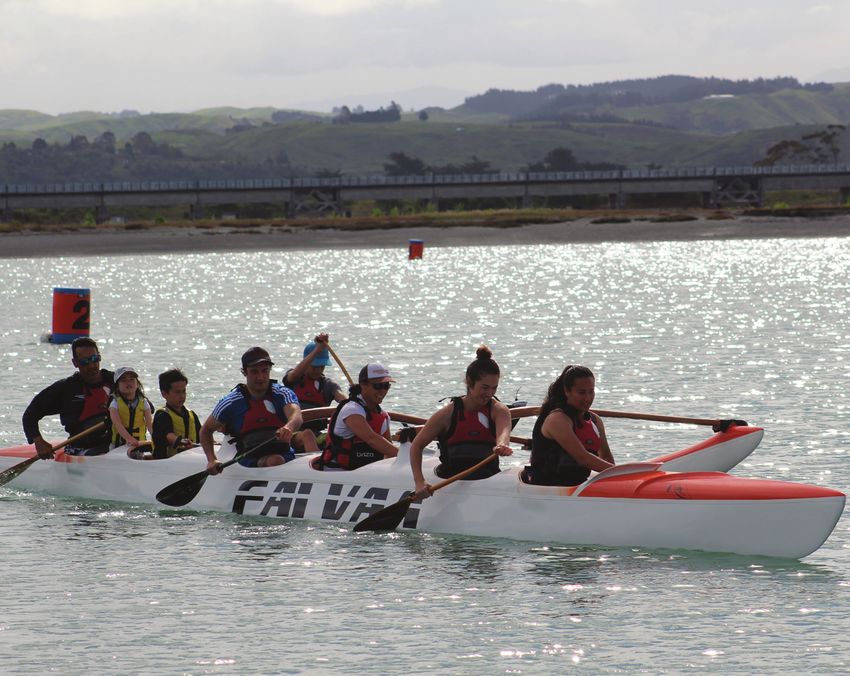
01

MARAEFIT                                            MaraeFit is a marae-centric initiative that provides opportunities for

“
                                                    sport and recreation organisations, whānau, hapū and marae to
                                                    increase their physical activities and capability in an ‘as Māori’ context.
                                                    Now in its fourth year, the project was created by Sport Hawke’s Bay He Oranga Poutama
First and foremost, MaraeFit is about               Kaiwhakahaere based on the Sport New Zealand kaupapa Māori sport and recreation
the people and for the people.”                     framework, “Te Whetū Rēhua”. This framework is the foundation of Sport New Zealand’s
– ARAMA WARE, MĀORI SPORTS EDUCATOR, HAWKE’S BAY.   He Oranga Poutama kaupapa.
                                                    The MaraeFit initiative has a strong focus on working alongside marae to build their
                                                    capability in delivering quality active recreation and sporting activities for whānau. It also
                                                    supports non-Māori organisations in increasing their cultural capability to provide events,
                                                    workshops or activities that value cultural connections.
                                                    MaraeFit uses an age-determined points system to incentivise engagement of the whole
                                                    whānau. Everyone who participates in the activity is able to koha their points to a chosen
                                                    Ngāti Kahungunu marae. The marae with the most points at the end of the annual series
                                                    is recognised and acknowledged at the Hawke’s Bay Sports Awards as ‘The Most Active
                                                    Marae in Kahungunu’.
                                                    Key success factors for the programme have been:
                                                    ŝŝ   Giving effect to Treaty Principles – Partnership, Protection and Participation
                                                    ŝŝ   Supporting and empowering marae
                                                    ŝŝ   Inter-generational activities that engage the entire whānau
                                                    ŝŝ   Aroha mai, aroha atu – generosity received, generosity returned.

     MARAEFIT
     CASE STUDY

                                                                                                                          SPORT NEW ZEALAND 2019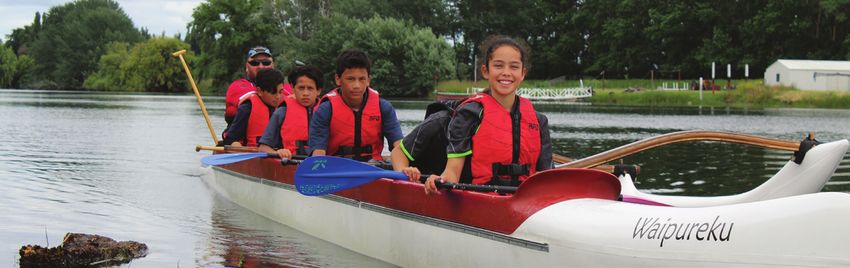
02

GETTING STARTED   Sport Hawke’s Bay wanted to strengthen its relationships with whānau,
                  hapū, iwi and Māori, as well as supporting marae initiatives that aimed
                  to increase physical activity for whānau.
                  Through demographics and other information sources, Sport Hawke’s Bay identified local
                  communities with low levels of participation in physical activity. The insights also highlighted
                  that whānau living in these communities enjoyed being active as a whānau and in
                  environments that supported them to participate as Māori.
                  Marae are pātaka (repositories) of whakapapa, waiata, tikanga and te reo, which is bought to
                  life by whānau, hapū, iwi. The hononga (connection) between whānau and marae is strong.
                  MaraeFit supports the hononga authentically and organically through the koha tikanga
                  (process), an unconditional way of giving with no expectations of receiving.
                  A 2013 study found that 84% of Māori lived in urban areas. While most reside in metropolitan
                  centres, many continue to associate with their iwi, tribes ‘back home’. However, one in six
                  Māori did not know their tribal affiliation, which leads to the assumption that they are also
                  unaware of their marae affiliation.
                  Taking these factors into account Sport Hawke’s Bay created the MaraeFit kaupapa where,
                  through active recreation and sport, whānau and marae are enabled to organically re-connect.

  MARAEFIT
  CASE STUDY

                                                                                        SPORT NEW ZEALAND 2019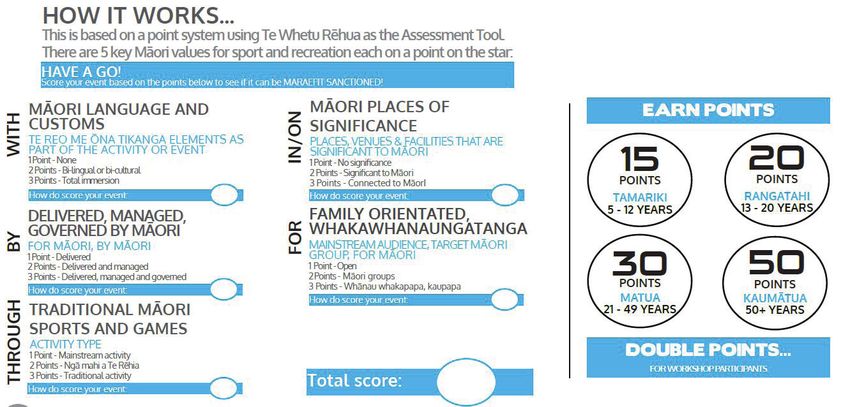
03

THE INITIATIVE   Programme development
                 Sport New Zealand’s Te Whetū Rēhua is the kaupapa Māori framework that is active
                 recreation and sport specific. Based on five key tangible wellbeing dimensions that are
                 important to Māori, it demonstrates ways to increase and respect cultural value in your
                 activity. You can learn more about Te Whetū Rēhua here: https://sportnz.org.nz/
                 managing-sport/search-for-a-resource/guides/te-whetu-rehua-the-guiding-star
                 Sport Hawke’s Bay based the MaraeFit kaupapa upon this framework with a view to:
                 ŝŝ increase organisation cultural awareness
                 ŝŝ increase whānau and hapū participation in a more meaningful way

                 ŝŝ connect whānau with marae

                 ŝŝ support whānau and hapū to participate as Māori, contributing

                    to healthier lifestyles.
                 Once the concept was developed, Sport Hawke’s Bay Kaiwhakahaere presented the kaupapa
                 to Ngāti Kahungunu Iwi Incorporated Board (membership representatives from the six
                 Taiwhenua in the Ngāti Kahungunu region) and Taura Here (urban-living but affiliated to
                 Ngāti Kahungunu). The Board approved and sanctioned the programme and MaraeFit was
                 launched on Waitangi Day, 2014.

   MARAEFIT
   CASE STUDY

                                                                                   SPORT NEW ZEALAND 2019
04

THE INITIATIVE                                   Something for everyone

“
                                                 MaraeFit is inclusive, aiming to meet the needs of all whānau, Māori and non-Māori to
                                                 maximise engagement and increase whanaungatanga (sense of connection).
                                                 To have an activity MaraeFit sanctioned, it must meet MaraeFit criteria that is guided by
My tamariki and I were a bit nervous, but as     Te Whētu Rēhua. Sport Hawke’s Bay Kaiwhakahaere work with Marae and other organisations
soon as we got to Pandora and saw other          to support this process.
tamariki and their whānau participating, it      A variety of sanctioned activities are offered each year, ranging from inter-marae sports
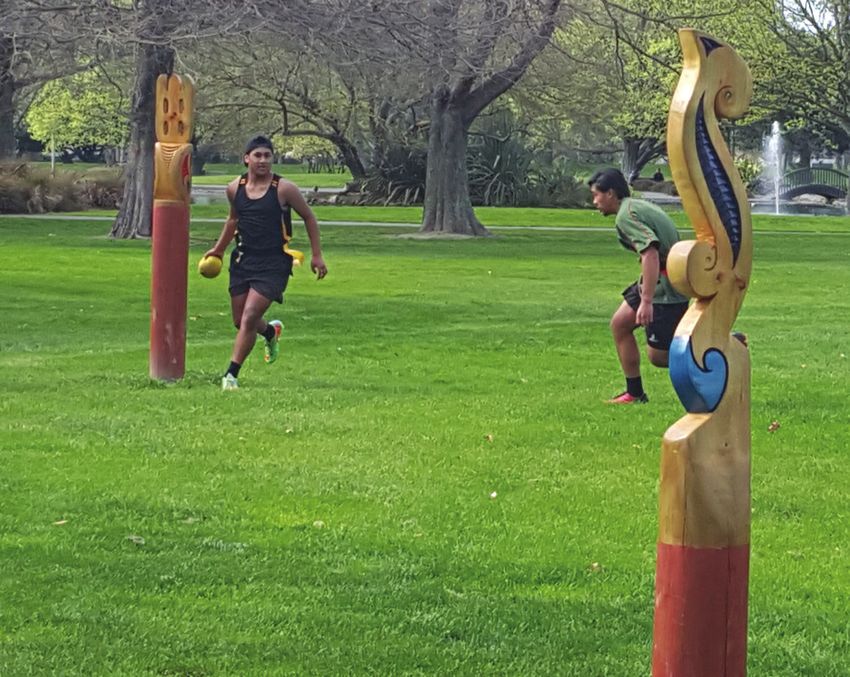
got them jumping in line and in a hurry to row   tournaments to traditional games workshops. An example of a MaraeFit activity is the Hikoi
that waka. The more Waka Ama gatherings          Series which included whānau walking up ancestral maunga (hills/mountains). To be
we went to, the more our confidence built        respectful and give an authentic experience, Sport Hawke’s Bay collaborated with the
up... That was us. We were committed!”           Department of Conservation (DOC) and Mana Whenua (local iwi). DOC’s contribution was to
– WAKA AMA PARTICIPANT
                                                 educate whānau about the importance of and plans for conservation, while Mana Whenua
                                                 was to pass on knowledge about the cultural significance of the whenua and maunga, and
                                                 Sport Hawke’s Bay facilitated the Hīkoi.
                                                 The programme’s participation incentive sees everyone taking part in a sanctioned activity
                                                 gaining points. The inter-generational points system is structured so that pakeke and
                                                 kaumātua (older adults) earn more points than tamariki and rangatahi (children and young
                                                 people) e.g. 12-19 years = 25pts, 50+ = 50pts. Some activities also require teams to
                                                 represent all age groups.
                                                 MaraeFit’s koha system allows participants to gift points to any marae within Ngāti
                                                 Kahungunu rohe by identifying their chosen marae on the registration form. Results are
                                                 posted on a leader board on the MaraeFit Facebook page.

                                                 Collaboration and capability
                                                 A strong focus for MaraeFit is to walk alongside marae and other organisations to
                                                 support them in developing their capability to deliver activities, and in some cases,
                                                 cultural understanding.
                                                 To achieve this, Sport Hawke’s Bay staff support marae and organisations at their events
                                                 and activities. Additionally, a range of sanctioned workshops, such as how to play Māori
                                                 games and Waka Ama coaching, are offered to help empower marae and offer further
                                                 connections with local communities. As a bonus incentive to increase capability,
                                                 participants double their koha points by attending sanctioned workshops, further
                                                 demonstrating Sport Hawke’s Bay commitment to sustainability.
                                                 Additionally, through MaraeFit, Sport Hawke’s Bay also saw opportunities to increase
                                                 mainstream active recreation and sporting organisations’ cultural capability to support
                                                 genuine engagement with Māori.
                                                 To have their activity MaraeFit sanctioned, organisations must meet MaraeFit’s criteria
                                                 based around Te Whetū Rēhua. This isn’t a one size fits all approach, each activity has
                                                 varying levels of support that the Sport Hawke’s Bay Kaiwhakahaere navigate on a case
                                                 by case basis.
                                                 An example is a mainstream recreational organisation came to Sport Hawke’s Bay wanting
                                                 MaraeFit to sanction their annual event. One of the tracks being used was Ngāti
                                                 Kahungunu’s ancestral maunga (mountain), Kahurānaki. The organisers did not realise the
                                                 sacredness and depth of connection that local iwi have with the maunga and the importance
                                                 of tikanga when accessing it. Sport Hawke’s Bay Whānau Active Team connected the
                                                 organisation with Ngāti Kahungunu Iwi who provided cultural guidance, appropriate
                                                 karakia, tikanga, with an intention to educate participants of the cultural significance of the
                                                 maunga to Iwi and how to value this connection.
                                                 Other sanctioned activities have included Sport Hawke’s Bay Kaiwhakahaere supporting
                                                 event management of the Ngāti Kahungunu Secondary School Waka Ama Champs, to
                                                 teaching Eastern Institute of Technology students how to play Kī o Rahi with a view to hold
                                                 an inter-faculty competition.

     MARAEFIT
     CASE STUDY

                                                                                                                     SPORT NEW ZEALAND 2019
05
IMPORTANT Giving effect to Treaty of Waitangi principles
SUCCESS FACTORS Sport Hawke’s Bay Māori Strategy is founded on the Treaty of Waitangi principles of
Partnership, Participation and Protection.
Through Te Whetū Rēhua, MaraeFit gives effect to these by:
ŝŝ connecting people and recreational and sporting organisations with Māori that
lead to positive, enduring partnerships
ŝŝ supporting participation “as Māori”, which allows all to participate
ŝŝ creating an awareness of shared responsibility to protect and thereby valuing
Māori taonga, such as sacred mountains, rivers and marae, and the importance
of te reo me ōnā tikanga.
To maintain the integrity of the initiative, it consistently applies the foundation framework
of Sport New Zealand Te Whetū Rēhua.
Offering activities in a way that enables participation “as Māori” is vital to maintain the
mana of the MaraeFit kaupapa and relationships with whānau, hapū, iwi and marae, as well
as give culturally-sound advice to mainstream organisations in how to genuinely engage
with Māori.
Supporting and empowering marae
MaraeFit empowers whānau, hapū, marae, iwi to manage, lead and govern active
recreation and sporting activities an important wellbeing dimension of mana motuhake
(being responsible for their own destiny) and sustainability. As such an important aspect
of the MaraeFit kaupapa has been supporting Marae and participants to grow their skills
in facilitating physical activity programmes through working alongside them in a
mentor capacity.
MaraeFit is the catalyst to incorporate physical activities into current marae kaupapa and/
or increase physical activity on the marae. As a result, each year, more marae are offering
and delivering their own activities and tournaments for their whānau.
MARAEFIT
CASE STUDY
SPORT NEW ZEALAND 201906
IMPORTANT Intergenerational activities to engage the entire whānau
SUCCESS FACTORS MaraeFit encourages and supports the notion of more Māori, more active, more often.
“
However, initially it was found that many of the whānau engaging in the programme were
also those who were already active. One of the challenges for MaraeFit was motivating
new participants to take part.
For us, it’s about getting the whole whānau The Sport Hawke’s Bay Whānau Active Team received feedback that whānau wanted
involved. Many of our whānau get togethers to participate in different ways to those that were already being offered. Creativity,
were traditionally centred around food. We adaptability and flexibility in terms of approach and activities was necessary to attract,
wanted to change that and now we spend engage and sustain participation. This included offering opportunities to engage both as a
time with whānau while participating in group and as individuals, and varying levels of activities from Q-Quest Hīkoi and Super 10s
physical activities. MaraeFit has given us Kapa Haka to Fast 5 netball and Inter-Marae Waka Ama races.
the opportunity to be active together.”
– JULIANA BENNETT, KOHUPĀTIKI MARAE. Kaumātua (elders) are very precious and are held in high esteem because of their mana and
wisdom and experiences. MaraeFit’s points system is structured in a way to incentivise
participation at all ages thereby encouraging Kāumatua (elders) along with their wider
A koha is a gift that is given unconditionally; whānau to take part.
it is given with aroha (respect and love).
With this concept in mind, whānau are able
Aroha mai, aroha atu – generosity received generosity returned
to koha their points regardless of their
connection to the chosen marae – therefore The koha points system used acts as a way to build and strengthen connections between
in this context, sport and recreation is a individuals, whānau, hapū and their marae.
vehicle to connect whānau with their marae Throughout the annual period, Sport Hawke’s Bay receives copies of registrations. Whānau
and help build a sense of community for sign a waiver giving Sport Hawke’s Bay permission to release their details to their chosen
whānau that do not affiliate to the local marae. At the end of the series a copy of the database is handed to each marae enabling
marae in their area.” them to see where whānau are living, update their records and see who gifted points. This
– MOANA-LEE RAIHANIA, SPORT NZ TOIHAUTU-
-
PRINCIPAL ADVISOR M AORI
process is treated in the same way as Māori would treat the handing over of whakapapa
or genealogy, with great respect.
OUTCOMES The Te Whetū Rēhua framework upholds the integrity of MaraeFit
and maintains the focus on marae in a way that is inclusive and
builds whanaungatanga (connections) within a whānau, hapū,
marae and community.
By using the framework from Te Whetū Rēhua, MaraeFit has supported an increase in
culturally relevant sport and active recreation opportunities available to individuals and
whānau within the Hawke’s Bay region. MaraeFit engaged with more than 1500 people
aged between three years to 60-plus years old – a reflection of the strong whānau focus
of the initiative.
The MaraeFit kaupapa has also established a greater sense of community and connections
between individuals, whānau and their marae. In 2017, participants identified with 40 of the
57 marae in the Hawke’s Bay region (Central Hawke’s Bay, Napier, Hastings and Wairoa),
with the winning marae accumulating 15,000 points.
MARAEFIT
CASE STUDY
SPORT NEW ZEALAND 201907
ACKNOWLEDGEMENTS Sport NZ would like to express special thanks to the organisations that developed these
initiatives, for their willingness to share their stories, and for supporting more communities to
benefit from sport and active recreation in Aotearoa.
SPORT NEW ZEALAND 2019You can also read


