Master Gardener Update - January 2021 - Janesville Urban Forest Alliance
←
→
Page content transcription
If your browser does not render page correctly, please read the page content below
Master Gardener Update
                                                                                                                                      January 2021
In this Issue               Virtual Visit
Chicago Botanic Garden 2    Chicago Botanic Garden, Part 2
MGV Notes & Invites         Last month we mentioned that trying to do justice to a 385 acre garden was not possible in a single visit. So our virtual visit
                            continues.
Rotary Gardens
Extra Volunteer Benefits    December’s newsletter introduced
                            you to several of the many gardens
Volunteer                   and natural areas that are part of
Opportunity/Ideas Wanted    the Chicago Botanic Garden. This
                            month, we’ll give you a glimpse of
Online Training Coming Up
                            more gardens, many as you might
in January and Beyond
                            see them at this time of year.

                            Kleinman Family Cove

                            Skimming 1.25 miles of shoreline,
                            the Kleinman Family Cove is an
                            optimal place to study aquatic
                            plants and animals. Located on the
                            Garden's North Lake, it features a

1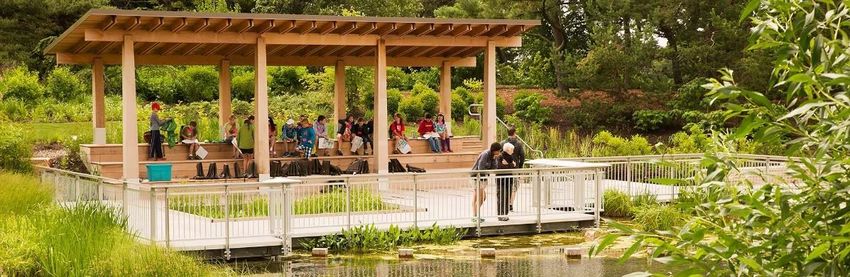
Websites
                            boardwalk, amphitheater, protected wading area,
For Rock County             and native plants.
MGV info:                                                                                       CBG’s Mission
rock.extension.wisc.edu/    At the Kleinman Family Cove, students analyze
upcoming-events-and-                                                                     We cultivate the power of plants to
                            aquatic animal life, assess water quality, and
volunteer-opportunities/    discover why water is important to human health.                    sustain and enrich life
OR                          Others explore the importance of shoreline
fyi.extension.wisc.edu/                                                           The Chicago Botanic Garden opened more than 45
                            management in the demonstration garden.               years ago as a beautiful place to visit, and it has
mgvrockco/                  Interpretive signage guides visitors to observe and   matured into one of the world's great living muse-
                            understand aquatic wildlife and habitat.              ums and conservation science centers. Every year,
MGV Hours Reporting:
wimastergardener.org/                                                             more than one million people visit the Garden's 27
                            With the nation's largest collection of aquatic       gardens and four natural areas, uniquely situated
report-your-hours/          plants—120,000 were planted in 2012 along the         on 385 acres on and around nine islands, with six
                            restored shoreline—and 81 acres of lakes and          miles of lake shoreline. The Garden also has a re-
RPMGA Blog:                 waterways, the Chicago Botanic Garden is uniquely
rpmga.blogspot.com                                                                nowned Bonsai Collection.
                            positioned to teach about the importance of
                            freshwater systems.                                   The Chicago Botanic Garden has more than 50,000
RPMGA on Facebook:                                                                members—one of the largest memberships of any
Hit control/click on this                                                         U.S. botanic garden. People of all ages, interests,
                            The Cove serves family members who take part in
link:                                                                             and abilities participate in programs, take classes,
                            on-site programs, students on field trips, Camp CBG
RPMGA on Facebook                                                                 and stroll the grounds year-round. Within the nine
                            groups, scouts, and participants in the Garden's
                            Science Career Continuum programs. More than          laboratories of the Garden's Daniel F. and Ada L.
Rotary Gardens:                                                                   Rice Plant Conservation Science Center, scientists
                            1,000 teachers bring groups from early childhood
rotarybotanicalgardens.                                                           and graduate students conduct a wide array of
                            through high school to visit the Cove annually
org                                                                               plant research. The Garden is one of only 17 public
                            through teacher development programs aimed at
Wisconsin Master            improving environmental education.                    gardens accredited by the American Association of
Gardener Program:                                                                 Museums. Its Lenhardt Library contains 150,000
wimastergardener.org        Visitors are welcome during Garden hours.             volumes - including one of the nation's best collec-
                                                                                  tions of rare botanical books.
Wisconsin Master
Gardener Association        Map of CBG on page 8, text continues on page 9.
(WIMGA): wimga.org

2
Master Gardener Volunteer Notes:
One Last Requirement to Recertify for 2021

By now, you should have all your 2020 hours entered in the Online Reporting System at
wimastergardener.org/report-your-hours/. You have one more thing to do before
you’re officially part of the MGV program for the coming year. Log back into the Online
Reporting System and complete the required annual paperwork: Review your contact
information, see if your background check and mandatory reporter training are cur-
rent, review and agree to the Volunteer Expectations and Conditions of Service, agree
(or not) to the photo release. The ORS should prompt you to do all this the first time
you log in during 2021. You won’t be able to enter any 2021 hours until you have fin-
ished these preliminaries. You aren’t officially recertified until this is done.
Please complete the Annual Enrollment process as soon as you can.

(Note: if you did not get all your hours for 2020 entered by noon on December 31, contact Horticulture Outreach Specialist, Julie Hill,
 julie.hill@wisc.edu.)

                                                 You’re Invited!

                                                 Trivia Night, online, Tuesday, January 19 at 6:00 p.m. How much do you know about gar-
                                                 dening and the master gardener program? Here’s a chance to test and hone your
                                                 knowledge! The Walworth County MGV Association is hosting and providing some prizes,
                                                 and both Rock and Walworth County MGVs are welcome. A Zoom link will be sent out a
                                                 week or so before the meeting.

Companion Planting Program, via Zoom, Thursday, February 18 at 6:00 p.m. Julie Hill has pulled together some university-based articles
for us on plant interactions and whether they really are effective at improving how our gardens grow. She will lead a discussion on compan-
ion planting myths, facts and what it all means for us as we educate others in our role as MGVs. Watch your in-box later this month for an
email in which Julie shares those articles so you can read them ahead of time. This program and readings will count for education hours.

3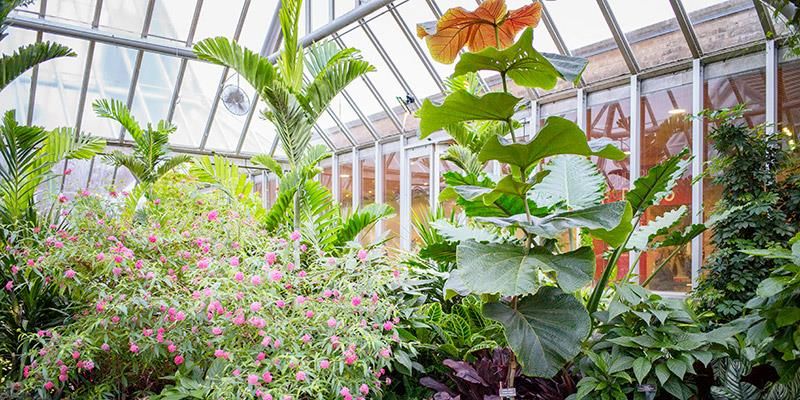
MGV Virtual Coffee/Tea Chats resume January 12, at 9 a.m. (second Tuesday of the month). We will resume these casual
                   virtual meetings as a way to connect with each other, socialize and share. Julie will send out the Zoom link when it gets
                   closer.

Rotary Gardens: Extra Volunteer Benefits

To thank the folks who’ve continued to support Rotary Gardens
through the craziness of 2020, the gardens are offering two special
volunteer benefits:

1. Free membership: Anyone who volunteered 20 hours or more
during 2020 (instead of the usual 36 hours) gets a free garden mem-
bership.

2. Holiday Light Show Special Event: All active garden volunteers have been invited to come and bring a “plus one” to a special viewing of
the Holiday Light Show on Thursday, January 7, from 4:30 to 7:00. The show isn’t open to the public that night--only volunteers are invited--
and admission is free. RBG’s volunteer coordinator, Carla Edgar, emailed the invitations on December 14, 2020. If you wish to attend,
please RSVP to Carla (volunteer@rotarygardens.org) to let her know you’re coming.

Volunteer Opportunity/Ideas Wanted
Our partner, Hedberg Public Library in Janesville, asked if we could do some type of winter programming that would involve take-home kits
that participants could pick up at the library and then they would tune into a virtual program for the instructions/presentation. This is a
great opportunity, and we could do it with other libraries as well. If you have an idea for a topic that fits this format, or if you’re interested
in helping put together something like this, please contact Julie Hill (julie.hill@wisc.edu). Take home kits could be some sort of seed
starting, mini greenhouse...or whatever your idea may be!

4
Online Training Coming Up in January and Beyond

Online Gardening Events, Marathon County, Beginning January 4

Janell Wehr, Horticulture Educator Extension Marathon County (Wausau area), is doing a series of five different gardening webinars via
Zoom during January. The talks are free, but you do need to register. Days and times vary. The first program covers starting seeds indoors.
The next four talks focus on vegetable gardens: site considerations, cultivar selection, garden mapping and crop rotation. Link to more info
and signups through the calendar at wimastergardener.org. Northcentral Technical College, also in Marathon County is offering a mini-
conference online, Garden Visions 2021, on Saturday, January 30, from 8:30 to noon. Cost for this event: $5. The topics are Transitional
Seasonal Containers with Mark Dwyer, Urban Trees with Brianna Fink and Basics of Garden Design with Janell Wehr. Register for Garden
Visions 2021 at https://www.ntc.edu/calendar/2021/01/30/garden-visions-2021-virtual-event

Happy Houseplants, Aram Public Library (Delavan), Jan. 5

In this program, local master gardeners will cover the basics of what it
takes to keep your houseplants smiling--which will make you happy
too! A 45 minute presentation plus time for your questions. Pre-
registration is required, so go to the following website for more info
and to register: https://www.aramlibrary.org/tuesday-january-5th-
6pm/ Invite your friends and share the link!

Houseplants, Colorado State University Extension, any
time

Here’s a more detailed study of houseplants. Topics include the his-
tory and benefits of houseplants, ideal conditions for successfully
growing plants indoors (light, temperature, humidity, water and ferti-
lizer), common houseplants overview and indoor pests and diseases. This course is applicable to all locations and is not state specific. Reg-
istration opens January 1. The format is self-directed; you can come and go as needed and have access for a full year from the time you
register. Takes about 3 hours to complete. Fee: $60. Register at https://www.online.colos-
tate.edu/courses/AGBB/AGBB2015.dot?Term=Spring%202021

5
Green Thumb Gardening Classes, Dane County UW Extension

                          Horticulture Educator Lisa Johnson and other experts from the Dane County UW Extension are offering a new set
                          of Green Thumb Gardening Classes, starting in January (January topics below). Each 2-hour session takes place
                          online on a Monday evening from 6 to 8 p.m. The fee is $12/session or $70 to register for all of them. The link to
                          the sign-up page on Eventbrite is https://2021greenthumbgardeningwinter.eventbrite.com/.
                          January 11: Vegetable Garden Planning and Techniques
                          January 25: Seed Starting
                          February 1: Vegetable Diseases

Healthful Gardening Series with Melinda Myers

Melinda Myers started out as a horticulture educator here in southeast Wisconsin, and has gone
on to become an author and media expert on gardening. There’s no charge for any of the sessions
in this series, but registration is required. Webinars take place Wednesday evenings from 6:30-
7:30 p.m. January’s topics are blow. For details or to register, go to
www.melindamyers.com/about-melinda/upcoming-appearances
Jan. 13, 2021 Improve Your Indoor Environment with Houseplants
Jan. 20, 2021 Grow Flavorful and Nutritional Herbs Indoors
Jan. 27, 2021 Low Maintenance Houseplants for Low Light Situations

Fruits on Fridays Webinar Series, University of IL Extension, Starting January 15

Each 1-hour webinar in this series takes place Friday at noon. Fee: $5/session. Topics: Jan. 15: Apples and Pears. Jan. 22: Stone Fruits
(Cherries, Peaches, etc.). Jan. 29: Grapes. Get info and register at https://web.extension.illinois.edu/registration/?RegistrationID=22910

2021 New Garden Trends, Olbrich Botanical Garden, via Zoom, Thursday, January 21, 1:00-2:15 p.m.

Be the first to know about the newest predicted trends for 2021 including gardening techniques and color palettes to add into next year’s
garden designs. Gain insight on the latest and greatest to keep your garden on trend! Fee: $15 or $12 for Olbrich members. Register by
January 11 at https://olbrich.doubleknot.com/event/2021-new-garden-trends-zoom-class/2763136.

6
Bombus Among Us – Bumblebee Basics, Thursday, January 28, 7:00-8:30 p.m.

                         Presented by Olbrich Botanical Garden via Zoom as part of the lecture series, A Gardener’s Call. Bumble bees
                         (Bombus) are by far our most charismatic and recognizable native bees. Award winning author of “Bees”, Heather
                         Holm, will illustrate the bumble bee life cycle through the growing season. Join us to learn about common Mid-
                         western and eastern bumble bee species, their habitats, the impact climate change has on populations, and the
                         importance of selecting the right native plants to meet the nutritional needs of the queens, workers, and males. 60
                         minute presentation on Zoom with 30 minute Q&A. Fee: $15 or $12 for Olbrich members. To register, go to
                         https://olbrich.doubleknot.com/event/discounted-virtual-lecture-series/2765463.

Pruning Workshop from Univ. of IL Extension Offered Again January 20 or 26

Described in last month’s newsletter, or ask Mary Kay Thompson (mastergardenermary@gmail.com) for a review. More info at https://ex-
tension.illinois.edu/events/2021-01-26-intro-fruit-tree-pruning-old-and-neglected-just-planted-fruit-trees

Workshops with Mark Dwyer

This winter, the UW-Whitewater will again be hosting some online workshops featuring Mark Dwyer. Classes will use the Webex platform,
which is free to download and use. February topics will be Elements of Beautiful and Functional Landscape Design (2/13/21, 9-10:30 a.m.)
and Sensational Shrubberies and Small Trees (2/27/21, 9-10:30 a.m.). A third workshop, Container Gardening Basics and Beyond takes
place March 20, 2021, also from 9-10:30 a.m. Fees are $25/workshop or $60 for all three. Sign up at
www.uww.edu/ce/personal-enrichment/gardenlandscape/gardeningworkshops

New Format for Racine/Kenosha County Spring Into Gardening Seminar
Registration Opens Jan. 4 for March Event

Instead of a one-day conference, this annual Spring event has been moved to Zoom and will include two
morning sessions on each of the four Saturdays in March. You can register starting January 4, and if you sign
up by the end of January, the fee for all four dates (8 topics) is only $20. After January 31, the fee increases—
but it’s still only $25! To see the topics and the excellent line-up of speakers, go to
https://kenosha.extension.wisc.edu/horticulture/spring-into-gardening/.

7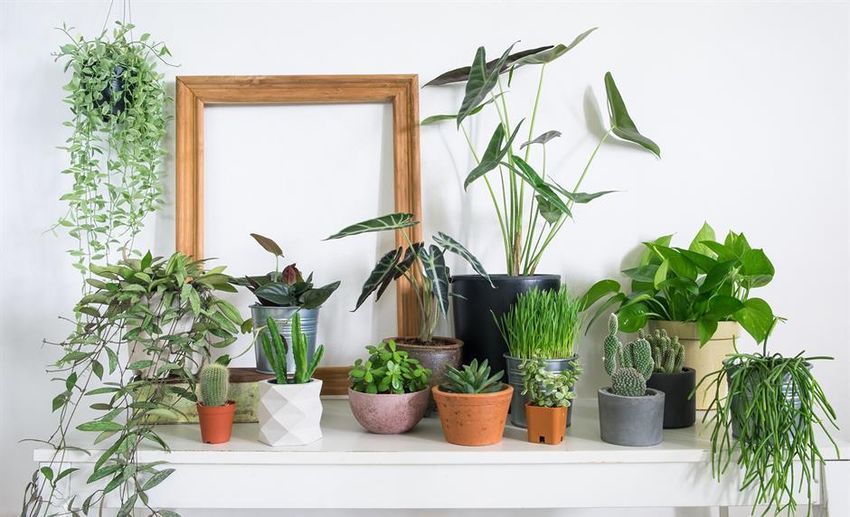
Chicago Botanic Garden, continued

For a larger version of the map to the right, go to
www.chicagobotanic.org/visit/map.

If You Go…

Chicago Botanical Garden is 385 acres of landscaped
gardens displaying millions of plants and flowers in a
variety of settings. The garden is located at 1000 Lake
Cook Road in Glencoe, Illinois, 60022.

Due to the COVID-19 pandemic the gardens have
modified their hours. To determine hours visit the
garden’s website at:
https://www.chicagobotanic.org/visit/hours

To speak to a representative of the gardens contact them
by phone at one of the numbers below.
Customer Service: (847) 835-6801
Main: (847) 835-5440
Member: (847) 835-8215

Entry to the garden is free, but parking is $25 unless
you’re a member.

“National” Membership

If you’re tempted to become a member of CBG, consider
the “national” category. It’s for people who live more
than 75 miles from the garden, and includes full benefits
at a reduced price.

8
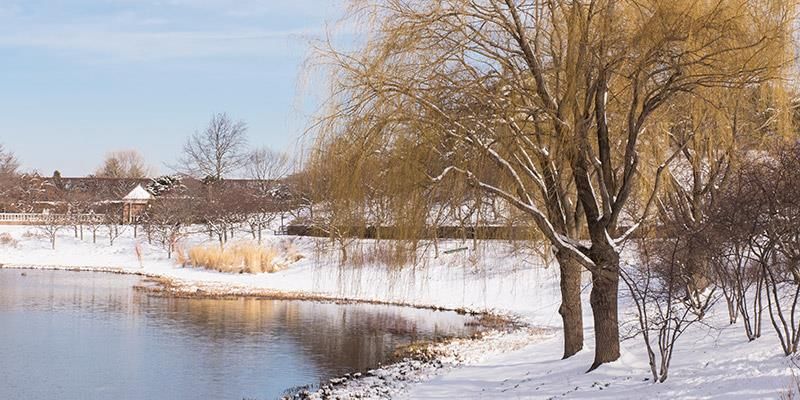
The Kleinman Family Cove was made possible by
                                                                                           the generous support of the Kleinman Family.

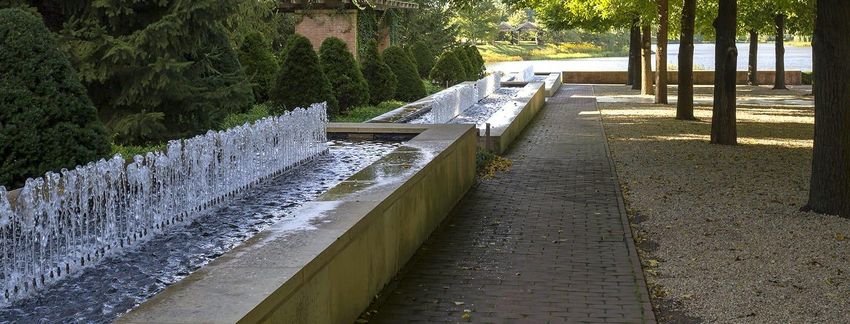
The Esplanade

The Esplanade showcases dramatic elm allées, a pavilion lined with sheared cone topiaries, and a row of waterspouts emerging from pools
of water.

Conceived by one of the greatest landscape architects of the twentieth century, Dan Kiley (1912-2004), and designed by colleague Peter
Morrow Meyer, the Esplanade is one of the Chicago Botanic Garden's most public spaces, bringing visitors down to the water in a most
inviting way. Kiley saw the Esplanade as an opportunity to create a great sense of place and arrival, offering visitors glimpses of vivid
sweeps of color against the water and sky as they pass over the bridge outside the Visitor Center.

It is the "front door" to the Joseph
Regenstein, Jr. School of the Garden,
originally designed by renowned
architect Edward Larabee Barnes in
1975.

Visitors stroll past the lovely
Crescent, brilliant with colorful
annuals sloping down to the water,
offering a beautiful view.

9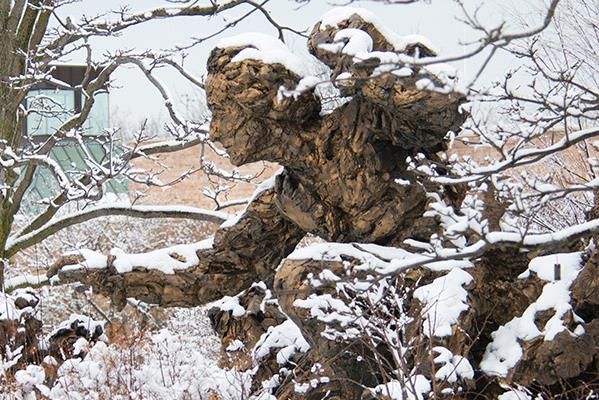
Evening Island

Evening Island, five acres of hillside, woodland, and meadow gardens,
surrounded by lakes, reflect ever-changing highlights throughout the year. The
garden is accessible by two bridges, the Arch or the Serpentine, which provide
two entirely different approaches.

From the stone pathways and terraces of this garden, visitors can enjoy
sweeping vistas, as well as views of the most spectacular summer sunsets. Each
season is celebrated with a unique combination of horticultural treasures that
peak at designated times.

Evening Island is an example of the New American Garden style of landscape
design, which features vast naturalistic sweeps of low-maintenance grasses, perennials, and roses to create a living tapestry. The garden is
sited, appropriately, between the formality of the English Walled Garden and the wildness of the native Prairie.

                                                                                                         Special features of this garden are
                                                                                                         the Nautilus terrace, a Jens Jensen-
                                                                                                         inspired council ring, and
                                                                                                         the Theodore C. Butz Memorial
                                                                                                         Carillon.

                                                                                                         Evening Island (left) and the Butz
                                                                                                         Memorial Carillon (above)

10
Regenstein Fruit & Vegetable
Garden
The Regenstein Fruit & Vegetable
Garden demonstrates the best ways to
grow the most ornamental and
delicious plants for our area.
Aromatic herbs, shiny peppers, juicy
grapes, and crisp apples are just a few
of the 400 different edible plants grown
here, in beautifully landscaped beds.
Not only does this garden tempt your
appetite, but your green thumb as well.
Here you will learn the best berries,
large fruits, vegetables, and herbs for
Chicago gardens, and also the most
effective gardening methods to grow
them to perfection. Year-round
programs, festivals, demonstrations,
exhibits, and tastings in the garden
provide visitors with ongoing learning
experiences. Don't miss the family
drop-in activities, featured during summer weekends.
Through the Garden's Windy City Youth Farm Program,
seasonal produce from the Regenstein Fruit & Vegetable
Garden is used in the food in the Garden View Café. (More
on this youth program in next month’s newsletter.)
(Left) A winter view of the buildings in the Regenstein Fruit &
Vegetable Garden where MGVs answer questions and help
educate the public.
11The Greenhouses
The Greenhouses display beautiful and
fragrant flowering plants, rare plants,
edible plants, utilitarian plants, seasonal
plants, and houseplants from around the
world.
Wet tropical rain forests and hot desert
sands are two environments that have
produced some of the most unusual plants
on earth. Many can be viewed here, along
with our warm temperate collection, in
three greenhouse areas. (Note: The
Greenhouses are closed temporarily.)
The Heritage Garden
The Heritage Garden pays tribute to the botanic gardens of the
past and the manner in which they organized and displayed
plants. It’s dedicated to Carolus Linnaeus, the Swedish botanist
who established binomial nomenclature as the system of naming
plants we still use today (Latin names). Modeled after Europe's
first botanical garden in Padua, Italy, the Heritage Garden is a
circular space, divided into sections. A large statue of Linneaus
(left) presides over the garden.
Seven perimeter beds display plants according to their
geographic origin; 14 additional beds display the major plant
families grouped according to their scientific classification.
In the center is a signature water feature with cascading sheets
12of water and a classic physic garden, which is planted with medicinal plants from around the world. In the summer, three aquatic pools contain waterlilies, lotus, and other tropical water plants. Elizabeth Hubert Malott Japanese Garden At times—when the gold ginkgo trees glow in the autumn light, for instance—it’s easy to overlook the ways in which the Japanese respect for nature and age are revealed in the Elizabeth Hubert Malott Japanese Garden. If you look closely, though, the effect is evocative, as seamless as a traditional haiku. Larger rocks throughout the garden are partially buried, as if they have been in place forever. (Rocks are believed to be the bones of the earth, an essential part of a Japanese garden). Flowering plants—such as iris, rhododendron, and plum—have a short bloom time, reflecting the yin-yang balance between the ephemeral existence of human life and the timelessness of nature. Many of the pine trees (which represent longevity in Japanese culture) are pruned and trained to give the illusion of age. This 17-acre lakeside garden includes three islands. Only two—Seifuto (Island of Clear, Pure Breezes) and Keiunto (Island of the Auspicious Cloud)—are open to the public. Across the lake, the inaccessible island Horaijima (Island of Everlasting Happiness) is symbolic of paradise—in sight yet elusive. 13
Lakeside Gardens

                                                                               Curving along the Great Basin, the Lakeside Gardens form a
                                                                               changing tapestry of color, texture, and movement with
                                                                               serpentine curves, seasonal highlights, and a juxtaposition
                                                                               of sun and shade plantings.

                                                                               Naturalistic in style, the Lakeside Gardens include creative
                                                                               combinations of perennials, aquatic plants, ground covers,
                                                                               grasses, trees, and shrubs. A much-anticipated moment in
                                                                               late April to early May is the blooming of the 300 crabapple
                                                                               trees encircling the Great Basin and reflected in its waters.

Mass succession plantings of aquatic and semiaquatic native plants, perennials, ornamental grasses, irises, and roses guarantee a color
show throughout all seasons. These plants were chosen for their ease of management and their adaptability to shoreline challenges and
water fluctuations.

Farwell Landscape Garden

The Farwell Landscape Garden displays a cross
section of different kinds of gardens suitable for
residential settings, and the plants appropriate to
these designs.

Specialized garden displays include formal and
informal herb gardens, a traditional perennial
border, a rock garden, streamside gardens, an easy-
to-grow mixed border, and other small-scale
landscaping ideas for Midwest gardens.

Tough, low-maintenance, but still quite showy
plants have been featured in the easy-to-grow area
to inspire hands-off gardeners.

14
A meandering path, with pools and streams, creates a pleasant stroll through diverse and beautiful settings. These garden tableaus offer home gardeners ideas for shade- and sun-loving plants. McDonald Wood Under a canopy of native oaks, eastern bluebirds nest in hollow trees and rare butterflies hover over patches of lake sedge— all hopeful signs in this fragile ecosystem, a treasured piece of a larger oak woodland that flourished in the Midwest over a century ago. In an ongoing effort to protect and restore the McDonald Woods, Chicago Botanic Garden ecologists and volunteers fight off invasive species such as buckthorn and garlic mustard. They also collect and scatter the seeds of native grasses, sedges, and wildflowers; the intent is to keep the 100-acre Woods as natural as possible, reminiscent of the days when early settlers described the land as a place of open oak groves with a carpet of grasses and wildflowers beneath spreading tree branches. The Woods is home to at least seven state-listed threatened or endangered plant species—northern cranesbill, forked aster, dwarf raspberry, bent-seeded hop sedge, brome hummock sedge, small sundrops, and dog violet—and is a site of critical scientific research on endangered species and habitat restoration. Look for our final installment on the Chicago Botanic Garden in next month’s newsletter! 15
An EEO/AA employer, University of Wisconsin-Extension provides equal opportunities in employment and programming,
                   including Title VI, Title IX, and the Americans with Disabilities Act (ADA) requirements.

                     Mailing Address: UW-Extension Rock County, 51 S. Main Street, Janesville, WI 53545
                          Physical Address: 3506 North Highway 51, Building A, Janesville, WI 53545
                                          Phone: 608-757-5066 Fax: 608-757-5055

16
You can also read


