MATERNAL IMMUNIZATION- TASK FORCE- AAFP
←
→
Page content transcription
If your browser does not render page correctly, please read the page content below

MATERNAL
IMMUNIZATION
  — TASK FORCE —

Immunization for Pregnant Women: A Call to Action
                                           from the
 American Academy of Family Physicians; American College of Nurse-Midwives; American
 College of Obstetricians and Gynecologists; and Association of Women’s Health, Obstetric
                                  and Neonatal Nurses

INTRODUCTION
Immunizations are an essential part of prenatal care, offering critical protection to women
and their fetuses against potentially deadly diseases. The Centers for Disease Control and
Prevention (CDC) Advisory Committee on Immunization Practices recommends that women
who are pregnant receive an inactivated influenza and a tetanus/diphtheria/acellular
pertussis (Tdap) vaccine in every pregnancy (1). The American Academy of Family
Physicians; American College of Nurse-Midwives; American College of Obstetricians and
Gynecologists; and Association of Women’s Health, Obstetric and Neonatal Nurses strongly
support this recommendation. As professional organizations whose members care for
pregnant women, we affirm the importance of recommending and advocating that
pregnant women receive all recommended vaccines at the appropriate time during each
pregnancy. The current increase in hesitancy about the safety and efficacy of vaccines has
created an environment that calls for our urgent commitment to discussing the evidence-
based benefits of vaccination with pregnant women.

INFLUENZA
During the 2018-19 season, an estimated 35.5 million people in the United States contracted
influenza, and 16.5 million visited health care practitioners for related care. In the same
season, more than 490,000 hospitalizations and 34,000 deaths were attributed to influenza
(2). Among women of reproductive age, pregnant women account for more than a quarter
of flu-associated hospitalizations each season (3). Influenza can be a devastating disease for
pregnant women because of the increased risk of fetal demise (4) and preterm labor and
preterm birth (5, 6). Influenza can also cause severe, life-threatening illness to pregnant
women (7, 8). Influenza vaccination plays an important role in protecting pregnant women
against such serious illness. Moreover, influenza vaccination during pregnancy also transfers
antibodies to the fetus, helping to protect babies against flu before their own eligibility for
the vaccination at 6 months (9).
In the United States, the influenza season typically lasts from October to May. The CDC
recommends that all women who are, will, or could be pregnant during influenza season
should receive an influenza vaccine during any trimester (1). The composition of the
influenza vaccine typically changes annually to accommodate the strain(s) of the virus that
are expected to be most prevalent that year, making it critical to receive an influenza
vaccine each year (10).

PERTUSSIS
Pertussis (whooping cough) can be a deadly infection for infants and children. Most cases
occur in infants less than two months old; babies in this age group account for 69% of
pertussis deaths and 262-743 pertussis-related hospitalizations each year (3). Yet, infants are
not eligible for the first pertussis containing vaccine until two months of age. As a result,
newborns are best protected if their mothers received a Tdap vaccine during pregnancy.
Pregnant women should receive the tetanus toxoid, reduced diphtheria toxoid, and
acellular pertussis (Tdap) vaccine during each pregnancy, between 27 weeks and 36 weeks
of gestation. When a pregnant woman receives a Tdap vaccine, maternal antibodies are
passed to the fetus, giving the infant a boost of protection at birth until they can receive
their first pertussis-containing vaccine. The Tdap vaccine should be administered as early as
possible in the 27-36-weeks-of-gestation window to maximize the maternal antibody
response and passive antibody transfer to the fetus (11-14). Pregnant women should be
counseled that, when given during the recommended time period, the Tdap vaccine is
extremely effective at preventing pertussis in infants less than 2 months of age (15). Partners,
family members, and infant caregivers should also receive the Tdap vaccine if they have not
previously been vaccinated (14).

SAFETY
No evidence currently demonstrates that vaccinating pregnant women with inactivated
virus, bacterial vaccines, or toxoids adversely affects the fetus. In fact, a growing body of
data demonstrates the safety of these vaccines in pregnancy (13, 16-18). Influenza
vaccination, for example, has been shown to reduce pregnant women’s risk for influenza-
associated hospitalizations by an average of 40%, thus demonstrating that pregnancy is in
fact safer because of prenatal vaccination (3). Health care practitioners should point
women to evidence-based resources and studies such as those referenced herein when
they express doubts or questions about the safety of vaccines during pregnancy.

YOUR ROLE AND RESPONSIBILITIES
Collectively, the American Academy of Family Physicians; American College of Nurse-
Midwives; American College of Obstetricians and Gynecologists; and Association of

MATERNAL IMMUNIZATION TASK FORCE                                                    JULY 2020 | 2
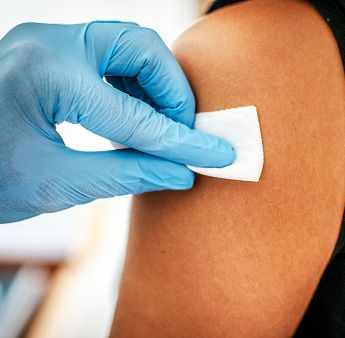
Women’s Health, Obstetric and Neonatal Nurses are deeply committed to improving
immunization rates in pregnant women and ask that our members commit to the following:
   1. For pregnant women, assess vaccine status and discuss which vaccines they should
      receive and when, ideally during the first prenatal visit.
   2. Strongly recommend that all pregnant women and anyone who resides in their
      households receive an influenza vaccine annually.
   3. Strongly recommend that all pregnant women receive a Tdap vaccine between 27
      weeks and 36 weeks of gestation in each pregnancy, preferably during the earlier part
      of this time period.
   4. If a pregnant woman declines vaccination, inquire about her reasons; reintroduce the
      discussion and offer the immunization at the next office visit.
   5. Become educated on the safety and efficacy of vaccines during pregnancy and be
      comfortable communicating this information thoroughly to patients.
Making a strong recommendation is crucial to vaccine uptake. Routinely reviewing a
woman’s antepartum record will reveal important gaps in immunization status and prompt
an open and fact-based dialogue. Addressing hesitancy about vaccines with firm data is
important. Messaging to the community should consistently emphasize that getting
vaccinated is the best step for preventing illness and that the inactivated (injectable)
influenza and Tdap vaccines are safe to receive during pregnancy (17-20).

John Cullen, MD, FAAFP                                                 Maureen G. Phipps, MD, MPH, FACOG
Board Chair                                                            Chief Executive Officer
American Academy of Family Physicians                                  American College of Obstetricians and
                                                                       Gynecologists

Susan Stone, DNSc, CNM, FAAN, FACNM                                    Rebecca Cypher, MSN, PNNP
President                                                              President
American College of Nurse-Midwives                                     Association of Women’s Health, Obstetric
                                                                       and Neonatal Nurses

 This publication was supported by the Centers for Disease Control and Prevention of the U.S. Department of Health and Human Services
   (HHS) as part of a financial assistance award totaling $500,000 with 100 percent funded by CDC/HHS. The contents are those of the
        author(s) and do not necessarily represent the official views of, nor an endorsement, by CDC/HHS, or the U.S. Government.

MATERNAL IMMUNIZATION TASK FORCE                                                                                     JULY 2020 | 3
REFERENCES
1. Centers for Disease Control and Prevention. 8. Jamieson DJ, Honein MA, Rasmussen SA, Williams
Guidelines for vaccinating pregnant women. JL, Swerdlow DL, Biggerstaff MS, et al. H1N1 2009
Atlanta, GA: CDC; 2016. Available influenza virus infection during pregnancy in the
at: https://www.cdc.gov/vaccines/pregnancy/h USA. Novel Influenza A (H1N1) Pregnancy
cp-toolkit/guidelines.html. Retrieved February 6, Working Group. Lancet 2009;374:451-8. Available
2020. at:
2. Centers for Disease Control and Prevention. https://www.sciencedirect.com/science/article/
Estimated influenza illnesses, medical visits, pii/S0140673609613040. Retrieved February 6,
hospitalizations, and deaths in the United States 2020.
— 2018–2019 influenza season. Atlanta, GA: CDC; 9. Nunes MC, Madhi SA. Prevention of influenza-
2020. Available related illness in young infants by maternal
at: https://www.cdc.gov/flu/about/burden/2018- vaccination during pregnancy. F1000Res
2019.html. Retrieved February 6, 2020. 2018;7:122. Available at:
3. Lindley MC, Kahn KE, Bardenheier BH, D'Angelo https://f1000research.com/articles/7-122/v1.
DV, Dawood FS, Fink RV, et al. Vital signs: burden Retrieved February 7, 2020.
and prevention of influenza and pertussis among 10. Centers for Disease Control and Prevention.
pregnant women and infants - United States. Selecting viruses for the seasonal influenza
MMWR Morb Mortal Wkly Rep 2019;68:885-92. vaccine. Atlanta, GA: CDC; 2018. Available
Available at: at: https://www.cdc.gov/flu/prevent/vaccine-
https://www.cdc.gov/mmwr/volumes/68/wr/mm selection.htm. Retrieved February 6, 2020.
6840e1.htm?s_cid=mm6840e1_w. Retrieved 11. Winter K, Nickell S, Powell M, Harriman K.
February 6, 2020. Effectiveness of prenatal versus postpartum
4. Haberg SE, Trogstad L, Gunnes N, Wilcox AJ, tetanus, diphtheria, and acellular pertussis
Gjessing HK, Samuelsen SO, et al. Risk of fetal vaccination in preventing infant pertussis. Clin
death after pandemic influenza virus infection or Infect Dis 2017;64:3-8. Available
vaccination. N Engl J Med 2013;368:333-40. at: https://academic.oup.com/cid/article/64/1/3
Available at: /2404576. Retrieved February 6, 2020.
https://www.nejm.org/doi/full/10.1056/NEJMoa12 12. Furuta M, Sin J, Ng ESW, Wang K. Efficacy and
07210. Retrieved February 6, 2020. safety of pertussis vaccination for pregnant
5. Richards JL, Hansen C, Bredfeldt C, Bednarczyk women - a systematic review of randomised
RA, Steinhoff MC, Adjaye-Gbewonyo D, et al. controlled trials and observational studies. BMC
Neonatal outcomes after antenatal influenza Pregnancy Childbirth 2017;17:390-2. Available at:
immunization during the 2009 H1N1 influenza https://bmcpregnancychildbirth.biomedcentral.
pandemic: impact on preterm birth, birth weight, com/articles/10.1186/s12884-017-1559-2.
and small for gestational age birth. Clin Infect Dis Retrieved February 6, 2020.
2013;56:1216-22. Available 13. McMillan M, Clarke M, Parrella A, Fell DB,
at: https://academic.oup.com/cid/article/56/9/1 Amirthalingam G, Marshall HS. Safety of tetanus,
216/294242. Retrieved February 6, 2020. diphtheria, and pertussis vaccination during
6. Pierce M, Kurinczuk JJ, Spark P, Brocklehurst P, pregnancy: a systematic review. Obstet Gynecol
Knight M. Perinatal outcomes after maternal 2017;129:560-73. Available at:
2009/H1N1 infection: national cohort study. https://journals.lww.com/greenjournal/fulltext/20
UKOSS. BMJ 2011;342:d3214. Available at: 17/03000/Safety_of_Tetanus,_Diphtheria,_and_Pe
https://www.bmj.com/content/342/bmj.d3214.lo rtussis.25.aspx. Retrieved February 6, 2020.
ng. Retrieved February 6, 2020. 14. Update on immunization and pregnancy:
7. Oluyomi-Obi T, Avery L, Schneider C, Kumar A, tetanus, diphtheria, and pertussis vaccination.
Lapinsky S, Menticoglou S, et al. Perinatal and Committee Opinion No. 718. American College
maternal outcomes in critically ill obstetrics of Obstetricians and Gynecologists. Obstet
patients with pandemic H1N1 Influenza A. J Gynecol 2017;130:e153-7. Available at:
Obstet Gynaecol Can 2010;32:443-7. Available https://journals.lww.com/greenjournal/fulltext/20
at: https://www.sciencedirect.com/science/artic 17/09000/Committee_Opinion_No__718__Update
le/pii/S1701216316344978. Retrieved February 6, _on_Immunization.49.aspx. Retrieved February 6,
2020. 2020.
MATERNAL IMMUNIZATION TASK FORCE JULY 2020 | 415. Winter K, Cherry JD, Harriman K. Effectiveness of 19. Maternal immunization. ACOG Committee
prenatal tetanus, diphtheria, and acellular Opinion No. 741. American College of
pertussis vaccination on pertussis severity in Obstetricians and Gynecologists. Obstet Gynecol
infants. Clin Infect Dis 2017;64:9-14. Available at: 2018;131:e214-7. Available at:
https://academic.oup.com/cid/article/64/1/9/24 https://journals.lww.com/greenjournal/FullText/20
04575. Retrieved February 6, 2020. 18/06000/Maternal_Immunization__ACOG_Com
16. Polyzos KA, Konstantelias AA, Pitsa CE, Falagas mittee_Opinion,.60.aspx. Retrieved February 6,
ME. Maternal influenza vaccination and risk for 2020.
congenital malformations: a systematic review 20. Donahue JG, Kieke BA, King JP, Mascola MA,
and meta-analysis. Obstet Gynecol Shimabukuro TT, DeStefano F, et al. Inactivated
2015;126:1075-84. Available at: influenza vaccine and spontaneous abortion in
https://journals.lww.com/greenjournal/FullText/20 the Vaccine Safety Datalink in 2012-13, 2013-14,
15/11000/Maternal_Influenza_Vaccination_and_ and 2014-15. Vaccine 2019;37:6673-81. Available
Risk_for.24.aspx. Retrieved February 6, 2020. at:
https://www.sciencedirect.com/science/article/
17. Sperling RS, Riley LE. Influenza vaccination,
pii/S0264410X19312447. Retrieved February 6,
pregnancy safety, and risk of early pregnancy
2020.
loss. Immunization and Emerging Infections Expert
Work Group. Obstet Gynecol 2018;131:799-802.
Available at:
https://journals.lww.com/greenjournal/pages/arti
cleviewer.aspx?year=2018&issue=05000&article=
00007&type=Fulltext. Retrieved February 6, 2020.
18. Influenza vaccination during pregnancy. ACOG ________________________________________________________
Committee Opinion No. 732. American College Copyright July 2020 by the American College of Obstetricians
of Obstetricians and Gynecologists. Obstet and Gynecologists. All rights reserved. No part of this publication
Gynecol 2018;131:e109-14. Available at: may be reproduced, stored in a retrieval system, posted on the
https://journals.lww.com/greenjournal/fulltext/20 Internet, or transmitted in any form or by any means, electronic,
18/04000/ACOG_Committee_Opinion_No__732__ mechanical, photocopying, recording, or otherwise, without
Influenza.45.aspx. Retrieved February 6, 2020. written permission from the publisher.
MATERNAL IMMUNIZATION TASK FORCE JULY 2020 | 5You can also read


