MCMASTER ENGINEERING GRADUATE PROGRAMS - ENG.MCMASTER.CA/GRADUATE
←
→
Page content transcription
If your browser does not render page correctly, please read the page content below
McMaster Engineering
                                 Graduate Programs
                                             2021

eng.mcmaster.ca/graduate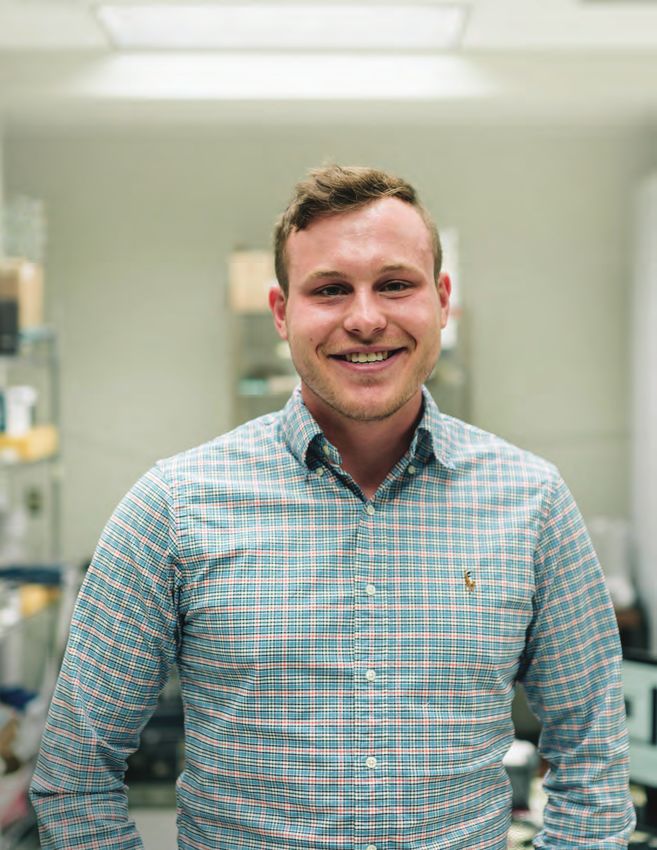
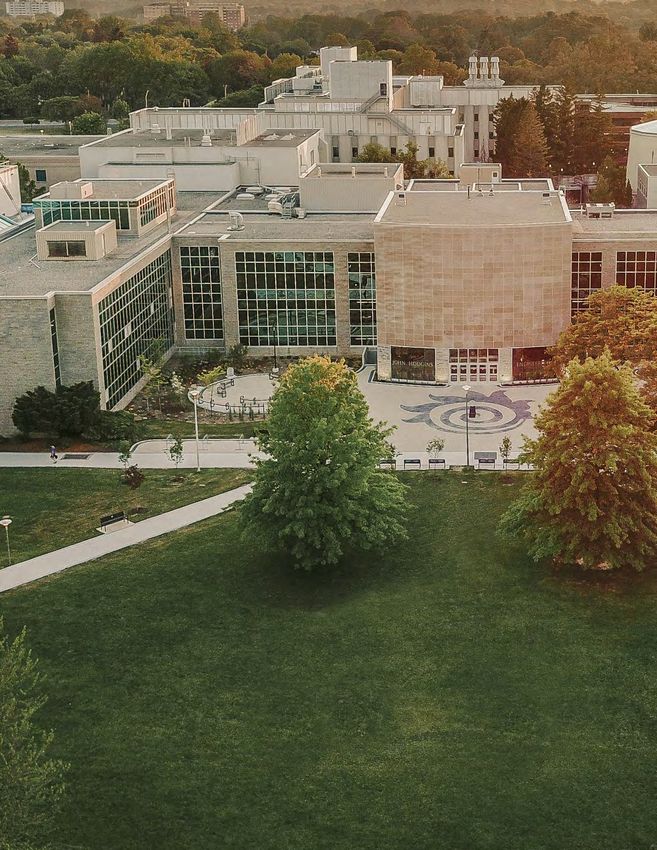
Ranked as one of the world’s top engineering schools,
    the Faculty of Engineering plays a significant role in helping
    McMaster University earn its reputation as one of
    Canada’s most innovative universities.

    Our focus on experiential, problem-based learning and
    our interdisciplinary approach to collaboration results
    in smarter insights, groundbreaking ideas, and greater
    optimism. This approach is helping us create a
    brighter world.

                                                                                     #2

           MOST
                        #1                                              IN THE WORLD
                                                                         FOR GLOBAL
                                                                           IMPACT
                                                                               Times Higher Education
                                                                                   Impact ranking
     RESEARCH INTENSIVE
         University in Canada
                                                      $41.8M in external
                                                          research funding
                                                             awarded to
                                                        engineering students

2      eng.mcmaster.ca/graduate
“McMaster Engineering is ranked
                                            among the top programs in the
                                            world. We foster a love of learning
                                            and sense of personal dedication to
                                            excellence within a broader societal
                                            context of engineering. Our students
                                            are motivated and inspired to become
                                            engaged citizen scholars who will
                                            transform the world.”
                                                                        Ishwar K. Puri
                                                              Dean, Faculty of Engineering

                                           “At McMaster Engineering, we value
                                            our strong sense of community that
                                            bring together graduate students and
                                            professors to find solutions to many
                                            pressing global challenges.”
                                                                    Michael Thompson
                                                         Associate Dean, Graduate Studies
                                                                    Faculty of Engineering

Page   P R O G R AM L IST                      M.Eng.   M.A.Sc./M.Sc.          Ph.D.
 10    Chemical Engineering                                     •                •
 12    Civil Engineering                         •              •                •
 14    Computing & Software                      •              •                •
 16    Electrical & Computer Engineering         •              •                •
 28    Engineering Design                        •
 28    Entrepreneurship & Innovation             •
 18    Engineering Physics                       •              •                •
 29    Engineering Public Policy                 •
 29    Manufacturing Engineering                 •
 20    Materials Science & Engineering                          •                •
 22    Mechanical Engineering                                   •                •
 24    School of Biomedical Engineering                         •                •
 27    Master of Engineering in                  •
       Systems &Technology
 26    W Booth School of Engineering             •
       Practice & Technology

                                            McMASTER ENGINEERING GRADUATE STUDIES 2020       3
McMaster
          teaching method
              McMaster wins Global
              Teaching Excellence Award
              McMaster has won the prestigious Global Teaching
              Excellence Award based on the strength of its
              experiential learning opportunities, a commitment
              to global engagement and the work of the Paul R.
              MacPherson Institute for Leadership, Innovation and
              Excellence in Teaching.

              Award-Winning Faculty
              McMaster is dedicated to teaching, learning and service. In the
              1960s, we pioneered the “problem-based” approach to learning
              that came to be known around the world as “the McMaster
              model”. Through this active, problem based learning style students
              become proactive thinkers with excellent critical thinking, problem
              solving and self-directed learning skills.

                                                          “I work for my students. They don’t work for us,”
                                                            says Emadi. “We have a really good support system and we
                                                            help one another create new knowledge every day. Together,
                                                            we apply practical, multi-disciplinary research.”
                                                          E madi and his research group have successfully transferred
                                                           their research to industry with several corporate-sponsored
                                                           projects including, The Leadership in Automotive Powertrain
                                                           (LEAP) project. Sponsored by Fiat Chrysler Automobiles (FCA)
                                                           and NSERC Automotive Partnership Canada, more than 100
                                                           researchers are working closely with engineers and managers
                                                           at FCA to build more environmentally friendly electrified vehicles.
                                                          Ali Emadi, Professor
                                                          Canada Research Chair in Transportation Electrification and
                                                          Smart Mobility and NSERC Industrial Research Chair in Electrified Powertrains

4   eng.mcmaster.ca/graduate
World-Class Facilities
     The Faculty of Engineering is home to 20 major research centres and
     institutes that house world-class equipment, which are operated by leading
     experts in their fields. Our students are trained in these facilities, which
     enables them to enter the workforce with expertise in the latest technologies.
     In keeping with our collaborative approach, our facilities are also used by
     faculty members across the University, by government, and the private sector.
     Our researchers and students also have access to other research centres and
     institutes across the University, such as the Nuclear Reactor, Brockhouse
     Institute for Materials Research, and the Brain-Body Institute.

Fostering Engineering                                                                                         37
                                                                                                    universities from around
Innovation                                                                                             the world, as well
The Government of Canada and the                                                                      as industry, perform
Province of Ontario invested $43M, the                                                                 research in CCEM
single largest government investment
in laboratories and research capacity
expansion in McMaster’s history. The
funding is part of a massive $75M project
that supported the renovation and retrofit
of existing labs in the Arthur Bourns
Building, and the construction of a new
innovation tower.

            The Canadian Centre for
         Electron Microscopy (CCEM)
         provides world-class electron
            microscopy capabilities
             for materials physics,
               nanomedicine and
             metallurgy research.

                                                                                      McMASTER ENGINEERING GRADUATE STUDIES 2020   5
McMaster
                                                                                   Engineering’s
                                                                                 Graduate Co-op

     McMaster Engineering graduate students pursue specialized knowledge, collaborate with industry and research
     organizations on real-world projects, and gain access to expertise, funding and state-of-the art facilities.
     All graduate students participate in professional planning sessions to develop career plans which are followed
     up on by their faculty advisors, with the option of receiving mentoring from industry partners.

     Co-op
     Co-op will enable students to establish a network of industry
     contacts, and develop a range of valuable skills, which will aid                    Industrial PhD
     them in their graduate studies and future careers. A term of work
     experience is a great addition to students’ master’s or doctoral                    Earn a Ph.D. while
     studies. Students benefit by gaining valuable industry experience              continuing to work full-time
     with leading engineering employers. Employers benefit by having
     access to a highly qualified talent pool of graduate students eager
                                                                                  Strategic benefits for companies
     to put theory into practice.                                                      and research institutes
                                                                                  Applicants must hold a research-
     Research & Co-op                                                               based Masters degree in a
     Participating in the co-op option can be a great way to integrate
                                                                                          STEM discipline
     the knowledge students have gained in the lab and apply it in an
     industrial setting. Alternatively, knowledge acquired while on a
     co-op work term can inform and enhance a student’s research.

                                               “Co-op experience is important because it’s a foot in the door within a
                                               company. The company may want to hire you afterwards – they wanted
                                               to hire me. It’s hard, especially in today’s market to get a job after
                                               graduation. Everyone is always struggling and you can see it in their
                                               faces. Having co-op experience makes you much more competitive.”
                                               Mike Chatzidakis
                                               Second Year Masters Student
                                               Materials Science & Engineering

6   eng.mcmaster.ca/graduate
Employment
                                                                                              rate
                                                                                               (within two years)

                                                            600+
                                                            local and
                                                                                                      93%
                                                          international
                                                        partner employers

Career Services
Workshops                                                                METRIC
                                                                         The Engineering Graduate Society (EGS) plans an annual conference
Career and professional development workshops are held throughout
                                                                         which provides an opportunity for graduate students, postdocs,
the year on a variety of topics. Past workshops have included:
                                                                         professors and industrial alumni in different engineering fields to
•    Cover Letter & Resume Writing                                       engage, share ideas, develop collaboration strategies and share
•    Effective Job Search Strategies                                     information about resources. Students participate as an attendee,
                                                                         presenter or showcase their research.
•    Creating and Using LinkedIn in a Job Search
•    Interview Preparation (including mock interviews with industry)
•    How to Negotiate a Job Offer
                                                                         Professional Skills
Industry often participate and/or lead these workshops giving
                                                                         Development Portal
students an opportunity to network with employers.                       McMaster Engineering graduate students access both online and
                                                                         in-class professional development and career modules that educate
                                                                         them about the job market, facilitate students’ readiness to enter these
Coaching                                                                 arenas post-graduation, and give them access to Masters/PhD specific
Our Career Development and Relationship Manager establishes strong       job opportunities and events.
relationships with top engineering employers, facilitates connections
between students and employers, provides career-planning tools and
resources, and provides opportunities for graduate students to gain
industry experience while pursuing their degrees. Co-op eligibility is
dependent on permission from the student’s research supervisor.

                                                                                          McMASTER ENGINEERING GRADUATE STUDIES 2020                7
“James Street North is percolating
    with a vibrant art scene, inventive
    farm-to-table restaurants, edgy
    start-ups and cool shops.”

    ~ The New York Times (2017)

    Hamilton
                                                                           Lake Huron

                                                                                                       Toronto
                                                                                              Guelph                    Lake Ontario
                                                                     USA                  Waterloo

    ONTA RIO , CA N A D A
                                                                                              Hamilton
                                                                                                        Niagara Falls

    We are less than an hour’s drive from the United States border
    and only 45 minutes from Toronto, Niagara Falls, Waterloo,                Lake Erie
                                                                                                  USA
    and Guelph. An on-campus GO Bus Terminal allows students
    to commute easily from the Greater Toronto Area.

8   eng.mcmaster.ca/graduate
Hamilton
                                                 is home to
                                                more than 100
                                                 waterfalls.

FOOD                                        NATURE                                                HISTORY & HERITAGE
From restaurants ranked among the           Natural beauty abounds throughout the                 Distinctive architecture, world-class
best in Canada to a vibrant food-truck      city, including McMaster University’s                 museums and 15 National Historic
scene, Hamilton’s appetite for all things   own backyard, which abuts the Royal                   Sites offer a glimpse into the city’s past
delicious knows no limits. International    Botanical Gardens and includes                        and make Hamilton the fascinating
eateries, unique culinary events, and       several hiking trails.                                community it is today.
a growing craft beer scene completes
the picture.

                                            CULTURE                                               SPORTS
                                            The arts scene is booming in Hamilton                 Whether you love to bike, hike, or
MUSIC                                       from local art galleries and studios to the           play organized sports, Hamilton has
No matter your musical taste, Hamilton      monthly James Street North Art Crawl                  got it all. The city is also home to the
delivers from local clubs hosting hot       and annual Supercrawl event, which                    CFL’s Hamilton Tiger-Cats and other
bands to classical orchestras.              attracts thousands of visitors each year.             sports teams.

           A 10-minute walk from campus, Westdale Village is the hub for student off campus living.

                                                                                          McMASTER ENGINEERING GRADUATE STUDIES 2020           9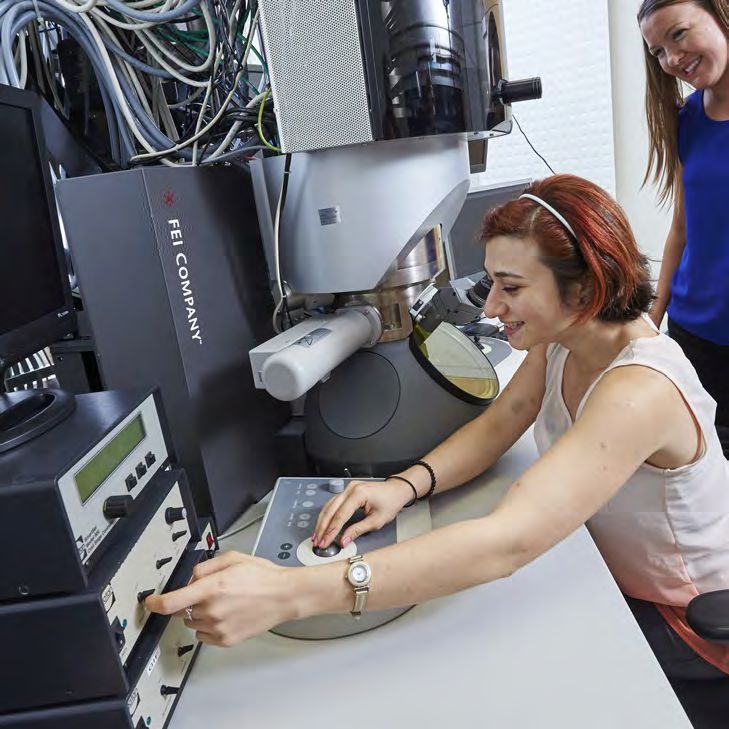
“I really like the opportunity to be working on something new and
               be very independent. If there’s one specific area that I’m finding
               really interesting, there’s the option to focus more on that or start
               a side project, so it’s very based on what I find interesting as a
               researcher.”
                                                                             Oriana Vanderfleet
                                                                PhD candidate, Chemical Engineering

10   eng.mcmaster.ca/graduate
SCHOOL OF ENGINEERING AND APPLIED SCIENCE
Chemical Engineering
Degrees Offered: MASc, PhD
Entry Dates: September, January, May
Admission Requirements: see page 31
Study Options: Full- or part-time for PhD degree.
McMaster houses one of the most distinguished and research-intensive chemical engineering departments in
Canada. Four of the 20 chemical engineers selected by the Canadian Society for Chemical Engineering for making
the greatest contributions to chemical engineering in Canada in the 20th century were professors at McMaster’s
Faculty of Engineering.
McMaster is engaged in leading edge
chemical engineering research and
Areas of Research
has concentrated research groups that BIOMATERIALS AND BIOPROCESSING
collaborate with international industrial
Drug delivery, tissue engineering, biocompatible surfaces, bioseparations, membranes,
sponsors including:
bioreactors, pharmaceutical processing
• Centre for Advanced Ophthalmic Materials
(Insight) POLYMER SCIENCE AND ENGINEERING
• Centre for Advanced Polymer Processing Polymer synthesis and characterization, polymer reaction engineering, polymer and
& Design (CAPPA-D) particulate processing, paper chemistry, nanotechnology, interfacial engineering
• Centre for Pulp and Paper Research
• Interfacial Technologies Group PROCESS SYSTEMS ENGINEERING AND CONTROL
• McMaster Advanced Control Consortium Process systems design, process control, optimization, supply chain planning
and scheduling, process fault detection and recovery
MATERIALS AND PROCESS MODELING AND COMPUTATION
Molecular modeling, computational fluid dynamics, energy systems,
alternative fuels/energy, wastewater treatment, life cycle analysis
“My students have energy, enthusiasm and they’re hungry.
They want things to happen.”
Heather Sheardown has spent her career developing ocular health technologies and related drugs that will improve
the quality of life for millions of people living with ocular conditions and vision loss. She says her research outcomes
would not be possible without the contributions from her students. “My students have energy, enthusiasm and
they’re hungry. They want things to happen.”
Heather Sheardown
Canada Research Chair in Ophthalmic Biomaterials and Drug Delivery Systems
Professor, Chemical Engineering
McMASTER ENGINEERING GRADUATE STUDIES 2020 11“I want to create job-ready employees for future
jobs, not just for jobs that are available now.”
Flash floods. Blackouts. Data breaches. How can society better respond
to disasters? Wael El-Dakhakhni is currently working on tools that will
help a wide range of stakeholders anticipate, and even prevent disasters
from happening. He inspires his students to have similar engineering
ambitions by helping them link their education to real societal challenges
and by encouraging them to develop their interpersonal skills.
Wael El-Dakhakhni
Director, McMaster Institute for Multi-hazard
Systemic Risk Studies (INTERFACE)
Professor, Civil Engineering
12 eng.mcmaster.ca/graduateSCHOOL OF ENGINEERING AND APPLIED SCIENCE
Civil Engineering
Degrees Offered: MEng, MASc, PhD
Entry Dates: September, January
Admission Requirements: see page 31
Study Options: Full- or part-time for all degrees offered
Ranked as one of the top three civil engineering programs in Canada and top 30 worldwide, we are a vibrant
multi-disciplinary research-intensive department focused on building healthier communities to create a brighter
world. Our strong linkages with industry are evident by our six research chairs and strong record of successful
application-based research funding. Our laboratory facilities allow us to conduct world-class research supported
by multiple research centres, networks and institutes.
McMaster is engaged in leading edge
research in the field of civil engineering
Areas of Research
and has concentrated research groups that RESILIENT INFRASTRUCTURE SYSTEMS
collaborate with international industrial
Extreme natural and man-made hazards, risk assessment and performance/resilience
sponsors including:
based design, large-scale testing and hybrid simulation, multi-hazard hazard simulation
• Centre for Effective Design of Structures and mitigation
• McMaster Interface Institute
SMARTER MOBILITY
• McMaster Institute for Transportation
and Logistics Connected and autonomous vehicles; smart cities; cyber-physical systems for
transportation; transit design, operation, and management; transportation safety;
• McMaster Water Network
transportation data analytics
WATER SECURITY AND CLIMATE CHANGE
Flood simulation, prediction and risk under climate change, fate and transport of
pathogens and heavy metals in ground water systems and impact on the environment
and human health, flow of contaminated water in fractured rock systems, systemic risk
of fracking on ground water aquifers
INTELLIGENT ENERGY SYSTEMS
Power grid simulation and optimization, building energy consumption and automation,
systemic risk posed by and on energy networks, energy linkage to water systems,
renewable energy; energy production resilience and sustainability under climate change
“The people here are just as nice as at home and I really appreciated that
because it was my first time really picking up and moving really far from home.
I felt very welcomed by all the students and staff.”
Bryanna Noade
MASc candidate, Civil Engineering
McMASTER ENGINEERING GRADUATE STUDIES 2020 13“It was an “aha” moment. I can use all my passions and leverage
them when I program. I can make programs and different
applications in software for any number of domains.”
Monika Jaskolka
PhD candidate, Software Engineering
14 eng.mcmaster.ca/graduateSCHOOL OF ENGINEERING AND APPLIED SCIENCE
Computing & Software
Degrees offered: MEng, MSc, MASc, PhD
Entry Dates: September
Admission Requirements: see page 31
Study Options: Full- or part-time for all degrees offered
McMaster’s Department of Computing and Software advances the field of computing through education and
research. We focus on computing research problems that involve scientific theory, engineering practice, and the
interface between the two. We seek to address society’s need for better methods of developing information
systems and dependable, safe, secure, high-quality software.
McMaster’s Department of Computing and
Software advances the field of computing
Areas of Research
through education and research. We focus COMPUTER SYSTEMS
on computing research problems that involve Operating systems, systems architecture and hardware, data storage and management
scientific theory, engineering practice, and the systems, distributed systems, and computer networks.
interface between the two. We seek to address
society’s need for better methods of developing HEALTH INFORMATICS AND BIOINFORMATICS
information systems and dependable, safe, Information technology, health care delivery, biomedicine, biological processes, medical
secure, high-quality software. software and devices.
SCIENTIFIC COMPUTING AND OPTIMIZATION
Quantitative modelling and analysis, optimal allocations of resources, scheduling tasks and
designing prototypes.
SECURITY, PRIVACY, AND DATA ANALYTICS
Crytographic algorithms and protocols, data cleaning and curation solutions, privacy
governance and preserving tools, and anomaly detection techniques.
SOFTWARE QUALITY
Multicore concurrency; Software Engineering approaches to Scientific Computation;
Domain Specific Languages; Generative Programming specifically; and Model-Driven
Engineering of Cyber-Physical Systems in general; and the Development and Certification
of Safety-Critical Systems.
THEORY AND METHODOLOGIES OF COMPUTATION
Theoretical computer science, foundations of software engineering, applications to
knowledge representation and synthesis of software from mathematical specifications.
“Making connections with industry gives students the opportunity to address
industry challenges now.”
Fei Chiang is building software tools to automate and improve data quality so that users can spend more time and
resources on data analysis and decision-making. Chiang and her research group work with prominent industry
partners such as IBM to improve their data quality. “Making connections with industry gives students the opportunity
to address industry challenges now.”
Fei Chiang
Assistant Professor, Computing and Software
McMASTER ENGINEERING GRADUATE STUDIES 2020 15“There has to be a mentor who students can look up to – someone to
meet with weekly, to show the little tricks of the profession. Someone
who will lean over the equipment to show how it works.”
Natalia Nikolova believes in the power of mentorship. To help her students succeed, she makes sure to devote as
much time as possible to each of them. Using radar technology, Nikolova and her team are developing a scanner for
early stage breast cancer detection and a fully automated, concealed weapon detection system.
Natalia K. Nikolova
Professor, Electrical and Computer Engineering
16 eng.mcmaster.ca/graduateSCHOOL OF ENGINEERING AND APPLIED SCIENCE
Electrical & Computer Engineering
Degrees offered: MEng, MASc, PhD
Entry Dates: September, January, May
Admission Requirements: see page 31
Study Options: Full- or part-time for all degrees offered
McMaster’s Electrical and Computer Engineering department is ranked as one of the best departments of
electrical and computer engineering both nationally and internationally. Faculty members are regular award
winners including the prestigious Premier Research Excellence Award (PREA), OCUFA teaching award, McMaster
Students Union Teaching Award, Booker Gold Medal, and the Signal Processing Society Education Award.
McMaster’s Department of Electrical & Areas of Research
Computer Engineering is home to The Centre BIOMEDICAL TECHNOLOGIES
for Research in Micro- and Nano-systems, Neural prostheses, medical robotics, medical imaging technologies, biomedical sensors,
a unique facility in North America offering hearing aids, brain-computer interfaces.
fabrication, characterization and integration
COMMUNICATION TECHNOLOGIES, SYSTEMS & NETWORKS
of different materials, components and
Theory, algorithms and implementations of communication networks: wireline, optical fibre,
devices at multiple length scales. For
wireless, mobile and wireless optical; multimedia communications; cloud computing.
example, Nano-Bonding and –Interconnect
System (NBIS) and Nanoimprinting ELECTRIFIED & AUTONOMOUS TRANSPORTATION
Lithography System (NIL) provide fabrication Hybrid & electric powertrain design & control, estimation & tracking for autonomous control,
and integration of nanometer scale electric motor drives.
structures and devices. Research using ELECTROMAGNETICS & PHOTONICS
MNSL infrastructure spans from fundamental Electromagnetic imaging & detection with applications in biomedicine and security, radar
areas such as molecular interactions during scattering, antennas, semiconductor laser diodes, integration of photonic devices.
bonding to applied relating to miniaturization INTEGRATED, EMBEDDED AND INTERCONNECTED SYSTEMS
of emerging systems for health and
Hardware/software co-synthesis, low power & reliable computing, Internet of Things,
environmental applications. telerobotics, smart grid.
MICROELECTRONICS & VLSI
Microelectronic characterization & modelling, nanoelectronics, ultra-low power integrated
circuits, computer-aided design of VLSI circuits
OPTIMIZATION, LEARNING & CONTROL
Optimization for engineering design, machine learning, data fusion, aerial robotics, haptic control.
POWER ELECTRONICS & ELECTRIC MACHINES
Power electronic converters, electric machines & energy conversion systems, renewable
energy systems.
SIGNAL, IMAGE & VIDEO PROCESSING
Detection and estimation, information and coding theory, video display technologies, multi-
media signal processing, data compression, biomedical signal processing.
“There is a wide range of career opportunities, especially for engineers in
Ontario. Many of my friends are coming to Ontario to find careers here.”
Mahsa Salmani
PhD candidate, Electrical and Computer Engineering
McMASTER ENGINEERING GRADUATE STUDIES 2020 17“Every time I achieve a goal and get one step closer to a working
device, I get a little motivation boost because I know that this could
be a technology that could have real world applications.”
Simon McNamee
Alumni
18 eng.mcmaster.ca/graduateSCHOOL OF ENGINEERING AND APPLIED SCIENCE
Engineering Physics
Degrees Offered: MEng, MASc, PhD
Entry Dates: September, January, May (not MEng)
Admission Requirements: see page 31
Study Options: Full- or part-time for all degrees offered
Engineering Physics at McMaster is pushing the forefront of modern physics to better the world through
technological advancement. We are solving the grand challenges of the future such as sustainable energy
supply, human health, digital information and communications technology.
Areas of Research
Engineering Physics at McMaster is engaged
BIOMEDICAL ENGINEERING
in leading edge research in biomedical
engineering, nuclear and energy systems Biosensors, biophotonics
engineering, nano- and micro-device
engineering, and photonics engineering. NUCLEAR ENGINEERING AND ENERGY SYSTEMS
Research in Engineering Physics includes: Small modular reactors, reactor core physics and safety analysis, intense positron beam for
• Centre for Emerging Device Technologies materials research, post-irradiation studies of nuclear reactor components, nuclear fuel and
waste management, medical radio-isotope research.
• McMaster Nuclear Reactor
• McMaster’s Biophotonics Facilities
NANOTECHNOLOGY, NANO- AND MICRO-DEVICE ENGINEERING
• Biointerfaces Institute
Micro-electro-mechanical systems (MEMS), photovoltaics, organic electronics,
• Centre for Advanced Nuclear Systems
optoelectronics, III-V materials and devices
• McMaster Intense Positron Beam Facility
• University Network of Excellence in
PHOTONICS ENGINEERING
Nuclear Engineering (UNENE)
Silicon photonics, displays, laser applications, sensors, ultrafast lasers
SMART SYSTEMS ENGINEERING
Smart systems that integrate various sensors and actuators to analyze and control a process.
“I hope that I can show them that I enjoy what I do and I can give that feeling to
them – that this is fun and I’m doing it because I believe in it.”
Leyla Soleymani is developing biosensors, miniature devices that can be used at point of care to quickly and
accurately diagnose certain types of cancer and infectious diseases. This low-cost technology will help improve
healthcare services for people around the world. Soleymani says a key to her success is her passion for her research
and she hopes to convey that passion to her students.
Leyla Soleymani
Canada Research Chair in Miniaturized Biomedical Devices
Associate Professor, Engineering Physics
McMASTER ENGINEERING GRADUATE STUDIES 2020 19“I want to showcase that we’re doing exciting research here and I want
to show the many avenues you can pursue in a research career.”
Using high-powered microscopes, Kathryn Grandfield looks at how materials for joint replacement and dental
implants attach to human tissue to create better quality devices that last longer inside the body. Grandfield credits
her professors for helping to shape her future. She strives to do the same for her students.
Kathryn Grandfield
Associate Professor,
Materials Science and Engineering
20 eng.mcmaster.ca/graduateSCHOOL OF ENGINEERING AND APPLIED SCIENCE
Materials Science & Engineering
Degrees Offered: MASc, PhD
Entry Dates: September, January, May
Admission Requirements: see page 31
Study Options: Full- or part-time for all degrees offered
Building strategically on our diverse expertise in materials, in collaboration with local and global partners,
the Department of Materials Science and Engineering here at McMaster University is internationally
recognized as a destination of choice, where students, scholars, alumni and employers partner in a journey
of learning, discovery and innovation.
McMaster is engaged in leading edge
Areas of Research
material science and engineering research
and has concentrated research groups that STRUCTURAL, AUTOMOTIVE AND AEROSPACE MATERIALS
collaborate with international industrial Lightweight alloys, heat treating, thermomechanical processing, mechanical
sponsors including: performance, galvanizing/coatings, corrosion performance
• Canadian Centre for Electron Microscopy
• Steel Research Centre FUNCTIONAL MATERIALS AND NANOTECHNOLOGY
• Centre for Automotive Materials Electronic/magnetic materials, electrocatalysts, supercapacitors, energy materials
and Corrosion (batteries/fuel cells), nanophotonics, 2-D materials, atomic-scale characterization
BIOMATERIALS
Osseointegration, bone applications in dentistry and orthopaedics, biomineralization
COMPUTATIONAL MATERIALS ENGINEERING/INFORMATICS
Sensors, big data, artificial intelligence, multi-scale modelling, material discovery,
image analysis, cluster analysis
“The moment I arrived at the airport, I realized everyone is so friendly and I
didn’t feel like I was someone from outside. I felt that I belonged here and
that this was the place I can live in and progress in my work.”
Shooka Mahboubi
PhD candidate, Materials Science and Engineering
McMASTER ENGINEERING GRADUATE STUDIES 2020 21“The McMaster mentorship experience is more like a partnership. That’s
why I chose Mac to pursue my graduate studies. Professors are excited
with what you’re doing and they want to be a part of what you’re doing.”
Ryan Rogers
MASc candidate, Mechanical Engineering
22 eng.mcmaster.ca/graduateSCHOOL OF ENGINEERING AND APPLIED SCIENCE
Mechanical Engineering
Degrees Offered: MASc, PhD
Entry Dates: September, January, May
Admission Requirements: see page 31
Study Options: Full- or part-time for all degrees offered
The Department of Mechanical Engineering is the second largest department in the Faculty of Engineering at
McMaster University. The research funding per faculty member is amongst the highest in the country and the
Department benefits from state of the art laboratories with established international reputations.
Our research is heavily supported by industry
and is in areas of strategic interest including
Areas of Research
hybrid vehicles, energy and environment, BIOMECHANICS
sustainable energy, biomechanics, materials
Biomechanics of Musculoskeletal Systems, Bone Adaptation to Mechanical Stimuli &
and manufacturing, MEMS and mechatronics.
Injury, Surgical Robotics, Bone Fracture Limits & Injury Tolerance, Design of Artificial
Our cluster of research groups include:
Joint Replacements, Surrogates for Biomechanical Research, Bio-Functional Interfaces,
• Centre for Advanced Micro Electro Fluidics Biomaterials & Biosensors, Cardiovascular Mechanics, Medical Imaging
• Computational Fluid Dynamics laboratory
• Flow-Induced Vibration and MANUFACTURING
Aeroacoustics Laboratory Casting, Computer Aided Manufacturing, Electrical Discharge Machining, Grinding, Machining
• Light Metal Casting Research Centre of Advanced Materials, Machining Processes and Systems, Materials Processing and
• Machining Systems Laboratory Systems, Manufacturing Automation, Manufacturing Processes and Systems, Metal Forming,
• McMaster Automotive Research Centre Cutting and Removal, Metallic and Non-Metallic Coatings for Advanced Steels, Process
• McMaster Manufacturing Research Institute Modelling & Simulation, Robotics
• McMaster Mechatronics Research Group
MECHANICS & DESIGN
• Metal Forming Laboratory
• Micro-Machining Laboratory Automotive Applications, Computer aided design, Control Systems, Dynamics and Vibrations,
Finite Element Analysis, Flow Induced Vibration and Noise, Hybrid Vehicles, Materials and
• Robotics and Manufacturing
Microstructural Engineering, Mechatronics, Microelectromechanical (MEMS) Devices,
Automation Research
Product Design and Manufacturing, Robotics, Theoretical mechanics
• Thermal Management Research Laboratory
• Thermal Processing Laboratory THERMAL FLUID SCIENCES
Aeroacoustics, Combustion, Computational Fluid Dynamics, Flow Control, Turbulence, Heat
Transfer, Microfluidics & Micro-fabrication, Modeling in Thermo-Fluid Systems, Multiphase
Flow, Reactor Thermal Hydraulics, Thermal Processing of Materials
“Being able to apply our knowledge and make improvements in industry is
what we strive to do. Engaging students on improving productivity, helping
a company earn new business and keeping jobs – this is a nice package of
everything coming together.”
Stephen Veldhuis
Director, McMaster Manufacturing Having an impact on peoples’ lives is what drives Stephen Veldhuis’ research. Veldhuis’ research is focused
Research Institute on tribology, the study of friction and wear, which contributes to the development of high performance
Professor, Mechanical Engineering
manufacturing solutions.
Braley-Orlick Chair in Advanced
Manufacturing Engineering
McMASTER ENGINEERING GRADUATE STUDIES 2020 23“Having the opportunity to develop new technologies to solve real
world health problems is a rewarding experience. Achieving great
things like this becomes possible when integrating engineering and
health science principles to address challenges from a more holistic
approach.”
Sandy Zakaria
MASc candidate, Biomedical Engineering
24 eng.mcmaster.ca/graduateSchool of Biomedical Engineering
Degrees Offered: MASc, PhD, MD / PhD
Entry Dates: September, January, May
Admission Requirements: see page 31
Study Options: Full- or part-time for all degrees offered
McMaster’s Faculty of Engineering and Faculty of Health Sciences have partnered to create a unique research
and training program under the umbrella of the School of Biomedical Engineering.
The School provides a unique collaborative environment that leverages our existing expertise in medical sciences and engineering, and that links current
and emerging areas of molecular, medical and bioengineering research. We invite you to join us in pushing the boundaries of discovery and improving
the lives of future generations through the seamless merging of the human with the human-made.
Our goal is to leverage McMaster’s internationally recognized strengths and resources toward the development of new approaches in biomedical science
and technology, through both fundamental and more goal oriented translational research programs.
McMaster’s School of Biomedical Engineering
is home to various research centres including:
Areas of Research
• Antimicrobial Research Centre BIOMATERIALS AND DEVICES
• Brockhouse Institute for Materials Research Biomaterials and tissue engineering directed towards growth or regeneration of cells, tissues
• Centre for Emerging Device Technologies and organs. The technology includes development of biomaterials, implantable devices and
• Centre for Minimal Access Surgery sensors and other biologically compatible materials with applications in numerous medical
devices and therapies.
• Juravinski Cancer Centre
• McMaster Institute for Applies
IMAGING, SENSING AND DETECTION
Radiation Sciences
Development and application of imaging technologies applicable to cells, tissues, organs and
• McMaster Manufacturing Research Institute
the brain for diagnostic and therapeutic purposes.
• Thrombosis and Atherosclerosis
Research Institute
THERAPEUTICS
Research toward the development of novel drugs and drug delivery methods, including the
development of biodegradable polymers and other materials for tissue engineering of cellular
scaffold and release of signaling molecules.
“The students get the opportunity to participate in exciting and interdisciplinary
research working at the interface of engineering and health sciences and
making an impact on society.”
Ravi Selvaganapathy
Professor, McMaster School of
Biomedical Engineering
Co-director, McMaster School of
Biomedical Engineering
McMASTER ENGINEERING GRADUATE STUDIES 2020 25“The faculty are all practitioners and industry people who became
academics so they bring this practicality to everything that we’re doing.”
Christopher Boothe
Master of Engineering and Public Policy candidate,
W Booth School of Engineering
Practice and Technology
26 eng.mcmaster.ca/graduateW Booth School of Engineering
Practice & Technology
Degrees Offered: MEng Design, MEPP, MTEI, MEEI, MEME, MS & T
Entry Dates: Varies by degree
Study Options: Varies by degree
Students become innovative problem solvers and lead creations of sustainable solutions in the connected world.
They focus on innovation in the early stages of design, smart systems (automation, robotics, AI, augmented reality),
and advanced manufacturing. Students are also intricately involved in entrepreneurship for start-up companies and
development of engineering based policy decisions. Our innovative graduate programs combine in-depth technical
expertise with project management and communication skills, positioning students to become leaders in their field.
Applying industry skills in community based projects, internships, and co-op help our students expand their
network of contacts.
FIVE MASTER’S DEGREE
PROGRAMS AVAILABLE:
•
•
Engineering and Public Policy
Engineering Design
92 %
of our alumni are employed in their field
within 6 months of graduating
• Entrepreneurship and Innovation
of our alumni currently work at the executive
10%
• Manufacturing Engineering
• Systems and Technology level (CIO, CFO, CEO, President, etc.) or are
founders of their own companies.
Master of Engineering in Systems & Technology
Want to help guide Industry 4.0 into the future? This master’s program is the only one of its kind
in Canada that delivers specialized training in the areas of digital manufacturing, automotive and
smart, connected systems.
If you want to create solutions that combine automation, robotics, sensors, computing systems
and software to enhance people’s lives, consider this practice-based master’s program a doorway
to an exciting profession.
Specialize in the following areas:
■ Automotive
■ Automation and Smart Systems
■ Digital Manufacturing
Admission Start Date FT Length PT Length
STEM degree, minimum B average September or 24 months 40 months
in last 10 technical courses January 12 months (accelerated option)
McMASTER ENGINEERING GRADUATE STUDIES 2020 27Master of Engineering Design
Design is a holistic process that pursues value-added solutions to the needs of
industry, individuals and society at large. Through your Master’s degree, you will
develop competencies to design solutions that consider users, customers, economies
and ecosystems alike.
We specialize in blending design thinking concepts with prototyping and testing – whether
using physical objects or advanced technologies like virtual reality and smart systems.
Through coursework and applied design projects you will build your experience leading
design projects from conception to completion while managing relationships with colleagues
and stakeholders. You will graduate and launch the next stage of your career with a portfolio
of design work.
Specialize in the following areas:
■ Digital Reality
■ Product Design
Admission Start Date FT Length PT Length
30%
continue the venture
STEM Degree, B- average in September 24 months 40 months they started in the
last 10 technical courses 12 months (accelerated option) program and go on to
continue to develop
Applicants who did not attain the required standing in their undergraduate degree, but who have at least four years of relevant it as a business
work experience may be considered.
Master of Engineering Entrepreneurship
and Innovation / Master of Technology
Entrepreneurship and Innovation
Visionary innovators recognize that they can develop their skills in identifying “pain
70%
points” in life and guide their teams towards solving them with new products and
services, while some others think you must be born with innovative genius.
Whether your ambition is to forge your own path as a startup founder or launch innovative are hired by
ventures in an established company, this award-winning graduate degree provides you the established companies
and advance into
skills for success.
leadership roles.
Our program will build your expertise in developing products or services which help people
lead better lives and make you a successful entrepreneur.
Degree Admission Start Date FT Length
Engineering STEM Degree, B- average in last 10 technical courses September 20 months
Entrepreneurship
and Innovation
Technology Degree from any discipline, with evidence of ability to successfully September 20 months
Entrepreneurship complete technical courses, B- average in final year
and Innovation
While students in the Master of Technology program are not expected to have any engineering or scientific background, they must embrace creativity
and innovation. Familiarity with technology is expected, but the required technological depth will depend on the student’s chosen project.
28 eng.mcmaster.ca/graduateMaster of Engineering
and Public Policy
Students in the Engineering and Public Policy program become
integrative problem solvers, armed with the interdisciplinary skills
to find solutions that can balance competing societal needs.
■ s researchers and policy makers, graduates work in both the public
A
and private sectors to drive decision-making.
■ sing the skills learned through interdisciplinary course work, as well
U
as real-world experience gained while working with community partners
to complete your research, you’ll be ready to make a difference in your
chosen career.
Admission Start Date FT Length PT Length
STEM Degree, B- average in September or January 24 months 40 months
last 10 technical courses 12 months (accelerated option)
Applicants who did not attain the required standing in their undergraduate degree, but who have at least four years of relevant work
experience may be considered.
Master of Engineering –
Manufacturing Engineering
Manufacturing is fundamental for making people’s lives better and
creating value for society. In the Manufacturing Engineering program
you will acquire capabilities to make manufacturing processes more
efficient and sustainable.
The manufacturing sector offers many career opportunities for engineers in
discrete manufacturing (e.g. from consumer products to aircraft) and process
industries (e.g. from petrochemicals to food production). Our program builds on
Ontario’s deep history of high-quality manufacturing.
Develop capabilities to improve operation of any type of manufacturing facility
(e.g. statistical analysis of plant data) and augment that by adding courses
specializing in process industries or in discrete manufacturing.
Available are either a project-based option (6 courses plus project) or
course-based option (8 courses).
Admission Start Date FT Length PT Length
Engineering Degree, September or January 24 months 40 months
B average in Degree (limited enrolment) 12 months (accelerated option)
Applicants who did not attain the required standing in their undergraduate degree, but who have at least four years of relevant work experience
may be considered.
McMASTER ENGINEERING GRADUATE STUDIES 2020 29Funding and Awards
Many graduate students at McMaster
are eligible for financial support, such
as teaching assistantships, research
DOMESTIC Masters funds, University graduate scholarships,
external scholarships, and bursaries.
Research Scholarship Funding and awards breakdown is
represented in dollars.
28%
Graduate Scholarship *breakdown is represented in CAD dollars
TA Scholarship 58%
7%
With the exception
of the Industrial
VISA Masters PhD and M.Eng.
Earn programs
Research Scholarship 8% $10-20K NET
income after
Graduate Scholarship 20% tuition and
incidentals
TA Scholarship
8% 65%
Faculty Bursary
EXTERNAL
DOMESTIC Doctorate FUNDING
Many gradudate students at
McMaster are eligible for
Research Scholarship
23% financial support through external
Graduate Scholarship 38% scholarships and bursaries.
Visit our website
TA Scholarship
to learn more
26%
Faculty Bursary eng.mcmaster.ca/graduate
15%
VISA Doctorate
Research Scholarship
26%
Graduate Scholarship
TA Scholarship
12% 63%
30 eng.mcmaster.ca/graduateAdmission Requirements
Minimum Requirements
Degree Program Degree Grades
Master of Applied Science (M.A.Sc.)/Master of Science (M.Sc.)
Biomedical Engineering
Chemical Engineering
Computer Science B+ (77-79%)
Materials Engineering
Software Engineering
Engineering Physics B (73-76%)
Civil Engineering B (75%)
Electrical and Computer Engineering
B+ (77-79%)
Mechanical Engineering
Honours
Master of Engineering (M.Eng) / Technology (M.Tech) Bachelor’s
Computing and Software Engineering Degree B- (70-72%)
(4 year) in
Engineering Physics Engineering, B (73-76%)
Civil Engineering Sciences, B (75%)
or equivalent
Electrical and Computer Engineering B+ (77-79%)
Master of Engineering Design (M.Eng. Design) B- (70-72%) in last 10 STEM and relevant courses
B- (70-72%) in last 10 STEM and relevant
aster of Engineering Entrepreneurship
M courses for M.E.E.I
& Innovation (M.E.E.I./M.T.E.I)
B- average in final year*
Master of Engineering and Public Policy (M.E.P.P.) B- (70-72%) in last 10 STEM and relevant courses
Master of Engineering in Manufacturing Engineering
B (73-76%) in last 20 STEM and relevant course
(M.E.M.E.)
Master of Engineering in Systems and Technology Honours Bachelor’s
B (72-76%) in last 20 STEM and relevant course
(MS&T) Degree (4 year)
Doctor of Philosophy (Ph.D.)
A- (80-84%) *** B (73-76%) in the last
Civil Engineering
two years of Bachelor’s degree
Biomedical Engineering
Chemical Engineering
Computer Science
Materials Engineering B+ (77-79%)
Materials Science
Master’s Degree
Mechanical Engineering
(MASc, MSc, or
Software Engineering
equivalent
Engineering Physics B (73-76%)
Electrical and Computer Engineering B+ (77-79%)
Computing & Software Engineering B+ (77-79%)
MD / Ph.D.
B+ (77-79%) and acceptance into
Biomedical Engineering
McMaster MD Program
*Please see page 28 for more details
Averages are calculated over
**Please see www.unene.ca for more details
the last two years of study
***B (73-76%) in the last two years of Bachelor’s degree McMASTER ENGINEERING GRADUATE STUDIES 2020 31Contact us
Email: enggrad@mcmaster.ca
Phone: 905-525-9140 ext. 22588
McMaster University
1280 Main Street West,
Hamilton, Ontario L8S 4L8
Canada
See what’s happening at McMaster Engineering
Visit our website
www.eng.mcmaster.ca/graduate
McMasterUEngineering @mcmastereng
@mcmastereng @mcmastereng
This issue was produced September, 2020.
For the most current information please download this document
from the Faculty of Engineering website or refer to the Graduate
Academic Calendar.You can also read


