Mexico to Canada: Fair recruitment in review - fivecorridorsproject.org - The Five Corridors Project
←
→
Page content transcription
If your browser does not render page correctly, please read the page content below
THE FIVE CORRIDORS PROJECT - CORRIDOR 5

Mexico to Canada:
Fair recruitment in review
JULY 2021

                               fivecorridorsproject.org
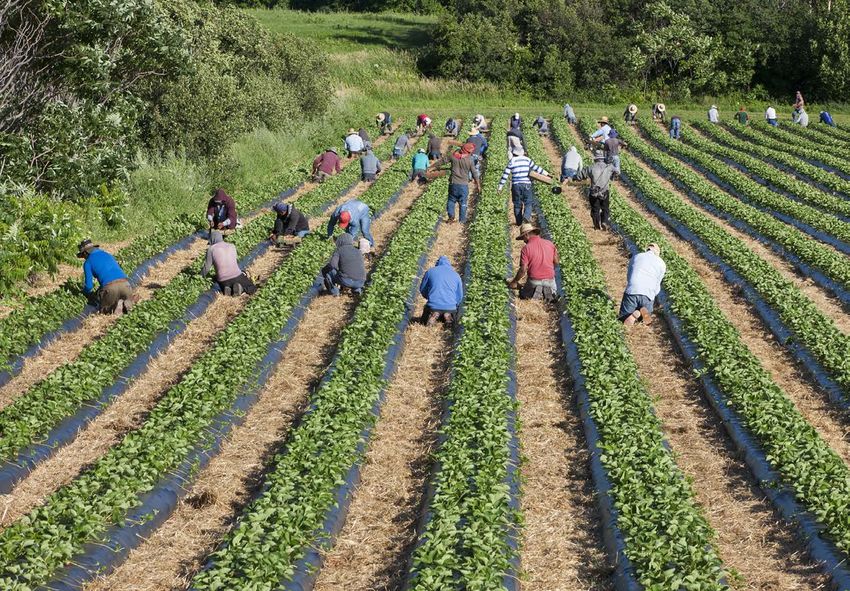
ABOUT THIS DOCUMENT The Five Corridors Project is an initiative led by FairSquare Projects, which aims to identify key measures that governments can take to ensure that migrant workers can migrate safely and with dignity. FairSquare Projects is a non-profit human rights organisation that tailors rigorous research with communication and advocacy work to promote systemic change. The Five Corridors Project is supported by Open Society Foundations, Humanity United and Porticus. The organisations that funded this project played no role in the design or execution of the research, and our conclusions and recommendations may not necessarily reflect the viewpoints of Humanity United, OSF or Porticus. fairsq.org Design by www.NickPurserDesign.com Cover photograph: Mexican migrant workers picking strawberries, Quebec, July, 2020. © Pierre Desrosiers / Getty Images
Assessment against the
                Five Corridors indicators:
                3. Bilateral labour arrangements
                3.1 Are the agreements publicly accessible in relevant languages? Are migrant
                    worker organizations aware of them?                                              62

                3.2 Does the government prioritise fair recruitment in the negotiating and
                    drafting of bilateral agreements, including involving social partners and
                    basing its position on evaluations of existing recruitment practices?            63

                3.3 Do bilateral agreements incorporate relevant internationally recognised human
                    rights and labour standards?                                                     65

                3.4 Do bilateral agreements contain specific mechanisms on fair recruitment for
                    example on consular protection, collaboration on enforcement, and coordination
                    on closing regulatory gaps?                                                      65

                3.5 Are there effective measures - that meaningfully involve social partners - to
                    implement and review bilateral agreements, including oversight mechanisms?       66

60   THE FIVE CORRIDORS PROJECT: CORRIDOR 5
3. Bilateral labour arrangements
“One of the biggest issues with the SAWP is that it lacks worker voice.” PROFESSOR LEAH VOSKO, YORK UNIVERSITY, 2020.
Summary of the programme in Canada. A representative of
the Mexican government signs the employment
The section focuses primarily on the Mexico-Canada contract alongside the worker, and the consulate
SAWP Memorandum of Understanding (MOU), must formally approve the accommodation
since both countries have relatively few bilateral (alongside Canadian inspectors) and the private
arrangements regarding labour migration. The insurance provided by the employer. Mexican
Mexico-Canada SAWP MOU is the most significant consulates conduct site visits to farms and play a
such arrangement for either country. Canada also direct role in managing complaints they receive
has SAWP MOUs with Caribbean countries, and four from workers. Worker transfers must be approved
Canadian provinces have MOUs with the Philippines. by the consulate. As explored in section 7, many
workers consider that the consulates could do more
The Mexico-Canada SAWP has a high profile in to support them, and quality of provision appears
Mexico and Canada. While the underpinning highly dependent on the personnel at specific
MOU is only available via freedom of information missions and the geographic location of the workers
requests in Canada, the programme’s key provisions in Canada. Housing conditions, wages and working
are widely accessible, including the standard hours, among other issues, remain significant
annual employment contract. The MOU makes no concerns. Nevertheless, most experts agree that the
explicit reference to internationally recognised enhanced authorities the SAWP awards to origin
human rights and labour standards, but outlines state officials improves workers’ abilities to raise
the principle of non discrimination for Mexican complaints, as compared to workers outside the
workers, stating that workers are to receive, SAWP.
“adequate accommodation and treatment equal
to that received by Canadian workers performing The SAWP MOU provides for annual reviews by
the same type of agricultural work, in accordance both Mexico and Canada “after consultation with
with Canadian laws.” As such, the degree to which employer groups in Canada.” Changes to the
migrant workers’ human rights are protected employment contract are agreed at this review.
depends primarily on Canada’s domestic legislative At present, workers are not represented in the
regime, which - in several important provinces - meetings, and thus are not able to directly negotiate
limits the rights and protections for agricultural improvements to working conditions and the fair
workers, irrespective of nationality, with respect to recruitment of migrant workers under the SAWP.
trade unions and labour standards. Employers have resisted the inclusion of unions,
on the basis that because workers cannot unionise
The Mexican government’s commitment to the in many provinces of Canada, Canadian unions are
“selection, recruitment and documentation” not the right actors to represent their interest. For
of workers - in response to Canadian requests its part the Mexican government says it represents
for labour - is arguably the core fair recruitment workers’ interests in SAWP meetings and seeks
mechanism within the agreement, eliminating the contract amendments based on feedback from
need for private sector recruiters. This has an effect workers each season. However a former official
in reducing the risk of exploitative fee charging and told us that the government has to prioritise
fraudulent recruitment, as explored in section 6. The keeping demand for Mexican seasonal workers high,
Mexican government also has authority to directly reducing its appetite for tough negotiations over the
involve itself in the implementation and monitoring SAWP contract.
MEXICO TO CANADA: FAIR RECRUITMENT IN REVIEW 61high profile in Mexico, and information to promote the
Recommendations to both the Mexican and program is communicated by the Mexican government
via the internet, radio, and social media.336
Canadian governments
Migrant worker organizations such as ProDESC, Centro
• Allow worker representation and participation,
de los Derechos del Migrante and the National Network
including by Mexican and Canadian unions
of Agricultural Workers, are aware of the SAWP and
and civil society organizations at SAWP annual
its provisions. Information on the SAWP for migrant
meetings, in line with ILO guidance on bilateral
workers available online is relatively basic and directs
agreements.
migrant workers and job seekers to visit local offices of
the SNE to obtain additional information related to the
program.337 Migrant worker interviewees told us that
Recommendations to the Mexican they obtained the majority of information related to the
government SAWP at local offices of the SNE during the selection
process, and during information sessions prior to their
• Make data available from the Report of Return final departure to Canada, rather than online.338
and the STPS’ Information System of Labour
Mobility (SIMOL) publicly, to allow academics Copies of the SAWP employer-employee contract are not
and civil society organizations to undertake available online in Mexican government websites, and
analysis of worker outcomes under the SAWP Mexican SAWP guidelines explain that “since the 2017
and the LMM on wages, remittances, and other season, the employer-employee contract was integrated
relevant programme information, while respecting into a single version that is published every year by
workers’ confidentiality. Employment and Social Development Canada through
its website [in English, French, and Spanish]”.339 Migrant
worker interviewees told us they only received the
employer-employee contract from Mexican officials once
3.1 Are the agreements publicly accessible selected for work in Canada.340
in relevant languages? Are migrant
worker organizations aware of them?
Canada
Mexico
We were unable to locate the SAWP MOU itself on any
We were unable to locate the SAWP MOU itself on any Canadian government site and instead obtained a copy
Mexican government site. However, information related via an access to information request.341 Nevertheless
to the bilateral Mexico-Canada Seasonal Agricultural information related to the programme, including
Worker Program (SAWP), including general guidelines,333 employer requirements,342 the annual SAWP employer-
operational manuals,334 and summaries of the MOU335 employee contract,343 and modifications to the
are accessible online from Mexican government employer-employee contract negotiated at annual SAWP
websites. More generally, the SAWP has a relatively review meetings,344 are available online from Canadian
333. Ministry of Labour and Social Welfare, “Lineamientos generales del programa de trabajadores agrícolas temporales México-Canadá (PTAT)”, (March 2019).
334. Subsecretaria de Empleo y Productividad Laboral, Coordinación General del Servicio Nacional de Empleo, Subcoordinación General del Servicio Nacional de
Empleo, “Programa de trabajadores agrícolas temporales México-Canadá (PTAT): Manual de Reclutamiento y operación”, (January 2016).
335. Elma del Carmen Trejo García and Margarita Alvarez Romero, “Programa de trabajadores agrícolas temporales México-Canadá (PTAT)”, Centro de
Documentación, Información y Análisis Dirección de Servicios de Investigación y Análisis Subdirección de Política Exterior, (June 2007).
336. See for example: AIEDMX, “8/11/17 Reportaje : Trabajadores Agrícolas Mexicanos en Canadá”, Youtube, (8 November 2017).
337. Servicio Nacional de Empleo, Programa de Trabajadores Agrícolas Temporales México-Canadá (PTAT)
338. Remote interviews, 7 July, 15 July, 16 July, 19 July, 22 July, 24 July, 26 July, 29 July, 30 July, 2 August, 14 August, 14 August 2020.
339. Ministry of Labour and Social Welfare, “Lineamientos generales del programa de trabajadores agrícolas temporales México-Canadá (PTAT)”, (March 2019).
340. Remote interviews, 7 July, 15 July, 16 July, 19 July, 22 July, 24 July, 26 July, 29 July, 30 July, 2 August, 14 August, 14 August 2020.
341. Government of Canada and Government of Mexico, “Memorandum of Understanding between the Government of Canada and the Government of the United
Mexican States regarding the Seasonal Agricultural Workers Program (SAWP)”, 1 January 2001, obtained through Access to Information (ATI) request to ESDC
A-2017-00599.
342. Government of Canada, “Hire a temporary worker through the Seasonal Agricultural Worker Program: Overview”, 5 February 2021.
343. Government of Canada, “Contract for the employment in Canada of seasonal agricultural workers from Mexico – 2021”, 15 January 2021.
344. Government of Canada, “2021 Amendments to the Seasonal Agricultural Workers Program Employment Contract with Mexico”, 15 January 2021.
62 THE FIVE CORRIDORS PROJECT: CORRIDOR 5government websites in English, French, and Spanish. this, the 2001 bilateral MOU for the Mexico-Canada SAWP
Information on worker rights, complaint mechanisms, states “that workers are to be employed at a premium
and COVID-19 is also available online.345 Comparable cost to the employers and are to receive from their
information relating to the SAWP for workers from respective employers, while engaged in employment
Caribbean countries is available on government in Canada, adequate accommodation and treatment
websites.346 equal to that received by Canadian workers performing
the same type of agricultural work, in accordance with
The Mexico-Canada SAWP and its provisions has a Canadian laws.”348
relatively high profile in Canada, and labour unions
and a number of migrant worker organizations are Mexican officials told us that they base their requests
active in advocacy initiatives and the provision of direct to the Canadian side for amendments to the SAWP
assistance to migrant workers employed under the employment agreement partly on the feedback
SAWP. Unions and worker organizations that actively from migrant workers received through a “report of
work with SAWP migrant workers in Canada include the return”, which migrant workers provide to the STPS
United Food and Commercial Workers (UFCW) union, the and the SNE at the end of each season. 349 The report
Migrant Workers Alliance for Change, Justicia for Migrant of return includes feedback from all SAWP migrant
Workers, Niagara Migrants Workers Interest Group, workers on working conditions, accommodation,
Migrant Workers Health Project, the Canadian Council transportation, payments, treatment by employers, and
for Refugees, the Network of Assistance for Agricultural additional support for workers.350 Modifications made
Migrant Workers in Quebec (RATTMAQ), and many to the employment agreement are made public in the
others. Employment and Social Development Canada website
each year.351
Nevertheless, a former Mexican government official
3.2 Does the government prioritise fair told us that Mexico is unable to effectively negotiate for
recruitment in the negotiating and workers’ rights beyond minor amendments, and will
drafting of bilateral agreements, ultimately accept whatever is requested by the Canadian
including involving social partners and side: “Mexico is afraid that if they ask for any request or
basing its position on evaluations of proposal, the Canadian employers will not want to work
existing recruitment practices? with Mexican workers anymore and request workers
from other countries, therefore they agree and accept
Mexico any kind of conditions.” The government, she said, “is
starting to consider itself as a travel and recruitment
The Federal Labour law commits that when entering in agency. Officials working on the SAWP are in their
a bilateral mechanism, “the general working conditions comfort zone and minimal changes are being introduced
for Mexican nationals in the destination country to the program.”352 A 2016 internal Canadian government
will be dignified and equal to the ones provided to briefing ahead of a SAWP meeting noted that the
workers in that country, [and] the conditions related to Mexican government is “unlikely to raise” media reports
repatriation, housing, Social Welfare, and other benefits of unfavourable conditions for workers employed on the
will be determined in the agreement.”347 Consistent with programme.353
345. Government of Canada, “Foreign Worker Rights”, 5 May 2021.
346. Government of Canada, “Hire a temporary worker through the Seasonal Agricultural Worker Program: Program requirements” 5 February 2021; Government of
Canada, “Contract for the employment in Canada of commonwealth Caribbean seasonal agricultural workers - 2021”, 15 January 2021.
347. Ley Federal del Trabajo, Article 28-A, 1 April 1970.
348. Government of Canada and Government of Mexico, “Memorandum of Understanding between the Government of Canada and the Government of the United
Mexican States regarding the Seasonal Agricultural Workers Program (SAWP)”, 1 January 2001, obtained through Access to Information (ATI) request to ESDC
A-2017-00599.
349. Interview with Mexican Consular Officials, Consulate of Mexico in Toronto, Ministry of External Relations (SRE), Toronto, 4 March 2020; interview with Director,
Ministry of Labor and Social Welfare, Mexico City, 10 March 2020.
350. Luis Manuel Muñoz Carrillo, “Seasonal Agricultural Workers Program Mexico-Canada: Costs and Benefits”, George Washington University, (2010).
351. Government of Canada, “2021 Amendments to the Seasonal Agricultural Workers Program Employment Contract with Mexico”, 15 January 2021.
352. Interview with former official, Ministry of Labour and Social Welfare (STPS), interview, Mexico City, 4 December 2019.
353. Global Affairs Canada (GAC), “Canada-Mexico Seasonal Agricultural Worker Program (SAWP)”, April 2016, obtained through Access to Information (ATI) request
to ESDC A-2017-00599, internal briefing note in preparation for annual meeting of Canada-Mexico Seasonal Agricultural Workers Program.
MEXICO TO CANADA: FAIR RECRUITMENT IN REVIEW 63As noted in section 7.6, this can affect consular support There is very little explicit content in the Mexico-Canada
for Mexican workers, with one 2010 study arguing that SAWP MOU or its additional protocol specifically
“the Mexican government’s interest in maintaining the relating to human rights protections, as the agreements
status quo for economic reasons” reduced its ability to primarily function as a framework for the recruitment
advocate for its nationals.354 Highlighting the perception and employment process, establishing the different
that any raising of human rights issues risks reducing roles of the two governments and the private
SAWP opportunities for Mexicans, a senior official - sector organizations authorized by Canada to assist
employers and administer elements of the scheme.
discussing a case of women who had made formal
The SAWP is described in internal briefings as “vital
complaints of sexual harassment against their Canadian
to the sustainability of Canadian agriculture [and] …
employer - told us that, “now this employer will not ask
an international model for the managed migration of
for Mexican workers but for Guatemalan, as they are
seasonal agricultural labour”, illustrating the two key
more submissive.”355
objectives of the government in its management of the
scheme.358 Nevertheless, access to information requests
As noted in 2.4, while civil society organisations do demonstrate that when Canada engages in discussions
work with the Mexican government on information and reviews over the SAWP, its officials evidently factor
dissemination campaigns for prospective migrant in issues related to worker conditions as one element
workers (see section 8), there is limited ability for of the wider management of a temporary migration
worker organisations to feed into government policy programme.
on the recruitment of migrant workers, including in its
negotiations with destination state governments. One issue where Canada has demonstrated its ability
and willingness to dictate terms to its MOU partners on
an issue of labour standards is in regard to the forced
Canada saving schemes which were until recently imposed
on workers from the Caribbean - with 25% of workers
In its SAWP bilateral MOUs with the governments of salaries deducted by their employers to be passed on
Mexico and the Caribbean, Canada has committed their governments, 5% for the administration of the
to ensuring migrant workers enjoy “adequate scheme and 20% put into compulsory saving schemes
in their home country. Such policies, which reduce the
accommodation and treatment equal to that received
agency of workers to control their own earnings but
by Canadian workers performing the same type of
are favoured by some origin state governments, are
agricultural work, in accordance with Canadian laws.”356
not consistent with international labour standards.359
Specific worker complaints include delays in receiving
As such, the degree to which migrant workers’ human
these forced savings at home and the low exchange
rights are protected relies primarily on Canada’s
rate used to convert their savings into their national
domestic legislative regime. Nevertheless, origin state currency.360 In any case the deductions are not compliant
consulates play a significant role in the inspection and with labour law in several provinces and between 2015
complaint processes of the SAWP. Some unions have and 2017, Canada informed its Caribbean partners
raised concerns that the importance of their role reflects of its intent to remove the 20% deduction from the
the Canadian government stepping back from and standard contract, leaving only the 5% contribution to
delegating its role as host state in protecting workers’ the programme administration. As one official noted in
rights.357 a 2016 email, “ESDC indicated that they would not be
354. Jenna L. Hennebry and Kerry Preibisch, “A Model for Managed Migration? Re-Examining Best Practices in Canada’s Seasonal Agricultural Worker Program”,
International Migration, (2010).
355. Interview with Director, Ministry of Labor and Social Welfare, Mexico City, 10 March 2020.
356. Government of Canada and Government of Mexico, “Memorandum of Understanding between the Government of Canada and the Government of the United
Mexican States regarding the Seasonal Agricultural Workers Program (SAWP)”, 1 January 2001, obtained through Access to Information (ATI) request to ESDC
A-2017-00599.
357. Elizabeth Kwan, Canadian Labour Congress, remote interview, 19 November 2020.
358. Global Affairs Canada (GAC), “Agenda item: Labour/SAWP”, 14 September 2015, obtained through Access to Information (ATI) request to ESDC A-2017-00599,
internal briefing note in preparation for meeting between Canadian and Jamaican officials.
359. ILO, “Bilateral Agreements and Memoranda of Understanding on Migration of Low Skilled Workers: A Review”, (2015).
360. Philip L. Martin, “Migrant Workers in Commercial Agriculture”, ILO, (2016).
64 THE FIVE CORRIDORS PROJECT: CORRIDOR 5able to approve a contract with any illegalities.”361 The Party: “Migrant workers shall enjoy treatment not less
change of policy caused some bilateral difficulties with favourable than that which applies to nationals of
the Jamaican government, in particular.362 the State of employment in respect of remuneration
and: (a) Other conditions of work [and] ... (b) Other
As noted in section 3.5, Canadian trade unions, in terms of employment.”365 The IRPR requires Canadian
particular the UFCW, have pressed for substantive government officials to apply this principle when
involvement in the annual SAWP discussions, arguing considering work permit applications, assessing
that their absence undermines their ability to advocate “whether the wages offered to the foreign national
and secure protections for workers. The government are consistent with the prevailing wage rate for the
instead attempts to consult workers, unions, and occupation and whether the working conditions meet
worker organizations directly, outside the sphere of generally accepted Canadian standards”.366 In practice,
bilateral discussions. For example in 2017 and 2018, unions have highlighted systematic policy areas in which
ESDC conducted a review of provisions related to the SAWP workers do not always receive equal treatment
employment of migrant workers in primary agriculture to Canadian residents, for example in relation to
- including the SAWP - that included, amongst others, access to Employment Insurance (EI) regular benefits,
discussions with 75 migrant workers, working with trade and regarding barriers to practical access to parental,
unions.363 maternal, and compassionate care benefits.367
The SAWP MOU contains no guarantees relating to
freedom of association, a key area of international
3.3 Do bilateral agreements incorporate
standards for migrant workers. As noted in section 9,
relevant internationally recognised
agricultural workers in multiple provinces are denied the
human rights and labour standards? right to join a union and engage in collective bargaining,
a prohibition on which the ILO and the Canadian
Mexico and Canada Supreme Court have clashed.368
The SAWP MOU itself does not make references to
internationally recognised human rights and labour
standards, acting primarily as an administrative 3.4 Do bilateral agreements contain
framework for the recruitment and employment of specific mechanisms on fair
workers. recruitment for example on consular
protection, collaboration on
The MOU does state “that workers are to be employed enforcement, and coordination on
at a premium cost to the employers and are to receive
closing regulatory gaps?
from their respective employers, while engaged in
employment in Canada, adequate accommodation Mexico and Canada
and treatment equal to that received by Canadian
workers performing the same type of agricultural work, In keeping with the government-to-government nature
in accordance with Canadian laws.” 364 This is broadly of the agreement, the Mexican government has specific
consistent with a key provision of the International authorities under the SAWP MOU, additional protocol,
Convention on the Rights of Migrant Workers and Their and attached employment contract to directly involve
Families, to which Mexico - but not Canada - is a State itself in the implementation and monitoring of the
361. Global Affairs Canada (GAC), “Agenda item: Labour/SAWP”, 14 September 2015, obtained through Access to Information (ATI) request to ESDC A-2017-00599,
internal briefing note in preparation for meeting between Canadian and Jamaican officials.
362. Teresa Wright, “Minister urged to press Jamaica over wage deductions of migrant workers in Canada”, National Post, (28 September 2018).
363. Government of Canada, “What we heard: Primary agriculture review”, 12 February 2019.
364. Government of Canada and Government of Mexico, “Memorandum of Understanding between the Government of Canada and the Government of the United
Mexican States regarding the Seasonal Agricultural Workers Program (SAWP)”, 1 January 2001, obtained through Access to Information (ATI) request to ESDC
A-2017-00599.
365. International Convention on the Protection of the Rights of All Migrant Workers and Members of Their Families, 18 December 1990.
366. Immigration and Refugee Protection Regulations, SOR 2002/227, Part 11, r. 203(3)(d), 30 April 2020.
367. UFCW Canada and the Agriculture Workers Alliance (AWA), “The Status of Migrant Farm Workers in Canada, 2020”, (2020).
368. ILO, “Interim Report - Report No 358, November 2010”, Conclusions: 351-360, Recommendations: 361,(November 2010).
MEXICO TO CANADA: FAIR RECRUITMENT IN REVIEW 65programme. The Mexican government’s commitment in Canada’s other MOUs, with Caribbean states under the
the additional protocol to the “selection, recruitment SAWP, establish similar mechanisms to the Mexico-
and documentation” of workers - in response to Canada MOU.372
Canadian requests - is the core mechanism that should
ensure fair recruitment.369 The degree to which the
replacement of the private sector by the state for the
3.5 Are there effective measures - that
recruitment phase of the migration journey contributes
meaningfully involve social
to better outcomes is explored in sections 1.4 and 6.
partners - to implement and review
bilateral agreements, including
Additionally, the Mexican government is directly
oversight mechanisms?
involved in mediating the relationship between the
employer and worker, giving it a stronger role in consular
Mexico and Canada
protection than origin states enjoy in the case of the
entry of migrant workers under the TFWP when there
Under the Additional Protocol to the SAWP, “the present
are no MOUs with origin states. The “government agent”
Operational Guidelines may be reviewed and amended
(meaning, in effect, Mexican consulate staff) signs the
annually through consultation between officials”.373
employment contract in addition to the worker, while
These review meetings take place and review the
the accommodation and private insurance provided
employment contract. Amendments are published
by the employer must meet with the satisfaction of the
following this process.374
consulate.370 Employers must share details of hours
worked and wages paid with the consulate, notify them
of any workplace injuries within 48 hours, agree to any Decisions of the SAWP review process can have a
worker transfer with them, and consult them before material impact on migrant workers as they directly
any dismissal or repatriation if the worker is accused of influence the terms of their contracts with employers.
not fulfilling their contract. The Mexican government In this context, the major issue of contention relating
commits to paying the repatriation flight in the event to this process is participation. As well as officials,
of employer insolvency. If employers do not meet these annual meetings include employers: the
their side of the contract, the Mexican government - Canadian Horticultural Council (CHC) is the employer
in consultation with ESDC - is entitled to rescind the representative, via its Labour Committee, in addition
contract, and if alternative employment cannot be to a number of other sectoral industry associations.375
found, the employer must pay the cost of repatriation Experts in agriculture, migration and labour may be
and at least wages that would have been owed to the invited to address the review process. However there is
worker under the minimum duration of the contract.371 no formal representation of workers at the meeting. In
These provisions create the overall framework for particular, the UFCW, the main agricultural trade union
the Mexican consulates’ role in protection of migrant in Canada, is not a stakeholder to the process. A leading
workers employed under the SAWP. They allow the academic expert on temporary migration in Canada
consulates to pay on-site visits to farms and to play a who has submitted to the SAWP review process told us
direct role in managing complaints they receive from that “one of the biggest issues with the SAWP is that it
workers. However, as noted in indicator 7.6, concerns lacks worker voice”, and argued that unions should not
have been raised about the consulates’ discharge of only be included in review discussions, but should be
these duties in practice. directly involved in the recruitment and deployment
369. Government of Canada and Government of Mexico, “Memorandum of Understanding between the Government of Canada and the Government of the United
Mexican States regarding the Seasonal Agricultural Workers Program (SAWP)”, 1 January 2001, obtained through Access to Information (ATI) request to ESDC
A-2017-00599.
370. Government of Canada, “Hire a temporary worker through the Seasonal Agricultural Worker Program: Program requirements”, 5 February 2021.
371. Government of Canada, “Contract for the employment in Canada of seasonal agricultural workers from Mexico - 2021” 15 January 2021.
372. Government of Canada and Government of Mexico, “Memorandum of Understanding between the Government of Canada and the Government of the United
Mexican States regarding the Seasonal Agricultural Workers Program (SAWP)”, 1 January 2001, obtained through Access to Information (ATI) request to ESDC
A-2017-00599.
373. Government of Canada and Government of Mexico, “Operational Guidelines to the Memorandum of Understanding between the Government of Canada and
the Government of the United Mexican States”, 1 January 2001, obtained through Access to Information (ATI) request to ESDC A-2017-00599.
374. See for example: Government of Canada, “2021 Amendments to the Seasonal Agricultural Workers Program Employment Contract with Mexico” 15 January
2021.
375. WALI, “Annual SAWP Review Process”, (28 September 2018).
66 THE FIVE CORRIDORS PROJECT: CORRIDOR 5process.376 A Mexican migrant rights organization told told us, “the challenge is that the workers who are
us it believed that the UFCW should be recognized as a actually on farms are not unionised. So the question
formal stakeholder to the SAWP and represent workers’ is whether unions are the right body to represent the
interests in bilateral discussions and negotiations.377 workers”.379 There are also concerns among some
employers about inviting parties to the table who may
Mexican officials told us that workers’ input informs not support the SAWP’s overall framework. The UFCW
their negotiations at annual review meetings,378 while told us it was hoping things might change in upcoming
employers have opposed the involvement of Canadian meetings, but that as of early 2021, “workers are not
trade unions in the process, as the vast majority of SAWP represented at the SAWP committee, so their concerns
workers are not unionized due in part to provincial legal and their issues are not part of the discussion. This is
restrictions. As the Canadian Federation of Agriculture totally unfair and very problematic.”380
376. Leah Vosko, York University, remote interview, 14 December 2020.
377. Andrea Gálvez, Centro de los Derechos del Migrante, interview, Mexico City, 4 December 2019.
378. Interview with Mexican Consular officials, Mexican Consulate in Toronto, Ministry of External Relations, Toronto, 4 March 2020.
379. Scott Ross, Canadian Federation of Agriculture, remote interview, 19 January 2021.
380. Santiago Escobar, United Food and Commercial Workers (UFCW) union, remote interview, 18 February 2021.
MEXICO TO CANADA: FAIR RECRUITMENT IN REVIEW 67Supported by Open Society Foundations, Humanity United and Porticus Produced by FairSquare
fairsq.orgYou can also read


