Middle School Course Guide 2019 - Kristin School
←
→
Page content transcription
If your browser does not render page correctly, please read the page content below
Middle School
                  Course Guide 2019
2019 Middle School Course Guide.indd 1   9/07/18 6:32 PM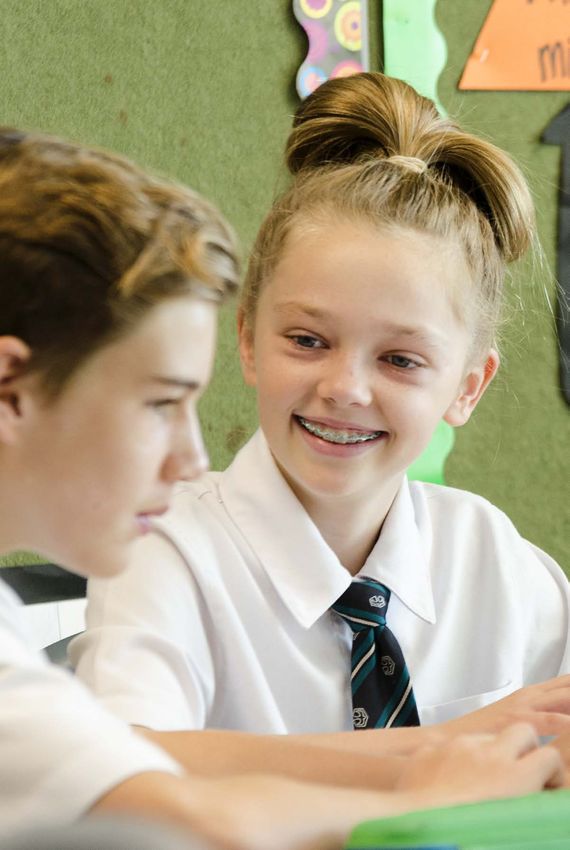
Vision Statement
                                                      To provide our students with a superior
                                                      all-round education to prepare them to
                                                      be responsible world citizens who think
                                                      creatively, reason critically, communicate
                                                      effectively and learn enthusiastically
                                                      throughout life.

                                                      Our Core Values
                                                      – Determination to achieve excellence
                                                      – A passion for learning
                                                      – Willingness to be innovative
                                                      – Respect for oneself and others
                                                      – Loyalty to and pride in Kristin
                                                      – Traditional Christian values

                                                      Our Motto
                                                      Progress with vision, integrity and love

            COVER PHOTO
            Louis Hackett and Bella Marris – Year 8

2019 Middle School Course Guide.indd 2                                                             9/07/18 6:32 PM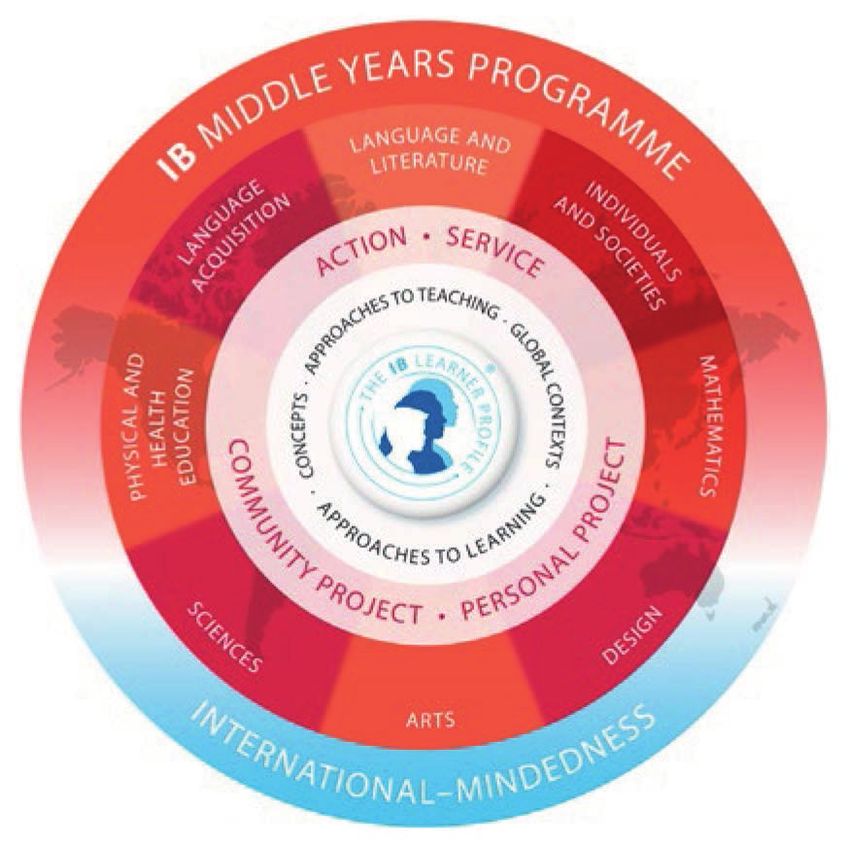
Contents
                                         Introduction                                                                    5
                                         Staff who can assist in course selection                                        6
                                         Middle School (Years 7-10)                                                      7
                                         Course Chart                                                                  25
                                         Year 7
                                         Special Features of Year 7                                                    29
                                         Year 7 Curriculum Programme                                                   30

                                         Year 8
                                         Special Features of Year 8                                                    38
                                         Compulsory Subjects                                                           40

                                         Year 9
                                         Special Features of Year 9                                                    48
                                         Compulsory Subjects                                                           50
                                         Option Subjects                                                               54

                                         Year 10
                                         Special Features of Year 10                                                   62
                                         Compulsory Subjects                                                           64
                                         Option Subjects                                                               67

                                         Senior School and Beyond
                                         National Qualifications Framework (NQF)                                       74
                                         International Baccalaureate Diploma Programme                                 76

                                          PLEASE NOTE:
                                          All Year 10 students will be issued with a 2019 Senior School Course Guide which
                                          contains information on Senior School courses, the NCEA and the IB Diploma
                                          programmes and entry requirements for tertiary courses. Copies of this booklet
                                          are available for interested parents with children in Year 7-9, in both the Senior
                                          and Middle School offices.

2019 Middle School Course Guide.indd 1                                                                                         9/07/18 6:32 PM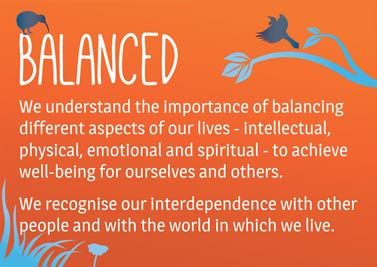
Our Dual Educational Pathway

                                                   NCEA Level 3                        IB Diploma Programme

                                         Year 13

                                         Year 12         NCEA Level 2            IB Diploma Programme

                                         Year 11                        NCEA Level 1

                                                                              IB
                                         Years 7 to 10             Middle Years Programme

                                         Years 1 to 6                       PYP
                                                                  Primary Years Programme

               KRISTIN MIDDLE SCHOOL / YEARS 7-10

2019 Middle School Course Guide.indd 2                                                                        9/07/18 6:32 PM
Foreword
                                         The middle years are important transition years for all of our students as
                                         they move from primary into the middle then senior years of schooling. The
                                         International Baccalaureate (IB) Middle Years Programme (MYP) at Kristin
                                         is designed to provide a rich and varied learning experience. We focus on
                                         personalising and tailoring the learning journey of each student through
                                         these crucial years into the next phase of their learning and the dual-
                                         pathway options (IB and NCEA) available in the Senior School.
                                          Kristin Middle School recognises and acknowledges the increasing
                                         complexity of the changing world in which our students live, and we work
                                         alongside our students to design experiences which address holistically
                                         student’s intellectual, social, emotional and physical wellbeing needs.
                                         Students are supported through varied and engaging learning experiences.
                                         These experiences encourage students to develop as life-long learners,
                                         discover their passions and build their capacities for responsible action and
                                         service within their many life contexts.
                                         The Middle School programmes are built upon the Kristin Mission and
                                         Values, and place the student at the centre, with the emphasis on the
                                         interconnectedness of learning and a balanced education, on being future
                                         ready and by progressing with vision, integrity and love.
                                         Middle School students are encouraged to develop clear and sophisticated
                                         understandings of how they learn best and how they can evaluate the
                                         effectiveness of their learning. All students are provided with opportunities
                                         to develop their ability to reflect purposefully on their learning in safe and
                                         cooperative learning environments. Our integrated approach allows students
                                         to maximise their learning and develop self-awareness, independence and
                                         resilience. This will support students to develop a strong foundation and
                                         academic independence in preparation for Year 11, 12 and 13.
                                         The development of these skills and attributes through the learning
                                         experiences offered in the Middle School at Kristin are relevant and desirable
                                         outcomes for our students. The capacity to experience change and the ability
                                         to function effectively both independently and collaboratively are critical
                                         as students face the opportunities and challenges of adolescence in our
                                         complex contemporary context, as well as their future career and education
                                         pathways beyond school.

                                         Dave Scott
                                         Middle School Principal

                                                                                                                         3

2019 Middle School Course Guide.indd 3                                                                                       9/07/18 6:32 PM
KRISTIN MIDDLE SCHOOL / YEARS 7-10

2019 Middle School Course Guide.indd 4              9/07/18 6:32 PM
Introduction

                                                        5

2019 Middle School Course Guide.indd 5                      9/07/18 6:32 PM
Staff who can assist with course selection
                                   Executive Principal ....................................................................................................... Tim Oughton
                                   Principal, Middle School .................................................................................................. Dave Scott
                                   Assistant Principal, Teaching and Learning Year 7-10 ............................................. Jason Gurney
                                   Assistant Principal, Communication and Administration ........................................... Kate Pollard
                                   Assistant Principal, Pastoral Care .............................................................................. Mark Haslam

                                   Heads of Faculty (HOF) - Years 7-13
                                   Faculty of Technology and Design ......................................................................... Andrew Churches
                                   Faculty of Visual and Performing Arts ............................................................................... Nick Duirs
                                   Faculty of Humanities and Commerce ............................................................................ Roger Lewis
                                   Faculty of Mathematics ................................................................................................ Freya England
                                   Faculty of English ..............................................................................................................David Shaw
                                   Faculty of Languages ............................................................................................... Maureen Gottard
                                   Faculty of Health and Physical Education....................................................................... Trevor Hayes
                                   Faculty of Sciences .................................................................................................Matthew Campbell

                                   Middle School Year Level and Associate Deans
                                   Year 7 Dean ......................................................................................................... Patrick Page-Wood
                                   Year 7 Associate Dean .................................................................................................Megan Bennett
                                   Year 8 Dean ............................................................................................................ Deborah Plummer
                                   Year 8 Associate Dean ..................................................................................................Nicola Hackett
                                   Year 9 Dean ........................................................................................................................... Viv Jones
                                   Year 9 Associate Dean .................................................................................................... Megan Darby
                                   Year 10 Dean ............................................................................................................ Colleen Wassung
                                   Year 10 Associate Dean....................................................................................................Mike Badger

                                   Middle Years Programme
                                   IB MYP Co-ordinator .................................................................................................. John Osbourne
                                   Community Projects ................................................................................................ Helen Mansfield

                                   Specialist Advisers
                                   Senior School Assistant Principal – Tertiary Futures ..............................................Gillian McCaskey
                                   Senior School Deputy Principal ........................................................................................ Geoff Burge
                                   Senior School Assistant Principal (IB Diploma Programme Senior School) ............... Debbie Dwyer
                                   Gifted and Talented Education (GATE, Year 7-10) ....................................................... Raewyn Casey
                                   Director of International Services ................................................................................. Jenny Taylor
                                   International Student Manager ........................................................................................ Helen Kim
                                   International Services Co-ordinator ................................................................................. Cindy Tong
                                   Enhanced Learning Co-ordinator .................................................................................. Megan Darby
                                   Chaplain ............................................................................................................ Rev. Rodney Ramsay
                                   Guidance Counselor (Year K-13) ............................................................................ Chanel Houlahan

                                   Year 10 2019 Option Counseling
                                   Senior School Dean of Apollo House .......................................................................... Richard Darrow
                                   Senior School Dean of Jupiter House .....................................................................Rebecca Simpson
                                   Senior School Dean of Mariner House ...........................................................................John Buckley
                                   Senior School Dean of Saturn House ............................................................................Neelam Davis

               KRISTIN MIDDLE SCHOOL / YEARS 7-10

2019 Middle School Course Guide.indd 6                                                                                                                                                 9/07/18 6:32 PM
Middle School Years 7-10

                                         Principles of Effective Middle Schooling
                                         Our aim is to offer a developmentally appropriate, holistic programme (academic,
                                         personal development, sporting, cultural, spiritual) that is responsive to the
                                         specific individual needs of our students.

                                         The Middle School at Kristin will:
                                         – Provide a positive, secure and supportive atmosphere in which the students’
                                           education will show balance between their cognitive and affective needs
                                         – Focus on the processes of learning
                                         – Be delivered by staff who respect and understand this age group.

                                         Middle School Culture
                                         1/ Teachers who value working in the Middle School because they enjoy
                                            and are skilled in working with this age group
                                         2/ Courageous, collaborative leadership
                                         3/ A shared vision that guides decisions and direction
                                         4/ A positive, safe and supportive environment for staff and students
                                         5/ High expectations of themselves and of each other held by students,
                                            staff and parents
                                         6/ Every student has at least one adult advocate
                                         7/ Close relationships with families and with the wider community, nurtured
                                            through strong communication.

                                         Special Features
                                         1/ A curriculum that is relevant, challenging, integrative and exploratory
                                         2/ Diverse learning and teaching approaches that utilise digital technology
                                            effectively
                                         3/ Assessment and reporting procedures that promote quality learning
                                         4/ Organisational structures that promote relationships and appropriate
                                            Middle School learning
                                         5/ A diverse guidance and support network
                                         6/ Programmes that promote health, wellness and safety for our students
                                         7/ Emphasis on service as action
                                         8/ Student centered rather than subject centered programme.

                                                                                                                            7

2019 Middle School Course Guide.indd 7                                                                                          9/07/18 6:32 PM
Important Information for Parents
                                             An integral element of the Middle School learning programme is choice,
                                             particularly at Year 9 and 10 when Option Subjects become available.
                                             In selecting subjects at each level, we recommend that parents and students keep
                                             in mind the following:
                                             – Ensure that they select subjects which hold great interest for them
                                             – Avoid specialising too early and maintain a broad range of subjects for as long
                                               as possible throughout the Middle School
                                             – Do not drop a subject that may be needed later
                                             – Assess carefully their skills and their areas of interest and try to develop these
                                             – Plan their possible option choices, not just for the next year but for the years
                                               following
                                             – If they have a future career in mind attempt to choose subjects that allow them
                                               to gain an insight into that field
                                             – Seek advice from the many people at Kristin and at home who are able to
                                               provide guidance on subjects and career planning.
                                             Parents and students need to be aware that some courses may not run if, for
                                             example, there are insufficient student numbers. Furthermore, with the large
                                             number of courses we offer, it is not always feasible to provide every possible
                                             combination of subjects.
                                             Year 8 and 9 students will be counseled by Tutors on their option selections in
                                             Term 3. Year 10 students will be counseled by their respective House Deans in the
                                             Senior School for 2020, on their option selections in Term 3, for the following year.

                                             Middle School Student Needs and Characteristics
                                             The period of Middle Schooling (10 to 15 years) involves immense change for
                                             students. In planning educational outcomes for them, the paramount emphasis
                                             must be on the students’ healthy growth and development in all areas – academic,
                                             social, sporting, cultural and spiritual. Adolescents have social, physical,
                                             emotional and intellectual needs that can only be met through specific educational
                                             experiences that are different from either the Junior School or the Senior School.
                                             Students undergo huge changes during the time they are in the Middle School and
                                             their education during this time must directly address their needs.
                                             What are the needs of these young people in our Middle School? The following
                                             seven needs are based on research by Gael Dorman, a renowned American
                                             educationalist. All our programmes must be based on these needs.
                                             1/ The need for a diversity of experiences
                                             2/ The need for self-exploration and self-definition
                                             3/ The need for meaningful participation in school and community
                                             4/ The need for positive social interaction with both peers and adults
                                             5/ The need for physical activity
                                             6/ The need for competence and achievement
                                             7/ The need for structure and clear boundaries

               KRISTIN MIDDLE SCHOOL / YEARS 7-10

2019 Middle School Course Guide.indd 8                                                                                               9/07/18 6:32 PM
Middle School Curriculum Design
Teaching programmes are designed to complement and stimulate learning as the
student moves through the progressive sequence of physiological, academic and
emotional developmental stages. Students in Year 7 and 8 are required to follow a set
programme and in Year 9 and 10 students are offered choices as Option Subjects.
Features of Middle School Programmes
– A strong emphasis on being explicitly taught superior literacy and numeracy skills
– Programmes that are adapted to the needs of adolescents
– A structured pastoral care programme and the assurance that a caring adult
is assigned to each student
– A variety of programmes involving the creative arts, music, languages and
leisure activities
– Opportunities for negotiation, goal setting, self-evaluation and reflection
– Programmes that provide a sense of immediate feedback and practical outcomes
(hands on)
– Emphasis on high-level communication, thinking and problem-solving skills
– Education Outside the Classroom (EOTC) programmes – camps, trips, visitors,
community involvement, service learning and special school events.
Digital Technology
In Kindergarten to Year 13 Kristin School runs programmes which exploit the
rich learning potential of digital technology. During the middle years the use of
technology is an integrated part of the curriculum. Students are exposed to a wide
variety of technologies ranging from their tablets and laptop computers to robots and
3D printers. The students are taught to choose the best tools for their learning from
a basis of personal experience and skills.
Developing student’s ability to manage themselves safely and appropriately online
also lies at the heart of the digital learning program. A significant focus is Digital
Citizenship.
BASE Programme
Kristin is a non-denominational school founded on traditional Christian values,
one of the core values of the school. All Middle School students take part in the
BASE programme. Year-level Chapel services are held several times each term
encouraging worship and reflection and allowing for a high degree of student
participation.
In this programme students are given the opportunity to explore issues of life and
faith. Students think critically about their lives: past, present and hopes for the
future. They are challenged to explore their values, ethics and world views. Students
are exposed to the religions of the world and reflect on their tolerance and respect
for all peoples, cultures and religions. They are given the opportunity to search for
answers to some of life’s big questions.
The principles of BASE are an inclusive environment of respect, care and sensitivity,
understanding where all people have the right to their beliefs and world views. Though
much of the teaching is Christian based, world religions and views will be included in
an open way. The BASE programme is not part of the regular timetable, but is given
two full school days a year, one in the first semester and one in the second.
9
2019 Middle School Course Guide.indd 9 9/07/18 6:32 PMGifted and Talented Education (GATE)
Students who are gifted or talented in intellectual, sporting, cultural arts and
leadership domains are all catered for in the classroom by differentiated teaching
and learning opportunities. There are also programmes on a variety of topics to
cater for the needs of these students.
The education and fostering of gifted students is a highly complex area. Striking
the balance between the needs of the students, the classroom, specialist gifted
programmes and of course social development is something that comes with
experience. The Middle School has, over many years, developed considerable
practical expertise. It also has the advantages and depth that come with a large
school, having the facilities of the Junior, Middle and Senior schools within its
physical amenities: rich information and research facilities, laboratories, theatres,
specialist teaching areas and teachers, GATE personnel, counselors, educational
psychologists and a holistic inquiry-based curriculum can all be drawn upon by the
Middle School.
Our first priority in Middle School GATE is to correctly identify gifted students,
starting with the students in Year 7. The process relies, in part, upon psychometric
testing where available, past and current teacher feedback and parent, peer
and self-nomination. Parents are encouraged to provide information concerning
their child’s gifts and talents and to obtain independent testing if possible. These
sources are all analysed together with other material, by the GATE Selection
Committee. This identification is a fluid and ongoing process and the task is
revisited throughout the student’s time in the school.
Example GATE Programmes
YEAR 7 PROGRAMME Advanced Inquiry Cluster Video Making Creative Writing
Philosophy Art Critical Thinking Robotics
YEAR 8 PROGRAMME Advanced Inquiry Cluster Video Making Creative Writing
Philosophy Art Critical Thinking Robotics
YEAR 9 PROGRAMME Advanced Inquiry Creative Writing Photography Critical Thinking
Art Philosophy Market Share Game
YEAR 10 PROGRAMME Advanced Inquiry NCEA Acceleration Community Project Creative Writing
Creative Thinking Market Share Game
KRISTIN MIDDLE SCHOOL / YEARS 7-10
2019 Middle School Course Guide.indd 10 9/07/18 6:32 PMOne of the great advantages gifted pupils at Kristin have is the high number of students
with abilities in a wide variety of areas, ranging from high intellectual ability and potential
through artistic and musical talent to sport. This means that students can be clustered,
if appropriate, with others of like skills and interests for educational purposes both
within the ordinary class curriculum and outside of traditional teaching boundaries. The
numbers involved allow us to run programmes that would be all but impossible in other
circumstances.
The Middle School has extensive programmes in place to cater for gifted students
which allow for depth and challenge. These include:
– Differentiation in the classroom through the Middle Years Programme (MYP)
– The use of a heavily inquiry-based approach to the curriculum
– A series of different workshops that provide for particular abilities, potentials
and passions and which are specifically designed to extend gifted students.
These include:
– Bridge Building – Mathex
– Children’s Literature Quiz – Otago Problem Solving
– Critical Thinking workshops – Philosophy
– Debating – Photography
– Drama – Robotics
– Future Problem Solving
These are just a sample of some of the specialist workshops we offer every year.
At Year 10, through an Acceleration programme, there are opportunities for many
students to sit NCEA Level 1 Achievement Standards in a range of subjects.
Cluster is a year-long extension and enrichment programme for Year 7-8. It is
a pull-out program once a seven-day cycle. It is at a parallel time to the home
period. Its purpose is to extend the students in areas such as critical thinking
and creative thinking, as well as looking at higher order thinking. The students
work with like minds from their own and other classes. There is an atmosphere of
acceptance where they can take risks in their learning without being judged.
The annual Forensics Camp was introduced in 2011. It caters for Year 8 students
who are enrolled as detectives in a program run by Year 9 and 10 students in an
exciting crime scene analysis and subsequent trial all of which takes place over a
five day period during the holidays.
Year 8 students get to learn forensic techniques and use teamwork to solve the
crime and run the trial. Year 9 students learn management and teamwork skills in
order to create and run the scenarios. Year 10 students learn leadership skills. The
Logistics team of Year 9 and 10 students also learn to project manage, cater and
run a small business.
11
2019 Middle School Course Guide.indd 11 9/07/18 6:32 PMEnglish Language Acquisition
This is an option choice for students who speak English as a second language.
However, students who are assessed as requiring support will be directed to this
subject. At Year 9 students may pick up a second language if desired.
Enhanced Learning
Does your child find reading and comprehension boring?
Does your child find getting ideas written down a challenge?
The assistance of the Middle School Learner Support Team is here to help
Specialised assistance is available to support students with the provision of extra
instruction and guidance in English literacy skills. Both in-class support and
small-group withdrawal is offered, (Language Enrichment and Literacy Plus).
Students are identified from standardised test results and educational
psychometric reports. Students may also be referred by teachers or parents.
Together we work towards setting your child up for greater learning success.
Career Services
Career Education and Guidance programmes are being implemented within the
curriculum at each level in accordance with the Ministry of Education guidelines.
Students may also be referred to the Senior School Assistant Principal of Tertiary
Futures for individual career counseling. Further information on subject selection
and minimum entry levels is in the section “Entry to Tertiary Courses” (see the
Senior School Curriculum Handbook).
E D U C AT I O N I S T H E M O S T
POWERFUL WEAPON
WHICH YOU CAN USE
TO CHANGE THE WORLD
NELSON MANDELA
KRISTIN MIDDLE SCHOOL / YEARS 7-10
2019 Middle School Course Guide.indd 12 9/07/18 6:32 PMInternational Baccalaureate Middle Years Programme
The IB Middle Years Programme (MYP) provides a framework of academic challenge
that encourages students to embrace and understand the connections between
traditional subjects and the real world, and become critical and reflective thinkers.
In the MYP, students study eight subject groups. Distinctive features of the MYP
include:
– Key and related concepts are big ideas, which form the basis of teaching
and learning in the MYP. They promote learning within and across traditional
disciplines.
– Global contexts provide shared starting points for inquiry into what it
means to be internationally minded, framing a curriculum that promotes
multilingualism, inter-cultural understanding and global engagement.
– Approaches to teaching and learning are skills which help students manage
their own learning. They provide a foundation for success in further education
and the world beyond the classroom.
– Service as action (community service). Students take action when they apply
what they are learning in the classroom and beyond. IB learners strive to be
caring members of the community who demonstrate a commitment to service
– making a positive difference to the lives of others and to the environment.
– Language and identity – MYP students are required to learn at least two
languages, their mother tongue and one other. Learning to communicate
in a variety of ways is fundamental to their development of inter-cultural
understanding and crucial to their identity affirmation.
Assessment in the MYP is criterion referenced, so students around the world
are assessed against pre-specified criteria for each subject group. A variety of
assessment strategies are used to enable students to best demonstrate the
learning that has taken place. Tasks are set by teachers throughout the course of
the programme and are assessed internally in the school.
13
2019 Middle School Course Guide.indd 13 9/07/18 6:32 PMIB Learner Profile
The aim of all IB
programmes is to
develop internationally-
minded people who,
recognising their
common humanity and
shared guardianship of
the planet, help to create
a better and
more peaceful world.
IB learners strive to be:
KRISTIN MIDDLE SCHOOL / YEARS 7-10
2019 Middle School Course Guide.indd 14 9/07/18 6:32 PM2019 Middle School Course Guide.indd 15 9/07/18 6:32 PM
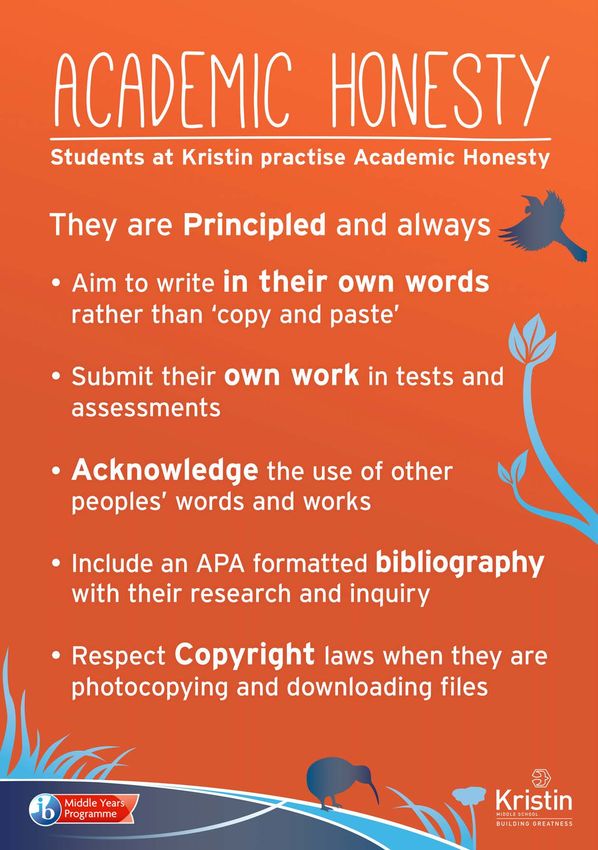
Academic Honesty
                                          The Middle School recognises that academic honesty is embodied in the Mission
                                          Statement, values and IB Learner Profile which are foundations of Kristin School.
                                          A clear, positive approach to academic honesty as good practice is imperative
                                          to ensure that:
                                          – Teacher and student integrity is promoted through sound teaching and learning
                                            practice
                                          – Student research is properly conducted
                                          – Assessment is authentic
                                          – Intellectual property and copyright regulations of New Zealand are upheld.
                                            This policy is consistent with the International Baccalaureate’s philosophy
                                            and expectations and is designed to support the Middle Years Programme’s
                                            Standards and Practices (2010).

                                          The aim of this academic honesty policy is to:
                                          – Promote the principles and practices of academic honesty to ensure that
                                            Middle School students and teachers are fully aware of these
                                          – Ensure that students do not have unfair advantage over other students through
                                            academically dishonest practices such as collusion, duplication, plagiarism or
                                            assessment misconduct
                                          – Ensure that the principles and practices of academic honesty are
                                            explicitly taught
                                          – Detail the opportunities which students receive to learn about and practice
                                            academic honesty
                                          – Define the specific skills and knowledge Middle School students need,
                                            to practice academic honesty
                                          – Outline the procedures to be taken when malpractice or infringement
                                            may have occurred
                                          – To provide a coherent approach which is aligned with the Junior and
                                            Senior Schools.

                                          How are students assessed?
                                          Teachers organise continuous assessment over the course of the programme taking
                                          account of specified criteria that correspond to the objectives for each subject.
                                          The MYP offers a criterion-referenced model of assessment. This means that
                                          students’ results are determined by performance against set standards, not by
                                          each student’s position in the overall rank order.
                                          Teachers are responsible for structuring varied and valid assessment tasks that
                                          allow students to demonstrate achievement according to the required objectives
                                          within each subject group. These may include:
                                          – Open-ended, problem-solving activities and investigations
                                          – Organised debates
                                          – Hands-on experimentation
                                          – Analysis
                                          – Reflection
                                          Assessment strategies, both quantitative and qualitative, provide feedback on the
                                          thinking processes as well as the finished piece of work. There is also an emphasis
                                          on self-assessment and peer-assessment within the programme.

               KRISTIN MIDDLE SCHOOL / YEARS 7-10

2019 Middle School Course Guide.indd 16                                                                                         9/07/18 6:32 PM
MYP Assessment Criteria
Each subject area has a set of unique criteria that are used to assess student work.
The maximum grade awarded for each criteria is 8.
Subject Criteria A Criteria B Criteria C Criteria D
Language and Analysing Organising Producing text Using language
Literature
Language Comprehending Comprehending Communication Using language
Acquisition spoken and visual written and visual
text text
Individuals and Knowing and Investigating Communicating Thinking
Societies understanding critically
Sciences Knowing and Inquiring and Processing and Reflecting on
understanding designing evaluating the impacts of
science
Mathematics Knowing and Investigating patterns Communicating Applying
understanding mathematics in
real-life contexts
Arts Knowing and Developing skills Thinking creatively Responding
understanding
Physical Knowing and Planning for Applying and Reflecting
and Health understanding performance performing and improving
Education performance
Design Inquiring and Developing ideas Creating the solution Evaluating
analysing
MYP Projects Investigating Planning Taking action Reflecting
Interdisciplinary Integrating Learning in context Communicating Reflecting
knowledge and
understanding
THE BEST WAY
TO PREDICT YOUR FUTURE
I S T O C R E AT E I T.
ABRAHAM LINCOLN
17
2019 Middle School Course Guide.indd 17 9/07/18 6:32 PMThe IBO Community Project
As the culmination of the MYP, students are expected to complete a Community
Project. This is a major project with a focus of their choice, completed under
the close guidance of a supervising teacher. This is a rewarding opportunity
for Year 10 students to undertake a service and action project that inspires
them, demonstrates their abilities as good learners, and practically facilitates
social responsibility. The Community Project offers students the opportunity to
collaborate, if they choose, to complete their inquiry and service with one or two
other students.
The process, expectations and requirements of the Community Projects are
presented to students through regular, workshops, although this significant
project is essentially extra-curricular and is completed during students’ own time.
Each year the Community Project resource is published as a complete online guide
for students and their parents.
An information evening is also held in Term 1 for parents of Year 10 students. The
common theme is that the Community Project has intrinsic worth that will benefit
the student and others, and is a project approached through one of the MYP’s
Global Contexts. The projects culminate with a presentation to an audience of
peers, teachers and parents.
Parents are most welcome to discuss any queries about the Community Project
with the Community Project Co-ordinator, Mrs Helen Mansfield.
Curriculum Integration
Wherever possible, the learning programmes incorporate curriculum integration.
Leaders from several faculties regularly meet and plan units of work that integrate
the various disciplines/subjects.
Curriculum Staffing
To assist in the implementation and co-ordination of MYP, key staff members are
responsible for leadership roles in areas of curriculum. These roles include:
Assistant Principal Teaching and Learning – responsible for all aspects of
Middle School Teaching and Learning
MYP Co-ordinator – responsible for the implementation for the MYP
Community Project Co-ordinator – responsible for the organisation of the Year 10
Community Project
Middle School Teaching and Learning Leaders – responsible to the Head of Faculty
in spiraling subject learning in the one subject for Year 7-10
KRISTIN MIDDLE SCHOOL / YEARS 7-10
2019 Middle School Course Guide.indd 18 9/07/18 6:32 PMMiddle School Homework Policy
Middle School students at Kristin are provided with a wide range of opportunities.
Staff acknowledge that Middle School students require a balanced and healthy
lifestyle which involves academic, sport, culture, social life and family. Therefore,
the amount of time provided for homework will reflect this balance. (Lillico, 2014)
Homework should be a balance of:
1. Physical activity
2. Revisiting what is learned at school
3. Cultural pursuits
4. Learning household tasks.
Homework enables our students to become independent learners. It also provides
students with the chance to reflect on their day’s learning.
Homework will:
– Be introduced and explained by teachers who are mindful and supportive of
the fact that students and their families lead busy lives. The homework tasks
will recognise and value the vast learning opportunities that already take place
within the home
– Incorporate a diverse range of activities which promote lifelong learning
– Encourage all students to pursue an active lifestyle, by valuing sports and other
physical activities that students engage in
– Develop students’ study habits e.g. organisation, persistence, time
management, responsibility and independence
– Inspire and motivate students and encourage their creativity when presenting
and documenting their evidence
– Support current classroom learning or what is about to be learnt
– Provide opportunities for students and their families to interact in the
learning process
– Encourage the use of resources available outside the school environment e.g.
community members, local libraries and the media
– Have clear learning intentions and suitable success criteria
– Provide a positive link between home and school that enhances a
child’s learning
– It is better for student learning to do small amounts of homework (chunks)
regularly rather than a large amount all at one time (Hattie).
Feedback
– All work should be acknowledged by the teacher in writing (tick, comment etc)
or verbally to the student
– Where possible and appropriate, precise feedback should be provided relating
to what the student needs to do to effect improvement
– Staff will monitor students who do not complete required homework and alert
the Dean about any students they have concerns about
– If a student is under-performing, it is required of staff that they take action.
Talk to the student, talk to the parents and talk to the Dean.
19
2019 Middle School Course Guide.indd 19 9/07/18 6:32 PMAdministration
The amount of homework set will be at the discretion of the teacher, but in general
terms, a student’s total homework schedule from all subjects will not exceed the
following:
Year 7
Home Room teachers monitor all homework. Focus for all homework is a
maximum of:
– Language acquisition 35 minutes per week
– Literacy 35 minutes per week
– Numeracy 35 minutes per week
The balance of all other homework will be at the discretion of the homeroom
teacher, the student and the student’s parents.
This could include such things as:
– Physical activity – Revisiting what is learnt at school
– Cultural pursuits – Learning household tasks
– Reading for pleasure
Year 8
Home Room teachers monitor all homework. Focus for all H/W is a maximum of:
– Language acquisition 35 minutes per week
– Literacy 35 minutes per week
– Numeracy 35 minutes per week
The balance of all other homework will be at the discretion of the homeroom
teacher, the student and the student’s parents.
This could include such things as:
– Physical activity – Revisiting what is learnt at school
– Cultural pursuits – Learning household tasks
– Reading for pleasure
Year 9
No student in Year 9 will exceed 3 hours of homework per week. The balance of all
other homework will be at the discretion of the student and the student’s parents.
This could include such things as:
– Physical activity – Revisiting what is learnt at school
– Cultural pursuits – Learning household tasks
– Reading for pleasure
Year 10
No student in Year 10 will exceed 5 hours of homework per week
The balance of all other homework will be at the discretion of the student and the
student’s parents.
This could include such things as:
– Physical activity – Revisiting what is learnt at school
– Cultural pursuits – Learning household tasks
– Reading for pleasure – Study for examinations
– Community Project
KRISTIN MIDDLE SCHOOL / YEARS 7-10
2019 Middle School Course Guide.indd 20 9/07/18 6:32 PMAssessment Calendar
An assessment calendar is created each term for every year level, outlining all the
term’s subject assessments and the dates due.
The Assessment Calendar is a means by which students are supported with
their personal planning and organisation so that not only can their assessments
be completed on time but also to a high standard. The assessment calendar for
each year level is located on myChild on the school website and on the student’s
myKristin class calendar.
Homework Club
The Middle School Homework Club runs three times a week and provides the
opportunity for students to practise good homework habits and to gain support
with specific subjects and areas of difficulty.
Tests and Examinations
– Years 7-9: assessments are integrated into the curriculum and therefore there
are no examinations.
– Year 10: students sit two-hour examinations at mid-year and at the end of year
in; Science, English, Mathematics, Humanities and Language option.
21
2019 Middle School Course Guide.indd 21 9/07/18 6:32 PMStudent Welfare
The fundamental goals of Kristin’s Student Welfare programme are to promote
involvement between teachers and students and to ensure that each student’s
individual welfare is promoted. Every student needs to have a relationship with
at least one adult that is characterised by warmth, concern, understanding and
openness.
Each student is placed in a tutor group whereby, on a daily basis, they meet with
the same student group and tutor teacher for the calendar year. Each year level
has a Dean, who has overall responsibility for the year group and works with all
staff involved with students at that year level. Each Dean begins with a group at
Year 7 and moves up each year with the group to the next level.
The Middle School Principal, Assistant Principals, Counselors and the Chaplain
are also key players in the Student Welfare programme. The Guidance Counselors
work with students and their families to provide support for learning, behavioural
and emotional issues.
Communication with Parents
A close relationship between home and school is essential for student success.
Parents are urged to contact the year-level Dean about any matter affecting the
welfare of their child. If in doubt parents should phone or email.
Rewarding Student Achievement
We place the highest priority on ensuring that not only are our students given the
opportunity to succeed in a wide range of activities but that their achievements in
these activities are acknowledged.
– Each week in the school newsletter names of student achievers are listed.
– GOTCHA tickets are awarded to students for any display of positive behaviour.
These go into the draw for gift vouchers.
– Treasure Chest stickers are awarded for excellent pieces of class work. When
students collect 20 stickers, they are entitled to a voucher for the Express Cafe.
– Following each set of reports, Middle School students can gain awards based
on their attitude and perseverance displayed towards their learning.
– We have an extensive range of trophies and prizes handed out to Middle School
students at the Cultural, Sports and Academic Prize-givings. They cover
achievement, potential, fair play and social skills.
– Each week, the Principal invites at least one student from each tutor group in
a year level for morning tea at the ‘10 O’clock Club’. The students are selected
because they have completed a piece of quality school work during the previous
month.
– Great News Postcards – these handwritten notes are posted to students to
acknowledge individual achievements.
With such a range of awards, each and every student has the opportunity to be
recognised. Staff at Kristin want to be ‘good-finders’.
KRISTIN MIDDLE SCHOOL / YEARS 7-10
2019 Middle School Course Guide.indd 22 9/07/18 6:32 PMKristin Attitude Profile
Award Criteria
Motivation
– Shows curiosity and a zest for learning
– Takes pride in learning and has high aspirations
– Applies positive thinking and mindfulness
– Takes initiative to ensure purposeful learning and goals reached
Principled
– Acts with honesty and integrity
– Displays a strong sense of fairness and justice
– Open minded and respects the dignity of others
– Takes responsibility for their own actions
Organisation
– Sets goals that are challenging and appropriate
– Plans and balances time effectively to meet deadlines
– Is punctual and brings necessary resources to class
– Selects and uses technology effectively
Collaboration and Caring
– Communicates effectively and expresses ideas
– Learns effectively alongside others
– Respects diversity and considers perspectives
– Works effectively in teams
– Is helpful, shows empathy and acts on it
Perseverance and Resilience
– ‘Bounces back’ after adversity, mistakes and failure
– Is flexible and accepts change
– Stays focused on tasks to reach goals
– Embraces challenging experiences
2019 Middle School Course Guide.indd 23 9/07/18 6:32 PMKristin Library Information Centre (LIC)
The LIC supports the Middle Years Programme by providing a place, resources
and skills for students to learn through inquiry and reading successfully. We have
an award-winning library with break out rooms dedicated to fostering a love of
quality literature in all its variety, areas for easy laptop use for Internet searching
and word-processing as well as a fully functioning centre for all resources in
different formats for all inquiry units and a comprehensive collection of fiction and
magazines for young adults’ enjoyment.
Our librarians are all fully qualified and are eager to help students with
information services to help find relevant information and generally to answer any
queries about the way information is organised. They work collaboratively with
teachers across the curriculum to meet the information and reading needs of
students. A group of students volunteer to be Student Librarians. They help and
advise on the running of the library on a weekly roster and organise functions,
competitions and events for students.
The library at Kristin is a place where staff and students are regular borrowers
and where they come in classes, in small groups or individually to study, to read
or to browse the displays and the Internet. The library webpages in the myKristin
provide links to essential inquiry resources, websites that support curriculum
learning and recreational reading promotions.
The library welcomes students from 8am-4.30pm each school day.
Education Outside the Classroom (EOTC)
EOTC is a key feature of Middle School education.
In early Term 1, all Middle School students experience Camp Week. Students will
gain new knowledge and understandings, skills and abilities, and attitudes, as well
as build on those they already have. Key outcomes from this week:
– To provide students with opportunities for enjoyment, adventure and challenge,
both close to home and far away
– To develop students’ skills so they can move with confidence and safety in
urban, rural and wilderness settings
– To help students develop respect for themselves and others by providing them
with opportunities for personal and social development
– To develop independence and interdependence and to provide opportunities to
strengthen links between students and staff.
KRISTIN MIDDLE SCHOOL / YEARS 7-10
2019 Middle School Course Guide.indd 24 9/07/18 6:32 PMMiddle School Course Chart
Year 7 Year 8 Year 9 Year 10
English English English Language and Literature
Individuals and Societies Individuals and Societies Individuals and Societies Individuals and Societies
Mathematics Mathematics Mathematics Mathematics
COMPULSORY SUBJECTS
Science Science Science Science
Arts Arts Physical Education Physical Education
Music/Art/Dance/Drama Music/Art/Dance/Drama
Physical Education/Sport Physical Education/Sport Language Acquisition* Language Acquisition*
Language Acquisition* Language Acquisition* Health Health
Health Health BASE BASE
CHOOSE AT LEAST ONE
BASE BASE CHOOSE ONE OPTION
ARTS OPTION FROM THE LIST BELOW
FROM THE LIST BELOW
Technology Design Technology Design Music Music
Food/Materials/Hard/Soft Food/Materials/Hard/Soft
Food Design Food Design Art Art
Dance Dance
Drama Drama
CHOOSE AT LEAST ONE
DESIGN OPTION Visual Design
FROM THE LIST BELOW
Digital Design Food Product Design
Visual Design Textiles Product Design
Materials Product Design Engineering Design
Textiles/Food Product Digital Design
Design
SELECT ANY OPTION ABOVE
OR BELOW TO MAKE UP A CHOOSE ONE OPTION
FROM THE LIST BELOW
TOTAL OF FOUR OPTIONS
Consumer Economics Future Problem Solving
Digital Design Visual Design
Future Problem Solving Second Foreign Language
Visual Design Sport Studies
At Year 7 and 8 Digital Design is Outdoor Education Engineering Design
fully integrated into the curriculum
programme. In Years 9 and 10 Digital Sport Studies Textiles Product Design
Design is a separate subject.
Materials Product Design Food Product Design
*Languages available are; Chinese, Textiles/Food Product Music
Design
French and Spanish
Sports Academy Dance
(by invitation only)
Sports Academy will count as two
Sports Academy
option choices. Selected students are (by invitation only) Food Product Design
then able to choose two other option
subjects of their choice. Digital Design
Enterprising Economics
25
2019 Middle School Course Guide.indd 25 9/07/18 6:32 PMKRISTIN MIDDLE SCHOOL / YEARS 7-10 2019 Middle School Course Guide.indd 26 9/07/18 6:32 PM
Year 7

2019 Middle School Course Guide.indd 27            9/07/18 6:32 PM
THE MORE
                                                     T H AT Y O U R E A D
                                                    THE MORE THINGS
                                                    YO U W I L L K N OW.

                                                        THE MORE
                                                    T H AT Y O U L E A R N
                                                    THE MORE PLACES
                                                       YOU’LL GO.
                                                           DR. SEUSS

               KRISTIN MIDDLE SCHOOL / YEARS 7-10

2019 Middle School Course Guide.indd 28                                      9/07/18 6:32 PM
year
7
Curriculum Overview
Subjects taught by class tutors Subjects taught by specialist teachers
as part of the Core programme
English Mathematics
Individuals and Societies Science
Arts
Visual/Drama/Music/Dance
Physical Education/Sport
Language Acquisition
Health
BASE
All subjects are compulsory
in Year 7. Options are
Technology Design
introduced in Year 9.
Special Features of Year 7
Digital Design
Basic operating procedures are taught in unison with the curriculum to provide
students with effective learning skills and to meet the demands of an increasingly
computer-literate society.
Education Outside the Classroom (EOTC)
Year 7 attend a five-day camp in February and are also involved in EOTC activities
during the year. Activities undertaken encourage group co-operation, initiative and
personal development. Social interaction between the old and the new Kristin students
in Year 7 and the building of new and existing friendships are key themes of EOTC.
Special Events
TERM 1 TERM 3
– Orientation Day – Character Reading
– Outdoor Education Week – Year 7 Formal
– Swimming Sports – International Languages Week
– Cross-Country – Visit to Kelly Tarlton’s
– Camp – Visit to Stardome
– Science Roadshow
TERM 2
– Anzac Service TERM 4
– Character Reading – Community Service Day
– Electives – Celebration of the Year (COY)
– Auckland Museum Visit – Sports & Cultural Assemblies
– House Singing – Athletic Sports
– Options Day
Structure of Classes
There are six mixed-ability gender-balanced classes. The student’s language choice
determines, to some extent, which class they will be in. Mathematics classes are
organised in mixed ability groupings, which may change throughout the year.
29
2019 Middle School Course Guide.indd 29 9/07/18 6:32 PMyear
7
Art
The Year 7 course encourages nurturing creativity in students as well focusing on
their ability to be organised and reflective. Topics and themes change from cycle
to cycle and students have the opportunity to create art in both two and three-
dimensional forms. Students are introduced to a range of artist models and art
from different cultures is discussed.
The students keep a developmental workbook to document their ideas and
reflections.
Students may use their laptops to create digital art, research from websites, write
reflections, make videos or presentations that document their artistic journey. In
addition, the students are introduced to a range of interactive art websites.
BASE (religion, ethics and philosophy)
In the first BASE day for Year 7 the students are encouraged to explore their lives,
‘My Story’. The aim is for the students to identify the uniqueness of their families
and life events that have formed them and their world view.
The second BASE day will challenge students to continue exploring their ‘story’
through identifying and understanding the values that they live by. The day
explores how values are formed and how they impact the way we live our lives.
Dance
Year 7 dance is a creative, athletic and highly collaborative course, that introduces
students to the world of dance around them. Whole class and small group
activities are structured to enable students to build their confidence in a variety
of fun movement styles, ranging from hip hop, street jazz, martial arts, and kapa
haka. Students will learn about the elements of dance and how to choreograph
original dances. They will experience being part of a whole class performance,
and create a developmental journal that captures their reflections over the course.
Topics covered include:
– What is dance? – Warming up and cooling down
– View and respond to dance videos – Choreography basics
– Performance techniques – Rhythm and use of props in dance
Drama
Drama is a collaborative process that uses live people as its medium. Students will
work individually and in small groups to develop performance skills. They will have
an opportunity to experience a variety of theatrical concepts and forms including:
– Working in role – Ensemble work
– Character building – Devising
– Introduction to script work – Movement and body awareness
– Reflection methods
KRISTIN MIDDLE SCHOOL / YEARS 7-10
2019 Middle School Course Guide.indd 30 9/07/18 6:32 PMYEAR 7 / COMPULSORY SUBJECTS
Language and Literature
In the Year 7 programme, we explore the ways in which storytelling has permeated
cultures and histories around the world. We look at the value of story and
storytelling, helping to explain who we are, where we have come from and what
we value. Our writing skills are focused on producing both creative and persuasive
pieces, improving our use of vocabulary, and including stylistic features.
Language Acquisition
At Year 7 a foreign language is studied from a choice of Chinese (Beginning or
Continuing), English Language Acquisition, French or Spanish. Students will
generally continue with their chosen language to the end of Year 10. The language
is studied following the Accelerative Integrated Methodology (AIM) which uses a
story-based approach to learning and provides an immersion experience in the
classroom. The introduction of high-frequency vocabulary combined with the
use of visual gestures accelerates oral production from an early stage. Activities
completed by students include:
– Lessons conducted entirely in the target language from the first day
– Participating in a play in the language being studied
– Completion of listening, speaking, reading and written exercises
– Using a range of interactive websites to develop and practice vocabulary
– Learning to appreciate and develop a respect for the culture and traditions of
the language.
Health
Activities are designed to identify, develop and practice skills for positive social
behaviour. These skills will focus on the family and friends. Students will develop
strategies to promote communication, problem-solving and conflict resolution
which will strengthen self-esteem and sense of well-being.
Topics will include:
– Hauora – well-being – Positive communication & friendships
– Pubertal change – Healthy lifestyle
31
2019 Middle School Course Guide.indd 31 9/07/18 6:32 PMyear
7
Individuals and Societies
The aim of the study of Individuals and Societies in Year 7 is to encourage and
enable students to develop and inquiring mind and basic research skills, whilst
developing awareness and understanding of people and cultures in a variety of
places and times. This is studied through understanding related concepts. The
following will be studied:
– Exploring our World – history of exploration and the development and recording
of maps. Leading on to general world geography and map reading skills
– Scars on the Heart – how hardships of WW1 contribute to change. This is a
transdisciplinary unit with English
– New Frontiers – an interdisciplinary unit with Science where students explore
the challenges, innovations and leadership styles of explorers
– We live on a Hotspot – a trans-disciplinary unit with English whereby students
explore Auckland’s unique landscape brings its own challenges requiring
societies to adapt and respond accordingly.
Mathematics and Statistics
Mathematics is all around us and, in Year 7, students are encouraged to become
more aware of this by learning to apply logic and reasoning in real life situations; to
reflect on the usefulness of understanding relationships between numbers; to gain
insight into the development of patterns. Students will:
– Discover the usefulness of understanding probability in order to have a better
chance at winning a game like Cluedo
– Use a range of number strategies to answer questions quickly and easily
– Find patterns and relationships in natural events and learn to express these
using words, symbols or rules.
Music
A dynamic and exciting music programme covering performance, appreciation
and composition has been developed for Year 7 students. They are catered for
at their ability level and are exposed to the use of a wide range of musical skills.
They will perform original works and be challenged to explore a variety of musical
experiences. Year 7 students can join the Year 7 and 8 choir or the Middle School
orchestra as well as form rock bands and perform in Kristin’s musical events.
Physical Education
The aim of our Physical Education programme in Year 7 is:
– To develop and build skills and knowledge that enable students to participate
successfully across a range of different activities
– Students will have a basic introduction into the importance of warm-ups and related
aerobic activities, allowing students opportunities to increase base fitness levels
– Striking skills utilising the driving range
– Continue to develop the essential run, jump and throw skills through an
athletics module
– Provide opportunities to explore different movement patterns and forms.
KRISTIN MIDDLE SCHOOL / YEARS 7-10
2019 Middle School Course Guide.indd 32 9/07/18 6:32 PMYou can also read


