Migrants with Irregular Status in Europe: Guidance for Municipalities - Clarinet Project
←
→
Page content transcription
If your browser does not render page correctly, please read the page content below
Executive Summary

Migrants with Irregular Status in Europe: Guidance for Municipalities
The purpose of this guidance is to assist municipal authorities in responding appropriately to
the presence of migrants with irregular status, including through facilitating their access to
some local services. It provides information on municipal policies and practices as an
evidence base upon which cities and towns may develop their own approach. The guidance
is primarily intended for municipal authorities but is also aimed at public bodies which work
with them. Working arrangements between public bodies and non-governmental service
providers is one of the topics covered.
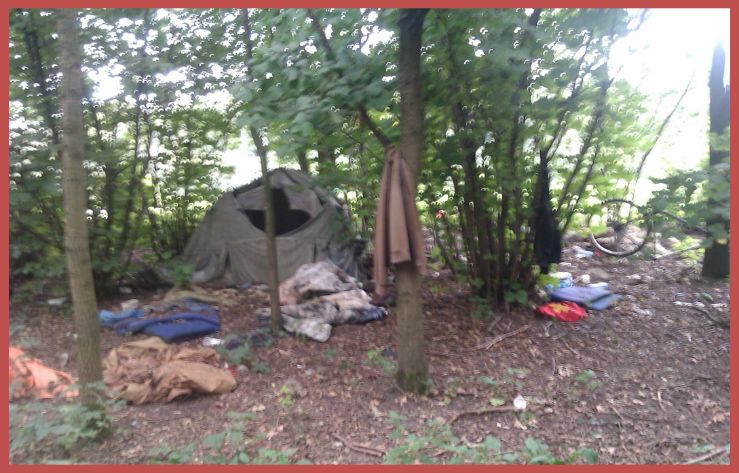
Among those living in local communities are people whose immigration status is irregular,
limiting their entitlement to work and public services. National legal frameworks provide
minimal or no access for irregular migrants to most services. This can lead to social
problems at the local level, including homelessness and destitution, which municipalities
find they need to address. While Europe’s municipalities have benefitted from guidance on
policies and practices in relation to migrants who are authorised to reside, guidance on how
to address the challenges raised by irregular migrants has not been available. One aim of
this guidance is to raise awareness of the particular challenges municipalities face in relation
to this group of residents. It is hoped that this will facilitate dialogue within and between
authorities on effective approaches they can take.

This guidance has been produced by the City Initiative on Migrants with Irregular Status in
Europe (C-MISE), a Working Group of eleven cities from ten European countries meeting
over a period of two years to share their experience, policies and practices, and to prepare
this guidance. This does not necessarily signify the approval of any individual city for each
aspect of the guidance. The cities are: Athens, Barcelona, Frankfurt, Ghent, Gothenburg,
Lisbon, Oslo, Stockholm and Utrecht. Helsinki and Zurich are Associate Members. The
Working Group was adopted as a sub-group of Eurocities’ Working Group on Migration and
Integration at the first meeting of C-MISE in June 2017.
The C-MISE initiative is funded by the Open Society Initiative for Europe and facilitated by
the Global Exchange on Migration and Diversity - the knowledge-exchange arm of the
Centre on Migration, Policy and Society (COMPAS) at the University of Oxford. The
Guidance has been written for the Working Group by Dr Sarah Spencer, Director of the
Global Exchange, and Senior Researcher Nicola Delvino.

Between and within each country the law on access to services can vary for different
categories of irregular migrants. This guidance does not provide municipalities with details
of the legal provisions within each country. It provides general guidance, illustrated with
practical examples, which municipalities can consider within the context of relevant national
and regional legal frameworks.
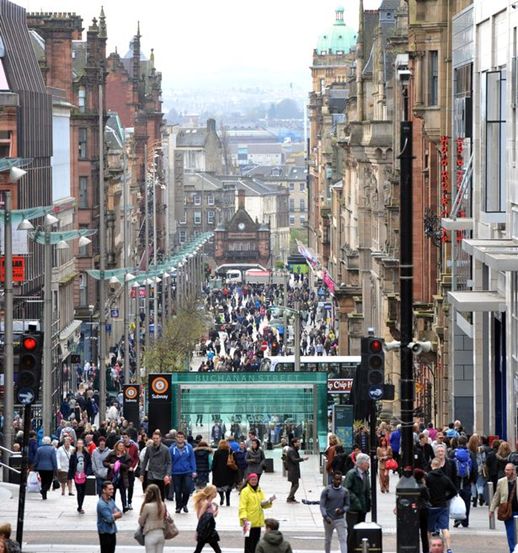
While immigration control is primarily a matter for national governments, responsibility for
public services is a shared competence. Municipalities across Europe differ in the range of
services for which they are responsible but all have responsibility for the general welfare of
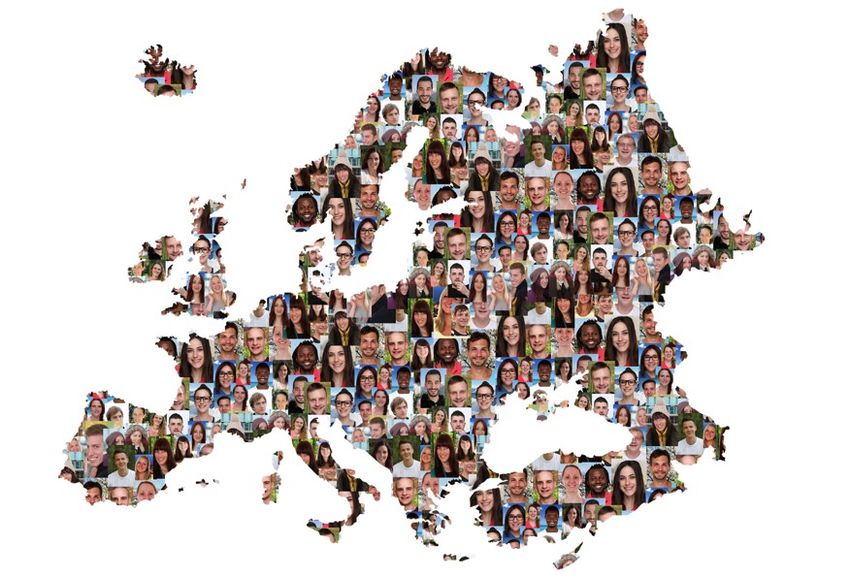
residents in their area. Municipalities provide services such as healthcare, policing, housing,
social services and education to people with differing needs, while bearing a broader
responsibility for maintaining social cohesion and public safety. Their role in promoting
tackling poverty is also increasingly recognised at the national and international level.

 ‘Migrants with irregular status’ refers to ‘third country nationals’ (from outside of the
European Union (EU) and the European Economic Area (EEA)) who have entered a European
country without authorisation (‘irregular entrants’), or who entered with a valid entry
permit but whose rights to stay have lapsed (‘overstayers’).

Aims and context
The first part of the guidance explains the challenges posed for municipalities by the
presence of migrants with irregular status and sets out the reasons why they facilitate
access to some services: to comply with legal duties; reduce irregularity; achieve a range of
municipal social policy objectives (such as public health and crime prevention); ensure the
efficient administration of public services; respect professional ethics; reassure public
opinion and safeguard the public image of the city.

Governance, coordination and consultation
The second part covers internal and inter-agency consultation, information sharing and
coordination; consultation and coordination with external stakeholders; contribution of the
municipal umbrella body; dialogue with national governments; developing a comprehensive
action plan and allocating a budget.
General principles on providing access to services
The third part covers ways in which municipalities facilitate access to mainstream services
with other residents and other migrants; or provide a service for irregular migrants who
cannot access a mainstream service. It explains why and how municipalities work with non-
governmental organisations (NGOs) to provide services; and how personal data on irregular
migrants can be handled, including the concept of ‘firewalls’.

Specific areas of service provision
The fourth part covers key service areas: facilitating regularisation and return through
provision of immigration counselling and support; accommodation; access to justice and
protection for victims of crime; healthcare; and access to schools, language classes and
training.

Local practices that reduce barriers to accessing services
Finally, the fifth part addresses promoting awareness of migrants’ rights; orientation of
newcomers; facilitating access to documentation; issuing local ‘civic cards’ facilitating access
to services; and fear of being apprehended when accessing a service.
Each section of the guidance stands alone. The reader can use the Contents page to
navigate the information needed. Further details of many of the practices and source
materials can be found in the C-MISE background paper: Delvino, N. (2017). European Cities
and Migrants with Irregular Status: Municipal initiatives for the inclusion of irregular
migrants in the provision of services.
Centre on Migration, Policy and
     Society (COMPAS)

   City Initiative on
     Migrants with
  Irregular Status in
   Europe (CMISE)

   Integrating Cities
   Conference, Milan
         2018

         Jan Braat                         11 Cities from 10 European countries

                                  Athens, Barcelona, Frankfurt, Ghent, Gothenburg, Lisbon,
      Chair, CMISE                          Oslo, Stockholm and Utrecht (Chair).
                                         + Helsinki and Zurich as Associate members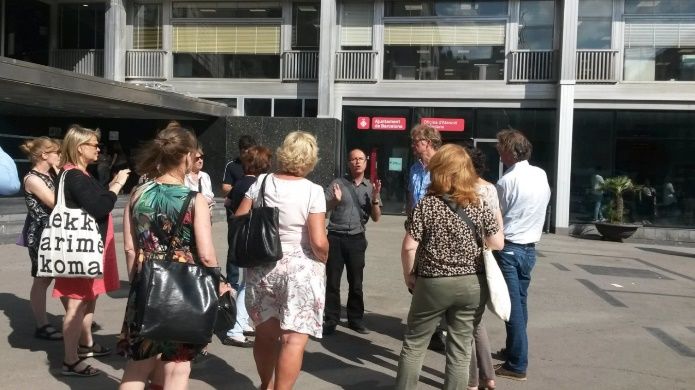
Irregular (‘undocumented’) migrants
Citizens of non EU countries who have not fulfilled their conditions of entry or stay
Some enter without permission
Many enter legally, to work, join family, study or seek refuge, but do not comply
with conditions of their visa, or overstay

Most recent estimate?
0.4% - 0.8% of the population of the EU 27 in 2008
Higher proportion of city residents

   Recent refugees
   refused asylum are
   expected to swell
   numbers: EU return
   rate is 36%

                                                                                            2
                                                                            Source: UNHCR
A European challenge

  Many work or are supported by family and friends. Some become destitute, need
  shelter and essential services, posing policy challenges for national and local
  government

                       Utrecht, 2012
                                                                      Barcelona, 2013-2014

                                       Grenfell Tower, London, 2017
                                                                                             3
Berlin protest, 2013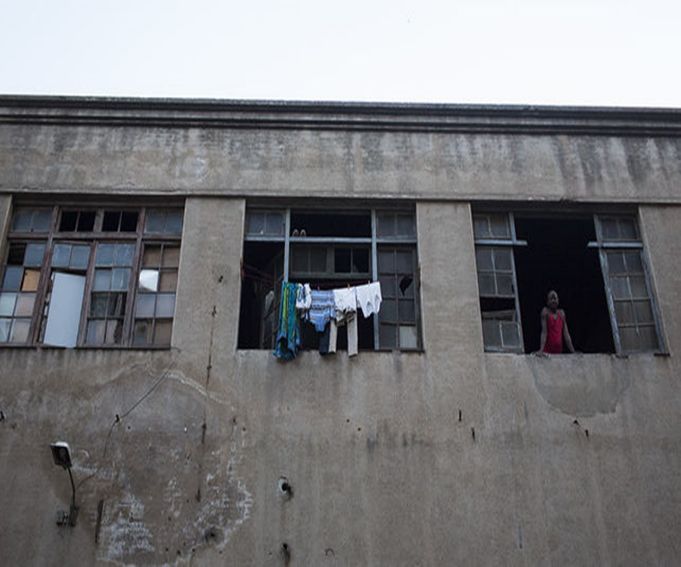
Expectation that cities will foster integration of regular migrants

                                                      But not those
                                                      whose status is
                                                      irregular
                                                      & subject to
                                                      enforcement
                                                      action

                                                                        4
European governments do recognise the
need for access to some services
•   All EU28 allow emergency health           Extensions to access:
    care (although some require              Ø Sweden 2013: Health care
    payment)                                   ‘that cannot be postponed’ &
                                               full access for children to
•   Some allow access to primary care,         health care & school
    hospital care, maternity, treatment      Ø Spain 2011: special residence
    for infectious diseases, & full care       permits for victims of
    for children                               domestic violence
                                             Ø UK 2012: Treatment for HIV
•   School: Ten countries granted
    specific entitlement; law in most
    states allows ‘all’ children to attend

                                                                               5
But many cities provide services beyond
national expectations

•   Health care                     • Skills training; job search
•   Nursery education               • Local ID cards
•   Shelter, accommodation          • Safe reporting for victims
•   Legal advice & representation     of crime: ‘safe in, safe out’
•   Language classes
•   Birth certificates                 Provided directly by
•   Assisting voluntary returns        the city or in
                                       partnership with an
                                       NGO

                                                                      6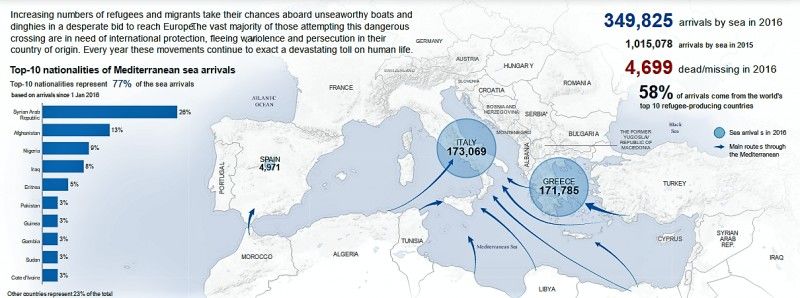
Why? For many reasons…

                           Homelessness, street sleeping
                                  Crime prevention
                           Image of city: tourism, business
                          Public health; domestic violence
                             Resolving irregular status
                              Managing public services
                            Humanitarian; medical ethics
                           Legal duties; Child protection
                                  Reputational risk

So Cities need to talk and learn from each other              7
Athens
          CMISE project: how it happened

                             Eurocities
                             WG assists
                               Oxford
                              research

Utrecht     Meet in
                                                Issue 1st
            Utrecht
                                              discussed by
            Athens
                                               WG: Riga
          Barcelona &
                                               April 2013
            Ghent

                        Barcelona July 2018
          OSF funds 2                         1st workshop
          year CMISE                           Integrating
            project                               Cities
                                                 Tampere
           2017-2019                            Sept. 2013

                               2 day
                             workshop
                             Barcelona,
                            Eurocities &
                            Oxford, 2014
What we are doing
• Working group
meeting over 2 years Four aims:
(2017-2019) • Build a stronger body of evidence
on city practices
• Facilitated by the • Share experience & ideas
Global Exchange on • Produce guidance & video on key
Migration & Diversity, areas of service provision for
University of Oxford municipalities across Europe
• Develop a shared, city perspective
• Adopted as Working on ways irregular migrants could
Group by Eurocities be mainstreamed into EU policy
agendasDrawing on Oxford’s research • Spencer, S. (2017). ‘Multi-level governance of an intractable policy problem: migrants with irregular status in Europe’. Journal of Ethnic and Migration Studies • Delvino, N. (2017). ‘The challenge of responding to irregular immigration: European, national and local policies addressing the arrival and stay of irregular migrants in the European Union’. http://www.compas.ox.ac.uk/event/autumn-academy-2017-strategic-approaches-on-irregular-migrants-in- europe/ • Delvino, N. (2017). European Cities and Migrants with Irregular Status: Municipal initiatives on the inclusion of irregular migrants in the provision of services. COMPAS report for C-MISE project. http://www.compas.ox.ac.uk/2017/european-cities-and-migrants-with-irregular-status/ • Spencer, S. (2016). ‘Postcode Lottery for Europe’s Undocumented Children: unravelling an uneven geography of entitlements in the European Union’. American Behavioural Scientist. • Price, J. & Spencer, S. (2015). ‘Safeguarding children from destitution: Local authority responses to families with ‘no recourse to public funds’. Oxford: COMPAS report. https://www.compas.ox.ac.uk/media/PR- 2015-No_Recourse_Public_Funds_LAs.pdf • Spencer, S. & Hughes, V. (2015). ‘Fundamental rights for irregular migrants: legal entitlements to healthcare and school education across the EU28’. European Human Rights Law Review (6), 604-616); and full report: https://www.compas.ox.ac.uk/media/PR-2015-Outside_In_Mapping.pdf • Delvino, N. & Spencer, S. (2014). ‘Irregular Migrants in Italy: Law and Policy on Entitlements to Services.’ 10 http://www.compas.ox.ac.uk/media/PR-2014-Irregular_Migrants_Italy.pdf
Guidance for municipalities: Spring 2019

To cover:                               Information on services
                                        including:
• Why cities facilitate access
  to services                           • Information, advice &
• Governance arrangements                 representation
• Budgets                               • Accommodation
• Handling personal data                • Protection for victims of crime
• Working with NGOs                     • Health care
                                        • Education
With accompanying video

& Paper on implications for EU policy in preparation
See project website
CMISE team at Oxford’s https://www.compas.ox.ac.uk/project/city-initiative-on-irregular-
migrants-in-europe-c-mis/
Global Exchange on
Migration & Diversity Cities of Migration Webinar
http://citiesofmigration.ca/webinar/webinar-inclusion-of-migrants-with-
irregular-status
Recent coverage in Financial Times
Contact: Migration: the riddle of Europe’s shadow population
Financial Times | 7 Oct 2018
Dr Sarah Spencer
sarah.spencer@compas.ox.ac.uk
Nicola Delvino
Nicola.delvino@compas.ox.ac.ukYou can also read


