Closing the Door to Open the Door to New Opportunities - LTC Summit October 14, 2017 - NCPA
←
→
Page content transcription
If your browser does not render page correctly, please read the page content below
10/10/2017

Closing the Door to Open the
 Door to New Opportunities
   LTC Summit October 14, 2017
                 Susan Rhodus, RPh
   Senior Vice President, Contract Administration
                      GeriMed

                                                            1
10/10/2017
Disclosure
• Susan Rhodus is the Senior Vice President, Contract
Administration with GeriMed, Inc. The conflict of interest
was resolved by peer review of the content.
Learning Objectives
• Discuss business considerations of moving your pharmacy
from combo to closed‐door pharmacy.
• Outline the steps to take when going from combo to closed‐
door pharmacy.
• Describe services that a closed door LTC pharmacy can be
able to provide to increase their revenue.
• Discuss areas examined in LTC pharmacy inspection and
common citation issued.
210/10/2017
LTC: Not just nursing homes anymore!
• Populations changes – 10,000 people in the United States
turn 65 years old every day
• Payment changes – cost of care in hospitals and nursing
homes have skyrocketed
• Geriatric and developmentally disabled residents want to be
more independent and spend more time at home –
perception of nursing home as a death sentence
Patient Residence Changes – Medication
Management Continues
• Skilled Nursing Homes/Rehabilitation Facilities – both Part A (short stay)
and Part D/other payer residents
• Assisted Living Facilities, Personal Care Homes, Group Homes
(developmentally disabled ‐ DD), Correctional Facilities, Intermediate
Care – for Individuals with Intellectual Disabilities (ICF‐IID, formerly ICF‐
MR), Chronic Psychiatric Facilities, Medical at Home, Hospice
• Are the residents needing extra assistance with their medications and
are you providing them with more services than a what a retail pharmacy
customer normally receives?
310/10/2017
CMS Requirements for Network Long Term
Care Pharmacies
• Instituted in 2006 as part of the Medicare Part D criteria for insurance sponsors
to provide access to residents of nursing homes for Part D prescriptions.
• CMS recognized that long term care residents required more services than
retail Medicare Part D beneficiaries
• “To qualify as a LTC pharmacy for a Part D sponsor’s LTC pharmacy network, a
pharmacy must currently have the capacity – either by itself or through
subcontracts with other entities‐ to meet all of these performance and service
criteria, even if an LTC facility that pharmacy serves does not need a particular
service subsumed under those performance and service criteria.” Medicare
Part D Manual Chapter 5
CMS Definition Relating to Non‐LTC Facilities
“Costs associated with special packaging and delivery for residents of non‐LTC facilities
(e.g., assisted living facilities and other forms of congregate residential settings) with the
same level of care need as residents of LTC facilities. It is reasonable to assume that the
typical enrollee residing in a non‐LTC facility setting who meets the same level of care
need as a beneficiary in an LTC facility would require the provision of dispensing related
services such as unit‐dose packaging and home delivery that are provided by LTC
pharmacies to the residents of LTC facilities. For this reason, CMS believes that non‐LTC
facilities in which individuals meeting an institutionalized level of care need constitute a
distinct pharmacy setting, and one in which specialized services such as specialized
packaging and home delivery would be appropriate for Part D sponsors to reimburse LTC
pharmacies via the dispensing fee. However, CMS notes that it would not be appropriate
for Part D sponsors to reimburse LTC pharmacies for these specialized services for
individuals who do not meet an institutionalized level of care need.” Medicare Part D
Manual Chapter 5
410/10/2017
CMS Performance and Service Criteria for
Network LTC Pharmacies (NLTCPs)
1. Comprehensive Inventory and 6. Pharmacist On‐Call
Inventory Capacity Service
2. Pharmacy Operations and 7. Delivery Service
Prescription Orders
8. Emergency Boxes
3. Special Packaging
9. Emergency Log Books
4. IV Medications
10. Miscellaneous Reports,
5. Compounding/Alternative Forms Forms, and Prescription
of Drug Composition Ordering Supplies
The Medical at Home population
Who are the patients you can service?
is the fastest growing segment
of Long term Care
510/10/2017
Percentage of Long-term Care Services Providers
that Provide Pharmacy or Pharmacist Services, by
Sector:
United States, 2014
NOTES: Pharmacy services refer to the filling of and delivery of prescriptions. See Appendix A for more information on how the provision of
pharmacy services was defined for each sector. See Chapter 4 for an explanation of differences in how services were measured in 2012 and
2014. The available administrative data did not have information on whether or not nursing homes provided pharmacy or pharmacist services.
Percentages are based on the unrounded numbers.
SOURCES: CDC/NCHS, Long‐Term Care Providers and Services Users in the United States: Data From the National Study of Long‐Term Care
Providers, 2013–2014, Figure 16 and Table 3 in Appendix B.
How many patients in 2014 (one day snap shot)?
• Home Health Care 4,934,620
• Hospice 1,340,723
• Nursing home 1,369,687
• Adult Day Care 282,200
• Residential Care 1,000,000
610/10/2017
The ID/DD Setting
16+ Persons 7-15 Persons ≤ 6 Persons
Nursing Facilities Public ICF/IDD Public ICF/IDD
State Institutions Private ICF/IDD Private ICF/IDD
Private ICF/IDD Other Residential Waiver-Supported
Living
73,609 56,003
504,897
Medical at Home Patients
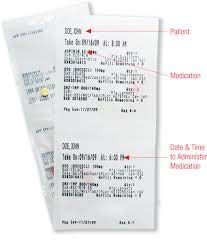
• Patients who prefer to be at home that would otherwise be in a nursing
home
• Have a caregiver at home – many times a spouse
• Waiver programs 1915 (c) or 1115 state demonstrations under HCBS
(Home and Community Based Services)
• Referral by physician or other healthcare professionals
• Managed Medicaid patients living at home in special needs programs
710/10/2017
Medical at Home: How is This Different
than Retail Pharmacy?
COMPLIANCE MEDICATION MANAGEMENT BETTER OUTCOMES
PACKAGING
Pharmacy can offer the Monthly services offered • Clinical Consultant
same services as a long include, but are not limited to, Pharmacist trained
term care pharmacy except the following: in Geriatrics
for emergency kits placed in
facilities, including medication reconciliation • Continued monitoring
compliance packaging, monitoring of adherence decreases re-
delivery, and an expansive reviews with prescribers hospitalizations and
inventory list to medication management increases adherence to
accommodate geriatric and other services to prescribed medications for
patients improve outcomes and better outcomes
decrease hospitalizations
©2017 GeriMed. All Rights Reserved.
Presentation content is proprietary and confidential.
15
How do you determine if you can service
these patients as an LTC Pharmacy?
• *Ten (10) services required by CMS for Medicare Part D LTC qualification – including
compliance packaging, 24/7 service
• Can the patient go to the drug store and get medications and take them appropriately
themselves? Or can you walk into a retail pharmacy and get the services offered by
this pharmacy as a regular patient? Is the patient responsible for their own
medication administration or is a caregiver administering it?
• These patients cannot be supported by a mail order service due to unique compliance
packaging and clinical needs
https://www.cms.gov/Medicare/Prescription‐Drug‐Coverage/PrescriptionDrugCovContra/Downloads/MemoPDBManualChapter5_093011.pdf
(CMS Prescription Drug Manual Chapter 5 Benefits and Beneficiary Protections 9/30/2011)
810/10/2017
‘Combo’ Pharmacies
• Claims reimbursement for LTC services
• Purchasing LTC products
• Dispensing software
• Workflow and production and space allocations
• Automated dispensing machines
• Regulations, contracts, etc.
• Personnel expenses
What pieces are missing in ‘Combo’ Pharmacy?
Reimbursement
• LTC Reimbursement – are you getting paid appropriately for
LTC services?
• Medicare Part D has different payment structure for long term care
services in nursing homes, ICF‐IID (intermediate care facilities for
individuals with intellectual disabilities, formerly ICF‐MR), and
assisted living facilities
• Medicaid and Commercial insurances do not distinguish between
retail and LTC services – reimbursement very low in Managed
Medicaid plans
910/10/2017
Solution to obtaining appropriate
reimbursement for LTC Medicare Part D claims
• Talk to LTC PSAO/GPOs about the benefits of their programs
• Some GPOs can assist you in getting LTC reimbursement in a
Combo pharmacies from all the major Part D payers
• Claim coding for billing
• DIR fees
• Review cost of network through transaction fees or monthly
billing fees
What pieces are missing in ‘Combo’ Pharmacy?
Purchasing
• Are you able to purchase brand pharmaceuticals and
pharmacy related products (packaging, automation,
equipment, medications carts, etc.) at a discounted rate vs.
retail?
• Class of trade discounts on brand pharmaceuticals
• Volume of purchases for LTC related pharmacy products
• Automation equipment specific to compliance packaging
1010/10/2017
Packaging, Software, Carts, Labels, etc.
Solution to obtaining better pricing on
pharmaceuticals and other pharmacy products
• Talk to a LTC GPO (group purchasing organization)
• Saving money on select brand products
• Saving money on LTC pharmacy products
• Wholesaler should be willing to provide COGs at the same rate for both
retail and LTC business
1110/10/2017
What pieces are missing in ‘Combo’ Pharmacy?
Dispensing Software
• Does your retail dispensing software provide the ability to
set up accounts based on facilities?
• Coding for appropriate patient residence codes
• Printing of materials for facility such as MARs (medication
administration records)
• Interfacing with an E‐Mar system (electronic medication
administration record)
• Billing facilities for Medicare Part A and other ancillary charges
(stock medications, forms, etc.)
Solution to an efficient dispensing software
for LTC patients
• Talk with your current vendor regarding what is needed to
service LTC patients
• Consider new software for the LTC portion of the business if
your current software is not compatible with LTC facilities
• Obtain work arounds or additional hard drives or servers
from your software company
1210/10/2017
What pieces are missing in ‘Combo’ Pharmacy?
Work flow, production, space
• Do you have the room, work flow, and efficient personnel
production to service LTC from your retail pharmacy?
• How many patients are you servicing?
• When are you entering orders?
• How often are you delivering to a facility?
• What packaging system are you using for the facilities? Do you
have one system or more than one?
Solution to workflow, production, space, etc.
• Do you have a plan for workflow? Is it working?
• Do you have a designated area to fill LTC prescriptions and
bill?
• How many prescriptions are you filling daily?
• Can you grow your business in the space you currently have?
1310/10/2017
What pieces are missing in ‘Combo’ Pharmacy?
Automated dispensing machines
• Do you have packaging machines to efficiently package the
systems delivered to the facilities?
• Are you looking to purchase newer equipment to improve
quantities and quality of packaging?
Solution to automated dispensing machines
• Do you have space and money to add machines?
• Can you start with the older types of machines to get the
business going? Have you spoken to other pharmacies
about purchasing used equipment?
• If you are growing your business, take a look at the newer
machines.
1410/10/2017
What pieces are missing in ‘Combo’ Pharmacy?
Regulations and Contracts
• Do you know the regulations for the facilities you are
servicing? ‐ National – CMS Survey Guidelines – new ones
just published in September, 2017 State – for assisted living
(personal care, residential, etc.)
• Do you have a contract with the facility?
• Do you have a policy and procedure in place with the
facility?
Solution for Regulations and Contracts
• Regulations and contracts apply to all pharmacies servicing
LTC facilities
• www.cms.gov
• www.ascp.com
• www.ncpa.com
• www.ahcancal.org (both nursing home and ALF regulations)
1510/10/2017
What pieces are missing in ‘Combo’ Pharmacy?
Personnel
• Are you using pharmacists and technicians within your retail
operations to fill prescriptions for LTC patients?
• Do you have designated delivery drivers for your LTC
business?
• Are your pharmacists on‐call at night and weekends to
deliver emergency medications to facilities off hours?
Solutions for Personnel
• After hours call can be managed with contractors to provide
emergency medications to facilities
• Using the same pharmacists and technicians to fill both
retail and LTC prescriptions
1610/10/2017
When should you consider moving to a closed
door pharmacy?
• Volume of prescriptions and facilities impacts:
Inventory (are you already separating inventory based on where
you fill the prescriptions?)
Space (is your workflow and productivity efficient to complete
daily tasks in a timely manner?)
Personnel (do you need more personnel to get the work
completed timely? Are you adding nursing homes to your
business?)
Costs (are you looking for additional discounts on brand products?)
Business Growth – Is Closed Door what I need
to do today?
• Considerations when looking at closed door:
What are your State Board of Pharmacy regulations regarding
hours of operation, space, opening in the same building?
Do you have the dollars to invest in another Pharmacist in Charge
based on your LTC business today (or in the near future)?
Do you have contracts with your facilities?
Do you have capital to grow your business? Investment in
equipment and medications carts, etc.
Are your savings on brand pharmaceutical products enough to
justify the additional costs?
1710/10/2017
Potential Model to Open Closed Door
Pharmacy
• If you have space in your current building – set up the closed door
pharmacy “next door” to the current retail pharmacy – must have
separate entrance and address
• Only open the LTC pharmacy for set hours daily to fill maintenance
orders (unless you need to fill a stat order) – share the pharmacist and
technician with the retail pharmacy
• Set up a LTC dispensing software computer terminal in the retail
pharmacy to enter new orders and print labels for all LTC orders
• Operate on cycle fill to complete most orders at a set day and time
monthly
‘Combo’ Pharmacy
• Same DEA and state License as retail pharmacy – same
physical address for both parts of the pharmacy
• Separate filling of prescriptions in compliance packaging
• LTC reimbursement
• Select brand pharmaceutical discounts
• Can use same personnel for both parts of the pharmacy
• Great for starting your LTC opportunity
1810/10/2017
Closed Door Pharmacy
• Separate DEA and state license from retail pharmacy – separate
entrance and physical address than the retail pharmacy
• Separate filling of prescriptions in compliance packaging
• LTC reimbursement
• Full line of discounts on brand pharmaceuticals
• Separate personnel (at least for the PIC)
• Great if your business is growing and you need an efficient operation
Other Services to Consider
• Vaccine administration – nursing home, assisted living,
developmentally disable
• Consulting services to facilities (and medical at home)
• Medication Management
• MTM in a long term care setting
• Value based healthcare is coming – reduced hospitalizations,
more adherent patients, etc.
1910/10/2017
LTC Pharmacy is a Great Opportunity!
• Increased reimbursement and profitability
• Growing population
• New opportunities with developmentally disable and
medical at home
• Value based programs are coming soon – you can save
money for Medicare by increasing adherence, decreasing
polypharmacy, providing systems for better medication
administration, etc.
Susan Rhodus, RPh
Senior Vice President, Contract Administration
GeriMed, Inc.
srhodus@gerimedgso.com
502‐423‐0351
20You can also read


