UNECE - UK International Rail - Benn Hall - Department for Transport
←
→
Page content transcription
If your browser does not render page correctly, please read the page content below
UNECE – UK International Rail
Benn Hall – Department for Transport
 Workshop: “The development of international passenger rail transport in the
                                         context of ITC Resolution No.264”

                                                            18 November 2020
                                                                               1
The rail network serves a diverse population, connecting
communities and transporting passengers and freight.
Who uses rail? Channel Tunnel Fixed Link:
Established under Treaty of Canterbury in 1986.
Concession agreement with Eurotunnel until 2086, as private
Concessionaire (and also operator of Shuttle services).
There are three types of traffic through the Tunnel:
Eurostar high-speed passenger services;
Pre COVID-19, 57% of rail journeys are undertaken for commuting to work Le Shuttle services carrying HGV lorries, passenger
and education, whilst 26% are leisure trips. Over 1 million daily vehicles, coaches;
passengers used rail to travel into central London.
Rail Freight trains, carrying intermodal traffic.
COVID-19 heavily impacted the number of passenger journeys and rail
revenues. In late March passenger journeys were down 95% on the
previous year. By early August 2020, passenger journeys were 77% below Over 25% of trade in goods between UK and
the same period last year. continental Europe by value passes through the Channel
Tunnel (worth €138bn a year).
In response to financial challenges presented by Covid-19, international
operators have had to substantially reduce services and, in some cases,
cut back their network, due to continued very limited demand for 1.7m trucks, 2.7m car and coach passengers, 11m
international travel. Eurostar passengers, 2000 freight trains in 2018.
Channel Tunnel services accounted for an estimated
£1.7bn of direct spending in the UK in 2018, across all
types of travel (Office for National Statistics).
International passenger services generate direct socio-
economic benefits of an estimated £281 million per
year, largely due to journey time improvements and
associated productivity gains for business travellers
(research commissioned by HS1 Ltd).
2
18 November
2020
Safety and improving train performance are key drivers of
passenger satisfaction and increasing passenger numbers.
Key Passenger Priorities
Punctuality/ Value for
Safety Delays Accessibility
Reliability money
Pre-COVID-19, rail passenger demand in the UK had far outstripped other nations:
220
Passenger kilometres (index:
200
180
1995 = 100)
160
140
120
100
Belgium France Germany Netherlands Sweden United Kingdom
Since the emergence of COVID-19, passenger numbers have declined by 99% as passenger journeys remain suppressed.
Surveys have found many passengers are hesitant to resume using public transport. A study found that passengers who had resumed
travelling were likely to do so again. There has also been a shift in passenger priorities to include cleanliness and the behaviour of
other travelers such as using face coverings and observing social distancing.
In 2018, UK rail was rated 6th out of 26 European countries for satisfaction, based on the views of the general population.
3
18 November
2020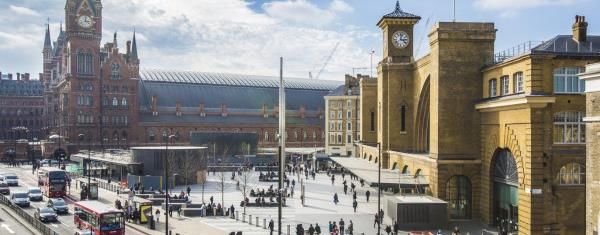
Prior to Covid-19, international passenger services carried record
numbers of passengers in recent years, despite major shocks.
Channel Tunnel: Annual passengers to and
from Europe A record 21m passengers travelled via the Channel Tunnel in
25 2019:
• 11m passengers carried by Eurostar
Passengers (million)
20
• 10.3 million passengers carried via Eurotunnel passenger
shuttles (i.e. travelled in a passenger vehicle).
15
• This followed a challenging period in the mid-2010s that saw
10 external shocks to international travel (e.g. terrorist attacks,
migrant crisis etc).
5 However, the impact of Covid-19 has been of a very different
magnitude…
0
1994 1996 1998 2000 2002 2004 2006 2008 2010 2012 2014 2016 2018
International High-Speed Rail
Weekly Passenger Numbers (2019 vs 2020)
For most of 2020, passenger numbers have been
significantly lower than 2019 levels due to Covid-19:
Total Weekly Passengers
• Passenger numbers fell to nearly zero in the earlier part of the
year when countries across Europe introduced restrictions
• Passenger numbers began to recover in May/June/July as 2020 Weekly Total 2019 Equivalent
restrictions started to ease. The UK Government introduced
travel corridors in July which supported the opening up of
travel.
• However, as transmission rates have increased across
Septem…
Septem…
Septem…
May
May
May
May
August
August
August
August
August
April
March
March
March
March
March
April
April
April
June
June
June
June
June
July
July
July
July
Europe, restrictions have once again been introduced, again
reducing demand for travel.
4
18 November
2020
Lower carbon emissions, competitive prices and new routes
have seen international passenger numbers grow.
Since the introduction of rail services, it has become an increasingly popular passenger route with the network of direct
connections having expanded in the last 25 years.
On its busiest days, prior to Covid-19, Eurostar would see around 20,000-30,000 passengers per day pass through St
Pancras on services to France, Belgium and the Netherlands.
International rail is by far the preferred mode of transport on major city-city markets, including London-Paris and
London-Brussels, completely reversing the dominance of the aviation market 20 years ago.
Industry analysis suggests that emissions from international rail connections could be up to 90% lower than
equivalent air routes (please note these are not UK Government estimates, we are currently undertaking analysis of
the environmental benefits of international rail compared with alternative modes.
On this basis, industry figures suggest the UK’s international rail services could have reduced annual emissions
by the equivalent of 750,000 tonnes of CO2 equivalents, or 60,000 short haul flights every year, delivering an
estimated £66 million of environmental benefits.
Unregulated passenger fares are also a key driver of increased
demand for international rail services in the UK, where there is wide
availability of low costs fares due to competition with airlines.
A key issue for passengers remains the ability to purchase through-
tickets or other integrated ticketing schemes to enable travel by rail
across several networks, which could unlock further demand.
The launch of the direct return service from Amsterdam this autumn
adds a further major city destination accessible by direct rail connection.
The London-Amsterdam is the largest air market in Europe – carrying
around 4 millions passengers each year between the two cities.
5
18 November
2020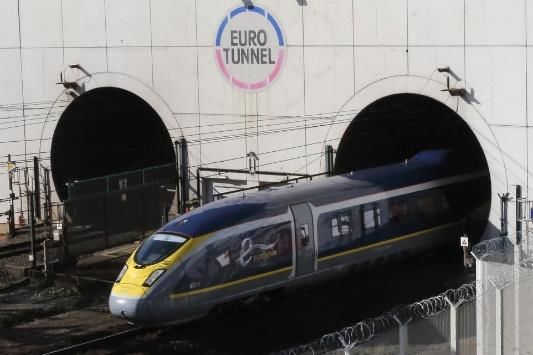
Plans to merge Eurostar and Thalys could open up wider
international links for passengers through the Channel Tunnel.
‘Project Greenspeed’ – potential network
Thalys is a European high-speed rail operator,
operating services between France, Belgium, the
Netherlands and Germany.
In 2019, it was announced that Eurostar and
Thalys would merge (‘Project Greenspeed’), with
the process expected to complete in 2021.
This has the potential to open up new international
links for UK rail passengers through either new
direct or well-integrated interchanges – for
example, Ile de France, Hauts de France,
Belgium, the Dutch Randstad and Germany’s
Ruhr.
Launch of direct return London-Amsterdam service
In 2017, Eurostar launched the first direct London-Amsterdam service. This service was outbound only to begin with due to the need for existing
agreements between the UK, France and Belgium signed in 1993, to be modified to include the Netherlands, to facilitate return services.
A new treaty concerning Frontier Control arrangements extends the existing model of “juxtaposed border checks” to the Netherlands; whereby
passengers are checked, prior to departure, successively by border officials from the departure and arrival countries. Another treaty provides for the
Netherlands government to oversee train security and station security for services operating from the Netherlands to the UK.
These new arrangements will enable direct services between the Netherlands and the UK to start operating later this year, without the need to
change trains at Brussels for immigration and security checks – making it easier for passengers to carry on their journey.
6
18 November
2020
There are opportunities to further expand and grow
international rail links between the UK and Europe.
As the public seeks lower carbon journeys, rail travel has become a popular alternative to short-haul flights for many.
The recent launch of the direct return London-Amsterdam services marks the expansion of major European cities directly
serviced by rail from London.
New destinations for UK
Research indicates that high-speed rail can be competitive with international rail services
equivalent air travel for journeys of less than or around 4 hours,
which presents a number of potential opportunities in terms of new
city destinations.
Industry is exploring a number of a potential new routes from the UK
and has conducted feasibility studies of certain city pairs to
identify the demand and a commercial proposition.
We have also seen night train and sleeper services regaining
popularity in recent years, with a number of new services having
launched or due to launch in the coming years across Europe.
Domestically, the UK has two long-standing, successful sleeper
services but none internationally.
The UK Government is happy to engage with prospective
operators of new such services from the UK where there is a
commercial proposition and where Government can assist to address
the unique challenges presented by operating through the Channel
Tunnel, including security and frontier control arrangements.
BORDEAUX FRANKFURT GENEVA
7
18 November
2020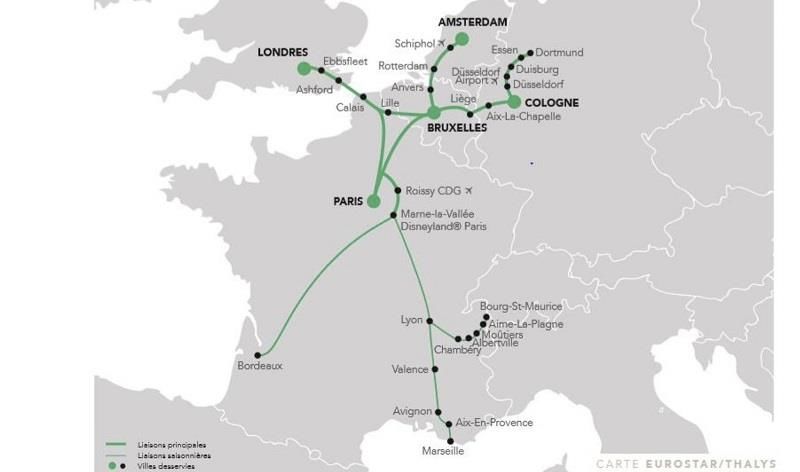
The UK Government is committed to supporting the future
                         growth of international rail passenger services.
The growth of international rail services from the UK over the last 30 years has demonstrated a clear demand for a more susta inable,
convenient and efficient form of international travel between the UK and major European destinations.
There are however, a number of key challenges that need to be addressed in supporting the restart and recovery of internation al rail
travel. Some are unique to international rail, whilst others apply across all modes of transport. The below is not an exhaustive list:

                     Support the restart and recovery of international travel post-Covid: UK Ministers established a Global Travel
                     Taskforce to consider what steps the Government can take, both domestically and on the international stage, to
                     enable the safe and sustainable recovery of international travel. The Taskforce has been tasked with developing a
                     series of recommendations aimed at ensuring there are clear public health measures, increasing demand safely
                     and that the UK is at the forefront in leading global standards.

              Border and security controls: juxtaposed border controls enable border checks to be carried out before departure,
              negating the need for checks on arrivals. This is a highly successful, tried and tested model, enabling a quicker, more
              convenient services for passengers, whilst ensuring the security of passengers, trains and the Channel Tunnel Fixed Link

                     Common standards: the UK’s international rail infrastructure has been designed and built to meet common
                     technical and safety standards (e.g. signalling, gauge etc), reducing barriers for operators and ensuring the
                     highest levels of safety. This will continue to be important to facilitate international services.

              Passenger rights: Providing a robust framework for passenger rights to be able to access modern, integrated ticketing
              solutions, as well as the right to refund and compensation when things go wrong. The UK has been a champion for rail
              passenger rights and this will be an increasingly important factor in passengers’ travel preferences and requirements.

                     Cost competitiveness: There are high costs to operating and maintaining high-speed rail infrastructure and major
                     infrastructure such as the Channel Tunnel. A robust regulatory framework to drive efficiencies, and therefore
                     reduce costs ultimately for passengers, is critical to ensure that rail remains competitive. This will be increasingly
                     important in a post-Covid environment of lower load factors, and therefore margins, for operators.

                                                                                                                                                   8
                                                                                                                                              18 November
You can also read


