Dynamic simulation analysis of rail track and track structure based on SIMPACK and ABAQUS
←
→
Page content transcription
If your browser does not render page correctly, please read the page content below
E3S Web of Conferences 248, 03007 (2021)                                                                https://doi.org/10.1051/e3sconf/202124803007
CAES 2021

         Dynamic simulation analysis of rail track and track structure
         based on SIMPACK and ABAQUS
         Guoqiang Du1, FengHan1,*, XianghuiFan1, Yuan Li1, Tao Liang1
         1School   of Civil Engineer, Lanzhou Jiaotong University,730070 Lanzhou, China

                       Abstract: With the continuous improvement of China's railway construction level, the requirements for the
                       quality of train operation are also improved. For the mixed passenger and freight railway, it is necessary to
                       transit from the simple design concept of safety to the design concept of the unity of comfort and safety.
                       Therefore, modern numerical calculation method or simulation software method is used to replace the
                       traditional quasi-static calculation method, and SIMPACK, ABAQUS and other related software are mainly
                       used to analyze the operation quality and track structure dynamics of the line design scheme. The derailment
                       coefficient, vertical acceleration and other evaluation indexes are used to evaluate the safety and comfort of
                       the line, and the dynamic analysis of the track structure is carried out based on the vertical force. The
                       research shows that under the condition of this line, when the passenger and freight train run at the designed
                       speed per hour in the curve section, they can meet the specification requirements of various indexes, and
                       there is still room for increasing speed, and the stress and strain value of the track structure can meet the
                       specification requirements.

       1 Introduction                                                         basis of SIMPACK and ABAQUS. Combined with the
                                                                              actual line conditions, the parameters obtained by
       With the rapid development of China's railway, the                     SIMPACK post-processing system are imported into
       railway operation mileage is increasing, and the railway               ABAQUS model for track structure analysis.The
       construction has become very important. However, the                   difference between this study and other studies is that
       data calculation and analysis of the existing line track are           SIMPACK refines the train model and considers the track
       based on various assumptions and simplifications, and                  irregularity, while ABAQUS refines the track structure.
       the results are theoretical values, which can not be more              The combination of the two considers not only the
       accurate expression for the train state under various                  dynamic relationship between the train and the line, but
       working conditions, and can not dynamically express the                also the impact of train operation on the track structure. It
       value of each index. The optimization of coordination                  makes the result closer to the reality.
       and matching between components is inclined to trial
       calculation, which makes the calculation complex and
       difficult to understand the comprehensive changes of                   2 Passenger and freight train model and
       each index combination. Cai Chengbiao and Yan Hua                      track structure model
       systematically evaluated the wheel rail system dynamics
       of Suining Chongqing railway by establishing the train                 SIMPACK software is widely used in the railway
       track spatial coupling model; Zhou Jian analyzed the                   industry, because it can not only simulate passenger
       dynamic characteristics of the passenger and freight                   trains, freight trains, locomotives, but also simulate small
       mixed track structure by establishing the train track                  parts such as lines and wheel rail wear, and use its
       coupling dynamic model, and evaluated the stress and                   powerful post-processing system to simulate dynamic
       deformation of the track structure; Lei, X; Rose, J. G. by             analysis of lines.
       establishing a three-layer composite beam model and
       using Fourier transform[1],this paper analyzes the                     2.1 Passenger train simulation model
       influence of passenger trains and freight trains on the
       dynamic response of track structure under the influence                The whole vehicle model of passenger train consists of
       of track irregularity at different speeds, and points out              the whole vehicle model of passenger train, including
       that with the deterioration of track irregularity, the                 train body, frame, wheelset, primary suspension,
       influence of freight trains on track is greater than that of           secondary suspension,etc. the passenger train model
       passenger trains. So on the basis of the existing methods,             mainly consists of wheelset and bogie combination, but it
       this paper uses SIMPACK to simulate the line and                       involves the wheel rail relationship, the relationship
       ABAQUS to analyze the track structure, mainly on the                   between wheelset and track,and many related

         *   Corresponding author: Feng Han, E-mai: 153025377@qq.com

  © The Authors, published by EDP Sciences. This is an open access article distributed under the terms of the Creative Commons Attribution License 4.0
  (http://creativecommons.org/licenses/by/4.0/).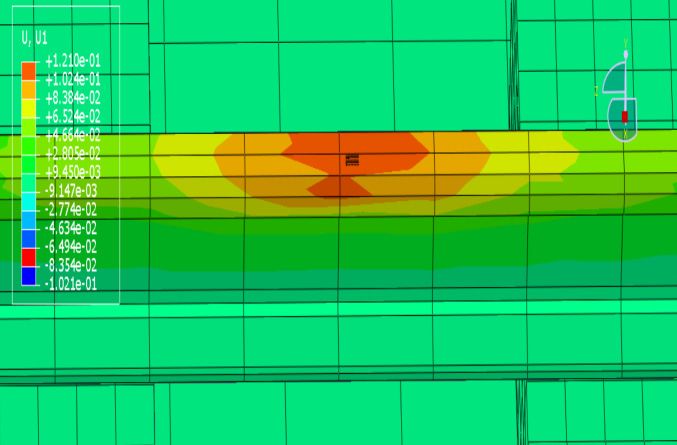
E3S Web of Conferences 248, 03007 (2021)                                                        https://doi.org/10.1051/e3sconf/202124803007
CAES 2021

       parameters,Various parameters also directly determine             Figure 1).
       the stability and comfort of the vehicle (as shown in


                                                        Fig. 1. Passenger train model

                                                                         primary and secondary suspension, which is more
                                                                         complex than the freight model. There is also a series of
       2.2 Truck train model
                                                                         forces defined.(As shown in Fig 2)
       The truck model is mainly composed of vehicle body,
       load saddle, side frame, bolster, frame, wheel set,


                                                          Fig.2. Truck train Model

                                                                         according to the results of stress-strain analysis.
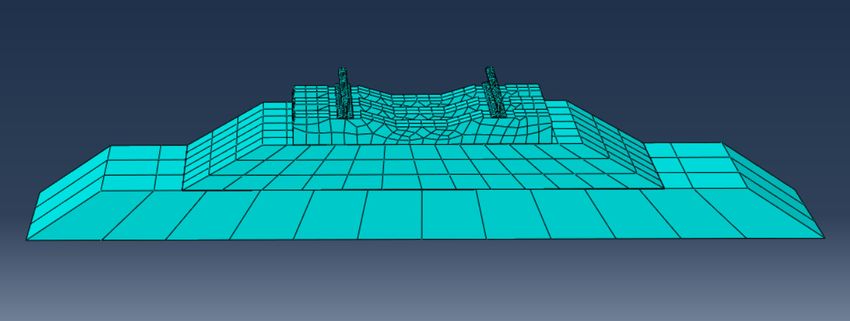
                                                                             The rail model is mainly composed of rail, sleeper,
       2.3 Track structure model
                                                                         track bed and subgrade. The fastener is simulated by
       ABAQUS can reflect the change process of each part of             contact spring. The modeling process in ABAQUS
       the track in the form of animation, so that the maximum           consists of seven parts: component, attribute, interaction,
       value of each data index and the time when the                    assembly, load, grid and work.The parameters are shown
       maximum value appears can be clearly observed, and the            in Table 1.
       safety and rationality of the track can be better judged
                                                 Table 1. Material property parameters

                                                                      Young's modulus
                     Part              Mechanical properties                                            Poisson's ratio
                                                                         (Mpa˅
                     rail                     elastic                     2.06×10⁵                           0.3
                   sleeper                    elastic                     3.75×10⁴                           0.3
                   Ballast                    elastic                       150                              0.27
                  subgrade                    elastic                        60                              0.35

                                                                     2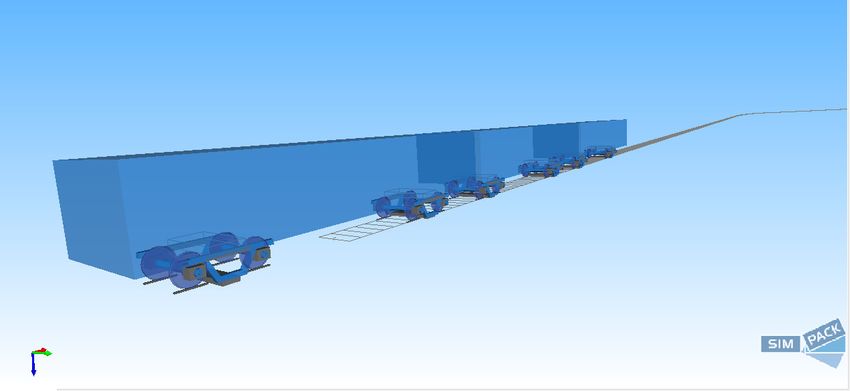
E3S Web of Conferences 248, 03007 (2021)                                                        https://doi.org/10.1051/e3sconf/202124803007
CAES 2021

                                                            Fig. 3. Track model

          In order to simulate the actual track irregularity, the        ABAQUS track model, the role of transverse force can
       random irregularity power spectral density is used to             be ignored, just consider the vertical force. Add the
       achieve. Because the wheel rail transverse force is very          actual line parameters to the train model, as shown in
       small compared with the wheel rail vertical force, in the         Table 2 and Fig 3.
                                                       Table 2. Train line parameters

                  linetype                   Length/m                    Radius/m                    Superelevation/mm
                straightway1                   52.87                        0                                0
              transition curve1                 150                       0~800                            0~120
               circular curve 1               130.14                       800                              120
              transition curve2                 150                       800~0                            120~0
           tangent between curves1            281.91                        0                                0
              transition curve3                 180                       0~800                            0~120
               circular curve 2               149.88                       800                              120
              transition curve4                 180                       800~0                            120~0
                straightway2                    350                         0                                0

                                                                         expression of derailment coefficient is as follows˖
       3 Evaluation of line dynamics index                                         Q          tan D - T/N
                                                                                                                               1
                                                                           P         1  TtanD/N
       3.1 Vehicle operation evaluation index
                                                                             Where in (1): Q is the lateral force on the wheelset, N
       The evaluation of lines mainly includes safety and                is the vertical force on the wheelset, and  is the rim
       comfort.nSafety mainly aims at the derailment                     angle of the wheel.
       problem:when the train is running, due to the influence
       of curve, superelevation,irregularity, vehicle loading and            According to the safety index of locomotive
       other factors, it produces relatively large vibration. When       derailment coefficient specified in "experimental
       it exceeds a certain limit value, it will cause the               appraisal method and evaluation standard for dynamic
       derailment problem of the train and cause traffic                 performance of railway locomotive" (TB / t213260-93),
       accidents.From the perspective of stress, there are two
                                                                         the safety index of locomotive derailment coefficient is
       main reasons affecting the derailment of the vehicle: one
       is the reduction of wheel weight, the other is the                as follows:
       transverse vibration of wheel and rail The force is                              Y/Q=0.6              excellent
       increasing. Therefore, the safety of the line is evaluated                        Y/Q=0.8             good
       by wheel load reduction rate, vertical force and                                  Y/Q=1.0             qualified
       derailment coefficient, and the main evaluation                   The expression of wheel load reduction rate is˖
       parameter of comfort is vertical acceleration. Previous
       studies have shown that the safety evaluation indexes are                        P    P1  P2                            2
       derailment coefficient and wheel load reduction rate,The                         P    P1  P2

                                                                     3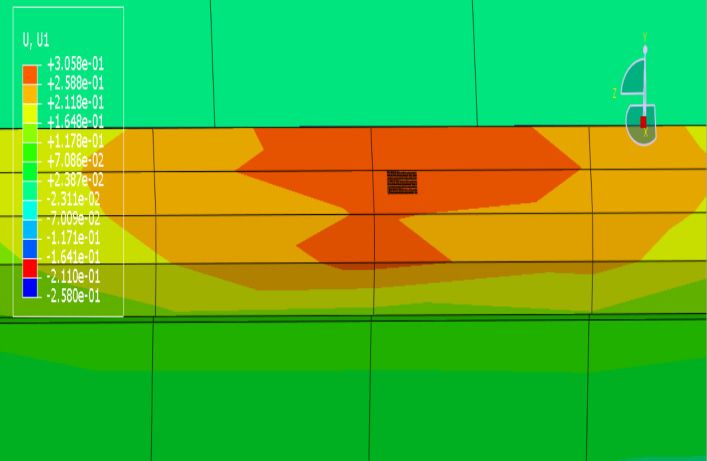
E3S Web of Conferences 248, 03007 (2021)                                                        https://doi.org/10.1051/e3sconf/202124803007
CAES 2021

            In equation (2): P wheel weight is reduced, P is the        superposition of front and rear wheel sets, the most
       average wheel weight of the wheel, P1 and P2 are the              severe rear wheel pairs are analyzed, and the relationship
       wheel rail vertical forces on the left wheel and right            between the indicators and time obtained by SIMPACK
       wheel respectively.                                               is analyzed.
            According to the limit value of wheel load reduction
       rate specified in the code for evaluation and experimental        3.2.1 Analysis of passenger train power index
       identification of railway vehicle dynamic performance
                                                                         The operation index of passenger car mainly focuses on
       (gb5599-85):
                                                                         comfort. On the premise of meeting the safety, it pays
                            P / P  0.65     risk limit
                                                                         more attention to the comfort of passengers. Therefore,
                            P / P  0.60     allowable limit
                                                                         the index analysis of passenger car should not only
            The main evaluation index of passenger train comfort
                                                                         analyze the safety such as derailment coefficient and
       is vertical acceleration. The standards for vertical
                                                                         wheel load reduction rate, but also evaluate the comfort
       acceleration of passenger train are as follows:
                                                                         index. The evaluation index of comfort mainly considers
                           az 1.0m/s2      excellent
                                                                         the vertical acceleration of the train. Comfort is directly
                            az 1.3m/s2      good
                                                                         reflected in human reaction, especially when passing
                            az 2.0m/s2      qualified
                                                                         through the transition curve, it will have a greater impact
         az is the vertical acceleration (m/s2)[2~4]
                                                                         on human feeling, so comfort should be considered[5-6].
       3.2 Evaluation of line index

       Previous research shows that due to the transfer


                                                   Fig.4. wheel rail vertical force

                                              Fig.5.Derailment coefficient at 120km/h speed

                                                                     4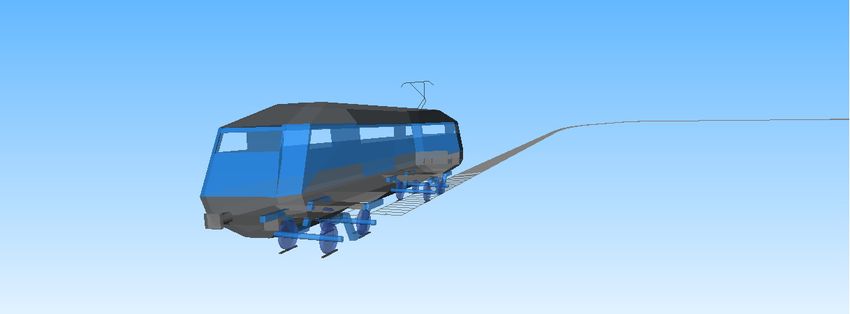
E3S Web of Conferences 248, 03007 (2021)                                                           https://doi.org/10.1051/e3sconf/202124803007
CAES 2021

                                            Figure.6. Wheel load reduction rate at 120km/h speed

           Through each index chart, it can be seen clearly and
       intuitively that the index diagrams of front bogie front
       wheel pair and rear bogie rear wheel pair are basically
       the same from the trend, but through traineful
       comparison, there is difference between them. The
       maximum value of vertical force of front bogie rear
       wheel pair is different compared with that of rear bogie,
       which proves that the front bogie wheel pair function will
       be transmitted to the rear after superposition The rear
       wheel pair of bogie makes the rear wheel pair of rear
       bogie have a large value.The deviation of the transition
       curve can be obtained,the first transition curve is the
       right deviation curve;the second transition curve is the                  Fig.7.Evaluation index of passenger train comfort

       left deflection curve.Due to the super high reason, the
                                                                               When the bus is running at the initial speed of
       vertical force on the side not raised is too large, the
                                                                           160km/h, the vertical acceleration is far less than the
       derailment coefficient and wheel weight reduction rate
                                                                           allowable limit, so the comfort of the bus greatly meets
       are larger in the transition curve section,and the transition
                                                                           the requirements of the specification.The vertical
       point gradually increases from the straight slow point to
                                                                           acceleration of single train is larger than that of multi
       the slow point, and the maximum value appears in the
                                                                           train, and the speed of single train at this moment is close
       circle curve segment. In this line, the vertical force of the
                                                                           to the critical speed.However, the derailment coefficient
       front wheel is 5.9% larger than the front wheel pair, the
                                                                           of passenger trains is relatively small due to the more
       maximum value is 0.255, and the load reduction rate of
                                                                           stable trainbody,but the wheel load reduction rates of
       the rear wheel to wheel is 9.3% higher than the front
                                                                           both are relatively large,which has great restrictions on
       wheel pair value.The maximum value is 0.5741.The
                                                                           the continuous improvement of speed.
       maximum vertical acceleration of passenger train is
       0.5963, which meets the passenger comfort standard
                                                                           3.3 Analysis on dynamic indexes of freight trains
       according to specified standard of passenger train vertical
       acceleration.                                                       Freight train and passenger train are very different, not
           In summary, according to the derailment coefficient             only the structure of the train body is different, but also
       and maximum wheel load reduction rate, it can be seen               the daily traingo load of freight trains is far greater than
       that when the bus is running at 120km/h, it meets the               that of passenger trains. Just because of this,only the
       requirements of the specification.                                  safety of freight trains needs to be considered, and the
                                                                           comfort of trains does not need to be considered.
                                                                           Because of the load,the wheel load reduction rate will be
                                                                           greatly affected.The wheel load reduction rate limits the
                                                                           running speed of trains, and more trucks are used For line

                                                                       5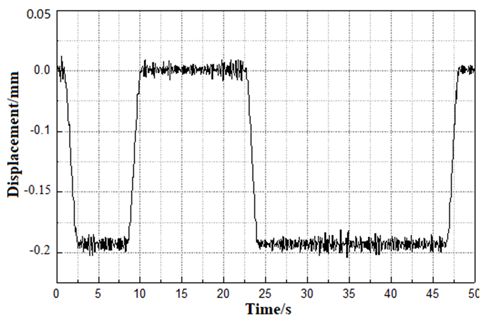
E3S Web of Conferences 248, 03007 (2021)                                                              https://doi.org/10.1051/e3sconf/202124803007
CAES 2021

       operation evaluation,although the curve radius is larger               be corrected. Due to the factors of over superelevation
       than that of the existing line, in order to meet the needs             and under superelevation, the superelevation is set to 0.
       of general conditions, the general running speed of                    07m, and the line evaluation is carried out by the main
       freight trains is 80 km/h as the initial speed, and then the           indexes such as derailment coefficient and wheel load
       line operation evaluation is trainried out.Due to the                  reduction rate.
       change of running speed, he curve superelevation should

                                                 Fig.8.Vertical force and Wheel load reduction rate

                                                                              4 Analysis of ABAQUS track structure
                                                                              model
                                                                              After the track structure model is established by using
                                                                              ABAQUS, the calculation results of SIMPACK are used
                                                                              as the continuous load to load. The continuous load is
                                                                              imported into ABAQUS, the load size is defined, the
                                                                              action plane of the load is specified, and then the work is
                                                                              carried out. The main work is to calculate the stress and
                                                                              displacement of the rail. The stress diagram and
                                                                              displacement diagram of the track structure can be
                                                                             viewed, and the action point of the maximum vertical
                Fig.9. Derailment coefficient of freight train                force can be found Analyze the stress value here to see if
                                                                              it is within the stress range[8-9].
           From the operation index of multi vehicle freight
       trains, when the speed of multi vehicle freight trains is              4.1 Analysis of passenger train track structure
       80km/h, the vertical force increases greatly compared
       with that of passenger trains, but the change trend is
       similar to that of passenger trains. The larger vertical
       force appears at the transition curve. Due to the existence
       of track irregularity, the force of left and right wheels of
       the same wheelset is different,which leads to the larger
       wheel load reduction rate,still meets the specification
       requirements. In this section of the line, the vertical force
       of the front wheel pair and the derailment coefficient of
       the rear wheel pair are 5.9% larger than those of the front
       wheel pair, and the maximum value is 0.255. The load
       reduction rate of the rear wheel pair is 9.3% larger than                   Fig.10.Maximum stress diagram of passenger train
       that of the front wheel pair. The maximum value is
       0.5136. Meet the security requirements.

                                                                          6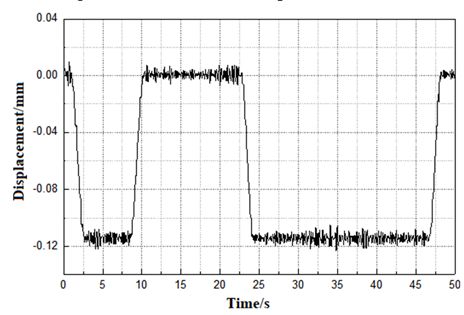
E3S Web of Conferences 248, 03007 (2021)                                                                https://doi.org/10.1051/e3sconf/202124803007
CAES 2021

               Fig.11.Maximum vertical displacement of rail
                                                                                      Figure.14. Maximum displacement of freight train

                Fig.12.Rail displacement diagram(passenger)
       It can be seen from the rail displacement diagram that the
       maximum displacement of the rail occurs at the transition
                                                                                          Fig.15.Rail displacement diagram(freight)
       curve, and the displacement at the straight section is very
       small, so the influence of the transition curve should be
                                                                                When the freight train is running,because the freight train
       considered for the consideration of the rail, and it can be
                                                                                model is a full load model, the vertical force is much
       found that when the load acts on the rail, the maximum
                                                                                larger than that of the passenger train,which makes the
       vertical stress is mainly concentrated at the top of the rail
                                                                                stress at the rail very large. The displacement value of the
       waist inside the rail, and decreases downward, and the
                                                                                rail not only increases because of the vertical force, but
       displacement of the upper rail waist is greater than that of
                                                                                also changes because of the influence of the stiffness of
       the lower rail The displacement of rail waist in the line is
                                                                                the track bed and cushion. If the stiffness increases, the
       0.1223mm, less than 2mm, so the displacement diagram
                                                                                displacement value will decrease.The distribution
       of rail is in line with the safety limit, and the selected rail
                                                                                position of the maximum stress and displacement of rail
       structure meets the operation safety of the line.As shown
                                                                                is similar to that of passenger train,which is located at the
       in Fig 10-12.
                                                                                upper part of rail head and rail waist,on the transition
                                                                                curve.As it gets closer to the circular curve,the
       4.2 Analysis of freight train track structure
                                                                                displacement value is gradually increasing,because the
                                                                                curve radius is also gradually increasing.When it reaches
                                                                                the circular curve segment, the curve radius reaches the
                                                                                maximum, and in each section of the line, the area with
                                                                                larger position value is also distributed here,and the
                                                                                straight line is sandwiched Compared with the straight
                                                                                line section at both ends, the displacement value of the
                                                                                rail is larger and smaller than that of the curve section.
                                                                                The stress displacement value of the rail in the figure is
                                                                                also within the allowable range.The stress and
                                                                                displacement indexes meet the standard requirements,
                                                                               and the single truck has a larger displacement[10-12].As
               Fig.13.Maximum stress diagram of freight train

                                                                            7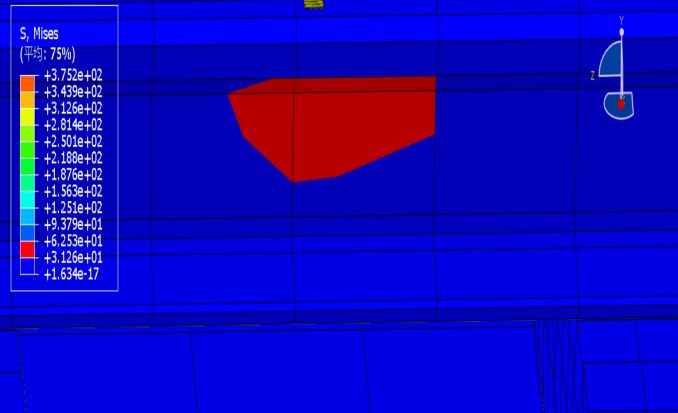
E3S Web of Conferences 248, 03007 (2021)                                                       https://doi.org/10.1051/e3sconf/202124803007
CAES 2021

       shown in Fig 13-15.                                               Science Foundation of China (51568037) for their help in
                                                                         this article.
       5 Conclusion
       In order to conform to the concept of modern route                References
       selection, from the perspective of track dynamics, carry          1.  Wang Baocheng, Han Feng. Introduction to railway
       out line evaluation and track structure selection, and                line engineering [M]. China Railway Press, (2016)
       realize the transformation from empirical track structure         2. State Railway Administration. Code for design of
       to numerical track structure design concept, this paper               railway lines (tb10098-2017) [S]. Beijing: China
                                                                             Railway Press,( 2017)
       takes a mixed passenger and freight line as the
                                                                         3. Liu yongxiao, Li Bin. Railway line maintenance [M].
       background, on the basis of understanding the basic
                                                                             Southwest Jiaotong University Press,( 2011)
       principle of track selection and uses SIMPACK and
                                                                         4. Li Chenghui. Rail transit (Second Edition) [M].
       ABAQUS to analyze the line scheme design and track                    Southwest Jiaotong University Press, (2012)
       structure driving power The main conclusions are as               5. Xiang Hua, Fu xiutong, Miao Bingrong. Basic
       follows˖                                                              course of SIMPACK dynamics [M]. Chengdu:
           (1) SIMPACK is used to model passenger trains and                 Southwest Jiaotong University Press, (2010)
       freight trains, and the line design scheme is introduced to       6. State Railway Administration. Code for design of
       analyze the driving dynamics. It can be concluded that                railway track (tb10082-2017) [S]. Beijing: China
                                                                             Railway Press,( 2017)
       when the curve radius is 800m and the passenger train
                                                                         7. Liu Zhan, Qian Yingli. ABAQUS finite element
       runs at the maximum speed of 120km/h specified in the                 analysis from introduction to mastery [M]. Beijing:
       specification, the safety and comfort can meet the                    People's Posts and Telecommunications Publishing,
       specification requirements.                                           (2015)
           (2) According to the train running speed,the track            8. Zhai Xiaoyan. Vehicle track coupling dynamics [M].
       structure type is 60kg/m, elastic bar type II fastener and            Beijing: Science Press, (2015)
       concrete type III sleeper. The dynamic simulation results         9. Kou Lijun.Dynamic analysis of SIMPACK software
                                                                             simulation [M]. Southern agricultural machinery
       show that when the bus running speed is within 120km/h,
                                                                             journal, (2018)
       all the model indexes of the design scheme meet the
                                                                         10. China Railway Corporation, technical specification
       standard requirements.                                                for railway pipeline (common speed railway).
           (3)According to this set of methods, the existing and             Beijing: China Railway Press, (2015)
       reconstructed line schemes can be preliminarily                   11. Ananasis of the dynamic response in the railway
       evaluated and the improvement scheme can be put                       vehicles        to      the        track      vertical
       forward.                                                              irregularities.M.D.umitriu.Journal of Engineering
                                                                             Science and Technology Review,(2015)
                                                                         12. Analysis of orbital stability in lure system,based on
       Acknowledgement                                                       dynamic harmonic balance.Petroleum Institute, Abu
                                                                             Dhabi,UAE (2017)
       The author thanks the tutor and his National Natural

                                                                     8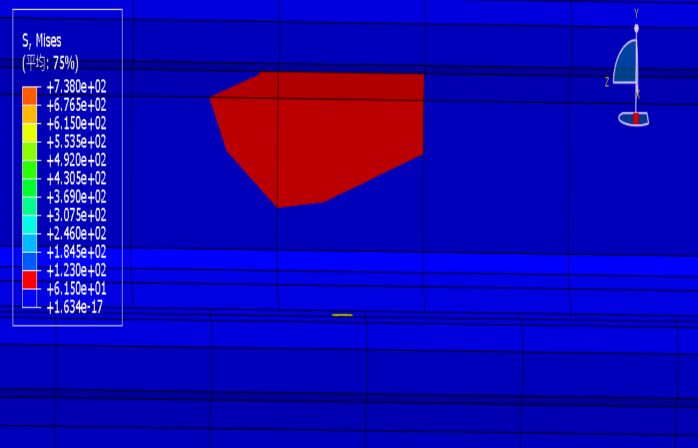
You can also read


