Minimum wage: global challenges and perspectives - IPC IG
←
→
Page content transcription
If your browser does not render page correctly, please read the page content below

A publication of
                              The International Policy Centre for Inclusive Growth

                                 Volume 15, Issue No. 2 • September 2018

     Minimum wage: global
challenges and perspectives
Policy in Focus is a regular publication of the
International Policy Centre for Inclusive Growth (IPC-IG).

The International Policy Centre for Inclusive Growth (IPC-IG) is a partnership   Some of the photographs used in this publication are licensed under
between the United Nations and the Government of Brazil to promote               The Creative Commons license; full attribution and links to the individual
South–South learning on social policies. The Centre specialises in research-     licenses are provided for each.
based policy recommendations to foster the reduction of poverty and
inequality as well as promote inclusive growth. The IPC-IG is linked to the      Specialist Guest Editor: Sergei Soares,
United Nations Development Programme (UNDP) in Brazil, the Ministry of           International Policy Centre for Inclusive Growth (IPC-IG)
Planning, Development, Budget and Management of Brazil (MP) and the
Institute for Applied Economic Research (Ipea) of the Government of Brazil.
                                                                                 In-house Editor: Manoel Salles

Director a.i.: Niky Fabiancic
                                                                                 Publications Manager: Roberto Astorino
IPC-IG Research Coordinators: Diana Sawyer; Fábio Veras Soares;
Rafael Guerreiro Osorio and Sergei Soares
                                                                                 Copy Editor: Jon Stacey, The Write Effect Ltd.

The views expressed in IPC-IG Publications are solely those of the authors
                                                                                 Art and Desktop Publishing: Flávia Amaral and Rosa Maria Banuth
and should not be taken as representing the views of their respective
institutions, the United Nations Development Programme,
                                                                                 Cover photograph: Atomische (Tom Giebel)
or the Government of Brazil.
                                                                                 .
Rights and Permissions – All rights reserved. The text and data in this
publication may be reproduced as long as written permission is obtained          Editor’s note: We would like to express our sincere appreciation to all the
from the IPC-IG and the source is cited. Reproductions for commercial            authors for their generous and insightful contributions, without which this
purposes are forbidden.                                                          issue simply would not have been possible.
Summary

 7         Minimum wages: recent trends and policy design issues
12         The effects of minimum wage policy on wage inequality—
        evidence from Latin America

19         Can the minimum wage reconcile opposing interests?
        Pending challenges and proposals for improvement

22         Multiple minimum wages in Central America
26         Minimum wage effects on jobs and poverty: evidence and policy debate in the USA
32         Minimum wage: some elements of the debate in Europe and in France
34         Minimum wages in India: current status and future prospects
38         Minimum wages in China: there is no free lunch
41         Minimum wages in sub-Saharan Africa: a primer
Editorial

    The increase in inequality over the last few decades in         transfers. On the other hand, the ease with which the
    most of the world has been a constant source of concern         minimum wage can be raised has undoubtedly led to
    for policymakers and analysts. Inequality can hinder            its abuse by populist policymakers. In many countries,
    economic growth, reduce well-being and increase                 legal wage floors have been set so high that they become
    poverty. It also fuels social unrest and reduces social         fictional rules with scant relation to the labour markets
    cohesion. Great attention has been given to the role            they purport to regulate.
    of fiscal redistribution (or lack thereof ) in the inequality
    debate, but perhaps mechanisms that involve money               The minimum wage and its effects have been studied
    passing directly from one economic agent to another,            thoroughly, but the conclusions as to its effectiveness
    rather than through the hands of the State, deserve             as social policy from this extensive body of literature are
    more attention. In a time of weakened labour unions and         far from consensual. The economics of the minimum
    decreasing income mobility, can the minimum wage once           wage have always been complicated, with mixed
    again shine as a market-friendly and effective policy tool?     evidence. Does it cause unemployment? Does it lead to
                                                                    more informality? Political and ethical issues cannot be
    Since its creation 124 years ago, the popularity of the         disentangled from economic ones. How high should the
    minimum wage among policymakers and the public at               minimum wage be? Setting this value often represents
    large has risen and fallen. Most countries have introduced      an economic and moral conundrum.
    wage floors, but many have done so only to have their
    real value be eroded by inflation. A few countries have         This issue of Policy in Focus is devoted to the minimum
    abolished minimum wages altogether (sometimes only              wage, the reasons for its existence and why now may be
    to recreate them later). Compliance has sometimes been          a good time to rethink its relationship with social policy.
    high and sometimes low.                                         It features articles by leading experts and scholars on
                                                                    minimum wage contexts more broadly in Latin America,
    Legislating a floor on wages has long been an attractive        Europe, Asia and sub-Saharan Africa, and on more specific
    way to reduce inequality and ensure social justice.             country contexts such as in the United States, China and
     It usually does not require significant fiscal outlays, it     France. We hope it will be a timely contribution to the
    is simple and very easy to explain politically, and it is a     timeless debate on the minimum wage and its effects
    market approach to reducing inequality (as opposed to           worldwide, and that it will help spark further discussion.
    tax and transfer). The minimum wage is related to the
    idea of fairness and avoids the never-ending disputes
    over what type of person is ‘deserving’ of government           Sergei Soares

6
Minimum wages: recent trends
and policy design issues
Patrick Belser and Ding Xu1                     What explains this sudden phenomenon?                 of the bottom half of the population, and
                                                Two factors can be highlighted. First, the            Sustainable Development Goal (SDG) 10 has
Minimum wages are back at the top of            growing evidence from academia and                    called for “fiscal, wage and social protection
the policy agenda. After being widely           national minimum wage institutions                    polices” to progressively reduce inequality.
cast as a counterproductive ‘job killer’ and    shows that minimum wages have not                     ILO Member States are calling for wage
an unwelcome source of labour market            generally resulted in the type of massive             policies that deliver a “just share of the fruits
rigidity in the 1980s and early 1990s,          job destruction feared by some of its                 of progress to all, and a minimum living
statutory wage floors have made a return        most outspoken critics. As expressed by               wage to all employed and in need of such
to the forefront of social policy debate.       Belman and Wolfson (2014), “support                   protection” (ILO 2008).
Since the late 1990s, many countries—           for the minimum wage is premised on
both developed and developing—                  its improving the lives of those most                 In most countries, the policy debate
have either adopted or strengthened             vulnerable in the labour market. If the               has thus moved on from the question
existing minimum wage systems. The UK           minimum wage leads to job losses                      of whether a statutory minimum wage
introduced a national minimum wage              for many of the same people, serious                  is desirable, to the question of how a
in 1999 and was followed by Ireland,            questions arise with respect to its relative          minimum wage system should best be
numerous former transition economies            benefits and costs”. The evidence of                  designed and operated, taking into account
of Eastern Europe and, perhaps most             massive job losses has not materialised.              national preferences and circumstances.
significantly, by Germany in 2015—a             Although the range of estimates varies                Exceptions include the Scandinavian
country which has traditionally relied on       widely across the literature, a large                 countries, where there remains broad
a system of collective agreements rather        proportion of recent studies and meta-                agreement that wage floors are best set
than on state intervention.                     studies (quantitative studies of studies)             through collective bargaining between
                                                find employment effects that are too small            workers and employers. This is arguably a
The UK recently signalled its intention         to be observable in aggregate employment              better solution, which takes into account
of progressively increasing the value of        or unemployment statistics, except                    the different capacities of employers to pay
the minimum wage up to the level of a           where the minimum wage is set at very                 wages in different industries. Unfortunately,
living wage by 2020. The minimum wage           high levels (see for example Belman and               in most countries—particularly developing
was reactivated in many emerging and            Wolfson 2014; Doucouliagos and Stanley                ones—the coverage of collective
developing economies around the world,          2009; or Broecke Forti and Vandeweyer                 agreements is largely insufficient to provide
including the BRICS countries. Brazil started   2017). It is true that methodologies are              wage floors to a broad majority of workers.
to gradually increase the federal minimum       hotly debated, and some healthy level                 Their governments are, therefore, operating
wage after 2005; the Russian Federation         of controversy remains in the literature.             statutory minimum wages in addition to
adopted a system with new regional rates        However, many policymakers and their                  those set through collective agreements.
in 2007 and recently implemented a two-         advisers now view the minimum wage as a               The next section discusses some key issues
stage increase to raise the level up to the     useful tool for achieving social justice if it is     of policy design.3
subsistence minimum; India is considering       carefully managed.
a legal reform to extend the coverage of                                                              Policy design issues
its Minimum Wage Act from workers in            A second element in the revival of the                yy Who should set the minimum
established (‘scheduled’) occupations to the    minimum wage is the failure of past                       wage? Good practice indicates that
entire population of wage workers; China        reforms in many countries to deliver                      governments should set minimum
adopted a system with provincial minimum        inclusive growth. Instead, wage and                       wages after a genuine process of
wages in 1994 and further strengthened its      income inequality have either increased or                consultation and social dialogue
implementation through a set of reforms in      remained very high in most developed and                  with representatives of workers and
2004; and South Africa just announced the       developing countries around the world.                    employers, listening to their arguments
introduction of a new national minimum          In South Africa, an extreme example, the                  and, as much as possible, taking
wage in 2018 to complement the existing         lowest paid 50 per cent of wage earners still             stock of their concerns. This can be
‘sectoral determinations’ adopted after         obtain only about 12 per cent of the total                accomplished under the framework of
the end of apartheid. There are even            wage bill, while the top 10 per cent receive              a national minimum wage commission
more examples of countries which have           close to half of the economy’s total wages                or of an existing tripartite social
strengthened their minimum wage systems,        (ILO 2016).2 It is now widely recognised that             dialogue commission, as in many
including Cambodia, Cape Verde, Costa           excessive inequality is not only bad for social           countries. When both employers and
Rica, Malaysia and Myanmar. Most recently,      cohesion but also for economic growth.                    workers are included in the negotiation
Qatar has announced the introduction            In this context, governments have looked                  process, it is likely to lead to more
of a minimum wage.                              for policies to raise the wages and incomes               balanced outcomes and, ultimately,

                                                                                   The International Policy Centre for Inclusive Growth | Policy in Focus   7
higher levels of compliance. Of course, economy more generally, in too many progressively brought up to the same
negotiations and consultations can countries these low-paid groups level. Public-sector pay scales should
be difficult, as views are sometimes remain unprotected by minimum wage also be consistent with minimum
far apart, but including the voices of laws. Interesting developments in this wages. Where this is not the case, there
experts or others who can represent regard include the growing number is an understandable feeling that the
the general interests of the country can of states in India which have recently State is imposing a costly measure on
help find an adequate middle ground. extended minimum wage coverage to the private sector that it is not willing
domestic workers, or the decision of to impose on itself.
yy Who should have a right to the the Constitutional Court of the Former
minimum wage? For minimum wage Yugoslav Republic of Macedonia to yy How many rates should there be?
laws to protect the most vulnerable rule as unconstitutional the exclusion Some countries have a single national
workers, they should not inadvertently of piece rate workers. In Uruguay, rate or some differentiated but unique
exclude groups such as domestic the minimum wage was introduced regional rates. This is usually the case
workers, casual workers, piece rate in 1969, but excluding domestic in large and/or decentralised countries.
workers or home-based workers. workers, who were incorporated in Brazil, for example, has a federal rate and
While enforcement will always remain 1991. In Chile, the minimum wage for some higher rates in a few richer states.
a challenge for these groups, as well domestic workers was 75 per cent of Other countries have multiple rates
as for wage workers in the informal the general rate until 2011, when it was which can vary by industry, occupation
FIGURE 1: Over-representation of women among minimum wage and sub-minimum wage earners
Wage earners characteris cs by wage group, Portugal (2017) Wage earners characteris cs by wage group, Thailand (2015)
by gender by gender
100 100
80 80
40 41
60 48 47 60
53 55 53 55
%
%
40 40
20 20
60 52 59 53 47 45 47 45
0 0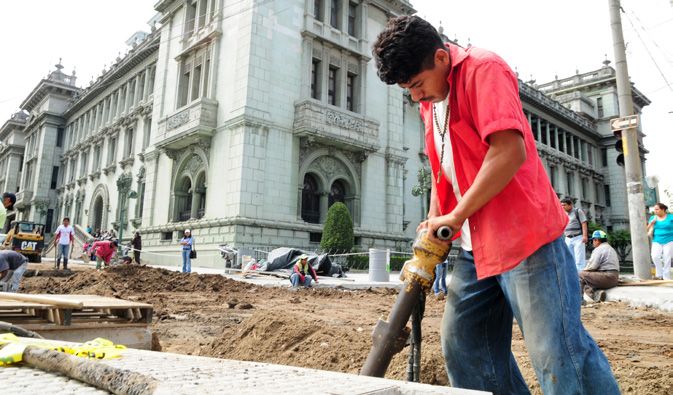
FIGURE 2: Wage distribution: Portugal, Thailand, Tunisia and Turkey
Wage distribuon Portugal (2017) Wage distribuon Thailand (2015)
Na onal Na onal
.004 mw=557 median=700 mean=857; K(mean)=.65 K(P50)=.8 mw=7800 median=11000 mean=14499; K(mean)=.54 K(P50)=.71
.00015
.003
Probability density
Probability density
.0001
.002
.00005
.001
0 0
0 mw mean 2000 3000 0 mw mean 40000 60000
median 1000 median 20000
Monthly wage, in EUR Monthly wage, in THB
Wage distribuon Tunisia (2014) Wage distribuon Turkey (2015)
Na onal Na onal
.0025 mw=275 median=450 mean=529; K(mean)=.52 K(P50)=.61 .002 mw=1273 median=1300 mean=1711; K(mean)=.74 K(P50)=.98
.002
.0015
Probability density
Probability density
.0015
.001
.001
.0005
.0005
0 0
0 mw mean 1000 2000 mw mean 4000 6000
median 0 median 2000
Monthly wage, in TND Monthly wage, in TRY
Note: The ‘K-density’ graph shows the kernel-based empirical distribution of monthly wages of all wage employees. The last two ratios in the upper right bar are the Kaitz
index. K(mean) is the ratio of the nominal legal minimum wage to the average wage; K(P50) is the ratio of the nominal legal minimum wage to the median wage.
Source: ILO calculation. Labour Force Survey (2017) from National Statistical Office of Portugal; Labour Force Survey (2015) from the National Statistical Office of Thailand; Labour
Market Panel Survey (2014) from the Economic Research Forum and Institute of National Statistics of Tunisia; Labour Force Survey (2015) from the Turkish Statistical Institute.
or both. This is more frequently the workers during a probationary period economic and social circumstances
case in countries with weak systems of are preferable to lower rates for young vary from country to country. Also,
collective bargaining and where the people, which are more difficult to as previously stated, some countries
minimum wage attempts to mimic or reconcile with the principle of non- have multiple rates to determine.
substitute for the outcomes of industry- discrimination. Similarly, one should be Even so, three general principles can
level collective bargaining. While there attentive to prejudice leading to lower be followed. The first is to follow a
are many good reasons to have multiple rates in women-dominated sectors balanced approach, considering the
rates, it should be noted that too or occupations. Figure 1 shows that needs of workers and their families as
many rates tend to result in confusion women are often over-represented well as economic factors. The second is
about applicability and in poor among low-paid workers. to follow an evidence-based approach,
compliance. Both Mexico and Costa relying on agreed criteria, adequate
Rica, for example, have tried to reduce yy At what level should the minimum statistics and a system of monitoring
the number of their rates. Mexico wage be set, and how often should and evaluation of the effects. The third
managed to progressively eliminate it be adjusted? There is obviously no is to establish a mechanism of regular
different regional rates, while Costa Rica standard formula to determine the adjustments, preferably every year or
reduced its number of occupational optimal level of a minimum wage, not two, to ensure some predictability of
rates. Finally, lower rates for trainees or least because wage distributions and the system. If there is a gap between
The International Policy Centre for Inclusive Growth | Policy in Focus 9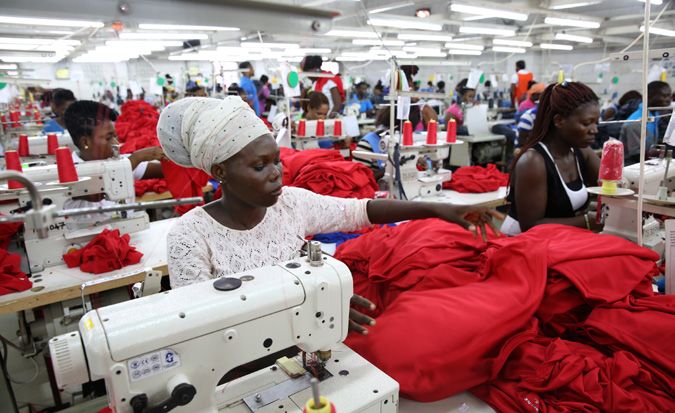
the minimum wage and the needs of                         in rates of non-compliance across
                                    workers and their families, medium-                       different groups of the population.
                                    term strategies can be adopted,                           Non-compliance is often more
                                    with successive adjustments to                            widespread in rural than in urban areas,
                                    progressively eliminate the gap—                          and in the informal than in the formal
                                    a process which will of course be easier                  economy. Women are also frequently
                                    under sustained economic growth.                          more likely to be underpaid than men,
                                                                                              as are disadvantaged ethnic or social
                                A useful starting point for evidence-                         groups. To design, put in place and
                                based social dialogue is an analysis of                       pursue sound strategies and measures
                                the distribution of wages, as illustrated                     for compliance and enforcement, it is
                                in Figure 2 (see page 9) with data for four                   important to analyse the extent and
                                countries: Portugal, Thailand, Tunisia and                    patterns of non-compliance and run
                                Turkey. From these simple charts we can                       information and awareness-raising
                                compute the ratio of the minimum wage                         campaigns, empower workers to
                                to the median wage (ranging from 0.61                         claim their rights, undertake targeted
                                in Tunisia to 0.98 in Turkey), as well as the                 labour inspections and inflict
                                percentage of workers paid less than the                      sanctions that function as a
                                minimum wage, paid around the minimum                         deterrent to non-compliance.
                                wage or paid up to 25 per cent above the
                                minimum wage (which includes workers                     Conclusion
                                whose wages might increase as a result                   It is often claimed that minimum wages
                                of spill-over effects when the minimum                   target poor people badly. This is indeed
                                is raised). Comparing minimum wages to                   true, as many poor households have no
                                the more widely available figure of mean                 members working as a paid employee, and
                                (rather than median) wages, Figure 3 shows               some minimum wage workers are from
                                that there remains an enormous diversity                 non-poor households. It is thus no surprise
                                across countries and some room for more                  that although many studies identify
                                balanced wage levels in many.                            poverty-alleviating effects with minimum
                                                                                         wages, some find that this effect is either
                                yy How to maximise compliance?                           very small or even non-existent.
                                   High rates of non-compliance, where
                                   they exist, have negative consequences                However, even in such circumstances, the
                                   not only for workers and their families,              minimum wage usually plays an important
                                   whose rights are violated, but also for               role in supporting the incomes of those in
                                   compliant employers, as it gives non-                 the lower part of the income distribution—
                                   compliant enterprises an illegitimate                 even when they do not lift households
                                   cost advantage. Within countries,                     above an arbitrary poverty line. As pointed
                                   there are usually significant differences             out by Belman and Wolfson (2014),

 “    Statutory wage floors
     have made a return to
      the forefront of social
              policy debate.

                                Photo: Simone D. McCourtie/World Bank. Woman working in a factory, Turkey, 2009 .

10
“
The minimum
wage usually plays
an important role
in supporting the
incomes of those in
the lower part of the
income distribution.
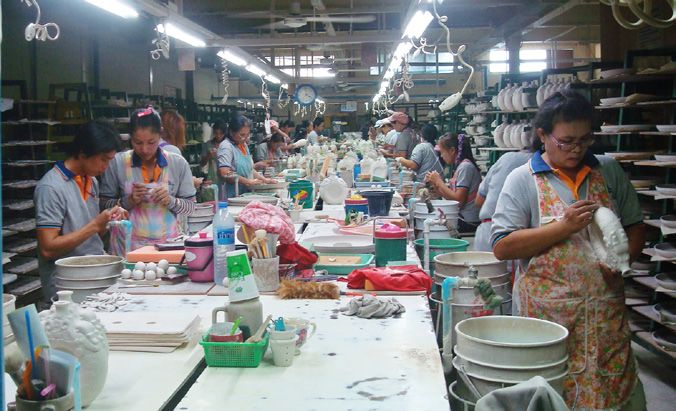
Photo: ILO/Phaywin. Porcelain factory, Thailand, 2012 .
what truly matters is whether minimum Broecke, Stijn, Alessia Forti and Marieke ILO. 2016. Global Wage Report 2016/17:
wages improve the lives of low-income Vandeweyer. 2017. “The effect of minimum Wage inequality in the workplace. Geneva:
wages on employment in emerging economies: International Labour Organization,
households and whether they are better a survey and meta-analysis.” Oxford Development Table 2, 42. .
off as a result. The literature shows that this Studies, 45:3, 366-391, DOI: . Accessed 8 August 2018.
a minimum wage succeeds in achieving
Doucouliagos, Hristos, and Tom D. Stanley, 2009.
these objectives and in reducing inequality “Publication Selection Bias in Minimum-Wage
depends first and foremost on whether it is Research? A Meta-Regression Analysis.” 1. International Labour Organization (ILO).
well designed and operated. British Journal of Industrial Relations, vol. 47(2),
406-428. London: London School of Economics. 2. Data refer to 2013.
ILO. 2008. Declaration on Social Justice for a Fair 3. A more extensive discussion of these
Belman, Dale, and Paul J. Wolfson. 2014. Globalization. Geneva: International Labour policy design options can be found in
“The New Minimum Wage Research.” Organization. . the ILO minimum wage policy guide,
Employment Research 21(2): 4–5. Accessed 8 August 2018. available online at .
FIGURE 3: Ratio of the minimum wage to mean wages and productivity
IRL
150,000
GDP per worker (PPP)
USA
100,000
BEL
MAC FRA NLD
TWN DEU AUS
ESP OMN
CMN GBR
JPA ISR TUR CRC
KOR TTO SUNGRC NZL SUN
CZE HRV SVK IRN
50,000
HUN DZA
LTU
ROD PRT
EST POL
PAN MNELVA BGR
MUS JOR
BWA TUN HEX CRI MKD
TRM
URY
AZE MNG BLR BDADOM
CHN SRB COL THAALB IDN
GBONGA ARM PER ECU SLV
UZB JAM UKR IND PRY PAK
TLS MDA VHM NIC HND
UGA KGZ GMB
UK TZA LSO BEN NPL
BDI NER
0
0 .2 .4 .6 .8 1
ra o
Low income Low middle-income
Upper-middle income High income
Source: ILO calculation. ILO Global Wage Database; ILO Global Employment Trends (GET).
The International Policy Centre for Inclusive Growth | Policy in Focus 11The effects of minimum wage policy on wage
inequality—evidence from Latin America
Sergei Soares1 and Joana Silva 2 wage has increased. In particular, the that the interplay between the formal
existence of an informal sector makes all and informal sectors as well as imperfect
The minimum wage and its effects on minimum wage analysis quite complex and enforcement make the analysis of the
employment and wage inequality are dependent on the cross-wage elasticity effects of the minimum wage on wage
among the most-studied subjects in labour showing how informal-sector employment inequality more complex in Latin America
economics. Overall, results are mixed reacts to formal-sector wages. This means than in developed countries.5
concerning both the magnitude and the
direction of such effects, but one conclusion
that can be drawn is that the level of the
minimum wage matters. For example, the BOX 1: Minimum wage institutions
effects of minimum wages may be larger in
Latin America than in the USA because the
minimum wage itself in the former is often The Constitution
higher relative to the median wage and is The constitutions of almost all Latin American countries mention the minimum wage. The
only exceptions are the minimalist Jamaican Constitution and those of Chile, Ecuador and
increasing rapidly.3 Conversely, the effects Haiti, which mention a ‘fair wage’ but not a minimum wage set by the State. Looking at
are potentially smaller in Latin America than constitutions, labour laws and minimum wage laws across the region, a typical rationale for a
in Europe, where the minimum wage is also wage floor is along the lines of ‘to allow the worker and his family to live a materially, morally
high but the enforcement of legislation is and culturally dignified life’.
much stricter. Similarly, macroeconomic
Setting the minimum wage
conditions may also be important. A rising
Within Latin America, ‘national’ minimum wages coexist with State-sanctioned wage
minimum wage in a rapidly growing
bargaining through three different models:
economy may help distribute the fruits
yy Some countries, such as Brazil and Chile, have a single national minimum wage,
of growth more evenly across workers by and employers and employees negotiate wages, either individually or through their
lifting the earnings of unskilled workers respective organisations, with little state involvement. In the past, the State was involved
without sizeable employment losses. On in collective bargaining—and some countries, such as Peru, still have such provisions
the other hand, a rising minimum wage in a on the books—but today wages by sector are negotiated between employers and their
employees. In Brazil, some states have legislated state wage floors that are higher than
context of low growth may backfire, because
the national minimum wage.
employment losses among unskilled
workers may outweigh wage gains. yy Argentina, Ecuador, and Uruguay follow a second model that includes both a national
minimum wage and strong state involvement in collective bargaining through wage
councils. The wage floor, however, is kept separate from State-supervised or State-
Minimum wage levels vary considerably by sanctioned collective bargaining.
country. In a few countries, such as Mexico,
yy In most of Central America the two issues come together, making for a plethora of
the minimum wage is simply too low to be
minimum wages within each country. For example, Panama’s latest law (2016) has 109
effective. In others, such as Colombia and categories and about 20 different minimum wages; Costa Rica has 13 different sectoral
Paraguay, it is so high that enforcement is minimum wages; Honduras has about 42; and El Salvador has 2 agricultural and 3
impossible. In a few, such as Brazil or Chile, non-agricultural minimum wages. The Dominican Republic has wages not by sector
the minimum wage is relatively high and (except for agriculture and security guards) but by company size. Nonetheless, there
is a trend towards convergence. Panama, for example, still sets wages for over 100
relatively binding. It is in these countries
sectors, but successive laws have assigned the same minimum wage to different sectors.
that its analysis is particularly relevant. In In El Salvador and Guatemala, only a few sectors currently have special minimum wages,
countries where the minimum wage bite mostly pertaining to agriculture and manufacturing.
is high, there is a larger risk that further
minimum wage increases will either Despite the many within-country variations, including some that persist in South America,
adversely affect employment rates or push the overall trend is clear—towards a single, unified minimum wage for all. However, this
vulnerable workers (such as unskilled unifying trend is evolving faster in some dimensions and country aggregates than in others.
workers, young people and women) either The usual mechanism for setting the wage floor is through a tripartite wage council
into informal-sector jobs or out of the (comprising workers, employees and government) that suggests the new minimum
to the labour ministry, which then makes the final decision.
labour force entirely. On the other hand,
Two notable exceptions to all of the above are Argentina and Brazil, which are polar
places where the bite is high are exactly
opposites in this regard. In Argentina, the National Council of Employment, Productivity and
those where the minimum wage could have the Minimum Wage is a bipartite commission of employers and employees with legal power
important distributional effects. to set the wage floor. The executive does not get involved, except to convene the council.4
In contrast, Brazil has no such commission whatsoever, and the wage floor is currently set by
Compliance with minimum wage laws is as a law approved by Congress.
varied as the rate at which the minimum
12FIGURE 1: Real minimum wages, 1995–2015
Panel A. South America Panel B. Central America
800 800
700 700
Paraguay Honduras
600 600
Real minimum wage in USD PPP
Real minimum wage in USD PPP
Guatemala
Costa Rica
500 Chile 500 Panama
Colombia
400 400 El Salvador
Ecuador Dominican Republic
Peru
300 Brazil 300
Nicaragua
200 Bolivia 200
Mexico
100 Uruguay 100
0 0
15
95
00
05
10
95
00
05
10
15
20
19
20
20
20
19
20
20
20
20
Year Year
Note: All minimum wages are expressed in US dollars PPP. Because none of the Central American countries have a unified minimum wage, the lowest urban minimum in each
country is selected as the representative minimum wage.
Source: Official country data for minimum wages.
The wage floor over the last two decades lower side (the vast majority of workers in Panel A (see page 14). In contrast, Panel B
In much of Latin America, minimum wages Mexico have a wage significantly above the shows that in Argentina, Brazil, Chile, Ecuador
have doubled or tripled over the last decade minimum wage). Workers in Guatemala, and Uruguay the wage floor has risen
or two. In Bolivia, Brazil, Chile, Ecuador and Nicaragua, Panama and, particularly, considerably faster than median wages.
Uruguay, the minimum wage has at least Honduras have seen the legal minimum
doubled over little more than a decade. wage increase rapidly. Workers in Mexico, Notice that, at the end of the commodity
In Colombia, the rate of increase has been however, have seen little change in the boom, the ratio of the minimum wage to the
much more modest, and in Paraguay legal minimum wage, and workers in the median wage has shown some convergence
it has not increased in real terms since Dominican Republic and El Salvador have towards values between 0.6 and 0.8, with
about 2003. Panel A of Figure 1 shows that seen the legal minimum rise and then fall considerably less variation than in 1995.
although workers in countries that already such that its value in real terms has changed These values are higher than in most high-
had high minimum wages in 1995 have little since 1995 (Figure 1, Panel B). income countries, where the wage floor
seen modest increases at best, the workers fluctuates between 0.37 and 0.6 of the
in economies where the floors were low Looking at the minimum wage as a median wage. Around the world, countries
have seen high minimum wage increases. percentage of the median wage, we can outside Latin America cluster around 0.4.
divide Latin America into two groups
In Mexico and Central America, the of countries: one in which this indicator What does the literature say?
pattern is less clear. Costa Rica, El Salvador, has clearly increased and one where this As we stressed in the introduction, there
Guatemala and Panama had minimum indicator has trended downwards since has been much study of the distributive
wages that were on the higher side in terms 2002–2003. In Bolivia, Paraguay and Peru, effects of the wage floor. Many of these
of purchasing power parity (PPP) US dollars. the minimum wage has merely kept up with studies were conducted on the minimum
Honduras, Nicaragua and, particularly, median wage growth, and in Colombia it has wage and its effects before most Latin
Mexico had minimum wages on the been falling since 2001, as shown in Figure 2, American minimum wages began their
The International Policy Centre for Inclusive Growth | Policy in Focus 13ascent at the end of the past century and In Mexico and Uruguay, the minimum high minimum wages for skilled workers may
the first decade of this one. wage was so low (relative to the median have reduced wage inequality.
wage) that it is either virtually non-binding
The literature on Brazil analysing the or only relevant in the first decile of the In addition, the literature has shown that
period before high minimum wage growth, wage distribution. The discussion mirrors in much of Latin America, before the large
summarised in Ulyssea and Foguel (2006), that in the USA: the minimum wage has increases of the 21st century, the minimum
shows that increases in the minimum wage had small effects on inequality or poverty wage was too low to be binding in the formal
led to modest reductions in employment because of its low level and variations. sector, and much of its bite occurred among
and reduced the wage dispersion among informal workers.6 The minimum wage also
those who remained employed. However, At the other extreme, Arango and Pachón appeared to create numeraire effects that
Ferreira, Firpo, and Messina (2017) and (2004) and Hernández and Pinzon (2006) echo higher up the wage distribution.7
Silva, Almeida, and Strokova (2015) found found that in Colombia the minimum
that in a context of low growth and wage was so high that increasing it In sum, the literature on the period before
stagnation of average income between would have no positive effects on either high minimum wage growth largely
1995 and 2002, the rising minimum wage inequality or poverty. concluded that, despite its effects on
was associated with higher levels of increasing unemployment, it has had
non-compliance with the law, resulting Finally, the literature on the Central American equalising effects. However, much of the
in increasing inequality. countries—with their multiple minimum wage distribution is unaffected either
wages by industry, region, category and because they are far above the wage
Bravo and Contreras (1998) and even educational attainment—had a floor or because of non-compliance.
Saavedra and Torero (2000) found different analytical approach. Gindling and
small negative employment effects Terrell (2004; 2006) report that in Costa Rica Relatively few studies have been
and reductions in inequality for Chile and Honduras, high minimum wages for undertaken concerning the minimum
and Peru, respectively. unskilled workers combined with not-so- wage during the boom years.
FIGURE 2: Minimum wages as a percentage of median wages, 1995–2015
Panel A. High, not growing Panel B. Growing
1.4 1.4
Paraguay
1.2 1.2
1.0 1.0
Colombia
MW/Median
MW/Median
Argen na Ecuador
0.8 0.8
Peru
Bolivia Chile
0.6 0.6
Brazil
0.4 0.4 Uruguay
0.2 0.2
0 0
95
00
05
10
15
95
00
05
10
15
19
20
20
20
20
19
20
20
20
20
Year Year
Source: Calculations based on official country data for minimum wages in Latin America. Median wages from Socio-Economic Database for Latin America and the Caribbean
(SEDLAC), Universidad Nacional de la Plata (CEDLAS) and the World Bank .
14“
In Costa Rica
and Honduras,
high minimum wages
for unskilled workers
combined with
not-so-high minimum
wages for skilled workers
may have reduced
wage inequality.
Photo: Josue Isai R. Figueroa/Unsplash. Construction workers, Alajuela, Costa Rica.
Maurizio (2014) found that in Argentina ever-present but small employment losses,
the increase in the minimum wage still has a wage-equalising effect. Measured
transformed it into a relevant institution unemployment effects are, for the most
not only in the formal sector but also, part, modest (Bell 1997; Lemos 2004), but
increasingly, in the informal sector. effects on informality may be important
(Lotti, Messina, and Nunziata 2016).
Likewise, in Chile, the minimum wage
continues to increase the wages of affected Extent and evolution of
workers, with small unemployment effects, minimum wage compliance
leading unambiguously to an increase To analyse compliance, we plot the
in wage equality, as shown by Grau and percentage of workers who earn less than
Landerretche (2011). one minimum wage against the ratio of
the minimum wage to the median wage.8
On the other hand, Alves et al. (2012) We look only at countries which have a single
reported that in Uruguay the large wage floor. Figure 2 shows that Paraguay
minimum wage increase in the 2000s had and, to a lesser extent, Colombia and Peru
insignificant unemployment effects and have minimum wages that are quite high.
reduced wage inequality only slightly Needless to say, Figure 3 (see page 16) shows
between 2004 and 2006. that compliance is low in all three countries,
and 40 per cent or more of the population
In Brazil, as shown by Ferreira, Firpo, earn less than the minimum wage.
and Messina (2017) and Corseuil, Foguel,
and Hecksher (2015), a rapid raise in the The graph shows a negative correlation
minimum wage during the boom period between the minimum wage (as compared
had equalising effects. This happened to the median) and compliance. Except
because employers could increase the wages for Bolivia and Mexico, all other countries
of workers earning near the wage floor, fall on the same curve. This curve shows
implying an improvement in the compliance two regions in which the minimum wage
rate of employers and increasing wages for compliance trade-off is almost linear. From
workers near the low end of the distribution. zero to 70 per cent of median wages, a
10 per cent increase in the minimum-to-
In sum, the effects of the minimum wage median ratio increases non-compliance
on wage inequality depend on its level and by about 0.7 percentage points. From
whether it is binding—aspects that will be 70 per cent onwards, the same relative
discussed further below. increase would reduce compliance by
1.5 percentage points. This relationship
The general conclusion is that an is confirmed in regression analysis
increasing minimum wage, despite controlling for growth in gross domestic
pervasive incomplete compliance and product (GDP) and country fixed effects.
The International Policy Centre for Inclusive Growth | Policy in Focus 15“ Wage floors cannot
be increased too far
FIGURE 3: Ratio of minimum to median wages and non-compliance
with the minimum wage, 1995–2014
without a heavy price 0.7
to pay in terms of 0.6
Per cent of workforce earning < MW
non-compliance.
0.5
Paraguay
0.4
Peru
Ecuador
0.3 Colombia
Bolivia
0.2 Argen na
Mexico
0.1 Chile
Uruguay Brazil
0
0 0.1 0.2 0.3 0.4 0.5 0.6 0.7 0.8 0.9 1.0 1.1 1.2 1.3
MW/Median
Note: Mean wages are for full-time employers, employees and self-employed workers aged 15–65. 0 and 99th
percentile income are not included. Each dot represents a country in a given year, colour-coded to approximate
the colours of each country’s national flag. ‘Less than one minimum wage’ is defined as less than 0.95 of the
minimum wage, to allow for some reporting error.
Source: Calculations based on official country data for minimum wages in Latin America; median wages from
Socio-Economic Database for Latin America and the Caribbean (SEDLAC), Universidad Nacional de la Plata
(CEDLAS) and the World Bank .
Any analysis of the advantages and more sense during economic booms such
drawbacks of increasing the wage floor in as the recent commodity boom?
Latin America must take into consideration
the negative relationship between the level This can be investigated through cross-
of the minimum wage and compliance. To country regressions, the results of which
determine whether increasing the minimum are shown in Table 1. The percentage of
wage is a desirable policy, the literature the labour force earning less than one
concerning Organisation of Economic minimum wage is the dependent variable,
Co-operation and Development (OECD) and the minimum-to-median ratio as well
countries pits the unemployment effects as GDP and GDP growth are the explanatory
against the compression of the earnings variables. For each of the five model
distribution of those who remain employed. specifications, the effect of the minimum-to-
However, in the developing world—and median ratio on non-compliance is almost
Latin America is no exception—this is a constant: an increase of 10 per cent in this
flawed approach because of imperfect ratio leads to an increase of about 3 to 4
compliance. When analysing the impact of percentage points in non-compliance. This
raising wage floors in Latin America, one is much higher than the implicit estimates
must analyse those whose incomes increase from Figure 3, which were around 0.7 for
with the minimum wage, those who minimum-to-median ratios of less than 70
become unemployed and those (many) per cent and about 1.5 for minimum-to-
who simply see the minimum wage pass median ratios above 70 per cent.
them by with few effects on their earnings.
The graph and the regression results show,
Therefore, wage floors cannot be increased of course, different things. The graph results
too far without a heavy price to pay in terms do not control for anything other than
of non-compliance. But can any more be the minimum-to-median ratio, while the
said about the circumstances in which it is regressions control for GDP growth as well
possible to minimise the negative affects? as country effects. The advantage of this
Does increasing the minimum wage make is that the regression results clearly show
16that GDP growth allows for lower effects Alves, G., V. Amarante, G. Salas, and A. Vigorito.
of non-compliance from similar increases 2012. “La desigualdad del ingreso en Uruguay
entre 1986 y 2009.” Working Paper, No. 12-03.
in the minimum wage. An increase of 1 Montevideo: Instituto de Economía.
percentage point in GDP growth decreases
non-compliance by 0.24 percentage points Arango, C. A., and A. Pachón. 2004. The Minimum
Wage in Colombia: Holding the Middle with a Bite
for South America. The implication is that if on the Poor. Bogota: Bank of the Republic.
GDP is growing at 5 per cent annually, for
example, the ratio of the minimum wage Bell, L. A. 1997. “The Impact of Minimum Wages
in Mexico and Colombia.” Journal of Labor
to the median could increase by up to 3 Economics 15(3): S102–135.
per cent with no adverse effects on the
percentage of individuals earning less than Bravo, D., and D. Contreras. 1998. “Is There Any
Relationship between Minimum Wage and
the minimum wage. Given that the economy Employment? Empirical Evidence Using Natural
was growing during most of the period Experiments in a Developing Economy.” Discussion
shown in Figure 3, this suggests that the Paper, No. 157. Santiago: Universidad de Chile.
two approaches may show the same thing. Corseuil, C. H., and F. G. Carneiro. 2001.
“Os Impactos do Salário Mínimo sobre Emprego
Table 1 also shows coefficients for Central e Salários no Brasil: Evidências a Partir de Dados
Longitudinais e Séries Temporais.” Brasília:
America. In this case, perhaps because
Instituto de Pesquisa Econômica Aplicada,
of the fundamentally different nature of Department of Social Studies.
minimum wages in Central America, neither
Ferreira, F., S. Firpo, and J. Messina. 2017.
GDP level nor GDP growth seem to affect “Aging poorly? Accounting for the Decline in
non-compliance with the minimum wage. Earnings Inequality in Brazil, 1995–2012.” World
Bank Policy Research Working Paper, No. 8018.
If a conclusion can be reached, it is Washington, DC: World Bank.
that a minimum-to-median ratio of about Gindling, T. H., and K. Terrell. 2004.
70 per cent is the limit after which minimum “Legal Minimum Wages and the Wages of
wage increases begin to incur heavy costs in Formal and Informal Sector Workers in Costa
Rica.” IZA Discussion Paper, No. 1018. Bonn:
terms of compliance. This limit is somewhat Forschunginstitut zur Zukunft der Arbeit.
elastic and may be pushed upwards by high
GDP growth, but wage floors cannot be Gindling, T. H., and K. Terrell. 2006. “Minimum
Wages, Globalization and Poverty in Honduras.”
increased indefinitely in countries with IZA Discussion Paper, No. 2497. Bonn:
large informal labour markets. Forschunginstitut zur Zukunft der Arbeit.
TABLE 1: Regression results
Dependent variable: Percentage of labour force with earnings < 1 minimum wage
Variables (1) (2) (3) (4) (5)
South America
Minimum–median 0.37 0.32 0.35 0.36 0.34
Log GDP per capita -0.03 -0.03
GDP per capita growth -0.24 -0.20
Country dummies Yes Yes Yes No Yes
N 128 121 128 128 121
R 2
96% 96% 96% 96% 96%
Central America
Minimum–median 0.38 0.41 0.41 0.27 0.37
Log GDP per capita 0.04 0.05
GDP per capita growth -0.02 -0.08
Country dummies Yes Yes Yes No Yes
N 114 112 114 114 112
R 2
77% 77% 77% 67% 71%
Note: Coefficients in green are significant at 1 per cent, in roman at 15 per cent, and in red not significant.
Source: Calculations using Labor Database for Latin America and the Caribbean (LABLAC)
.
The International Policy Centre for Inclusive Growth | Policy in Focus 17Gindling, T. H., and K. Terrell. 2007. “The Effects Texto para Discussão Ipea no. 724. Brasília:
of Multiple Minimum Wages throughout Institute for Applied Economic Research.
the Labor Market: The Case of Costa Rica.”
Labour Economics 14(3): 485–511. Saavedra, J., and M. Torero. 2000. “Labor Market
Reforms and Their Impact on Formal Labor
Grau, N., and O. Landerretche. 2011. “The Labor Demand and Job Market Turnover: The Case of
Impact of Minimum Wages: A Method for Peru.” IDB Working Paper, No. 121. Washington,
Estimating the Effect in Emerging Economies DC: Inter-American Development Bank.
Using Chilean Panel Data.” Working Paper,
No. 329. Santiago: Universidad de Chile, Silva, J., R. Almeida, and V. Strokova. 2015.
Department of Economics. “Sustaining Wage and Employment Gains in
Brazil: A Skills and Jobs Agenda.” Directions in
Gruber, J. 1997. “The Incidence of Payroll Development Series. Washington, DC: World Bank.
Taxation: Evidence from Chile.” Journal of Labor
Economics 15: 72–101. Ulyssea, G., and M. Foguel. 2006. “Efeitos do
Salário Mínimo Sobre o Mercado de Trabalho
Hernández, G., and E. Pinzón. 2006. “El efecto Brasileiro.” IPEA Discussion Text, No. 1168. Brasília:
del salario mínimo sobre el empleo y los Instituto de Pesquisa Econômica Aplicada.
ingresos.” Archivos de Economía 316. Bogota:
Departamento Nacional de Planeación.
1. Institute for Applied Economics Research
Lemos, S. 2004. “The Effects of the Minimum (Instituto de Pesquisa Econômica Aplicada—Ipea).
Wage on Wages, Employment and Prices.” 2. World Bank.
IZA Discussion Paper, No. 1135. Bonn: 3. After falling by almost 40 per cent in real terms
Forschunginstitut zur Zukunft der Arbeit. between 1968 and 1990, the federal minimum
wage in the USA remained more or less constant
Lotti, G., J. Messina, and L. Nunziata. 2016. up to 2007. Despite eventual increases to keep up
“Minimum Wages and Informal Employment with inflation, it was broadly constant and quite
in Developing Countries.” Washington, DC: low compared to the median wage.
World Bank. Unpublished. 4. It should be noted that in recent years the
minimum wage has often been increased by
Maloney, W. and J. Nuñez-Méndez. 2004. decree without convening the Council.
“Measuring the Impact of Minimum Wages. 5. For a discussion of the role of informality on
Evidence from Latin America.” In Law and wage inequality in Latin America, see Messina
Employment: Lessons from Latin America and the and Silva (2018).
Caribbean, edited by J.J. Heckman and C. Pagés. 6. Maloney and Nuñez-Mendez (2004);
Chicago: University of Chicago Press. Neri, Gonzaga, and Camargo (2000).
7. Throughout the region, it is common to use
Maurizio, R. 2014. Labour Formalization and the minimum wage as a more general unit of
Declining Inequality in Argentina and Brazil account or numeraire—for instance, in quoting
in 2000s: A Dynamic Approach. Geneva: wages or monetary contracts in general.
International Labour Organization. The numeraire effect refers to the bunching of
wages at round multiples of the minimum wage,
Messina, J., and J. Silva. 2018. Wage Inequality in because the statutory minimum wage is often
Latin America: Understanding the Past to Prepare used as the numeraire—or base measure of
for the Future. Latin American Development value—for wage negotiations. See also Messina
Forum Series. Washington, DC: World Bank Group. and Sanz-de-Galdeano (2014).
8. ‘Less than one minimum wage’ is defined as
Neri, M., G. Gonzaga, and J. M. Camargo. 2000. less than 0.95 of the minimum wage, to allow for
“Efeitos informais do salário mínimo e pobreza.” some reporting error.
“ Wage floors
cannot be increased
indefinitely in societies
plagued by informal
labour markets.
Photo: Eduardo Cabrera/Unsplash. Welder working, La Pintana, Chile.
18Can the minimum wage reconcile
opposing interests? Pending challenges
and proposals for improvement
Andrés Marinakis1 levels, and the desirability of Is the minimum wage enough?
attaining and maintaining a high Is it enforced?
At the turn of the 20th century, very few level of employment. To answer these questions, the situation
countries could boast a minimum wage. of urban wage workers employed at
In those that could, it was generally These aspects distil the essential challenge private companies from 2005 to 2015
rather limited in scope. Aiming to forestall involved in setting minimum wages: how will be analysed, based on data from
exploitation, the UK established wage to reconcile the needs of workers with the national household surveys.3 This period
councils for certain jobs. Australia and economic viability of companies and a was part of a cycle of sustained economic
New Zealand instituted minimum smoothly operating labour market. growth (although it slowed down in
wages in several industries and regions. the later years) and real minimum wage
In the USA six states had laws mandating At present, more than 90 per cent of the increases in the vast majority of countries
a minimum wage, and in Canada world’s countries have minimum wage laws, throughout the region. However, the size
four provinces had a minimum wage. so these policies are widely implemented of these increases varied considerably
France and Norway set minimum (ILO 2006). Minimum wages were recently according to the baseline wage (extremely
wages for the textile industry. introduced in Malaysia (2013), Cape Verde low in some countries and very high in
(2014), Germany (2015) and South Africa others, with respect to market wages),
The 1919 Treaty of Versailles, which (2018). All countries in Latin America have as well as institutional factors and policy
created the International Labour minimum wage systems that have been objectives in each country.
Organization (ILO), laid out, among in place for decades now. In light of this
its general principles, payment to the recent statistical information, this article To explore whether the minimum wage
employed of a wage adequate to maintain analyses the extent to which countries is sufficient, the urban per capita poverty
a reasonable standard of living and the in the region have managed to reconcile line, calculated by the United Nations
notion that men and women should opposing interests, and it provides a series Economic Commission for Latin America
receive equal remuneration for work of of proposals to better enforce this and the Caribbean (ECLAC), is used as the
equal value.2 Later, the Preamble to the instrument of social protection. single reference criterion for all countries.4
ILO Constitution referred to “the provision
of an adequate living wage” (ILO 1919).
The first international convention
on the matter was adopted in 1928 FIGURE 1: Minimum wage and per capita poverty lines, 2005 and 2014
(No. 26, Minimum Wage-Fixing Machinery
Convention). Convention No. 131
(Concerning Minimum Wage-Fixing, 3.5
with Special Reference to Developing
Countries) was adopted in 1970, becoming 3.0
an international touchstone. Its third
2.5
article outlined the following elements
to consider in determining the level of 2.0
minimum wages:
1.5
yy the needs of workers and their families,
1.0
taking into account the general level
of wages in the country, the cost of 0.5
living, social security benefits, and
the relative living standards of other 0.0
p.
ile
a
ay
il
a
ica
or
y
r
s
ico
ru
ia
social groups; and
do
a
ua
az
m
bi
Re
liv
ur
Pe
d
gu
Ch
aR
ex
m
na
Br
ua
va
ug
Bo
nd
n
ra
lo
M
Pa
l
ica
st
Ec
Ur
Sa
Pa
Co
Ho
Co
in
El
m
Do
yy economic factors, including 2005 2014
the requirements of economic
development, productivity Source: ILO (2017a).
The International Policy Centre for Inclusive Growth | Policy in Focus 19FIGURE 2: Minimum wage non-compliance in private enterprises “ Despite recent
progress, minimum
wages are generally
80
67
still too low to meet the
70
60 55
needs of workers and
50 44 43
their families and
40 33
37 3836 exhibit high levels
28 28
30 27
23 22 of non-compliance.
19 21 20 1922
20 17 15 14 13
8 8 75
10 54
0
ile
a
ia
a
ica
il
r
ay
y
r
as
ico
ru
p.
n
bi
do
do
az
a
liv
Ch
Re
ur
Pe
aR
gu
gu
m
ex
Br
n
Bo
ua
lva
nd
lo
ge
ra
u
n
M
st
Ec
Ur
Sa
Co
ica
Pa
Ho
Ar
Co
in
El
m
Do
2005 2015
Source: ILO (2017a).
This line is evidently below that which coverage of workers’ needs, expressed half the countries have non-compliance
would result from a basic needs basket. through the poverty line. To assert that rates exceeding 20 per cent. However,
It does, however, serve as a valid these gains truly benefited the lowest- it should be stated that a low level of
benchmark, because, as stated in the earning wage workers, it is important to non-compliance should not always be
Minimum Wage-Fixing Recommendation ensure that there has not been a parallel seen as a sign of efficient enforcement but
(No. 135), it ought to be used as a policy rise in non-compliance of such magnitude could also be the result of an excessively
instrument to eliminate a country’s poverty. that it would offset any improvement in low minimum wage. This was the case for
income for minimum wage earners. Mexico during the entire period.
Of the 14 countries analysed, 12 saw the
minimum wage rise. The exceptions are To estimate the level of minimum wage Nevertheless, it is worth pointing out
Mexico and Paraguay, where it remained non-compliance, we turn to the household that several countries managed to
largely unchanged (see Figure 1, page 19). surveys in each country and compare progressively increase the minimum
Bear in mind that these improvements hourly wages in the urban private sector wage while simultaneously improving
took place against a backdrop of with the hourly minimum wage.6 It is worth compliance. Such was the case for
economic growth. highlighting that the estimates have a Uruguay, Brazil and Chile. On the other
margin of error, which could result from both hand, the impact of the sharp increase
Because poverty lines are expressed in per the information provided on labour income in Honduras in 20099 was weakened by
capita figures, it is necessary to consider and the reported number of hours worked. escalating non-compliance.
household size. According to estimates Therefore, they should be taken as an
from 2011, families in Latin America had an indication of the magnitude of the problem. The data presented demonstrate
average of 3.8 members per household. It Additionally, as estimates are for the that despite recent progress,
is known that lower-income families tend beginning and end of the period analysed, minimum wages are generally still
to have more members, and, given that they indicate trends in each country as a too low to meet the needs of workers
the minimum wage policy is meant to result of the minimum wage policy and and their families and exhibit high
protect the lowest wage earners, it would other policies related to its enforcement.7 levels of non-compliance. Therefore,
seem appropriate to use this segment as we might conclude that this policy
a reference. The average family size in the Figure 2 summarises the minimum wage instrument is still far from effectively
poorest 50 per cent of the population in 2011 non-compliance rate in urban private- reconciling the needs of workers with
was 4.3 people.5 In any event, in all countries, sector companies across 14 countries economic and labour market factors.
one minimum wage would not be enough to throughout the region in 2005 and 2015.8 However, several countries have shown
lift an average-sized family out of poverty. Although wage gains were observed in that the systematic implementation
half the countries, the data show that of progressive increases to the real
Real minimum wage gains between failure to comply with the minimum wage minimum wage throughout
2005 and 2015 were reflected in better is a serious problem in the region, as a period of sustained growth,
20You can also read


