State of commitment to universal health coverage: synthesis, 2020 2030 - UHC2030
←
→
Page content transcription
If your browser does not render page correctly, please read the page content below
State of commitment to
universal health coverage:
synthesis, 2020

Urgent action for health
systems that protect
everyone – now

                           2030
                                  1
Key targets, commitments
            and actions in the political
               declaration on UHC

 Ensure political
   leadership                       Leave no                      Legislate                Uphold quality          Invest more,                      Move
 beyond health                     one behind                    and regulate                 of care              invest better                   together
  Commit to achieve UHC             Pursue equity in           Create a strong, enabling       Build quality          Sustain public         Establish multi-stakeholder
   for healthy lives and            access to quality            regulatory and legal         health systems           inancing and           mechanisms for engaging
  well- being for all at all      health services with         environment responsive        that people and         harmonize health          the whole of society for
stages, as a social contract.     financial protection.           to people’s needs.        communities trust.         investments.               a healthier world.

                                                                                                                 Promote strong and resilient health systems for
        Emphasize gender equality, redress gender power
                                                                                                                 enhancing health emergency preparedness and response.
        dynamics and ensure women’s and girls’ rights as
                       foundational principles for UHC.

                                                                     Gender                 Emergency
                                                                     equality              preparedness

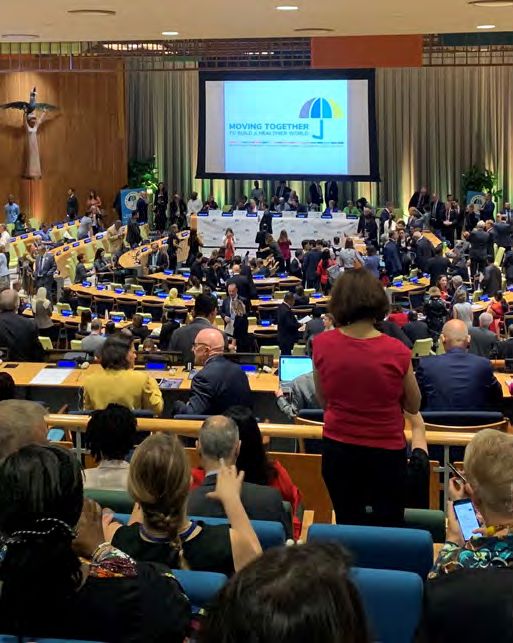
                     UN high-level meeting on
                     universal health coverage,
                     multi-stakeholder hearing
                     Photo Credit: @UHC2030 - Akihito Watabe

                                                                                                                                                                         2
Contents
Acknowledgements                                                                4

Abbreviations and acronyms                                                      5

Foreword                                                                        6

Executive summary			                                                            9

   •   Messages for national political leaders                                  10

   •   Message for global leaders and other stakeholders                        16

Introduction                                                                    18

Purpose                                                                         20

Methods                                                                         21

Country progress towards UHC during a global health emergency                   23
   •   Prioritize UHC to tackle and recover from the COVID-19 pandemic,         24
       allay anxiety and rebuild trust.

   •   Address the systemic inequities that are widening with COVID-19          26
       by creating stronger social and financial safety nets and prioritizing
       equity every step of the way.

   •   Extend and strengthen UHC legislation and regulations, set clear         30
       targets, and communicate better to bring people together.

   •   Support, protect and care for health workers, and innovate to            32
       improve and maintain quality during emergencies.

   •   Invest in primary health care as a joint effort of health and finance    36
       ministers and local governments, to ensure the continuity of
       essential health services and provide first-line defence against
       outbreaks.

   •   Build partnerships through genuine civil society engagement.             39

   •   Empower women, who are proving to be highly effective leaders in         42
       health emergencies.

   •   Give more weight to UHC principles in every crisis response, and         45
       build emergency preparedness into all health system reforms.

Contribution of the UHC movement during a global health emergency               49
Country profiles                                                                57
UHC data portal                                                                 58
References                                                                      59
                                                                                     3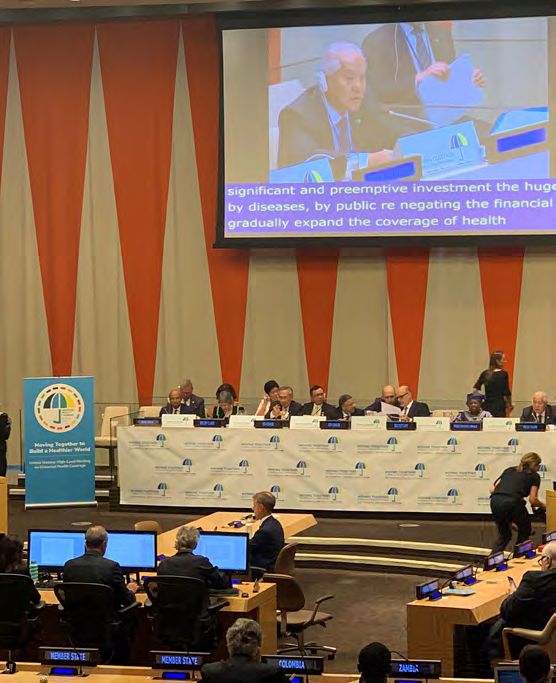
Acknowledgements
UHC2030 extends its appreciation to the Member            • Political Advisory Panel: Elhadj As Sy, Emilia Saiz,
States of the United Nations (UN) for entrusting            Gabriela Cuevas Barron, Gro Harlem Brundtland,
us with the important task of contributing to: the          Keizo Takemi, María Fernanda Espinosa Garcés
development and strengthening of the sustainability         and Vytenis Povilas Andriukaitis.
of universal health coverage (UHC) at the national
                                                          • Contributing experts: Lenio Capsaskis, Taona
level (A/RES/72/139); the preparatory process and
                                                            Kuo, Ties Boerma, Yosuke Kita, and Satoshi Ezoe.
the meeting of the UN high-level meeting on UHC
in 2019, particularly with regard to sharing evidence     • Chatham House: Robert Yates, Claire Munoz
and good practices, challenges and lessons learnt (A/       Parry, Emma Ross, Frini Chantzi, Gretchen
RES/73/131); and the revitalization and promotion           Stevens, Nina van der Mark, Anna Socha, Ben
of strong global partnerships with all relevant             Wakefield, and Lara Hollmann.
stakeholders to support the efforts of Member States
collaboratively, including through technical support,     We extend special thanks to Healthcare Information
capacity-building and strengthening advocacy (A/          For All for translating the survey responses from
RES/74/2).                                                country and community stakeholders. We also
                                                          express our gratitude to Global Health Strategies for
We thank Ilona Kickbusch and Githinji Gitahi, co-         strategic communications, Alison Dunn and Mathew
chairs of the UHC2030 Steering Committee, for their       Kelley for layout design, Elisabeth Heseltine for
strategic guidance in initiating this flagship project.   proofreading and copy editing, and Françoise
This project was coordinated by Akihito Watabe, Task      Lafourcade and María Faget for French and Spanish
Lead on the State of UHC Commitment, under the            translations of this publication.
direction of Marjolaine Nicod and Toomas Palu, Joint
Leads of the UHC2030 core team.                           We greatly value the comments of over 400
                                                          respondents to the 2020 UHC Survey in 125
The 2020 synthesis and the country profiles were          countries as well as constituencies of UHC2030 who
developed by the State of UHC Commitment task             provided information for the synthesis and country
team and contributing experts, with research support      profiles.
from the Centre for Universal Health, Chatham House,
London, United Kingdom. UHC2030 warmly thanks             We thank all the partners of UHC2030 who have
everyone for their strong commitment to the work,         endorsed the global compact for progress towards
especially as so much of it had to be done under the      UHC for their collective commitment and work
challenging circumstances created by the COVID-19         towards UHC by 2030 and for their support to the
pandemic. The task team provided overall guidance,        UHC Movement.
collected sources, contributed articles, conducted
                                                          Most importantly, we thank all the UHC Movement
stakeholder consultations and formulated the
                                                          actors around the world whose voices and
messages for political leaders. The UHC Movement
                                                          experience guide our work. They are the ones most
Political Advisory Panel reviewed the messages for
                                                          actively engaged, every day, in ensuring that the
political leaders after reflecting on the key findings
                                                          Political Declaration on UHC is realized in their lives
and evidence from various experts. Individual
                                                          and for their families, communities and countries.
contributors to the work were:

 • Task team: Khuat Thi Hai Oanh, Justin Koonin,
   Masaki Inaba, Itai Rusike, Logan Ansell, Matthew
   Guildford, Shyama Kuruvilla, Ilze Kalnina, Nono
   Ayivi-Guedehoussou, Alethea Dopart, Richard
   Cibulskis, Dheepa Rajan, Kira Koch, Gabriela
   Flores, Gang Sun, KateThomson, Ann Keeling,
   Roopa Dhatt, Tara Brace-John, Jenny Yates,
   William French, Jessica Clark, Kazumi Inden and
   Eliana Monteforte.

                                                                                                                    4
Abbreviations and
acronyms
ACT-A     Access to COVID-19 Tools Accelerator

CSEM      Civil Society Engagement Mechanism

COVAX     The Vaccines Pillar of the Access to COVID-19 Tools Accelerator

CSO		     Civil Society Organization

          Lesbian, Gay, Bisexual, Transgender and Queer (or Questioning)
          and Others

SDGs      Sustainable Development Goals

UHC		     Universal Health Coverage

UHC2030   International Health Partnership for UHC2030

UN        United Nations

VNR       Voluntary National Review

WHO       World Health Organization

                                                                            5
Foreword
    “COVID-19 has shown that universal health coverage, strong
     public health systems and emergency preparedness are
     essential to communities, to economies, to everyone.”
     António Guterres, the Secretary-General of the United Nations (Policy brief: COVID-19 and UHC (1))

2020: A global reckoning for universal health coverage
The world looks very different today from how it did one year ago, just before the first cases of
COVID-19 were reported to the World Health Organization (WHO).

Mere months earlier, in September 2019, world leaders gathered to endorse the most
ambitious, comprehensive political declaration on health in history. The day of the UN
high-level meeting on universal health coverage (UHC) was filled with optimism, as leaders
reaffirmed their commitments to achieve UHC and ensure healthy lives and well-being for all
by 2030.

The ongoing COVID-19 crisis is an unprecedented challenge to global health and a
fundamental threat to human security. It has been an extreme stress test for the world’s
health systems. As countries face the dual challenges of managing the spread of the virus and
sustaining other health services, it has tested every country’s ability to reach everyone with
high-quality essential health services without a financial burden. Leaders around the world
and at every level of government have been faced with countless difficult decisions. In many
places, COVID-19 has exploited and exacerbated deep inequities and gaps that were holding
people back long before the virus hit.

About this synthesis
This first synthesis of the state of UHC commitment and country profiles published in the
lead-up to International UHC Day in 2020, is based on diverse stakeholder perspectives of
current country situations and commitments and summarizes challenges and opportunities for
advancing UHC in a world coping with the COVID-19 pandemic. It draws on many sources,
including an online stakeholder consultation and survey, a literature review, media analysis,
political statements of UN Member States in various global forums and a review of actions
taken by global initiatives. The report is structured on the eight areas of commitment in the
political declaration on UHC (2), which are based on the “Key Asks” of the UHC movement on
which stakeholders agreed before the UN high-level meeting in 2019 (3).

At the time this report was being finalized in November 2020, the pandemic—and the
responses to it—are still unfolding, which means that it remains to be determined which
approaches have been the most successful. However, key findings and lessons are already
emerging.

                                                                                                          6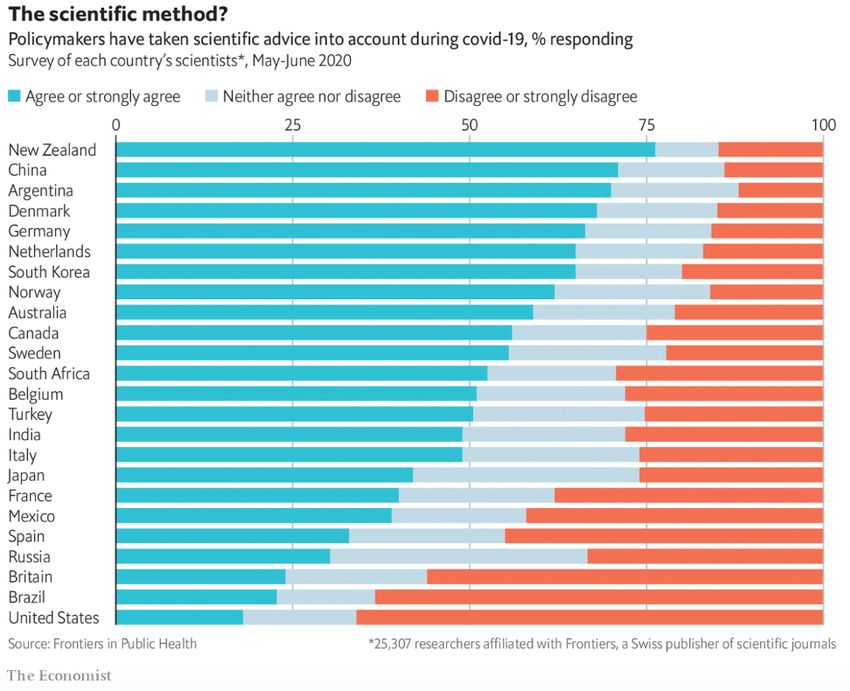
Messages for political leaders
UHC is not just a long-term initiative that can be “put on a back-burner” until the pandemic
is over. It is an urgent priority for ending this crisis and building a safer, healthier future. The
State of UHC Commitment review asks a simple question: Are governments taking action
towards meeting their UHC commitments? This synthesis presents findings and trends from
around the world in people’s lived experiences during this trying time. The current state of
UHC presents huge challenges. In many countries, poor and vulnerable groups are once
again being left behind, and inequities are widening due to the COVID-19 crisis. People are
anxious about their health, their finances and their futures, and trust in government and
political leaders is eroding in some countries. The COVID-19 pandemic is also exposing and
exacerbating weaknesses in health systems, showing that many governments neglected
to invest in health, social safety nets and emergency preparedness when it really mattered:
before a crisis struck. Even countries with stronger health systems could have been better
prepared for this emergency. There is still much to be done to ensure adequate support to
front-line health workers, to meaningfully engage all stakeholders in decision-making and
to ensure gender-equitable responses. Furthermore, many countries have not adopted
measurable national targets, and public awareness of governments’ commitments remains
limited.

However, there is also hope. Countries that have performed better so far on COVID-19 tend
to have leaders who interact with the scientific community, heed advice from public health
officials and take rapid, decisive action to protect everyone.

We call on all leaders and other stakeholders across society to take
urgent action for health systems that protect everyone – now.

Co-chairs of the UHC2030 Steering Committee and members of the
              UHC Movement Political Advisory Panel

    Ilona     Githinji     Elhadj       Emilia     Gabriela       Gro         Keizo        María        Vytenis
 Kickbusch,    Gitahi,     As Sy,       Saiz,      Cuevas,     Brundtland,   Takemi,     Espinosa,    Andriukaitis,
  Co-chair    Co-chair     Political   Political   Political     Political   Political    Political     Political
                           Advisor     Advisor     Advisor       Advisor     Advisor      Advisor       Advisor

                                                                                                                      7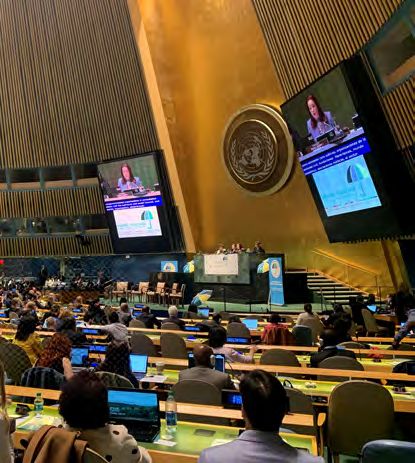
Specifically, we call on all national political leaders to:
         Prioritize UHC to tackle and recover from the COVID-19 pandemic, allay
         anxiety and rebuild trust. Public health, economies and societies suffer when
         people are anxious about their health, finances and futures and lose trust in
         government and political leaders.

         Address the systemic inequities that are widening with COVID-19 by creating
         stronger social and financial safety nets and prioritizing equity every step of
         the way. The poor and vulnerable communities that were struggling even before
         the pandemic are being hit hardest by the health and economic impacts.

         Expand and strengthen UHC legislation and regulations, set clear targets,
         and communicate better to bring people together. Many countries have not
         adopted measurable national UHC targets, and public awareness of government
         commitment to UHC remains limited.

         Support, protect and care for health workers, and innovate to improve and
         maintain quality during emergencies. Front-line health workers have not been
         supported adequately during the pandemic, adversely affecting the quality of their
         service.

         Invest in public health and primary health care as a joint effort of health and
         finance ministers, and local governments, to ensure the continuity of essential
         health services and provide first-line defence against outbreaks. People want
         more government spending on health but tend to overlook public health and
         preparedness, which are essential public goods.

         Build partnerships through genuine civil society engagement. Civil society has
         often considered that they are consulted only to comply with requirements. This
         is a mistake. Civil society is a crucial bridge between governments and the people
         left behind in an emergency response.

         Empower women, who are proving to be highly effective leaders in health
         emergencies. UHC processes are still gender-blind, and COVID-19 has shown
         that women and girls are still being left behind.

         Give UHC principles more weight in every crisis response, and build
         emergency preparedness into all health system reforms. Some countries have
         performed well in responding to the pandemic, and UHC approaches have been
         crucial, but many countries have underinvested in preparedness.

Going forward, we urge all global leaders and other
stakeholders come together, to ensure coherent action and
to build trust and accountability by widening participation
in health governance at all levels.

                                                                                              8
Executive summary
We call on all leaders and other stakeholders across society
to take urgent action to ensure health systems that protect
everyone – now.
Just over one year on from the UN high-level meeting on UHC, the State of UHC Commitment
review examines a simple question: Are governments taking action towards meeting their
UHC commitments?

The key findings are that, in many countries, poor and vulnerable groups are once again being
left behind, and inequities are widening due to the COVID-19 crisis. People are anxious about
their health, their finances and their futures, and trust in government and political leaders
is eroding in some countries. The COVID-19 pandemic is also exposing and exacerbating
weaknesses in health systems, showing that many governments neglected to invest in
health, social safety nets and emergency preparedness when it really mattered: before a crisis
struck. Even countries with stronger health systems could have been better prepared for this
emergency. There is still much to be done to ensure adequate support for front-line health
workers, to meaningfully engage all stakeholders in decision-making and to ensure gender-
equitable responses. Furthermore, many countries have not adopted measurable national
targets, and public awareness of governments’ commitments remains limited.

However, there is also hope. Countries that have performed better so far on COVID-19 tend
to have leaders who interact with the scientific community, heed advice from public health
officials and take rapid, decisive action to protect everyone.

As fear and mistrust are likely to increase in the coming months, as the pandemic intensifies,
political leaders must take decisive action now to tackle the pandemic in order to have a rapid,
demonstrable impact on people’s lives.

As many people’s fears are associated with the adverse health and economic impacts of the
crisis, an obvious policy to be considered is scaling up health system reforms towards UHC, to
benefit health and financial security simultaneously by protecting people against the costs of
health care. The fact that UHC can allay people’s fears about the financial consequences of ill
health was recognized by Aneurin Bevan, the architect of the United Kingdom’s health reforms,
who called his book on the success of the creation of the National Health Service “In Place of
Fear”.

Many of the world’s great health systems were put in place by leaders in the aftermath or even
in the middle of national crises, often in an attempt to reduce fear, lower social tensions and
rebuild trust in the State. These include the transitions to UHC in France, Japan, New Zealand,
Rwanda, Sri Lanka and Thailand, where health system reforms followed devastating malaria
epidemics (4).

                                                                                                   9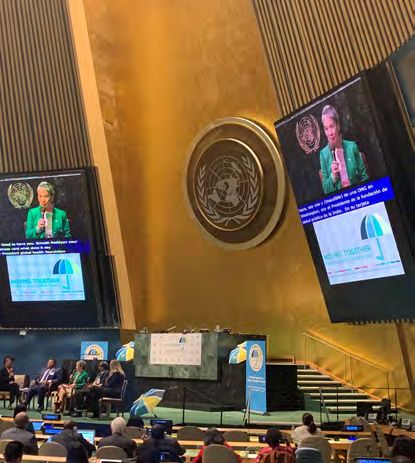
With the world now gripped by the greatest health crisis in more than a century, today’s
leaders may be advised to use this strategy and, even in the face of fiscal restriction because
of the economic impact of COVID, invest heavily and rapidly in health system reforms not only
to tackle this crisis but also to protect everyone from future public health and other crises. This
would also rebuild trust in the State and strengthen the case for stronger social contracts to
sustain universal services, not only in health but also in other vital social sectors. This is likely
to prove one of the best strategies for recovering from the COVID-19 crisis and getting back
on track to achieving all the Sustainable Development Goals (SDGs).

Messages for national political leaders
Political leaders who are responsible for fulfilling their country’s commitment to UHC are
unlikely to engage with detailed findings and recommendations. It is therefore important
to bring the details together and translate them into key messages for political leaders to
consider as they plan and implement their COVID-19 responses and their longer-term UHC
strategies. The following messages and key findings, reflecting the COVID-19 crisis, have been
identified for the 2020 synthesis in a multi-stakeholder consultation and survey, a literature
review, media reports and from the political commitments made in several international
forums. The state of UHC commitment review is structured around eight “commitment areas”
in the political declaration on UHC, based on the Key Asks from the UHC movement, which
stakeholders agreed on before the UN high-level meeting in 2019.

             Ensure Political Leadership Beyond Health

Prioritize UHC to tackle and recover from the COVID-19 pandemic, allay anxiety
and rebuild trust. Public health, economies and societies suffer when people are
anxious about their health, their finances and their futures and lose trust in government
and political leaders.

Fear is rising in populations around the world, in both rich and poor countries. People fear for
their own and their families’ health (including fear of death and long-term health impacts), for
unemployment and loss of income, poverty, hunger, isolation and discrimination. Fear is also
induced by the health inequities that have been exposed by the pandemic and are likely to
widen. It is worth noting that, in many countries, those who fear unemployment and loss of
income or poverty are also those who are unable to access care.

Such individual and collective fear is also increasing mental illness – notably anxiety and
depression –resulting in significant loss of well-being. Increasing fear is also dividing
populations, such as younger and older age groups and groups of differential vulnerability to
COVID-19. These divisions represent a significant threat to social cohesion, which must be
sustained in what could be a long crisis.

Fear is also fuelling growing dissatisfaction with the responses of some governments to
COVID-19 and eroding trust in some governments and their leaders. This is undermining
compliance with public health measures, such as restrictions on social gatherings and the
wearing of face masks, and is also fuelling scepticism about the safety and efficacy of vaccines,
exacerbated by online disinformation campaigns. Some protests against government policies
                                                                                                        10
to combat COVID-19 are becoming violent and therefore posing a threat to social stability (5).
Erosion of trust in the State could have profound long-term consequences, not least for
advancing UHC, if it undermines social contracts in which people are prepared to pay higher
taxes for universal public services. Leaders should recognize the importance of UHC in
preparedness and response to COVID-19 and advance the UHC agenda when building
resilience in the recovery phase of the pandemic.
It is already clear that failing trust in political leaders who are perceived as having performed
poorly in response to the pandemic has negative political consequences for them, reflected by
falling approval ratings (6,7) or potentially impacting election outcomes (8–10).
Therefore, it is in the interests of politicians themselves to make a priority of alleviating the
fears of their populations about COVID-19, to rebuild trust in their leadership and to find quick,
effective ways to do so. Reform of health systems towards UHC could be an effective way;
now is a good time for civil society organizations (CSOs) and their partners to emphasize the
health, economic and social benefits of UHC to political leaders.
Leave No One Behind
Address the systemic inequities that are widening with COVID-19 by creating
stronger social and financial safety nets and prioritizing equity every step of
the way. The poor and vulnerable communities that were struggling even before the
pandemic are being hit hardest by the health and economic impacts.
At the UN high-level meeting on UHC, global leaders agreed to reach UHC equitably and
made a specific commitment to “Ensure that no one is left behind, with an endeavour to reach
the furthest behind first…” (11).
Global surveys of people’s experiences and media reports (12) indicate that this commitment
is not being fulfilled in responses to the COVID-19 pandemic, and the poor and vulnerable
are being hit hardest by the direct and indirect effects of the pandemic. The groups that
are suffering disproportionately include the elderly, poorer members of society, women and
girls, people with disabilities and chronic health conditions, people living in remote areas and
migrant populations.
Even in high-income countries, vulnerable groups are being left behind, notably elderly people
living in residential care homes, people requiring palliative care, migrant populations living in
poor housing with inadequate workplace protection and homeless people, who are slipping
through social safety nets.
As unemployment levels have been rising and income levels falling, more and more people
have been struggling to access effective health services, particularly in health systems
dominated by out-of-pocket payment and employment-based insurance schemes. These
threaten to reduce both service coverage and financial protection from health costs and
to increase health inequality between the rich and the poor. Not only does this undermine
progress towards UHC, it threatens collective health security, reflecting the statement by
WHO that: “No-one is safe until everyone is safe” (13).
11Regulate and Legislate
Expand and strengthen UHC legislation and regulations, set clear targets, and
communicate better to bring people together. Many countries have not adopted
measurable national UHC targets, and public awareness of government commitment
to UHC remains limited.
One of the key findings from the 2020 UHC Survey (14) is that stakeholders are unclear about
what constitutes a UHC commitment and what, if any, commitments their governments have
made recently or in the past. In referring to commitments, survey respondents often mentioned
references to health in their country’s constitution or laws or vague policies or statements
made in meetings or in the media.
Furthermore, few countries have set explicit UHC targets to increase coverage of essential
health services or to increase financial protection or have failed to communicate those targets
to stakeholder groups, including CSOs. Although all countries agreed to monitor progress
towards UHC with two specific indicators – SDG indicators 3.8.1, coverage of essential
services, and 3.8.2, financial protection – most have not yet set explicit national targets to
improve those indicators or have never reported on them. The UHC-related targets that exist
tend to be focused on specific population groups, increasing the uptake of selective disease-
specific services or the availability of key inputs such as health facilities and health workers,
increasing enrolment in insurance schemes or pledging to increase public financing. These
targets often fail to materialize in the ultimate goal of ensuring that everyone, everywhere has
access to high-quality essential health services without fear of a financial burden.
This leads to confusion in the population about what commitments they should hold their
governments accountable for and what, if any, progress is being made to meet them.
Parliaments, civil society and other stakeholders can not only ask governments to share
more information about legislation and regulation but can act on their own, learning about
legislation or the lack thereof and sharing the information with the population. UHC is more
likely to advance if people are proactive in pursuing it and holding their government to account
for providing it.
Uphold Quality of Care
Support, protect and care for health workers, and innovate to improve and
maintain quality during emergencies. Front-line health workers have not been
supported adequately during the pandemic, adversely affecting the quality of their
service.
In virtually all countries, the COVID-19 pandemic has put front-line health workers under
immense pressure and exposed shortcomings in the numbers of health workers, their
distribution, their levels of remuneration and the inadequacy of the resources available to them
12to provide high-quality services. A major failing has been in providing health workers with
adequate personal protective equipment.
In some areas, greater efficiency is required in ensuring human resources. Countries should
make sure that front-line health services are optimally staffed to meet population needs.
While this crisis has generated many challenges, it has also created opportunities to innovate
and improve health care delivery, as in rapid scaling-up of tele-health and tele-medicine
services to maintain and even increase access to vital services, particularly for people living in
remote areas and for those who are self-isolating to avoid infection.
Invest More, Invest Better
Invest in public health and primary health care, as a joint effort of health and
finance ministers and local governments, to ensure the continuity of essential
health services and provide first-line defence against outbreaks. People want
more government spending on heath but tend to overlook public health services and
preparedness, which are essential public goods.
When stakeholders were asked on what aspects of their country’s health system their
governments should increase spending, there was a clear tendency to prioritize services
that benefit individuals (e.g. health facilities, medicines and front-line health workers) over
collective public health services; very few referred to strengthening pandemic preparedness.
Given the devastating impact of COVID-19, it is hoped that populations will begin to
demand better performance from their public health systems and that these be given greater
priority in UHC processes. As governments across the world are now investing huge sums
in surveillance, contact tracing and testing systems, there are some signs of greater public
accountability for how those resources are being spent (15). Even with constrained finances to
rebuild from the economic effects of the pandemic, countries should prioritize both UHC and
pandemic preparedness in health system reforms, with greater collaboration between health
and finance authorities. This commitment was made by G20 leaders at their summit in Osaka,
Japan, in 2019 (16).
One of the key lessons of 2020 has been that health and economics are not mutually
exclusive but are inextricably interconnected. The pandemic therefore provides a compelling
reason to prioritize investments in health now, for both health and economic reasons. The
costs of inaction vastly outweigh those of investing in public health functions and outbreak
preparedness (17). The costs of responding to the pandemic and the resulting economic
recession have been and will continue to be immense, undermining progress in reducing
the poverty and inequity of past decades. Therefore, health policies should prioritize public
financing and remove financial barriers to services at the point of use. It is undeniable that
parliamentarians are facing hard choices, navigating between controlling the outbreak and
protecting other essential health services, mitigating the “indirect” effects of COVID-19
and restoring the economy. However, experience shows that effective epidemic control and
protecting the most vulnerable benefit the economy.
13Move Together
Build partnerships through genuine civil society engagement. Civil society has
often considered that it is consulted only to comply with requirements. This is a
mistake. Civil society is a crucial bridge between governments and people left behind
in emergency response.
The advice of and requests by CSOs are often not considered in high-level policy decision-
making. In some areas, only selected nongovernmental actors are included in policy-making
consultations, and other key stakeholders are left out, as reported by patient groups in France
(18). Our research confirms that the voices of people and community organizations are not
always heard in decision- and policy-making spaces for UHC and in the COVID-19 response,
and, when people’s concerns are voiced, there is limited or no uptake by policy-makers.
An equitable response to COVID-19 requires that civil society maintain its role and give voice
to the communities most likely to be left behind in a public emergency response. The crisis is
making it harder for civil society to respond, as closure of civic space, constraints on movement
and increasingly authoritarian policies in many countries make it extremely difficult to conduct
advocacy and to demand accountability. Governments should create mechanisms for engaging
civil and civic society to enable them to take up opportunities.
Gender Equality
Empower women, who are proving to be highly effective leaders in health
emergencies. UHC processes are still gender-blind, and COVID-19 has shown that
women and girls are still being left behind.
The COVID-19 pandemic, like previous pandemics and infectious disease outbreaks, is
exacerbating gender inequality in many ways. Globally, women make up a significant
proportion of front-line health workers, who are at increased risk of infection. Thus, some
have deliberately stayed away from their children to reduce the risk of infecting them. Women
who do not work in the health sector have also been disproportionately affected by the
pandemic. In many countries, women work in sectors that have been heavily impacted by the
pandemic or in the informal sector and have thus been more likely to experience economic
loss. Furthermore, curfews and lockdowns have been instituted in many countries without
consideration of the continuity of maternal health services, putting pregnant women at risk. In
addition, gender-based violence has been reported to increase during lockdowns in several
countries.
The patriarchal nature of global and public health systems received increasing attention during
2020. Recent research (19) showed that 85.2% of COVID-19 national task forces are men,
and an average of about 25% of participants in the first three committees on International
Health Regulations Emergency were women. A gender-sensitive response to disease
outbreaks is crucial; responses are more likely to be effective for everyone if there is diversity in
14leadership panels. In addition, countries with women leaders are reporting fewer COVID-19-
related deaths, and strong leadership by women politicians is gaining international attention.
Emergency Preparedness
Give UHC principles more weight in every crisis response, and build emergency
preparedness into all health system reforms. Some countries have responded well
to the pandemic, and UHC approaches have been crucial, but many countries have
underinvested in preparedness.
Whereas it is too early to say definitively which countries and what COVID-19 responses have
been better and why, global media reports and international surveys of public perceptions
indicate a consensus that some governments have performed better than others. In particular,
some countries in South East Asia and Australasia have been praised for their approach, and
experts have credited the response in several Asian countries as having been facilitated by
their governments’ investment in preparedness since their experience with the SARS epidemic
in 2003, which affected the region the most (20). A number of African governments and
regional bodies have also been praised for their COVID-19 responses that built on lessons
learnt from previous outbreaks.
One factor that appears to be common to good performance so far has been the willingness
of political leaders to heed scientific, evidence-based advice from their public health officials
and to take rapid, decisive action to protect public health. In taking action, they have adopted
strategies consistent with the principles of UHC, namely universality, leaving nobody behind
and allocating support and services equitably according to need. This is in stark contrast to
leaders who have downplayed the impact of the pandemic and often overruled their public
health officials in prioritizing economic activity over protecting public health. A graphic
published in The Economist in November 2020 (Fig. 1) shows the extent to which scientists
around the world in May–June 2020 perceived that policy-makers in their countries had taken
scientific advice into account. The lowest scores were given by scientists to countries (21) that
have the highest cumulative numbers of COVID-19 deaths in November 2020 (22).
If the world is to tackle future pandemics more effectively, it needs empathetic leaders who
make decisions based on science not populist urges. This will be facilitated by a well-informed
population that can hold their leaders to account.
The pandemic has highlighted major weaknesses in multilateral response systems and in
compliance with the International Health Regulations (2005). Improving global preparedness
will therefore require investment in multilateral partnerships and organizations, notably
strengthening WHO and ensuring that its funding matches its global mandate and
responsibilities.
15Fig. 1. Are governments following the science on
COVID-19? Source: reference 21
Message for global leaders and other stakeholders
We urge all global leaders and other stakeholders to come together to
ensure coherent action and to build trust and accountability by widening
participation in health governance at all levels.
Civil society has a crucial role to play in accelerating progress towards UHC by influencing
agenda-setting, contributing to and monitoring policy implementation and holding
governments to account. Although the participation of non-State actors such as the media,
patient organizations, research organizations and auditors in global decisions has increased
and new models of governance have emerged in which civil society and other non-State actors
have formed constituencies, their participation and ability to hold leaders to account are still
challenged.
The process of voluntary national reviews (VNRs) should be transformed. Our findings show
that, while more countries and civil societies have recently reported progress in UHC, more is
required to make SDG review work properly, to ensure more objective, accurate reporting of
progress in meeting measurable UHC commitments.
CSO participation is limited by unclear, non-standardized reporting and the lack of measurable
16national targets for UHC. Our survey indicated that many CSOs are unaware of global
accountability mechanisms and do not know where or how they can participate in decision-
making, especially at global level. They also face managerial, technical and funding constraints
to their participation.
Improving CSO participation is not the responsibility only of governments and global health
institutions. It will also require health-focused CSOs to become more proactive in engaging in
accountability processes like VNRs and demanding a seat at the table in such processes.
Without access to global platforms and better understanding of global accountability
mechanisms whereby commitments are made and country progress is reported, civil society
cannot track implementation of national targets or effectively hold leaders to account for their
words and actions. The types of commitments and actions taken by governments should be
communicated clearly nationally, regionally and globally. A review of the statements made at
the UN high-level meeting on UHC and the Seventy-first World Health Assembly indicates
that approximately half the political statements lacked a clear commitment (14) to move UHC
forward at national level.
There is concern that the involvement in COVID-19 responses of CSOs, the private sector
and other stakeholders has been limited by divergence of funds from regional and national
advocacy platforms to the pandemic response.
Multi-stakeholder participation in social and political accountability for UHC must be
strengthened at all levels, including making governance mechanisms, platforms, laws and
regulations accessible to civil society to ensure its effective participation. Their participation
should be institutionalized as an acknowledged, formal relation for monitoring, reviewing
and making recommendations and for monitoring the solutions and actions that follow. The
process should also be democratized, as recommended in a recent report of the Independent
Accountability Panel (23), so that all levels of political leadership, government and other
stakeholders listen to and act upon the expressed needs and priorities of the people.
Multilateral organizations and multi-stakeholder partnerships must provide scientific guidance
and institutional support for active citizenship and bridge science and politics, so that leaders
make the right political decisions based on science and evidence (23).
UN high-level meeting on
universal health coverage,
multi-stakeholder hearing
Photo Credit: @UHC2030 - Akihito Watabe
17Introduction
Photo Credit: @WHO - Fanjan Combrink
Photo Credit: @WHO - Jim Holmes
18Introduction
On 23 September 2019, the world’s leaders came together at the United Nations (UN)
General Assembly and made the most comprehensive commitment to health ever, to achieve
universal health coverage (UHC) by endorsing a political declaration (11). In doing so, they
reaffirmed the promises made in agreeing to the Sustainable Development Goals (SDGs),
which include the goal of ensuring healthy lives and well-being for all at all ages. The political
declaration represents a significant milestone in the global UHC movement, because, in
addition to pledging to achieve UHC by 2030, leaders also committed themselves to a wide
range of actions and investments in their health systems to accelerate progress and leave no
one behind. WHO hailed the agreement as “the world’s most comprehensive set of health
commitments to be adopted at this level.” (24).
The political declaration makes clear reference to scaling up investments in preventive health
services, including the vital public health functions necessary to tackle the spread of infectious
diseases. It was notable how few of the world’s leaders mentioned public health services, or
even primary care, in their speeches to the UN high-level meeting, despite stern warnings
about a potential pandemic in the report of the Global Preparedness Monitoring Board, “A
world at risk” (25), published on the eve of the meeting on UHC.
Less than 4 months later, the COVID-19 pandemic – an unprecedented challenge to global
health and a threat to human security – took hold. It has provided an extreme test of the
world’s health systems in terms of their ability to ensure that everyone receives the promotive,
preventive, curative, rehabilitative and palliative care services they need without suffering
financial hardship: the definition of UHC. Regrettably, the global toll from COVID-19 and the
health and economic impacts of the crisis indicate that the world is struggling to meet its UHC
commitments. The resilience of systems in the spirit of UHC is seen in the ability to protect
vulnerable populations from not only COVID-19 but also the knock-on effects and to maintain
essential services for those who need them. The COVID-19 experience has brought to the fore
the reality that the health systems of many countries were not adequately prepared to protect
the health of their populations from COVID-19 or from routine threats to health. Behind
these global figures, however, it would appear, at least at the time of writing in November
2020, that some countries have performed better than others in tackling COVID-19 and in
maintaining their progress towards UHC, despite the pandemic. Many reviews are under way
to understand the factors that account for this variable experience and the lessons that can
be learnt to guide policies in the future in order to strengthen health security within broader
health system reform for achieving UHC.
The International Health Partnership for UHC 2030 (UHC2030) is a global movement to
build stronger health systems for UHC. It provides a multi-stakeholder platform to convene,
build connections and promote enhanced political and financial commitments for UHC, more
coherent health systems strengthening by all relevant partners, inclusive approaches and
accountability for results, based on a shared vision for health systems that protect everyone
and a shared commitment to leave no one behind.
19Purpose
The aim of this review of the state of commitment to UHC is to curate the diverse views of a
range of stakeholders on the current situation and commitments to making progress towards
UHC by 2030. It asks a simple question: are governments taking action to fulfil their UHC
commitments? The review is political, country-focused and action-oriented and therefore
complements the more technical Global UHC monitoring reports (26), which address UHC
indicators of service coverage and financial protection.
Monitoring progress in attaining UHC and holding everyone accountable to take the necessary
action may require national data on the political dimensions of rights, governance and equity
that are not always collected by national institutions. It also involves going beyond the face
value of policy reports of what ought to be happening by providing empirical assessments of
the experiences of people, especially the vulnerable, in accessing health services.
Recognizing that health system reform is inherently political, the profiles of individual countries
in this review are presented to provide national stakeholders with information to be used in
inclusive, participatory assessments of progress in UHC and commitments over time. The
profiles provide the basis for feeding into regular country preparatory processes for regional
summits and the UN High-level Political Forum on Sustainable Development, such as in
voluntary national reviews (VNR). Brief syntheses of key political messages and findings from
the multi-stakeholder review are provided for input to the UN high-level meeting on UHC in
2023 and beyond, including the UN Secretary-General’s progress report.
This inaugural synthesis includes challenges and opportunities for advancing UHC seen
through the lens of how well the world has coped to date (November 2020) in addressing
the COVID-19 pandemic. As UHC is a political choice to be made by every nation and its
achievement depends on the emerging priorities of political leaders and people, the synthesis
also seeks to contribute to and influence the debate on how the world can recover lost ground
and recover better.
20Methods
This review of the state of UHC commitment consolidates stakeholder perspectives of global
and country progress towards UHC by 2030 and includes information from academic sources
and the media. Mixed methods were used to triangulate data from UN systems, governments
and non-State actors. Fig. 2 outlines the approach taken, which combines an online survey,
quantitative data analysis, a literature review of VNR reports and additional sources, including
a Wakelet repository (27) of over 700 articles, input from the civil society engagement
mechanism (CSEM) for UHC2030, country consultations and articles on the constituencies of
UHC2030 submitted by its partners.
Methods Outputs
Online survey (400+) and Outreach Output 1: Country profiles
webinars (4) Quantitative and qualitative data collection from
the survey and databases 2015-19 to set country
baselines
Quantitative data: Country Indicators (20)
Output 2: Country review
• Synthesis of data collected in country profiles
Literature review: VNR (185+), COVID-19 (650+) • Country stories on UHC in the context of
COVID-19
Country consultations: CSEM (3+)
Output 3: Global review
• Emerging initiatives impact the UHC Movement
• Best practices from constituencies and networks
Partner article contributions: High-level Round Table Peer Review
• Wakelet list (650+) (UHC2030 Political Advisors)
• Story contributions (6) Outcome: Messages for Political Leaders from the
Political Advisory Panel
• One month before UHC Day: Country Profiles
(dashboard version 1)
Fig. 2. Research methods, outputs • One week before UHC Day: The 2020 Synthesis
and outcomes of the State of UHC + Updates of Country Profiles
Commitment review
The survey was structured to elicit information on the key targets, commitments and follow-
up actions of the political declaration of the UN high-level meeting on UHC. The participants
included stakeholders beyond health experts and governments, such as CSOs, academia,
parliamentarians, the private sector and the media. The review will be conducted annually
to update the profiles of selected countries, with a brief synthesis of key political messages
and findings from a multi-stakeholder review. This first review includes analyses of data
from 2015 to the present and other sources of information in order to establish a baseline for
country profiles of the state of UHC commitment in all 193 UN Member States, regardless of
data availability. This first synthesis includes only a limited number of country stories that are
21publicly available or extracted from the survey. After 2021, the review will indicate progress.
Each year, the focus will be on countries that provide VNRs to the UN high-level political forum,
allowing our assessments to support and feed into country-led multi-stakeholder dialogue
on a comprehensive review of sustainable development, rather than creating a parallel
accountability mechanism for UHC.
We collected stakeholders’ perspectives on how countries are performing in eight areas of
commitment in the 2019 political declaration on UHC (2) (Fig. 3), which were selected on the
basis of the “Key Asks” from the UHC movement.
Ensure political
leadership Leave no Legislate Uphold quality Invest more, Move
beyond health one behind and regulate of care invest better together
Commit to achieve UHC Pursue equity in Create a strong, enabling Build quality Sustain public Establish multi-stakeholder
for healthy lives and access to quality regulatory and legal health systems inancing and mechanisms for engaging
well- being for all at all health services with environment responsive that people and harmonize health the whole of society for
stages, as a social contract. financial protection. to people’s needs. communities trust. investments. a healthier world.
Promote strong and resilient health systems for
Emphasize gender equality, redress gender power
enhancing health emergency preparedness and response.
dynamics and ensure women’s and girls’ rights as
foundational principles for UHC.
Gender Emergency
equality preparedness
Fig. 3. Key targets, commitments and
actions in the political declaration on UHC
22Country progress towards
UHC during a global
health emergency
Photo Credit: @WHO - Lisette Poole
Photo Credit: @WHO - Fabeha Monir
23Country progress towards
UHC during a global
health emergency
Ensure Political Leadership Beyond Health
Message for national political leaders
Prioritize UHC to tackle and recover from the COVID-19 pandemic,
allay anxiety and rebuild trust.
Policy recommendations
• Tackling COVID-19 and recovering better call for a genuine, effective, multi-sectoral
approach by governments, including local, municipal and regional governments, and not
health ministries alone.
• Governments should be proactive rather than reactive and adopt inclusive COVID-19
strategies that bring people together in national solidarity, working towards a common
goal.
• Clear messages, transparent data and evidence-based decision-making are critical for
building trust and ensuring compliance with vital public health measures. Governments
must urgently halt the spread of misinformation and false rumours about COVID-19 and
vaccine safety.
• Beyond their immediate COVID-19 responses, governments must clearly communicate on
progress and the actions they are taking to achieve UHC, including setting clear targets
to improve service coverage and financial protection and communicating them to all
stakeholders.
• Governments should strengthen their health security systems within their longer-term
UHC strategies and recover better with a view to accelerating progress in achieving all the
SDGs.
Findings
• Across the world, people at all income levels are fearful and anxious about the
COVID-19 crisis, especially its possible impact on their health and economic well-being.
Recognizing that the pandemic is not only a public health crisis but that the implications go
beyond the health sector, they are turning to their heads of government to solve the crisis
24and alleviate their fears. People have recurrently feared going to health services during
the pandemic because of concern about contracting the virus. Anxiety, stress and fear
were commonly mentioned in our survey. Stigmatization was another barrier to accessing
health services. Our survey and international media reports indicate that, whereas some
leaders are perceived to have performed well, others have been slow to respond or even
dismissive of the pandemic, which has eroded trust in their leadership.
• Government performance has been variable. With regard to the performance of
their governments in tackling recent epidemics, survey respondents expressed a broad
variety of opinions, the most frequent (33%) response being “fair”, roughly similar
numbers reporting “good” (26%) and “poor” (20%) and 10% each for the more extreme
responses of “very poor” and “excellent”.
Interestingly, these responses were
fairly independent of income level, with
a roughly even distribution of “excellent” Very poor
and “very poor” ratings from high- and Poor
low-income countries. Critical comments on Fair
the response of political leaders included
Good
concern about lack of preparedness, unclear
Excellent
or even confused messages, corruption
and poor transparency, politicization of N/A
COVID-19 and neglect of other (non-
COVID-19) health services and diseases.
• The survey indicated that lack of
clear, evidence-based messages from
governments incites fear and mistrust in the population. Health care workers also
expressed fear of COVID-19, and in many cases health workers have protested about their
working conditions and lack of personal protective equipment; some have refused to treat
patients. Such situations clearly exacerbate people’s fear and undermine trust in the health
system, the government and its political leaders.
• There has been considerable variation in the extent to which political leaders have
implemented public health measures to curb the spread of the coronavirus and have
initiated emergency economic policies to protect businesses, jobs and people’s living
standards. Wide variation was also seen in how quickly leaders have acted, some being
accused of being slow and others of being too hasty in enacting draconian measures that
have imposed hardship on people forced into lockdown or having to relocate (Box 1).
• Responses within countries have also varied. In some countries in which subnational
and local governments have considerably devolved powers, the approaches of national and
subnational leaders have differed significantly, which has fuelled heated political debates
about which strategy is in the best interests of the people. Political leaders are therefore
under close scrutiny and are increasingly recognizing that, in view of the enormous stakes
involved, their performance in tackling COVID-19 may make or break their political careers.
25Box 1. Evidence-based, inclusive communication
is the key to building trust.
The political leadership of New Zealand’s Government has received plaudits
during the COVID-19 crisis, both domestically and internationally. In February
2020, when the first cases appeared in the country, the Government
responded to advice from public health advisers and implemented a “go hard,
go early” lockdown to stop the spread of the virus. The Government also
used an inclusive communications strategy, referring to the population as
“the team of 5 million” and using clear messages to explain why the public
health measures were necessary for the long-term welfare of the people. The
strategy was widely accepted and complied with, which has been credited as
a major factor in New Zealand’s early containment of the virus, with only 35
deaths reported by the end of October 2020.
In contrast, the early response of the federal government in the USA was to
play down the significance of the threat posed by COVID-19. Divisiveness
has been recognized as a feature of the US response, and the population has
been polarized on issues such as wearing face masks. The lack of uniform
adherence to public health measures and the divisions in society are widely
acknowledged as having contributed to the country’s struggle to control
transmission of the virus.
Sources: references 8–10, 28–30
Leave No One Behind
Message for national political leaders
Address the systemic inequities that are widening with COVID-19
by creating stronger social and financial safety nets and prioritizing
equity every step of the way.
Policy recommendations
• UHC is by definition universal: nobody should be left behind in accessing vital health
services, especially in a pandemic of an infectious disease that threatens us all. As access
to health services should be determined by need and financed according to ability to pay,
more attention should be paid to achieving UHC equitably, prioritizing the needs of the
most vulnerable.
• Governments should heed the advice of the UN to suspend health service user fees during
the pandemic and to move away from selective health insurance schemes to guaranteeing
universal entitlement to publicly financed health services (1).
26• No one should face financial, geographical or cultural barriers to access to essential
COVID-19-related services, including testing, treatment, palliative care and vaccines,
once they become available. Special measures should be taken to ensure equity and
protect the most vulnerable at greatest risk, including front-line health workers. As these
principles also apply to other vital health services, achieving universal access to COVID-19-
related services should be seen as a springboard for accelerating progress towards UHC
worldwide.
• Ensure adequate safety nets, beyond health services, to protect the livelihoods and welfare
of vulnerable groups, including the poor, the elderly, people with disabilities, migrant
populations, the homeless and people living in remote communities.
• Governments and the international community should seize the moment to protect the
health and welfare of the most
vulnerable; we are not safe unless
everyone is safe.
Findings Very poor access
Good access
• One third of survey respondents Poor access
said that people had poor access Fair access
to health services in their country. Excellent access
Furthermore, 10% of respondents
claimed that access was very poor.
Less than 25% considered that
access to services was good or
excellent.
• People are suffering significant
financial hardship in accessing
health services. Only 14% of
respondents said that access
without financial hardship was
“good” or “excellent”, the majority
said it was “fair” or “some access”,
whereas 23% said there was no Women and girls LGBTQ+
access without financial hardship. individuals People living with
disabilities People living with
• COVID-19 has magnified
HIV People who use drugs
inequities. The global survey
concords with other analyses in Youth
showing that the most vulnerable Migrants
are hardest hit by the direct and Other (please specify)
indirect effects of COVID-19.
Specific groups identified by
respondents as being left behind
27You can also read


