MINNESOTA STATEWIDE PLAN 2021
←
→
Page content transcription
If your browser does not render page correctly, please read the page content below
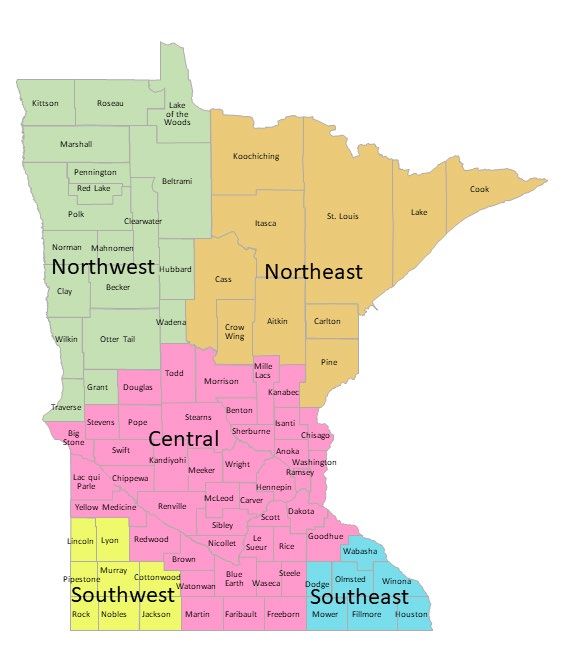
1

2

               MINNESOTA
             STATEWIDE PLAN

                                         2021
    Highlights of the 2021 EAS Plan

    In this draft version we have numbered the lines so if you find a sentence or section you
    have an issue with it can easily be identified and brought back to the policy group to be
    addressed. We’re giving you an advance look at the new plan, with an opportunity to
    comment on it because we want you input.

    We have shortened the plan, making it to the point starting with a checklist for EAS
    Participants to, insure that all areas of responsibility are covered. Less prohibitive
    listening station assignments, instead of ten pages directing stations where to tune to it
    was reduced to three pages of if you are located the part of the county tune to this
    station.
Minnesota EAS Plan DRAFT COPY NOT FOR DISTRIBUTION
3 Introduction
4
5 This plan, required by the Federal Communications Commission in 47 C.F.R. §11.21, describes the
6 organization and implementation of the State of Minnesota Emergency Alert System (EAS). It sets forth
7 procedures for EAS Participants (broadcast, cable, wireline) and designated government officials (PSAPs)
8 to issue messages for pending or actual emergencies.
9
10 This plan serves three basic purposes:
11
12 1. It outlines how the Governor, the National Weather Service (NWS) and authorized State/Local
13 government entities can provide emergency messages for the state of Minnesota, in whole or in
14 part.
15
16 2. It provides guidance to EAS Participants for the execution of alerts from all sources.
17
18 3. It outlines the framework for how emergency managers, public safety answering points (PSAP)
19 and EAS Participants can work together to assure that Minnesota residents and residents in
20 surrounding states can receive timely information, in an effort to protect life and property.
21
22 This plan is an addition to the FCC EAS Rules and is not meant to be a summary, in whole or in part, of
23 those Rules. FCC Rules, Part 11, provide for the Emergency Alert System. This plan, prepared by the SECB
24 equivalent to the State Emergency Communications Committee (SECC) in cooperation with;
25
26 • Federal Communications Commission (FCC),
27 • National Weather Service (NWS) office in Chanhassen, Minnesota,
28 • Minnesota Department of Public Safety,
29 • State and local officials and
30 • EAS Participants.
31
32 Provides background data and prescribes specific procedures for EAS Participants to transmit emergency
33 information and warnings to the public, within the EAS Participants coverage area.
34
35 Reason for a Plan
36
37 The State of Minnesota is subject to major emergencies and disasters, weather, technological and
38 criminal, which can pose a significant threat to the health and safety of the public. The ability to provide
39 citizens with timely emergency information is a priority of emergency managers statewide. The
40 Emergency Alert System (EAS) developed by the Federal Communications Commission (FCC) provides
41 emergency information to the public via television, radio, cable systems and wire line providers.
42 The Integrated Public Alert and Warning System, (IPAWS) was created by FEMA to aid in the distribution
43 of emergency messaging to the public via the internet and mobile devices. It is intended that the EAS
44 combined with IPAWS be capable of alerting the public reliably and effectively. This plan was written to
45 explain who can originate EAS alerts and how and under what circumstances these alerts are distributed
46 via the EAS and IPAWS.
i
DRAFT COPY NOT FOR DISTRIBUTION - 2021/03/08Minnesota EAS Plan DRAFT COPY NOT FOR DISTRIBUTION
47 Purpose
48
49 When emergencies and disasters occur, rapid and effective dissemination of essential information can
50 significantly help to reduce loss of life and property. The EAS through IPAWS are designed to provide this
51 type of information. These systems will only work through a coordinated effort. The purpose of this plan
52 is to establish standardized, integrated EAS & IPAWS communications protocols capable of facilitating
53 the rapid dissemination of emergency information to the public.
54 Objectives
55
56 • Provide participating stations with the information they need to be participate in the EAS.
57 • Describe the EAS administrative structure within Minnesota. (page 1)
58 • Establish who has the authority to originate an EAS notification. (page 2)
59 • Identify approved event codes for Minnesota. (page 7)
60 • Explain EAS integration with IPAWS (page 12)
61 • Establish standards for training, exercising, and testing of the EAS and IPAWS. (See Annex A)
62
63 Legal References
64
65 This plan was developed in accordance with Federal Communications Commission requirements, as well
66 as State of Minnesota statutes. Legal bases and references include:
67 Federal Telecommunications Act of 1996.
68 Federal Communications Commission, Report & Order FCC 94-288.
69 FEMA Executive Order 12472: Assignment of National Security and Emergency Preparedness
70 Telecommunications Functions dated April 3, 1984.
71 FEMA Executive Order 12656: Assignment of Emergency Preparedness Responsibilities dated November
72 18, 1988.
73 FEMA Statement of Requirements for Presidential Communications dated September 15, 1995.
74 Title 47 U.S.C. 151, 154 (I), 303 (r) and 606; 47 CFR Part 11, FCC Rules & Regulations, Emergency Alert
75 System.
76 Minnesota Statutes, Chapter 12, as amended.
77 Plan Review Schedule
78
79 The Minnesota EAS Statewide plan will be reviewed every two years at a minimum. Beginning in 2021
80 and every year thereafter, the MN-IPAWS committee will meet and review the plan, updating as
81 necessary. Changes to the plan when needed to address deficiencies identified in reviews, tests and
82 activations.
ii
DRAFT COPY NOT FOR DISTRIBUTION - 2021/03/08Minnesota EAS Plan DRAFT COPY NOT FOR DISTRIBUTION
Revision Date of Person(s) Changes Made
Number Revision Responsible for
Revision
1.0 3/8/2021 Total Revision
83
84 Distribution
85
86 Agencies identified in this document will provide updated information about their responsibilities. This
87 will be reflected in plan revisions.
88 All plan maintenance and distribution conducted by the MN-IPAWS Committee will be coordinated
89 through the Minnesota Division of Emergency Communication Networks (ECN). Additional copies of the
90 plan are available by contacting the ECN representative from the MN-IPAWS. See Annex E for contact
91 names.
92 Current copies of this plan distributed to:
93 a. All EAS participants in Minnesota;
94 b. The FCC, DPS and Local Public Safety entity’s.
95 c. Any participating private organization that contributes to the dissemination of EAS messages.
96 d. Posted to the internet on the ECN IPAWS and FCC web Pages.
97 Signatures
98
99
100
101 _________________________________ _______________________________
102 Chair IPAWS Committee SECB MPR
103
104
105
106
107 _________________________________ _______________________________
108 NWS FCC
109
iii
DRAFT COPY NOT FOR DISTRIBUTION - 2021/03/08Minnesota EAS Plan DRAFT COPY NOT FOR DISTRIBUTION
110 Emergency Alert System (EAS) Checklist for EAS Participants
111
112 Our EAS Operational Area is: _____________________________________________________________
113 (Page 10)
114
115 CAP Monitoring Point: www.fema.gov/apps
116
117
118 EAS Monitoring Assignment # 1___________________________________________________________
119
120
121 EAS Monitoring Assignment # 2___________________________________________________________
122
123
124 EAS Monitoring Assignment # 3 (Optional) __________________________________________________
125
126
127 _____ 1. FCC EAS Operating Handbook is immediately available.
128 (https://www.fcc.gov/general/eas-test-reporting-system)
129
130 _____ 2. All personnel receive appropriate training in EAS procedures and in the use of EAS equipment.
131
132
133 _____ 3. EAS encoder-decoder is installed and operating.
134
135
136 _____ 4. Correct assignments monitored, according to State EAS plan.
137
138
139 _____ 5. Weekly and monthly EAS tests (RWT, RMT) received and logged.
140
141
142 _____ 6. Weekly EAS test transmissions (RWT) made and logged.
143
144
145 _____ 7. Copy of State EAS plan is immediately available.
146
147
148 _____ 8. A member of the station on the EAS List-serv. eas@eas.talklist.com
149
iv
DRAFT COPY NOT FOR DISTRIBUTION - 2021/03/08Minnesota EAS Plan DRAFT COPY NOT FOR DISTRIBUTION
150
151 Table of Contents
152 Introduction ................................................................................................................................................... i
153 Reason for a Plan ....................................................................................................................................... i
154 Purpose ..................................................................................................................................................... ii
155 Objectives ................................................................................................................................................. ii
156 Legal References ....................................................................................................................................... ii
157 Plan Review Schedule ................................................................................................................................... ii
158 Distribution .................................................................................................................................................. iii
159 Signatures .................................................................................................................................................... iii
160 Emergency Alert System (EAS) Checklist for EAS Participants..................................................................... iv
161 Table of Contents .......................................................................................................................................... v
162 SECC Governance Structure (State Emergency Communication Committee) .............................................. 1
163 Alert Origination ........................................................................................................................................... 1
164 Alerting Responsibilities:........................................................................................................................... 1
165 Handbook .............................................................................................................................................. 1
166 National Level Activation EAN Alert...................................................................................................... 1
167 Severe Weather Activation ................................................................................................................... 2
168 Statewide and Regional Activation ....................................................................................................... 2
169 Local Activation ..................................................................................................................................... 2
170 EAS/IPAWS Operations Policies ............................................................................................................ 2
171 Emergency Alert System (EAS) Checklist for Emergency Response Personnel .................................... 3
172 False Alerts ................................................................................................................................................ 3
173 Header Codes ................................................................................................................................................ 4
174 Operational Areas ....................................................................................................................................... 10
175 Monitoring Assignments: Presidential ........................................................................................................ 10
176 Monitoring Assignments: State and Local Alerts ........................................................................................ 14
177 Statewide ................................................................................................................................................ 14
178 Local ........................................................................................................................................................ 15
179 Alerting Procedures .................................................................................................................................... 16
180 Elected Officials....................................................................................................................................... 16
181 National Weather Service ....................................................................................................................... 16
v
DRAFT COPY NOT FOR DISTRIBUTION - 2021/03/08Minnesota EAS Plan DRAFT COPY NOT FOR DISTRIBUTION
182 Statewide Distribution ............................................................................................................................ 16
183 Local ........................................................................................................................................................ 17
184 Multilingual Alerting ................................................................................................................................... 17
185 Local Area Plans .......................................................................................................................................... 18
186 Annex A: Testing and Training .................................................................................................................... 19
187 Testing ..................................................................................................................................................... 19
188 Required Weekly Test ......................................................................................................................... 19
189 Required Monthly Test ....................................................................................................................... 19
190 National Periodic Tests (NPT).............................................................................................................. 20
191 Missed Tests ........................................................................................................................................ 20
192 Log keeping ......................................................................................................................................... 20
193 Training ................................................................................................................................................... 21
194 Annex B: Security Recommendations ......................................................................................................... 22
195 Annex C: Memorandum of Understanding (MOU) ..................................................................................... 23
196 Annex D: Minnesota National Weather Service Contact Information........................................................ 25
197 Annex E: Contact Information..................................................................................................................... 27
198 Annex F: Glossary of Terms......................................................................................................................... 28
199
vi
DRAFT COPY NOT FOR DISTRIBUTION - 2021/03/08Minnesota EAS Plan DRAFT COPY NOT FOR DISTRIBUTION
200 SECC Governance Structure (State Emergency Communication
201 Committee)
202
203 The SECC is the IPAWS subcommittee of the Minnesota Statewide Emergency Communications Board
204 (SECB).
205
206 The Minnesota Statewide Emergency Communications Board (SECB), now named the IPAWS
207 subcommittee (IPAWS), was created to replace the FCC mandated SECC. This committee works together
208 with the following organizations to maintain this plan: The Minnesota Broadcasters Association,
209 National Weather Service, Public Safety, Minnesota Emergency Management, Twin Cities Public
210 Television, Minnesota Public Radio and other interested parties.
211 Plan updates address radio, television, internet, social media, email, and text messaging.
212 The MN-IPAWS committee is the statewide coordinating group for the EAS and IPAWS. A list of current
213 key members of the MN-IPAWS is located in Annex E.
214 Alert Origination
215
216 Alerting Responsibilities:
217
218 Handbook
219
220 Part 11 of the FCC Rules and Regulations require that a copy of the EAS Handbook and State EAS Plan is
221 be maintained “at normal duty positions or EAS equipment locations “for all EAS Participants”. The
222 current FCC EAS Handbook is available at https://www.fcc.gov/general/eas-test-reporting-system under
223 the heading: HANDBOOK.
224
225 National Level Activation EAN Alert
226
227 National (EAN/NPT)
228 In the event of a national emergency, the President may decide to address the nation. The White House
229 Communication Agency will transmit an Emergency Alert Notification (EAN) directly from the White
230 House via FEMA, to the Minnesota Primary Entry Point (WCCO Radio) and the NPR satellite system to
231 the Minnesota State Relay, (MPR).
232 Periodically, FEMA will schedule a National Periodic Test (NPT) to test this part of the system.
233 For Statewide emergencies, the authorized alert is sent to the Primary Entry Point (PEP) WCCO AM and
234 the State Relay (MPR).
235 All participating nationals (PN) are mandated to install and operate a CAP certified EAS encoder/
236 decoder. PNs must configure the decoder to receive two sources (see Monitoring Assignment:
237 Presidential), decode and monitor for the emergency activation notification (EAN) alert code and the
238 national periodic test (NPT) alert code. If an EAN is properly received/decoded, PN’s must pre-empt
1
DRAFT COPY NOT FOR DISTRIBUTION - 2021/03/08Minnesota EAS Plan DRAFT COPY NOT FOR DISTRIBUTION
239 programming and immediately broadcast the live incoming audio continuously until the end-of-message
240 (EOM) code is received/ decoded.
241 Severe Weather Activation
242
243 Broadcasting severe weather alerts over the EAS is voluntary. The NWS local forecast office is
244 responsible for originating severe weather alerts.
245 The NWS local forecast office may distribute non-weather emergency messages, (NWEM) via local
246 NOAA radio transmitters (legacy EAS) and/or the FEMA IPAWS program (CAP). Any NWEM alerts are
247 originated via NOAA weather radio in cooperation and agreement with the local public
248 safety/emergency management office and the NWS local forecast office.
249 Statewide and Regional Activation
250
251 Statewide (BLU, CAE, RMT, RWT and NUW)
252 During a statewide emergency or test, authorized agencies may originate an EAS/IPAWS alert via the
253 EAS or using the IPAWS-OPEN server. Incoming EAS/IPAWS alerts will be relayed on WCCO AM and the
254 Minnesota Public Radio state relay network.
255 Local Activation
256
257 Local Alert (CDW, CEM, EVI, RWT, and SPW)
258 During a local emergency, authorized agencies may originate an EAS Alert using IPAWS.
259 As an alternative, a NWEM alert can be sent to the local NWS office via telephone, fax, email, 800 MHz
260 radio. The NWS local forecast office may distribute non-weather emergency messages, (NWEM) via local
261 NOAA radio transmitters (legacy EAS) and/or the FEMA IPAWS program (CAP). Any NWEM alerts are
262 originated via NOAA weather radio in cooperation with the local public safety/emergency management
263 office and the NWS local forecast office.
264 See annex D for NWS contact information for your local NWS office. The NWS will forward the alert
265 using the NOAA Weather Radio network.
266 EAS/IPAWS Operations Policies
267
268 EAS and IPAWS are intended to alert the public with a message that informs them where to turn for
269 further information. After the alert has been issued, participating news organizations should preempt
270 programming and provide emergency information. The EAS is not intended to be a broadcast service
271 providing continuous programming and supporting information.
272 EAS and IPAWS alerts should be clear, concise, and used only when necessary to protect lives or
273 property. To ensure accountability and responsible use of the EAS/IPAWS, the MN-IPAWS has
274 determined that all EAS alerts may only be originated by those agencies with authority assigned by
275 FEMA and the MN-IPAWS. Federal and state laws prohibit anyone without cause or authority from
276 originating an EAS notification.
2
DRAFT COPY NOT FOR DISTRIBUTION - 2021/03/08Minnesota EAS Plan DRAFT COPY NOT FOR DISTRIBUTION
277 Emergency Alert System (EAS) Checklist for Emergency Response Personnel
278
279 In general, the following conditions should be considered in determining whether the issuance of an
280 EAS alert is warranted:
281
282 EAS Activation Checklist
283
284 Yes No
285
286 ___ ___ Is this a sudden, unforeseen, or unpredictable situation?
287
288 ___ ___ Does the situation pose an imminent threat to life or property?
289
290 ___ ___ Does the situation have the potential to adversely impact a significant population
291 or geographic area?
292
293 ___ ___ Does the situation require that the public be warned immediately to seek shelter or
294 take other protective action?
295
296 ___ ___ Are other means of disseminating information inadequate to ensure rapid delivery
297 of the information?
298
299 Important: Do not activate EAS or WEA if the answer to any of these questions is “No.”
300
301 False Alerts
302
303 As stated in part 11.45 Prohibition of false or deceptive EAS transmissions.
304 No person may transmit or cause to transmit the EAS codes or Attention Signal, or a recording or
305 simulation thereof, in any circumstance other than in an actual National, State or Local Area emergency
306 or authorized test of the EAS; or as specified in;
307 11.46 EAS public service announcements.
308 EAS Participants may use the EAS Attention Signal and a simulation of the EAS codes as provided by
309 FEMA in EAS Public Service Announcements (PSAs) (including commercially-sponsored announcements,
310 infomercials, or programs) provided by federal, state, and local government entities, or non-
311 governmental organizations, to raise public awareness about emergency alerting. This usage is only
312 permitted if the PSA is presented in a non-misleading and technically harmless manner, including with
313 the explicit statement that the Attention Signal and EAS code simulation are being used in the context of
314 a PSA for the purpose of educating the viewing or listening public about emergency alerting.
315 11.61 Tests of EAS procedures.
316 Reporting Period
3
DRAFT COPY NOT FOR DISTRIBUTION - 2021/03/08Minnesota EAS Plan DRAFT COPY NOT FOR DISTRIBUTION
317 No later than twenty-four (24) hours of an EAS Participant's discovery (i.e., actual knowledge) that it has
318 transmitted or otherwise sent a false alert to the public, the EAS Participant send an email to the
319 Commission at the FCC Ops Center at FCCOPS@fcc.gov, informing the Commission of the event and of
320 any details that the EAS Participant may have concerning the event.
321 Header Codes
322
323 Note: The EAS protocol, including any alert codes, must not be amended, extended, or abridged without
324 FCC authorization.
325
326 EAS Header Code Analysis
327
328 The FCC has mandated that an EAS Header Code contain the following elements sent in the following
329 sequence:
330
331 [Preamble] ZCZC-ORG-EEE-PSSCCC+TTTT-JJJHHMM-LLLLLLLL – repeated 3 times, Attention Signal (8
332 seconds), Audio, Video, or Text Message, [Preamble] NNNN – repeated 3 times
333
334 Note: The ASCII dash (-) and plus (+) symbols are required and may not be used for any other purpose.
335 Unused characters must be ASCII space characters. FM or TV call signs must use a slash, ASCII character
336 number 47 (/), in lieu of a dash.
337
338 Explanation:
339
340 [Preamble]= (Clears the system): Sent automatically by your Encoder.
341
342 ZCZC= (Start of ASCII Code): Sent automatically by your Encoder.
343
344 ORG= (Originator Code): Preset once by the message originator, then sent automatically by your
345 Encoder. See section (a) below for codes.
346
347 EEE= (Event Code): Determined by the message originator, each time an alert is sent. See section (b)
348 below for codes.
349
350 PSSCCC= (Location Code): Determined by the message originator, each time an alert is sent. See section
351 (c) below for codes.
352
353 TTTT= (Duration of Alert): Determined by the message originator, each time an alert is sent. This
354 indicates the valid time period of a message in 15 minute segments up to one hour and then in 30
355 minute segments beyond one hour; i.e. , +0015, +0030, +0045, +0100, +0430 and +0600.
356
357 JJJHHMM= (Date/Time-of-Day): Sent automatically by your Encoder.
358
359 LLLLLLLL= (8-Character ID, identifying the EAS Participants, Weather Service Office, or Civil Authority
360 operating that Encoder): Preset once by message originator, then sent automatically by your Encoder.
361 See section (d) below for the format to be used in constructing L-codes.
362
4
DRAFT COPY NOT FOR DISTRIBUTION - 2021/03/08Minnesota EAS Plan DRAFT COPY NOT FOR DISTRIBUTION
363 Attention Signal: Must be sent if an audio, video or text message is sent, duration 8 seconds.
364
365 [Preamble]= (Re-clears the system): sent automatically by your Encoder when you receive the
366
367 End-of-Message sequence. Followed by: NNNN= (End-of-Message Code): End of Message (EOM) code
368 sent as a string of four ASCII N characters. Usually initiated automatically at the end of every EAS Alert
369 originated by all sources. If an EAS message fails to carry the EOM code, or an EAS encoder-decoder
370 does not automatically release back to air at the end of the message, EAS Participants may clear their
371 system by manually issuing an RWT (Required Weekly Test).
372
373 (a) Originator Codes (ORG) the following are the only Originator Codes to be used by sources in the
374 state of Minnesota:
375
376 WXR – To be used by National Weather Services Offices
377
378 CIV – To be used by Minnesota Emergency Management Agency, Minnesota Dept. of Public
379 Safety, and all other Civil Authorities
380
381 EAS – To be used by all EAS Participants. EAS Participants will almost always be relaying EAS
382 messages originated by WXR or CIV. However, on rare occasion there may be an emergency
383 condition that requires an EAS Participant, in coordination with emergency response authorities,
384 to use their EAS equipment to originate an EAS message.
385
386 PEP – Primary Entry Point. Only used by federal authorities.
387 (b) Event Codes authorized in Minnesota (EEE) The only required EAS event codes are EAN, NIC,
388 NPT, RMT and RWT (see chart page 7). The following codes are approved by the IPAWS committee.
389
390 The following Event (EEE) codes are presently authorized for the State of Minnesota:
391 BLU - Blue Alert ‐ An emergency message that rapidly disseminates information to law
392 enforcement agencies throughout the United States to the media and the public about violent
393 offenders who have killed, seriously injured or pose an imminent threat to law enforcement, or
394 when an officer is missing in connection with official duties. BLU Alerts provide details about the
395 possible assailant(s), including physical descriptions, vehicle information and other identifying
396 characteristics.
397 CAE - Child Abduction Emergency (AMBER Alert) – An emergency message, based on
398 established criteria, about a missing child believed to be abducted. A local or state law
399 enforcement agency investigating the abduction will describe the missing child, provide a
400 description of the suspect or vehicle, and ask the public to notify the requesting agency if they
401 have any information on the whereabouts of the child or suspect.
402 CDW - Civil Danger Warning – A warning of an event that presents a danger to a significant
403 civilian population. The CDW, which usually warns of a specific hazard and gives specific
404 protective action.
5
DRAFT COPY NOT FOR DISTRIBUTION - 2021/03/08Minnesota EAS Plan DRAFT COPY NOT FOR DISTRIBUTION
405 CEM - Civil Emergency Message – An emergency message regarding an in‐progress or imminent
406 significant threat(s) to public safety and/or property. The CEM is hazard is less specific than the
407 Civil Danger Warning (CDW).
408 EVI - Immediate Evacuation – A warning where immediate evacuation is recommended or
409 ordered according to state law or local ordinance.
410 NUW - Nuclear Power Plant Warning ‐ A warning of an event at a nuclear power plant, classified
411 as a Site Area Emergency or General Emergency as classified by the Nuclear Regulatory
412 Commission (NRC).
413 RMT - Required Monthly Test ‐ A test message that is generally originated by the state primary
414 entry point (PEP) station, a state emergency management agency, or by the National Weather
415 Service and are then relayed by broadcast stations and cable channels.
416 RWT – Required Weekly Test – A test message that consists at a minimum of the header and
417 end‐of‐message tones. RWTs are also authorized to test the WEA system in the background by
418 having your phone handset enabled to receive a test alert.
419 SPW – Shelter in Place Warning – A warning of an event where the public is recommended to
420 shelter in place (go inside, close doors and windows, turn off air conditioning or heating
421 systems, and turn on the radio or TV for more information).
422 FFW – Flash Flood Warning – A flood which occurs due to heavy or excessive rainfall, a dam or
423 levee failure, sudden release of water impounded by an ice jam, or a debris slide or flow. A flash
424 flood warning will also be issued if a previously issued flash flood warning needs to be extended
425 in time.
426 SMW – Special Marine Warning – issued for near-shore areas for short-duration (2 hours or
427 less) sustained marine thunderstorm winds or associated frequent gusts of 34 knots (39 mph) or
428 greater; and/or hail 3/4 inch or more in diameter; and/or waterspouts. They are also issued for
429 near shore areas with sustained non-thunderstorm short duration winds or associated frequent
430 gusts of 34 knots or greater (gale force or stronger).
431 SVR – Severe Weather – Radar indication and/or reliable reports of wind gusts equal to or in
432 excess of 58 mph and/or hail size of one inch diameter or larger.
433 TOR – Tornado Warning – radar indication and/or reliable reports of a tornado or developing
434 tornado.
435 SQW – Snow Squall Warning - radar or satellite indication and/or reliable reports of snow
436 squalls with visibility 1/4 mile or less in snow with sub-freezing ambient road temperatures,
437 and/or plunging temperatures behind an arctic front sufficient to produce flash freezes, along
438 with a significant reduction in visibility from falling and/or blowing snow. Forecaster judgment
439 regarding impacts including time of day, day of week, and other societal factors should be
440 considered. If a blizzard or winter storm warning is already in effect, the SQW is not issued.
441
6
DRAFT COPY NOT FOR DISTRIBUTION - 2021/03/08Minnesota EAS Plan DRAFT COPY NOT FOR DISTRIBUTION
442 EAS Event Code programming recommendations
Event WEA Recommended Relay
Event Name Originators Address
Code Permitted Priority Required
National Codes
(Required):
EAN 1 Emergency Action Yes High PEP Yes 000000 2
Notification
NPT National Periodic Test Yes High PEP Yes 000000
NIC 3 National Information Center Low PEP No 000000
RMT Required Monthly Test Yes Low Civ, Wxr, Yes All counties
in local area
RWT Required Weekly Test Yes Log Only PEP, Civ, No County in
Wxr
State and Local Codes
(Recommended):
BLU 4 Blue Alert Yes High Civ, Wxr Voluntary Statewide
CAE Child Abduction Emergency Yes High Civ, Wxr Voluntary Statewide
CDW Civil Danger Warning Yes High Civ, Wxr Voluntary Local Area
CEM Civil Emergency Message Yes Medium Civ, Wxr Voluntary Local Area
EVI Immediate Evacuation Yes Medium Civ, Wxr Voluntary Local Area
Notice
NUW Nuclear Power Plant Yes High Civ, Wxr Voluntary 5
Warning
SPW Shelter in Place Warning Yes Medium Civ, Wxr Voluntary Local Area
National Weather Service
(Recommended):
FFW Flash Flood Warning Yes High Wxr Voluntary Local Area
SVR Severe Thunderstorm High Wxr Voluntary Local Area
Warning
SMW Special Marine Warning High Wxr Voluntary 091000
6
SQW Snow Squall Warning Yes High Wxr Voluntary Local Area
TOR Tornado Warning Yes High Wxr Voluntary Local Area
443
444
1
Needs to be programmed in, per requirements of; CFR 47, §11.54 EAS operation during a National Level Emergency.
2
See Part 11.51(m)
3
Needs to be programmed in, per requirements of; CFR 47, §11.16 National Control Point Procedures.
4
Child Abduction Emergency (CAE) and Blue Alert (BLU) is initiated in the State of Minnesota specifically by the Department of
Public Safety, Bureau of Criminal Apprehension.
5
Nuclear Power Plant Warning (NUW) Limited to EAS Participants with coverage in the Counties of Dakota, Goodhue,
Sherburne, Wright, Pierce County, Wisconsin.
6
Special Marine Warning (SMW) limited to EAS Participants with coverage in the Counties along the Lake Superior shoreline.
7
DRAFT COPY NOT FOR DISTRIBUTION - 2021/03/08Minnesota EAS Plan DRAFT COPY NOT FOR DISTRIBUTION
445 (c) Location Codes (PSSCCC) ANSI codes: 027000 Minnesota (entire state) and 091000 for Lake
446 Superior.
County Code County Code County Code
Aitkin 027001 Isanti 027059 Pipestone 027117
Anoka 027003 Itasca 027061 Polk 027119
Becker 027005 Jackson 027063 Pope 027121
Beltrami 027007 Kanabec 027065 Ramsey 027123
Benton 027009 Kandiyohi 027067 Red Lake 027125
Big Stone 027011 Kittson 027069 Redwood 027127
Blue Earth 027013 Koochiching 027071 Renville 027129
Brown 027015 Lac qui Parle 027073 Rice 027131
Carlton 027017 Lake of the Woods 027077 Rock 027133
Carver 027019 Lake 027075 Roseau 027135
Cass 027021 Le Sueur 027079 Scott 027139
Chippewa 027023 Lincoln 027081 Sherburne 027141
Chisago 027025 Lyon 027083 Sibley 027143
Clay 027027 Mahnomen 027087 St. Louis 027137
Clearwater 027029 Marshall 027089 Stearns 027145
Cook 027031 Martin 027091 Steele 027147
Cottonwood 027033 McLeod 027085 Stevens 027149
Crow Wing 027035 Meeker 027093 Swift 027151
Dakota 027037 Mille Lacs 027095 Todd 027153
Dodge 027039 Morrison 027097 Traverse 027155
Douglas 027041 Mower 027099 Wabasha 027157
Faribault 027043 Murray 027101 Wadena 027159
Fillmore 027045 Nicollet 027103 Waseca 027161
Freeborn 027047 Nobles 027105 Washington 027163
Goodhue 027049 Norman 027107 Watonwan 027165
Grant 027051 Olmsted 027109 Wilkin 027167
Hennepin 027053 Otter Tail 027111 Winona 027169
Houston 027055 Pennington 027113 Wright 027171
Hubbard 027057 Pine 027115 Yellow Medicine 027173
447
448 FCC rules specify the EAS/SAME Locations codes in the PSSCCC format. The first digit ("P") is
449 used to indicate one-ninth of a local jurisdiction such as a county, etc. as located in the CCC
450 element.
451
P Digit Location
0 = Entire Area
1 = Northwest 2 = North 3 = Northeast
4 = West 5 = Central 6 = East
7 = Southwest 8 = South 9 = Southeast
452
8
DRAFT COPY NOT FOR DISTRIBUTION - 2021/03/08Minnesota EAS Plan DRAFT COPY NOT FOR DISTRIBUTION
453 The second set of two digits ("SS”) indicates the state. Therefore, a message targeted to the
454 entire state of Minnesota would have the SS code of 27, and the EAS/SAME message PSSCCC
455 code would be 027000.
456
457 The SS code is also used to designate offshore areas (marine areas). The offshore area code for
458 Minnesota is SS code 91. The NWS description for code 91 is as follows: Lake Superior
459
460 The third set of three digits (“CCC”) indicate the county or local jurisdiction. The list of ANSI
461 codes for the entire United States is provided at the following web site:
462
463 (d) EAS Participant Identification Codes (LLLLLLLL): This 8-character (LLLLLLLL) code is affixed to
464 every EAS message originated or re-transmitted by every EAS Encoder. The code identifies the
465 particular EAS message originator, including EAS Participants, NWS Offices, or civil authorities
466 operating that encoder. "L-code" IDs must adhere to the following formats. No deviation from
467 these formats is allowed, since using certain other characters would cause an error in the
468 system.
469
470 EAS Participants: Single Station: WXXX followed by four “space” characters. Two Stations using
471 a common EAS Encoder-Decoder: "WXXXWYYY". Three or more Stations using a common EAS
472 Encoder-Decoder: The call letters of one of the stations is sufficient. All other stations sending
473 the alert should keep a log of alerts sent, as should the station whose call letters are used in the
474 L-Code.
475
476 National Weather Service Offices: Use the Letters "NWS" followed by the call sign of the NOAA
477 Weather Radio (NWR) station sending the alert.
478
479 Civil Authorities: Use the letters “MN-HSEM” and “MN-BCA” for identification when using EAS
480 hardware solutions, all others will identify using a CAP assigned solution.
9
DRAFT COPY NOT FOR DISTRIBUTION - 2021/03/08Minnesota EAS Plan DRAFT COPY NOT FOR DISTRIBUTION
481 Operational Areas
482
483 Monitoring Assignments: Presidential
484
485 Overview
486 The national activation of the Emergency Alert System (EAS) for an Emergency Action Notification (EAN)
487 must take priority over any other EAS message and preempt any broadcast in progress. During a
488 national emergency radio and television broadcast network program distribution facilities must be
489 reserved exclusively for the dissemination of Presidential messages per 47 C.F.R. 11.2(a).
490
10
DRAFT COPY NOT FOR DISTRIBUTION - 2021/03/08Minnesota EAS Plan DRAFT COPY NOT FOR DISTRIBUTION
491
492 All EAS participants are required to monitor the assigned channels for inputs one (1) and two (2) on their
493 EAS decoder. This action will enable relay of the national level emergency action notification (EAN) alert.
494 The table that follows shows these recommended inputs. In addition, your local NWS station is also
495 listed; it is recommended that it be tuned to input 3.
496 Note: If your station or headend facility is unable to receive any one of their monitoring assignments
497 they should sent an email to eas@eas.talklist.com.
498 EAS Decoder Input 1 - This input is required by FCC rules.
499 EAS Decoder Input 2 - This input is required by FCC rules.
500 EAS Decoder Input 3 - local NWS, recommended by MN-IPAWS
501 CAP (Common Alert Protocol) Connectivity EAS receiver boxes must (by FCC ruling) be connected to the
502 CAP server maintained by FEMA. The URL for the FEMA server is:
503 https://apps.fema.gov/IPAWSOPEN_EAS_SERVICE/rest/update
504 All broadcast Stations and cable systems must be able to receive a Common Alerting Protocol (CAP)
505 source as required by the FCC Rules and Regulations 47 C.F.R Part 11.56.
506
COUNTY ASSIGNMENT FREQ BAND ASSIGNMENT FREQ BAND NWS FREQ BAND
1 2
AITKIN (NORTH) KGRP 89.7 FM KBPR 90.7 FM KZZ84 162.45 FM
AITKIN (SOUTH EAST) WINH 91.9 FM WGRH 88.5 FM KZZ84 162.45 FM
AITKIN (EAST) WSCN 100.5 FM WSCD 92.9 FM KZZ84 162.45 FM
AITKIN (WEST) KBPN 88.3 FM KBPR 90.7 FM KZZ84 162.45 FM
ANOKA KNOW 91.1 FM WCCO 830 AM KEC65 162.55 FM
BECKER KCCD 90.3 FM KCCM 91.1 FM WNG610 162.45 FM
BELTRAMI (NORTH) KRXW 103.5 FM KCRB 88.5 FM WXM99 162.425 FM
11
DRAFT COPY NOT FOR DISTRIBUTION - 2021/03/08Minnesota EAS Plan DRAFT COPY NOT FOR DISTRIBUTION
BELTRAMI (SOUTH) KNBJ 91.3 FM KCRB 88.5 FM WXM99 162.425 FM
BENTON KNSR 88.9 FM KSJR 90.1 FM WXL65 162.4 FM
BIG STONE KNCM 91.3 FM KRSU 88.5 FM KXI32 162.55 FM
BLUE EARTH KNGA 90.5 FM KGAC 91.5 FM WXK40 162.4 FM
BROWN (EAST) KGNA 90.5 FM KGAC 91.5 FM KXI39 162.525 FM
BROWN (WEST) KGNA 90.5 FM KRSW 89.3 FM KXI39 162.525 FM
CARLTON WSCN 100.5 FM WSCD 92.9 FM KIG64 162.55 FM
CARVER KNOW 91.1 FM KSJN 99.5 FM WNG685 162.425 FM
CASS (NORTH) KNBJ 91.3 FM KCRB 88.5 FM WXM99 162.425 FM
CASS (SOUTH) KBPN 88.3 FM KBPR 90.7 FM WXJ64 162.55 FM
CHIPPEWA KNCM 91.3 FM KRSU 88.5 FM KXI32 162.55 FM
CHISAGO KNOW 91.1 FM WCCO 830 AM WNG 162.425 FM
CLAY KCCD 90.3 FM KCCM 91.1 FM WXK42 162.475 FM
CLEARWATER KNBJ 91.3 FM KCRB 88.5 FM WXM99 162.425 FM
COOK WLSN 89.7 FM WMLS 88.7 FM KXI43 162.45 FM
COTTONWOOD KNSW 91.7 FM KRSW 89.3 FM KXI31 162.45 FM
CROW WING KBPN 88.3 FM KBPR 90.7 FM WXJ64 162.55 FM
DAKOTA KNOW 91.1 FM WCCO 830 AM KEC65 162.55 FM
DODGE KZSE 91.7 FM KLSE 90.7 FM WXK41 162.475 FM
DOUGLAS KNSR 88.9 FM KSJR 90.1 FM WNG707 162.4 FM
FARIBAULT KNGA 90.5 FM KGAC 91.5 FM WXK40 162.4 FM
FILLMORE KZSE 91.7 FM KLSE 90.7 FM WXK41 162.475 FM
FREEBORN KNSE 90.1 FM KGAC 91.5 FM WXK40 162.4 FM
GOODHUE KZSE 91.7 FM KLSE 90.7 FM KJY80 162.45 FM
GRANT KNCM 91.3 FM KRSU 88.5 FM WNG707 162.4 FM
HENNEPIN KNOW 91.1 FM WCCO 830 AM KEC65 162.55 FM
HOUSTON KXLC 91.1 FM KZSE 91.7 FM WXJ86 162.55 FM
HUBBARD KNBJ 91.3 FM KCRB 88.5 FM WWG98 162.475 FM
ISANTI KNOW 91.1 FM WCCO 830 AM WNG678 162.425 FM
ITASCA (WEST) KNBJ 91.3 FM KCRB 88.5 FM WXM99 162.425 FM
ITASCA (EAST) WIRN 92.5 FM WIRR 90.9 FM KZZ29 162.4 FM
ITASCA (SOUTH) KGRP 89.7 FM WIRR 90.9 FM KZZ29 162.4 FM
JACKSON KNSW 91.7 FM KRSW 89.3 FM KXI31 162.45 FM
KANABEC WINH 91.9 FM WGRH 88.5 FM WNG678 162.425 FM
KANDIYOHI KNSR 88.9 FM KSJR 90.1 FM WXK44 162.475 FM
KITTSON KNTN 102.7 FM KQMN 91.5 FM WNG683 162.525 FM
KOOCHICHING (NORTH KITF 88.3 FM KCRB 88.5 FM WXK45 162.55 FM
EAST)
KOOCHICHING (SOUTH KNBJ 91.3 FM KCRB 88.5 FM WXK45 162.55 FM
WEST)
LAC QUI PARLE KNCM 91.3 FM KRSU 88.5 FM KXI32 162.55 FM
LAKE (NORTH) WIRC 89.3 FM WSCD 92.9 FM KXI44 162.5 FM
LAKE (SOUTH) WSCN 1005 FM WSCD 92.9 FM WNG630 162.425 FM
LAKE OF THE WOOD KRXW 103.5 FM KCRB 88.5 FM WWF45 162.45 FM
LE SUEUR KNGA 90.5 FM KGAC 91.5 FM WXK40 162.4 FM
LINCOLN (NORTH) KNCM 91.3 FM KRSW 91.5 FM KXI50 162.5 FM
LINCOLN (SOUTH) KNSW 91.7 FM KRSW 89.3 FM KXI50 162.5 FM
LYON KNSW 91.7 FM KRSW 89.3 FM KXI50 162.5 FM
MAHNOMEN (NORTH) KNTN 102.7 FM KQMN 91.5 FM WNG610 162.45 FM
MAHNOMEN (SOUTH) KCCD 90.3 FM KCCM 91.1 FM WNG610 162.45 FM
MARSHALL KNTN 102.7 FM KQMN 91.5 FM WXK43 162.55 FM
12
DRAFT COPY NOT FOR DISTRIBUTION - 2021/03/08Minnesota EAS Plan DRAFT COPY NOT FOR DISTRIBUTION
MARTIN KGNA 90.5 FM KGAC 91.5 FM WNG688 162.475 FM
MCLEOD (NORTH) KNSR 88.9 FM KSJR 90.1 FM WNG685 162.425 FM
MCLEOD (SOUTH) KGNA 90.5 FM KGAC 91.5 FM WNG685 162.425 FM
MEEKER KNSR 88.9 FM KSJR 90.1 FM WXK44 162.475 FM
MILLE LACS (NORTH) WINH 91.9 FM KBPR 90.7 FM KZZ84 162.45 FM
MILLE LACS (SOUTH) KNSR 88.9 FM KSJR 90.1 FM WNG678 162.425 FM
MORRISON KNSR 88.9 FM KSJR 90.1 FM WNG673 162.525 FM
MOWER KZSE 91.7 FM KLSE 90.7 FM KXI68 162.45 FM
MURRAY KNSW 91.7 FM KRSW 89.3 FM WNG702 162.425 FM
NICOLLET KGNA 90.5 FM KGAC 91.5 FM KXI39 162.525 FM
NOBLES KNSW 91.7 FM KRSW 89.3 FM WNG702 162.425 FM
NORMAN (NORTH) KNTN 102.7 FM KQMN 91.5 FM WXK42 162.475 FM
NORMAN (SOUTH) KCCD 90.3 FM KCCM 91.1 FM WXK42 162.475 FM
OLMSTED KZSE 91.7 FM KLSE 90.7 FM WXK41 162.475 FM
OTTER TAIL (SOUTH WEST) KNWF 91.5 FM KCMF 89.7 FM WNG680 162.5 FM
OTTER TAIL (NORTH WEST) KCCD 90.3 FM KCCM 91.1 FM WNG680 162.5 FM
OTTER TAIL (WEST) KBPN 88.3 FM KBPR 90.7 FM WNG680 162.5 FM
PENNINGTON KNTN 102.7 FM KQMN 91.5 FM WXK43 162.55 FM
PINE WINH 91.9 FM WGRH 88.5 FM WNG678 162.425 FM
PIPESTONE KNSW 91.7 FM KRSW 89.3 FM KXI50 162.5 FM
POLK KNTN 102.7 FM KQMN 91.5 FM WXK43 162.55 FM
POPE (EAST) KNSR 88.9 FM KSJR 90.1 FM WXK44 162.475 FM
POPE (WEST) KNCM 91.3 FM KRSU 88.5 FM WNG707 162.4 FM
RAMSEY KNOW 91.1 FM WCCO 830 AM KEC65 162.55 FM
RED LAKE KNTN 102.7 FM KQMN 91.5 FM WXK43 162.55 FM
REDWOOD (SOUTH WEST) KNSW 91.7 FM KRSW 89.3 FM KXI50 162.5 FM
REDWOOD (NORTH WEST) KNCM 91.3 FM KGAC 91.5 FM WGN711 162.4 FM
RENVILLE (NORTH WEST) KNCM 91.3 FM KRSU 88.5 FM WGN711 162.4 FM
RENVILLE (SOUTH EAST) KGNA 90.5 FM KGAC 91.5 FM WGN711 162.4 FM
RENVILLE (NORTH EAST) KNSR 88.9 FM KSJR 90.1 FM WGN711 162.4 FM
RICE KNOW 91.1 FM KSJN 99.5 FM WXK40 162.4 FM
ROCK KNSW 91.7 FM KRSW 89.3 FM WXM28 162.4 FM
ROSEAU (EAST) KRXW 103.5 FM KQMN 91.5 FM WNG583 162.525 FM
ROSEAU (WEST) KRXW 103.5 FM KQMN 91.5 FM WWF45 162.45 FM
ST. LOUIS (NORTH WEST) KTIF 88.3 FM WIRR 90.9 FM WXK45 162.55 FM
ST. LOUIS (NORTH EAST) WIRC 89.3 FM WIRR 90.9 FM KZZ44 162.45 FM
ST. LOUIS (CENTRAL) WIRN 92.5 FM WIRR 90.9 FM KZZ45 162.475 FM
ST. LOUIS (SOUTH) WSCN 100.5 FM WSCD 92.9 FM KZZ45 162.475 FM
SCOTT KNOW 91.1 FM WCCO 830 AM WNG685 162.425 FM
SHERBURNE KNOW 91.1 FM KSJN 99.5 FM WNG676 162.5 FM
SIBLEY KGNA 90.5 FM KGAC 91.5 FM WNG685 162.425 FM
STEARNS (EAST) KNSR 88.9 FM KSJR 90.1 FM WXL65 162.4 FM
STEARNS (WEST) KNSR 88.9 FM KSJR 90.1 FM WXK44 162.475 FM
STEELE KZSE 91.7 FM KGAC 91.5 FM WXK40 162.4 FM
STEVENS KNCM 91.3 FM KRSU 88.5 FM WNG707 162.4 FM
SWIFT KNCM 91.3 FM KRSU 88.5 FM KXI32 162.55 FM
TODD (NORTH) KBPN 88.3 FM KBPR 90.7 FM WNG673 162.525 FM
TODD (SOUTH) KNSR 88.9 FM KSJR 90.1 FM WNG673 162.525 FM
TRAVERSE KNCM 91.3 FM KRSU 88.5 FM WNG707 162.4 FM
WABASHA KZSE 91.7 FM KLSE 90.7 FM WXK41 162.475 FM
13
DRAFT COPY NOT FOR DISTRIBUTION - 2021/03/08Minnesota EAS Plan DRAFT COPY NOT FOR DISTRIBUTION
WADENA KBPN 88.3 FM KBPR 90.7 FM WXJ64 162.55 FM
WASECA (EAST) KZSE 91.7 FM KGAC 91.5 FM WXK40 162.4 FM
WASECA (WEST) KNGA 90.5 FM KGAC 91.5 FM WXK40 162.4 FM
WASHINGTON KNOW 91.1 FM WCCO 830 AM KEC65 162.55 FM
WATONWAN KNGA 90.5 FM KGAC 91.5 FM KXI31 162.45 FM
WILKIN KCCD 90.3 FM KCCM 91.1 FM WNG680 162.5 FM
WINONA KZSE 91.7 FM KLSE 90.7 FM WXJ86 162.55 FM
WRIGHT KNOW 91.1 FM WCCO 830 AM WNG676 162.5 FM
YELLOW MEDICINE KNCM 91.3 FM KRSU 88.5 FM KXI32 162.55 FM
507 Monitoring Assignments: State and Local Alerts
508
509 Statewide
510
511 State alerts will come from either the Bureau of Criminal Apprehension (BCA) or the State Emergency
512 Operations Center (SEOC) operated by Homeland Security and Emergency (HSEM). These agencies have
513 equipment capable of producing an EAS message in CAP or legacy formats. The primary way to
514 distribute a message is through IPAWS using CAP, as shown is the figure below. WCCO-AM and MPR
515 both function as a back up to stations that may not receive the message through IPAWS.
516
517
518
519 The secondary “legacy” method uses leased lines to send an audio message to the State Primary (SP)
520 WCCO-AM and State Relay (SR) Minnesota Public Radio (MPR) as shown in the diagram below.
521
14
DRAFT COPY NOT FOR DISTRIBUTION - 2021/03/08Minnesota EAS Plan DRAFT COPY NOT FOR DISTRIBUTION
522
523 Local
524
525 All local alerts will come from Counties or Cities of the First Class in CAP. Those entitys purchase a third
526 party software that integrates in their current warning application. This “add-on” feature is activated
527 after proper IPAWS COG authorization. It offers the ability to originate a CAP alert directly to FEMA
528 IPAWS OPEN system. EAS Participants must program their equipment accordingly.
529
530
531
532 Stations A, B and C receive the alert because they broadcast in to the affected county were as station D
533 does not.
15
DRAFT COPY NOT FOR DISTRIBUTION - 2021/03/08Minnesota EAS Plan DRAFT COPY NOT FOR DISTRIBUTION
534 Alerting Procedures
535
536 Overview
537 For the EAS to function properly, standard operating procedures (SOPs) must be outlined for all
538 operators of EAS equipment. These SOPs must be adhered to consistently for the EAS to work. This
539 section will provide the information necessary for all EAS participants to perform their assigned tasks.
540 Assumptions
541
542 FCC Regulations require the use of the Emergency Alert System (EAS). This Plan shall be utilized for all
543 hazards regardless of emergency, disaster and/or event type. This Plan assumes all participants have
544 received training in the utilization of the Emergency Alert System and are familiar with FCC Rules and
545 Regulations. The following individuals or their representative are authorized to initiate national and
546 state level activation of the Minnesota EAS.
547
548 • The President of the United States,
549 • Governor of Minnesota,
550 • Minnesota Homeland Security and Emergency Management Director or designee,
551 • Meteorologist-In-Charge, National Weather Service, Chanhassen or designee,
552 • Superintendent of the Bureau of Criminal Apprehension or designee,
553 • Local activation may also be initiated by the chief law enforcement official or designee.
554
555 Elected Officials
556
557 The Governor’s office may initiate EAS alerts, the office will coordinate with HSEM for distribution.
558 National Weather Service
559
560 The NWS issues EAS weather alerts. Minnesota NWS forecast offices originate all weather emergency
561 alerting via NOAA weather radio. In addition, the Tornado (TOR) and Flash Flood Warnings (FFW) are
562 issued via IPAWS OPEN.
563 Transmission of warnings over NWR will include the 1050 Hz alert tone followed by the SAME/EAS
564 preamble header code, the reading of the weather emergency message, and finally the end-of-message
565 (EOM) code.
566 NOAA weather radio can also transmit non-weather messages (NWEM). Under local agreement,
567 PSAPs/Public Safety or Emergency Management can provide emergency messages to their local NWS
568 office for broadcast on the NOAA Weather Radio. See annex D for NWS local office contact information.
569
570 Statewide Distribution
571
572 AMBER (CAE)
573 AMBER alerts are issued by the Minnesota Bureau of Apprehension. Criteria for issuing an alert can be
574 viewed on the BCA website. AMBER alerts are issued once, cancellation of the alert is communicated by
16
DRAFT COPY NOT FOR DISTRIBUTION - 2021/03/08Minnesota EAS Plan DRAFT COPY NOT FOR DISTRIBUTION
575 the BCA and news organizations but not as an EAS message. The state BCA will transmit the following
576 message to all Minnesota EAS Participants via WCCO and the State Relay network during an AMBER
577 activation:
578 BLUE (BLU)
579 Blue alerts are issued by the Minnesota Bureau of Apprehension. Criteria for issuing an alert can be
580 viewed on the BCA website. Blue alerts are issued once, cancellation of the alert is communicated by the
581 BCA and news organizations but not as an EAS message. The state BCA will transmit the following
582 message to all Minnesota EAS Participants via WCCO and the State Relay network during a Blu Alert
583 activation:
584 Nuclear Power Plant Warning (NUW)
585 The NUW code is issued by Minnesota HSEM in coordination with the power plant operators. This is a
586 warning of an event at a nuclear power plant, classified as a Site Area Emergency or General Emergency
587 as classified by the Nuclear Regulatory Commission (NRC).
588
589 Local
590
591 PSAPs & EOCs may distribute EAS alerts the following ways.
592 Purchase of third party software that integrates with their current warning application. This “add-on”
593 feature is activated after proper IPAWS COG authorization. It offers the ability to originate a CAP alert
594 directly to FEMA IPAWS OPEN system.
595 Partner with other local PSAP to centralize the alert origination process.
596 Alerting authorities may also request that the servicing NWS send out non weather emergency alerts to
597 their local NWS radio system. See annex D for the NWS office in your local area and contact information.
598 Multilingual Alerting
599
600 It is recommended that stations be aware of non-English speakers in their audience. For stations that
601 have more than 5% non-English speakers viewing or listening, the exploration of non-English language
602 emergency alerts is encouraged.
603
604 Our recommendation is that each jurisdiction follow the Department of Justice (DOJ) "5% rule".
605
606 https://www.justice.gov/crt/file/885391/download
607
608 This rule suggests an annual review of demographics noting that for every 5% or more of non-English
609 speaking audience members, accommodations should be made to issue messages in their language.-
610 Our recommendations are the following:
611
612 • A Social media provided link to public officials responsible for warning and alerting.
613 • Community outreach with key leaders willing to be part of a list-serve that in turn, can help
614 disseminate public health and safety information.
17
DRAFT COPY NOT FOR DISTRIBUTION - 2021/03/08Minnesota EAS Plan DRAFT COPY NOT FOR DISTRIBUTION
615 • Partnerships with broadcast entities willing to support ELL public information services.
616
617 Social Media
618
619 Our recommendation is that social media NOT be used to alert or post alerts for the following reasons:
620 • Posts quickly go out of date yet can live a long time, any post should consist only of links to
621 authorized public information.
622 • Because content is never ending on social media, sites posting alerts are often not able to
623 remove alerts once they've expired, creating a risk of misinformation.
624 • Warning and alerting is the job of public officials, the best intentions from those responsible for
625 issuing alerts may cause undo alarm.
626 Local Area Plans
627 The state of Minnesota only has a statewide plan and does not have any local plans.
18
DRAFT COPY NOT FOR DISTRIBUTION - 2021/03/08Minnesota EAS Plan DRAFT COPY NOT FOR DISTRIBUTION
628 Annex A: Testing and Training
629
630 Testing
631
632 The following requirements regarding both RWTs (required weekly test) and RMTs (required monthly
633 test) apply to all cable operators and broadcasters, "PN". Even stations that have elected not to
634 participate in local EAS alerts must still rebroadcast their local RMT. There are two exceptions to these
635 rules.
636
637 1. Class "D" FM and LPTV stations need not have an EAS Encoder. They must have an EAS
638 Decoder. Thus, these stations are exempt from running the weekly digital code RWT test.
639 However, they must retransmit monthly RMT tests as outlined below, minus the EAS Header
640 Codes and Attention Signal. In addition, LPTV stations must present all EAS information
641 visually, just as all other TV stations must do.
642
643 2. FM Translator and TV Translator stations, which are not required to have any EAS
644 equipment.
645
646 Wired and Wireless Cable systems participants should reference FCC rules and regulations part 11 for
647 testing responsibilities.
648 County-Location Codes:
649 All Minnesota EAS Participants must program their EAS equipment to designate, at a minimum, the
650 county of their city of license as their local EAS area.
651
652 Required Weekly Test
653
654 All EAS Participants, with exception of those noted earlier, must transmit an RWT every week, on
655 random days and times, except for the week of the Required Monthly Test. There are no time-of-day
656 restrictions for transmitting the RWT. Reception of an RWT must be logged, but no further action is
657 required.
658 Required Monthly Test
659
660 All Minnesota Statewide EAS RMT's will happen on the first Wednesday of the month.
Daytime Nighttime
Jan, Mar, May, Sept, Sept, Nov Feb, Apr, Jun, Aug, Oct, Dec
13:44 22:44
661
662 Testing Schedule for RMT: HSEM, and the BCA Duty Officer need to follow this plan for timely
663 distribution of the test HSEM issues the daytime RMT’s, the BCA issues the night time RMTs and daytime
664 tests when they fall on a holiday.
19
DRAFT COPY NOT FOR DISTRIBUTION - 2021/03/08Minnesota EAS Plan DRAFT COPY NOT FOR DISTRIBUTION
665 During the designated week for this test, all other EAS Participants are to standby for this test and then
666 retransmit it within 60 minutes of reception. Re-transmission of the RMT within 60 minutes is an FCC
667 requirement. Transmission of the RMT takes the place of the RWT for that week. Times should be
668 logged for both the receipt and retransmission of an RMT. All incoming information, including audio,
669 must be retransmitted exactly as received except for the location code portion of the digital preamble.
670 Retransmission of a RMT is not required by a station that is off the air.
671
672 National Periodic Tests (NPT)
673
674 FEMA will schedule and originate the National Periodic Test (NPT) semiannually. This test must be auto-
675 forwarded immediately after reception. The results of this test must be filed with the FCC using EAS Test
676 Reporting System (ETRS):
677 • Part 1 On or before 11:59 p.m. EDT the day of the test,
678 • Part 2 With-in 24 hours of the test,
679 • Part 3 With-in 45 days after the test.
680 Missed Tests
681
682 If you miss a RWT or RMT, follow these steps:
683 • Check operational status of the EAS encoder decoder unit.
684 o Check system logs,
685 o Confirm receivers are working OK for good signal,
686 o Good audio level, and
687 o No audio distortion of the incoming broadcast.
688 • Also check for IPAWS OPEN connectivity.
689 Post an inquiry to the Minnesota EAS list server. (eas@eas.talkgroups.com)
690 • See if other PN have experienced similar issue(s).
691 • Try to determine if the source of the test did in fact broadcast it.
692 • Log any information gleaned from the above steps into the EAS log.
693 Log keeping
694
695 A log must be kept of all EAS messages received and sent. The log must be checked for the required
696 tests received from your assigned monitoring sources, as well as your originated tests, and signed
697 weekly by the participants Chief Operator, or their designee. This log may be requested for inspection by
698 agents of the Federal Communications Commission or Alternative Broadcast Inspection Program
699 personnel in the normal course of their duties. Logs must be kept for two (2) years.
700
701 Failure to receive or send any of the above test alerts requires that your Chief Operator, or their
702 designee, investigate the cause then remediate and take measures to make sure it does not repeat
703 (assuming remediation of the problem was on the end of the receiving station). This series of events
704 must be documented and included with the stations EAS log for that month including explanations from
705 your assigned monitoring sources. A discussion of missed or impaired alerts can be view on the
706 eas@eas.talklist.com list service.
20
DRAFT COPY NOT FOR DISTRIBUTION - 2021/03/08You can also read


