Charting the Course Atlantic Canada - 2008-2018 Transportation Strategy
←
→
Page content transcription
If your browser does not render page correctly, please read the page content below

Charting
          the Course
            Atlantic Canada
            Transportation Strategy
                     2008-2018

DRIVE
      Y
SAFEL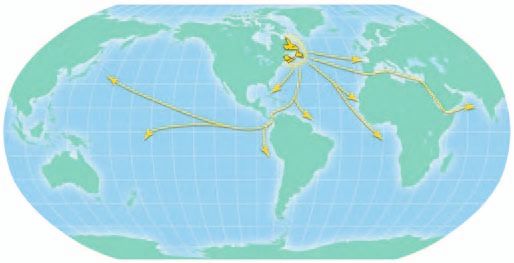
Charting
the Course
  Atlantic Canada
  Transportation Strategy
           2008-2018
Department of Transportation

Charting the Course
The Atlantic Canada Transportation Strategy
2008-2018

Published by:
Province of New Brunswick
P.O. Box 6000
Fredericton, New Brunswick

Printed in New Brunswick

CNB 3781
Table of Contents
   Introduction . . . . . . . . . . . . . . . . . . 3

   The Vision . . . . . . . . . . . . . . . . . . . . 4
     Consider the Present . . . . . . . . . . . . . . . . . . . . . 4
     Consider the Future . . . . . . . . . . . . . . . . . . . . . . 6

   Atlantic Canada’s Strategic Infrastructure . . . 8
     Strategic Highways . . . . . . . . . . . . . . . . . . . . . . 8
     Strategic Railways . . . . . . . . . . . . . . . . . . . . . . 9
     Strategic Airports . . . . . . . . . . . . . . . . . . . . . . . 9
     Strategic Marine Ports & Ferry Services . . . . . . . . . . . 10

   Challenges Facing Transportation
   in Atlantic Canada . . . . . . . . . . . . . . 11
     Funding Challenges . . . . . . . . . . . . . . . . . . . . 11
     Policy and Regulatory Challenges . . . . . . . . . . . . . 12
     Atlantic Canada Service Challenges . . . . . . . . . . . . 16

   Action plan . . . . . . . . . . . . . . . . . . 19

   A Call for Action . . . . . . . . . . . . . . . 21

   Appendix A: Strategic Infrastructure Criteria . 22

   Appendix B: Maps . . . . . . . . . . . . . . 25
Newfoundland and Labrador • New Brunswick • Nova Scotia • Prince Edward Island

The Atlantic Canada Transportation Strategy 2008-2018

We        are very pleased to present The Atlantic
Canada Transportation Strategy, 2008 – 2018, a 10-year
                                                           the world and presents new prospects for future
                                                           development and commercial trade beyond our
transportation strategy for the Atlantic region.           borders.

The Strategy presents a vision for a state-of-the art      By focusing on the region’s strategic transportation
transportation system in Atlantic Canada, covering         infrastructure, we have identified funding, policy,
all modes of transportation (road, rail, air and marine)   regulatory and service challenges that need to be
that supports economic and social development in           addressed to support current use of our system and
the region with benefits for all of Canada.                to facilitate future development opportunities in our
                                                           region.
This document complements a comprehensive
national transportation strategy entitled Looking          Action is needed if we are to properly position
to the Future: A Plan for Investing in Canada’s            ourselves to seize new opportunities and respond
Transportation System, which was released by the           to the existing challenges. This strategy will serve as
Council of the Federation (COF) in December 2005.          a blueprint for future cooperation amongst Atlantic
                                                           Ministers of Transportation, as well as other key
A safe, efficient and sustainable transportation           partners, on progress towards the achievement
system remains a key element of Atlantic                   of our vision for a state-of-the-art, multi-modal
Canada’s prosperity and quality of life. In an age         transportation system to, from and within Atlantic
of globalization, it opens the door to the rest of         Canada.

Hon. Dianne C. Whelan       Hon. Denis Landry              Hon. Murray K. Scott        Hon. Ron W. MacKinley
Minister of                 Minister of                    Minister of                 Minister of
Transportation and          Transportation                 Transportation &            Transportation and
Works                                                      Infrastructure Renewal      Public Works
Newfoundland and            New Brunswick                  Nova Scotia                 Prince Edward Island
Labrador

                                                                                                                1
Newfoundland and Labrador • New Brunswick • Nova Scotia • Prince Edward Island

 2
The Atlantic Canada Transportation Strategy 2008-2018

Introduction
The Atlantic Canada Transportation Strategy 2008 – 2018

Good transportation infrastructure enables the            Trading patterns throughout the world are
movement of people, goods and numerous services           realigning in favour of unprecedented development
effectively and efficiently while minimizing impacts      opportunities for Atlantic Canada. The region must
on the environment. It connects communities,              be ready to seize these opportunities. This strategy
provinces, regions, and nations. Transportation           presents an incontestable case for an accelerated
allows businesses to develop and grow by                  and expanded program for funding covering
providing seamless access to resources and markets.       rehabilitation and development needs in strategic air,
Transportation allows people to access health,            rail, marine, and highway infrastructure in the region.
educational, employment and recreational facilities.        It calls for increased participation by all orders of
Transportation is the key to social and economic                government as well as the private sector. It also
development and a good quality of life.                          calls for action on policy, regulatory and service
                                                                    issues to bring economic benefits to Atlantic
Why is an Atlantic Canada transportation                               Canada and, in fact, all of Canada. Time is of
strategy needed?
                                                                        the essence if the region is not to forfeit
                                                                           current trading advantages to others
Following the COF’s National Transportation Strategy
                                                                             who are equally interested.
entitled Looking to the Future: A Plan for Investing in
Canada’s Transportation System, the provinces of
Atlantic Canada - Newfoundland & Labrador, Nova
Scotia, Prince Edward Island and New Brunswick
- collaborated to develop a 10–year Atlantic Canada
Transportation Strategy. The strategy builds on
the national paper by focusing on the region’s
infrastructure, policy and regulatory challenges and
service issues. While each province has individual
transportation infrastructure needs and priorities,
this strategy recognizes that each Atlantic Province is
heavily dependent on one another’s transportation
networks for current and future economic and social           The Vision
activities.
                                                      A state-of-the-art transportation
The strategy recognizes the current challenges facing system in Atlantic Canada that
both the national and provincial governments in         supports economic and social
funding transportation systems but also recognizes     development   in the region with
that these challenges must be overcome if all areas       benefits for all of Canada
of Canada are to contribute to a strong national
economy that remains competitive internationally.

                                                                                                                 3
Newfoundland and Labrador • New Brunswick • Nova Scotia • Prince Edward Island

The Vision

The vision, the driving force of this strategy, would     Canada/U.S. Surface Border Crossings
see the achievement of a transportation system            The three highest volume land commercial Canada-
capable of supporting and growing a self-sustaining       U.S. border crossings in Atlantic Canada are at
Atlantic economy that is a major contributor to a         Woodstock, St. Stephen, and Edmundston. Nearly
strong national economy.                                  700,000 trucks per year travel between Canada
                                                          and the United States through the 16 Maine-New
To move forward on this vision and to understand
why it is essential to focus on both current and future
                                                          Brunswick border crossings. In addition, close to 7
transportation demands, it is necessary to:               million passenger vehicles cross this border annually.

                                                          There are two major railway border crossings
Consider the Present                                      between Maine and New Brunswick, one at St. Croix,
                                                          and the other at St. Leonard. These lines connect
Highways                                                  into the U.S. rail system, and facilitate rail trade with
There are over 1.3 million registered passenger           the U.S., and also directly link Montreal, Quebec, and
vehicles and over 40,000 registered trucks, and two       Saint John, New Brunswick by rail through northern
major intercity bus lines in Atlantic Canada. They        Maine.
operate on 55,000 km of provincially maintained
roads and highways, including nearly 8,300 bridges.       Airports and Air Services
This also includes 4,700 km of National Highway           Airports in Atlantic Canada now handle over 6 million
System highways and intermodal linkages. These            passengers and over 60 million kg of cargo annually,
highways, connected by key ferry services, border         with Halifax, St. John’s, and Moncton handling over
crossings, and the Confederation Bridge, connect          80% of the passengers and 98% of the freight.
all communities within each province, and via the         Fredericton, Saint John, Charlottetown, and Deer
National Highway System, to points throughout             Lake each handle approximately 200,000 passengers
the region, Canada, and the United States. Urban          annually. Additionally, five other Atlantic airports
transit also plays an important role for travellers in    transport a total of 300,000 passengers yearly. Gander
municipalities in Atlantic Canada, moving over 24         International Airport handles over 70,000 domestic
million passengers a year.                                passengers and over 200,000 Trans Oceanic Plane
                                                          Stop (TOPS) passengers annually. In addition to
Railways                                                  commercial aviation, there are many other users of
In Atlantic Canada, there is one Class I railway,         airports, including: emergency services (Medivac,
Canadian National Railway (CN). It provides twice         forest protection, policing), general / recreational
daily double-stack container rail service between the     aviation, corporations, flight training schools, and
Port of Halifax, the CN intermodal facility in Moncton    government services.
with connections to Saint John and its major
inland terminals in Montreal, Toronto and Chicago.        Marine Ports
There are also several short line railways operating      Atlantic Canada’s marine ports are a very prominent
over 1,600 km of track. Passenger rail is also active     component of the national freight system,
throughout the region. VIA Rail transports over           collectively handling approximately 120 million
200,000 passengers annually with the greatest part of     tonnes of cargo annually. Of the top four busiest
this traffic on the line from Halifax through Moncton,    ports by tonnage in Canada, three of them are in
Miramichi, Bathurst and Campbellton to Montreal.          Atlantic Canada including: Come-by-Chance, NL,
                                                          Saint John, NB, and the Strait of Canso, NS. All are

 4
The Atlantic Canada Transportation Strategy 2008-2018

critical for Canada’s oil and gas industry. The Port      The ferry service operating between Wood Islands,
of Halifax is Canada’s third busiest container port,      Prince Edward Island and Caribou, Nova Scotia carries
handling over 500,000 TEUs. Container facilities are      more than 165,000 vehicles and 400,000 passengers
also available in Saint John, NB, St. John’s, NL and      annually. This ferry service contributes approximately
Corner Brook, NL.                                         $27 million each year to the Island’s economy. The
                                                          Souris, Prince Edward Island to Grindstone, Les Îles de
The cruise ship industry has been an emerging             la Madeleine (Quebec) ferry service carries more than
tourism generator for Canada, with Halifax and Saint      40,000 vehicles and 105,000 passengers annually.
John being the second and third busiest cruise ship
ports in Canada, after Vancouver. There are now           Nova Scotia’s intra-provincial ferry services transport
over 400,000 passengers visiting Atlantic Canada          over 1 million passengers annually. For New
by cruise ship annually, arriving on close to 250         Brunswick, intra-provincial ferry services transport
vessels, contributing in excess of $50 million to local   over 4 million passengers annually.
economies. The cruise industry in Prince Edward
Island has experienced steady growth in recent years,     More than 140,000 passengers annually travel
hosting more than 28,000 passengers and 13,000            between Saint John, New Brunswick and Digby, Nova
crew members annually. The recently completed             Scotia by ferry, and 150,000 passengers are carried on
improvements at the Charlottetown wharf will              the ferry service between Nova Scotia and Maine. The
support continued growth. Growth of cruise ship           future of the Saint John/Digby service is uncertain
activity in Newfoundland and Labrador is also             as a result of financial difficulties encountered by
significant. In 2006, Newfoundland and Labrador was       the operator. The Federal Government is exploring
host to 105 cruise ship visits – bringing over 34,000     options for that service.
passengers and 17,000 crew members to several
ports throughout the province. The global growth in       Trade
the cruise industry, coupled with the development
                                                          Exports drive the Atlantic economy. Atlantic Canada
of provincial cruise itineraries and home ports, is
                                                          exports approximately $22 billion worth of goods
increasing the size and value of the cruise market in
                                                          and services internationally, while importing nearly
Atlantic Canada.
                                                          $18 billion. Over $17 billion, or 80% of the region’s
Ferry Services                                            total international exports, were directed to the U.S.
                                                          in 2005, representing an increase of over 100% in the
Ferry services are integral to the economy of
                                                          past 10 years. Total international and interprovincial
Atlantic Canada. For Newfoundland & Labrador, a
                                                          trade in the region is equivalent to almost 130% of
constitutionally guaranteed ferry service provides
                                                          GDP– higher than the national average.
the crucial economic and social link to mainland
Canada. On an annual basis, the Marine Atlantic           Tourism
service between Newfoundland & Labrador and
                                                          Natural beauty and renowned attractions have
Nova Scotia carries over 400,000 passengers, more
                                                          made our region a tourism destination for travellers
than 135,000 passenger vehicles, and more than
                                                          worldwide. The tourism industry in Atlantic Canada
88,000 commercial vehicles through Port aux
                                                          generates over $3 billion in revenues annually and
Basques and Argentia. The interprovincial service
                                                          employs over 100,000 people. There are nearly half a
between Newfoundland & Labrador and Blanc
                                                          million visits annually to Newfoundland & Labrador,
Sablon (Quebec), transports over 70,000 passengers
                                                          nearly 1.0 million to Prince Edward Island, 1.7 million
and 24,000 vehicles annually. The international ferry
                                                          to New Brunswick, and 2.2 million to Nova Scotia.
service to and from the islands of St. Pierre and
                                                          Tourism is a leading economic generator in Atlantic
Miquelon transports over 25,000 passengers annually.
                                                          Canada. Good transportation access to and within
Within Newfoundland and Labrador, intra-provincial
                                                          the region is required to sustain and grow the
ferry services transport over 750,000 passengers
                                                          region’s tourism industry.
annually.

                                                                                                               5
Newfoundland and Labrador • New Brunswick • Nova Scotia • Prince Edward Island
Energy the New England States. Prince Edward Island is also
The Energy sector continues to develop in Atlantic developing energy projects, including wind energy.
Canada at a significant pace. Transportation
issues specific to this sector are being monitored
and assessed and there will be matters requiring Consider the Future
attention as the sector continues to expand. The 21st Century promises unparalleled trade
The oil and gas reserves in Newfoundland and opportunities. Atlantic Canada, with its strategic
Labrador, combined with the vast hydro potential, location on Canada’s east coast, offers year-round,
are positioning Newfoundland and Labrador as an deep-water ports, proximity to major world shipping
“Energy Warehouse”. New Brunswick is growing routes and some infrastructure that is not at capacity.
its energy hub in Saint John with action involving The region has tremendous potential as Canada’s
the new LNG facility, the potential new oil refinery, Atlantic Gateway to attract these opportunities,
refurbishment of Point Lepreau and the potential benefiting the region, the country and the continent.
of other developments. Nova Scotia’s energy
developments include a LNG terminal at Bear Head Trade is growing in three powerful and shifting
and the Maritime and Northeast Pipeline running into trade networks; the north-south NAFTA network,
the European Union-NAFTA network, and the Suez
The Atlantic Gateway
region and Trade Routes Europe
United States
Mexico
Caribbean
Africa
Asia via
Suez Canal
South America
Asia and Oceania
via Panama Canal
6The Atlantic Canada Transportation Strategy 2008-2018
Express networks (from South and East Asia via A Memorandum of Understanding (MOU) regarding
the Suez Canal). As volumes continue to grow on the development of an Atlantic Gateway was
these routes, Canada will need strategically located signed by the Government of Canada and the four
multi-modal transportation infrastructure on its Atlantic Provinces on October 14, 2007. Work is
east coast capable of handling these shipments. As ongoing under the terms of the MOU to identify: the
well, the importance of an Atlantic Gateway as a components of the Atlantic Gateway; the analytical
readily available mechanism to alleviate the current and planning work required to develop each of the
congestion and capacity constraints facing many of components; and the appropriate approaches and
the east and west coast ports of entry of Canada and timing for involvement of the private sector and
the United States needs to be recognized. other stakeholders and to promote the Atlantic
Gateway in domestic and international markets. The
The 2007 Federal Budget announced a long-term Atlantic Provinces are unanimous in their position
Infrastructure Plan which included a new National that the Atlantic Gateway must be developed in a
Gateways and Border Crossings $2.1 billion fund. manner which benefits the four provinces.
The Atlantic Gateway is one of the gateways named
by the Federal Government for federal support. The On December 12, 2007, the Council of Atlantic
Federal Government has also released a national Premiers reiterated their commitment to the
gateways and trade corridor policy framework development of an Atlantic Gateway strategy
to guide investments in strategic transportation and agreed that early marketing and investments
infrastructure to support international trade volumes in the initiative are necessary to strengthen the
and values of national significance. The national efficiency of the multimodal transportation system
fund will enhance infrastructure at key locations and linking the four Atlantic Provinces to key markets.
support non-infrastructure elements that impact the In addition, Premiers urged accelerated progress on
effectiveness of national transportation assets. key infrastructure as well as policy and regulatory
enhancements under the MOU, with timely access to
federal funding being a critical requirement.
7Newfoundland and Labrador • New Brunswick • Nova Scotia • Prince Edward Island
Atlantic Canada’s
Strategic Infrastructure
The first step in identifying the strategic
transportation infrastructure for Atlantic
Canada by mode began in 2005 with the
COF’s national transportation strategy
“Looking to the Future: A Plan for Investing in
Canada’s Transportation System”. That strategy
presented criteria to identify the critical
components of a national transportation
system. Atlantic Canada’s strategic
infrastructure is based on the same criteria
applied nationwide, resulting in a list of
strategic highways, railways, airports, marine
ports and ferries. The criteria are located in
Appendix “A”.
The Strategic Highways in Atlantic Canada by Route
While the criteria for the nationally strategic number are listed below and mapped in Appendix
network are comprehensive, additional regional “B”, Map 1:
considerations are required from an Atlantic Canada
transportation perspective. The Trans-Canada Newfoundland & Labrador:
Highway in Cape Breton, Highway 105, which runs NHS Highways
on the north side of the Bras D’Or Lake, is a strategic 1, 2 (from TCH to Port of St. John’s), 100, 340, 350, 430
highway for movement of freight and people to and (TCH at Deer Lake to St. Barbe ferry terminal), 500
from the eastern end of the province. In addition, as (Trans Labrador Highway), 510
part of the definition of nationally strategic airports,
the COF’s strategy included other major regional Intermodal linkages
hubs as one of the criteria for inclusion as a strategic
• -Portugal Cove Rd from TCH to St. John’s Airport;
airport. Regional hubs are defined by each province
in Atlantic Canada based on individual transportation • -Route 450A from TCH to Port of Corner Brook;
needs. Details can be found in Appendix “A”. • -Route 340 from TCH to Lewisporte Marine Terminal;
• -Route 350 from TCH to Port of Botwood.
Strategic Highways
Nova Scotia:
Strategic highways in Atlantic Canada include the NHS Highways
National Highway System as defined in the COF
101, 102, 103, 104/Trunk 4, 125/105 (Sydney to North
Paper and Highway 105, the Trans-Canada Highway
Sydney), 106, 111(Victoria Rd to 118), 118, 303
in Cape Breton. The National Highway System (NHS)
also includes linkages that connect the NHS to Intermodal linkages
intermodal facilities and to border crossings that
• -Joseph Howe/Kempt/Barrington/Lower Water/
meet the criteria identified in Appendix “A”. For Prince
Hollis Sts. from Highway 102 to Port of Halifax;
Edward Island and the island of Newfoundland,
which have no direct rail access, the reliance on • -Dartmouth - Rtes 111 & 322 from Rte 118 to Port of
highways is even greater for the movement of freight Halifax (Autoport)
and passengers.
8The Atlantic Canada Transportation Strategy 2008-2018
Prince Edward Island: Nova Scotia:
NHS Highways Canadian National Railway; Windsor
1, 1A, 2, 3 & Hantsport Railway; Cape Breton &
Central Nova Scotia Railway, VIA Rail
Intermodal linkages
New Brunswick:
• Brackley Point Road
Canadian National Railway; New
from Route 1 to
Brunswick Southern Railway; Chemin de
Charlottetown Airport
fer de la Matapédia et du Golfe inc; New
New Brunswick: Brunswick East Coast Railway; Montreal, Maine and
NHS Highways Atlantic Railway, VIA Rail
1, 2, 7, 8, 11, 15, 16, 17, 95 Newfoundland & Labrador:
Québec North Shore and Labrador Railway
Intermodal linkages
• -Municipal streets to Port of Saint John from East
side Route 1 to Port of Saint John – East side; Strategic Airports
• -Municipal streets to Digby ferry & Port of Saint John Airports are the infrastructure link for air carriers
from West side Route 1 to Digby Ferry/Port of Saint providing passenger and freight service quickly and
John - West side; over long distances. The National Airport System
• -Route 111 from Route 1 to Saint John Airport; (NAS) is comprised of airports that the federal
government has considered critical to the air
• -Nevers Road & Route 102, from Route 2 to transportation system in Canada and it has retained
Fredericton Airport; ownership but leases them to not-for-profit Canadian
• -Route 15, Harrisville & Dieppe Blvd, Route 132 from Airport Authorities (CAA) to operate and maintain.
Route 2 to Greater Moncton International Airport; Unlike the NAS airports, the federal government has
transferred both ownership and operation of the
• -Turgeon Rd/Hwy 134 from Route 11 to Port of
regional / local airports to local airport authorities
Belledune.
comprised of private and municipal interests. The
airports with scheduled air service are eligible for
Border crossings
certain capital funding support from the federal
Woodstock, St. Stephen, Edmundston government but demand surpasses availability. The
regional / local airports are all challenged by capital
and operating funding requirements.
Strategic Railways
Railways, an integral component of a multi-modal The strategic airports in Atlantic Canada are listed
system, connect marine ports to markets directly below and mapped in Appendix “B”, Map 3:
and to highways through trans-load and inter-modal
facilities, such as the major terminal in Moncton that Newfoundland & Labrador:
serves users from three of the Atlantic provinces. St. John’s, Gander, Deer Lake, Stephenville, -
VIA Rail also provides an alternate form of passenger St. Anthony, Wabush, Happy Valley-Goose Bay, -
travel. Moncton is the 6th largest revenue generating Port Hope Simpson, Nain -
station on the entire VIA Rail system. With the
exception of VIA Rail, a federal Crown Corporation, Nova Scotia:
the railways in Atlantic Canada are owned, operated Halifax, Sydney, Yarmouth
and maintained by the private sector.
Prince Edward Island:
The strategic railways in Atlantic Canada are listed Charlottetown
below and mapped in Appendix ”B”, Map 2:
9Newfoundland and Labrador • New Brunswick • Nova Scotia • Prince Edward Island
New Brunswick: Prince Edward Island:
Fredericton, Moncton, Saint John, Bathurst Charlo, Charlottetown
St. Leonard
New Brunswick:
Saint John, Belledune, Bayside, Dalhousie
Strategic Marine Ports &
The Strategic Ferry Routes in Atlantic Canada are
Ferry Services listed below and mapped in Appendix “B”, Map 5:
Strategic marine ports support import and export
cargo and passenger movements. With appropriate Newfoundland & Labrador and Nova Scotia:
road and rail connections, they are integral Port aux Basques/North Sydney
components of the transportation network. Similar
to the airports, the federal government owns the Argentia/North Sydney
Canada Port Authority (CPA) ports that are operated
by not-for-profit organizations. These local port Newfoundland & Labrador and Quebec:
authorities are comprised of private and municipal St. Barbe/Blanc Sablon
interests, which are responsible for their operation
Newfoundland & Labrador and St. Pierre &
and maintenance. Regional cargo ports are owned,
Miquelon:
operated and maintained by private interests.
Fortune/St. Pierre
For a maritime economy such as Atlantic Canada,
marine ports are vital not just for trade but also
Nova Scotia and Maine:
for interprovincial and international ferry services,
Yarmouth/Bar Harbor
which provide yet another strategic transportation
alternative to connect the region. For Newfoundland Yarmouth/Portland
and Labrador, certain intra-provincial ferry services
are deemed strategic due to geographic factors. Prince Edward Island and Nova Scotia:
Wood Islands/Caribou
The strategic marine ports in Atlantic Canada are
listed below and mapped in Appendix “B”, Map 4: Prince Edward Island and Quebec:
Souris/Îles de la Madeleine
Newfoundland & Labrador:
St. John’s, Come By Chance, Whiffen Head, Corner New Brunswick and Nova Scotia:
Brook, Lewisporte, Botwood, Holyrood, Happy Valley Saint John/Digby
Goose Bay
Nova Scotia:
Halifax, Strait of Canso, Syndey
10The Atlantic Canada Transportation Strategy 2008-2018
Challenges Facing
Transportation in Atlantic Canada
The challenges to transportation in Atlantic Canada Provincial governments in Atlantic Canada spend
are threefold: long-term, sustainable and sufficient over $1 billion annually on transportation, primarily
funding; updated policies and regulations; and on highways, in their efforts to sustain the system,
service enhancements – all in support of economic which is more than they collect in provincial fuel
and social development in Atlantic Canada with taxes and licensing fees.It is essential that the Federal
benefits for all of Canada. government continue to be a funding partner as
a transportation infrastructure funding deficit, as
identified in the COF’s 2005 Strategy, continues to be
Funding Challenges an issue
The major challenge is long-term, sustainable and
Figure 1: Approximate average program
sufficient funding. Governments and private sector
expenditures by Atlantic Canadian governments
providers of transportation infrastructure are all
facing a similar challenge: how to maintain and
sustain infrastructure in the long term given the need
and available funding sources.
Billions of dollars are needed for transportation
infrastructure enhancements in Atlantic Canada. It is
estimated that $4.4 billion (2005 dollars) is needed
to rehabilitate the National Highway System alone
in Atlantic Canada. This includes $2.0 billion in New
Brunswick, $1.2 billion for Newfoundland & Labrador,
$1.0 billion for Nova Scotia, and $0.2 billion for Prince
Edward Island. This amount does not include the
significant investment requirements for highways
With health and education investments continuing
that are not part of the NHS, constituting over 90%
to account for the vast majority of public spending
of the total highway network in the region. The
(Figure 1), the region’s governments must find ways
financial burden of building and maintaining the full
of ensuring that transportation is adequately funded
network falls primarily to provinces, as ownership of
now and in the future.
roads is divided on the basis of 83% provincial/16%
municipal/1% federal.
In its 2007 Budget, the Federal Government
announced establishment of a 7-year $33 Billion
In Atlantic Canada, there are also issues with the
Infrastructure Plan, with transportation specifically
long-term viability of strategic small airports, short
identified as a prominent component of this Plan.
line railways, certain marine ports. and ferry services
This announcement constituted a significant
that are also facing funding challenges.
milestone in that it not only represented an
unprecedented level of federal support, but it also
embodied the fundamental principle of ensuring
long-term, predictable funding. These decisions were
made in response to the position advanced by the
COF and sustained representations by all provincial
and territorial transportation departments to the
Federal Department of Transport.
11Newfoundland and Labrador • New Brunswick • Nova Scotia • Prince Edward Island
The Federal Infrastructure Plan is a major step finalizing uniform special permit conditions for the
forward in helping the Atlantic Provinces to movement of indivisible, over-dimensional loads
begin a renewed effort to address transportation within Atlantic Canada. Implementation of the
infrastructure challenges, in recognition of fact concept of a “regional” permit will be pursued with
that this infrastructure forms the backbone of the the ultimate objective of allowing a special permit
economy. A significant gap still remains between in one province to be recognized and accepted
available funding and investment needs, but in the other three provinces. The Committee will
the foundation laid by the Infrastructure Plan be working on uniform permit conditions for non-
provides the essential launching pad for moving conforming vehicles as well as overweight load
ahead collectively on the path to tackling the permits. A uniform system regarding escort vehicles
infrastructure deficit. There is concern over delays in for oversize/overweight loads is being developed for
the development of the new federal program criteria, the Atlantic region with uniform requirements such
project selection and release of federal funding. The as driver qualifications and vehicles markings.
federal government must streamline and accelerate
these processes if funding is to be utilized in a timely There are also important policy issues outside of
manner. Atlantic Canada, including Route 185 in Quebec,
which is the external Trans-Canada Highway
One of the key components that will help narrow connection for the entire Atlantic region. Completion
the gap further between available federal funds and of the twinning of Route 185 in a timely manner is
infrastructure needs will be the Atlantic Gateway essential to maintain and support developing trade
and federal funding support provided through that patterns. Also, the Trans-Canada Highway in Quebec
program. Atlantic Premiers have spoken about this is weight restricted during the spring. This has a
recently when they met in December, 2007. They direct negative impact on the economy of Atlantic
called for accelerated investment via the Atlantic Canada. Quebec is the only province that applies that
Gateway by the federal government for priority restriction to the Trans-Canada Highway.
infrastructure projects.
Policy and Regulatory
Challenges
Policies and regulation guide how
infrastructure is used and managed, and
ensure the safety and security of the
travelling public. Appropriate policies and
regulations will support efficient, effective,
safe and secure use while facilitating trade
and development. Following are the areas
identified for continuation of current
initiatives or improvement.
Increased allowable vehicle weights on highways
Highway Policy
in the United States, specifically Maine, need to
Harmonization of regulations respecting vehicle weights
be sought as well. Certain Interstate highways
and dimensions, and simplification of regulatory burden
throughout eastern Canada and the New England states allow 100,000 lbs (45,360 kg), while Interstate 95
connecting to New Brunswick is still only allowing
The Atlantic Committee on Vehicle Weights and 80,000 lbs (36,290 kg). Interstate 95 is the only
Dimensions succeeded in implementing uniform interstate highway connecting to Atlantic Canada,
vehicle weight and dimension rules in all Atlantic therefore the weight limits place considerable
Provinces in early 2002. The Committee is currently restrictions on the region’s primary freight
12The Atlantic Canada Transportation Strategy 2008-2018
connection to its major trading partner, the United Agency in situations where competition is weak
States. This has direct negative impacts on the or absent and shippers have issues with carriers
economy of Atlantic Canada and does not support concerning rates and service. Federal policies must
the developing NAFTA trade corridor. do more to ensure that the interests of rail users are
balanced with those of the national rail carriers.
More use of Intelligent Transportation Systems (ITS) and
transportation technology As short line railways are often captive to Class
I railways to transport freight to and from their
The use of ITS, such as Road Weather Information
lines, these short line rail carriers require effective
Systems (RWIS), allow improved management of
regulatory recourse if faced with rate and service
highway maintenance operations, improved highway
issues that unfairly restrict freight movement.
safety, and provide traveller information. As well,
Governments must be prepared to support all
enhanced scale operations with more Weigh-in-
railways in their efforts to seek improved freight
Motion (WIM) systems on major routes can expedite
movement. An option, for example, could be co-
the flow for legal weight loads by allowing bypass
production agreements between CN and the Atlantic
of scale facilities and have been shown to greatly
short lines to improve access to Halifax and Saint
reduce carrier costs. Safety is enhanced through
John.
a random audit process. Since not all vehicles are
reporting, enforcement personnel have more time Canada/U.S. Border Policy
for safety inspections. This technology benefits all Initiatives to improve border efficiency while not
users. compromising security
Railway Policy - Because of Atlantic Canada’s dependence on exports
to the United States and the growing NAFTA,
European Union - NAFTA and the Suez Express trade
networks, the timely and secure movements of
people, goods and services across the Canada-U.S.
border is integral to the economy of Atlantic Canada.
Initiatives are needed to improve efficiency of these
trade flows without compromising security.
Currently there are border inspection policy issues
that restrict the free flow of rail freight from Atlantic
Canada through Maine to destinations in Quebec.
A legislative and policy framework that balances the These issues include the requirement by the U.S.
interests of rail users, including rail users who access the government for a complete and comprehensive
national system via short lines, with the national carriers cargo manifest for sealed rail cars, even though
the final destination of cargo is in Canada. This has
Many shippers across Atlantic Canada are dependent adversely affected a highly successful intermodal rail
upon the rail mode to move their products to service due to the volumes of paperwork required
market. The long distance to market, high volume of for transit. The federal government must continue to
products shipped and low value of these products take steps to resolve this issue soon to avoid further
makes rail the mode of choice. negative trade impacts.
Only two of the four Atlantic Provinces have access Work is underway at the St. Stephen/Calais border
to a Class I carrier and this access is limited to one crossing to construct a new crossing. The agreements
carrier, Canadian National. The current proposed call for this work to be completed by the end of 2008.
amendments to the rail provisions of the Canada The road work and the new bridge will meet that
Transportation Act are expected to provide improved target. The Canadian Border Services Agency has
shipper recourse to the Canadian Transportation confirmed they will have their facility operational
13Newfoundland and Labrador • New Brunswick • Nova Scotia • Prince Edward Island
by the end of 2008. There is concern that the U.S. Small airport viability
customs facility may not meet the agreed completion
The viability of Canada’s small airports is an issue of
date.
importance across all jurisdictions, including the four
Air Policy Atlantic Provinces. As an integral part of the nation’s
International / trans-border air policy liberalization air transportation system, small airports require
access to long-term and stable capital funding as
Many countries, including the United States, are avidly well as appropriate policy and regulatory support.
pursuing “open skies” type agreements. International This will require involvement by all three orders of
air policy liberalization will foster an innovative and government and the private sector.
competitive air transportation environment that will
benefit all users and the communities housing these In September 2004, the Council of Ministers
services. The federal government’s new international Responsible for Transportation and Highway Safety
air policy “Blue Sky” will be a key factor in future agreed that the viability of small airports is a shared
growth. New air services for strategic airports in responsibility. Each province and territory and
Atlantic Canada are being pursued and federal policy the federal government participated in a national
support to that end is necessary. study which was released in September 2006.
Recommendations included ensuring small airports
Further liberalization of Canada’s air bilateral were eligible for certain federal funding support
agreements is needed. Negotiations must take into programs.
consideration an overall “value-for-value” exchange of
benefits, as opposed to the narrow concept of “carrier Federal Air Revenues and Charges
benefits,” and must also consider regional needs and In the interest of preserving a healthy and
perspectives within the nation. Opportunities to competitive aviation system in Canada, the aviation
expand air bilateral agreements as they relate to air policy and regulatory environment must be
cargo must also be considered. reviewed, with a focus on reducing the discrepancy
between the money removed from the system and
The federal government must also, over the
invested back.
longer term, explore the development of an open
North American aviation market and eventually, In May 2005, the federal government announced
a multilateral approach to “open skies.” It is also a new airport rent policy that revised the formula
important for Canada to conclude an open skies for calculating the rent received from National
agreement with the European Union. Airport System (NAS) airports. The new formula will
provide NAS airports across the
country with reductions over the
long term. However, the issue of
airport rent is still a significant
one for stakeholders nationwide
and further negotiations must be
undertaken to address residual
concerns.
Aviation regulations that impose
costs on airports and air carriers,
and consequently, other users, are
also issues for many airports and
carriers. While many regulations are
viewed as necessary and desirable,
this is not always the case. It is
14The Atlantic Canada Transportation Strategy 2008-2018
incumbent upon the federal government to take Marine Policy
a cautious and considered approach to regulation, Borrowing limits for Canada Port Authority (CPA) ports
while considering the merits of providing financial and innovative financing tools
compensation for new regulatory requirements.
Ports are an important part of Canada’s transportation
Despite some reductions, the Air Travelers Security system as key connectors to the global marketplace.
Charge (ATSC) continues to place an additional As the emerging trade patterns discussed earlier
cost on this mode of transportation. The security of develop, the role of these ports is expected to
airports is a national issue and related costs should increase. Changes in federal policy are needed to
be funded from general revenues and not by air ensure that Canada’s ports remain viable and have
passengers alone. the capacity to pursue growing opportunities, such
as short sea shipping.
Canada Border Services Agency (CBSA) level of service
and cost recovery policy at Atlantic Canadian airports CPA ports are currently constrained in the amount
they can borrow for capital projects by the terms of
Until recently only one National Airport System their Letters Patent. While CPA ports can request an
airport in Atlantic Canada had access to 24/7 increase in their borrowing limits by applying to the
customs service (Gander International) The Halifax federal Minister of Transport, the process can be long
Stanfield International Airport received these services and cumbersome.
in April, 2007. More Atlantic Canada airports need
significant enhancements regarding CBSA services to Pending amendments to the Canada Marine
be able to attract and retain international air services. Act attempt to address this issue. Under the
In meeting the demands for customs services that proposed amendments, a tiered approach will be
fall outside an airport’s core hours of service, the implemented that will permit larger CPA’s to move
CBSA implements a full-cost recovery policy. This to a commercially-based borrowing regime while
system is inequitable across the country. smaller CPA’s will be subject to a code that governs
borrowing rather than a fixed borrowing limit, as
There are several airports in Atlantic Canada that are well as enhanced accountability requirements.
disadvantaged by this cost recovery regime. With The Atlantic Provinces believe that eliminating the
limited or no CBSA service, smaller airports have borrowing limits for CPAs and replacing them with
difficulty attracting and retaining trans-border and whatever level of borrowing is acceptable in the
international air service. These cost recovery fees, market will allow the ports to better respond to
which range from $300 to $4,500 per flight, can be future growth and development opportunities.
sufficient reason for airlines to favour airports with
24/7 CBSA service outside Atlantic Canada. Federal participation in port investments of national
significance
A lack of efficient international and trans-border air
service can act as a deterrent to economic growth U.S. governments at all levels consider their ports
in Atlantic Canada. The federal government must to be vital parts of the transportation system.
review the base services provided by CBSA at Atlantic American ports have access to a variety of financing
Canadian airports with the intent of providing CBSA mechanisms, including the ability to issue tax-free
services on an equitable basis. revenue bonds. In order to ensure that Canadian
ports are able to realize future business opportunities,
The CBSA level of service and cost recovery policy the federal government must create a policy and
is also an issue for other modes, including certain of regulatory environment that allows CPA ports to
the region’s marine ports, particularly those smaller access innovative and flexible financing tools.
ports that receive cruise ship traffic.
Under the existing Canada Marine Act, CPA ports
do not have access to federal funding or loan
guarantees. Pending amendments to this legislation
15Newfoundland and Labrador • New Brunswick • Nova Scotia • Prince Edward Island
Key stakeholders have banded together to present
forceful representations to prevent planned cutbacks
from actually occurring. The Atlantic provinces will
continue to be vigilant in ensuring that the federal
government fully understands the significant
contribution these services make to the regional and
national economy and provides long-term financial
support commensurate with their importance.
would allow these ports to apply for contribution Atlantic Canada Service
funding related to infrastructure, environmental Challenges
sustainability and the implementation of security
The greatest challenges on the service side relate
measures.
to the availability of a seamless, multi-modal
These are important first steps in allowing ports transportation network that provides a choice of
access to the capital funding they require to finance services that respond to users’ needs. Such a system
infrastructure that will allow them to effectively serve will facilitate efficient, effective, safe, secure and
customer needs and take advantage of growth in environmentally responsible choices among users.
various areas of port traffic. The lack of adequate service options among modes
will lead to sub-optimal transportation choices.
Short sea shipping In support of economic and social objectives and
international competitiveness, both the public and
With the developing trade networks discussed under private sectors will have to be responsive to the
the vision, short sea shipping is expected to play an needs of users and proactive in addressing service
increasing role in the transportation of goods along issues.
the east coast of North America. As larger container
ships enter service, a hub-and-spoke model could Improving air services to larger Canadian, U.S., and
international markets
develop for container traffic. The largest ships will call
at a very limited number of ports, with smaller ships
Regional access to larger Canadian, U.S. and
dispersing their cargoes to local and regional ports.
international markets is crucial for the economy
There may be a need for these ports to acquire or
of Atlantic Canada. This includes retaining and
improve container-handling capabilities. The national
expanding direct passenger air service to Toronto,
governments in Canada and the United States need
Montreal, and Ottawa and other key centres.
to address policy and regulatory changes to allow
this mode of transportation to develop to its fullest Since the United States is Canada’s largest trading
potential. partner, the availability of adequate direct air service
Inter-provincial/international ferry links
between the two countries is essential. As well,
increased service between Atlantic Canada and other
Inter-provincial and international ferries are an growing international markets in Asia and Europe is
important example of short sea shipping. Several necessary to ensure emerging trade opportunities
such services in the Atlantic provinces provide a can be fully developed by Atlantic Canada. For
valuable, shorter, alternate transportation route for example, Newfoundland and Labrador wish to re-
people and goods. Ferries also serve as a strong establish their link with the United Kingdom.
catalyst for tourism development.
In recent years the federal government has taken
steps to reduce funding support for ferry services,
with potentially serious consequences for the region.
16The Atlantic Canada Transportation Strategy 2008-2018
Ensuring an adequate service level is maintained for the South Coast of Labrador. Residents rely on this
constitutionally guaranteed transportation services service to access goods and services as well as to
bring tourists to their region.
The role of the federal government must be
maintained and strengthened in providing Within Newfoundland and Labrador there are 19
constitutionally guaranteed ferry service between vessels which provide ferry service to a number
Newfoundland & Labrador and mainland Canada. The of isolated communities, and establish critical
federal government, through its budget decisions, transportation links between the island and Labrador
directly impacts funding and service levels, which in because of the province’s vast geography
turn, impacts access to and from Newfoundland &
Labrador. The importance of this key constitutionally Sustaining strategic small airports in Atlantic Canada
guaranteed link to the mainland is underlined by
the lack of multi-modal transportation alternatives. The viability of strategic small airports remains a
Fares on the Marine Atlantic Inc. service between concern for Atlantic Canada. In collaboration with
Nova Scotia and Newfoundland must be kept the private sector, all orders of government must be
at reasonable levels and an aggressive Vessel willing to address policy and regulatory issues that
Replacement Strategy is required. affect small airports in Atlantic Canada. Small airports
service important roles regarding medivac services,
Sustaining ferry services forest protection, general aviation and tourism.
Both the Wood Islands / Caribou and Saint John / Sustaining scheduled air service in smaller regions of
Digby ferry services have been identified as strategic Atlantic Canada
ferry services in the COF’s national transportation
strategy. The Wood Islands / Caribou service Over the last 10 years, there has been a dramatic
is an important service link to eastern PEI and decrease in the amount of scheduled passenger
northeastern Nova Scotia for economic and tourism air service available in certain regions of Atlantic
reasons and provides the only link to the mainland Canada. There are opportunities for the provision of
should the Confederation Bridge be out of service passenger service, and air carriers will be encouraged
for an extended period of time. The Saint John / to recognize these business opportunities and
Digby run provides a significant inter-modal service implement new services. The cost of air travel
alternative for passengers and commercial users and between smaller regions and larger communities
is a strong tourist attraction. Long-term, predictable that house most essential medical services,
federal funding of these strategic inter-provincial education and institutions is also a significant
ferry services needs to be achieved. concern.
Sustaining VIA Rail Service
The inter-provincial ferry service operating between
St. Barbe, NL and Blanc Sablon, Quebec is a critical VIA Rail continues to attract significant ridership
link for the residents on the Quebec North Shore and levels in the areas of Atlantic Canada that it serves.
It is important that VIA Rail service continues as an
alternate mode of passenger transportation. The
existing service from Montreal – Campbellton –
Moncton - Halifax (the Ocean) should be increased to
daily service. Further enhancements should consider
a new daily service from Montreal via Edmundston
and Grand Falls to Moncton during the peak tourist
season.
17Newfoundland and Labrador • New Brunswick • Nova Scotia • Prince Edward Island Intercity bus scheduled services across the region Intercity bus scheduled services provide a valuable and affordable public transportation service to many communities across the Atlantic region and beyond. This transportation alternative will continue to play an important part of a comprehensive multi-modal transportation network across the region. Urban transit Urban transit services are provided throughout Atlantic Canada and are being enhanced through federal funding. Appropriate funding levels directed at this passenger transportation alternative should encourage its use in the Atlantic Provinces with the objective of preventing the congestion and pollution problems currently experienced in larger urban centers. 18
The Atlantic Canada Transportation Strategy 2008-2018

Action plan
Transportation is a key enabler of economic              Other national priorities of particular importance to
and social development. This Atlantic Canada             Atlantic Canada are:
Transportation Strategy is a blueprint for guiding
public and private sector collaboration on critical      • -Sustained funding sufficient to address the long-
transportation funding, as well as policy, regulatory,      term transportation infrastructure needs across all
and service requirements, thereby enabling the              modes;
economy of Atlantic Canada to build on its strengths     • -Further air policy liberalization;
and opportunities, with benefits for all of Canada.
                                                         • -Reduction/elimination of airport rents;
All provinces and territories have developed             • -Strategic small airport sustainability through
common positions on a range of national                     partnered initiatives;
transportation issues. The Atlantic Provinces have
been active participants in achieving consensus and      • -Canada Border Services Agency (CBSA) level of
developing these positions and they are included in         service enhancements at airports and ports and
this paper.                                                 application of their cost recovery policy;
                                                         • -Enhanced financial flexibility for Canadian Port
                                                            Authorities;
The Most Pressing Need
                                                         • -Attaining full recognition of the unique role of
The most pressing need at this time is the region’s         international and inter-provincial ferry services
strategic highways and needed rehabilitation funding        in Atlantic Canada, including constitutionally
to restore them to their design service levels. All         guaranteed service, and securing the long term
across Canada, rehabilitation requirements are              federal financial commitment commensurate with
outstripping current sources of funding. For Prince         this role;
Edward Island and the island of Newfoundland, which
have no direct rail access, the reliance on highways     • -Improved Canada-U.S. Border Efficiency;
is even greater for the movement of freight and          • -Improving the rail system freight flows regionally,
passengers.                                                 nationally and internationally;

                                                         Additional issues the Government of Canada needs
                                                         to assist in correcting include:

                                                         • -The upweighting of Interstate 95 in Maine from
                                                            80,000 lbs to 100,000 lbs from the New Brunswick
                                                            border to Augusta, Maine;
                                                         • -The timely completion of the new U.S. border
                                                            facility in Calais, Maine;
                                                         • -Work with the Province of Quebec to have spring
                                                            weight restrictions removed from the National
                                                            Highway System and most particularly the Trans
                                                            Canada Highway; and
                                                         • -Work with the Province of Quebec under the
                                                            Continental Gateway initiative to accelerate the
                                                            completion of the twinning of route 185 between
                                                            the New Brunswick border and Rivière-du-Loup.

                                                                                                             19
Newfoundland and Labrador • New Brunswick • Nova Scotia • Prince Edward Island • -Sustaining and expanding VIA Rail service. The Atlantic Provinces are also co-ordinating efforts on transportation measures within the region. Priorities for regional co-operation include: • -The Atlantic Gateway, incorporating a balanced approach that benefits each province; • -The Atlantic Harmonized Trucking Strategy; • -Assessing the potential for developing short-sea shipping; • -Assessing future prospects for short line railways; • -Increased use of Intelligent Transportation Systems. 20
The Atlantic Canada Transportation Strategy 2008-2018

A Call for Action
For Atlantic Canada to be successful in developing       The federal government must ensure its policies
a multi-modal transportation system that will            and legislation reflect and support the region’s
support regional and national economic growth,           requirements.
new partnerships among the Atlantic provinces, the
federal government, municipalities and the private       The federal government must also intervene with
sector will be essential.                                others, external to the Atlantic Provinces, in support
                                                         of priorities to enhance economic opportunities for
Provincial governments                                   Atlantic Canada, and in fact, for all of Canada.

Provincial governments in the region collectively        Municipal governments
invest over $1 billion annually in transportation,
primarily on highways, in their efforts to sustain the   Municipalities have responsibility for various aspects
system. This is more than they collect in provincial     of transportation within their jurisdictions and have
fuel taxes and licensing fees. This funding will have    a lead role to play in the local movement of freight
to be increased if the strategic objectives identified   and passengers. They need to continue to be active
here are to be addressed in a timely fashion. New,       partners with provincial governments in local and
collaborative approaches to funding and service          regional transportation planning and funding for
delivery with other orders of government and the         strategic transportation infrastructure.
private sector need to be identified. As well, policy
                                                         The private sector
and regulatory initiatives must be complementary to
the achievement of these objectives.
                                                         The transportation industry needs to continue to be
Federal government                                       innovative in the provision of freight and passenger
                                                         services in Atlantic Canada, seeking a more multi-
While current federal funding programs are               modal approach and increased efficiencies. As
welcomed, additional and sustained federal funding       well, private sector interests in transportation need
is needed to address the transportation infrastructure   to participate more fully with governments in
deficit. Accelerated federal approvals regarding         identifying funding alternatives for the provision of
current funding programs are also important. Early       infrastructure and providing suggestions on policy
access to additional funding via the Atlantic Gateway    and regulatory initiatives.
initiative is essential.

                                                                                                            21
You can also read


